tech-news
OpenAI unveils Atlas browser, taking aim at Google Chrome
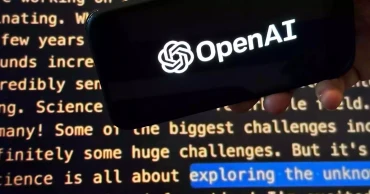
OpenAI has entered the web browser market with the launch of Atlas, a new browser designed to integrate artificial intelligence directly into the online search experience — setting up a major showdown with Google’s dominant Chrome browser.
The San Francisco-based company behind ChatGPT hopes Atlas will turn its chatbot into a central gateway for browsing the web, potentially drawing more users and digital ad revenue. However, analysts warn it could further reduce traffic to traditional news outlets if users rely on ChatGPT’s summaries instead of visiting external websites.
ChatGPT currently has over 800 million users, though most use it for free. Despite paid subscriptions, OpenAI continues to operate at a loss and is seeking new sources of revenue. Atlas is initially available on Apple laptops, with versions for Windows, iOS, and Android to follow soon.
OpenAI CEO Sam Altman described Atlas as “a once-in-a-decade opportunity to rethink what a browser can be.” But Forrester analyst Paddy Harrington cautioned that going up against Google, which holds a massive market share with Chrome’s 3 billion users, will be an enormous challenge.
Atlas includes a premium “agent mode” allowing the AI to browse autonomously, using a person’s search history to find and explain information — what Altman called “using the internet for you.”
Amazon Cloud outage highlights internet’s hidden weak spots
However, critics warn this could make users overly dependent on algorithms. “It’s taking personality away from you,” Harrington said, questioning how personalized or ad-free such browsing could remain.
With AI-powered search growing rapidly — used by nearly 60% of Americans, according to an AP-NORC survey — OpenAI’s Atlas could mark a major shift in how people interact with the internet.
Source: AP
7 months ago

FBS launches AI Assistant to help traders cut through market noise, stay strategic
Global brokerage firm FBS has unveiled its latest innovation — the FBS AI Assistant — a smart feature within the FBS app designed to help traders filter out market noise and focus on meaningful insights that drive better trading decisions.
Navigating financial markets can be overwhelming, with constantly changing charts, shifting trends, and differing analyses. The FBS AI Assistant simplifies this process by transforming complex data into concise, actionable information. Powered by OpenAI technology, it enables traders to analyze markets faster, spot emerging patterns, and make confident decisions in real time.
Microsoft warns Russia, China using AI to intensify cyberattacks on US
With just a few taps, the AI Assistant studies charts, timeframes, and indicators to produce clear summaries that save traders valuable time. The tool helps users:
Streamline technical analysis;Identify clear market trends and trading opportunities;Make informed, data-backed decisions; andMaintain composure during volatile conditions.“The FBS AI Assistant replaces chaos with clarity,” said an FBS spokesperson. “It turns data overload into structured insights, helping traders act with confidence and strategy.”
Each AI-generated report includes key trend analyses, indicator readings, price patterns, and trade ideas based on both historical and real-time data. Users can access up to five reports daily, while accounts with balances above $20 can generate as many as 15 reports per day.
FBS emphasizes that the AI Assistant is not a signal provider, but rather a strategic companion designed to guide traders toward better decision-making. By prioritizing clarity and discipline, it encourages users to trade with awareness instead of emotion.
Through tools like the AI Assistant, FBS continues to support traders in cutting through the noise, identifying clear trends, and trading with greater confidence.
Source: AP
7 months ago

People turning to AI for divine conversations
Artificial intelligence is no longer confined to classrooms or offices — it’s now entering temples, churches, and mosques. Around the world, worshippers are beginning to use AI chatbots for prayer, guidance, and even confession, blurring the line between technology and spirituality.
In Rajasthan, 25-year-old student Vijay Meel found comfort in GitaGPT, an AI program trained on the Bhagavad Gita. When he failed his banking exams, he turned to the chatbot for advice. Its message — “Focus on your actions and let go of the worry for its fruit” — rekindled his motivation. “It felt like hearing Krishna’s voice directly,” Meel said.
Microsoft warns Russia, China using AI to intensify cyberattacks on US
AI-powered tools like Text With Jesus and QuranGPT are drawing millions seeking spiritual insight through digital means. Experts say the trend reflects a growing sense of disconnection from traditional institutions.
“Talking to AI about God isn’t just about faith — it’s about belonging,” says anthropologist Holly Walters. “AI has already become our new spiritual mediator.”
Source: BBC
7 months ago

South Koreans tied to online scams in Cambodia return home for investigation
A group of South Koreans suspected of participating in online scam operations in Cambodia arrived back in South Korea on Saturday aboard a chartered flight to face criminal inquiries.
Their return comes in the wake of the death of a South Korean student who was allegedly forced to work at a scam center in Cambodia, sparking outrage at home. In response, the South Korean government sent officials to Phnom Penh to coordinate efforts with Cambodian authorities.
Cambodian Interior Ministry spokesperson Touch Sokhak had earlier confirmed that 64 South Koreans were being sent back late Friday. Upon arrival at Incheon International Airport, the returnees—wearing handcuffs and flanked by police—were taken to waiting security vehicles for transport.
Most of those repatriated were arrested during Cambodian crackdowns on online fraud hubs. They now face police investigations in South Korea, said national security director Wi Sung-lac. Authorities are working to determine whether the individuals voluntarily joined the scam operations or were coerced under false pretenses, such as fake job offers.
South Korean officials estimate that roughly 200,000 people are working in scam centers across Cambodia, including around 1,000 South Koreans.
Since the COVID-19 pandemic, online fraud schemes have surged. Victims include not only those deceived by fake investments, gambling sites, and romance scams, but also people forced to carry out the scams under threat of violence. Watchdog groups say international crime networks earn billions annually through these operations.
South Korea recently imposed a travel ban on parts of Cambodia, including Bokor Mountain in Kampot province, where the deceased student was found. Cambodia’s Prime Minister Hun Manet has urged Seoul to reconsider the restrictions, according to South Korea’s Foreign Ministry.
President Lee Jae Myung has instructed authorities to take swift action to crack down on illegal job advertisements targeting vulnerable individuals — not just in Cambodia, but throughout Southeast Asia.
Online scam networks were once mainly concentrated in Southeast Asia, particularly in Cambodia and Myanmar. However, a June Interpol report noted that in the past three years, victims have also been trafficked from regions such as South America, Western Europe, and Eastern Africa. Scam centers have also been identified in areas like the Middle East, West Africa, and Central America.
7 months ago

Microsoft warns Russia, China using AI to intensify cyberattacks on US
Russia, China, Iran, and North Korea are increasingly using artificial intelligence (AI) to conduct cyberattacks and online deception campaigns targeting the United States, according to a new Microsoft report released Thursday.
The company detected over 200 instances of foreign adversaries using AI-generated content in July — more than double the cases recorded in 2024 and ten times higher than in 2023. Microsoft’s annual digital threats report said hostile states are rapidly adopting AI to automate espionage, disinformation, and hacking operations.
“AI can now translate phishing emails into perfect English or even generate realistic digital clones of government officials,” the report warned.
Microsoft pushes AI-powered Windows 11 as Windows 10 support ends
Amy Hogan-Burney, Microsoft’s vice president for customer security and trust, said attackers are increasingly targeting governments, businesses, hospitals, and transport systems, while many U.S. organizations still rely on outdated cyber defenses.
“This is the year when you absolutely must invest in your cybersecurity basics,” Hogan-Burney said.
The U.S. remains the top global target for cyberattacks, followed by Israel and Ukraine. Microsoft said AI-enabled operations by adversaries are reshaping the digital battlefield.
Source: AP
7 months ago

Microsoft pushes AI-powered Windows 11 as Windows 10 support ends
Microsoft is urging users to upgrade to Windows 11 as it ends free security support for Windows 10, while unveiling new artificial intelligence features that make laptops more interactive through voice commands.
The tech giant announced Thursday that its Copilot AI chatbot is now more deeply integrated into Windows 11, including a new “Hey, Copilot” voice mode that lets users talk directly to their computers. Microsoft says the shift toward conversational computing will be “as transformative as the mouse and keyboard.”
Windows 10, introduced in 2015, still runs on hundreds of millions of PCs, many of which can’t upgrade to Windows 11 due to hardware limits. Critics warn the end of free updates could leave users vulnerable to cyberattacks or push them to discard older devices, worsening e-waste problems.
Microsoft is offering paid extended support through October 2026, while some users may qualify for free security extensions via cloud services.
7 months ago

OpenAI partners with Walmart to enable ChatGPT shopping
OpenAI has teamed up with Walmart to allow shoppers to purchase products directly through ChatGPT, marking another step in the company’s effort to transform its popular chatbot into a virtual shopping assistant and strengthen its revenue base.
In a statement on Tuesday, Walmart said the new feature will enable customers to “simply chat and buy,” meaning users can instantly check out items — from groceries and household goods to any product they might be discussing with the chatbot — without leaving ChatGPT.
“For many years, e-commerce shopping experiences have relied on a search bar and a long list of items,” Walmart CEO Doug McMillon said. “That is about to change.”
OpenAI CEO Sam Altman said the partnership will “make everyday purchases a little simpler.”
The companies have not yet confirmed when ChatGPT users will be able to start buying Walmart products directly through the platform, but Walmart said the feature will roll out “soon.”
The collaboration represents OpenAI’s latest expansion into online commerce, following similar partnerships launched recently with Shopify and Etsy. Working with Walmart — the largest retailer in the United States — marks a significant leap for OpenAI as it looks to compete with major players such as Amazon and Google for a share of the digital shopping market.
OpenAI has yet to turn a profit and continues to rely on investor funding to cover the costs of developing and operating its advanced AI systems. When announcing its Shopify and Etsy partnerships last month, the company said it was working with payments firm Stripe to build the technical framework for purchases via its “Instant Checkout” system.
Walmart, meanwhile, has been integrating AI across its operations and consumer platforms. On Tuesday, the Bentonville-based retail giant highlighted its AI shopping assistant “Sparky” and other uses of artificial intelligence at both Walmart and Sam’s Club. Members of Sam’s Club, owned by Walmart, will also be able to shop through ChatGPT once the new feature launches.
“AI is transforming everything we do, from smarter catalogs to faster delivery — and it only works if people trust it,” said Daniel Danker, Walmart’s executive vice president of AI Acceleration, Product and Design, in a statement to the Associated Press.
Shares of Walmart rose nearly 5% at market close on Tuesday following the announcement.
Source: AP
7 months ago

Salesforce unveils Agentforce 360 to unite humans and AI for smarter work
Salesforce (NYSE: CRM) on Wednesday announced Agentforce 360, a platform designed to connect humans and AI agents in a single trusted system, enabling employees to work smarter, deliver better customer experiences, and operate with unprecedented speed and intelligence.
Presented at Dreamforce 2025, Agentforce 360 marks the next step in Salesforce’s vision of the Agentic Enterprise, where AI elevates human potential rather than replacing people.
Salesforce has spent the past year proving the model through four major releases and thousands of customer deployments, including using the platform internally.
“We’re entering the age of the Agentic Enterprise — where AI elevates human potential like never before,” said Marc Benioff, Chair and CEO, Salesforce. “Agentforce 360 connects humans, agents, and data on one trusted platform, helping every employee and company achieve more.”
Over the past 12 months, Salesforce advanced Agentforce through four key releases: in October 2024, it launched Agentforce, the first enterprise AI agent platform; in December 2024, Agentforce 2 introduced an improved Atlas Reasoning Engine for more grounded results; in March 2025, Agentforce 2dx enabled agents to be embedded in any workflow; and in June 2025, Agentforce 3 delivered enhanced interoperability and governance to support enterprise-scale deployments. These developments culminate in Agentforce 360, transforming Salesforce beyond CRM to empower employees, streamline operations, and enable AI agents to collaborate with humans and other agents.
Agentforce 360 integrates four core elements of an Agentic Enterprise: the Agentforce 360 Platform, offering enterprise-grade AI agents with a conversational builder, hybrid reasoning, and voice capabilities; Data 360, a unified data layer that provides context and insights using Intelligent Context and Tableau Semantics; Customer 360 Apps, which embed AI into workflows to understand business logic, processes, and customer interactions; and Slack, a conversational interface that connects humans, agents, apps, and data in real time.
This integrated system allows businesses to deploy agents grounded in trusted data, collaborating across teams and workflows, and extending functionality via partners across industries.
Agentforce 360 is already transforming operations: Reddit reduced support response time from 8.9 to 1.4 minutes, deflecting 46% of cases; Adecco automated 51% of candidate conversations outside working hours; OpenTable resolved 70% of diner and restaurant inquiries autonomously; Engine cut handle time by 15%, saving over $2 million annually; and 1-800Accountant achieved a 90% case deflection rate during tax week.
Agentforce 360 includes several key innovations: Agentforce Builder, a conversational development studio for designing agents using natural language; Agentforce Voice, a native voice layer for real-time, integrated conversations; Hybrid Reasoning & Agent Script, which combines deterministic workflows with flexible LLM reasoning; Agentforce Vibes, enabling low-code AI app development; and Observability, providing dashboards to monitor reasoning, accuracy, and compliance.
Additional features span Data 360, Customer 360 Apps (Sales, Marketing, Service, Field Service, Revenue Management, Commerce, IT), Slack integrations, and industry-specific solutions.
Partner integrations allow companies to use AI models from Anthropic, OpenAI, Google, and others directly within Salesforce and Slack. Agentforce 360 is available globally today, with ongoing innovations in pilot and beta programs.
7 months ago

Instagram claims it’s protecting teens by restricting them to PG-13 content
Teenagers on Instagram will be restricted to seeing PG-13 content by default and won't be able to change their settings without a parent's permission, Meta announced on Tuesday.
This means kids using teen-specific accounts will see photos and videos on Instagram that are similar to what they would see in a PG-13 movie — no sex, drugs or dangerous stunts, among others.
“This includes hiding or not recommending posts with strong language, certain risky stunts, and additional content that could encourage potentially harmful behaviors, such as posts showing marijuana paraphernalia,” Meta said in a blog post Tuesday, calling the update the most significant since it introduced teen accounts last year.
Anyone under 18 who signs up for Instagram is automatically placed into restrictive teen accounts unless a parent or guardian gives them permission to opt out. The teen accounts are private by default, have usage restrictions on them and already filter out more “sensitive” content — such as those promoting cosmetic procedures. But kids often lie about their ages when they sign up for social media, and while Meta has began using artificial intelligence to find such accounts, the company declined to say how many adult accounts it has determined to be minors since rolling out the feature earlier this year.
The company is also adding an even stricter setting that parents can set up for their children.
The changes come as the social media giant faces relentless criticism over harms to children. As it seeks to add safeguards for younger users, Meta has already promised it wouldn’t show inappropriate content to teens, such as posts about self-harm, eating disorders or suicide.
But this does not always work. A recent report, for instance, found that teen accounts researchers created were recommended age-inappropriate sexual content, including “graphic sexual descriptions, the use of cartoons to describe demeaning sexual acts, and brief displays of nudity.”
In addition, Instagram also recommended a “range of self-harm, self-injury, and body image content” on teen accounts that the report says “would be reasonably likely to result in adverse impacts for young people, including teenagers experiencing poor mental health, or self-harm and suicidal ideation and behaviors.”
Meta called the report “misleading, dangerously speculative” and that it misrepresents its efforts on teen safety.
Josh Golin, the executive director of the nonprofit Fairplay, said he's “very skeptical about how this will be implemented.”
“From my perspective, these announcements are about two things. They’re about forestalling legislation that Meta doesn’t want to see, and they’re about reassuring parents who are understandably concerned about what’s happening on Instagram," he said.
“Splashy press releases won’t keep kids safe, but real accountability and transparency will," Golin said, adding that passing the federal Kids Online Safety Act would push for this accountability.
Ailen Arreaza, executive director of ParentsTogether, was also skeptical.
“We’ve heard promises from Meta before, and each time we’ve watched millions be poured into PR campaigns while the actual safety features fall short in testing and implementation. Our children have paid the price for that gap between promise and protection," Arreaza said. “While any acknowledgment of the need for age-appropriate content filtering is a step in the right direction, we need to see more than announcements — we need transparent, independent testing and real accountability.”
Meta says the new restrictions go further than its previous safeguards. Teens will no longer be able to follow accounts that regularly share “age-inappropriate content” or if their name or bio contains something that isn't appropriate for teens, such as a link to an OnlyFans account. If teens already follow these accounts, they’ll no longer be able to see or interact with their content, send them messages, or see their comments under anyone’s posts, the company said. The accounts also won’t be able to follow teens, send them private messages or comment on their posts.
Meta said it already blocks certain search terms related to sensitive topics such as suicide and eating disorders, but the latest update will expand this to a broader range of terms, such as “alcohol” or “gore” — even if they are misspelled.
The PG-13 update will also apply artificial intelligence chats and experiences targeted to teens, Meta said, “meaning AIs should not give age-inappropriate responses that would feel out of place in a PG-13 movie.”
The Motion Picture Association, which runs the film rating system that was established nearly 60 years ago, said it was not contacted by Meta prior to its announcement.
“We welcome efforts to protect kids from content that may not be appropriate for them, but assertions that Instagram’s new tool will be ‘guided by PG-13 movie ratings’ or have any connection to the film industry’s rating system are inaccurate,” said Charles Rivkin, the chairman and CEO of the association, in a statement.
For parents who want an even stricter setting for their kids, Meta is also launching a “limited content” restriction that will block more content and remove teens’ ability to see, leave, or receive comments under posts.
To Maurine Molak, the cofounder of Parents for Safe Online Spaces, or ParentsSOS, whose son died by suicide in 2016 after being bullied online, Meta's announcement amounts to what she called a “PR stunt.”
“Any time it seems like we’re getting close to federal legislation...that would actually hold them really accountable and create transparency and independent audits and require parental safety tools that work, it seems like they’re always releasing some new safeguard,” Molak said. “I think it's for Congress to see...'hey, we’ve got parents, we got you covered, we’re going to take care of you, we don’t need legislation' and it’s the same thing over and over again.”
While some advocates worry that the announcement may give parents a false sense of security about the safety of their kids on Instagram, Desmond Upton Patton, a professor at the University of Pennsylvania who studies social media, AI, empathy and race, said it gives a “timely opening for parents and caregivers to talk directly with teens about their digital lives, how they use these tools, and how to shape safer habits that enable positive use cases.”
“I am especially glad to see changes around AI chatbots that make clear they are not human, they do not love you back, and should be engaged with that understanding,” he said. "It is a meaningful step toward a more joyful social media experience for teens.”
7 months ago

OpenAI teams up with Walmart to enable shopping directly in ChatGPT
OpenAI has partnered with Walmart to allow shoppers to buy products directly through ChatGPT, expanding the AI company’s growing move into digital commerce as it seeks new revenue sources.
In a joint announcement Tuesday, Walmart said the new feature will let customers “simply chat and buy,” meaning users can instantly purchase items — from groceries and household essentials to other products they’re discussing with the chatbot — without leaving the app.
“For many years now, eCommerce shopping experiences have consisted of a search bar and a long list of item responses,” Walmart CEO Doug McMillon said in a statement. “That is about to change.”
OpenAI CEO Sam Altman said the partnership will “make everyday purchases a little simpler.”
The companies did not specify when the feature will launch, only saying it would be available “soon.”
The deal marks OpenAI’s latest move into online retail, following similar integrations with Shopify and Etsy sellers. Teaming up with Walmart — the world’s largest retailer — represents a major leap, potentially positioning ChatGPT as a competitor to Amazon and Google in the digital shopping space.
Trump’s tariffs may mean Walmart shoppers pay more, his treasury chief acknowledges
OpenAI, which has yet to turn a profit, has relied heavily on investor funding to maintain and expand its AI systems. The company said last month that it collaborated with payments firm Stripe to develop the technical framework for its “Instant Checkout” feature.
Meanwhile, Walmart has been accelerating its own use of artificial intelligence across operations. The Bentonville, Arkansas-based retailer highlighted tools like its AI shopping assistant “Sparky” and other innovations deployed in Walmart and Sam’s Club stores. Members of Sam’s Club will also be able to use ChatGPT’s new shopping feature once it launches.
“AI is transforming everything we do, from smarter catalogs to faster delivery — and it only works if people trust it,” said Daniel Danker, Walmart’s executive vice president for AI Acceleration, Product and Design.
Shares of Walmart closed nearly 5% higher on Tuesday following the announcement.
Source: AP
7 months ago