tech-news

Intel hires former board member as new CEO in latest comeback attempt
Struggling chipmaker Intel has hired former board member and semiconductor industry veteran Lip-Bu Tan as the latest in a succession of CEOs to attempt to turn around a once-dominant company that helped define Silicon Valley.
Tan, 65, will take over the daunting job next Tuesday, more than three months after Intel's previous CEO, Pat Gelsinger, abruptly retired amid a deepening downturn that triggered massive layoffs and raised questions about the chipmaker's ability to survive as an independent company.
This won't be Tan's first time running a semiconductor company, nor his first association with Intel. He spent more than a decade as CEO of Cadence Design Systems, which makes software that helps designs processors, and joined Intel's board of directors in 2022 before stepping down last August. Tan will rejoin Intel's board in addition to becoming CEO.
“Lip-Bu is an exceptional leader whose technology industry expertise, deep relationships across the product and foundry ecosystems, and proven track record of creating shareholder value is exactly what Intel needs in its next CEO,” Intel's interim Executive Chairman Frank Yeary said.
Intel has been led by interim co-CEOs, David Zinsner and Michelle Johnston Holthaus, since Gelsinger walked away from a job that he undertook in February 2021.
Although Gelsinger arrived at Intel amid high hopes, his tenure was a major letdown as Intel's stock price plunged 60%, wiping out $160 billion in shareholder wealth. Leading up to his departure last year, Intel laid of 17,500 of its employees — about 15% of its workforce — and suspended its dividend to save money on its way to an annual loss of $19 billion.
More recently, Intel delayed the opening of two new chip factories i n Ohio to ensure the projects are completed in a “financially responsible manner.” The project is supposed to draw upon the $7.8 billion in funding earmarked for Intel in the CHIPS Incentives Program created during the administration of President Joe Biden.
SpaceX delays flight to replace NASA's stuck astronauts after launch pad problem
It was the latest sign of distress for Intel, a Santa Clara, California, company that helped launch Silicon Valley by developing the microprocessors that enabled the personal computer revolution under the leadership of its CEO at that time, Andy Grove.
But as its leadership changed Intel missed the technological shift to mobile computing triggered by Apple's 2007 release of the iPhone, and it's lagged more nimble chipmakers. Intel's troubles have been magnified since the advent of artificial intelligence — a booming field where the chips made by once-smaller rival Nvidia have become tech's hottest commodity.
Nvida now boasts a market value of $2.8 trillion compared to Intel's $90 billion. Intel's stock price rose more than 10% in Wednesday's extended trading after Tan's hiring was announced, indicating investors believe he will revive the company's fortunes.
While Tan was Cadence Design's CEO from January 2009 to May 2021, the company's stock price increased by 44-fold.
Tan's past accomplishments resulted him being named winner of the Semiconductor Industry Association's 2022 Robert Noyce Award — an honor named after one of Intel's co-founders.
1 year ago

SpaceX delays flight to replace NASA's stuck astronauts after launch pad problem
A launch pad problem prompted SpaceX to delay a flight to the International Space Station on Wednesday to replace NASA's two stuck astronauts.
The new crew needs to get to the International Space Station before Butch Wilmore and Suni Williams can head home after nine months in orbit.
Concerns over a critical hydraulic system arose less than four hours before the Falcon rocket's planned evening liftoff from NASA's Kennedy Space Center. As the countdown clocks ticked down, engineers evaluated the hydraulics used to release one of the two arms clamping the rocket to its support structure. This structure needs to tilt back right before liftoff.
Musk’s Starlink aims to expand internet access in remote India
Already strapped into their capsule, the four astronauts awaited a final decision, which came down with less than an hour remaining in the countdown. SpaceX canceled for the day. Officials later said the launch was off until at least Friday.
Once at the space station, the US, Japanese and Russian crew will replace Wilmore and Williams, who have been up there since June. The two test pilots had to move into the space station for an extended stay after Boeing's new Starliner capsule encountered major breakdowns in transit.
Starliner's debut crew flight was supposed to last just a week, but NASA ordered the capsule to return empty and transferred Wilmore and Williams to SpaceX for the return leg.
1 year ago

10 Best Alternatives to Skype in 2025
Skype offers video and voice calling features. These calls can be one-to-one or connect a group. This free software has some paid features too. Millions of people around the world use Skype for personal, professiona and business uses. However, as Skype is shutting down in May 2025, users are looking for reliable communication alternatives. Here are the 10 best Skype replacements, offering high-quality calls, messaging, and collaboration features to suit different needs.
Exploring Top 10 Skype Alternatives to Use After May 2025
.
Microsoft Teams
Microsoft Teams is a collaboration platform developed by Microsoft, designed to support video conferencing, chat, and file sharing for businesses and organizations. It is available for free with limited features or as part of the Microsoft 365 suite with paid plans starting from $4/user/month.
The download size varies but typically is around 300 MB. Teams integrates seamlessly with Microsoft 365 apps, like Word, Excel, and PowerPoint, enabling real-time collaboration. Key features include HD video calls, live transcription, file storage, and virtual whiteboards.
It supports up to 100 participants on the free plan. The app's pros include its security, collaboration tools, and integration with Microsoft products. However, its cons include a steep learning curve for new users and the necessity of a Microsoft account.
Read more: Elon Musk reacts to 'Bengali' Signboard at London Station
Zoom
Zoom is a video conferencing software developed by Zoom Video Communications, primarily used for remote meetings, webinars, and online events. The app is available for free, with a 40-minute limit on group meetings, and paid plans start at $14.99/user/month.
The download size is around 20-300 MB, depending on the platform. Zoom offers high-quality video and audio, virtual backgrounds, breakout rooms, and cloud recording. It supports up to 1,000 participants with paid plans.
Pros include its ease of use, reliable performance, and third-party integrations. However, security settings are not maximized by default, and free users face meeting time limits. Despite occasional connectivity issues, Zoom remains one of the most popular video conferencing platforms.
Slack
Slack, developed by Salesforce, is a communication and collaboration platform designed for teams and businesses. It offers free and paid plans starting at $7.25/user/month. The download size is approximately 300 MB.
Read more: Understanding Zero-Click Hacks: The Growing Cyber Threat to WhatsApp Users
Slack is known for its organized channels, real-time messaging, voice, and video calls. It also integrates with over 2,600 apps, including Google Drive, Zoom, and Microsoft 365. Key features include screen sharing, file sharing, and advanced search capabilities.
The app’s pros are its team-centric features and integrations, while its cons include a limited message history on the free plan and expensive pricing for large teams. Slack is best suited for team communication and project management in collaborative environments.
WhatsApp
WhatsApp, developed by Meta (formerly Facebook), is a free messaging platform that allows users to send text messages, voice notes, and make voice and video calls. Available for Android, iOS, and desktop (via web or app), it supports group chats and media sharing, offering end-to-end encryption for secure communication.
The app is lightweight, with a download size of approximately 60-200 MB. WhatsApp is popular for both personal and business use, offering WhatsApp Business for small businesses to engage with customers. While it is free for personal use, WhatsApp Business and its API come with additional features for enterprise-level communication, available at custom pricing.
Read more: YouTube Video Script Writing: Some Effective Tips and Tricks
Pros include free calls, group video chats with up to 32 participants, and its cross-platform availability. Cons include the need for a phone number, limited desktop functionality, and a 32-participant group call limit.
Google Meet
Google Meet, a product of Google, is a video conferencing tool that offers both free and paid plans. Free accounts allow meetings of up to 100 participants with a 60-minute duration limit. The app integrates seamlessly with Google Workspace apps such as Gmail, Calendar, and Drive, enhancing productivity.
Available for Android, iOS, and web browsers, Google Meet’s download size is around 30MB. The service includes HD video conferencing, real-time captions, smart screen sharing, and live AI transcription. Paid plans start at $6 per user/month and offer additional features like longer meeting durations, more participants, and cloud storage.
Pros include strong security, ease of use, and integration with Google services. Cons include a meeting limit on free plans, fewer features compared to Zoom or Microsoft Teams, and occasional browser freezing.
Read more: How to Protect Your YouTube Channel from Getting Hacked
Viber
Viber, developed by Rakuten, is a free messaging app offering voice, video calls, and messaging services. Available on Android, iOS, Windows, macOS, and Linux, it is a great alternative to Skype for international communication. Viber’s download size is approximately 120MB.
It allows free app-to-app communication and provides low-cost international calls via Viber Out. The app offers group chats, file sharing, stickers, and end-to-end encryption, ensuring secure communication.
Pros include its free voice and video calls, cross-platform support, and privacy features like self-destructing messages. However, Viber is not as widely used as WhatsApp or Skype, and calls to non-Viber numbers require credits. The free version also includes ads, and a phone number is required for registration.
Jami
Jami, an open-source and decentralized communication platform, provides free voice, video calls, and messaging. It is available for Android, iOS, Windows, Linux, and macOS, with a download size of around 50-150 MB.
Read more: Best Free Online Scriptwriting Courses
Developed by Savoir-faire Linux, Jami allows direct calls between users via peer-to-peer networking, which enhances privacy. It supports HD video calling, instant messaging, file sharing, and group chats.
One of Jami’s key features is its focus on privacy, with no need for personal information, and all communication is end-to-end encrypted. While Jami is free, it is not as fully-featured as some Skype alternatives. The lack of server-based calls may affect call quality in some cases, and it lacks some collaborative tools.
FaceTime
FaceTime, developed by Apple Inc., is a free video and audio calling app exclusive to Apple devices. It integrates seamlessly with iPhone, iPad, and Mac, allowing users to make high-quality calls using only a phone number or email address.
FaceTime supports group video calls with up to 32 participants and provides features like SharePlay for collaborative experiences, spatial audio for natural-sounding conversations, and Portrait Mode with video effects.
Read more: How to Increase YouTube subscribers for free?
The app is free for Apple users, and FaceTime links allow cross-platform access for Android and Windows users via a browser. However, FaceTime is limited to Apple users, lacks built-in chat or collaboration features, and requires a strong internet connection for optimal performance.
Jitsi
Jitsi, an open-source platform, offers free and secure video conferencing without the need for account creation. Developed by Jitsi, it is available for web, mobile, and desktop platforms, allowing for unlimited participants and no time limits.
The download size varies depending on the platform, but it is lightweight and runs directly in a web browser. Jitsi supports end-to-end encryption, screen sharing, and remote desktop control, making it ideal for secure business and personal meetings.
While Jitsi is free and highly flexible, it lacks built-in scheduling or meeting management features and may depend on third-party integrations for cloud recording. It also requires self-hosting for full customization, which may limit some users.
Read more: How To Be A Popular Instagram Influencer
Signal
Signal is a free, privacy-focused messaging and calling app developed by the Signal Foundation. It offers end-to-end encrypted voice, video, and text communication, ensuring complete privacy for users. Unlike Skype, Signal does not track or collect user data and is funded by donations.
The app is available on Android, iOS, Windows, macOS, and Linux, with a download size varying by platform (around 100-200MB). Key features include encrypted messaging, high-quality voice and video calls, self-destructing messages, and secure group chats.
Pros include strong encryption, no ads or tracking, and open-source transparency. However, it requires a phone number to sign up, has limited cloud backup options, and lacks business or API features. Despite a smaller user base, it remains a top choice for privacy-conscious users.
Webex
Webex, developed by Cisco, is a cloud-based communication platform designed for professional use, offering messaging, voice, and video services. It provides a free basic plan for individuals, with paid plans starting at $13 per month for businesses.
Read more: 7 Top AI Writing Tools, Software to Generate Human-Like Text
Webex includes features like meeting transcripts, hand gesture recognition, background noise cancellation, and screen sharing. It is well-suited for enterprises, offering advanced collaboration tools and AI-powered features. The platform's seamless integration with other Cisco products makes it ideal for large-scale teams.
However, Webex's pricing is higher than some competitors, and occasional lag or freezing can occur. While the free plan supports basic meetings, businesses will need a paid plan for more comprehensive features.
Wrapping Up
Transitioning from Skype is essential as it nears retirement, and there are plenty of alternatives to explore. Microsoft Teams, Zoom, and Google Meet are ideal for professional use, while platforms like Signal and WhatsApp offer more secure and accessible options for personal communication. Choose the one that best suits your needs.
Read more: Best Free Websites to Improve English Writing Skill
1 year ago

Musk’s Starlink aims to expand internet access in remote India
Elon Musk’s Starlink has struck agreements with India’s leading telecom providers to introduce its satellite internet services across the country, marking a significant step toward connecting millions of people, especially in remote areas. The deals with Reliance Jio and Bharti Airtel, which control over 70% of India’s telecom market, come just a day after Starlink announced a similar partnership with Airtel.
However, the agreements are contingent on Starlink receiving government approval to operate in India. The announcements follow a meeting between Indian Prime Minister Narendra Modi and Musk in Washington.
Starlink Devices to Be Available in Stores Nationwide
Under the agreement with Jio, Starlink will sell its satellite equipment in Jio’s extensive retail network across India, making the service more accessible. Additionally, Starlink will leverage Jio’s infrastructure to enhance coverage in areas where internet access remains limited. Jio’s statement highlighted that Starlink will complement its existing broadband services by providing fast internet to challenging locations quickly and affordably. Jio will also assist with installation and activation of Starlink’s devices.
Regulatory Hurdles and Pricing Challenges for Starlink
Despite these agreements, Starlink’s entry into the Indian market is not guaranteed, as it still requires regulatory approval. Local reports suggest that the company’s application is close to receiving initial approval, though concerns over security compliance remain. Indian telecom minister Jyotiraditya Scindia previously stated that Starlink’s license would only be issued once it meets all security norms.
Another challenge for Starlink could be pricing, as mobile data in India is among the cheapest globally, and Starlink’s service may face difficulties competing with local providers.
Musk says X targeted in ‘massive cyberattack,’ causing outage
Expanding Internet Access to Remote Areas
Around 40% of India’s population, over 1.4 billion people, currently lacks internet access. With its constellation of over 6,900 satellites, Starlink could play a key role in connecting rural and hard-to-reach regions, offering low-latency broadband to areas previously without internet.
1 year ago

Explorers discover wreckage of cargo ship that sank in Lake Superior storm more than 130 years ago
Twenty years before the Titanic changed maritime history, another ship touted as the next great technological feat set sail on the Great Lakes.
The Western Reserve was one of the first all-steel cargo ships to traverse the lakes. Built to break speed records, the 300-foot (91-meter) freighter dubbed “the inland greyhound” by newspapers was supposed to be one of the safest ships afloat. Owner Peter Minch was so proud of her that he brought his wife and young children aboard for a summer joyride in August 1892.
As the ship entered Lake Superior's Whitefish Bay between Michigan and Canada on Aug. 30, a gale came up. With no cargo, the ship was floating high in the water. The storm battered it until it cracked in half. Twenty-seven people perished, including the Minch family. The only survivor was wheelsman Harry W. Stewart, who swam a mile (1.6 kilometers) to shore after his lifeboat capsized.
For almost 132 years, the lake hid the wreckage. In July, explorers from the Great Lakes Shipwreck Historical Society pinpointed the Western Reserve off Michigan's Upper Peninsula. The society announced the discovery Saturday at the annual Ghost Ships Festival in Manitowoc, Wisconsin.
“There's a number of concurrent stories that make this important,” the society's executive director, Bruce Lynn, said in a telephone interview. “Most ships were still wooden. It was a technologically advanced ship. They were kind of a famous family at the time. You have this new ship, considered one of the safest on the lake, new tech, a big, big ship. (The discovery) is another way for us to keep this history alive.”
Search lasted more than two years
Darryl Ertel, the society's marine operations director, and his brother, Dan Ertel, spent more than two years looking for the Western Reserve. On July 22, they set out on the David Boyd, the society's research vessel. Heavy ship traffic that day forced them to alter their course, though, and search an area adjacent to their original search grid, Lynn said.
Nearly 70 migrants dead after boat sinks en route to Spain, says Malian minister
The brothers towed a side-scanning sonar array behind their ship. Side sonar scans starboard and port, providing a more expansive picture of the bottom than sonar mounted beneath a ship. About 60 miles (97 kilometers) northwest of Whitefish Point on the Upper Peninsula, they picked up a line with a shadow behind it in 600 feet (182 meters) of water. They dialed up the resolution and spotted a large ship broken in two with the bow resting on the stern.
Confirmation day
Eight days later, the brothers returned to the site along with Lynn and other researchers. They deployed a submersible drone that returned clear images of a portside running light that matched a Western Reserve’s starboard running light that had washed ashore in Canada after the ship went down. That light was the only artifact recovered from the ship.
“That was confirmation day,” said Lynn, the society's executive director.
Darryl Ertel said that discovery gave him chills — and not in a good way. “Knowing how the 300-foot Western Reserve was caught in a storm this far from shore made a uneasy feeling in the back of my neck," he said in a society news release. "A squall can come up unexpectedly…anywhere, and anytime.”
Lynn said that the ship was “pretty torn up” but the wreckage appeared well-preserved in the frigid fresh water.
The Great Lakes can be more dangerous than the oceans
The Great Lakes have claimed thousands of ships since the 1700s. Perhaps the most famous is the Edmund Fitzgerald, an ore carrier that got caught in a storm in November 1975 and went down off Whitefish Point within 100 miles (160 kilometers) of the Western Reserve. All hands were killed. The incident was immortalized in the Gordon Lightfoot song, “The Wreck of the Edmund Fitzgerald."
Assistant Wisconsin State Climatologist Ed Hopkins said that storm season on the lakes begins in November, when warm water meets cold air and winds blow unimpeded across open water, generating waves as high as 30 feet (9 meters). The lakes at that time can be more dangerous than the oceans because they're smaller, making it harder for ships to out-maneuver the storms, he said.
Russian cargo ship sinks in the Mediterranean, 2 crew missing
Brittle steel may have played a role in sinking
But it's rare to see such gales form in August, Hopkins said. A National Weather Service report called the storm that sank the Western Reserve a “relatively minor gale," he noted.
A Wisconsin Marine Historical Society summary of the Western Reserve sinking noted that the maritime steel age had just begun and the Western Reserve's hull might have been weak and couldn't handle the bending and twisting in the storm. The steel also becomes brittle in low temperatures like those of Great Lakes waters. The average water temperature in Lake Superior in late August is about 60 degrees (16 degrees Celsius), according to the National Oceanic and Atmospheric Administration.
The summary notes the Titanic used the same type of steel as the Western Reserve and that it may have played a role in speeding up the luxury liner's sinking.
1 year ago

Musk clashes with Polish FM over Starlink in Ukraine; calls him ‘small man’
Musk asserted on X that Ukraine’s entire frontline would collapse without Starlink. Sikorski countered, stating that Poland funds the service in Ukraine and warned that any threat to shut it down would prompt a search for an alternative provider.
Rubio dismissed Sikorski’s remarks, urging him to be grateful. Musk went further, calling Sikorski a “small man.”
The argument ended after Polish Prime Minister Donald Tusk urged allies to treat weaker partners with respect rather than arrogance.
Starlink, a SpaceX initiative, has been crucial for Ukraine’s military communications since the Russian invasion in February 2022. The system, used extensively by Ukrainian forces, includes tens of thousands of terminals, with up to 500 purchased by the U.S. Department of Defense in 2023.
The exchange began when Musk described Starlink as the "backbone of the Ukrainian army," claiming that without it, Ukraine’s frontline would collapse. Sikorski responded that Poland’s Ministry of Digitization funds the service at an annual cost of approximately $50 million. He also criticized the ethics of threatening a country under attack and warned that Poland would seek alternative providers if SpaceX proved unreliable.
Elon Musk and Marco Rubio fight in White House cabinet meeting
Rubio refuted Sikorski’s claims, insisting no one had threatened to cut Ukraine off from Starlink. He added that Ukraine would have already lost the war without the system, with Russian forces potentially reaching Poland’s border.
Musk then directly insulted Sikorski, stating, “Be quiet, small man. You pay a tiny fraction of the cost. And there is no substitute for Starlink.”
Source: BBC
1 year ago
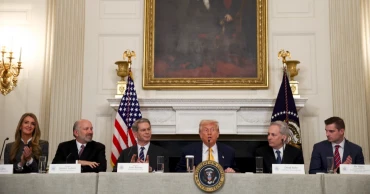
Trump vows support for crypto industry at White House summit
President Donald Trump said Friday he’s committed to making the US a world leader in cryptocurrencies as industry leaders heaped praise on him for reversing what they said had been unfair attacks on digital assets by the previous administration.
“I thought it was very important that we stay in the front of this one,” Trump said at the first-ever White House “Crypto Summit.”
A former crypto-skeptic, Trump has warmly embraced an industry that’s shown him significant love in return and spent heavily to help him win last year’s election.
“It’s truly wonderful to see how things have changed and how the pendulum has swung back,” Cameron Winklevoss, the co-founder of the crypto exchange Gemini, told Trump.
The summit included crypto company executives, cabinet officials and lawmakers, many of whom took turns raving about Trump’s leadership on digital assets. The emboldened industry said it was unfairly treated by the Biden administration and helped Trump and other Republicans score wins in the last election.
Trump reiterated his eagerness to help the crypto industry with friendly legislation and light-touch regulations.
Google leans further into AI-generated overviews for its search engine
Friday’s summit was the latest in a series of actions the new Trump administration has taken to try and boost the crypto industry. Notably, that’s included the Securities and Exchange Commission dropping several enforcement actions against large crypto companies, including those whose leaders were at Friday’s summit.
On Thursday, Trump signed an executive order establishing a “Strategic Bitcoin Reserve,” which essentially bars the US government from selling bitcoin – currently valued at about $17 billion – it has acquired through criminal and civil asset forfeiture.
The order also allows the Treasury and Commerce Departments to come up with “budget-neutral” plans for the government to acquire additional bitcoin, though no details of what those plans might look like have been released.
The order is a significant boost for bitcoin’s credibility and legitimacy. The oldest and most popular cryptocurrency, bitcoin has gone from an experiment by libertarian cryptography enthusiasts to an asset worth $1.7 trillion in less than two decades.
“Bitcoin is special,” said David Sacks, the Trump administration’s “crypto czar,” told reporters Friday.
Trump’s order also creates a “Digital Asset Stockpile,” where the government will hold seized cryptocurrencies other than bitcoin. On Sunday, Trump sent crypto prices on a short-lived surge after a surprise announcement that he wanted the government to hold lesser-known cryptocurrencies XRP, solana and cardano.
It’s unclear why Trump named those specific cryptocurrencies and not others. His announcement caused a stir in the crypto community about whether the government would pick winners and losers among various types of cryptocurrencies.
Yesha Yadav, a professor at Vanderbilt Law School, said it’s clear the Trump administration wanted to avoid getting dragged into that kind of fight with the way the executive order was worded.
“It’s unsurprising that the Trump EO from yesterday has been quite neutral,” she said.
Trump’s foray into crypto has included backing a personal meme coin and other ventures to enrich himself and his family. Those moves have drawn swift criticism from Democrats and even some crypto enthusiasts who support Trump.
Sacks told reporters Friday that Trump’s personal crypto-related projects were “irrelevant” to the administration’s work related to the industry. That work, Sacks said, was focused on making the US the world capital in crypto through fair and clear regulations that promote innovation while still protecting investors.
Sacks added his role was not to try and convince Americans to buy crypto.
“You should do your homework because this is a very volatile industry,” Sacks said. “It’s not for everyone.”
1 year ago

Siemens announces $285 million investment in US manufacturing
Siemens plans to invest $285 million in manufacturing in the United States, the tech company said Thursday, including two new facilities in California and Texas.
The U.S. is the largest market for the company. The recent investments in the Siemens' U.S. manufacturing footprint and the planned acquisition of Altair, a Michigan-based software company, mark more than $10 billion in investment in the U.S.
“We believe in the innovation and strength of America’s industry. That’s why Siemens has invested over $90 billion in the country in the last 20 years. This year’s investment will bring this number to over $100 billion," Roland Busch, president and CEO of Siemens AG, said in a statement. “We are bringing more jobs, more technology and a boost to America’s AI capabilities.”
Siemens’ announcement comes as chip giant Taiwan Semiconductor Manufacturing Co. said it plans to invest an additional $100 billion in the U.S., on top of $65 billion in investments the company had previously said it would make. That investment will be for three more chip manufacturing plants, along with two packaging facilities, in Arizona.
Google leans further into AI-generated overviews for its search engine
Siemens said it plans to open two manufacturing facilities for electrical products in Fort Worth, Texas, and Pomona, Calif. The company said it expects its latest investment to create more than 900 skilled manufacturing jobs, with the equipment produced in those factories supporting the U.S. commercial, industrial and construction sectors. The move will also allow the company to power AI data centers.
1 year ago
Google leans further into AI-generated overviews for its search engine
Google is updating its ubiquitous search engine with the next generation of its artificial intelligence technology as part of an effort to provide instant expertise amid intensifying competition from smaller competitors.
The company announced Wednesday that it will feed its Gemini 2.0 AI model into its search engine so it can field more complex questions involving subjects such as computer coding and math.
As has been the case since last May, the AI-generated overviews will be placed above the traditional web links that have become the lifeblood of online publishers dependent on traffic referrals from Google's dominant search engine.
Google is broadening the audience for AI overviews in the U.S. by making them available to teenage searchers without requiring them to go through a special sign-in process to see them.
The stage is also being set for what could turn out to be one of the most dramatic changes to the search engine's interface since Google co-founders Larry Page and Sergey Brin started the company in a Silicon Valley garage during the late 1990s.
Google is going to begin a gradual rollout of an “AI mode” option that will result in the search engine generating even more AI overviews. When search is in AI mode, Google is warning the overviews are likely to become more conversational and sometimes head down online corridors that result in falsehoods that the tech industry euphemistically calls “hallucinations.”
“As with any early-stage AI product, we won’t always get it right,” Google product vice president Robby Stein wrote in a blog post that also acknowledged the possibility “that some responses may unintentionally appear to take on a persona or reflect a particular opinion.”
Which phones are getting One UI 7 first and when
More stringent guardrails are supposed to be in place to prevent AI mode from steering people in the wrong direction for queries involving health and finance.
The need for additional fine tuning is one reason Google is initially only offering AI mode in its experimental Labs section, and only subscribers to its $20-per-month Google One AI Premium will be allowed to test it out at first.
But these tests almost always result in the technology being released to all comers — a goal that Google is pursuing in response to AI-powered search engines from ChatGPT and Perplexity.
Google's amped-up usage of more sophisticated AI overviews is likely to amplify worries that the summaries will make web surfers even less likely to click on links to take them to sites with useful information on the topic.
Those traffic referrals are one of the main ways that online publishers attract the clicks needed to sell the digital ads that help finance their operations.
Google executives insist AI overviews are still driving traffic to other sites by driving up people's curiosity so they engage in more queries to learn more, resulting in more clicks to other publishers.
But those reassurances haven't placated publishers who believe that Google will be the main beneficiary of AI overviews, further enriching an internet empire that already generates more than $260 billion in annual ad revenue.
The expanded use of AI overviews also could expose Google to more allegations that it is abusing the power of a search engine that a federal judge last year found to be an illegal monopoly in attempt to maintain its position as the internet's main gateway.
The U.S. Justice Department, which filed the monopoly claims against Google in 2020, is now proposing a partial breakup of the company that would include the sale of its Chrome browser as part of its punishment. The hearings on the proposed penalties against Google, which may include digging deeper into its use of AI, are scheduled to begin next month in Washington D.C.
Online educational online service Chegg already has amplified on that monopoly case with a lawsuit filed last month in the same Washington court accusing Google of improperly cribbing information from its site to present in its AI Overviews. Google has denied the allegations.
1 year ago
Which phones are getting One UI 7 first and when
The wait for Samsung’s latest UI update, One UI 7, which debuted on Jan. 22, 2025, with the Galaxy S25 series, extends to April. Bringing a complete overhaul in design and features, the new One UI will showcase Samsung’s futuristic take on user interfaces. Let’s dig into all the features packed into One UI 7 and its rollout schedule for major series and models.
What is One UI 7 Update?
One UI 7 is Samsung’s top-of-the-line user interface upgrade kneaded atop Android 15—the latest version of Google’s operating system. The beta program of One UI 7 kicked off on Dec. 5, 2024, providing access to users from several countries, including the United States, South Korea, and Germany, in order to rake feedback and evolve into a stable version.
People got excited, anticipating an imminent disburse, when the Galaxy S25 and A06 5G series and several rebrands, such as the Galaxy M06 5G and F06 5G, launched with pre-installed One UI 7. But the hope slumped in February when Samsung released the fourth beta upgrade and prolonged its silence about a mass dispense.
Adding insult to injury, Google announced Android 16’s release date. With One UI 7’s stalled release, Samsung’s older users are now fretting over an even longer wait for One UI 8. To their condolence, Samsung is preaching its effort to offer a freshly realised user interface as the reason for the delay.
Read more: Samsung Galaxy M16 5G: Elevating the budget-friendly experience
How Does One Ui 7 Stand Out?
One UI 7 is a massive overhaul over the previous versions to reframe and reshape the way users navigate Samsung devices. It will be distributed across all device genres: tabs, smartphones, and TVs, bolstering synchronised performance.
Here is the long list of all the primary UI tweaks brought by One Ui 7:
Redesigned User Interface
One UI 7 unveils a simplified interface featuring a new control centre, revamped notification panel, and a vertically scrolling app drawer. These changes promote intuitive navigation and a cleaner aesthetic, enhancing user interaction by making essential functions more accessible and reducing visual clutter.
Now Bar
The Now Bar, positioned at the bottom of the screen, aggregates real-time activities such as music playback, recording, and stopwatch functions. This feature offers users immediate access to ongoing tasks, streamlining multitasking and reducing the need to switch between applications.
Read more: Top Smartphones Launching in March 2025: Flagship & Budget Models to Watch
Now Brief
Leveraging artificial intelligence, Now Brief provides users with a daily summary, including schedules, weather updates, and relevant notifications. This personalized overview aids in efficient daily planning and ensures that important information is readily available at a glance.
AI Writing Assistant
The updated AI writing assistant offers advanced tools for text correction, summarisation, and content generation across various applications. This enhancement facilitates more efficient communication, aiding users in drafting emails, messages, and documents with greater accuracy and speed.
Call Transcription
Integrated AI capabilities now enable real-time call transcription, converting spoken words into text without the need for third-party applications. This feature is particularly beneficial for users who prefer reading over listening or need transcripts for reference purposes.
Camera App Overhaul
The camera application has been reorganized to provide a more intuitive layout, allowing users to focus on capturing images without distraction. Enhanced previews and streamlined access to shooting modes contribute to a more seamless photography experience.
Read more: vivo Y29 4G Review: What’s special about this budget-friendly phone?
Audio Eraser
Audio Eraser allows users to remove background noise or emphasise specific audio tracks within videos. This feature enhances media editing capabilities directly on the device, eliminating the need for specialised software and improving the quality of user-generated content.
Security Features
One UI 7 introduces robust security measures, including theft protection, auto-blockers, and a new biometric authentication system for sensitive settings. These further safeguard user data and device integrity, providing peace of mind in an increasingly digital world.
USB Connection Blocking
A new security feature allows users to block USB connections, preventing unauthorised access and data transfers. This measure is particularly useful in protecting devices from potential security threats when charging in public areas.
Read more: itel S25 Ultra Review: Budget-Friendly Phone with AMOLED Display, Reliable Battery, and More
Adaptive Charging
The adaptive charging feature intelligently adjusts charging speed based on usage patterns, preserving battery health and extending device longevity. By learning user habits, the system ensures that the battery is charged optimally, reducing wear over time.
Notification Shade
The notification shade has been revamped for better organization and readability, allowing users to manage alerts more efficiently. Grouped notifications and clearer layouts contribute to a more streamlined experience.
Enhanced Widgets
Widgets have been updated to offer more customization and functionality, enabling users to tailor their home screens to better suit their needs. This enhancement allows for a more personalized and efficient interface.
Read more: iPhone 16e Review: Budget-Friendly Apple Experience with Premium Features
Improved Connected Device Capabilities
One UI 7 modifies connectivity features, making it easier to manage and control connected devices from a centralized hub. This improvement simplifies the user experience in smart home environments.
AI-Powered Interpreter
The integrated AI interpreter facilitates real-time translation during conversations, breaking language barriers and promoting seamless communication. This feature is handy for travellers and multicultural interactions.
Gemini Live Integration
Gemini Live allows users to perform natural language queries, enhancing the device's ability to understand and respond to complex requests. This integration represents a significant step toward more intuitive human-device interactions.
Read more: Kieslect Pura Reno Review: A Compact Smartwatch for Women
Which smartphones are getting One UI 7 first update, and when
A leaked photo from the Samsung workshop veils out the One UI 7’s release dates in major models and devices. The rollout will begin with the Galaxy S24, Galaxy S24+, Galaxy S24 Ultra, the Galaxy S24 FE, the Galaxy Z Flip6, and Galaxy Z Fold6 on Apr. 18, 2025.
The Galaxy S23 family, Galaxy Z Flip5 and Z Fold5, and the Galaxy A54 will follow the stream on April 25.
The update for the Galaxy S23 FE, the Galaxy S22 series, the Galaxy Z Fold4 and Z Flip4, and the Galaxy A34, Galaxy A33, and Galaxy A53 will come almost a month later, on May 16.
Read more: iPhone 16e Review: Budget-Friendly Apple Experience with Premium Features
The Galaxy S21 series and the Galaxy Z Flip3 and Z will be the last models to get the One UI 7 update on May 23.
Verdict
Samsung’s mysterious delay in releasing the One UI 7 update has triggered mixed reactions among users. New users are excited about the refurbished user interface and features, while older customers are still holding their breath for the update. The new UI has a reimagined design with several AI functionalities and revamped older features. However, with Google’s Android 16 release date drawing near, Samsung must scramble to ensure complete disbursement before June.
Read more: OPPO Reno 13F 5G Review: A Stylish Powerhouse or Just Another Mid-Range Phone?
1 year ago