tech-news
Content creators respond to TikTok's uncertain future in the US
TikTok content creators who make a living promoting their businesses and personal brands on the app were afraid Sunday that they would have to find new ways to engage consumers and make money as the app's future in the United States remained uncertain.
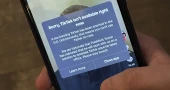
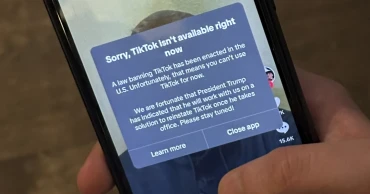
TikTok told U.S. users that it was beginning to restore service just hours after the popular video-sharing platform went dark in response to a federal ban, which President-elect Donald Trump said he would try to pause by executive order on his first day in office.
Some users reported Sunday that the app was working again, but it remained unavailable for download in Apple and Google’s app stores. Others remained locked out of accessing their profiles and the communities they had built online.
Read: Xiaomi Redmi Turbo 4 Review: Is It a Value-for-money Midranger?
Here's how content creators are reacting:
Esthetician mourns her online community
On a typical morning, esthetician and social media personality Lee Zavorskas scrolls on TikTok while she sips coffee. Sunday morning was different – she scribbled a to-do list instead, which included playing with her cats and dog and plotting how to bolster her presence on other platforms like YouTube since TikTok went dark for her Saturday night.
“I’m a 58-year-old content creator that found a seat at the table that’s not available on Instagram,” Zavorskas said.
While Zavorskas has more followers on Instagram, she found a large crowd of people over the age of 40 on TikTok, making it easier to build her audience. She held out some hope that she would be able to return to the community she found on the app.
“It’s like going to your favorite restaurant and ordering your favorite food, and they’re like, ‘You know what? We took it away,’” she said.
Small business owner fears for the future
Tiffany Cianci, a Maryland-based content creator who owns small businesses, stopped posting on Twitter and Instagram and cut her advertising with Meta and Google out of frustration.
“It’s TikTok or nothing for me,” she said.
Read more: OpenAI, Retro Biosciences working to extend ‘human lifespan’
She thinks lawmakers unfairly punished TikTok for succeeding alongside its profitable competitors. And they played “political football” with an app that millions of small businesses rely on to survive, she said.
“I spoke to small businesses in the last three days that have sobbed on my livestreams, afraid they’ll have to lay their employees off tomorrow morning,” Cianci said. “They are so afraid because they have other people’s lives in their hands.”
Beauty creator shifts to YouTube
Tiffany Watson, a 20-year-old beauty content creator, had been making videos since the days of Musical.ly, and was just starting to figure out the kind of content she was passionate about when TikTok went dark.
“The community on TikTok is like nothing else, so it’s weird to not have that anymore,” she said.
With spare time on her hands, Watson plans to focus on bolstering her presence on Instagram and YouTube. She also wants to devote more time to school as the psychology major and criminal justice minor prepares to graduate from Wingate University in North Carolina and enter “the real world." But being a content creator remains her “main dream," she said.
If Trump lifts the ban, Watson plans to return to TikTok, but said she will “probably be more tuned into my YouTube since this ban has kinda spooked me.”
1 year ago
Top Free Prompt Engineering Courses Online in 2025
Prompt engineering has become a critical skill in the age of artificial intelligence (AI), empowering users to create clear and effective instructions for generating accurate outputs. To meet growing demand, several online platforms are offering free online prompt engineering courses that teach you how to unlock the full potential of AI tools.
Best Free Online Prompt Engineering Courses
.
ChatGPT for Everyone by OpenAI and Learn Prompting
This 1-hour beginner-level course, led by Sander Schulhoff and Shyamal Anadkat, introduces the fundamentals of ChatGPT and generative AI. It explains how ChatGPT works, its diverse applications, and techniques for crafting effective prompts. The syllabus covers using ChatGPT as a personal assistant, enhancing productivity, and creating content.
Participants will learn prompt-writing strategies, including role assignment while understanding ethical considerations and ChatGPT's limitations. Real-world case studies further enhance the learning experience. The course is free, self-paced, and offers a certificate of completion through Learn Prompting Plus to showcase your skills.
Read more: 10 Best Free AI Image Generators in 2025
Course Link: https://learnprompting.org/courses/chatgpt-for-everyone
Free Prompt Engineering Course by Simplilearn
This 1-hour beginner-level course offers a free and comprehensive introduction to AI, NLP, and prompt engineering. It covers the fundamentals of AI and NLP, the concept and applications of prompt engineering, types of prompts, and techniques for creating effective and engaging prompts.
Taught by industry experts, the course combines theory with practical examples, real-world case studies, and hands-on exercises to enhance learning. Upon completion, participants receive a certificate, which can be shared on LinkedIn. Perfect for AIML engineers, chatbot developers, and data scientists, this course equips learners to design and optimize prompts for conversational AI systems.
Read more: 12 Most In-Demand Tech Skills for 2025: Stay Ahead in the Job Market
Course Link: https://www.simplilearn.com/prompt-engineering-free-course-skillup
Prompt Engineering for Everyone by IBM
Led by Antonio Cangiano, IBM’s AI specialist, this 5-hour beginner-level course offers a comprehensive introduction to prompt engineering. It uses notes, audio recordings, and hands-on labs to teach the art of crafting compelling prompts. The course covers foundational techniques, such as Persona and Interview Patterns, and advanced approaches like Chain-of-Thought and Tree-of-Thought prompting.
Learners will also explore bias mitigation, verbosity control, and IBM's Watsonx Prompt Lab. An optional final project allows participants to apply their knowledge. This free course, offering a certificate, is perfect for professionals aiming to revolutionize their interactions with AI systems.
Course Link: https://community.ibm.com/community/user/watsonx/blogs/nickolus-plowden/2023/10/15/learn-to-build-with-ai-series
Read more: 10 Best Free AI Infographic Generators for 2025: Transform Ideas into Stunning Visuals
Essentials of Prompt Engineering by Coursera
This 1-hour beginner-level course by Amazon Web Services introduces the foundational concepts of prompt engineering. It covers crafting, refining, and optimizing prompts, with techniques such as zero-shot, few-shot, and chain-of-thought prompting. Participants will also learn to identify and mitigate potential risks in prompt engineering.
A hands-on assignment allows learners to apply the skills acquired. Offered via a free trial with an optional $49/month subscription, the course includes a certificate upon completion. Updated in July 2024, this course is ideal for those interested in AI/ML and generative AI, providing in-demand skills for a competitive edge.
Course Link: https://www.coursera.org/learn/essentials-of-prompt-engineering
Advanced Prompt Engineering by Learn Prompting
Designed for intermediate to advanced learners, this 1-week course led by Sander Schulhoff provides in-depth training on advanced prompt engineering techniques. It explores concepts like in-context learning, chain-of-thought (CoT) prompting, problem decomposition, and self-criticism methods to craft effective prompts for complex AI applications.
Read more: How to Detect an AI-generated Image
Learners will enhance their understanding of AI tools like ChatGPT, DALL·E 3, GPT 3.5, and GPT 4. Taught by a renowned AI expert, the course combines theory with practical strategies, offering a certificate upon completion. Available with a free trial, access to all paid courses is $39/month via Learn Prompting Plus.
Course Link: https://learnprompting.org/courses/advanced-prompt-engineering
Prompt Engineering Specialization by Vanderbilt University on Coursera
Led by Dr. Jules White, this beginner to intermediate-level specialization spans 1 month (10 hours/week) and teaches participants to use generative AI for automation, productivity, and intelligence augmentation. The course includes three modules: composing queries for ChatGPT, advanced data analysis, and trusted generative AI.
Participants will gain hands-on experience in crafting prompts, automating tasks, and applying AI tools to real-world scenarios like social media content creation, data visualization from Excel, and PDF information extraction. The course is free with a trial and offers a certificate from Vanderbilt University upon completion.
Read more: Best Text-to-Speech Software
Course Link: https://www.coursera.org/specializations/prompt-engineering
Prompt Engineering and Advanced ChatGPT on edX
The Advanced ChatGPT course is an intermediate-level program designed to teach advanced techniques for using ChatGPT effectively. Spanning one week with 1-2 hours of learning per week, the course covers critical areas such as advanced prompting methods to generate accurate and engaging responses.
Learners explore how ChatGPT can be applied across various industries like healthcare, finance, education, and customer service. The course also addresses the integration of ChatGPT with tools like NLP and ML for developing sophisticated chatbot applications. Additionally, it discusses ChatGPT's limitations and how to mitigate them to build more robust applications. This self-paced course is free with limited access, but a certificate can be earned for $40.
Course Link: https://www.edx.org/learn/computer-programming/edx-advanced-chatgpt
Read more: Free Online AI Courses by Harvard University from Basic to Advanced Levels
Takeaways
These free online prompt engineering courses offer excellent opportunities to master AI tools like ChatGPT and enhance your skills in crafting effective prompts. With courses catering to different levels, from beginners to advanced learners, they provide valuable insights, hands-on exercises, and certification options to help you excel in AI applications and improve productivity in various industries.
1 year ago
TikTok users grapple with uncertainty, hope and frustration as ban approaches
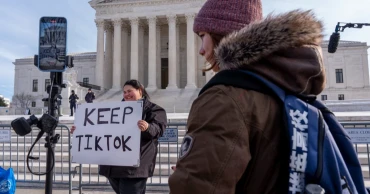
The U.S. moves closer to a potential TikTok ban as the Supreme Court upholds a law halting new downloads of the app starting Sunday. However, questions remain about how the ban will be enforced and its implications, leaving millions of users, including content creators and small business owners, in limbo.
Comedian and influencer Terrell Wade, with 1.5 million TikTok followers, describes the looming ban as a source of chaos and uncertainty. “I really don’t know what to believe,” he said. The ruling demands TikTok’s China-based parent company sell the platform before Jan. 19, citing national security concerns, but a sale appears unlikely before the deadline.
Biden declines to enforce TikTok ban, leaves decision to Trump
The Biden administration, while maintaining the need for a sale, indicated it wouldn’t enforce the ban immediately, leaving the task to President-elect Donald Trump, who has pledged to preserve access to TikTok. However, Trump’s approach after his inauguration remains unclear.
If implemented, the ban will stop new downloads and updates, rendering the app eventually unusable, though it won’t vanish from existing devices immediately. For many creators, this prospect threatens livelihoods and forces them to adapt to other platforms.
Kelsey Chickering, a principal analyst at Forrester, notes the ban is a stark reminder that social media platforms can rise and fall, disrupting the lives of influencers and businesses reliant on them.
Los Angeles-based content creator Janette Ok says TikTok is central to her work, helping her secure brand deals and promote her art. The app, she says, has been life-changing. “It’s a beautiful app that’s brought people together,” she said, calling the ban disheartening and “un-American.”
Small business owners share similar fears. Jordan Smith, owner of The Elevated Closet in Austin, Texas, and Alejandro Flores-Munoz, a Denver-based caterer, credit TikTok for finding niche audiences and growing their businesses. Losing the platform, they say, will have a significant impact on their operations.
Ruben Trujillo, who markets coffee-themed cards through TikTok, is frustrated with the shifting political dynamics. “Small business owners are told to be creative and build from the ground up, and now it feels like those opportunities are being taken away,” he said.
As Sunday’s deadline looms, users like Wade and Ok remain hopeful for a last-minute reprieve, though uncertainty continues to overshadow the future of TikTok in the U.S.
1 year ago
Biden declines to enforce TikTok ban, leaves decision to Trump
President Joe Biden will not implement a TikTok ban scheduled to take effect just before he leaves office, according to a U.S. official. Instead, the app's future now depends on President-elect Donald Trump.
Congress passed a law last year, signed by Biden, requiring TikTok's Chinese parent company, ByteDance, to divest its U.S. operations by Jan. 19, a day before the presidential inauguration. However, the outgoing administration has decided to defer enforcing the law and any associated ban to Trump.
Anonymously discussing the Biden administration’s perspective, the official revealed that Trump, who once advocated banning TikTok, has since promised to keep it operational in the U.S. However, his transition team has not clarified their approach to achieving this.
TikTok CEO Shou Zi Chew is expected to attend Trump’s inauguration, potentially signaling the incoming administration’s intent to prevent the app’s shutdown. National security adviser-designate Mike Waltz told Fox & Friends on Thursday that the federal law permits an extension of the divestment deadline if viable negotiations are underway.
The debate over TikTok has bridged party lines. Senate Democratic Leader Chuck Schumer stated he discussed the issue with Biden, advocating for more time to secure an American buyer and protect the livelihoods of influencers reliant on the platform. However, Republican Senator Tom Cotton blocked a legislative effort to extend the deadline, arguing TikTok has had sufficient time to comply.
“Tiktok is a Chinese Communist spyware app that exploits children, harvests data, and spreads propaganda,” Cotton remarked.
Meanwhile, TikTok’s legal challenge to the divestment law was recently heard by the Supreme Court, where justices appeared inclined to uphold the statute. The law cites national security concerns as grounds for ByteDance’s divestiture or TikTok’s ban in the U.S.
“If the court upholds the law, President Trump is clear: TikTok is a valuable platform, but he will prioritize protecting Americans’ data,” Waltz said. He suggested the administration would work toward a deal to keep the app functional.
In another development, Pam Bondi, Trump’s nominee for attorney general, avoided committing to upholding a TikTok ban during her Senate hearing.
Trump has shifted his stance on TikTok since his initial attempts to ban it during his first term, now praising its role in engaging younger voters during his campaign. He has even credited the platform for boosting his appeal to younger demographics, particularly male voters, and pledged to safeguard TikTok during his campaign.
1 year ago
Google signs deal with AP to deliver up-to-date news through its Gemini AI chatbot
Google says its artificial intelligence chatbot Gemini will deliver up-to-date news from The Associated Press in the tech giant's first such deal with a news publisher.
Google announced the deal in a blog post Wednesday, saying that AP “will now deliver a feed of real-time information to help further enhance the usefulness of results displayed in the Gemini app.”
AP's chief revenue officer, Kristin Heitmann, said it is part of a longstanding relationship with the search giant “based on working together to provide timely, accurate news and information to global audiences.”
"We are pleased Google recognizes the value of AP’s journalism as well as our commitment to nonpartisan reporting, in the development of its generative AI products,” Heitmann said in a written statement.
Neither company has disclosed how much Google will pay AP for the content. Google declined further comment on how it would present information from AP’s journalism and whether it would credit the news organization or link back to the original articles.
Gemini, formerly known as Bard, has been Google's answer to the demand for generative AI tools that can compose documents, generate images, help program code or perform other work.
AP has sought to diversify its revenue stream in recent years and in 2023 signed a deal with OpenAI, maker of ChatGPT, enabling the AI company to license AP's archive of news stories to train future versions of its AI systems. The financial terms of that deal were also not disclosed, but it sparked an increasing number of similar partnerships between OpenAI and news organizations around the world.
At the same time, news organizations have expressed concerns about AI companies using their material without permission — or payment — and then unfairly competing with them for advertising revenue that comes when people use a search engine or click on a news website. The New York Times and other outlets have sued OpenAI and other AI companies for copyright infringement and, on Tuesday, presented their arguments before a New York federal judge.
Tech companies have argued that freely taking publicly available text from the internet to teach their AI models constitutes a “fair use” under U.S. copyright laws. But faced with legal challenges and a technology that is prone to spouting errors known as hallucinations, AI companies have also sought to license high-quality data sources to improve the performance of their products.
Read: Trump adviser says president-elect exploring options to 'preserve' TikTok
Publishers are at a disadvantage as tech companies integrate AI-generated summaries of information into an array of online services, but such deals are also beneficial in giving news outlets much-needed revenue and improving the overall quality of information that people are seeing online, said Alex Mahadevan, director of The Poynter Institute’s Mediawise, a digital media literacy initiative.
“You either sign a deal with an AI company and work with them and kind of take what they offer for all of your hard work, all of your articles, all of your data, or you fight, the way that The New York Times and others are trying to do in court,” he said.
The AP prides itself on being an unbiased news source and offers news stories, pictures, video, audio and interactive content direct to consumers via the website APNews.com. But the bulk of its business comes from selling its journalism to organizations that use it.
The AP has experienced a precipitous loss in revenue from newspaper customers, including losing Gannett and McClatchy -- two of the largest traditional U.S. newspaper publishers -- last year. The AP has increasingly secured other sources of revenue, including philanthropic funding, but is still hurt by the news industry’s overall woes.
“The AP has copious amounts of data and text, which are the equivalent of gold in terms of training advanced generative AI models,” said Sarah Kreps, a professor and director of Cornell University's Tech Policy Institute. While such deals might help offset some revenue losses, they also present dangers.
Read more: Biden’s semiconductor law to boost US chip output at high cost, says report
“By outsourcing their value to tech companies, news outlets may cede control over how their work is used and monetized,” Kreps said by email. “Instead of building stronger, direct relationships with readers, they risk becoming suppliers of raw material for platforms that then commodify and repurpose their journalism.”
1 year ago
Trump adviser says president-elect exploring options to 'preserve' TikTok
Trump’s pick for national security adviser, Florida Rep. Mike Waltz, said in an interview on Wednesday that the president-elect is exploring options to “preserve” TikTok.
Waltz made the comment when Fox News anchor Bret Baier asked him about a report from The Washington Post that said Trump was considering an executive order to suspend enforcement of a federal law that could ban the popular platform nationwide by Sunday.
Last week, the Supreme Court heard oral arguments in a legal challenge to the statute brought by TikTok, its China-based parent company ByteDance, and users of the app. The Justices seemed likely to uphold the law, which requires ByteDance to divest TikTok on national security grounds or face a ban in one of its biggest markets.
“If the Supreme Court comes out with a ruling in favor of the law, President Trump has been very clear: Number one, TikTok is a great platform that many Americans use and has been great for his campaign and getting his message out. But number two, he’s going to protect their data,” Waltz said.
US TikTok users flock to Chinese app Xiaohongshu as TikTok ban looming
“He’s a deal maker. I don’t want to get ahead of our executive orders, but we’re going to create this space to put that deal in place," he added.
Separately on Wednesday, Pam Bondi, Trump’s pick for attorney general, dodged a question during a Senate hearing on whether she’d uphold a TikTok ban.
Trump has reversed his position on the popular app, having tried to ban it during his first term in office over national security concerns. He joined TikTok during his 2024 presidential campaign and his team used it to connect with younger voters, especially male voters, by pushing content that was often macho and aimed at going viral. He pledged to “save TikTok” during the campaign and has credited the platform with helping him win more youth votes.
1 year ago
Biden’s semiconductor law to boost US chip output at high cost, says report
A sweeping 2022 law, touted by President Joe Biden as a way to revive US manufacturing of semiconductors and reduce the country’s reliance on foreign-made computer chips, will “sharply increase production’’ of semiconductors in the United States.
But it will do so at a high cost and might not deliver the best bang for the buck, concludes a report out Wednesday by an economic think tank in Washington.
Researchers at the Peterson Institute for International Economics calculated that the $280 billion CHIPS and Science Act will create about 93,000 construction jobs as chip factories go up in the United States and 43,000 permanent jobs once they’re in operation.
However, the government subsidies behind the expected chip manufacturing boom mean that each job created will cost taxpayers about $185,000 a year – twice the average annual salary of US semiconductor employees, the Peterson report found.
SEC sues Elon Musk who allegedly kept hidden Twitter ownership on time before buying it
“More production might not provide the best security for the money,’’ wrote researchers Gary Hufbauer and Megan Hogan.
The Peterson reports notes that in passing the CHIPS Act Congress “did not consider alternative ways’’ of spending billions of dollars to ensure the US had adequate chip supplies. Other options could have included creating a chip stockpile run by the Federal Emergency Management Agency or providing financial incentives for US chip users and foreign chip producers to keep bigger inventories of semiconductors in the United States.
Biden touted and Congress passed the CHIPS Act after semiconductor supplies ran short following COVID-19 lockdowns. The shortages disrupted production of automobiles and other products.
The Biden administration also viewed ramping up made-in-America chip production as a national security issue because it would reduce US reliance on foreign imports of chips, which are used by the military as well as private companies.
A study by the Boston Consulting Group and the Semiconductor Industry Association has found that America’s share of world chip production capacity, measured by volume and not dollar value, fell from 37% in 1990 to just 10% in 2022.
Policymakers are alarmed that US industry depends heavily on chips manufactured in Taiwan, a supply that could be threatened if China launches military strikes intended to force the autonomous island to reunite politically with the Chinese mainland.
The giant Taiwan Semiconductor Manufacturing Co., which supplies chips to Apple and Qualcomm, among others, is investing heavily in chip plants in Arizona.
Biden's administration proposes new rules on exporting AI chips, provoking an industry pushback
The CHIPS Act also aims to boost the US share of the world's advanced chips to 20% by 2030 from none today. But the Peterson report argued that such a leap would require additional government subsidies and overcoming shortages of skilled labor and electricity. It also noted that South Korea and Taiwan are offering their own chipmaking giants generous tax credits to protect their lead in the market. Asking whether the US can meet that 20% goal, the Peterson researchers conclude: "Maybe.''
It’s unclear whether the incoming Trump administration will scrap or make changes to the CHIPS Act. During the election campaign, President-elect Donald Trump had argued that tariffs on foreign chips – not subsidies to encourage US production – would have done more to bring semiconductor plants to the United States.
But the Peterson researchers noted that in the past European Union tariffs had failed to revive chip production in Europe. “There is no compelling reason why a comparable tariff would prove more successful for the United States,’’ they wrote.
1 year ago

Top Virtual Reality Trends of 2025: The Future of VR
Virtual reality (VR) is no longer just a futuristic concept—it's transforming industries and redefining how we interact with technology. As immersive technologies like VR, augmented reality (AR), and mixed reality (MR) continue to evolve, 2025 is poised to bring groundbreaking advancements. From revolutionizing gaming and education to reshaping healthcare and retail, VR is set to dominate the tech landscape. Here's a look at the top trends shaping the future of VR this year.
Best VR Trends and Predictions for 2025 & Beyond
The world has already witnessed the remarkable potential of virtual reality (VR) applications and devices, which can transport users into immersive virtual environments where they interact with digital objects. In 2025, VR technology is expected to become even more accessible, enhancing various aspects of everyday life. Here’s what we can expect this year:
Immersive Classroom Applications
VR is going to revolutionize our ways of learning things and the traditional education system. Applications featuring virtual classrooms and training environments will appear where students and learners can study and train themselves using different virtual materials. History, physics, and geography lessons will come alive to provide learners with real-time references. Doctors, electricians, and bomb diffusers will perform critical operations in risk-free, virtual environments without worrying about messing up. It will make learning more engaging and effective.
Read more: Top 10 Medical Breakthroughs and Healthcare Innovations of 2024
Hyper-reality
Hyper-reality has been a phenomenal element of modern science fiction for the past centuries. It refers to a virtual place made with enhanced virtual reality technology that allows users to feel the sensory details of the place. That means users can touch, taste, smell, and see real-time interactive changes of different objects while being in the virtual realm. The immense potential of immersive technologies has enlivened the conceptual idea of hyper-realism and made it possible to achieve.
Social VR Platforms
Social VR platforms are shared virtual spaces where people can meet, talk, and interact with each other and get into virtual friendships. The technology sets to bring a new horizon to virtual reality, making it beyond a solo experience and creating scopes to share events and memories with friends. In 2025, these social VR platforms will be more streamlined for easier use and become popular among virtual nomads. Features like hosting parties, concerts, and ceremonies, joining them, taking photos, playing multiplayer games, and visiting spectacular places will turn these platforms into a mainstream lifestyle trend.
AI Integration
Artificial intelligence is becoming more prevalent in the virtual realm, making it incredibly interactive. VR platforms and applications are integrating AI to analyze user behaviors and patterns to offer a more personalized experience. Merging these technologies creates more dynamic layouts and provides more freedom to the users. Both technologies are set to undergo remarkable upgrades this year, projecting even more possibilities in their joint ventures in the future.
Read more: 12 Most In-Demand Tech Skills for 2025: Stay Ahead in the Job Market
Commercial Adoptions
VR will be more influential in the business world, promising futuristic solutions for managing, training, and communicating with clients, employees, and consumers. Stakeholders will be able to arrange meetings and training sessions within virtual environments. Customer service offered via VR sessions will transcend the traditional ways, ensuring a space-age customer experience. Following the uprising wave of VR integrations, commercial institutions will adopt the trend, promoting the future technology to their consumers.
Standalone Headsets
Meta released the first VR-powered standalone headset, Quest, back in 2019. The headset took the tech world by storm, striking people with awe with its incredible features and VR gaming options. In 2025, users are expecting to see more of these standalone headsets at different price ranges, with more powerful features. These headsets come with built-in chipsets to process every functionality without requiring any external support. Apart from Meta Quest, Apple Vision Pro is also popular for its smooth performance and durability. Apple may introduce a new version of Vision Pro, packing it with a sleeker design and more robustness.
Cloud Gaming
Cloud gaming platforms provide cross-device gaming experiences, drawing massive attention from gamers worldwide. However, only a few of such platforms are featuring VR games. This scenario may change in 2025 due to constant demands from gamers and the rising popularity of VR gaming. Several mainstream cloud game platforms have hinted about their immersion with VR headsets, and fans are hoping for 2025 to be the year of their dreams coming true.
Read more: 10 Best Free AI Infographic Generators for 2025: Transform Ideas into Stunning Visuals
VR Content
With the trending increase in active VR users, content creators are shifting their attention to making quality VR content. Many game developers have also announced that their next development game will be VR-supported. Till now, Resident Evil 4 is the only game from an acclaimed cult to be redesigned for Oculus Quest. However, games like Horizon Call of the Mountain, GTA San Andreas, and Just Dance are also under development to be VR-compatible. 2025 is about to bring a new era for VR content creators and consumers.
Conclusion
Virtual reality is an emerging technology with endless possibilities. Over the past few years, the technology has overcome its initial development phase. With the booming popularity of VR content, users are hopeful they will see major developments featuring and upgrading the power of immersive technologies in 2025.
Read more: 10 Best Free AI Image Generators in 2025
1 year ago

SEC sues Elon Musk who allegedly kept hidden Twitter ownership on time before buying it
The U.S. Securities and Exchange Commission has sued billionaire Elon Musk, saying he failed to disclose his ownership of Twitter stock in a timely manner in early 2022, before buying the social media site.
As a result, the SEC alleges, Musk was able to underpay “by at least $150 million” for shares he bought after he should have disclosed his ownership of more than 5% of Twitter’s shares. Musk bought Twitter in October 2022 and later renamed it X.
Musk started amassing Twitter shares in early 2022, and by March of that year, he owned more than 5%. At this point, the complaint says, he was required by law to disclose his ownership, but he failed to do so until April 4, 11 days after the report was due.
Musk's lawyer, Alex Spiro, said in a statement that the lawsuit “is an admission by the SEC that they cannot bring an actual case" since Musk has “done nothing wrong." He called the lawsuit a “sham.”
"As the SEC retreats and leaves office — the SEC’s multi-year campaign of harassment against Mr. Musk culminated in the filing of a single-count ticky tack complaint against Mr. Musk under Section 13(d) for an alleged administrative failure to file a single form — an offense that, even if proven, carries a nominal penalty," Spiro added.
Read: US TikTok users flock to Chinese app Xiaohongshu as TikTok ban looming
After Musk signed a deal to acquire Twitter in April 2022, he tried to back out of it, leading the company to sue him to force him to go through with the acquisition.
The has SEC said that starting in April 2022, it authorized an investigation into whether any securities laws were broken in connection with Musk’s purchases of Twitter stock and his statements and SEC filings related to the company.
Before it filed the lawsuit, the SEC went to court in an attempt to compel Musk to testify as part of an investigation into his purchase of Twitter.
The SEC's current chair, Gary Gensler, plans to step down from his post on Jan. 20 and it is not clear if the new administration will continue the lawsuit.
1 year ago
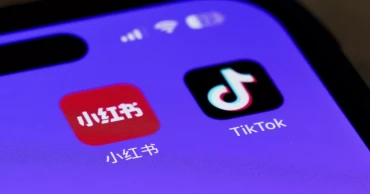
US TikTok users flock to Chinese app Xiaohongshu as TikTok ban looming
As the threat of a TikTok ban looms, U.S. TikTok users are flocking to the Chinese social media app Xiaohongshu – making it the top downloaded app in the U.S.
Some of the “TikTok refugees,” as they call themselves, say the TikTok alternative, a Chinese app, is being chosen in protest of the TikTok ban.
The U.S. Supreme Court is due to rule on a law that stipulates TikTok must be divested from its Chinese parent company ByteDance by Jan. 19 or face a ban in the U.S. over national security concerns.
After the justices seemed inclined to let the law stand, masses of TikTok users began creating accounts on Xiaohongshu, including hashtags such as #tiktokrefugee or #tiktok to their posts. Since Monday, Xiaohongshu has become the top downloaded free app on Apple’s App Store in the U.S.
Xiaohongshu, which in English means “Little Red Book” is a Chinese social media app that combines e-commerce, short video and posting functions.
The app has gained traction in China and other regions and countries with a Chinese diaspora such as Malaysia and Taiwan in recent years, racking up 300 million monthly active users, a majority of whom are young women who use it as a de-facto search engine for product, travel and restaurant recommendations, as well as makeup and skincare tutorials.
The #tiktokrefugee topic has racked up over 160,000 posts on Xiaohongshu, many of which are videos of American users introducing themselves and asking for tips on how to navigate the app, which they are calling “RedNote”.
Xiaohongshu did not immediately respond to a request for comment from The Associated Press.
Alexis Garman is a 21-year-old TikTok user in Oklahoma with nearly 20,000 followers. She joined Xiaohongshu on Tuesday after seeing others do the same. Garman said she is not particularly concerned about data privacy.
“What I experienced on (Xiaohongshu) so far has been really great and inviting,” said Garman, who has left two posts on the platform.
Read: TikTok’s future at US Supreme Court: Free speech vs security
“I like your makeup,” a Xiaohongshu user from Beijing comments one of her posts, and Garman thanks them in a reply. A user from the southwestern province of Sichuan commented “I am your Chinese spy … please surrender your personal information or the photographs of your cat (or dog).”
“TikTok possibly getting banned doesn’t just take away an app, it takes away jobs, friends and community,” Garman said. “Personally, the friends and bond I have with my followers will now be gone.”
Other American users who have joined Xiaohongshu have been outspoken about joining the app in protest of the possible TikTok ban.
An American user with the handle Definitelynotchippy made a video addressed to the Chinese users of Xiaohongshu, explaining why Americans are downloading the app.
“The reason that our government is telling us that they are banning TikTok is because they’re insisting that it’s owned by you guys, the Chinese people, government, whatever,” she said. “And they’re trying to make us think that you guys are bad.”
“A lot of us are smarter than that though so we decided to piss off our government and download an actual Chinese app,” she said. “We call that trolling … in short we’re here to spite our government and to learn about China and hang out with you guys.”
Chinese users on Xiaohongshu have so far welcomed American users, with some offering to teach them Chinese. Others have offered tips on navigating the Chinese internet, warning the new users not to mention or discuss anything considered politically sensitive as they may get censored. In some cases, Chinese students have asked the Americans for help with their English homework.
Like most apps and internet services in China, Xiaohongshu is subject to censorship. Platforms typically enforce censorship by deleting or shadowbanning content that Beijing deems politically sensitive. Large Western platforms, such as Google and Facebook, are blocked in China.
Though Xiaohongshu has seen an influx of users, it is not clear if the app could replace TikTok, which has created an ecosystem that allows for e-commerce and advertising. Before TikTok was under threat, the overwhelming majority of Xiaohongshu's users were Chinese, and the app, which lacks translation features, is not optimized for an international user base.
Even though U.S.-China tensions remain high over trade and national security, many Chinese and American Xiaohongshu users have pursued friendly cultural exchanges on the app. Those interactions range from live chat rooms to comments on posts.
A TikTok refugee who goes by the name Amanda posted a video on how happy she was in finding the Xiaohongshu app, saying that Chinese users have been welcoming. Under her post, a Chinese user comments: “We are not enemy, we are human beings (living) in one world!”
Read more: Small businesses brace themselves for potentially disruptive TikTok ban
“We also never … had a chance to communicate with you foreign guys directly sharing the same app or platform, so the (feeling is) mutual since you come on this app,” another says.
In a comment posted in Chinese, Amanda, the TikTok “refugee” said she would work on posting captions and subtitles in Chinese in the future.
“I am so happy to talk to Chinese people and learn about your culture and experiences,” she said.
1 year ago