tech-news

OPPO wins 2 international awards for innovation
OPPO has recently been honoured with two international awards in recognition of its innovation and industry influence.
OPPO Air Glass won silver in the AR category at the 2023 Edison Best New Product AwardsTM. OPPO was also named one of the 10 Most Innovative Asia-Pacific Companies of 2023 by business media Fast Company, according to a press release.
The awards were announced in Florida on 20 April.
Established in 1987 in honour of inventor Thomas Edison, the Edison Awards are among the most prestigious accolades in the world recognizing products, designs, and technologies that have made outstanding contributions to global innovation, said the release.
The Edison Awards are selected by a panel of over 3,000 business executives and academics on the four criteria of concept, value, delivery, and impact.
Alongside awards earned for product innovation, OPPO has also been named by Fast Company as one of the 10 Most Innovative Asia-Pacific Companies of 2023 in recognition of the technological innovation and sustainable impact of its Battery Health Engine, the release also said.
“Through its mission of ‘Technology for Mankind, Kindness for the World’, OPPO is dedicated to developing user-centric innovation that improves lives, communities, and the world,” it said.
At Mobile World Congress (MWC) 2023 in March, OPPO showcased its latest breakthroughs including the SUPERVOOC S power management chip, environment-friendly Zero-power Tags and OPPO’s self-developed MariSilicon Y flagship Bluetooth audio SoC.
“OPPO will continue to aim for even greater heights with its technology and products, providing high-quality services and excellent user experiences for people around the world,” the release added.
3 years ago

Huawei Announces Switch to MetaERP, Redefining Enterprises' Core Business Systems
Huawei announced it has replaced the legacy ERP system with its MetaERP system over which it has full control.
The Huawei hosted the MetaERP Award Ceremony titled "Heroes Fighting to Cross the Dadu River" with the aim to recognize the individuals and teams who made critical contributions to this project at the company's Xi Liu Bei Po Village Campus in Dongguan of China recently.
ERP (Enterprise Resource Planning) is the most critical enterprise management IT system. Huawei introduced the MRP (Manufacturing Resource Planning) II system in 1996 and later expanded to the ERP system with several iterative upgrades.
The old ERP system was the core system underpinning Huawei's enterprise operations and rapid development for more than 20 years. It supported Huawei's efficient business operations which generate hundreds of billions of dollars every year in more than 170 countries and regions across the world.
In 2019, the Huawei began facing increased external pressure and business challenges. The company decided to develop a completely self-controlled MetaERP system to replace the old ERP system. This has been the most extensive and complex transformation project Huawei has ever undertaken. Over the past three years, Huawei has invested significant resources and assigned several thousand people to this project while also working with industry and ecosystem partners to overcome related challenges.
This new, future-oriented, ultra-large-scale and cloud-native MetaERP system has already gone live by replacing the old ERP system.
MetaERP currently handles 100 percent of Huawei's business scenarios and 80 percent of its business volume.
MetaERP has already passed the tests of monthly, quarterly and yearly settlements while ensuring zero faults, zero delays and zero accounting adjustments.
Sabrina Meng, Huawei's Rotating Chairwoman and CFO, said, "Leaps in technology take a spirit of craftsmanship and years of experience. More importantly, it takes an open mind to drive leaps in the way we think. We wouldn't have been able to build MetaERP without the support of our partners. Innovation is only possible with an open mind, and thriving is only possible when we work together."
Huawei has complete and full-stack control over MetaERP which has been built with other Huawei systems like EulerOS and GaussDB.
Huawei has also worked with partners to incorporate advanced technologies such as cloud-native architecture, metadata-driven multi-tenant architecture and real-time intelligence into the MetaERP system, significantly improving service efficiency and operational quality.
Huawei's guiding principles are to build the simplest possible architecture with the best possible quality, delivering the best possible experience at the lowest possible costs. In a range of fields, including both ERP and PLM, Huawei will keep working with partners to build more efficient and secure core enterprise business systems that are not subject to any restrictions.
3 years ago
Microsoft reports boost in profits, revenue, as it pushes AI
Microsoft on Tuesday reported a 9% increase in profit for the January-March quarter, as growth in cloud computing sales helped bolster its plans to expand its use of artificial intelligence.
The company reported quarterly profit of $18.3 billion, or $2.45 per share, beating Wall Street expectations for earnings of $2.24 a share.
The software maker posted revenue of $52.9 billion in the period, its third fiscal quarter, up 7% from the same period a year ago. Analysts polled by FactSet expected Microsoft to post revenue of $51.02 billion for the quarter.
The quarter marked an ambitious push by Microsoft to capitalize on its investments in artificial intelligence and close partnership with San Francisco-based startup OpenAI with the February release of a new AI chatbot feature on its search engine Bing.
Also Read: Is Bing too belligerent? Microsoft looks to tame AI chatbot
Microsoft is also integrating similar AI tools into the cloud computing and software products it sells to big businesses and organizations, though it's not immediately apparent to what extent the AI features are playing a role in overall sales.
Microsoft’s personal computing business, centered on its Windows software, was widely expected to continue a deterioration that began last year due to economic uncertainties and crimped demand. Quarterly sales from that segment dropped 9% to $13.3 billion, the company said Tuesday.
Also Read: Google hopes ‘Bard’ will outsmart ChatGPT, Microsoft in AI
Making up for that decline was a 16% increase in revenue from Microsoft's cloud-based business segment, to $22.1 billion for the quarter. Revenue also grew 11% to $17.5 billion from Microsoft's productivity software segment centered around its Office suite of workplace products such as email.
3 years ago

Big Tech crackdown looms as EU, UK ready new rules
TikTok, Twitter, Facebook, Google, Amazon and other Big Tech companies are facing rising pressure from European authorities as London and Brussels advanced new rules Tuesday to curb the power of digital companies.
The U.K. government unveiled draft legislation that would give regulators more power to protect consumers from online scams and fake reviews and boost digital competition.
Meanwhile, the European Union was set to release a list of the 19 biggest online platforms and search engines that face extra scrutiny and obligations under the 27-nation bloc's landmark digital rules taking effect later this year.
Also Read: TikTok attorney: China can’t get U.S. data under plan
The updates help solidify Europe’s reputation as the global leader in efforts to rein in the power of social media companies and other digital platforms.
Britain's Digital Markets, Competition and Consumers bill proposes giving watchdogs more teeth to draw down the dominance of tech companies, backed by the threat of fines worth up to 10% of their annual revenue.
Under the proposals, online platforms and search engines can be required to give rivals access to their data or be more transparent about how their app stores and marketplaces work.
The rules would make it illegal to hire someone to write a fake review or allow the posting of online consumer reviews “without taking reasonable steps" to verify they're genuine. They also would make it easier for consumers get out of online subscriptions.
The new rules, which still need go through the legislative process and secure parliamentary approval, would apply only to companies with 25 million pounds in global revenue or 1 billion pounds in U.K. revenue.
Also Read: Twitter restores blue tick to high-profile accounts with over 1 million followers
Also Tuesday, the European Commission, the EU's executive arm, is set to designate 19 of the biggest online platforms or search engines that will have to take extra steps to clean up illegal content and disinformation and keep users safe online.
Violations of the bloc’s new Digital Services Act could result in fines worth up to 6% of a company’s annual global revenue — amounting to billions of dollars — or even a ban on operating in the EU.
Google, Twitter, TikTok, Apple, Facebook and Instagram have already disclosed that they have more than 45 million users in Europe, putting them over the bloc's threshold.
3 years ago

Twitter restores blue tick to high-profile accounts with over 1 million followers
Twitter reinstated blue tick badges for some accounts with over one million followers without charging a subscription fee.
Beyoncé, Harry Kane, Richard Osman, and Victoria Beckham are among those whose blue ticks were restored, reports BBC.
The BBC News Twitter account got back its gold badge but has not paid for it.
Before Elon Musk acquired the platform, the blue tick was a free symbol of verification provided by Twitter, said the report.
It was created as an authentication method to prevent the spread of false accounts and disinformation.
It is now a sign that an account has subscribed to Twitter Blue, a premium service, and there is a verification procedure associated with making a payment. The price varies depending on where the membership is bought, but it is usually approximately $8 per month, said the report.
Those who had a blue tick from the first verification procedure but did not pay the membership price began losing their ticks on April 20, it added.
James O'Brien, a broadcaster with 1.1 million followers, is one of many who has regained their blue tick after losing it. He admitted to not having paid for his account.
He also mentioned that some accounts with fewer than 1 million followers appeared to have had their blue ticks restored, which he described as "anointed entirely at Elon Musk's discretion."
Musk claimed that he paid for the memberships on behalf of novelist Stephen King, actor William Shatner, and basketball star LeBron James who had criticized the scheme.
Despite having over 21 million followers, certain celebrities, such as actor Ryan Reynolds, still do not have a blue tick.
It was claimed that the legacy blue ticks had to be removed manually, so this might potentially be a manual procedure that will continue in the following days.
Twitter Blue had a difficult launch. It was first delayed due to an increase of fake accounts posing to be official organizations, and in recent weeks, both subscribers and previously validated accounts have seemed identical.
Subscribers' tweets are more visible, individual messages can be longer, and they see fewer advertisements.
Elon Musk has previously stated that when he took over, the company's finances were in disarray and that Twitter was losing $4 million per day.
Twitter has not said how many users have subscribed so far, but app maker Sensor Tower projected to TechCrunch that the network will have roughly 386,000 subscribers in March 2023. This does not include subscriptions paid through Twitter's website rather than its app, but it is still a modest portion of the company's over 300 million user base.
3 years ago

SpaceX takes second shot at launching biggest rocket
SpaceX prepared to launch the biggest and most powerful rocket Thursday, working nonstop after the first shot at a test flight fizzled earlier in the week.
The nearly 400-foot (120-meter) Starship was poised to blast off from the southern tip of Texas, near the Mexican border. SpaceX’s Elon Musk gave 50-50 odds of the spacecraft reaching orbit on its debut.
None of the rocket will be recovered. Instead, if all goes well, the first-stage booster, dubbed Super Heavy, would drop into the Gulf of Mexico. The spacecraft on top would continue eastward, passing over the Atlantic, Indian and Pacific Oceans before ditching near Hawaii. The whole flight, if successful, would last just 1 1/2 hours.
The company plans to use Starship to send people and cargo to the moon and, eventually, Mars. NASA has reserved a Starship for its next moonwalking team, and rich tourists are already booking lunar flybys.
A stuck booster valve scrapped Monday’s try. Hundreds of space fans returned to the launch site at Boca Chica Beach on the eve of the second launch attempt, snapping more selfies.
“I've been waiting for this, really, for years,” said Bob Drwal, a retired engineer who drove down from Chicago with wife Donna.
3 years ago
'TruthGPT': Elon Musk plans to create alternative to ChatGPT
Billionaire Twitter owner Elon Musk is again sounding warning bells on the dangers of artificial intelligence to humanity — and claiming that a popular chatbot has a liberal bias that he plans to counter with his own AI creation.
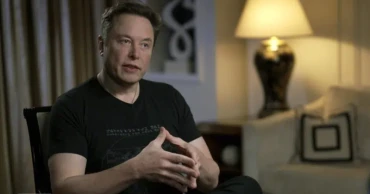
Musk told Fox News host Tucker Carlson in a segment aired Monday night that he plans to create an alternative to the popular AI chatbot ChatGPT that he is calling “TruthGPT,” which will be a "maximum truth-seeking AI that tries to understand the nature of the universe.”
The idea, Musk said, is that an AI that wants to understand humanity is less likely to destroy it.
Musk also said he's worried that ChatGPT “is being trained to be politically correct.”
In the first of a two-part interview with Carlson, Musk also advocated for the regulation of artificial intelligence, saying he's a “big fan.” He called AI “more dangerous” than cars or rockets and said it has the potential to destroy humanity.
Read: 'Out of control' AI race: Elon Musk, top tech personalities call for a pause
Separately, Musk has incorporated a new business called X.AI Corp,, according to a Nevada business filing. The website of the Nevada secretary of state’s office says the business was formed on March 9 and lists Musk as its director and his longtime adviser, Jared Birchall, as secretary.
Musk has for many years expressed strong opinions about artificial intelligence and has dismissed other tech leaders, including Mark Zuckerberg and Bill Gates, for having what he has described as a “limited” understanding of the field.
Musk was an early investor in OpenAI — the startup behind ChatGPT — and co-chaired its board upon its 2015 founding as a nonprofit AI research lab. But Musk only lasted there for a few years, resigning from the board in early 2018 in a move that the San Francisco startup tied to Tesla’s work on building automated driving systems. “As Tesla continues to become more focused on AI, this will eliminate a potential future conflict for Elon,” OpenAI said in a February 2018 blog post.
“I came up with the name and the concept,” Musk told Carlson, lamenting that OpenAI is now closely allied with Microsoft and is no longer a nonprofit.
Musk elaborated on his departure in 2019, saying it was also related to his need to focus on engineering problems at Tesla and some differences of opinion with OpenAI’s leaders. It was “just better to part ways on good terms," he said.
“Tesla was competing for some of same people as OpenAI & I didn’t agree with some of what OpenAI team wanted to do,” Musk tweeted, without specifying.
But there have been questions surrounding the quality of Tesla's AI systems. U.S. safety regulators last month announced an investigation into a fatal crash involving a Tesla suspected of using an automated driving system when it ran into a parked firetruck in California.
REad: Top 5 AI Chatbot Platforms and Trends in 2023
The firetruck probe is part of a larger investigation by the agency into multiple instances of Teslas using the automaker’s Autopilot system crashing into parked emergency vehicles that are tending to other crashes. NHTSA has become more aggressive in pursuing safety problems with Teslas in the past year, announcing multiple recalls and investigations.
In the year after Musk resigned from the board, OpenAI was still far away from working on ChatGPT but publicly unveiled the first generation of its GPT system, on which ChatGPT is founded, and began a major shift to incorporate itself as a for-profit business.
By 2020, Musk was tweeting that “OpenAI should be more open” while noting that he had “no control & only very limited insight” into it.
At times, he has been complementary. In the days after the Nov. 30 release of ChatGPT, Musk tweeted to OpenAI CEO Sam Altman that it is “scary good” and complained that news media wasn’t widely covering it because “ChatGPT is not a far left cause.”
Since then, however, Musk has repeatedly highlighted examples that he says show left-wing bias or censorship. Like other chatbots, ChatGPT has filters that try to prevent it from spewing out toxic or offensive answers.
3 years ago

Apple CEO celebrates India as first store in country set to open on April 18
As it celebrates more than 25 years in India, iPhone manufacturer Apple announced today that its first two stores in the country will open this week, marking the company's ambitious growth strategy.
Apple will open two locations in Mumbai and Delhi, NDTV reported.
"This week, as Apple celebrates more than 25 years in India, the company is marking a major expansion with the opening of its first Apple Store locations in the country, along with new environmental initiatives and a key milestone in the rapidly growing community of Indian developers," Apple said in a statement.
Apple will open its first store in Mumbai on April 18, followed by the opening of its second official store in Delhi on April 20, said the report.
Read More: 4 Best Apple Watch Ultra Clone Reviews
According to Apple, these stores have been intended to have a local look and feel.
"India has such a beautiful culture and an incredible energy, and we are excited to build on our long-standing history -- supporting our customers, investing in local communities, and working together to build a better future with innovations that serve humanity," Apple CEO Tim Cook said.
Apple shipments from India are expected to exceed USD 5 billion in the fiscal year 2022-23, accounting for over half of the total "Made in India" phone exports, the report also said.
In 2017, the company started manufacturing iPhones in India through contract manufacturers.
Read More: Apple Car: The Leaks and Rumors
"Apple's work with Indian suppliers of all sizes supports hundreds of thousands of jobs across the country," the statement said.
The company also stated that it works one-on-one with developers to help them take their apps from "good to great" at the iOS App Design and Development Accelerator in Bengaluru.
"India's vibrant community of app developers now supports more than 1 million jobs. A testament to the tremendous growth of developers in India, App Store payouts to developers in the country have more than tripled since 2018," the statement added.
Read More: Apple to use Sony’s state-of-the-art Sensor technology in iPhone 15 Series
3 years ago
24 students receive ‘Huawei BUET ICT Academy’ certification
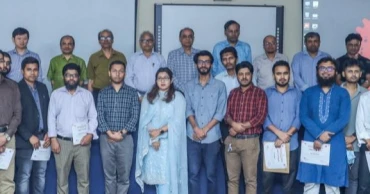
Twenty-four students have been awarded certifications from “Huawei BUET ICT Academy” after the first batch successfully completed its four months training this week.
BUET Vice Chancellor Satya Prasad Majumder, Pro VC Prof Abdul Jabbar Khan and director of Huawei South Asia Enterprise Partner Development and Management Department Zhangcheng handed over the certification to the students, said a press release today.
Started in January this year, the training for the first batch was focused on routing and switching (IP Networks) and 5G (Cellular and Mobile Networks).
Huawei Authorized Information and Network Academy (HAINA) coordinated the course and certification, said the release.
Of the 24 students, 14 have completed training in routing and switching, and 10 have finished training on 5G. In addition, the participants got the opportunity to communicate with more than 3,000 global instructors. Further, the academy aims to cover 83 certification programmess on 19 different subjects in the next batches.
“Academic knowledge itself is not enough for the students anymore. Thus, collaborating with Huawei will expose the students to practical scenarios and knowledge. Moreover, gaining international certificates benefits the students by opening a wide range of job opportunities and preparing them for future employment,” said BUET VC.
“Huawei has been always devoted in developing a better ICT talent ecosystem in Bangladesh and equip them with relevant ICT skills. We are pleased to see the interest of youth showed for this academy. Congratulations to all the participants of the first batch who finished the training,” said Zhangcheng.
It is mentionable that Huawei South Asia has been setting up ICT Academy in collaboration with different universities as part of their commitment to developing an ICT ecosystem. Huawei has recently established its 6th ICT Academy at CUET in Bangladesh to enhance ICT-related skills among young learners.
3 years ago

Teletalk signs deal with Huawei to strengthen nationwide network
Teletalk Bangladesh Limited has signed an agreement with Huawei to upgrade Teletalk’s network to ensure better coverage in rural areas and 5G readiness.
The signing ceremony was held at the city's Lakeshore Hotel Gulshan on Thursday, (April 13, 2023).
A.K.M. Habibur Rahman, managing director of Teletalk Bangladesh Limited, Md. Khayrul Hasan, project director, Expansion of teletalk's Network up to Rural Areas and Network Readiness for
5G Services Project, Pan Junfeng (Peter), president of Huawei South Asia Representative Office and CEO of Huawei Bangladesh; Guo Yu, Account Director, Huawei, were at the signing event along with other officials from both companies.
The project will ensure 4G coverage for the marginal people of Bangladesh. Huawei will facilitate Teletalk with new 4G sites, core network, IP network, charging and billing system modernization solutions.
Pan Junfeng said “Digital connectivity is the key to transforming the country, and we continue to help the nation develop its ICT & Telecommunication sector. With that inspiration, we have been a responsible member of this ecosystem in Bangladesh with our latest and advanced technology. Previously, we partnered with Teletalk to launch 5G for the first time in Bangladesh. It was a great achievement. We are extremely pleased to collaborate with Teletalk Bangladesh Limited further. We hope this agreement will help the nation to increase the pace of achieving the vision of Smart Bangladesh.”
“We want to diversify our network so that everyone nationwide can access high-speed connectivity; thus, we have taken on the major network upgradation project. We want to offer superior service to our subscribers at affordable costs. Huawei has fantastic technologies, solutions, and team to support Teletalk in meeting its ambitions, said Habibur Rahman. "Thus, we feel pleased to partner with Huawei and upgrade our network nationwide. We aim to finish the project by mid-2024, he added”
3 years ago