Social-Media
Shareholders await Musk's next move in Twitter takeover bid
Twitter has dropped a major roadblock in front of Elon Musk’s effort to take over the company, leaving investors to wonder about the mercurial Tesla CEO’s next move.
The social media company has adopted a “poison pill” defense that makes it difficult for Musk or any other investor to buy Twitter without the board of directors’ approval. Musk, who currently owns about 9% of the company, last week disclosed an offer of about $43 billion, or $54.20 per share.
Twitter’s next likely move is to formally reject Musk’s offer, although it could negotiate. Musk has a number of options which also include talks with the board, sweetening his offer, or even triggering the poison pill, which experts say would be disastrous for the company.
In a regulatory filing on Monday, Twitter’s board said it approved the defensive move to protect the company from “coercive or otherwise unfair” takeover tactics.
The board is leaving open the possibility of negotiating with Musk or another suitor. The filing says the shareholder rights agreement should not interfere with any merger or offer approved by the board.
Although he said his offer was “final,” Musk may have to raise his bid to satisfy other shareholders. A Saudi prince who is among Twitter’s major shareholders scoffed at the offer last week in a tweet. Al Waleed bin Talal said he didn’t believe $43 billion is close to Twitter's value given its growth prospects. Twitter shares hit an all-time high of $77.63 in March 2021.
When he made his offer public, Musk provided no details on financing, but such a disclosure could improve his chances. He could raise money by borrowing billions using his stakes in Tesla and SpaceX as collateral, and he could bring in other investors.
The poison pill would give stockholders as of April 25 the right to buy one one-thousandth of a share of preferred stock for each common share they own, at a price of $210. The rights are triggered if any person or group of investors buys 15% or more of the company’s shares without board approval.
The preferred stock would have the same voting rights as a common share, according to the filing, which does not specifically mention Musk.
Also Read: Elon Musk wants to buy Twitter, make it 'maximally trusted'
The poison pill essentially would spell the end of Twitter if Musk or another investor acquires 15% or more of the company, said James Cox, a professor of corporate and securities law at Duke University.
Shareholders who exercise the rights and buy preferred stock at $210 would get $420 in Twitter stock or assets, he said. That would be more than Twitter can afford to pay, and likely would send the company into receivership, Cox said.
“You want to create an event that Musk would never want to trigger because it would be the death of Twitter,” Cox said. He predicts that Musk and the board will negotiate, at least for a while, adding that no investor has ever crossed the line to activate a poison pill.
Also Read: Elon Musk accused of breaking law while buying Twitter stock
If Musk triggered the poison pill, he risks wiping out much of the money he has invested in Twitter because his stake would be diluted, said Columbia University law professor Eric Talley. “You want to deter someone from deliberately triggering the poison pill,” Talley said.
Twitter's board has information that the average shareholder doesn't, such as earnings or market growth projections, and whether there's reason to believe that the share value is artificially depressed, Talley said. The board, he said, could just hold out.
"They’re sitting right now on top of a poison pill that’s a bit of a showstopper. From a corporate law perspective, they’re on pretty solid footing right now if they just keep that in place and say they’re not comfortable bargaining at this stage.”
Musk said in making his bid that Twitter “needs to be transformed as a private company” in order to build trust with users and do better at serving what he calls the “societal imperative” of free speech. He said shareholders, not the board, should decide whether Twitter goes private.
Shares of Twitter closed Monday up 7.5% at $48.45, still $5.75 shy of Musk’s offer. That’s a sign that investors are skeptical of whether Musk can pull off the deal.
Musk began accumulating Twitter shares in late January, ending up with a stake of about 9%. Only Vanguard Group controls more shares. A lawsuit filed last week in New York federal court alleged Musk illegally delayed disclosing his stake so he could buy more shares at lower prices.
Musk took to Twitter to criticize board members in recent days, saying he’d save about $3 million per year by bringing the board salary to zero if his bid succeeds, and noting that board members collectively owning just a tiny financial stake in Twitter shows that their “economic interests are simply not aligned with shareholders.”
Musk, who has more than 82 million followers, is a prolific tweeter who has criticized other celebrity accounts for not tweeting enough, suggesting that as a sign that Twitter is dying.
The takeover episode will put pressure on Twitter executives to show that the company is not underperforming, said Olaf Groth, a business professor at the University of California, Berkeley. Even the entire social media business model of making money through advertising -- which Musk has questioned -- is now “up for discussion,” Groth said.
“He may decide it’s not worth it, and that he sent a political signal to exert pressure,” Groth said. “Now all eyes are on Twitter and the clock is ticking.”
4 years ago
Making money on TikTok: 10 Best Ways
Within a few months of its release in 2017, the TikTok app had become a worldwide viral sensation. TikTok became the third most installed non-gaming app in 2019, topping even Instagram and Facebook, according to Statista. TikTok, with its massive scale, offers enormous potential to produce additional cash for people and companies. This post will go through eight tried-and-true ways of making money on TikTok.
10 Effective Ways to earn money from TikTok
Creator’s Fund
TikTok Creator Fund is TikTok's approach to recognizing and supporting unique creators on their website. It's the app's latest attempt to establish itself as a go-to platform for consumer-generated content.
TikTok Creator Fund is not based on an advertising model. Instead, your money increases in tandem with your channel and content. It is also affected by things such as views from authentic accounts, the geography of your readers, and others.
Read How to Increase YouTube subscribers for free in 2022?
And, since TikTok content engagement is dynamic and varies on a daily basis, your money will fluctuate on a daily basis as well.
Live Stream Donations
Taking contributions from your followers/viewers is one of the various methods to generate money on Tiktok. It operates in the same way as the American video live streaming service Twitch does. The admirers donate money to show their appreciation for these live streams.
As a creator, you may enable Live Gifting while live broadcasting on TikTok, get rewarded in real-time, and payout your winnings using PayPal.
Read How Do Social Media Influencers Make Money?
However, there is a minor twist here. TikTok uses in-app coins instead of currency, which viewers must acquire before giving to their favorite influencers. They may locate the coins by going to Settings > Balance > Recharge.
The next step will be to swap these currencies for virtual prizes. Each prize has a variety of intriguing alternatives. There are a varied number of coins. They also vary in value.
Make and Sell TikTok Accounts
Many companies would want to have a footprint on TikTok but lack the time and resources to set up and maintain an account. Why not put them on a fast track to TikTok success? This may be accomplished by making and selling TikTok accounts.
Read Monetizing Your Blog: How to Make Money from Blogging
People have been creating social media accounts and selling them for a long time in order to gain money. For example, Ramy Halloun, 23, earns roughly $30,000 per year utilizing this TikTok monetization approach.
You need more than an appealing selection of videos on your TikTok account to effectively sell TikTok accounts. You will also need a narrow focus and a loyal fanbase.
Open a Selfy Store
Before you can start establishing influence and generating money on TikTok, you must first have a website where people can purchase your stuff.
Read How to Earn Money from Facebook
While Shopify is used by the majority of TikTokers to sell merchandise, it is far from the only game in town. If you despise hidden fees and having to pay for third-party connections to sell things like merchandise, Shopify is probably not for you.
There is a lot simpler option that may provide you with everything you need to generate money on TikTok. Let's look at that possibility.
TikTok Marketplace
TikTok Creator Marketplace is a platform that connects marketers with creators. This might be useful for creating sponsored films that use a popular user's viewership to promote sales or brand visibility.
Read How to Earn Money from YouTube Channel
Furthermore, it connects smaller firms with bigger producers who may be eager to help them expand via a shoutout or collaboration.
This platform provides cutting-edge data analytics on artists' accounts, which may assist companies in finding the greatest fit for their products. This is the simplest method to capitalize on the power of influencer and affiliate marketing.
Direct Traffic to the Other Channels
TikTok is well-known for its short video duration as well as its highly personalized and intelligent "For You" page.
Read $1 Salary Club: Why do CEOs take a one-dollar annual salary?
This implies that even a single properly crafted and niche-specific video can draw much more traffic than standard social media platforms. You may use it to attract visitors to your other channels to profit from the massive audience it provides.
Virtual Gifts
TikTok's built-in monetization function allows you to live broadcast and accept virtual gifts as another method to generate money. Once you have over 1000 followers, you will be able to use the live streaming option. Your fans may buy coins and use them to give you virtual presents during a live broadcast.
Sponsored Post
Sponsored content is another option to monetize your TikTok account. This is when companies contact you about including their products in your video. In exchange, they pay you a price for your services.
Read Payoneer to Bkash Fund Transfer: A Great Advancement of Freelancing in Bangladesh
To begin, contact local businesses in your neighborhood to see if they want to be featured on TikTok. It would be a good idea to charge a low cost at first, then gradually increase your fee as you achieve fame as a TikTok maker.
Promote Music
TikTok is a terrific resource for young musicians looking to obtain exposure. As a result, producers may make money by using certain music in their videos.
TikTok musician accounts have been on the increase. Nowadays, many new musicians have arisen on the platform, using their notoriety to garner followers/streamers on sites such as Apple Music and Spotify.
Read Negotiating Salary: How to Get the Best Out of a New Job
Become TikTok Consultant
TikTok is one of the most difficult platforms for many businesses to grasp. Because of the channel's one-of-a-kind character, patterns often shift quite fast. Anyone may become a viral phenomenon suddenly. However, it's also easy to lose a significant portion of your fans for a simple mistake or unexpected action. Because of this, TikTok consultants are in great demand.
TikTok consultants are professionals hired by businesses to assist them in expanding their profiles and increasing traffic to their TikTok accounts.
Conclusion
TikTok is a rapidly developing social media network that provides more methods to monetize content than most people understand. The scope of earning from TikTok ranges from the Creator Fund to influencer marketing to the TikTok coin collection.
Read Work from Home, Earn and Be Your Own Boss
At the same time, it is doubtful that you can become a billionaire on the site overnight, and it might take years to earn even a fraction of that amount.
However, when it comes to social media remuneration across many platforms, TikTok undoubtedly provides a diverse set of earning options that make it a dependable source of income for anybody willing to put in the time and effort. We hope our discussion would help you to pick effective ways to make money from TikTok.
4 years ago
.jpg)
'Kill more': Facebook fails to detect hate against Rohingya
A new report has found that Facebook failed to detect blatant hate speech and calls to violence against Myanmar’s Rohingya Muslim minority years after such behavior was found to have played a determining role in the genocide against them.
The report shared exclusively with The Associated Press showed the rights group Global Witness submitted eight paid ads for approval to Facebook, each including different versions of hate speech against Rohingya. All eight ads were approved by Facebook to be published.
The group pulled the ads before they were posted or paid for, but the results confirmed that despite its promises to do better, Facebook's leaky controls still fail to detect hate speech and calls for violence on its platform.
The army conducted what it called a clearance campaign in western Myanmar's Rakhine state in 2017 after an attack by a Rohingya insurgent group. More than 700,000 Rohingya fled into neighboring Bangladesh and security forces were accused of mass rapes, killings and torching thousands of homes.
Also Monday, U.S. Secretary of State Antony Blinken announced that the U.S. views the violence against Rohingya as genocide. The declaration is intended to both generate international pressure and lay the groundwork for potential legal action, Blinken said.
Also read: Rohingya sue Facebook for $150bn over Myanmar hate speech
On Feb. 1 of last year, Myanmar’s military forcibly took control of the country, jailing democratically elected government officials. Rohingya refugees have condemned the military takeover and said it makes them more afraid to return to Myanmar.
Experts say such ads have continued to appear and that despite its promises to do better and assurances that it has taken its role in the genocide seriously, Facebook still fails even the simplest of tests — ensuring that paid ads that run on its site do not contain hate speech calling for the killing of Rohingya Muslims.
“The current killing of the Kalar is not enough, we need to kill more!” read one proposed paid post from Global Witness, using a slur often used in Myanmar to refer to people of east Indian or Muslim origin.
“They are very dirty. The Bengali/Rohingya women have a very low standard of living and poor hygiene. They are not attractive,” read another.
“These posts are shocking in what they encourage and are a clear sign that Facebook has not changed or done what they told the public what they would do: properly regulate themselves,” said Ronan Lee, a research fellow at the Institute for Media and Creative Industries at Loughborough University, London.
The eight ads from Global Witness all used hate speech language taken directly from the United Nations Independent International Fact-Finding Mission on Myanmar in their report to the Human Rights Council. Several examples were from past Facebook posts.
The fact that Facebook approved all eight ads is especially concerning because the company claims to hold advertisements to an “even stricter” standard than regular, unpaid posts, according to their help center page for paid advertisements.
“I accept the point that eight isn’t a very big number. But I think the findings are really stark, that all eight of the ads were accepted for publication,” said Rosie Sharpe, a campaigner at Global Witness. “I think you can conclude from that that the overwhelming majority of hate speech is likely to get through.”
Facebook's parent company Meta Platforms Inc. said it has invested in improving its safety and security controls in Myanmar, including banning military accounts after the Tatmadaw, as the armed forces are locally known, seized power and imprisoned elected leaders in the 2021 coup.
“We’ve built a dedicated team of Burmese speakers, banned the Tatmadaw, disrupted networks manipulating public debate and taken action on harmful misinformation to help keep people safe. We’ve also invested in Burmese-language technology to reduce the prevalence of violating content,” Rafael Frankel, director of public policy for emerging markets at Meta Asia Pacific wrote in an e-mailed statement to AP on March 17. “This work is guided by feedback from experts, civil society organizations and independent reports, including the UN Fact-Finding Mission on Myanmar’s findings and the independent Human Rights Impact Assessment we commissioned and released in 2018.”
Facebook has been used to spread hate speech and amplify military propaganda in Myanmar in the past.
Also read: 3 stabbed dead in Gazipur over ‘Facebook comment’: 2 held
Shortly after Myanmar became connected to the internet in 2000, Facebook paired with its telecom providers to allow customers to use the platform without having to pay for the data, which was still expensive at the time. Use of the platform exploded. For many in Myanmar, Facebook became the internet itself.
Local internet policy advocates repeatedly told Facebook hate speech was spreading across the platform, often targeting the Muslim minority Rohingya in the majority Buddhist nation.
For years Facebook failed to invest in content moderators who spoke local languages or fact checkers with an understanding of the political situation in Myanmar or to close specific accounts or delete pages being used to propagate hatred of the Rohingya, said Tun Khin, president of Burmese Rohingya Organization UK, a London-based Rohingya advocacy organization.
In March 2018, less than six months after hundreds of thousands of Rohingya fled violence in western Myanmar, Marzuki Darusman, chairman of the U.N. Independent International Fact-Finding Mission on Myanmar, told reporters social media had “substantively contributed to the level of acrimony and dissension and conflict, if you will, within the public."
“Hate speech is certainly of course a part of that. As far as the Myanmar situation is concerned, social media is Facebook, and Facebook is social media,” Darusman said.
Asked about Myanmar a month later at a U.S. Senate hearing, Meta CEO Mark Zuckerberg said Facebook planned to hire “dozens” of Burmese speakers to moderate content and would work with civil society groups to identify hate figures and develop new technologies to combat hate speech.
“Hate speech is very language specific. It’s hard to do it without people who speak the local language and we need to ramp up our effort there dramatically,” Zuckerberg said.
Yet in internal files leaked by whistleblower Frances Haugen last year, AP found that breaches persisted. The company stepped up efforts to combat hate speech but never fully developed the tools and strategies required to do so.
Rohingya refugees have sued Facebook for more than $150 billion, accusing it of failing to stop hate speech that incited violence against the Muslim ethnic group by military rulers and their supporters in Myanmar. Rohingya youth groups based in the Bangladesh refugee camps have filed a separate complaint in Ireland with the 38-nation Organization for Economic Cooperation and Development calling for Facebook to provide some remediation programs in the camps.
The company now called Meta has refused to say how many of its content moderators read Burmese and can thus detect hate speech in Myanmar.
“Rohingya genocide survivors continue to live in camps today and Facebook continue to fail them,” said Tun Khin. “Facebook needs to do more.”
4 years ago
Netflix, TikTok block services in Russia to avoid crackdown
Netflix and TikTok suspended most of their services in Russia on Sunday as the government cracks down on what people and media outlets can say about Russia’s war in Ukraine.
Pulling the plug on online entertainment — and information — is likely to further isolate the country and its people after a growing number of multinational businesses have cut off Russia from vital financial services, technology and a variety of consumer products in response to Western economic sanctions and global outrage over the invasion of Ukraine.
U.S. credit card companies Visa, Mastercard and American Express all said over the weekend they would cut service in Russia. South Korea’s Samsung Electronics, a leading supplier of both smartphones and computer chips, said it would halt product shipments to the country, joining other big tech companies such as Apple, Microsoft, Intel and Dell.
And two of the so-called Big Four accounting firms said Sunday they were cutting ties to the country. KPMG and PricewaterhouseCoopers both they would end their relationships with their Russia-based member firms, each of which employs thousands of people.
Ukraine’s minister of digital transformation, Mykhailo Fedorov, called on U.S. technology companies to do more Sunday to hit back against Russia. He tweeted open letters asking Apple and Google to shut down their app stores in Russia and for Amazon and Microsoft to suspend their cloud computing services.
Providers of internet-based services and apps have been mostly reluctant to take actions that could deprive Russian citizens of social media services and other sources of information.
That changed Friday when Russian President Vladimir Putin intensified a crackdown on media outlets and individuals who fail to hew to the Kremlin line on the war, blocking Facebook and Twitter and signing into law a bill that criminalizes the intentional spreading of what Moscow deems to be “fake” reports.
Netflix didn’t specify a reason for suspending services Sunday except to say it reflected “circumstances on the ground.” The company had previously said it would refuse to air Russian state TV channels.
4 years ago

How to Get Free Instagram Followers for Business in 2022
Instagram is one of the fastest-growing social media channels, benefiting companies as well as celebrities. Instagram users spend hours each day engaging in recreational activities, and there are surely many individuals who desire to be influencers. It is an incredible digital platform that allows users to cash out their accounts if they have a huge following and fan interaction. Instagram has grown from a basic photo-sharing application to a giant marketing and networking platform for companies and people. Stay with us to get tips for increasing Insta followers at free of cost.
Ways to Get More Followers on Instagram at Free of Cost
Having said that, boosting your Instagram following may help you improve traffic to your website, increase revenue, and even transform anybody into a trendsetting influencer. Here are some tried-and-true methods for increasing your Instagram followers — without using spam accounts or bots.
Tapping into Instagram Reels
If you are not currently posting Instagram Reels, you are potentially losing out on a significant chance to expand your follower base.
Read Kylie Jenner becomes first woman with 300 million Instagram followers
Instagram Reels, the app's short-form, looping video feature, is still one of the most successful methods to reach new audiences. Unlike most of the Instagram experience, viewers in the Reels feed are presented high-quality material from both followers and non-followers.
This implies that the Reels have the potential to go far beyond a business’s follower list.
Optimizing Post Captions for Inbound and Outbound Search
Optimizing Instagram photos for search is a significant Instagram growth tip. Instagram recently updated to enable English-speaking users in six countries to search the platform using keywords.
Read How To Be A Popular Instagram Influencer
According to an Instagram spokesman, the team examines a variety of criteria when surfacing relevant results, including the "kind of material, captions, and when it was uploaded."
Additionally, it employs machine learning to "identify the highest-quality material that is personally relevant to you." For the time being, only grid postings will be shown.
Curate Attractive Profile for Robust First Impression
Having an Instagram feed that is well-planned and clearly highlights your specialization is critical for converting profile visits to followers. When someone visits a business profile, the business wants them to immediately grasp its purpose.
Read Facebook launches Instagram Lite in Bangladesh
Utilize a visual planner tool to organize your Instagram grid before posting to ensure a consistent style that suits your business.
Collaborating with Influencers and Brands
Collaborating with like-minded influencers and companies is a significant win-win situation. You can make profit from brand association and get access to a new audience.
Collaborations do not have to be prohibitively expensive. Some of the most successful collaborations are straightforward and mutually beneficial.
Read Facebook working on Instagram for kids under 13
Similarly, you do not need to collaborate with mega-influencers to have an effect. Nano and micro-influencers often have greater engagement rates and a cheaper rate card for sponsored articles than macro-influencers.
However, you will need to work with more Nano or Micro-influencers to achieve the same audience size as a Macro influencer - the optimal technique will depend on your available bandwidth and money.
Making Shoppable Instagram Feeds
Nowadays, purchasing things from Instagram pages is a popular method of shopping online. Additionally, as previously said, many individuals utilize Instagram to locate the right buy.
Read Best Rooftop Restaurants in Dhanmondi with Instagrammable Views
It makes sense for businesses to establish shoppable Instagram feeds. Shoppable feeds send visitors to your product page, allowing them to explore, click, and purchase instantaneously.
As a consequence of their direct purchasing experience, these consumers are likely to follow you for more product suggestions and to promote your brand to others.
Creating Highly-shareable Content
In terms of reaching new audiences organically, providing shareable content is an excellent place to start. Inspirational quotations, instructional carousel articles, and trending memes are all effective forms of content. Even a single viral post may reach thousands of people.
Read How to Earn Money from Instagram
Memes, in particular, are very effective at establishing viral reach – particularly when they capitalize on a current trend in popular culture. This type contents are often amusing or creative, and they frequently use both text and pictures. To develop an incredibly effective meme, strike a balance among several factors, such as, the graphics tool, the mood of target audience, and the speciality of your business.
Creating a Strong Value Proposition
Whether it is fashion suggestions, inspiring quotations, or lifestyle material, having a clear value proposition is critical for turning visitors to your profile into followers.
Read How Do Social Media Influencers Make Money?
This does not signify that all of your material must be identical. Expert content developers advocate concentrating on 3-5 content pillars linked to the area. Thus, you may diversify a content strategy without diminishing your primary startegies.
Creating Instagram Challenges
Instagram challenges have long been popular, and they are now making an appearance on Instagram Reels more regularly.
Successfully launching an Instagram challenge may propel your account into the zeitgeist, exposing it to hundreds, if not millions, of new followers.
Read Monetizing Your Blog: How to Make Money from Blogging
To get huge responses and the greatest results, make the participation process as simple as possible. For instance, you can establish a branded hashtag to connect the challenge to your business, and consider what activities participants would love.
Using Industry Hashtags
Instagram hashtags are wonderful tools for directing users to material that piques their interest. And if prospective followers discover you via a highly targeted hashtag, they are likely to follow you after seeing your most popular posts.
With this in mind, you should include hashtags related to your sector in each Instagram post. For example, a photographic brand may use.
Read Payoneer to Bkash Fund Transfer: A Great Advancement of Freelancing in Bangladesh
The most effective method of discovering relevant hashtags is to open the Instagram app and touch the explore button. From there, you may see popular hashtags that are being used by a large number of individuals.
Analyzing Results
One strategy for determining how to increase your Instagram followers is to examine what the present fans react to. Several Instagram metrics may be tracked directly inside the app or through third-party analytics solutions.
Bottom Line
If you want to expand your business steadily on Instagram, you must consistently provide high-quality material to attract the target audience. While fragmented social media works for personal accounts, corporations need a more deliberate approach. All of the strategies discussed of enhancing the number of free instagram followers will assist a company in increasing its followers as well as potential clintes. However, these ways are not one-time checkboxes. You need to keep an eye on the social media content strategies to stay updated.
Read Want to start freelancing from Bangladesh? These are the best platforms for you
4 years ago

How to Increase YouTube subscribers for free?
YouTube is one of the most popular online video websites in the world. It has millions of videos that people can watch for free, so gaining YouTube subscribers is a great way to build a presence as an internet personality. But with so many channels buzzing about on this website, it can be difficult to get noticed and you may not know where to start. That is why we have done all the work for you and rounded up 12 ways you can gain more YouTube subscribers for free.
Ways to increase your YouTube subscribers at free of cost
Make videos frequently
As obvious as this may seem, it's by far the best way to get more subscribers. Make more videos and your audience will grow quicker than you can imagine! As long as you are putting out content of some sort, be it a video review or an informative guide, people will start to take notice and subscribe to see what else you do. If you can't think of anything to make a video about, try looking at topics that other people are successful at covering in their videos. For example, if you're a beauty expert then make a video on how to apply foundation like a pro.
Read India blocks 35 Pakistan-backed YouTube channels
Use hashtags
YouTube has a great feature where you can put the hashtag #videoslikes on your video title, which will cause the video to be listed in various places on YouTube and in search results. You can also use the hashtag #vlog or #videoblog or whatever else you like. By using these tags, your video is going to be found by more people and give it a chance at being viewed.
Optimize your title
Make it catchy and relevant to your content. Include keywords, be sure to save the best information for your first paragraph, include keywords in subtitles, and mention the social media accounts you share. And that’s how your videos will get discovered by more people. Eventually, it will help to get more subscribers.
Read Best YouTube Channels to Learn English
Promote on social media
Write links and images on social media channels (Facebook, Twitter). Add an internal link to the YouTube page and use video thumbnails when promoting videos. Also invite fans to watch or share links (tweet, hashtag) from your channel.
Use keywords as much as possible
When creating new videos, be sure to use keywords related to your channel content. But don't spam them either. Use a mixture of words that fit your style and interests that are going to get users who are interested in those topics. You can use free keyword tools to find the best keywords to use.
Read Tips and Tricks to Increase YouTube Subscribers organically
Add annotations
You can bring your videos to life with annotations, which are basically captions or annotations that flash on the screen throughout videos. If you are a beauty vlogger and use lots of makeup products in your videos, then you could add annotations with the product names and brands throughout your video. You can also put in helpful tips about the video for those who want to know more about what it's all about. This is a great way to get more YouTube subscribers as it will make your channel relevant and full of information!
Create videos followig trending videos
Want more YouTube subscribers? Just make a video on a hot topic, whether it's popular news or something that fans have been keeping an eye on. As long as you make your video different enough, you can use this method for any type of content. Plus, if your video is about what other people like then it will be even more likely that people will subscribe to watch your future videos!
Read Top YouTube Movie Channels to Watch Full Length Movies Online Free
Make your video unique
Be sure to make your videos as original as possible. Whether you are recording a new song in the music industry or reviewing a new book on the literary scene, you need to be sure that people will want to watch your content and not just go elsewhere. Without this, it's easy for people to forget about your channel. If they like you enough in the beginning, they will most likely stick around to see what other content you have created!
Create a viral video
Comedy, drama, fun facts—videos that make viewers laugh or cry are much more likely to attract attention than those that don’t. If you can make your audience laugh or gasp at your creativity, you will have a much better chance at getting more YouTube subscribers than if you just shove a product in their faces.
Read How to Earn Money from YouTube Channel
Make videos relevant to search
Just because a video is popular doesn’t always mean that it will be found by people looking for the same topic. Make sure that you are writing and creating content that YouTube’s algorithms put in their search results, so they can help users find what they want. If your videos show in the relevant search, you are likely to get more views as well as subscribers. So, you may need to research how the YouTube algorithm works.
SEO
Search Engine Optimization (SEO) is a great way to show your videos on Google search results. YouTube SEO is different from website SEO. So, you can optimize your video for search engines. As a result, you will get more views and eventually attract more subscribers.
Read YouTube updates hate speech guidelines to prohibit videos
Participating in YouTube events, challenges
Another way of gaining more subscribers is to participate in YouTube events and challenges. There are tons of YouTube challenges that you can take part in. Usually, in contests, everyone has to create a video or make artwork on selected topics. If you are one of the lucky few that can make their video go viral, you could be on your way to getting YouTube subscribers at an incredible rate.
Conclusion
YouTube is highly competitive nowadays and it’s not always easy to get noticed. However, there are numerous ways to get noticed and grow subscribers. This article covered some top ways to augment the YouTube Subscribers organically at free of cost. You can also create your own strategy to attract more subscribers.
Read YouTube promises to stop promoting misleading videos
4 years ago
WhatsApp pushes privacy update to comply with Irish ruling
WhatsApp is adding more details to its privacy policy and flagging that information for European users, after Irish regulators slapped the chat service with a record fine for breaching strict EU data privacy rules.
Starting Monday, WhatsApp's privacy policy will be reorganized to provide more information on the data it collects and how it's used. The company said it's also explaining in more detail how it protects data shared across borders for its global service and the legal foundations for processing the data.
WhatsApp is owned by Facebook, now renamed Meta Platforms. With the update, users in Europe will see a banner notification at the top of their chat list that will take them to the new information.
Read:Ohio retirement fund sues Facebook over investment loss
WhatsApp is taking the action after getting hit with a record 225 million euro ($267 million) fine in September from Ireland’s data privacy watchdog for violating stringent European Union data protection rules on transparency about sharing people’s data with other Facebook companies.
The chat service said it disagreed with the decision, but it has to comply by updating its policy while it appeals. The update doesn’t affect how data is handled, and users won’t have to agree to anything new or take any other action.
Ireland's Data Privacy Commission is the lead privacy regulator for WhatsApp under European Union rules because its regional headquarters is in Dublin.
Read:Facebook to shut down face-recognition system, delete data
WhatsApp was embroiled in a separate privacy controversy earlier this year when it botched a different update to its privacy policy that raised concerns users were being forced to agree to share more of their data with Facebook. That update sparked a backlash from users who switched to rival services like Telegram and Signal, an investigation by Turkey's competition watchdog, a temporary German ban on gathering data, and a complaint by EU consumer groups.
A six-hour outage of Facebook services last month highlighted how vital WhatsApp has become for its more than 2 billion users worldwide.
4 years ago
.jpg)
Short video platforms are new way of building communities: Head of Likee Operations in Bangladesh
Gibson Yuen, Head of Likee Operations in Bangladesh, has said Short video platforms like ‘Likee’ are a new way of building communities which act as convenient-to-use social media platforms.
Gibson Yuen said, “It is not only comforting to watch short videos but is less time-consuming. Because of time constraints, people leave the unnecessary parts and jump straight to the point of the videos. On the other hand, long videos often get tedious to watch.”
In these short video platforms, content creators post videos from which viewers may learn a great deal, he said.
Read:Likee’s #KnowledgeMonth campaign ends; 5,470 videos uploaded by 1,904 users
Such categories may include life-hack videos, which let people know about tips and tricks that make life simpler, educational videos from educators, general knowledge videos from many daily newspapers, and much more. The best part here is the chance to learn so much without the monotonous feeling, but genuinely enjoying instead.
Visual learning is a learning method preferred by many children as well as adults as an effective method to learn and remember. Many studies have also found that visual learning has catered to better memory recollection than the auditory learning method. It means short video platforms can be an amazing way to communicate learnable information.
Through this learning process, communities of learners and educators are created where similar content-makers get a chance to collaborate virtually, and viewers get to discuss the videos with others, creating multiple communication channels, Gibson added.
Read Likee teams up with 10 Minute School
Covid-19, lockdown impositions, and a general fear of crowds have hindered the natural community-building instinct of humans. During these dire times, social media and short video platforms have acted as rescuers of this society-loving mankind, creating multiple communication channels for people, he said.
The short video industry has especially managed to improve the lives of talented content creators by giving them opportunities to communicate their ideas.
Communities of learners, educators, artists, and many more individuals have been made for them to share their interests and talents with each other, as well as the world, said the head of Likee Operations in Bangladesh.
Read: Likee launches campaign to promote cyber safety
Additionally, they create communities of people with similar talents. A community of singers, dancers, painters, etc., are generated, often adding colors to the lives of many. They get to discuss their work and interests with people who share similar ones. This not only enhances communication but also improves the mental health of many.
The world is filled with talented individuals who remain undiscovered due to the lack of opportunities. He said, “For them, the convenience of short video platforms is a blessing. It was rather tough for many cover artists to actually upload long videos targeting engaged audiences, as viewers often become reluctant to watch long covers.”
People started posting their videos, which can also be made aesthetically pleasing through filters on Short Video Platforms, like Likee. Through these videos, people also get to know about exciting forms of art, such as finger dancing – a form of dance that was rather unknown before short videos were trendy.
Read Learning together with Likee’s #Steps2learn
Besides music and dance, art and painting videos can also be conveniently showcased through such short videos. This not only promotes exposure of talent but also opens the window for many such talented individuals to get paid work. Talent hunters often spot artists from such apps, exposing them to jobs they would love.
4 years ago
.jpg)
Ohio retirement fund sues Facebook over investment loss
Ohio’s largest public employee pension fund has sued Facebook — now known as Meta — alleging that it broke federal securities law by purposely misleading the public about the negative effects of its social platforms and the algorithms that run them.
The lawsuit by the Ohio Public Employees Retirement System specifically claims that Facebook buried inconvenient findings about how the company has managed those algorithms as well as the steps it said it was taking to protect the public.
Read:Plenty of pitfalls await Zuckerberg’s ‘metaverse’ plan
The suit also contends claims that Facebook knew that its platform facilitated dissention, illegal activity, and violent extremism, but refused to correct it. The Associated Press and a coalition of other news organizations have reported extensively on Facebook's actions, internal dissents that warned of these problems and related issues around the world based on internal company documents, now known as the Facebook Papers, leaked by the data scientist and former Facebook employee Frances Haugen.
“Facebook said it was looking out for our children and weeding out online trolls, but in reality was creating misery and divisiveness for profit,” Ohio Attorney General Dave Yost said in a statement. “We are not people to Mark Zuckerberg, we are the product and we are being used against each other out of greed.”
Read:In the middle of a crisis, Facebook Inc. renames itself Meta
The lawsuit, filed last week in federal court in California, says market losses resulting from publicity over Facebook’s actions caused investors — including OPERS — to lose more than $100 billion . A Facebook spokesperson called the lawsuit without merit and said the company would fight it.
4 years ago
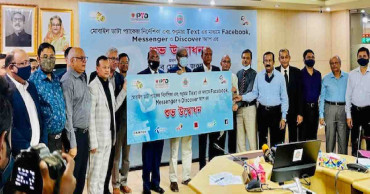
Grameenphone launches Text-Only Facebook, Discover
Grameenphone, in partnership with Meta, has launched text-only Facebook and Discover to enable Grameenphone customers to stay connected more consistently, even when they run out of data.
Text-only Facebook will help the telecom operator's customers to stay connected with a text-only version of Facebook and Messenger when they run out of data until they can top up their data balance again.
Discover, a mobile web and Android app, will allow Grameenphone customers to browse the internet using a daily balance of 15MB without data charges. Also, it only supports low-bandwidth features such as text and icons when using free data.
Read: Grameenphone signs agreement with D24 Logistics
Post and Telecommunication Minister Mustafa Jabbar inaugurated text-only Facebook and Discover Tuesday at Bangladesh Telecommunication Regulatory Commission (BTRC).
"Allowing the use of Facebook without the internet is a great initiative. This shall help reduce the digital divide by ensuring information sharing and connectivity of marginalised people," he said.
"The government has been emphasising bringing maximum people under the umbrella of digital connectivity. But to turn it into a reality, we need the private sectors, especially the mobile network operators to step forward," BTRC Chairman Shyam Sunder Sikder said. "It is a good move by Grameenphone to improve access to social media and other important resources on the internet."
Read:Bangladesh Retail Awards 2021: Grameenphone wins two accolades
"Today's launch is a testimony of co-creation with Meta and Regulator to best use digital solutions for ensuring access to vital information in need for one of the largest Facebook user bases in the world," Grameenphone CEO Yasir Azman said.
"Helping people stay connected and ensuring they have consistent access to important resources on the internet such as education and health resources is critical. We are grateful to support these programmes to enable better connectivity and access for people in Bangladesh," Paul Kim, director of International Business Development and Operator Partnerships, APAC at Meta, said.
Read GP Explorers: 2nd batch graduates from Grameenphone's in-house skill academy
4 years ago