social-media
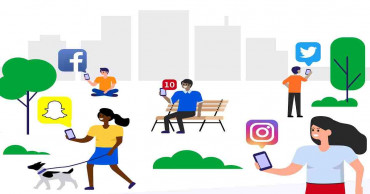
Social Media Addiction: How to detach yourself from the cycle
In today’s world of internet connectivity, it's only normal that social media usage will surge. There are about 4.48 billion social media users in this world. That’s more than half the entire population of the world. But the proliferation of social media brings a new set of problems. Nowadays the young generation is suffering from the tendency of increased impulsiveness to scroll through social media. In this article, we will take a deep dive into social media addiction and how to get rid of it.
What is social media addiction?
Have you ever gone to bed and impulsively reached for your phone? Spent hours scrolling through different social media and messing up your sleep schedule in the process? If it’s a yes, then chances are you’re suffering from a case of social media addiction. You’re not alone, however.
Read How social platforms are dealing with the Taliban
In 2017, a survey found that there are about 210 million people with social media addiction. This was from a time when the world didn’t have to grapple with the pandemic. In its wake, the pandemic has left most of the office, education, and other works to an online platform, making people increasingly prone to becoming addicted to social media and online platforms.
It might not feel much like it at first but it’s part of human behavioral addictions. At one point, you will get so into scrolling through newsfeeds and posts and pictures that it will eventually end up hampering other parts of your life.
So, is there a way out of this? Well, there are a lot of ways to go about social media detoxification. We’ll talk about some of the most effective ways to get your life back to normalcy.
Read A set of directives for judicial officials for using social media
How to Get Rid of Social Media Addiction
Turn the notification off
The first you can do to get out of the cycle is to turn the notification off. You cannot even start the process of detachment if your phone lights up with a notification every other hour. The tendency to check who twitted or shared a post will eventually start a domino effect where you end up spending more time than you should.
Some people count “like” and interactions in their posts. If you have that tendency, we suggest you stay away from your phone for a few hours after posting anything. Do not let the urge to check interactions get to you. Turning off the notification will minimize the distraction and make way for a gradual transition from the addiction.
Read Dating changed during the pandemic; apps are following suit
Do not go to sleep with your phone
More than 45% of social media users said that they go to sleep while scrolling their phones. This is a very bad practice with some serious side effects. You not only deprive your brain of the rest, but the blue light from the phone messes with the eyes and hampers your sleep schedule.
The only way to get around this problem is to stop taking the phone to bed. Considering the addictive nature or simply something that became a habit, not taking the phone to bed isn’t something that’s going to be easy.
You can keep the phone on the other side of your bedroom or somewhere that’s out of your reach when you’re in bed. It’ll take some time getting used to. But once you do, you will be able to gradually cut off the impulsive need to browse the phone.
Read: How to Stop Your Online Shopping Addiction?
Say no to social media while in bed
Similar to going to bed with a phone, some too many people instinctively reach for their phone once they wake up. This is also a bad habit and compulsive behavior. The extreme dependency on social media content means you are inadvertently getting dragged into the platform without your knowledge.
Try to not use your phone until after you’ve completed your morning routine. Too much social media content in the morning will only make you distracted throughout the day.
Avoid overthinking social media appearance
This is probably the most common problem when it comes to social media platforms. You are not alone if you spend too much time thinking about what to post and how to post. Most social media users have this urge to look better and sound better in social media to get better validation. In reality, you’re using up precious time from your daily life overthinking about social media. This is a form of passive addiction to social media.
Read Dutch data protection authority fines TikTok over privacy
The stress and anxiety related to this validation might be too much to handle. Some people might even fall into depression because of this stress. As a social media user, the last thing you should worry about is what people think about what you post. The process of destressing starts from detachment from social media appearance.
Find replacement
Think of a time when neither digital devices nor social media existed. The earliest example of a digital handheld device dates back to the 90s and that of social media dates back to the 2000s. So, what about the people before that time? Didn’t they have a fulfilling life? They probably had a better life considering the analog options they had.
This is also something that you need to do. Rather than getting engrossed with social media, try and find your hobbies again. There are effective and productive alternatives to social media like reading books or gardening. The more you indulge in analog hobbies, the more you’ll be able to detach yourself from social media.
Read Boithok: Bangladeshi video conferencing app for online meeting
Digital detox
The best solution is to stay away from social media completely. Once you’ve learned to take the small steps, it's time you focused to take considerable time offs from all types of social media platforms. The entire process is known as a digital detox.
It won’t happen overnight. You will have the urge to get back at the start. But the more time you spend away from social media, the more life becomes productive and stress-free. You can gradually minimize your usage to a healthy level, or you can cut it off completely, the choice is yours.
Bottom Line
Overcoming social media addictions is easier said than done. Just like other behavioral addictions, you’ll have to take small steps to get away from them completely. While it might be seemingly easy, you’ll still have to follow through with each of the steps for successful detoxification. We hope this article helps you to divest yourself of the addiction.
Read How To Be A Popular Instagram Influencer
4 years ago
.jpg)
How social platforms are dealing with the Taliban
As the Taliban negotiates with senior politicians and government leaders following its lighting-fast takeover of Afghanistan, U.S. social media companies are reckoning with how to deal with a violent extremist group that is poised to rule a country of 40 million people.
Should the Taliban be allowed on social platforms if they don’t break any rules, such as a ban on inciting violence, but instead use it to spread a narrative that they’re newly reformed and are handing out soap and medication in the streets? If the Taliban runs Afghanistan, should they also run the country’s official government accounts?
And should tech companies in Silicon Valley decide what is — and isn’t — a legitimate government? They certainly don’t want to. But as the situation unfolds, uncomfortable decisions lie ahead.
Also read: Who are the Taliban?
DOES THE TALIBAN USE SOCIAL MEDIA?
The Taliban quickly seized power in Afghanistan two weeks before the U.S. was set to complete its troop withdrawal after a two-decade war. The insurgents stormed across the country, capturing all major cities in a matter of days, as Afghan security forces trained and equipped by the U.S. and its allies melted away.
The last time the Taliban was in power in Afghanistan, Facebook, Twitter and YouTube did not exist. Neither did MySpace, for that matter. Internet use in the country was virtually nonexistent with just 0.01% of the population online, according to the World Bank.
In recent years, that number has vastly increased. The Taliban have also increased their online presence, producing slick videos and maintaining official social media accounts. Despite bans, they have found ways to evade restrictions on YouTube, Facebook and WhatsApp. Last year, for instance, they used WhatsApp groups to share pictures of local health officials in white gowns and masks handing out protective masks and bars of soap to locals.
On Twitter, Taliban spokesman Zabihullah Mujahid has been posting regular updates to more than 300,000 followers, including international media. Twitter suspended another account, @AfghPresident, which has served as the nation’s de facto official presidential account, pending verification of the account holder’s identity.
“There’s a realization that winning the war is as much a function of a nonmilitary tool like social media as it is about the bullets,” said Sarah Kreps, a law professor at Cornell University who focuses on international politics, technology and national security. “Maybe these groups, even from just an instrumental perspective, have realized that beheading people is not a way to win the hearts and minds of the country.”
Also read: Taliban promise women's rights, security under Islamic rule
WAIT, THE TALIBAN WERE ALLOWED ON TWITTER?
Facebook and YouTube consider the Taliban a terrorist organization and prohibit it from operating accounts. Twitter has not explicitly banned the group, though the company said Tuesday that it will continue to enforce its rules, in particular policies than bar “glorification of violence, platform manipulation and spam.”
This essentially means that until the accounts violate Twitter’s rules — for instance, by inciting violence — they are allowed to operate.
While the Taliban is not on the U.S. list of foreign terrorist organizations, the U.S. has imposed sanctions on it. Facebook said Tuesday that the group is banned from its platform under its “dangerous organization” policies. which also bars “praise, support and representation” of the group and accounts run on its behalf. The company emphasized in a statement that it has a dedicated team of Afghanistan experts that are native speakers of Dari and Pashto, Afghanistan’s official languages, to help provide local context and to alert the company of emerging issues.
Facebook has a spotty record when it comes to enforcing its rules. Doing so on WhatsApp, also owned by Facebook, could prove more difficult given that the service encrypts messages so that no one but senders and recipients can read them.
Twitter said it is seeing people in Afghanistan using its platform to seek help and that its top priority is “keeping people safe.” Critics immediately questioned why the company continues to ban former President Donald Trump even as it allows Mujahid to post.
“They certainly decided to silence a former U.S. president,” said Alex Triantafilou, chairman of the Hamilton County Republican Party in Cincinnati, Ohio, who called Twitter’s decision “preposterous.”
Twitter permanently suspended Trump following the deadly insurrection at the U.S. Capitol on Jan. 6, saying his posts glorified and could lead to more violence. The company has long insisted that it suspends accounts based on behavior and whether they violate its rules on the service, and not on offline actions and affiliation.
While he understands that social media companies operate in a global economy, Triantafilou said, “it seems to me that supporting America and our own interest” would make more sense for a U.S. company.
Also read: What Taliban's return means for Bangladesh
WHAT HAPPENS NOW?
As the situation unfolds, the major companies are grappling with how to respond. It’s not an entirely unique situation — they have had to deal with groups such as Hamas and Hezbollah, for instance, which hold considerable political power but are also violent and have carried out acts of terrorism.
“For the past decade, Hamas has used social media to gain attention, and convey their messages to international audiences in multiple languages,” wrote Devorah Margolin, senior research fellow at the Program on Extremism at The George Washington University, in a July report. For example, she wrote, both the political and military wings of Hamas operated official accounts on Twitter.
Despite attempts to use its English-language account to make its case to the international community, Margolin said the group still used Twitter to call for violence. In 2019, Twitter closed the official accounts, @HamasInfo and @HamasInfoEn, for violating its rules, saying there is “no place on Twitter for illegal terrorist organizations and violent extremist groups.”
Facebook declined to say specifically if it would hand over Afghanistan’s official government accounts to the Taliban if it is recognized as the country’s government. The company pointed to an earlier statement saying it “does not make decisions about the recognized government in any particular country but instead respects the authority of the international community in making these determinations.”
Twitter declined to answer questions beyond its statement. YouTube, meanwhile, provided a boilerplate statement saying it complies with “all applicable sanctions and trade compliance laws” and bans the incitement of violence.
All that effectively leaves the door open for the social platforms to eventually hand over control of the official accounts, assuming the Taliban behave and U.S. sanctions are lifted. “That seems like a reasonable approach, because I think the social media platforms don’t necessarily want to be adjudicating is which groups are legitimate themselves,” said Kreps, who served in the U.S. Air Force from 1999 to 2003, partly in Afghanistan.
At the same time, she noted, the companies, especially Facebook, have learned a great deal — and paid a price — for the way the way social media helped incite genocidal behavior in Myanmar. And they’re unlikely to want a repeat of those horrors.
4 years ago

Dating changed during the pandemic; apps are following suit
Early in the coronavirus pandemic, Jennifer Sherlock went out with a few men she met through dating apps. The dates were “weird,” she said, and not just because they were masked, socially distanced and outdoors.
One one occasion, a date remained masked while they were out for a stroll, but soon after invited her back to his place, a move Sherlock saw as reckless. “It was so off putting, and awkward,” she said. “So we wouldn’t be safe outside without mask(s), but we would be safe back at his place maskless?”
Read:Dutch data protection authority fines TikTok over privacy
She decided she needed a way to filter people, so she began arranging video chats before agreeing to meet anybody in person. Sherlock, 42, a PR consultant who lives in New Jersey, said it’s a practice she’ll continue post-pandemic.
Sherlock isn’t alone in changing the way she used dating apps during the pandemic, prompting many to roll out new features. Despite the social distancing of the past 18 months, the use of dating apps in general has surged as people sought connections amid their isolation.
Tinder reported that 2020 was its busiest year yet; this year, its users have already set two records for usage between January and March. Hinge tripled its revenue from 2019 to 2020, and the company expects it to double from that this year.
Read Itel Vision 2 Plus Review: Know the Advantages and Disadvantages
In response to changing demands, Tinder announced new tools last month that will allow users to get to know people better online. People will now be able to add videos to their profile and can chat with others even before matching with them.
“Historically consumers were reluctant to connect via video because they didn’t see the need for it,” said Jess Carbino, an online dating expert and sociologist who has worked for Tinder and Bumble. Post-COVID, however, many people expect a higher degree of screening, she said. “Online dating apps like Tinder are leaning into that.”
The dating apps say their research shows video chats are here to stay, even as life starts to return to normal in some parts of the world.
Read Moto Edge 20 5G Smartphone Review: Know the Pros and Cons
Almost half of Tinder users had a video chat with a match during the pandemic, with 40% of them intending to continue them post-pandemic. Tinder says this is largely driven by Gen Z users in their late teens and early 20s, who now make up more than half of the app’s users. And a majority of Hinge UK users, 69%, also say they’ll continue with virtual dates after the pandemic.
Tinder, alongside other popular apps including Hinge, OkCupid and Bumble, has in Britain and the U.S. partnered with the government to add a badge to profiles indicating that users have been vaccinated. (There’s no verification process, though, so matches could be lying).
Read:Likee bans 42,751 accounts in 5 months for violating rules
Dating app users are also increasingly looking for deeper connections rather than casual encounters, Carbino said.
That’s what happened to Maria del Mar, 29, an aerospace engineer, who wasn’t expecting to end up in a relationship after she matched with someone on Tinder early in the pandemic last year.
She started chatting with her now-boyfriend through the app in April 2020 during a complete lockdown in Spain, where she lives. Having moved back to her parent’s tiny town of León from Barcelona, del Mar was bored when she joined the app, but was surprised to find many things in common with her current partner.
Read Xiaomi POCO F3 GT Review: Can It Satisfy the Crazy Gamers?
After weeks of chatting, they finally met for a first date — a socially-distanced hike — after restrictions eased slightly in May 2020. Now the two have moved in together. “If it wasn’t for the app, probably our paths wouldn’t have crossed,” she said.
Fernando Rosales, 32, was a frequent user of Grindr, an app popular with gay men looking for more casual encounters, in pre-pandemic times. He turned to Tinder for social connections when coronavirus restrictions prevented people from meeting others in London, where he lives.
“Grindr is like, ’I like you, you like me, you’re within 100 meters of me, I’m going to come over,’” said Rosales, who works at the popular British coffee chain Pret.
Read OnePlus Nord 2 5G Review: Is it worth buying?
“Tinder is something more social,” he added,. Sometimes he uses the app just to meet others to play online video games or video chat.
Ocean, 26, a drag artist and photographer in Berlin, turned to the live video feature of a LGBTQ+ app called Taimi to make friends across the world during the pandemic. Having two-to-five minute video chats with strangers from places like the Philippines or parts of the U.S. was “amazing,” she said. Ocean’s given name is Kai Sistemich; she identifies as a woman when in drag.
Read:Facebook to end rule exemptions for politicians
She said she’ll continue using the feature post-pandemic, especially while she’s doing solo activities like cooking, or getting ready before going out to party.
Sherlock also expects some of her pandemic dating behaviors to carry into the post-pandemic world. She recently asked two men she was texting for Facetime chats before meeting in person, something she would not have done pre-pandemic.
“It’s a crazy dating world out there, so saving time is necessary,” she said.
Read Xiaomi POCO X3 GT Review: Does it Offer Value for Money?
4 years ago
.jpg)
Dutch data protection authority fines TikTok over privacy
The Netherlands’ Data Protection Authority said Thursday it has fined TikTok 750,000 euros ($885,000) for not offering a privacy statement in Dutch, saying many children who use the popular video sharing app would be unable to understand the information.
The agency said that by not offering a Dutch-language privacy statement, “TikTok failed to provide an adequate explanation of how the app collects, processes and uses personal data.”
It said TikTok has some 3.5 million users in the Netherlands and that Dutch privacy law is “based on the principle that people must always be given a clear idea of what is being done with their personal data.”
Also read: WhatsApp puts its new privacy policy on hold in India
The data protection authority said TikTok had “lodged an objection to the fine.”
TikTok said in a statement that its privacy policy and a “shorter and more accessible version for our younger users, available in Dutch since July 2020, has been accepted by the Dutch Data Protection Authority as the solution to this issue.”
It added that it made other changes to safeguard the privacy of minors in the past 18 months, including setting accounts of 13-to-15-year-olds to private by default and only allowing direct messaging for users 16 and over.
Also read: US banning use of WeChat, TikTok for national security
Last month, Dutch consumer group Consumentenbond said it was launching a 1.5 billion euro ($1.8 billion) claim against TikTok over what it alleges is unlawful harvesting of personal data from users.
The group and a foundation called Take Back Your Privacy demanded that TikTok pay damages to 1.2 million to 1.6 million Dutch children who use the app.
4 years ago
.jpg)
Likee bans 42,751 accounts in 5 months for violating rules
Singapore-based global short video creation and sharing platform Likee has banned 42,751 Bangladeshi accounts from January to May this year for violating safety protection regulations.
Recently, Likee kicked off a campaign titled "#BhalorJonnoJano" (#KnowForGood) to enlighten the users about Likee community rules and the positive values that it would like to promote among the content creators and celebrities using this platform.
Also read: Likee steps forward to ensure user safety, content quality
As part of the campaign, actor Mumtaheena Chowdhury Toya, YouTuber Tawhid Afridi, actor Tanha Tasnia, 10 Minute School founder and CEO Ayman Sadiq and Gender Equality Consultant Rijve Arefin created videos, delineating the rules for posting contents and the necessity of everyone's participation to build a safe and healthy online community.
Also, Likee has taken many steps in the last few months to filter any objectionable contents and encourage users to showcase the brighter side of their creativity through creating contents that inspire others and reveal their talents.
Also read: CID arrests five, inc. Bigo and Likee executives, for app-based crimes
The platform strictly maintains a set of criteria to screen out any objectionable content. Also, a complete content security mechanism is in place to inspect fraudulent information, pornographic links, gambling, and other negative activities in real-time.
Joy, Likee's head of operations in Bangladesh, said: "From January to May this year, Likee banned 42,751 accounts for violating rules, and around 8.7 million videos were given penalties per month."
Read Short video platforms are new way of building communities: Head of Likee Operations in Bangladesh
4 years ago

Facebook to end rule exemptions for politicians
Facebook plans to end a contentious policy championed by CEO Mark Zuckerberg that exempted politicians from certain moderation rules on its site, according to several news reports.
Read: Facebook won’t remove posts claiming COVID-19 is human-made
The company’s rationale for that policy held that the speech of political leaders is inherently newsworthy and in the public interest even if it is offensive, bullying or otherwise controversial. The social media giant is currently mulling over what to do with the account of former President Donald Trump, which it “indefinitely” suspended Jan. 6, leaving it in Facebook limbo with its owners unable to post.
The change in policy was first reported by the tech site The Verge and later confirmed by the New York Times and the Washington Post.
Read: Online speech shield under fire as Trump Facebook ban stays
Facebook has had a general “newsworthiness exemption” since 2016. But it garnered attention in 2019 when Nick Clegg, vice president of global affairs and communications, announced that speech from politicians will be treated as “newsworthy content that should, as a general rule, be seen and heard.”
The newsworthiness exemption, he explained in a blog post at the time, meant that if “someone makes a statement or shares a post which breaks our community standards we will still allow it on our platform if we believe the public interest in seeing it outweighs the risk of harm.”
Read: Facebook board’s Trump decision could have wider impacts
This hasn’t given politicians unlimited license, however. When Facebook suspended Trump in January, it cited “the risk of further incitement of violence” following the deadly insurrection at the U.S. Capitol as the reason. The company says it has never used the newsworthiness exemption for any of Trump’s posts.
Facebook declined to comment.
5 years ago
.jpg)
Likee launches ‘Crazy Movie Editors’ campaign for film buffs
Likee, the popular short video creation and sharing app has recently kicked off an exciting activity named ‘Crazy Movie Editors’ for film buffs who can win variety of prizes by creating video contents reviewing movies of any language.
The activity commenced on May 22 and will continue till June 4, 2021.
The initiative aims at discovering talented movie reviewers from Likee users and content creators. Any Likee user is eligible to participate in the activity. All a user needs to do is create a movie review video, add #CrazyMovieEditors and upload it. For every movie, one can upload a review in a maximum of 6 parts, each part not more than one minute, totaling six minutes.
Read Free Online Movies: Best Netflix Alternatives for Streaming Movies in 2021
However, in order to qualify for the contest, the review contents must be original, genuine and complete. The contents must also have original clips from reviewed movies inserted into it to clarify the points, information related to the video cover, and clear voice-over/audio.
Joy, Likee’s Head of Operations in Bangladesh, said, “This activity has been designed in a way to let our users and content creators come up with interesting reviews of movies that will give them an opportunity to exhibit their film acumen.”
The winning reviewers will get prizes in three categories for the most popular video contents – cash prize, quality prize, and identity prize. If any user can create review videos for more than five different movies within 2 weeks, selected accounts will get the opportunity to share USD 1000.
Read Bengali OTT Platforms for Watching Movies, Web Series, Musical Shows
Under the second category (quality prize), a user will have the chance to earn as much as USD 50 from each movie review and USD 500 from each individual account.
For every 2000 likes in an individual video, the creator will get 1 US dollar. 10 best content creators will be awarded with Likee Blue V Badge verifications. Next time the user creates any content, it will be evaluated based on the Blue V standard.
5 years ago

Boithok: Bangladeshi video conferencing app for online meeting
The recent COVID-19 pandemic has forced everyone to stay home and eventually work from home. Bangladesh government and other organizations have been using Zoom and other available alternatives to continue work from home. It seems working from home and having online meetings becomes a new normal. In this context, the Bangladesh government has launched a web-based video conferencing platform ‘Boithok,’ to overcome the dependency on other international apps such as Zoom, Google Meet, Teams, etc. In this article, we have accumulated all the things you need to know about the Bangladeshi online meeting app Boithok.
Key Features of Boithok
It has a lot of similarities to other available apps in the market. However, the developers have tried to improve those similar features alongside adding some new features.
First of all, you don’t need to have an account to operate or arrange a meeting on Boithok. You will just need to visit the Boithok website or apps and create a new meeting on your own. However, you may need to add a password to secure the meeting and refrain unwanted people to join in. So, the lock-protected room ensures the maximum security of your data.
Read How to Use Ridesharing Vehicles Safely during COVID19 Pandemic
Next, the video and audio quality are top-notch compared to the international competitors. It ensures the richness and clarity of the visuals and audio.
In-app messaging is available in the Boithok. It features unlimited messaging while the online meeting is going on. Besides, the participants can also exchange private messages during the meeting.
You don’t need to download any app for your computer, a desktop browser is good enough to create a meeting and continue the conversation. However, you may need to install apps to use on phones or tablets. The conference link or URL is small, which is easily shareable with others to get started.
During the meeting, participants can raise their hand by clicking the raise hand option if they want to participate or have any questions and after that user can click or tap on the lower the hand option.
Further, it comes with recording and sharing features. A host can record the meeting and others can share their screens too. However, you will need to have an account to record and download the recording from the Boithok server.
Read Top Job Searching apps in Bangladesh
How to use Boithok?
Using the Boithok is very simple as a piece of cake. To create a meeting from your computer, you will just need to visit https://vc.bcc.gov.bd/ and then type the Boithok name. After creating the meeting room you can share the link and invite others to join the room. As a participant, you will just need to click on the link provided by the host and join in, and set a name for yourself.
After that, you will be able to access all the features we have mentioned above. However, you will have to provide access to your microphone and camera to talk and share screen or video during the meeting.
How much is the Boithok video conferencing app?
Currently, it is free to use, and it should be free in the future too. However, currently, 60 participants can join the meeting at a time. The developers are working relentlessly to add more features and improve the app. Further, the app will have a paid version in the future, which will generate remittance for the country. But it will take time and the government is planning to introduce the app to the international level and arrange a cross-country governmental meeting via Boithok.
Boithok has already been released on April 24 and different ministries are currently using the app and it is also available to use for anyone.
Read Top health apps for online doctor consultation services in Bangladesh
Boithok on iOS, Android, and Windows devices
Bangladeshi virtual meeting app Boithok is available on Android, iOS, and Windows platforms. You can visit the respective application stores such as Google Play, App Store, etc. to download Boithok on your device. Currently, the app size is 62MB for Android, 42.5MB for iOS, and 62MB for Windows PC.
However, the web version and the app versions have identical features, so you will find it easier to use from any device.
Who developed the Boithok?
Bangladesh government’s Department of Information and Communication Technology has developed the Boithok and it is maintained by the BNDA team. 10 developers have developed the Boithok software and 50-100 programmers will join the team in the future.
Read Best Food Delivery Apps in Bangladesh in 2021
Pros of Boithok App
Although it is similar to other online meeting applications, it has some good features that can make it unique from the international apps. The good thing about Boithok is that it uses the Bangladeshi data center, so the data will remain secure. Besides, hosting on Bangladeshi servers will overcome the dependency on international servers, which will ensure safety too. Another good option is that users can stream YouTube videos during the meeting.
Limitations of Boithok App
Boithok is testing its beta version, so there might be some bugs and UI issues. The initial launch has experienced several server crashes, which is not a major issue for a beta version. Nevertheless, other limitations may come up when mass people start using it.
Read Best Ride-Sharing Apps in Bangladesh
Needed permissions from the user
Whenever you install the app on your device, it will ask you to give access to some of your device’s applications such as calendar, camera, microphone, etc. The calendar permission will let the app read the calendar events and modify them according to upcoming Boithok meeting details. Cameras will allow the app to steam yourself and speak via microphone access.
Bottom Line
Bangladeshi video conferencing app Boithok can be a revolutionary app to represent the country in other countries by competing with giant tech companies like Google, Microsoft, Zoom, and more. As we have mentioned earlier different ministries have already adopted Boithok, which will certainly put an impact on the future of our online meeting.
Read Top WhatsApp Alternatives for Free Calling and Group Chatting
5 years ago

How To Be A Popular Instagram Influencer
Despite being a social platform for the common man, Instagram has doubled as a multi-billion dollar industry that has turned the heads of advertisers, sponsors, e-commerce platforms and other businesses. There are so many variables that are in play to become a viral hit, and there is no perfect strategy to attain that kind of success - but there are clear guidelines that will expand your reach and presence: here is how to be a popular Instagram influencer.
Tips and Tricks To Be Famous in Instagram
Choosing Your Niche
The ideal kind of audiences are the ones who will come back to your content, i.e followers. The best way to do this is to find a niche that will have others looking forward to your next post, and being generic will make it difficult to incentivise commitment. Because of this, finding a niche is crucial to arrow in the kind of audiences you want to view your content. Finding a niche could vary from food, fashion, gaming, movie, cosmetics and so much more.
The most important thing to remember when thinking about this is identifying something you are passionate about. This is important for a few reasons: one, being that a passion-driven page will give you the motivation to post content regularly. This is synonymous with having a good understanding of your niche. With knowledge, your post will have substantiated preferences, informative bios and the trust of future investors or partners.
Read How to Earn Money from Instagram
Creating A Memorable Bio
At the end of the day, Instagram, like other social media platforms are meant to be more personal than formal. Because of this, fans who are emotionally invested would appreciate knowing the background behind the creator of their favourite content. When they can establish a common ground with you, their motivation to support your content will naturally become stronger. Since Instagram is accessed primarily for leisure, showing a bit of your personality through your bio would genuinely matter to them.
Generic quotes aren’t the way to go if you want to establish originality in your bio. Being genuine with your story and what makes you passionate about the content you are posting is grounded enough for audiences to appreciate. With more authenticity, audiences will feel that they are interacting with your page at the angle of a relationship, rather than being a consumer of your content. The bio sets the introductory tone to your content and should be perfected before moving forward.
Read Quarantine Income Opportunities: How to Earn Money during lockdown period
Insta-stories Are A Must
There’s more to Instagram than just photos: Insta-stories are a great way to deliver concise video content that give people a “live” update of what you’re up to. It keeps audiences involved in your life and can appear to be way more authentic than a carefully edited photo if done right. Showing off your expensive car or expensive items that you have just bought is not the way to go, because showing off can often be interpreted as the content creator actively trying to one-up his or her audiences- which is not very tactful.
Instead, making a quick reaction of news within your niche or something within your niche that currently has your attention are simple, but effective ways to set the tone of your page in that period of time. Overall, it isn’t rocket science to post something genuine, and it can easily be done with the niche you are passionate about, or even something even more personal when your fanbase has properly been cultivated.
Read How to Earn Money from YouTube Channel
Consistency In Your Grid
Presentation at a glance holds an immense amount of power that decides whether people are going to bother even exploring your page or scroll right through. There’s no shame to edit your pictures to be aesthetically pleasing, but the filters, editing style and overall tone should be consistent so that your collage of photos are coherent and can give audiences a sense of understanding of what they can expect from your future uploads.
Applications like Visco or Lightroom can do wonders to up your editing game, but over-editing may pose a risk of robbing authenticity off your images. Audiences appreciate truth in their content and having images that are edited too much may hamper the audience’s perception of the truth behind each uploaded photo. Ultimately, the best way to approach this is to edit just enough for aesthetic appeal and consistency, but not to cast any doubt on its authenticity.
Read How to Earn Money from Facebook
Knowing Your Hashtags
Now we’re entering a slightly more business approach to your Instagram profile. Keywords are a critical component to ensuring that your page gets the right kind of exposure in its field. This is where finding a niche will save you; when having a niche, your keywords become much more specific and that allows your page to land on the “recommended” feed for potential audiences.
On a reach perspective, this is possibly one the key components to allow more exposure. Naturally, you’ll want to scout other specialists in the same niche to see what hashtags are used. Do keep in mind that if the hashtag is too common, it might get lost in the crowd, but going for something too niche may also make it hard to reach audiences, as the algorithm needs to know where your page should land.
Read Monetising Your Blog
Consistency Is Key
Posting frequently is the other component that affects your reach as a content creator. Ensuring that your posts are uploaded at high-traffic times will be the way to go so that you can cast your net wide to attract as many eyes as possible during the day. Posting twice a day is good as it tackles the two time slots with peak user activity while avoiding bombardment of content.
Ultimately, finding the perfect balance of hashtags, a relatable bio, perfect edits and other factors is a daunting task and is extremely difficult to get right. Instead of setting your eyes on getting viral and tracking your numbers constantly, the best way is to post frequently about things you enjoy with the aforementioned tips in mind - if done so, there’s a good chance people will start to see the authenticity behind each post.
Read Tips and Tricks to Increase YouTube Subscribers organically
5 years ago
.jpg)
Apple signals return of right-wing 'free speech' app Parler
Apple said it has reached an agreement with the right-wing social app Parler that could lead to its reinstatement in the company’s app store. Apple kicked out Parler in January over ties to the deadly Jan. 6 siege on the U.S. Capitol.
In a letter to two Republican lawmakers in Congress, Apple said it has been in “ substantial conversations ” with Parler over how the company plans to moderate content on its network. Before its removal from the app store, Parler was a hotbed of hate speech, Nazi imagery, calls for violence (including violence against specific people) and conspiracy theories.
Apple declined to comment beyond the letter, which didn’t provide details on how Parler plans to moderate such content. In the letter, Apple said Parlor’s proposed changes would lead to approval of the app.
Also read: Judge says Amazon won’t have to restore Parler web service
Parler said it has implemented “several new safeguards” designed to detect posts that “would not fall within the protections of the First Amendment,” but added that it did not make broad policy changes.
“While the App Store version of Parler will prohibit some posts that Parler allows, those posts will still remain visible on the web-based and Android versions of Parler,” the company said in a statement.
The First Amendment does not apply to private companies such as Parler — it prohibits the government from making laws that impede free speech. But this has not stopped people from claiming that social media companies violate their free speech rights by moderating content, or from “free speech” apps such as Parler from popping up to fill a perceived void of “censorship-free” discussion sites.
As of midday Monday, Parler was not yet available in the app store and Apple did not give a timeline for when it will be reinstated. According to Apple’s letter, Parler proposed changes to its app and how it moderates content. Apple said the updated app incorporating those changes should be available as soon as Parler releases it.
Also read: Apple CEO escalates battle with Facebook over online privacy
Google also banned Parler from its Google Play store in January, but Parler remains available for Android phones through third-party app stores. Apple’s closed app system means apps are only available through Apple’s own app store. On Monday, Google reiterated its January statement that “Parler is welcome back in the Play store once it submits an app that complies with our policies.”
So far, this has not happened.
Parler remains banned from Amazon’s Web Services. Amazon said in January that Parler was unable to moderate a rise in violent content before, during and after the insurrection. Parler asked a federal judge in Seattle to force Amazon to reinstate it on the web. That effort failed, and the companies are still fighting in court.
Republican political donor Rebekah Mercer has confirmed she helped bankroll Parler and has emerged in recent months as the network’s shadow executive after its founder John Matze was ousted as CEO in February.
5 years ago