others

‘Adyontor’ to release their first song ‘Opekkhar Chithi’ tomorrow
Emerging band ‘Adyontor’ is going to release their debut song ‘Opekkhar Chithi’ tomorrow (Tuesday) on the occasion of Eid-Al-Fitr via G-Series YouTube Channel.
Sponsored by “Leeds Skill Development Centre”, a formal deal was signed between the country’s top music label G-Series and Adyontor earlier.
The band members, G-Series CEO Khademul Jahan, its Managing Director Nazmul Haque Bhuiyan Khaled, renowned band photographer Imtiaz Alam Beg were present during the signing ceremony, said a press release recently.
Imtiaz Beg has posed for a photoshoot for the song. Through this, he did a band photoshoot after a long break. The song was mixed or mastered and recorded by Kazi Anan with his own S. A. L. studio.
Popular attire brand ‘Heavy Metal T-Shirt’ provided T-shirts for the song Opekkhar Chithi, it reads.
The song Opekkhar Chithi features Adyontor Lineup – Tamal Roy (Vocal), Sakif Alam (Lead Guitar), Afif Zarif Turno (Rhythm Guitar), Zahid Arham (Bass Guitar), Aruf Bin Hussain (Drums). This song was scripted and tuned by Sakif Alam and Tamal Roy respectively.
It may be mentioned that a group of youths aging from 18 to 19 formed the band in May 2023. It also secured the second position in the "Battle of The Band Contest" organised by the Notre Dame College Culture Club in the same year.
Since then, their demand for various concerts has increased. It also created a Facebook fanbase in a short time.
2 years ago

Beyoncé's ‘Act ll: Cowboy Carter’ defies categorisation, redefines American style
“Nothin’ really ends / For things to stay the same they have to change again,” Beyoncé sings on “Act ll: Cowboy Carter,” the opening lines of the opening track, “Ameriican Requiem.”
“Them big ideas, yeah, are buried here / Amen.”
In some ways, it is a mission statement for the epic 78-minute, 27-track release — or at the very least, functions like a film’s title card to introduce yet another blockbuster album.
In the days leading up to “Cowboy Carter,” the superstar said this “ain’t a Country album” but “a ‘Beyoncé’ album” — positioning herself in opposition to country music’s rigid power structures and emphasizing her ability to work with the style with her latest genre-defying opus.
A capital-C country album it is not — and of course it isn’t. Beyoncé is an eclecticist, known for her elastic vocal performances: in a moment, choosing to belt close to godliness and, in another, moving with marked ease into a fractured run, inheriting histories through the vowels she stresses, the handclaps she introduces and the genres she utilizes. (That’s evident in the instruments as well, which range from washboard, pedal steel, banjo, mandolin, Vibraslap, bass ukulele and mandolin, to name a few.)
If the album, five years in the making, was inspired by the racist backlash she faced after performing at the 2016 CMAs with The Chicks, as many fans have theorized, she’s eclipsed it and then some. Tell Beyoncé she isn’t welcomed in your space; she’ll carve out a bigger one.
“Ameriican Requiem” bleeds into a reimagination of a Beatles ’ classic, “Blackbiird.” It was originally written by Paul McCartney about desegregation in American schools with particular emphasis on the Little Rock Nine, the first group of Black students to desegregate an Arkansas high school in 1957. In Beyoncé’s rendition, harmonies are stacked. She’s joined by Tanner Adell, Brittney Spencer, Reyna Roberts and Tiera Kennedy — some of the most exciting voices in contemporary country — who are also Black women.
They aren’t the only next generation highlighted on “Cowboy Carter”: Willie Jones’ rich Louisiana tone turns “Just for Fun,” into trail-riding gospel country. Shaboozey’s country-rap marks a pivot in the album’s trajectory on “Spaghettii,” setting the listener up for the singular listening experience of the Patsy Cline-channeling “Sweet Honey Buckiin’,” with its Jersey club beats.
Country veterans, too, appear: Willie Nelson is a rough-around-the-edges radio DJ on the fictional station KNTRY — the resulting effect is an alternative America where terrestrial country radio does not overwhelmingly prefer playing white performers; snippets of Sister Rosetta Tharpe’s “Down by the River Side,” Chuck Berry’s “Maybellene” and Roy Hamilton’s 1957 “Don’t Let Go” bled into Nelson’s smoky voice.
The ’50s cuts are an inspired choice; Beyoncé has chosen to reference the decade in which format-based radio emerged and, as a result, country music’s racial lines were all but codified. The effects are still felt. One frequently referenced study, conducted by University of Ottawa professor Jada Watson, examined over 11,000 songs played on country radio from 2002 to 2020 and found that artists of color made up only 3% of all airplay, two-thirds of which were men. In even her interludes, Beyoncé has taken her listeners to school.
“Jolene” is a reimagined take on the 1973 Dolly Parton original; it’s preceded by “Dolly P,” a spoken-word interlude from Parton. “Remember that hussy with the good hair you sang about?” she says, referencing “Becky with the good hair” from “Sorry” off 2016’s “Lemonade.” “Reminded me of someone I knew back when, except she has flaming locks of auburn hair. Bless her heart! Just a hair of a different color, but it hurts just the same.”
Beyoncé’s version, of course, is very Beyoncé — there’s no shrinking and begging for this woman to step off; it’s a warning.
Perhaps Beyoncé’s clearest predecessor on this album is Linda Martell, the first Black woman to play the Grand Ole Opry. Martell’s 1970 landmark record “Color Me Country” should be considered country canon; she offered Black women rare visibility in a genre stereotypically associated with whiteness.
She also appears twice on “Cowboy Carter,” first providing clarity on the complicated origins of country in “Spaghettii.”
“Genres are a funny little concept, aren’t they?” she says, laughing. “In theory, they have a simple definition that’s easy to understand. But in practice, well, some may feel confined.”
Shared histories and families are abundant on Beyoncé’s “Cowboy Carter”: “Protector” begins with Beyoncé’s daughter Rumi Carter asking for “the lullaby, please,” leading into a tear-jerker of an acoustic ballad centering motherhood.
If listeners position “Act ll: Cowboy Carter” next to “Act l: Renaissance,” they might view the record as a continued dialogue in the Beyoncé mythos: “Lemonade” established Beyoncé’s dedication to Black empowerment. “Renaissance” reclaimed House music for its Black progenitors in a sprawling release that placed techno, Chicago and Detroit house, New Orleans bounce, Afrobeats, queer dance culture and beyond on the same dance floor — and highlighted the frequent invisibility of Black performance in music history books. “Cowboy Carter” does something similar with country music — and, in true Beyoncé fashion, extends well beyond it, as vessel, captain and crew on this journey.
“Bodyguard” borders on soft rock; “Ya Ya” interpolates Nancy Sinatra’s “These Boots Were Made for Walkin’” and The Beach Boys’ “Good Vibrations”; “Riiverdance” and “II Hands II Heaven” bring back the electronica of “Renaissance.” “ll Most Wanted” features the raspy-rich Miley Cyrus, and interpolates Fleetwood Mac’s “Landslide.” “Levii’s Jeans” modernizes the timeless combination of R&B and country ballads, amplified by a surprising collaborator in a crooning Post Malone — lest we forget he also hails from Texas.
“Oh Louisiana” is helium-injected blues and funk; the classic guitars on “Daughter” lead into Beyoncé singing the famous Italian aria “Caro Mio Ben” in the original language. If you’ve been waiting for her opera moment, here it is.
When she’s back to English in the refrain, she declares, “If you cross me, I’m just like my father / I am colder than Titanic water,” reminiscent of outlaw country’s murder ballads and a successor to Bey’s first ever country song, “Daddy Lessons” from “Lemonade.”
Effortlessly — and momentously — “Cowboy Carter” weaves canonized classics into the same breath as Beyoncé's country music evolutions and Black music history preservations. If the Beatles and the Beach Boys are unimpeachable, so is Martell, so is Beyoncé, and Adell, and so on.
The magic here, of course, is Beyoncé’s mastery of art and message. And at the center of everything is her larger-than-life performance — serious and jubilant, like when she plays her nails as percussion, an ode to Parton doing the same on “9 to 5.” (That’s on “Riiverdance,” a club song that also references country’s Celtic folk origins.)
On “Cowboy Carter,” historical course-correcting and evolution go down with honey. Lessons are learned on the dance floor, on the radio, at the imagined honky-tonk, in headphones.
It’s a massive album that will require close examination for full enjoyment — but Beyoncé fans have long learned to be great students.
2 years ago

The Sea of Sound Concert: A transnational musical feast by the South China Sea
A mult-inational musical show 'Sea of Sound' on Friday was recorded in Sanya district of Hainan Province of China offering the audience a music feast transcending time and space as well as geographical boundaries.
International journalists from 25 countries also attended their third show titled 'Hear Every Voice' after visiting the CMG voice of the South China.
Having been successfully held for two seasons, the Sea of Sound concert is an innovative public diplomacy cultural product launched by the CRI Voice of the South China Sea.
Through various forms of musical performances such as chorus and ensemble by musicians from different countries, the concert showcases stories of cultural integration and mutual learning among different civilizations, interpreting the theme of letting different people hear each other.
The first two seasons of the Sea of Sound have been recommended by several Chinese embassies abroad and have received high praise from overseas guests such as ambassadors from Southeast Asian countries.
Various related topics have trended on Chinese social media, including discussions about Moroccan singer Dina and the creation process of the iconic Chinese theme song Journey to the West.
This year, the Sea of Sound · Voice of the South China Sea concert adopted an innovative design, with the performance set against the backdrop of the sea and grasslands. Musicians from China, Singapore, Malaysia, Indonesia, and other countries gathered by the seaside in Sanya to meet with friends on musical grounds, listen to each other, and present a performance that seamlessly blends nature, culture, and elements from multiple countries.
As before, the concert presents a simple yet international performance. Without extravagant stages, it solely relies on music as the bond, connecting music enthusiasts from around the world who may be strangers yet have harmonious cooperation. They play and sing together across distances, harmonizing to the same tune.
The concert highlights live broadcasting and interactivity, creating an atmosphere of music gatherings among musicians from different countries in the form of music salons. Interwoven with music stories and topics during the live broadcast, the interaction between musicians presents the theme of hearing each other.
Another highlight of the concert is the sense of presence. The outdoor circular seating arrangement of the stage, combined with live performances by the band, places the audience at the forefront of experiencing the music.
The ambiance resembling a small-scale salon, coupled with irregular seating arrangements, fully leverages the unique outdoor setting, creating an immersive experience where individuals are enveloped in the surroundings while enjoying the music.
After the recording, the concert will be broadcast on various media platforms, including CMG’s CCTV-4, CCTV News, China Arts, and Voice of the South China Sea.
2 years ago

Rafiqul Alam’s new Liberation War song released in Ayub Bachchu’s composition
Eminent singer and freedom fighter Rafiqul Alam’s new Liberation War song has been released on Independence Day this year, written and composed by the late rock legend Ayub Bachchu for the distinguished artist back in 2005.
Rafiqul Alam, who calls Ayub Bachchu “the Van Halen of Bangladesh,” reflected on the time Ayub Bachchu gave him the song “Shadhinota.”
“The posthumous song of Ayub Bachchu is titled 'Shadhinota' which speaks of glorifying 'Shadhinota' (independence) itself. It talks about what 'Shadhinota' is to the people of Bangladesh, how passionate we as a nation are about our Liberation War, and that it was in exchange for blood that we got our independence,” said Rafiqul.
“Back in 2005, when we were working on another project, we discussed collaborating on a song on several occasions, but it didn’t happen for many reasons. At last, he gave me this song, and it was a very sensible choice to give me a song that speaks about our history,” said the veteran singer describing the background journey of the track.
Rafiqul Alam is a renowned playback singer and vocalist, trained by Pundit Haripada Das. In his journey, he has been groomed by several legendary music directors, among whom he calls Satiya Saha his musical father.
Swadhin Bangla Betar Kendra was a milestone in his path, where he performed many of the classic songs both in group and solo during the Liberation War of 1971. “Moder Gorob Moder Asha” was one of these songs.
The music arrangement of “Shadhinota” is performed by Rafiqul's son, Farshid Alam, a singer-songwriter, composer, and bassist. His debut in music arrangement for his father happened through this song.
“The Western and Eastern ratio in the composition of Ayub Bachchu songs has always been 50/50, but, in this case, I think he chose a 40/60 approach (40 being Western and 60 being Eastern) since my father was the singer,” Farshid said. “For me, it was not an easy job to maintain that harmony in my arrangement. I hope I did justice to the song, and I wish Ayub Bachchu could have listened to my arrangement of his composition.”
The song is available on Rafiqul Alam’s YouTube channel, https://www.youtube.com/watch?v=vEMFmXASNsk.
2 years ago
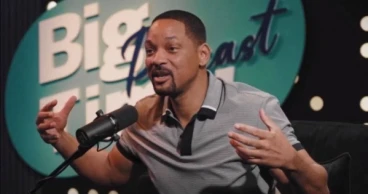
‘Quran is crystal clear’: Will Smith
Hollywood icon Will Smith recently shared his profound appreciation for the Quran, describing the Muslim holy book as “crystal clear” and lauding its simplicity.
In a conversation reported by Al Arabiya, Smith recounted his experience of reading the Quran last Ramadan. “I loved the simplicity; the Quran is so clear; it is crystal clear. It is hard to walk away with misunderstanding,” Smith remarked.
He was moved by the spirit of the Quran, which he found to be “so beautiful and clear.”
Read more: Reasons Why Ramadan Fasting is More Beneficial Than Dieting
Delving deeper into his spiritual journey, Smith revealed that he has explored the holy texts of Judaism and Christianity as well. He expressed amazement at the deep connections between the Quran, Torah, and Bible.
“I was surprised how it is like one story, from the Torah through the Bible and into the Quran. I never totally understood Abraham as the father and then the split with Isaac and Ishmail and it was beautiful to get the completion of that comprehension,” he shared.
Smith, who is currently visiting Saudi Arabia, also opened up about his affinity for the Middle Eastern country and its culture during a podcast with MBC.
With a touch of humor, Smith, who portrayed the Genie in the live-action movie "Aladdin," quipped: “I think I was a Genie in a past life. I am so at home; I love it here.”
Read more: 10 Best Free Apps for Ramadan on Android and iOS
2 years ago
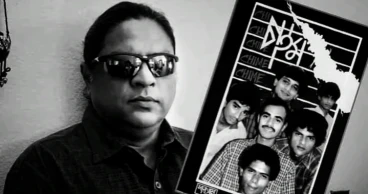
Singer Khalid no more
Popular band singer Khalid passed away on Monday evening. He was 60.
He breathed his last around 7:15pm at a city hospital while undergoing treatment there, lyricist and composer Prince Mahmud confirmed.
Family sources said the body will be taken to Gopalganj after Namaj-e-Janaza at Green Road Jame Mosque on Monday at 11 pm. Later, he will be buried in the family cemetery there.
Khalid is best known for his songs "Shorolotar Protima", "Himaloy", "Kono Karonei", among dozens of other hits during the 90's and 2000's.
Born in Gopalganj, the singer started his journey in the world of music in 1981.
2 years ago

Sadi Mohammad laid to eternal rest at Mohammadpur
Sadi Mohammad, one of the foremost Rabindra Sangeet exponents in the country, has been laid to eternal rest on Thursday at the capital’s Mohammadpur Jame Masjid Complex Graveyard.
The burial of the revered artist took place at 2 pm after the Zuhr prayers.
On Wednesday night, Sadi Mohammad’s hanging body was found at his ancestral family home, discovered by his brother and eminent dance artist Shibli Mohammad.
“My brother went to his room to practise after breaking his fast on Wednesday. Afterwards, he instructed his helper to go, saying that he would call him once finishing his practice, which felt strange to me as he never shuts the door when rehearsing,” a devastated Shibli Mohammad described the incident to the media.
“I went to his room and discovered the door closed from inside and found no response, not even after a forceful knock, we went on breaking the door and I observed that my brother was no more,” he described.The Rabindra Sangeet maestro was immediately taken to the Shaheed Suhrawardy Medical College and Hospital, and the duty doctor confirmed that he took his own life.
Mohammadpur Police Station Officer-in-Charge (OC) Tofazzal Hossain also echoed the same after the primary evaluation of the incident. However, no postmortem was done of the body upon the decision of the family.
Artistes from the cultural arena rushed to pay their last respects to Sadi Mohammad before his burial on Thursday. Among them were many music stars and actors including his nephew and media personality Syed Gousul Alam Shaon, eminent singer Khurshid Alam, Rezwana Choudhury Bannya, Anima Roy, Adity Mohsin, Lily Islam, Khairul Alam Sabuj, Kabir Bakul, Laisa Islam Lisa, and many others.
Numerous celebrities and fans of the esteemed musician shared tributes to the great singer on social media. Many of them have, however, expressed their frustration and grief over the fact that, despite being a committed and distinguished Rabindra Sangeet singer and hailing from a family of a martyr, he did not receive state honours and awards. He also left a burning question for the state regarding what the requirements should be to receive state honours.
“My brother would get some satisfaction if he got any state recognition while he was alive. Sadi Mohammad is my elder brother, and it was embarrassing for me when I got the Ekushey Padak this year before him. I told him that I would not receive the honour in person because of this reason but he insisted and comforted me, saying that he was proud of me, and I should receive the award as an acknowledgement of my contribution to the country’s culture as a dance performer,” Shibli Mohammad told media.
“However, when I handed him the invitation to go to the Ekushey Padak ceremony alongside me, he politely refused because he felt that many people would ask why he is yet to receive the honour. He was mentally devasted after our mother’s demise last year, and regarding the awards - he felt that he got overlooked despite being a lifelong devoted artist,” Shibli said.
Sadi Mohammad was born on 4 October, 1957 to martyr Salim Ullah and Zebunnessa. His father was a leader of the Bangladesh Awami League and was brutally murdered in 1971, which he witnessed himself.
After the country’s independence, Sadi Mohammad was enrolled on Bangladesh University of Engineering and Technology (BUET)'s Department of Civil Engineering. He did not carry on with his studies there and went to Santiniketan after receiving a scholarship in 1975 and attended Visva-Bharati University to complete his graduation and post-graduate studies in Rabindra Sangeet.
In his lifetime, Sadi Mohammad received only one state honour - the Rabindra Award by Bangla Academy in 2015.
2 years ago

List of winners at the 2024 Oscars
A list of winners at the Academy Awards on Sunday:
BEST PICTURE
“Oppenheimer”
BEST ACTRESS
Emma Stone, “Poor Things”
BEST ACTOR
Cillian Murphy, “Oppenheimer”
SUPPORTING ACTOR
Robert Downey Jr., “Oppenheimer”
SUPPORTING ACTRESS
Da’Vine Joy Randolph, “The Holdovers”
DIRECTOR
Christopher Nolan, “Oppenheimer”
LIVE ACTION SHORT FILM
“The Wonderful Story of Henry Sugar”
SOUND
“The Zone of Interest,” Tarn Willers and Johnnie Burn
ORIGINAL SCORE
“Oppenheimer,” Ludwig Göransson
ORIGINAL SONG
“What Was I Made For?” from “Barbie”
VISUAL EFFECTS
“Godzilla Minus One”
FILM EDITING
“Oppenheimer,” Jennifer Lame
2 years ago
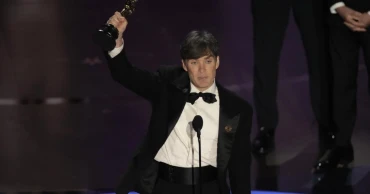
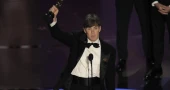
Cillian Murphy wins his first best actor Oscar for role in ‘Oppenheimer' biopic
Cillian Murphy called himself a “very proud Irishman” after he trotted onstage to claim his first-ever Oscar for portraying the man who created the atomic bomb in Christopher Nolan’s blockbuster biopic “Oppenheimer.”
“I'm a little overwhelmed,” said Murphy, who won best actor for his stellar role as J. Robert Oppenheimer. The film tells the story of how Oppenheimer and his peers at Los Alamos would test the bomb on July 16, 1945, not knowing what was going to happen — and the ensuing fallout.
“I'm very humbled,” he said backstage. “I'm very grateful.”
Murphy, though a regular presence in Nolan films going back almost two decades, had always been a supporting player. This time, Nolan wanted him to lead.
Murphy thanked Nolan and the director's wife, Emma Thomas, a producer on the film.
“It's been the wildest, most exhilarating, most creatively, satisfying journey you've taken me on over the last 20 years,” Murphy said to Nolan. “I owe you more than I can say.”
The Irish actor said he did a screen test for Nolan as a kid and thought that would be his last opportunity with the director.
“I thought that would be it,” he said. “I thought it would be just enough to be in a room with Chris for a couple hours. I'm thankful for this.”
‘Oppenheimer’ set to win big at the Oscars
Murphy bested Colman Domingo for “Rustin,” Bradley Cooper for “Maestro,” Paul Giamatti for “The Holdovers,” and Jeffrey Wright for “American Fiction.”
“Oppenheimer” won seven awards Sunday, including best picture, best director for Nolan and a supporting actor Oscar for Robert Downey Jr.
Murphy called Nolan the perfect director and an extraordinary writer and producer.
“We made a film about the man who created the atomic bomb,” Murphy said. “For better or worse, we’re all living in Oppenheimer’s world, so I really like to dedicate this to the peacemakers. everywhere.”
Ben Kingsley, a presenter, applauded Murphy's courage and trust in Nolan for agreeing to take on the role before reading the script.
“Your performance is masterful,” said Kingsley. He acknowledged that Murphy’s portrayal of Oppenheimer had “layers of humanity whilst his character created something inhumane.”
Kingsley added: “It’s riveting to watch.”
Last year, Murphy told The Associated Press that when Nolan approached him to star as Oppenheimer, he called it was a “great day.”
“He’s so understated and self-deprecating and, in his very English manner, just said, ‘Listen, I’ve written this script, it’s about Oppenheimer. I’d like you to be my Oppenheimer,’” he said.
For Murphy, he knows there are some movies he’s right for and some that he is not.
Robert Downey Jr. wins his first Oscar for supporting actor role in 'Oppenheimer'
“I have always said publicly and privately, to Chris, that if I’m available and you want me to be in a movie, I’m there. I don’t really care about the size of the part,” he said last year. “But deep down, secretly, I was desperate to play a lead for him.”
Murphy came into the Academy Awards a strong contender after picking up trophies at the Golden Globes, SAG Awards and BAFTA Film Awards.
2 years ago

Robert Downey Jr. wins his first Oscar for supporting actor role in 'Oppenheimer'
Robert Downey Jr. became an Oscar winner on Sunday in a long-awaited victory for the veteran actor who received his first acting nod three decades ago.
Downey won best supporting actor for his portrayal of Rear Adm. Lewis Strauss in “Oppenheimer,” hailed as one of his best performances in years.
It was the third overall Oscar nod for one of Hollywood’s most versatile performers but whose career has been marked by extreme setbacks.
“I’d like to thank my terrible childhood” Downey said in a light-hearted speech, pausing for the audience’s laughter, “and the academy — in that order.”
He also gave thanks to his wife, Susan. “You loved me back to life and that’s why I’m here.”
'Oppenheimer' wins best picture at Academy Awards, Emma Stone takes best actress
Downey has been open about his past struggles with drug addiction. He revealed in his 2022 documentary “Sr.,” which pays tribute to his filmmaker father, that he was addicted to drugs by age 8.
A series of arrests for drug-related charges and a year in prison followed Downey’s first Oscar nod 30 years ago, when he was 28.
The actor said recently on “The View” that he’s grateful he didn’t end up winning in 1993 for best actor for “Chaplin.”
“I was young and crazy,” he said. “It would have put me under the impression that I was on the right track.”
Downey also received an Oscar nod in 2008 for a supporting role in “Tropic Thunder.”
Sunday's win solidified Downey's frontrunner status this awards season. He also took home the top honor for supporting actor at the Golden Globes, BAFTA Film Awards, SAG Awards and Critics Choice Awards.
“Why me? Why now? Why do things seem to be going my way?” he said while accepting his SAG Award.
Downey beat Sterling K. Brown for “American Fiction,” Ryan Gosling for “Barbie,” Mark Ruffalo for “Poor Things” and Robert De Niro for “Killers of the Flower Moon.”
‘Oppenheimer’ set to win big at the Oscars
“Oppenheimer,” Christopher Nolan’s three-hour deep dive into the development and fallout of the atomic bomb during World War II, won seven Oscars on Sunday, including best picture, best director for Nolan and best actor for Cillian Murphy. The film entered the night with 13 nominations.
“What we do is meaningful,” Downey said onstage Sunday, “and the stuff we decide to make is important.”
2 years ago