arts-culture

Episodes of her Gaze: Maksuda Iqbal Nipa's resplendent art collective launched at DLF
Unveiling the kaleidoscopic world of vibrantly crafted abstract paintings by renowned painter Maksuda Iqbal Nipa, Cosmos Books on Friday launched 'Episodes of her Gaze' at the 10th Dhaka Literature Festival (DLF).
The maiden publication of Nipa's majestic artworks published from Cosmos Books, the book was unveiled by Nabila Rahman, Digital Transformation Strategist of UNB, at the Cosmos Books stall at DLF, at Bangla Academy in the capital
Expressing her gratitude to Cosmos Books for publishing her maiden art collective, Maksuda Iqbal Nipa said that she is honoured about her book being a part of this year's DLF, as it returned from a three-years hiatus due to the Covid-19 pandemic.
"The concept of the book reflects my contemporary artworks, which I began during my days back in Japan where I studied my Master's. This book features 200 artworks from several of my exhibitions, and it was jointly created with artist and art writer Javed Jalil," Nipa told UNB.
"Although this publication was previously launched at the National Musuem during my solo exhibition and later at the Dhaka Art Summit, this is the first time my art collective is being exhibited in DLF through this publication," she added.
Read: ‘Nobo Opens a Door’: Engaging storytelling enthrals children at DLF
The book is edited by Catherine Grace Gardener and Mubin Shadman Khan, while the layout and design was made by ARK Reepon. Photographs of her artworks for the book was contributed by Nipa's husband, and renowned artist in his own right, Mohammad Iqbal, as well as ARK Reepon, Hossain Shahid Echo, Mizanur Rahman Khoka, Rezaul Haque, Rasel Chowdhury, and Sourav Chowdhury.
The book also contains a foreword by the late Australian cinematographer Dr Jim Frazier, a pioneer behind the camera who worked with Sir David Attenborough in his heyday. The multiple award-winning naturalist fell in love with Nipa's works during the time he spent in Bangladesh in 2015-16.
A masterful painter with a vivid knowledge of abstract paintings and known for her vibrant abstractions that are frequently illustrated on enormous canvases, Maksuda Iqbal Nipa earned her BFA (Drawing and Painting) in 1996 from the Faculty of Fine Art, University of Dhaka, Bangladesh, and in 2002 she enrolled in a Post-Graduate Research Course (Oil Painting) at the Aichi University of Education, Japan. Nipa graduated from the Aichi University of Education in 2004 with a Master of Education in Fine Arts (Painting). Nipa's artistic style drastically shifted during her time in Japan from representational to her own brand of abstraction.
A proponent of the French maxim "Art for art's sake," Nipa’s journey with her creations has always been independent, and adamant to not serve any didactic, moral, utilitarian or political purposes. The artworks of Nipa are abstract, emotive, visual diaries of the hardships she endures on a daily basis as a woman and a person.
She was inspired to craft her artworks by her longing for harmony and her wish to flee the oppression she encounters; she experimented and created oil paintings on big canvases while discovering what it meant to be liberated from oppression. She subsequently continued to develop her pieces over time until they had no structure or shape.
Read: “More than meets the eye”: Dr Kenneth Robbins on Habshi rule in Bengal and Africa-India connection in the Middle Ages
Nipa's journey as a woman and artist is about toiling with spaces of birth, prolonged states of contemplation and obscured flights of silent fancies. Her pictorial parameters are gardens of the seen, unseen and the absorption of moments as the eyes take in the trillions of information. But her link is more to the sensory unconscious mating of environments where she dwells in an escape, seeking bliss.
The zone of her imaginative contemplation is the words hidden behind veils of curiosity and doubt.
In her visual plates, the anxiety of merging the ethereal and objective and the contest between directions, takes her into a perusal of pictorial repetition and planes of separation. There is an inclination of losing the self into a private monologue of layers, as a conversation between thoughts, memory and time. She rectifies her subjectivity into circles penetrating various formations of expression.
Her certain obsessions and journeys are silenced and trapped within the visuals as layers pressing the other, keeping an essence of the previous times. Her use of scratchy strokes of anxiety creating tactile sensitivity, subdued dense lines of obscurity relating unfathomable space of vision. The pigments from underneath and within are parallel and vertical cross-hatchings of gestural activity between visual elements. They are chromatic gradation of light sensations.
As an artist, Nipa's inner mood and reminiscence of the hidden self is a quest which she meditates through silent overtones of restless urges and modes which slowly live with the existing self- glancing diary of canvases.
In her illustrious career, Nipa has held numerous solo and group shows at home and abroad, including the National Museum of Bangladesh, the UNESCO Headquarters in Paris, France, the Toyota Municipal Art Museum in Toyota, Japan, the Las Vegas Art Museum, USA, the Youngone Corporation in Seoul, Korea, etc. She has been honoured by Bangladesh Mahila Parishad (Bangladesh Women’s Association) for outstanding contributions to her respective field. Nipa has received numerous awards and grants from Japan, China, and Bangladesh.
3 years ago
“More than meets the eye”: Dr Kenneth Robbins on Habshi rule in Bengal and Africa-India connection in the Middle Ages
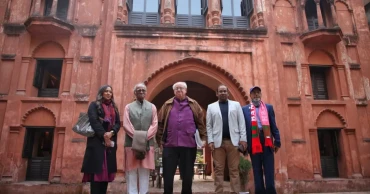
Addressing the fascinating history of the Habshi dynasty in Bengal (from 1487 AD to 1493 AD), prolific international researcher, archivist and curator Dr Kenneth X Robbins on Thursday said that proper archiving of the particular period in South Asia is necessary.
“There are remarkable and important chapters in the Afro-South Asian diaspora including the activities of the African rulers in Bengal and elsewhere in South Asia. There are fascinating stories regarding religion, racism, music and so on. All this history has to be put together by historians,” Dr Robbins said as the honorary speaker at the National Professor Atwar Husain Memorial Lecture 2023, delivered at the Asiatic Society of Bangladesh on Thursday.
He said, “There are stories regarding Habshi rulers and their activities, such as Malik Andil (Sultan Saifuddin Firuz Shah) who was very generous to the people but we don’t actually know what he did. His son succeeded him who was a federal ruler, and the final ruler (Shamsuddin Muzaffar Shah) was also known as a charitable person. We know other stories regarding Africans building mosques in Bengal, bringing their culture here. This is all very interesting…these are important to the history of Bengal.”
He mentioned a book project on the documentation of Bengalis and Africans from the Indian Ocean world — co-edited by Nahar Khan, Executive Director of Cosmos Foundation; Dr Rosie Llewellyn-Jones MBE, a well-known British scholar with expertise on Lucknow and its culture; and himself. The book would contain several chapters on African elites in Bengal, important characters in Bengal, Bengalis abroad, and music featuring names such as American musician Bardu Ali with a Bengali Muslim origin.
Chairperson of National Professor Atwar Husain Trust Fund and Liberation War Museum founder-trustee Mofidul Hoque chaired the seminar.
Read more: ‘Historical and unexplored ties between Afro-South Asian communities need cultural attention’
3 years ago

Spardha to stage ‘4.48 Montrash’ at Mahila Samity from Jan 5 to 13
Spardha, the independent theatre collective known for its unique and fascinating productions, will stage its acclaimed “4.48 Montrash” at the Nilima Ibrahim Auditorium of Bangladesh Mahila Samity in Dhaka, starting from Thursday.
Adapted from the late British playwright and stage director Sarah Kane’s “4.48 Psychosis”, the Bangla version of the play translated by Shahman Moishan and Sharif Siraj is designed and directed by noted theatre personality Syed Jamil Ahmed.
Read more: Green University English Club stages “Macbeth”
From January 5 to 13, a total of eleven shows of the play will be staged at the venue, according to the organisers.
Storyline of the play revolves around a young female artist and her psychosis, shedding light on issues including sexual assault, torture, murder, religious intolerance and turmoil in society.
It showcases a unique poetic style as opposed to the traditional linear narrative, in order to embrace a post-dramatic architecture by crafting an amalgamation of literary techniques including soliloquies and monologues, stream-of-consciousness, everyday dialogues, and direct narratives addressed to the audiences.
Read more: Batighar stages 'Radcliffe Line' at BSA
Popular filmmaker Mostafa Sarwar Farooki was enthralled with the play in December 2020, and lauded the production for its excellence.
“A befitting production to end a depressing year! Jamil Ahmed once again didn’t fail to create magical moments, throw the right questions, and place us in front of a disturbing mirror! All the performers made me believe they hate to live this unjust and chaotic life! Mohsina Akhter (lead in the play) gave a powerful performance once again, she was so relatable!,” – Farooki wrote on Facebook at the time.
Two tiers of tickets are available for the shows – Tk 500 and Tk 1000. Students and theatre activists can watch the play at a discounted price (Tk 300) per show.
Ticket details are available on the Facebook page of Spardha and also at the event page of the play.
3 years ago

Curtain rises on Dhaka Lit Fest 2023 Thursday
The tenth edition of the Dhaka Lit Fest will be held at the Bangla Academy from January 5 to 8.
The fest will host many award-winning authors and internationally acclaimed speakers, including Nobel laureate Abdulrazak Gurnah; winners of the Booker and International Booker, Neustadt International, PEN/Pinter, Prix Médicis, Academy Award, Windham-Campbell Prize, Albert Medal, Waterstones Children's Book Prize, and Aga Khan Award.
Read more: 32 bands to take the stage of Dhaka Rock Fest 3.0 on December 27,28
This year's line-up also features Nuruddin Farah, Amitav Ghosh, Hanif Kureishi, Pankaj Mishra, Tilda Swinton, Jon Lee Anderson, Onjali Rauf, Sarah Churchwell, Geetanjali Shree, Daisy Rockwell, Esther Freud, Alexandra Pringle, Dame Sarah Gilbert, Marina Mahathir, Joy Goswami, Anisul Hoque, Mashrur Arefin, Kamal Chowdhury, Muhammad Zafar Iqbal, Marina Tabassum, Syed Manzoorul Islam, Imdadul Haq Milan, Kaiser Haq, Shaheen Akhtar, Amitabh Reza, Azmeri Haque Badhon and more.
Over 500 speakers, performers, and thinkers representing five continents will participate in the four-day event with over 175 sessions.
Along with a diverse mix of conversations and dialogues, and sessions on science and technology, there will also be activities for children, and young adults, film screenings, and theatrical, music, and cultural performances at the fest.
Read more: Ganga-Jamuna Cultural Festival 2022 draws to a close
Dhaka Tribune and Bangla Tribune are the event's title sponsors, City Bank platinum sponsor, and British Council is the strategic partner.
Online registration for the fest is now open. Tickets are available for Tk200 and Tk500, and entry will be free for children under 12.
3 years ago
Majestic Silks of Bangladesh Exhibition by Maheen Khan: Fashion in silk gets the heritage touch
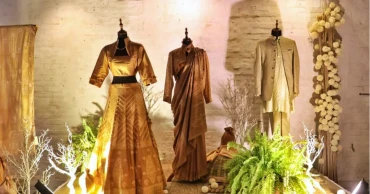
Showcasing the rich history of Bangladesh's illustrious silk industry as well as efforts to support and promote local designs, a three-day exclusive solo fashion exhibition titled ‘Majestic Silks of Bangladesh Exhibition by Maheen Khan’, is currently underway at the Nordic Club, Gulshan in the capital.
The solo design exhibition began on Tuesday (December 27, 2022), featuring some of the unique designs of eminent Bangladeshi fashion designer Maheen Khan, the founding president of the Fashion Design Council of Bangladesh (FDCB) and the founding managing director of Mayasir, a trend-setting brand that emphasizes the nation's traditional embroidery.
Sharing her motifs and visions with UNB regarding her major solo exhibition in a long time, Maheen Khan said that this event is proudly showcasing some of the exclusive, handmade crafts as a befitting tribute to the country’s majestic silks.
Read more: BGMEA, Fashion Design Council to promote khadi globally
3 years ago

For People and Planet: New cookbook with insights into carbon footprint of each dish
Crab cakes made with fonio, an ancient West African grain, or Ratatouille prepared with "imperfect" produce to reduce food waste, are only a couple of the over 70 recipes included in a recently launched cookbook with climate-friendly and delicious recipes.
The Cookbook in Support of the United Nations: For People and Planet" is divided into chapters that include food systems, biodiversity, sustainable consumption and production, climate, as well as food waste, providing recipes, yes, but also insights into the carbon footprint of each dish.
Renowned chefs such as UN World Food Programme (WFP) Goodwill Ambassador Chef Manal Al Alem, and Chef José Andres, as well as indigenous home cooks and farmers from around the world, have contributed to the book.
The book is the brainchild of Kitchen Connection, an organisation that for a decade has been bridging together culinary arts, sustainability and education, and driving the discussions on the need for a food systems transformation.
"We found that those in the highest-emitting countries in the world emit through our food choices about 3 kilograms of CO2 emissions per meal. The recipes in this book have 58.6 percent less carbon compared to an average meal from high-emitting regions of the world," Kitchen Connection founder and New York University Professor Earlene Cruz, told UN News.
The cookbook also highlights and follows the World Health Organization's macronutrient guidelines, making the recipes not only healthy for the planet, but also for everyone.
But most of all, it puts a spotlight on how important people's food choices are and how they can impact their immediate environment, no matter where they cook.
Cruz said: "Whether we're in cities, in suburban or rural areas, or somewhere as remote as Antarctica, consideration of our food choices and how they impact our immediate environment is paramount."
Read more: Activists target Salt Bae’s upscale London steakhouse
3 years ago

Group art exhibition begins at Zainul Gallery in Dhaka University
A group exhibition named “Japan & Bangladesh – A Group Art Exhibition” has begun at the Zainul Gallery, the University of Dhaka.
The exhibition is jointly organized by Embassy of Japan in Bangladesh, the Department of Drawing and Painting, the University of Dhaka and sponsored by bKash Ltd.
DU Vice Chancellor Professor Dr. Md. Aktaruzzaman, Deputy Chief of Mission of the Embassy of Japan in Bangladesh MACHIDA Tatsuya inaugurated the exhibition.
Read more: Bangladesh’s Victory Day celebrated in Dubai with ‘Bijoy Art Exhibition’
3 years ago
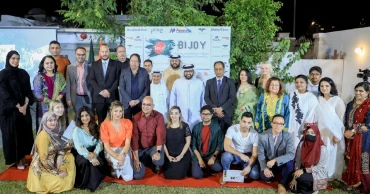
Bangladesh’s Victory Day celebrated in Dubai with ‘Bijoy Art Exhibition’
Funun Arts Group along with Mahfuz Canvas from Bangladesh organised “Bijoy”, an artistic celebration of 51st Victory Day of Bangladesh, on December 12 at Dubai International Art Center.
This exhibition proclaimed the message of tolerance and unity with which nations should build a safe and secure future for their coming generations.
“Bijoy” featured sixty original artworks from Bangladesh. Most of the artists visited the UAE as part of the exhibition and others sent their artworks to be exhibited.
Read more: Spirit of Victory Day imbues celebrations at home and abroad
Artists from twenty nationalities, who are residents of UAE also joined them in exhibiting unique and spectacular artistic pieces on the theme of love, peace, harmony, and togetherness.
Consul General of Bangladesh in Dubai and the Northern Emirates B.M. Jamal Hossain inaugurated this mega art event while eminent personalities were present on the occasion.
Appreciating Funun Arts and Mahfuz Canvas along with the title sponsor, PowerPac, for oganising the exhibition, Jamal Hossain said this will mark the beginning of a new era where art, ideologies, and perspectives merge in creating a better world for posterity.
“Art is beyond all boundaries, and we are using art to bring people together in this wonderful land,” said Shiba Khan, Founder and CEO of Funun Arts.
PowerPac (a concern of Sikder Group) was the title sponsor of this event.
3 years ago

Exhibition with rare photos of Bangladesh’s birth, Bangabandhu to open tomorrow
In the month of victory, Samdani Art Foundation and Centre for Research and Information (CRI) are showcasing never-before-seen images by renowned photographer Anne de Henning that highlight and celebrate Bangladesh’s indomitable courage during the Liberation War against Pakistani occupation forces. The exhibition, titled ‘Witnessing History in the Making: Photographs by Anne de Henning’, is set to open tomorrow.
The exhibition will be open to visitors at Dhaka’s Liberation War Museum from December 15 to December 24. The presence of Anne de Henning and a tour by the veteran French photographer through her exhibition is a special attraction.
Already earning global acclamation and covered by leading international media outlets, the exhibition drew praises in France earlier. “So intense and so fragile” is how Forbes magazine described the exhibit.
Traveling through the country during the Liberation War, Henning’s photographs captured life in the war zone – from freedom fighters, to men, women and children boarding refugee trains and fleeing from their villages.
On her second visit to the country, her photographs from 1972 feature Bangabandhu Sheikh Mujibur Rahman, who, all his life, worked to decolonize the nation from British and Pakistani rule and move towards democracy and freedom. Images of Mujib were systematically destroyed after the coup of 1975 and Henning’s surviving colour photographs are among the few known to still exist.
“There's a leader from the subcontinent who led his country to independence based on very progressive ideals of a secular, equal country for all,” said Radwan Mujib Siddiq, grandson of Bangabandhu Sheikh Mujibur Rahman and a trustee of CRI, expressing his views about the photographs.
“The whole of Bangladesh got behind him, they fought a war against all odds, and Bangladesh emerged independent,” he said.
Henning’ captured Bangabandhu giving a speech at the first Council Meeting of Awami League after the independence of Bangladesh. “I came specifically from Calcutta to photograph the event,” she said. Although at the time she favoured shooting in black and white, she chose to capture this event in colour because of the vibrant blue, white and red stripes of the shamiyana — ceremonial tent — that housed the event.
Centre for Research and Information (CRI) and Samdani Art Foundation will also hold “Let’s Talk with Anne de Henning: Memories of Bangladesh in War and Peace” on December 17, 2022. At the session, Henning will share her experience of capturing images during the Liberation War in 1971 and the post-war country in 1972.
Anne De Henning was one of the first photojournalists to enter Bangladesh during the war. She came back again in 1972, to photograph the man whose name she heard many times during the war, Bangabandhu Sheikh Mujibur Rahman. Henning will be visiting Bangladesh after 50 years.
3 years ago

Asian Art Biennale Bangladesh 2022: Participating foreign artists visit Gallery Cosmos
Gallery Cosmos, an exclusive art space dedicated to enriching the perception and appreciation of contemporary Bangladeshi art and one of the most prominent art galleries in Dhaka, hosted an exclusive meet-up and dinner for the participating artists of the ongoing 19th Asian Art Biennale Bangladesh 2022 on Sunday night.
Over 150 prominent artists from the participating 114 countries, including Bangladesh, and officials from Bangladesh Shilpakala Academy visited Gallery Cosmos and Cosmos Atelier-71 printmaking studio at the Cosmos Centre in Dhaka’s Malibagh as part of the event.
Read more: 'BRAVEHEART’: Gallery Cosmos pays rich artistic tribute to Bangabandhu
Enayetullah Khan, prominent Bangladeshi entrepreneur, journalist, author and patron of arts and Founder-Managing Director of the Cosmos Group and Chairman of Cosmos Foundation, joined the event alongside Dr Iftekhar Ahmed Chowdhury, former Foreign Advisor of Bangladesh and President of Cosmos Foundation; Daniela Mariana Sezonov Tane, Ambassador of Romania to India; Romanian artist-sculptor Alexandru Poteca; Bangladesh Shilpakala Academy Director of Fine Arts Syeda Mahbuba Karim Mini and other distinguished personalities.
3 years ago