Others
Return looted police arms by Tuesday
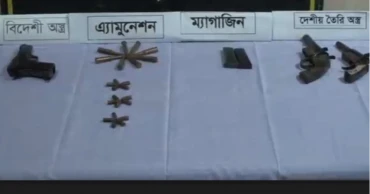
The looted arms and ammunition of police must be returned to police headquarters by September 3.
The police headquarters issued the directive on Sunday.
Law enforcement agencies have recovered a total of 3,872 firearms that were looted during recent movement from various locations, including police stations, police lines, and police outposts, as of August 31, said the authorities.
The recovered items also include 2,86,216 rounds of bullets, 22,201 tear gas shells, and 2,139 sound grenades, according to the police statement.
The Bangladesh Army has been actively assisting in the recovery efforts throughout the country to ensure the swift return of all looted arms and ammunition.
1 year ago

Bus-truck collision leaves 5 dead in Gopalganj, 25 injured
At least five people were killed and scores injured in a head-on collision between a passenger bus and a truck on Dhaka-Gopalganj highway in Kashiani upazila of Gopalganj early Sunday, said police.
The identities of the casualties could not be known immediately, said Kashiani police station’s Officer-in-Charge Md Jillur Rahman.
He said the accident occurred around 7:30am when the Dhaka-bound bus from Pirojpur collided with the truck coming from the opposite direction while crossing a lane in Majhigati area on the highway, leaving five dead on the spot and 25 others injured.
The injured were rushed to Upazila Health Complex and the bodies were taken to the police station, he said, adding that the bodies will be sent to Sadar Hospital morgue for autopsy.
Details about the accident will be shared later, the OC added.
1 year ago

River erosion halts ferry movement at Daulatdia terminal
The Daulatdia Ferry Terminal No-4 in Rajbari has been closed since midnight Friday due to sudden erosion of the Padma River causing suffering for the terminal users.
Currently, out of the four ferry terminals at Daulatdia, only two are operational, causing disruption in ferrying vehicles.
Sources at Bangladesh Inland Water Transport Authority (BIWTA) said around 25 meters of the terminal and nearby residential areas have eroded, making the area risky.
Locals said that erosion began suddenly around 1:15am on Friday, with the riverbank on the eastern side of the terminal collapsing. This caused panic among locals, prompting the authorities to shut down the terminal. Earlier a ferry carrying vehicles had departed for Paturia around 1am.
Laskar Shamsul Alam, an official of Bangladesh Inland Water Transport Corporation (BIWTC) in charge of the terminal's pontoon, said that the ferry "Shah Mokhdum" left for Paturia at 1am. Shortly after, erosion began on the eastern side of the pontoon, causing the ground to collapse rapidly and the water level to rise. The terminal was closed around 2am as a precautionary measure, and a recovery vehicle was brought in to lift the pontoon.
By Saturday afternoon, a recovery vehicle from BIWTC was seen on the connecting road of Terminal No-4, with the pontoon secured by thick ropes to prevent it from drifting away. Approximately 100 feet of the ramp has fallen into the river, leaving it in a hazardous state. Additionally, ten local families are at risk due to the ongoing erosion.
Local tea-staller Monir Fakir said that he had just closed his shop and returned home when he heard about the terminal's collapse and expressed concern for his tea stall and residence, located just 10 yards from the terminal, fearing that they may be destroyed if the erosion continues.
1 year ago

Early warning from neighbouring country could have minimised flood damages: Adviser Sakhawat
If neighbouring country had alerted in advance about the release of water, the damages caused by the devastating floods in Bangladesh could have been minimised, Textile and Jute Adviser Brigadier General (retd) M Sakhawat Hossain said on Saturday.
"We were not prepared for this flood. Floods are not common at this time of year. Our neighboring country did not issue any warnings and suddenly released water, which exacerbated the situation,” he said.
“We hope this will not happen in the future," the adviser told reporters after inspecting the medical camp for the flood victims set up by the Army at the model mosque area in Cumilla’s Burichong upazila.
Cumilla Cantonment Brigadier General Abu Sayed Al Masud, Additional Superintendent of Police Kamran Ahmed, Burichong Upazila Executive Officer Sahida Begum and other army officers were present.
Regarding the rehabilitation of flood-affected people, Sakhawat Hossain said: "The government has taken responsibility at a critical moment. The process of rehabilitating those affected by the flood is ongoing. Since there is no political government currently, we are lacking in appointing contractors for the job. Therefore, the rehabilitation efforts will proceed as quickly as possible."
Earlier in the day, during a visit to a medical camp in Sreepur's Chauddagram of the district, the adviser highlighted the risk of waterborne diseases including skin diseases.
At that time, he emphasised the need for adequate medical supplies in flood-affected areas under these conditions.
1 year ago

Chief Adviser to come up with 'comprehensive framework' on reforms soon: Spl Asst Mahfuj Alam
Chief Adviser Prof Muhammad Yunus will soon come up with a “comprehensive framework” on reforms which will include how the transition of power will take place, his Special Assistant Mahfuj Alam said on Saturday.
“He will mainly give a framework on reforms,” he told reporters at Foreign Service Academy at a briefing after the Chief Adviser’s views-exchange meetings with over two dozen of political parties including Jatiya Party and Islamic parties held at state guesthouse Jamuna from 3pm to 8pm.
Chief Adviser’s Press Secretary Shafiqul Alam and Deputy Press Secretary Mohammad Abul Kalam Azad Majumder also responded to questions from the reporters.
Mahfuj said the political parties through their proposals will let the interim government know how much reasonable time they will give the government.
“He (Prof Yunus) basically wanted to listen to the political parties on what kind of reforms they want,” said the Special Assistant.
The Chief Adviser expressed his optimism that taking all onboard he will present the framework very soon.
Prof Yunus assured that based on opinions from all, a greater national consensus will be created on reforms and lasting changes.
“It is a golden opportunity for the nation to reform and this opportunity needs to be utilized properly,” Press Secretary Shafiqul Alam quoted the Chief Adviser as saying.
The Chief Adviser asked the political parties to give concrete and written proposals outlining what they want regarding reforms including Constitution’s amendment or rewrite.
The Press Secretary said reasonable time will depend on reforms proposals and it cannot be said now. “No one talked about a specific timeframe.”
“All said the country will march ahead under your (Prof Yunus) leadership and we will be able to see concrete and very lasting reforms,” Shafiqul Alam said.
The Press Secretary said the Islamic parties demanded withdrawal of 300 cases against them and sought fair and transparent investigations into events in 2013, 2016 and 2021 to know actually how many of their people died.
Earlier on Thursday, a BNP delegation led by its Secretary General Mirza Fakhrul met with the Chief Adviser.
Earlier on August 12, senior leaders of BNP, Jamaat-e-Islami, CPB led by Shah Alam, Gonotantra Mancha, BJP, Islami Andolan Bangladesh, AB Party, Gono Odhikar Parishad, Democratic Left Alliance and NDM held separate meetings with the Chief Adviser and extended their full support to the interim government.
1 year ago

Complete rewrite of the constitution necessary to prioritise human rights in Bangladesh: Ali Riaz
The existing constitution in Bangladesh has paved the way for a personality cult-based authoritarian system, according to Professor Ali Riaz of Illinois State University, USA.
Speaking at a public session held at the Professor RC Majumder Auditorium at Dhaka University on Saturday afternoon, he emphasised that rather than reforming or amending the current constitution, a complete rewrite is necessary to prioritise human rights and pro-democracy issues.
The event, organized by the non-political organisation Speak Bangladesh, was titled "Bangladeshi Constitution in Post-Mass Uprising: Amendment or Rewriting?"
Riaz argued that the current constitution has mechanisms that enable the creation of dictators, both de facto and constitutional. He outlined three main reasons why merely amending the constitution would be insufficient.
First, he pointed out that the prime minister holds excessive powers. In 1975, all power was initially concentrated in the president through the establishment of BAKSAL. However, during the transition from a presidential to a prime ministerial system, these powers were transferred to the prime minister, where they have remained unchecked, fostering autocracy.
Second, he criticised the Fifteenth Amendment, which designates one-third of the Constitution as "basic structures" that can never be altered. He referred to this as the "Eternity Clause," arguing that no parliament should have the authority to make such provisions permanent, as elected officials are only mandated to serve for a fixed period, even in a fair voting system.
Third, he emphasised that no meaningful balance of power can be achieved by simply tweaking the existing framework, as the Constitution inherently consolidates power.
Despite these criticisms, Professor Riaz expressed optimism that the constitution could be rewritten in a way that upholds policies consistent with human rights and democracy. He suggested that the principles of "equality, human dignity, and social justice," as outlined in the 1971 Declaration of Independence, should serve as the foundation for any new political solution.
1 year ago
Most parties demand timeframe for elections in talks with CA
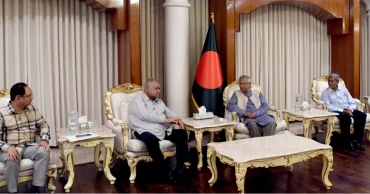
Most political parties, during a series of exchange meetings with Chief Adviser Professor Muhammad Yunus on Saturday, demanded that the interim government arrange the national election within a reasonable timeframe, after promptly completing the necessary state reforms.
They also pledged to fully support the government in overhauling the country’s election system, election commission, and all state organs—including the police, administration, and judiciary—to ensure a credible national election, restore democracy, and prevent autocracy and misrule.
All the political parties also separately submitted their written proposals on state reforms and various demands during the meetings with the Chief Adviser. The top leaders of the parties also briefed the media about the outcomes of their discussions.
Among them, seven Islamic parties said they assured the Chief Adviser of remaining vigilant and taking necessary steps to prevent any untoward incidents during the upcoming Durga Puja celebrations of the Hindu community.
The Chief Adviser began a series of view-exchange meetings with an initial meeting with six Islamic parties at the state guest house Jamuna.
Law adviser Asif Nazrul, Industries adviser Adilur Rahman Khan, Religious affairs adviser AFM Khalid Hossain AFM Khalid Hossain and Chief Adviser’s special assistant Mahfuz Alam were present at the meeting.
Senior leaders from the parties—Khelafat Majlish, Nizam-e-Islam, Hefazat-e-Islam, Bangladesh Khelafat Majlish, Khelafat Andolon, and Jamiat Ulama-e-Islam—arrived at Jamuna at 3 p.m. and engaged in a one-hour meeting with the head of the interim government.
Following this, the leaders of Islami Andolon met with the Chief Adviser at 4 p.m. Subsequently, top leaders from several other parties, including the Liberal Democratic Party (LDP), Jatiyatabadi Samamona Jote, the 12-party alliance, Bangladesh JSD, Gonoforum, and Jatiya Party, also held discussions with the Chief Adviser. These discussions continued until 8 p.m.
Talking to journalists, LDP Chairman Oli Ahmed said they informed the Chief Adviser that the only way to keep political parties engaged is by providing a clear roadmap or forecast for the elections.
“This roadmap could span six months or nine months. We have emphasized that elections should be held as soon as possible after the necessary reforms are completed. The elections must take place, and the sooner they do, the better it will be for the interim government, the political parties, and the country,” he said.
However, Oli stressed that elections should not be conducted before completing essential reforms needed to restore peace, good governance, and democracy. “Reforms must be completed first. We need to restore humanity among the people of the country.”
He also mentioned that the government could hold elections to local government bodies before the national elections to keep the political parties busy.
When asked about the Chief Adviser's response to the LDP’s statements on the election, he said, “The Chief Adviser emphasized that unity among political parties is crucial on every issue. If I head north and you go south, the country's problems won’t be resolved. A consensus must be reached by all parties.”
The LDP leader also noted that they had submitted an 83-point proposal on state reforms to the Chief Adviser.
He said they told Dr Yunus that if Jamaat's registration can be cancelled for minor reasons, then why should the registration of the Awami League, which is responsible for the killing of thousands of students and people and for the disappearance of several thousand opposition leaders and activists over 15 years, not be annulled? It is absolutely necessary to cancel their registration.
Oli said they warned the interim government that more untoward incidents could occur in the coming days.
“I informed the interim government that they are still not out of danger. The conspirators remain active… Those who were loyal to Hasina have not been dismissed, and investigations against them have not started. Simply transferring them from one position to another will not resolve the problems…They are enemies of the country and must be imprisoned,” he observed.
Jatiya Party Secretary General Mujibul Haque Chunnu said they urged the Chief Adviser to implement all necessary reforms in state organs, including the judiciary, police, administration, and constitutional bodies.
“Our chairman told the interim government that it should undertake reforms that an elected government might not address,” he said.
Chunnu also said they urged the Chief Adviser to ensure a balance of power so that the same person cannot hold both the head of government and leader of parliament positions and to prevent anyone from serving as Prime Minister more than twice.
Besides, he said they recommended that the government take steps to improve law and order and keep essential commodities within the public’s purchasing power. “We suggested that the police force should be more proactive.”
The Jatiya Party leader also said they proposed the government focus on completing the reforms demanded by the people and their party before considering the election. “We want to give the government the necessary time to carry out these reforms before holding the election.”
After the six parties’ meeting with the Chief Adviser, Maulana Mamunul Haque, General Secretary of Bangladesh Khelafat Majlish, said, “We had fruitful discussions. “We have told him (Yunus) to implement the necessary reforms within a reasonable timeframe and avoid unnecessary delays in arranging the elections.”
He said the Chief Adviser also said they will proceed with the elections without delay after the necessary reforms.
Mamunul said the Chief Adviser indicated that preparations and arrangements for this are underway.
“We did not specify a precise duration for what constitutes a reasonable timeframe. We did not discuss any specific deadlines,” he said.
During the meeting, Mamunul said the Islamic parties assured the interim government of their full cooperation in ensuring the security of temples and puja mandaps during Durga Puja.
He said they demanded the withdrawal of nearly three hundred cases filed against the leaders and activists of Hefazat-e-Islam. “We have requested that these cases be withdrawn as quickly as possible through executive orders and legal processes.”
Mamunul said that leaders and activists of Hefazat-e-Islam were attacked during various movements in 2013, 2016, and 2021 and many of their activists are still missing.
“We have also sought the government’s assistance in identifying all our martyrs and missing persons through a comprehensive report. We have proposed establishing a special tribunal to expedite the trial of these killings,” he said.
Besides, Mamunul said they have demanded that no anti-Islamic policies or laws be enacted in the country.
Islami Andolan Bangladesh chief Syed Rezaul Karim said they urged the Chief Adviser to establish a commission to identify and take action against government officials and journalists who assisted the Awami League government in holding farcical elections in 2014, 2018, and 2024, and in committing various misdeeds over the last 16 years.
“We have recommended overhauling the administration and law enforcement agencies with qualified personnel. We stressed that unless a transparent environment is created, holding elections could replicate the same problematic conditions as before. Therefore, we urged the Chief Adviser to ensure that a proper environment is established first,” he said.
Rezaul Karim also mentioned their proposal for implementing a proportional representation (PR) system that includes people from all walks of life, professions, and mentalities. “Elections should be conducted proportionately, with parties and symbols involved. The people will vote, and representatives will be elected to Parliament based on the votes each party receives. This approach ensures the involvement of all professions and prevents the creation of discriminatory or anarchic conditions. We have highlighted these points in our proposals.”
On behalf of Islami Andolan, he said they submitted a 13-point demand to the Chief Adviser, which includes establishing an acceptable investigation commission and an independent tribunal to prosecute those responsible for the July massacres and human rights violations.
Following the fall of the Awami League government on August 5 due to a student-led mass uprising, the advisory council led by Dr Muhammad Yunus took responsibility for the interim government on August 8.
Earlier on Thursday, a BNP delegation led by its Secretary General Mirza Fakhrul met with the Chief Adviser.
Earlier on August 12, senior leaders of BNP, Jamaat-e-Islami, CPB led by Shah Alam, Gonotantra Mancha, BJP, Islami Andolan Bangladesh, AB Party, Gono Odhikar Parishad, Democratic Left Alliance and NDM held separate meetings with the Chief Adviser and extended their full support to the interim government.
1 year ago

Tk 1,13,245 lakh crore laundered abroad: CID starts investigation against S Alam Group
The Criminal Investigation Department (CID) has launched an investigation into Md Saiful Alam, the owner of S. Alam Group, and his associates under the Money Laundering Act. The investigation involves allegations of fraud, forgery, over-invoicing, under-invoicing, and organized crimes through hundi operations, which have reportedly led to the laundering of approximately Tk 1,13,245 lakh crore abroad.
Azad Rahman, additional superintendent of police of the CID media wing confirmed the probe on Saturday.
According to various sources, Saiful Alam and the implicated individuals renounced their Bangladeshi citizenship but managed to obtain Permanent Residency (PR) in Bangladesh within just one day in 2022. They are accused of laundering money from Bangladesh to Singapore, Malaysia, Cyprus, and Europe, where they allegedly acquired both movable and immovable assets and conducted business under their own names or through related persons and companies.
In Singapore, the laundered money was reportedly used to establish a company named "Canali Logistic Private Ltd" with a paid-up capital of approximately Tk 245.74 crore. Furthermore, through the creation of fake documents and by committing fraud and forgery, the group allegedly secured loans amounting to Tk 95,000 crore from six banks for importing/exporting goods and making overseas investments. This money was then laundered abroad.
The CID's preliminary findings suggest that Saiful Alam, along with his wife Farzana Parveen, their sons Ahsanul Alam and Ashraful Alam, and other related persons, are collectively involved in these money laundering activities. As a result, the CID has initiated a formal investigation under the Money Laundering Act and relevant regulations.
1 year ago

RSF condemns charges of crimes against humanity against 25 journalists
Reporters Without Borders (RSF) has condemned charges of crimes against humanity against at least 25 Bangladeshi journalists charges, calling for their immediate release and the dismissal of all unfounded allegations.
The organisation has highlighted the pattern of judicial harassment against journalists in the country.
On August 29, the 25 journalists were charged with crimes against humanity, linked to the death of a protester in July. Among those charged are Farzana Rupa and Shakil Ahmed, both of whom were previously implicated in other protester deaths and are currently detained, said RSF on its wedsite.
The complaint, lodged with the International Crimes Tribunal—originally established in 1973 to prosecute war crimes from Bangladesh's independence—marks an escalation in the legal actions targeting journalists over the past ten days. In addition to Rupa and Ahmed, who were recently dismissed from Ekattor TV, other prominent figures named in the case include the former prime minister, Sheikh Hasina. Although Rupa and Ahmed are the only journalists currently detained, many others have reportedly gone into hiding, fearing arrest.
Antoine Bernard, RSF’s Director of Advocacy and Assistance, condemned the actions, stating, "The purge of journalists affiliated with the former government has reached a new level. Media professionals are bearing the brunt of a legal vendetta that is damaging the political transition in Bangladesh. The interim authorities, led by Nobel Peace Prize laureate Muhammad Yunus, must act to stop this vicious process. Farzana Rupa and Shakil Ahmed must be released immediately, and all charges against journalists must be dropped.”
Several high-profile journalists, editors, and TV presenters are among those named in the case.
The list includes:
*Abed Khan, former editor-in-chief of Dainik Samakal*Ahmed Zobair, CEO of Somoy TV*Ajoy Dasgupta, former deputy editor-in-chief of Dainik Samakal*Ashish Saikat, news director of Independent Television*Farida Yasmin, president of the Jatiya Press Club*Farzana Rupa, presenter at Ekattor TV*Iqbal Sobhan Chowdhury, editor-in-chief of Daily Observer*Joy E Mamun, former news director of ATN Bangla*Manash Ghosh, news director of Asian TV*Mohammed Manzurul Islam, editor-in-chief of DBC News*Mozammel Babu, managing editor of Ekattor TV*Munni Saha, former news director of ATN News*Nobonita Chowdhury, presenter and program director at BRAC*Naem Nizam, editor-in-chief of Bangladesh Pratidin*Pranab Saha, editor-in-chief of DBC News*Probash Amin, former news director of ATN News*Saiful Alam, editor-in-chief of Dainik Jugantor*Shakil Ahmed, news director at Ekattor TV*Shyamal Dutta, editor-in-chief of Bhorer Kagoj*Shyamal Sarkar, journalist at Ittefaq*Soma Islam, presenter at Channel i and president of the Reporters' Forum for Election and Democracy (RFED)*Subhash Singha Roy, journalist and political analyst*Swadesh Roy, journalist for Dainik Janakantha*Tushar Abdullah, news director of Ekhon TV’s financial channel*Zayadul Ahsan Pintu, journalist at DBC News
Ongoing investigations and broader context
This latest legal action follows a series of lawsuits against journalists. On August 28, three additional journalists—Mahmudul Alam Noyon of Dainik Janakantha, Hasibur Rahman Bilu of Independent Television, and JM Rauf of Dainik Kaler Kantho—were named in a separate case concerning the murder of another protester. These cases are part of a broader pattern of targeting media professionals, which intensified during the final months of Sheikh Hasina's government, RSF also said.
In February 2023, JM Rauf was physically attacked by supporters of the Awami League, Hasina's party. This marked a continuation of the hostile environment for journalists in Bangladesh, reflected in the country's low ranking of 165th out of 180 in RSF's 2024 World Press Freedom Index.
RSF continues to call for an end to the harassment of journalists and for the immediate release of those detained.
1 year ago
Bangladesh to seek timely forecasts from upstream countries for sudden and severe floods: Syeda Rizwana
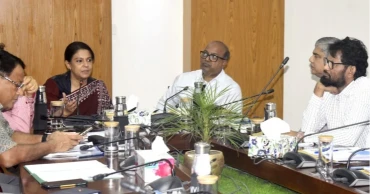
Syeda Rizwana Hasan, Advisor to the Ministry of Water Resources, has stated that all necessary information would be sought from upstream countries, including China, India, Nepal, and Bhutan, to provide timely forecasts for sudden and severe floods.
“Discussions and communications with these countries will be strengthened to ensure this. Efforts will also be made to provide timely flood forecasts to the public in simple language," she said.
The advisor made these remarks while presiding over a review meeting of the activities of departments under the Ministry of Water Resources, held on Saturday at the conference room of Pani Bhaban in the capital.
The advisor mentioned that public hearings would be conducted in Feni and Cumilla areas over recent floods and future actions will be taken based on public feedback.
All obstacles to ensuring the natural flow of rivers must be removed. The advisor also directed the relevant authorities to take action against all illegal encroachments, including fish enclosures in the Feni River.
Syeda Rizwana further emphasized the need to prevent crop damage in the Haor regions due to dam breaks. She instructed that approval from the Department of Environment and the Department of Haor and Wetlands Development must be obtained before constructing any infrastructure in the Haor areas. Additionally, all pumps under the Ganges-Kobadak Irrigation Project must be activated, and the extraction of groundwater in the project area must be halted.
The meeting was attended by Nazmul Ahsan, Secretary of the Ministry of Water Resources, heads of departments under the ministry, and relevant officials.
The meeting included detailed discussions on the activities of the Joint River Commission, the flood control forecasting system of the Bangladesh Water Development Board, the progress of activities in Haor areas, and the rehabilitation project under the Ganges-Kobadak Irrigation Project.
The advisor stressed the importance of proper implementation of these projects.
1 year ago