Others

BAU Students Provide Relief for Livestock in Feni and Moulvibazar
In response to the recent flash floods that severely affected Feni and Moulvibazar districts, students from the Faculty of Veterinary Science (FVS) and the Faculty of Animal Husbandry (AH) at Bangladesh Agricultural University (BAU) organized relief efforts, including the provision of animal feed, medical care, and essential medicines for the livestock in these regions.
Rakib Rony, a student of FVS and a coordinator of the relief efforts, confirmed the initiative on Saturday (August 31).
"We have collected a total of six tons of animal feed. On August 28, a team of students transported three tons to Fulgazi, Parshuram, and Chhagalnaiya upazilas in Feni. Another team delivered two and a half tons to Kulaura upazila in Moulvibazar on August 30. The remaining half-ton will be distributed to other flood-affected areas," he said.
The students provided four key services: primary treatment for sick animals, supplementation with vitamins and minerals for animals suffering from various deficiencies, supply of animal feed, and telemedicine support for farmers needing further assistance.
"As BAU students, we stand with both people and animals during their time of need. This effort reflects our commitment to a compassionate cause," Rony added.
C.P. Bangladesh Co. Ltd. was the largest contributor of animal feed, with additional supplies from Innova, Minar Agro, and local pet companies. Pharmaceutical companies like Square, Acme, ACI, Eskayef, and Biolab provided medicines.
Mashsharat Maliha, another FVS student, highlighted the telemedicine service, stating, "Farmers in flood-affected areas have been given contact numbers for veterinarians. They can reach out for advice if their livestock faces any issues."
Prof. Dr. Mahbubul Pratik Siddique from the Department of Microbiology and Hygiene at FVS commented, "Several districts are flood-stricken, and both people and livestock are suffering greatly. Our students have seized the opportunity to serve society, and we are grateful for the university administration's support."
In Feni, students distributed animal feed and medicines to approximately 900 farmers in the flood-hit upazilas, providing technical advice during farm visits. The district livestock department confirmed a significant shortage of animal feed despite adequate human food supplies.
Dr. Md. Mozammel Haque, District Livestock Officer of Feni, noted that the farmers in the area greatly benefited from the students' efforts.
In Moulvibazar, local farmers reported dire conditions for their livestock, prompting the students' assistance.
Nebash Chandra Pal, Upazila Livestock Officer (Add. Charge) of Kulaura, expressed gratitude, noting that BAU was the first to deliver livestock relief to Kulaura, ahead of any government or private organization.
1 year ago
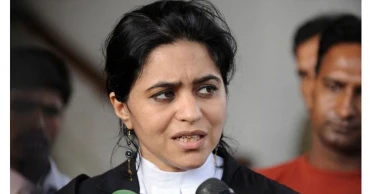
Constitution: Creating something new is far more challenging, says Barrister Sara Hossain
Barrister Sara Hossain on Saturday said there must be more scrutiny of the argument that the Constitution should be entirely rewritten.
“While dismantling existing structures may seem straightforward, creating something new is far more challenging,” said the senior lawyer of the Supreme Court of Bangladesh while speaking at a dialogue.
Barrister Sara Hossain emphasised the need for diverse perspectives in the ongoing discussion and said that for any new framework to be sustainable, it must be inclusive.
She said it is not enough to create something that is merely permanent; it must also be adaptable and capable of ongoing improvement.
Constitution: Experts share views on whether amendment or repeal will lead to democratic reconstruction
Barrister Sara said the current dialogue seems to focus primarily on freedom of expression, neglecting other fundamental rights.
“Additionally, we still retain the death penalty. In considering reform, we must examine both societal norms and practices, not just the functions of institutions,” she said.
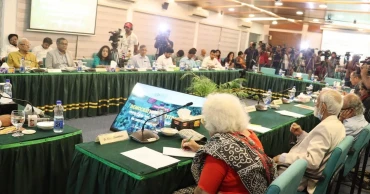
The Centre for Governance Studies (CGS) hosted the dialogue at the Bangladesh Institute of International and Strategic Studies (BIISS) Auditorium to discuss the constitutional reform for the interim government.
Zillur Rahman, Executive Director of CGS, moderated the discussion.
Speakers included Dr Ali Riaz, Distinguished Professor of Illinois State University, USA, and member of CGS’s Advisory Board, Dr Badiul Alam Majumdar, Secretary of SHUJAN, Ikteder Ahmed, former judge and columnist, Nurul Kabir, Editor of New Age, A F Hassan Ariff, Advisor, Ministry of Local Government, Rural Development and Cooperatives and the Ministry of Land, Dr Borhan Uddin Khan, Prof of Department of Law, University of Dhaka, Dr Manzoor Hasan OBE, Executive Director, Centre for Peace and Justice, BRAC University, A.M. Mahbub Uddin Khokon, President, Bangladesh Supreme Court Bar Association, Mahfuj Alam, Special Assistant to the Chief Advisor, Habibur Rahman, former Student, Department at Law, University of Dhaka, Z I Khan Panna, Advocate, Supreme Court of Bangladesh and Chairperson of Ain o Salish Kendra, Barrister Raja Devasish Roy, Chief of Chakma Circle, Dr Dilara Chowdhury, Professor, Department of Political Science, Jahangirnagar University, and Dilruba Shormin, Advocate, Supreme Court of Bangladesh, Munira Khan, President FEMA.
1 year ago
Constitution: Experts share views on whether amendment or repeal will lead to democratic reconstruction
Interim Government’s Adviser AF Hassan Ariff has said the Constitution serves as a vehicle for democratic reform and since the aspirations of 1971 remain unfulfilled, the mass uprising of 2024 has brought forth the need for change.
"For this reason, we should consider establishing a second republic while preserving the essence of the first," said the Adviser who is looking after the Ministry of Local Government, Rural Development and Cooperatives, as well as the Ministry of Land.
Speaking at a dialogue hosted by Centre for Governance Studies (CGS) on Saturday, he said insights from constitutional debates in other countries can guide them.
“A continuously amended constitution does not hinder democratic progress; rather, it remains a dynamic document. Our primary focus should be on democratic reconstruction, incorporating diverse perspectives to rebuild democracy effectively,” Ariff said.
Distinguished Professor of Illinois State University (USA), Dr Ali Riaz, stated that the core question is whether the current Constitution can truly support a democratic society.
“Over the past 15 years, we’ve witnessed an autocratic regime that the Constitution has effectively sustained,” he said.
He believes significant reforms are necessary to achieve genuine democratic change.
“The concentration of power in the prime minister’s office is a major concern, with the PM holding both executive and presidential authority,” Prof Riaz said.
The current regime operated entirely within the Constitution, meaning that future leaders will inherit the same extensive powers.
“A critical issue is the independence of the judiciary. The process for appointing members to constitutional bodies lacks transparency and must include open hearings,” Prof Riaz said.
The most glaring example was the prime minister’s sole appointment of the president, he said.
Similarly, Prof Riaz said, the appointment of the Election Commission has been opaque, allowing the government to install its own appointees and conduct elections on its own terms.
1 year ago
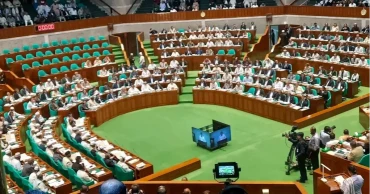
Priority should be given to reforms, fair polls: Webinar
Speakers at a roundtable have said the government should keep in mind the people's aspirations and make necessary reforms in the country as well as create a space for holding free, fair and impartial elections.
They said the interim government that was formed in Bangladesh in the mass uprising of the students can be called a revolutionary government.
At the webinar hosted by Right to Freedom (R2F), the speakers said expectations of the common people of this revolutionary government are very high and reforms work should start without any delay in all the collapsed state institutions.
They said those involved in disappearances, murders and corruption should be brought to justice and the reform agenda of the government should be discussed with the political parties and the initiative should be taken to sign a 'National Charter' based on consensus.
Right to Freedom Board Member Jon Danilowicz moderated the webinar while Right to Freedom Executive Director Mushfiqul Fazal Ansarey gave a brief introduction of the panel of speakers and Ambassador (retd) William B Milam, Board President of the R2F offered opening remarks.
Executive Director of the Centre for Policy Dialogue (CPD) Dr Fahmida KhatunDirector of the South Asia Institute at Wilson Center in Washington, D.C. Michael Kugelman and Secretary, Citizens for Good Governance Dr. Badiul Alam Mazumdar spoke at the webinar which aimed to foster conversations on critical aspects of Bangladesh’s new journey under the leadership of Nobel Laureate Professor Muhammad Yunus.
Badiul Alam Mazumdar laid emphasis on drastic changes through required reforms that could lead to a free and fair election.
He hoped that there will be a better future, a new future and a new Bangladesh.
Badiul said to prevent the petition of what happened in the past, they need to reorganize the institutions that have broken down.
He said major reforms need to happen and what kind of reforms will depend on how deep they want to go in terms of reforms.
Badiul said the 15th amendment will have to be declared illegal and there are good reasons for declaring it constitutional because this was enacted in an unconstitutional way.
1 year ago
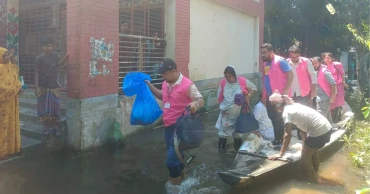
Australia, Canada contribute Tk 10 crore to BRAC for flood response
Australia and Canada, under the Strategic Partnership Arrangement (SPA) with BRAC, have contributed Tk 10 crore towards flood response and rehabilitation efforts in Bangladesh.
Australia has contributed Tk 7 crore, while Canada has contributed approximately Tk 3.10 crore.
This funding will support 11,000 households across flood-affected regions, according to BRAC.
Chief Adviser of the Interim Government Prof Mohammad Yunus, recently emphasised the importance of coordinating with NGOs and leveraging their expertise in managing flood relief and rehabilitation efforts in Bangladesh.
During a meeting with representatives of various NGOs, he highlighted the need for international funding and coordination to effectively address the challenges posed by the floods.
BRAC’s response strategy aligns with Prof Yunus's call for global cooperation, ensuring that support from international partners like Australia and Canada is effectively mobilised to build resilience and promote recovery in the most affected regions.
BRAC, in partnership with Australia and Canada, will utilise the funds to provide substantial support, including cash payments, repair and rehabilitation of water, sanitation, and hygiene facilities, emergency health and nutrition services, livelihood restoration, house repairs, agriculture inputs, and cattle feed.
BRAC has already allocated over BDT 5 crore from its own resources to deliver immediate assistance, including medical support.
The additional SPA funding of BDT 10 crore will ensure that comprehensive support continues through June 2025, addressing the long-term needs of those affected by the floods.
So far, BRAC has reached around 50,000 families with emergency relief, including food, drinking water, and essential medicines. In a coordinated response, 5,000 BRAC staff members have been deployed, working around the clock -- by boat, tractor, and even on foot -- to reach those most in need in hard-to-reach and underserved areas.
BRAC, with the support of the Government of Bangladesh and partners, has been on the ground since the start of the crisis and will continue to support families as they recover and rebuild.
This collaborative effort with Australia and Canada underscores the importance of international cooperation in disaster response and demonstrates the enduring commitment of BRAC and its partners to the well-being of flood-affected communities across Bangladesh.
1 year ago

Economic reforms list long but some measures need to start now: Fahmida Khatun
Executive Director of the Centre for Policy Dialogue (CPD) Dr Fahmida Khatun said the list for the interim government for immediate and midterm measures is long but some of the measures have to start during its term .
She said the measures taken by the interim government should be carried out the next government also when the new elected government will come.
“But the initiatives have to be taken now, and this is the time,” she said while speaking at a webinar, noting that the challenges for the interim government are humongous.
The economist said first of all, the interim government has to ensure political stability and also restore law and order situation because these are preconditions for economic prosperity and economic growth.
1 year ago

Death toll from flood climbs to 59, over 54 lakh people affected
The death toll from the recent flood in 11 districts has risen to 59 with five more deaths till Saturday, according to the report of Disaster Management and Relief Ministry.
Of the fresh fatalities, four were reported from Feni while one from Noakhali district.
So far, the floods have claimed 14 lives in Cumilla, six in Chattogram, 23 in Feni, nine in Noakhali, three in Cox’s Bazar and one each in Brahmanbaria, Khagrachhari, Moulvibazar and Lakshmipur districts respectively.
Among them, 41 were male, six female and 12 children.
Besides, 06, 96, 995 families have been stranded in 68 upazilas of 11 flood-hit districts--Feni, Cumilla, Chattogram, Khagrachhari, Noakhali, Moulvibazar, Habiganj, Brahmanbaria, Sylhet, Lakshmipur and Cox’s Bazar.
Moreover, 54, 57, 702 people have been affected in 504 municipalities or unions of the 11 districts.
According to the ministry, the flood situation is stable in Chattogram, Habiganj, Sylhet, Cox’s Bazar and Khagrachari districts while flood situation is improving in Moulvibazar, Brahmanbaria, Cumilla, Feni, Noakhali and Laxmipur districts.
Meanwhile, at least 3, 93,305 people have taken shelter in 3,928 shelter centres while 36, 139 domestic animals were kept there, according to data from the ministry.
A total of 519 medical teams are providing medical services in the flood affected areas.
So far, a sum of Tk 4.52 crore has been allocated in the flood-stricken districts while 20,650 tonnes of rice, 15,000 pieces of dry foods or other foods and baby foods and fodder worth Tk 35 lakh each were allocated, said the ministry.
As the flood situation has improved in different parts of the country, some people, who have taken shelter in shelter centres have started to return to their homes.
The road communications have started to improve in some flood-hit areas while the authorities concerned have been asked to take necessary steps to control the outbreak of water-borne diseases after recession of flood water.
1 year ago
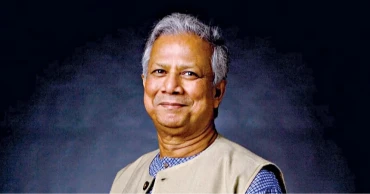
Chief Adviser’s views exchange initiates with 7 Islamic parties
Chief Adviser Professor Muhammad Yunus has started views exchange with seven Islamic parties at the state guest house Jamuna.
Leaders of Khelafat Majlish, Nizam-e-Islam, Hefazat-e-Islam, Bangladesh Khelafat Majlish , Islami Andolon, Khelafat Andolon and Jamiat Ulama-e Islam entered Jamuna at 3 pm on Saturday.
The discussions will continue until 8 pm, said an official from the Press Wing of the Office of the Chief Adviser .
During the discussions, the political parties are expected to present their proposals and views on the country's current situation, the reform of the administration and the election commission, and the next general election.
Environment and Forest Adviser Syeda Rizwana Hasan indicated that they will persist with the dialogue process with political parties and accept the reform proposals that emerge from these discussions.
Following the fall of the Awami League government on August 5 due to a student-led mass uprising, the advisory council led by Dr Muhammad Yunus took the responsibility of the interim government on August 8.
Although major political party BNP welcomed the interim government, its secretary general Mirza Fakhrul Islam Alamgir has been calling since August 24 for the government to engage in talks with political parties regarding the election issue.
A delegation led by Mirza Fakhrul met with the Chief Adviser on Thursday.
After the meeting, BNP Secretary General Mirza told reporters that the Chief Adviser will exchange views with the political parties in phases.
Earlier on August 12, senior leaders of BNP, Jamaat-e-Islami, CPB led by Shah Alam, Gonotantra Mancha, BJP, Islami Andolan Bangladesh, AB Party, Gono Odhikar Parishad, Democratic Left Alliance and NDM held separate meetings with the Chief Adviser and extended their full support to the interim government.
As of filing this report on Saturday afternoon, the Chief Adviser’s office had not disclosed how many political parties have been invited to join the exchange of views.
However, some political parties have confirmed that they have been invited to the Chief Adviser’s office for an exchange of views.
Subsequently, the Chief Adviser will hold discussions with delegations from Gonoforum, LDP, Jatiya Party, Jatiyatabadi Samomana Dal, the 12-party alliance, and Bangladesh JSD.
1 year ago

Auto-rickshaw driver killed ‘by muggers’ in Dhaka
A 40-year-old auto-rickshaw driver was stabbed to death allegedly by muggers at Basabo in the capital early Saturday.
The deceased was identified as Yusuf Sadhu, son of Chan Mia of Araihazar upazila of Narayanganj district.
Quoting Shakil Mia, nephew of the deceased, Md Manakka, sub-inspector of Sabujbagh Police Station, said Yusuf, father of three children, used to live in Jatrabari’s Kajla area alone while his family has been living in Narayanganj.
HSC candidate collecting funds for flood victims stabbed to death in mugging incident in Dhaka’s Rampura
Muggers waylaid Yusuf around 4:30 am under the Khilgaon flyover and stabbed him indiscriminately apparently to snatch his battery-run auto-rickshaw, leaving him injured.
Later, he was taken to Dhaka Medical College and Hospital where the doctors declared him dead around 5:15 am.
1 year ago

Govt decreases price of petroleum fuels with effect from Sept 1
Bangladesh's interim government has decreased the prices of petroleum fuels at the retail level with effect from September 1.
As per a gazette notification issued by the Energy and Mineral Resources Division on Saturday, the price of diesel and kerosine at the consumer level will be Tk 105.50 per litre, down by Tk 1.25, from the previous price of Tk 106.75.
Price of petrol will be decreased by Tk 6 to Tk 121 per litre, from the previous price of Tk 127.
Read more: Govt's executive authority to raise power and gas prices cancelled through ordinance
Price of octane will also be decreased by Tk 6 to 125 per litre, from the previous price of Tk 131 per litre.
The new prices of petroleum fuels have been set in continuation of every month’s adjustment process under an automatic pricing formula in line with the global market price, said the Energy and Mineral Resources Division.
1 year ago