Others
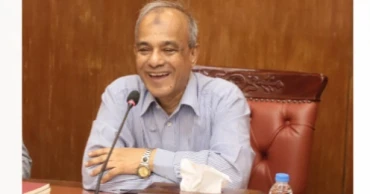
Newly-appointed Home and Agriculture Adviser urges officials to work professionally and within the law
Newly appointed Home and Agriculture Adviser, Lt Gen (retd.) Jahangir Alam Chowdhury, has called on government officials to work with professionalism and adhere strictly to the law.
During a meeting with officials at the Ministry of Home Affairs in Dhaka’s Secretariat, the adviser emphasized the importance of integrity and cooperation in their duties.
“Mistakes can happen while working, but intentional errors will not be tolerated and will be dealt with accordingly,” he warned, urging everyone to work together sincerely.
He also assured that the concerns of those officials who have been genuinely wronged or disadvantaged will be taken into consideration. However, he made it clear that grievances arising from corruption will not be entertained.
The meeting was attended by several high-ranking officials, including Senior Secretary of the Security Services Division Md. Mashiur Rahman NDC, newly appointed Secretary of the Public Security Division Dr. Mohammad Abdul Momen, outgoing Senior Secretary of the Public Security Division Md. Mokabbir Hossain, and Inspector General of Police Md. Mainul Islam NDC, along with heads of various departments under the Ministry of Home Affairs.
Earlier, upon his arrival at the ministry, the new adviser was welcomed by senior officials and received a guard of honour.
1 year ago

Shahjalal Fertilizer Factory resumes production after five-month closure
Shahjalal Fertilizer Company Limited (SFCL) in Sylhet resumed production partially on August 6 after around five months of closure due to gas crisis.
The factory restarted operations following the collapse of the Sheikh Hasina-led government on August 5.
The factory now owes Tk 779 crore to Jalalabad Gas Transmission and Distribution System Limited. Production has resumed on a limited scale due to "directives from higher authorities" that have led to a partial restoration of gas supplies.
However, concerns persist regarding the factory's long-term operation if the gas issue is not fully resolved.
The SFCL was closed on March 13 this year due to a gas supply disruption. The company cited an outstanding gas bill of approximately Tk 779 crore and a nearly fourfold increase in gas prices as reasons for the shutdown.
The fertilizer factory, built at a cost of Tk 4,985 crore taka, began production on August 14, 2016. It was capable of producing 1,760 metric tonnes of urea fertilizer per day but had been producing around 1,450 metric tonnes daily. The factory also produced liquid ammonia as a by-product.
Moreover, the price of gas supplied to the factory has increased from Tk 4 to Tk 16 per unit and the cost of producing one tonne of fertilizer is around Tk 36,000, while it is sold at Tk 25,000, resulting in a loss of Tk 11,000 per tonne. The Ministry of Industries is trying to resolve this issue by negotiating subsidies with the Ministry of Agriculture.
Despite the high hopes for the project, the factory has not yet turned a profit. While the sale of fertilizer has generated Tk 555 crore for the government, the Jalalabad Gas authority is still owed Tk 779 crore.
Admitting the arrears unpaid, Gopal Chandra Ghosh, General Manager (Operations) of SFCL, said the factory is still facing challenges with insufficient gas supply which affects its production capacity.
He also said that the arrear bill remains unpaid and efforts are ongoing to reconcile subsidy payments with the Ministry of Agriculture. Inter-ministerial discussions are underway to address these issues, and some technical problems at the factory also need resolution before full-scale production can resume.
For the fiscal year 2023-24, the SFCL had a production target of 380,000 tonnes, but by March 13 this year, when it was shut down, it had produced 240,000 tonnes of urea.
1 year ago
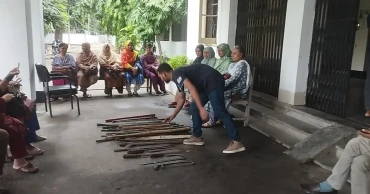
Students recover weapons from BCL-controlled dormitories at Dhaka Teachers' Training College
Students from the Anti-Discrimination Movement recovered a large number of locally-made weapons from dormitories controlled by the Bangladesh Chhatra League (BCL) at Dhaka Teachers' Training College on Sunday afternoon.
The recovered weapons included knives, machetes, sickles, rods, hockey sticks, batons, and cricket stumps.
According to Hasibul Islam, a coordinator of the Anti-Discrimination Student Movement, they had received information that the dormitories at the Teachers' Training College in Dhaka had been under the control of the BCL for an extended period and that a large cache of weapons was stored there.
Acting on a tip off, they initiated their operation, searching each room in the dormitories and recovering the weapons.
Hasibul Islam stated that these weapons had been used by BCL leaders and activists on various occasions, most recently during attacks on protesters in the quota reform movement.
Teachers from the college were present during the operation; however, no BCL leaders were found at the scene.
1 year ago
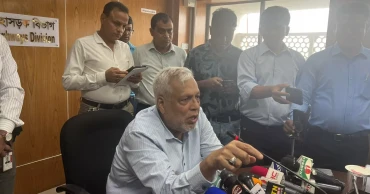
Metro Rail to resume operations within 7 days max: Adviser Fauzul
Interim Government’s Road Transport and Bridges Adviser Muhammad Fauzul Kabir Khan said on Sunday that Dhaka Metro Rail services will resume within seven days max.
He came up with the announcement during an introductory meeting with officials at the ministry in Dhaka.
The adviser emphasized that there would be a renewed focus on development projects, ensuring that progress is not limited to Dhaka alone but also extends to neglected areas.
He stressed the importance of cost-efficiency in every project, noting that instructions have been given to adhere to budget constraints.
Regarding the procurement process, the adviser indicated that single-source procurement, which had been prevalent, will be discontinued. Instead, there will be a move towards competitive tendering to prevent favoritism and ensure transparency.
He also addressed the issue of inadequate parking spaces on major roads in Dhaka, directing that measures be taken to address this. Vehicles will not be allowed to stop arbitrarily, aiming to alleviate congestion and improve traffic flow.
In addition to focusing on Dhaka and major cities, he underscored the need for development in areas with high pedestrian traffic and addressed the high cost of road construction in Bangladesh, asserting that this perception must be changed. The same contractor should not be assigned all projects; instead, contracts will be awarded to those who perform well.
Regarding the irregularities in the Bangladesh Road Transport Authority (BRTA), the adviser shared his own experience of inconvenience.
He recounted how he had to take a week off to obtain a driving license, criticizing the lengthy process and vowing to address such issues to prevent future harassment for citizens.
1 year ago

Up to 626 people took refuge in cantonments for safety after fall of AL govt: ISPR
A total of 626 people, including members of the deposed Awami League government, took shelter in different cantonments of the country after it collapsed on August 5, according to ISPR on Sunday.
Following a significant political shift when the law and order situation across the country deteriorated drastically, several political figures, along with various civilians, sought refuge in military bases fearing for their lives, said the ISPR in a release.
In an effort to prevent extrajudicial actions, protect lives, and uphold the rule of law, a total of 626 individuals were given shelter in different military bases, it said.
This group included 24 political figures, 5 judges, 19 civilian administrative officers, 28 police officers, 487 police personnel of various ranks, 12 officials from public universities, and 51 family members (wives and children).
As the situation improved, 615 individuals voluntarily left the military bases. So far, four of the sheltered individuals have been handed over to law enforcement agencies following proper legal procedures, based on charges or cases against them. Currently, 7 people, including 3 individuals and their 4 family members, remain in the military bases. All relevant information has been communicated to the ministry concerned by the military authorities.
Given the situation, the Bangladesh Army is working impartially and professionally to restore law and order, prevent extrajudicial actions, and maintain the rule of law.
The military urges everyone to remain patient, avoid rumours, and demonstrate a cooperative attitude. The Bangladesh Army remains committed to standing by the public in full respect of the country's laws, said the release.
1 year ago
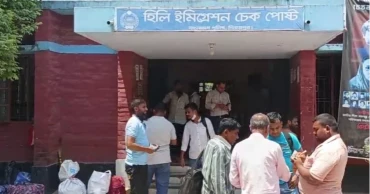
No measures sighted in Hili land port to check for Mpox
Though the infectious disease Mpox (monkeypox) has spread in several countries precautionary measures are yet to be taken to check for the virus at Dinajpur’s Hili International Land Port.
Hundreds of people use the land port to go to neighbouring India, Nepal and Bhutan from Bangladesh and residents of those countries also use it regularly, indicating an immediate measure to prevent it.
Local health officials said that common symptoms of Mpox include fever, headache, muscle aches, back pain, weakness, swollen lymph nodes, and skin rashes or lesions.
They advise anyone experiencing these symptoms or coming into contact with an infected person to seek medical attention at the local health complex.
They, however, also said that measures will be taken if directives are received from the Health Department.
Saiful Islam and Sanchita Rani, who frequently use this checkpoint to travel to India, have expressed concern that people from various countries pass through this port and underscored the need for precautionary measures due to the virus’s potential for rapid human-to-human transmission.
The Directorate General of Health Services (DGHS) has said that effective measures are in place to prevent the spread of the Mpox in the country.
Meanwhile, Officer-in-Charge (OC) Sheikh Ashraful of the Hili Immigration Checkpoint confirmed that they have not yet received directives from the DGHS.
He said they learned about the Mpox virus via social media and assured that they are staying alert until further instructions are received.
The Mpox virus was first detected in the Democratic Republic of Congo in Africa and has since spread to several central and eastern African countries, including Burundi, Uganda, Rwanda, Sweden, and Kenya.
On August 16, a case of Mpox was identified in Pakistan.
1 year ago

Rising dengue cases in Khulna city worry residents
The number of dengue cases, a mosquito-borne disease, is increasing in Khulna like elsewhere in the county.
Due to political instability and other factors this year, the Directorate General of Health Services (DGHS) and Khulna City Corporation (KCC) are yet to take effective measures against this disease.
Moreover, a separate ward for dengue patients has not been opened at Khulna Medical College Hospital (KMCH) and mosquito control activities have stalled.
The citizen-service providing organization KCC is yet to launch the campaign to identify Aedes mosquito larvae leaving residents concerned over the growing situation.
According to the health department of the KCC, from the very beginning of the year until August 16, a total of 183 people have been detected with dengue in Khulna. Of them, 172 have recovered after receiving treatment while six are now undergoing treatment at the KMCH and four others are receiving care at other public and private hospitals.
On August 14, one patient died while undergoing treatment at the KMCH.
Despite prevailing such a situation in the Khulna, no separate ward for dengue patients has been set up at the KMCH. Dengue patients are being treated in the general medicine ward and patients and their relatives have reported that this lack of a dedicated ward increases the risk of infection.
Expressing concern, conscious society said that mosquitoes could spread the disease to healthy individuals after biting those already infected.
Contacted, Dr. Suhas Ranjan Halder, resident medical officer of the KMCH, said that due to the currently manageable number of patients, there are no plans to set up a separate ward for dengue patients.
He assured that there are enough dengue testing kits and that the platelet separator machine is operational.
Meanwhile, political instability over the past month has led to a halt in Khulna City Corporation’s mosquito control operations. This month, no mosquito-controlling chemicals have been distributed in the city and no cleanliness drives have been conducted.
As a result, mosquito breeding has increased and the city corporation has not taken any steps to identify Aedes mosquito larvae. The waste management department lacks information on mosquito breeding areas or larvae prevalence.
Anisur Rahman, chief waste management officer of the KCC, told UNB that due to the rain, larvicide and adulticide are not being used as they would be washed away by rainwater.
He said fogging machines are being used to kill flying mosquitoes and once the rain subsides, larvicide and adulticide will be applied. Plans are also being considered to identify Aedes mosquito larvae.
Dr. Swapan Kumar Halder, chief health officer of the KCC, said that awareness campaigns about dengue are being conducted at Picture Palace Square in the city.
Health workers are visiting homes to make residents aware of the preventive measures, he added.
1 year ago
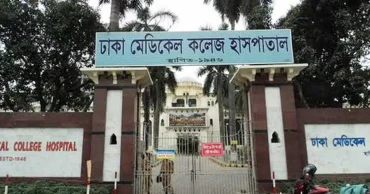
Another student shot during student movement dies at DMCH
Another student who sustained bullet injuries during the student movement in the capital's Zigatola area on August 4 died on Saturday.
Riaz, 23, a final year degree student at Muladi Government college, Barishal, died while undergoing treatment at the intensive care unit (ICU) of Dhaka Medical College Hospital around 3:45pm, said Rejaul Karim, elder brother of deceased Riaz.
Rejaul said that his brother studied at Muladi Govt. College. But due to the financial crisis he lived at aunt's house in the Hazaribagh area and worked in her shop for 3/4 years.
He was shot during a clash between the protestors and the police in Zigatola area on August 4. Later, he was admitted to Dhaka Medical College Hospital with serious injury.
Mohammad Bachchu Mia, in-charge of DMK police camp said, the body has been kept at the hospital morgue for an autopsy.
1 year ago

Father, son among 3 killed in Chattogram road accident
Three people, including man and his son, were killed after a lorry and CNG-run auto-rickshaw collided on Chattogram-Cox’s Bazar Highway in Patiya upazila on Saturday afternoon.
The deceased were identified as Shreekanta Dhar, 65, his son Litu Kumar Dhar, 30, residents of Paschim Goirla area of Dholghat union of the upazila, and CNG driver Ali Azgar, 30, a resident of Jongal Khain union of the upazila.
The accident occurred around 5pm in Shantirhat area of the upazila, said Moniruzzama, sub-inspector (SI) of Patiya Highway police.
On information, police rushed to the spot and found Litu Dhar dead, he added.
They rescued two injured and took them to Chattogram Medical College Hospital where doctors declared Shreekanta Dhar dead on arrival.
Later, CNG driver Ali Azgar succumbed to his injuries around 7pm, added the SI.
1 year ago

No foreign mission personnel currently sheltering in any cantonment: ISPR
The Inter-Services Public Relations (ISPR) has announced that no personnel from foreign missions are currently residing within any of the country's cantonments. This information was shared in a press release issued by the ISPR on Saturday.
According to the press release, the recent political upheaval and the subsequent deterioration of law and order across the country led to a request for enhanced security for various foreign missions in Bangladesh. During this period, when other law enforcement agencies were not available, the army was asked to assist in providing security. As a result, army personnel were deployed to secure diplomatic areas and embassies in Dhaka, a task that continues to this day.
The statement also mentioned that at the request of the Indian High Commission, only civilian members were provided shelter within the Dhaka Cantonment and other military cantonments. Additionally, some members stayed at their respective consulate buildings and various hotels, which were also secured by the army.
Furthermore, a few Russian experts working at the Rooppur Nuclear Power Plant were provided with security. The army has provided all relevant information to the concerned ministry regarding these matters.
1 year ago