Others

Inflation hits 13-year high of 11.7% in July: BBS
Bangladesh’s inflation hit a 13-year high in July and reached 11.66 percent.
Bangladesh Bureau of Statistics (BBS) released this inflation data on Monday (August 12).
The inflation was recorded at 9.72 percent in June.
Food inflation was marked a record high of 14.10 percent and non-food inflation at 9.68 percent in July.
It was 10.42 percent and 9.15 percent respectively in June 2024.
The previous high was 9.94 percent last May.
Student protests for the government jobs quota reform in July has also made the economy measurable, which impact shows in the inflation.
1 year ago
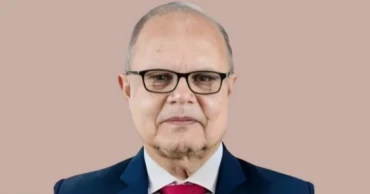
Ali Imam appointed special assistant to Chief Adviser Yunus
Ali Imam Majumder, former cabinet secretary of Bangladesh, has been appointed as the special assistant to the chief adviser Professor Muhammad Yunus.
A notification, signed by Cabinet Secretary Md. Mahbub Hossain, was issued in this regard this evening.
Majumder will enjoy the status of an adviser, added the notification.
Born in 1950, Majumder joined the Bangladesh Civil Service on 11 February 1977 as an administration cadre.
Majumder served as the District Commissioner (DC) of Sylhet District and Cox's Bazar District in 1997. In 2004, Majumder was the Secretary of the Ministry of Labour and Employment.
On 31 October 2006, Majumder was appointed the Principal Secretary to the Chief Advisor of the Caretaker Government. On 6 December 2006, he also became the Cabinet Secretary of Bangladesh.
In May 2007, he approved a proposal to raise the ranks of the heads of the three armed forces of Bangladesh.
On 19 November 2007, the term was extended by one year.
He reported that the proclamation of Independence of Bangladesh document had gone missing from government custody.
He also served as the chairman of Sonali Bank.
Majumder retired from the civil service on 28 November 2008.
1 year ago

Two cops suffer bullet injuries in misfire at Mirpur Police Lines
Two policemen suffered bullet injuries in a misfiring in the armory of Mirpur Police Lines in the capital on Monday.
The injured are - Md Alamin, 30, and Yasin Ali, 28, attached to Darussalam police station.
Of them, Alamin was admitted to Dhaka Medical College Hospital (DMCH) in the afternoon while another policeman was undergoing treatment at a local hospital.
The incident was reported at 3:30pm, said Ranju Mia, assistant sub-inspector (ASI) of Darussalam police station,
"As the police station has reopened after closure for several days, they went to Mirpur Police Line at Mirpur 14 to bring weapons from the police station," ASI said.
“Yasin Ali was testing the magazine by inserting the pistol. However, he did not realize that there was already a bullet in the chamber of the pistol. The bullet went out and penetrated his palm and hit one side of Alamin's chest sitting next to him and exited on the other side. Later, he was brought to DMCH Hospital with serious injuries. He is currently undergoing treatment,” added the ASI.
The services of most of the police stations remained suspended after the fall of the Hasina government on August 5, following attacks on the police stations across the country amid a mass upsurge.
After that, the policemen announced a strike.
However, they started returning to work from Thursday and announced the withdrawal of the strike on Sunday.
1 year ago
Youth-envisioned ‘New Bangladesh’ must ensure democratic, accountable governance: TIB
Transparency International Bangladesh (TIB) has emphasised that the youth-envisioned “new Bangladesh” must prioritise democratic and accountable governance, free from discrimination, corruption, and injustice.
In a press release marking International Youth Day 2024, TIB advocated for a comprehensive overhaul of the state structure and a new political framework centered on public interest. It expressed confidence in the youth’s role in advancing the nation’s efforts to uphold voting rights, justice, human rights, freedom of expression, and media freedom.
TIB urged the interim government to establish a conducive environment to achieve this vision Dr. Iftekharuzzaman, TIB’s Executive Director, highlighted the youth's role in toppling a dictatorial regime at great cost, demonstrating their resilience against oppression. He stressed that tyranny, arising from a lack of responsibility and transparency, must be condemned, and that all stakeholders, including political parties, must recognize the power of the youth and create an environment where their rights and demands are respected.
As a new era begins, TIB believes that the youth will lead the country towards a future characterized by fundamental freedoms, democratic governance, and a society free from discrimination and communalism. Their recommendations for International Youth Day 2024 include: fostering a new Bangladesh based on youth aspirations, ensuring equality, meritocracy, and good governance; creating a democratic state structure that upholds human rights and public welfare; and restructuring institutions to prevent politicization and ensure they do not serve partisan agendas.
Additional recommendations include enforcing accountability for severe human rights violations through national and international investigations involving the United Nations; establishing robust legal frameworks to protect fundamental rights like the right to protest, freedom of assembly, media freedom, and speech; and eliminating illicit wealth accumulation through corruption.
TIB also calls for effective strategies to prevent authoritarian control over the internet and social media, and for the restructuring of rule-of-law institutions to prevent future human rights violations. Overall, TIB advocates for sustainable measures to ensure that youth can freely express their opinions without fear.
1 year ago
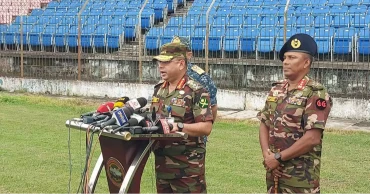
Soldiers will return to barracks once police resume normal operations: Army Chief
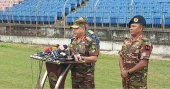
Soldiers will return to barracks once police resume normal operations, Army Chief General Waker-Uz-Zaman said on Monday.
The Army Chief said this while responding to journalists at Sheikh Abu Naser Stadium in Khulna this afternoon.
He also said that there is positive improvement in the law and order situation in the country.
“If the situation continues to improve, all regular forces will carry out their counter-terrorism operations,” He said that 30 crimes against the minority communities have been committed in 20 districts of the country.
He called upon the political parties to shun all violence and do politics for the people.
Earlier, he held a meeting with senior government officials including Khulna Divisional Administration, District Administration, DIG, KMP Commissioner.
1 year ago
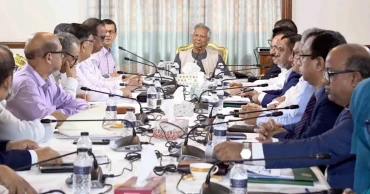
Chief Adviser asks ministries, departments to start activities as soon as possible
Chief Adviser to the Interim Government Prof Muhammad Yunus asked the ministries and departments to start activities as soon as possible.
He also called upon the officials concerned to ensure transparency and sensitivity by harnessing the power of the youth.
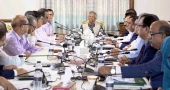
The Chief Adviser made this call in a meeting with the senior secretaries and secretaries of the ministries/departments under him held at state guest house Jamuna.
In the meeting, the secretaries informed the chief advisor about the action plans of the ministries.
He also talked about ensuring emergency supplies.
At the same time, he gave instructions to speed up the reopening of ports and the railways. Prof Muhammad Yunus asked them to take necessary steps to ensure that agricultural production continues and supply of fertilizers, fuel and electricity remains normal.
1 year ago

Religious Affairs Ministry launches hotline to receive complaints on attacks on religious institutions
The Ministry of Religious Affairs has introduced a dedicated hotline number for reporting attacks to ensure the safety of religious institutions.The new hotline 01766-843809, is designed for individuals to quickly report any incidents involving miscreants targeting temples, churches, pagodas, or other religious institutions, according to a press release on Monday.The ministry encouraged the public to use this number for immediate assistance or to send text messages if they witness or experience any such attacks, it said.
1 year ago
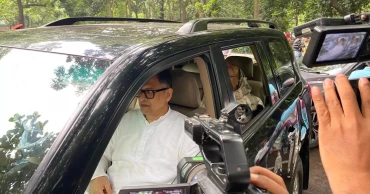
Chief Adviser’s meeting with BNP leaders underway
The Chief Adviser of the interim government, Dr Muhammad Yunus, sat in a meeting with BNP senior leaders Monday afternoon.
BNP standing committee members, led by its Secretary General Mirza Fakhrul Islam Alamgir, joined the meeting at the state Chief Adviser’s residence at 4pm.
BNP media cell member Sayrul Kabir Khan said Dr Yunus invited the BNP leaders for the meeting.This is the first formal meeting between the head of the interim government and BNP leaders since its formation on August 8.
BNP standing committee members Khandker Mosharref Hossain, Mirza Abbas, Dr Abdul Moyeen Khan, Nazrul Islam Khan, Salahuddin Ahmed, Amir Khasru Mahmud Chowdhury, Selima Rahman and Jamiruddin Sircar were present.
As former Prime Minister Sheikh Hasina fled the country after resigning in the face of a student-led mass movement, the interim government was formed under the leadership of Nobel-winning economist Professor Muhammad Yunus.
1 year ago

Chief Adviser to hold meeting with minority community leaders on Tuesday
Chief Adviser of the interim government Professor Muhammad Yunus will hold a meeting with the leaders of the minority community on Tuesday.
Religious Affairs Adviser AFM Khalid Hossain told this to journalists at the Secretariat on Monday afternoon.
“Those who attacked the minorities are miscreants and they will be brought under the law, Adviser AFM Khalid Hossain said.
“We have received some complaints. In different parts of the country, houses and places of worship of religious minorities have been attacked. The Ministry of Religious Affairs is always by the side of the minority community. It was in the past, it is now, and it will be in the future. We are now collecting lists through the deputy commissioners of the damaged places of worship and the homes or other properties that have been damaged,” said Khalid.
“We will decide tomorrow how much financial assistance we can provide to the affected people in consultation with the Ministry of Finance,” he said.
The attack was a bit more severe due to the absence of the police. Since the police have joined, we are hopeful that such incidents will not happen again, he added.
A hotline number will be launched to provide information for preventing attacks on minorities, Khalid also said.
1 year ago
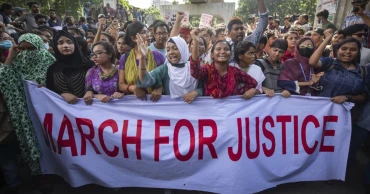
Bangladesh protests are not the first time student uprisings have helped bring about radical change
In Bangladesh, weeks of protests against a quota system for government jobs turned into a broad uprising that forced the prime minister to flee the country and resign.
The demonstrations began peacefully weeks ago and were primarily led by students frustrated with the system that they said favored those with connections to the ruling party.
But it turned violent on July 15 as student protesters clashed with security officials and pro-government activists. Former Prime Minister Sheikh Hasina fled last week after the unrest during which nearly 300 people died, including both students and police officers.
Students or other young people have frequently played pivotal roles in popular uprisings that have brought down governments or forced them to change policies. Here are some other major cases:
Gota Go Gama protests in Sri Lanka
Like in Bangladesh, widespread protests in Sri Lanka in 2022 were able to bring down a government, and youth played a key role.
Scattered demonstrations turned into months-long protests starting in March 2022 as an economic crisis worsened in the Indian Ocean island nation, leading to a shortage of fuel, cooking gas and other essentials as well as an extended power outage.
In April, protesters primarily led by university students and other young people occupied an esplanade adjoining President Gotabaya Rajapaksa’s office in the capital Colombo, demanding he and his government resign.
More people joined daily, setting up a tent camp dubbed “Gota Go Gama,” or “Gota Go Village,” a play on Gotabaya’s nickname “Gota.”
The protest site was peaceful, with organizers offering free food, water, toilets and even medical care for people. Camp leaders, many of whom were university students, held daily media briefings and made regular speeches, while the crowd was entertained by bands and plays.
The government reacted by imposing a curfew, declaring a state of emergency, allowing the military to arrest civilians and restricting access to social media, but were unable to stop the protest.
Under pressure, many ministers resigned but President Rajapaksa and his older brother, Prime Minister Mahinda Rajapaksa remained.
In May, Rajapaksa supporters attacked the protest camp, drawing widespread condemnation from across the country and forcing Prime Minister Rajapaksa to resign.
Gotabaya Rajapaksa clung to power until July, when protesters stormed his official residence, forcing him to flee the country. After taking temporary refuge in the Maldives, Rajapaksa later resigned.
His successor, Ranil Wickremesinghe, in one of his first moves as new president ousted protesters from occupied government buildings and shut down their camp, dismantling their tents in the middle of the night.
The situation has since calmed, and Wickremesinghe has been able to address the shortages of food, fuel and medicine and restore power.
Complaints continue, however, about the rise in taxes and electric bills that are part of the new government’s efforts to meet International Monetary Fund loan conditions. Former Prime Minister Rajapaksa's son Namal Rajapaksa will be running in the presidential elections this September.
Athens Polytechnic uprising in Greece
In November 1973, students at Athens Polytechnic university rose up against the military junta that ruled Greece with an iron fist for more than six years.
Military officers seized power in a 1967 coup, establishing a dictatorship marked by the arrest, exile and torture of its political opponents.
The regime's brutality and hardline rule gave rise to a growing opposition, particularly among students, culminating in the November uprising.
The protest began peacefully on Nov. 14, with students staging a strike at the Athens Polytechnic university and occupying the campus. By the next day, thousands from around Athens had joined in to support the students and the demonstrations grew, as did calls to end the dictatorship.
On Nov. 17, the military crushed the revolt when a tank smashed through the university's gates in the early hours of the day, killing several students. The number of fatalities is still disputed, but at the time the regime had announced 15 dead.
Days after the uprising, another military officer staged a coup and implemented an even harsher regime. It was short lived however, after a series of events led to a return to democracy in Greece, its birthplace, in 1974.
A prosecutor’s report issued after the return to civilian government, estimated fatalities at 34, but mentioned only 18 names. There were more than 1,100 injured.
Today, annual marches in Athens to commemorate the pro-democracy student uprising still attract thousands of people.
Kent State demonstrations in the United States
American students had long been protesting the U.S. involvement in Vietnam when President Richard Nixon authorized attacks on neutral Cambodia in April 1970, expanding the conflict in an attempt to interrupt enemy supply lines.
On May 4, hundreds of students at Ohio's Kent State University gathered to protest the bombing of Cambodia, and authorities called in the Ohio National Guard to disperse the crowd.
After failing to break up the protest with teargas, the National Guard advanced and some opened fire on the crowd, killing four students and wounding nine others.
The confrontation, sometimes referred to as the May 4 massacre, was a defining moment for a nation sharply divided over the protracted conflict, in which more than 58,000 Americans died.
It sparked a strike of 4 million students across the U.S., temporarily closing some 900 colleges and universities. The events also played a pivotal role, historians argue, in turning public opinion against the conflict in Southeast Asia.
Soweto Uprising in South Africa
In the decades-long struggle against white minority rule in South Africa, a pivotal moment came in 1976 in the Soweto area of Johannesburg.
In a series of demonstrations starting June 16, Black students from multiple schools took to the streets to protest against being forced to study in Afrikaans, the Dutch-based language of the white rulers who designed the system of racial oppression known as apartheid.
The protests spread to other areas in South Africa, becoming a flashpoint for anger at a system that denied adequate education, the right to vote and other basic rights to the country’s Black majority.
Hundreds are estimated to have died in the government crackdown that followed.
The bloodshed was epitomized by a photograph of a dying student, Hector Pieterson. The image of his limp body being carried by another teenager was seen around the world and galvanized international efforts to end South Africa’s racial segregation, though apartheid would linger for nearly two more decades.
South Africa achieved democracy with majority rule elections in 1994 and today June 16 is a national holiday.
Velvet Revolution in Czechoslovakia
As the Communist governments of Eastern Europe teetered in 1989, widespread demonstrations broke out in Czechoslovakia after riot police suppressed a student protest in Prague on November 17.
On November 20 as the anti-Communist protests grew, the students being joined by scores of others and some 500,000 took to the streets of Prague.
Dubbed the “Velvet Revolution” for its non-violent nature, the protests led to the resignation of the Communist Party's leadership on November 28.
By Dec. 10, Czechoslovakia had a new government and on Dec. 29, Vaclav Havel, a dissident playwright who had spent several years in prison, was elected the country’s first democratic president in a half century by a parliament still dominated by communist hard-liners.
In 1992, Czechoslovakia peacefully split into two countries, the Czech Republic and Slovakia.
1 year ago