Others

Quota movement announces ‘March for Justice’ Wednesday
The quota reform protesters have announced their most visible programme rooted in freedom of assembly since the imposition of a nationwide curfew for Wednesday - a ‘March for Justice’ at the country’s educational institutions, court premises and major roads, to press home their nine-point demand.
Quota movement deaths: JU teachers, students hold silent march with mouths, eyes covered with red cloth
“In such a situation, mass killings, mass propaganda, attacks, cases, disappearances and murders on students and people across the country and in order to demand justice after investigation by the United Nations and to realize the 9-point demand of the student community and all the people of the country, 'March for Justice' will be held on Wednesday, July 31, 2024 in courts, campuses and on the streets,” said a media release signed by Abdul Hannan Masood, a coordinator of the Anti-Discrimination Student Movement that has led the quota reform protests, on Tuesday evening.
They urged students and people to join their programme, which will be held around 12:30pm on Wednesday.
Quota protest deaths: Mourning day today
The 9-point demands include an apology from Prime Minister Sheikh Hasina, and resignations of six ministers: Home Minister Asaduzzaman Khan, Road Transport and Bridges Minister Obaidul Quader, Education Minister Mohibul Hasan Chowdhoury, Law Minister Anisul Huq, State Minister for Information and Broadcasting Mohammad Ali Arafat, and State Minister for Post, Telecommunications, and Information Technology Zunaid Ahmed Palak.
In the release, they claimed that over 266 people have been killed and thousands injured in attacks by the law enforcers.
'National Inquiry Commission' to investigate massacre centring quota protests
The government has sued over two lakh people over the past few days in Dhaka while police are engaged in ‘arrest business’, it reads.
Moreover, over 10, 000 people across the country have been arrested, the release noted.
1 year ago

Dollar rate breaches Tk124 in kerb market
The price of the US dollar rose to Tk124 in the kerb (open) market due to a shortage of foreign exchange in the legal channel.
Money exchangers and individual dollar traders have said the price has recently increased due to a decreased remittance flow in the legal channel.
On Tuesday (July 30), such information was known after searching various money changer houses in the Motijheel Dilkusha area of the capital.
The recent internet shutdown and curfew, centric student movement impacted regular remittance flow in the banking channel. As a result, the price of US dollar has increased by Tk 2 to 3 within a day. Now customers have to pay Tk124 to 124.4 to buy a dollar from the kerb market.
Last Sunday and Monday (July 28 and 29), the dollar was sold at Tk121 to 122 in the kerb market.
However, Bangladesh Bank (BB) sources said the expatriates sent around $1.85 billion remittances in to the country till July 29.
Since introduction of the 'crawling peg' on May 8 to restore stability in the foreign exchange market, the dollar rate increased by Tk7.0, and the interim rate was set at Tk117. As a result, the dollar rate remained stable at Tk 117 to Tk 118 for more than two months. Now it is starting to rise again.
Meanwhile, the central bank has given verbal instructions to bring remittances at higher prices to reduce pressure on reserves.
1 year ago

DMP sounds out strong stance against 'arrest business'
Joint police commissioner (operation) of Dhaka Metropolitan Police (DMP) Biplab Kumar Sarkar has issued a warning to his fellow officers, saying the highest punishment awaits any policeman found guilty of ‘arrest business’ - denoting the corrupt process by which arrests or even release can be bought with money.
“Since the day the block raid was ordered, everyone has been warned about ‘arrest business’. If any such allegation is received, not only the responsible policeman will be withdrawn, but the highest legal action will be taken against him,” Biplab Kumar said while talking to reporters at DMP headquarters.
Replying to a question about whether police are embarrassed over the video footage of the shootings they were involved in, the DMP joint commissioner said “Every incident must be judged. If our member is fired, in the context which he fired will be reviewed. Fair investigation of every case will be ensured. So that the question does not arise that the police are biased in the case.”
Asking about the detention of general students, Biplab, said there is no scope to arrest general students, people and innocent people. “Senior officers of DMP were deployed in the block raid to ensure that the innocent people should not be harassed by the police. But there is no scope to spare any people involved in any offence.”
Police have set a target to those attackers or the Jamaat-Shibir syndicate and BNP criminals who carried out attacks on the Metro Rail, Setu Bhaban, Toll Plaza and set fire on different vehicles and police are working after citing the video and CCTV camera footage, he said.
So far, 268 cases have been filed in 50 police stations in the recent violence in Dhaka city and a total of 2850 people were arrested, he added.
He also assured that police will perform a neutral role and the DMP Commissioner will monitor it.
1 year ago

Finance Ministry and REHAB sign deal to develop 10,000 skilled workers
The Real Estate and Housing Association of Bangladesh (REHAB) have signed an agreement with the Ministry of Finance's Skills for Industry Competitiveness and Innovation Program (CSIP) to provide training for 10,000 workers' skill development in the housing sector.
This agreement was signed on Tuesday at Probasi Kalyan Bhawan in the capital. The president of the REHAB Wahiduzzaman signed the contract on behalf of the organisation. Senior Vice President of Rehab Liaquat Ali Bhuiyan, Vice President-3 Abdul Latif, Vice President (Finance) Abdur Razzak, and Chief Coordinator of SEIP-Rehab Project Kazi Abul Kashem were present on this occasion.
Executive Project Director (Additional Secretary) Mohammad Walid Hossain signed the deal on behalf of CCIP. Senior officers of CCIP were present at this event.
The training will be given to the trainees completely free of cost; also, every trainee will get a scholarship. Electrical Installation and Maintenance, Plumbing and Pipe Fittings, Machinery and Steel Binding, Tiles, and Marble Works- these four courses will provide advanced training under the project.
The duration of the training will be four months. After the training, the trainees will have employment opportunities in the country and abroad.
1 year ago
Only Youtube gets back to Palak; Facebook, others have till Wed morning
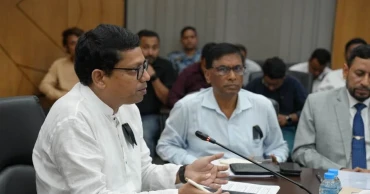
State Minister of Ministry of Posts, Telecommunications, and Information Technology Zunaid Ahmed Palak said that he expects to know by 11am Wednesday when the restriction on Facebook and other social media services can be lifted. Accordingly he will make an announcement after 11am tomorrow (July 31).
He said this after a meeting on Tuesday afternoon.
He mentioned that YouTube has agreed to respond to BTRC's letter.
“However, Facebook and other institutions have not yet responded. There is time until 11am tomorrow. After reviewing everything and holding a meeting, we will be able to announce the decision regarding the reopening of social media,” he added.
1 year ago

Education Minister announces educational institutions to open gradually, but still no date
Education Minister Mohibul Hasan Chowdhury confirmed that educational institutions will be reopened in phases, considering public safety.
The announcement was made following a meeting chaired by Home Minister Asaduzzaman Khan at the Ministry of Home Affairs this afternoon.
When asked about the specific timeline for reopening, the Minister stated that details would be provided once public safety risks are assessed and mitigated.
Additionally, the date for the Higher Secondary Certificate (HSC) examinations will be announced at a later time.
The Minister also mentioned ongoing discussions with private universities regarding their reopening plans.
1 year ago

Nine new High Court judges take oath
Nine new High Court judges have taken the oath of office on Tuesday.
Chief Justice Obaidul Hassan administered the oaths of the nine judges, who previously served as additional justices, at the Judges’ Lounge of the Supreme Court on Tuesday morning, said Shafiqul Islam, public relations officer of the Supreme Court.
President Mohammed Shahabuddin appointed the judges to the HC Division of the Supreme Court.
HC dismisses Dr Yunus's revision application in embezzlement case
The new judges are: Justice Mohammad Showkat Ali Chowdhury, Justice Md Atabullah, Justice Biswajit Debnath, Justice Md Ali Reza, Justice Md Bazlur Rahman, Justice KM Emrul Kayesh, Justice Fahmida Quader, Justice Md Bashir Ullah, and Justice AKM Rabiul Hassan.
1 year ago
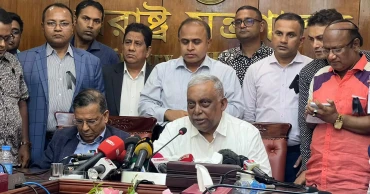
Curfew in Dhaka, 3 other districts to be relaxed from 7 am to 8 pm from tomorrow: Home Minister
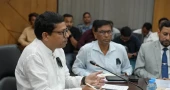
The government has announced a relaxation of the ongoing nationwide curfew from 7 am to 8 pm for four days starting tomorrow (July 31) in Dhaka, Narayanganj, Gazipur, and Narsingdi districts, Home Minister Asaduzzaman Khan said on Tuesday.
“The situation in Bangladesh is gradually returning to normal, so the ongoing curfew will be relaxed from 7 am to 8 pm. It will remain in force for Dhaka Metropolitan, Dhaka district, Narayanganj, Gazipur, and Narsingdi districts,” the Home Minister said during a meeting at the ministry.
The decision regarding the relaxation of curfew in other districts will be taken by the deputy commissioners concerned, he said.
Regarding the reopening of educational institutions and the full restoration of internet services, the minister mentioned that “the Education Minister and State Minister for ICT will provide further details.”
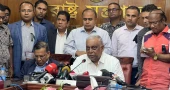
When asked about mass arrests, Asaduzzaman said, “No mass arrests were made, and no innocent person was detained. Arrests were made after proper verification.”
Regarding the banning of Jamaa-e-Islami, the home boss said it is under process.
Law Minister Anisul Huq, Industries Minister Nurul Majid Mahmud Humayun, Education Minister Mohibul Hasan Chowdhury, State Minister for Information and Broadcasting Mohammad Ali Arafat, State Minister for Labour and Employment Md Nazrul Islam Chowdhury and State Minister for Posts, Telecommunications and Information Technology, Zunaid Ahmed Palak were present there.
Besides, secretaries of the ministry concerned, Inspector General of Police and Director General of Rapid Action Battalion (Rab) and high officials concerned of law enforcing agencies were present there.
Additionally, the Public Administration Ministry announced that all offices will operate according to the regular schedule starting Wednesday.
Following violence across the country over the quota reform movement, the government imposed a nationwide curfew since last Friday midnight. The curfew has been relaxed several times in Dhaka and other parts of the country since then.
1 year ago
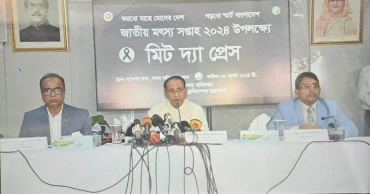
Govt to take initiative to increase fish production using technology: Minister
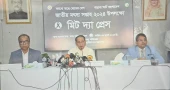
The government will take initiative to increase fish productivity at every stage using modern and automated fish farming technology alongside farm mechanization to achieve the target of 85 lakh tonnes of fish production by 2041, Fisheries and Livestock Minister Md Abdur Rahman said on Tuesday.
Khulna's fish export earnings decline by Tk 679 crore in FY 2023-24
Like every year, National Fisheries Week-2024 inaugurated on Tuesday which will continue till August 5, he said while speaking at the ‘Meet the press’ on the occasion of National Fisheries Week-2024.
The theme of this year fisheries week is “Bhorbo mache moder desh, gorbo smart Bangladesh’
Prime Minister Sheikh Hasina will inaugurate the fisheries week around 10:30 am at Bangabandhu International Conference Centre.
Twenty-two people and organisations will be honoured with the National Fisheries Award. Of them six will be awarded with gold medals, eight each with silver and bronze medals.
Ban on fishing at Kaptai Lake extended for 15 days
The Prime Minister will also release some fish fry at Gonobhaban lake on Wednesday noon, said the minister.
The minister said the production of native species of fish will be increased through releasing fish fries in rivers, canals and water bodies, modernising fish hatcheries and establishing fish sanctuary.
Mentioning that Bangladesh secured the second position in producing sweet water fish, the minister said they want to grab the first position in this sector by using technology.
Noting that the government has taken steps for the development of the lifestyle of the fishermen, the minister said identity cards have been given to 15.80 lakh out of 18.10 lakh fishermen.
Currently, Bangladesh exports fisheries and fisheries products to more than 50 countries of the world and despite the economic slowdown in the global market, Bangladesh earned Tk 4496.38 crore through the export of 77408 tonnes of fish and fishery products in the fiscal year 2023-24, he said.
Poor hilsa catch disappoints Bhola fishermen in the peak season
Besides, the government has set a target to export fish worth five billion dollars by 2030, he added.
Replying to a question about the decline in export earnings in shrimp sector, the minister said due to the increase in demand for shrimp in the domestic market, the export of shrimp abroad has decreased slightly.
However, efforts are being made to create a special economic zone in Cox's Bazar to increase shrimp production, he said.
1 year ago

Tk 4,376 crore earned from fish export in FY 2024
The country’s export earnings from fish and fish products was Tk 4,376 crore in the 2023-2024 fiscal year.
This information was shared in the message issued by Prime Minister Sheikh Hasina on the occasion of the National Fisheries Week-2024 which will be inaugurated on Wednesday.
Khulna's fish export earnings decline by Tk 679 crore in FY 2023-24
“Our government has been tirelessly working to ensure safe and quality fish products in the international and domestic markets. As a result, Tk 4,376 crore was earned by exporting 71,477 metric tons of fish and fish products in the 2023-2024 fiscal year despite the economic instability in the world,” she said.
Bangladesh has become self-sufficient in fish production due to Awami League government's fish-friendly policies and proper implementation of far-reaching plans in the fisheries sector, said Sheikh Hasina.
Ban on fishing at Kaptai Lake extended for 15 days
She said Bangladesh's success in the fisheries sector is now recognised in the international arena. Bangladesh has been the world’s second in freshwater fish production and 5th in closed water fish production for the last 5 years according to the report of the Food and Agriculture Organization of the United Nation.
Also, Bangladesh ranks 8th in crustaceans production, 14th in marine fish production and 1st in hilsa extraction in the world, she said.
Poor hilsa catch disappoints Bhola fishermen in the peak season
The premier hoped that everyone would work more diligently to accelerate the unstoppable development progress and build a developed, prosperous and smart Bangladesh by 2041 through maintaining the continuous development of the country’s fisheries sector.
She wished success to all the programmes of 'National Fisheries Week 2024'.
1 year ago