Others
CPD executive director calls for 'comprehensive economic reforms' at PRI seminar
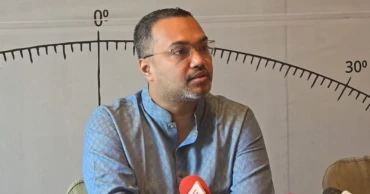
Centre for Policy Dialogue (CPD) Executive Director Dr Fahmida Khatun on Monday underscored the need for comprehensive economic reforms, stronger institutions and a greater focus on employment generation to sustain Bangladesh’s development momentum.
She said this while speaking at a programme titled “Macroeconomic Insights: An Economic Reform Agenda for the Elected Government” held at a hotel in the capital this afternoon.
The Policy Research Institute of Bangladesh (PRI) and Department of Foreign Affairs and Trade (DFAT) of the Australian Government jointly organized the event.
The discussion was attended by Finance Adviser Dr Salehuddin Ahmed as chief guest, along with leading economists, policymakers and representatives from development partners.
Presided over by Chairman of the PRI Dr. Zaidi Sattar, Dr. KAS Murshid, Former Director General of Bangladesh Institute of Development Studies (BIDS), Clinton Pobke, Deputy High Commissioner, High Commission of Australia to Bangladesh, spoke as special guests. Dr. Ashikur Rahman, Principal Economist, PRI, made the keynote presentation. Dr. M. Masrur Reaz, Chairman and CEO, Policy Exchange Bangladesh (PEB), spoke as distinguished panelists.
Dr Khatun said Bangladesh’s development achievements over the years — including reductions in poverty, improvements in per capita income and social progress — had long been recognised internationally as a success story. Despite governance limitations, the country managed to make notable gains in economic and social indicators.
“But the momentum weakened over time due to inherent structural weaknesses,” she said, pointing to low investment efficiency, a weak tax system and inadequate attention to reforms. She observed that reforms are often unpopular and require strong political commitment and bold leadership to implement successfully.
Referring to ambitious economic targets set by political parties, she said achieving a one trillion-dollar economy by 2034 would require around 9 percent sustained annual growth for nearly a decade. Similarly, reaching a two trillion-dollar economy by 2040 would demand even higher growth over a longer period.
She questioned whether Bangladesh currently has the institutional strength, governance standards, skilled human resources and technological readiness needed to sustain such high growth rates.
“Without structural reforms, these targets will remain difficult to achieve and the economy will continue to move in circles,” she said.
Highlighting key reform areas, Dr Fahmida Khatun mentioned public finance management, fiscal framework, trade and investment climate, and the financial sector. She, however, placed special emphasis on employment, describing it as one of the most pressing challenges.
She said recent public movements had been largely driven by demands for jobs, noting that the public sector can absorb only about 5 percent of total job seekers, while the economy has failed to generate sufficient employment opportunities.
“Growth without jobs has little meaning,” she said, adding that inequality has also increased alongside economic expansion. She referred to the Gini coefficient approaching 0.5, indicating widening income disparity.
She pointed out that about 40 percent of the labour force is still engaged in agriculture, much of it seasonal and informal. While the service sector contributes over half of GDP, it has not created enough quality jobs. The manufacturing sector, which could provide stable and better-paid employment, has also fallen short in generating adequate opportunities.
She noted that a significant portion of Bangladeshi migrant workers are employed abroad in low-skilled or semi-skilled roles, which limits income potential and long-term benefits.
Stressing the need for labour market reform, she said the country must prioritise manufacturing expansion and skill development to create decent jobs.
She also raised concerns about the mismatch between education and employment. Although about two million young people enter the job market each year, employers often struggle to find suitably skilled candidates. Youth unemployment remains significantly higher than the national average, and the rate among those not in employment, education or training is even higher.
“The higher the level of education, the higher the unemployment rate in some cases. This shows a serious skills mismatch,” she said.
Dr Fahmida Khatun called for increased budget allocations for education and improvements in quality, governance and training facilities. She made similar observations about the health sector, saying low spending and poor utilisation of resources weaken the workforce’s productivity.
She also highlighted the importance of social protection, particularly at a time when inflation has remained high since 2023 while wages have not increased at the same pace. With investment slowing and job creation lagging, she said support for low-income groups is essential.
However, she warned that expanding social protection requires adequate fiscal space. The declining tax-to-GDP ratio remains a major challenge in mobilising resources for social programmes.
Referring to various election pledges, including family cards and farmer support schemes, she said such initiatives would require a strong fiscal strategy and comprehensive public finance reforms to ensure sustainable funding.
Dr Fahmida Khatun concluded by stressing the need for an integrated reform agenda focused on employment, education, health and fiscal management to support long-term economic stability and inclusive growth.
25 days ago
Australian diplomat optimistic about Bangladesh’s economic prospects on back of reforms
Deputy High Commissioner of the High Commission of Australia to Bangladesh Clinton Pobke has expressed strong optimism about Bangladesh’s economic prospects, saying the country has the potential to achieve sustained high growth if ongoing reforms are strengthened and institutionalised.
Speaking at a discussion hosted by the Policy Research Institute (PRI) in Dhaka, Pobke praised the role of the think tank in generating data and policy analysis, describing its work as vital for informing policymakers and engaging the public.
“It’s wonderful to see so many people here tonight for this discussion,” he said, noting that he had closely followed PRI’s activities over the past year.
He said such events create space for open debate and allow diverse voices from across society to exchange ideas and perspectives.
The Australian diplomat also acknowledged the contributions of Bangladesh’s economic community, including professionals in government, academia, think tanks, the private sector and industry groups, calling them a “true asset for the country.”
While making it clear that it is not his role as a foreign diplomat to prescribe policy solutions, Pobke reflected on Bangladesh’s underlying economic potential and the significance of the country’s current moment.
He described Bangladesh’s growth trajectory since independence as remarkable, pointing out that the country has consistently maintained annual growth rates of 5 to 6 percent despite various challenges and periods of instability.
Referring to global development frameworks, he said several foundational policy elements often associated with strong economic performance were not historically prominent in Bangladesh, yet the country still achieved steady expansion.
According to him, if a future government is able to strengthen these core foundations, Bangladesh could realistically sustain growth of 8 to 10 percent and emerge as a major economic powerhouse.
Pobke highlighted several reform initiatives undertaken over the past 18 months, including changes in exchange rate management, regulatory steps in the banking sector such as the bank resolution regime, measures to reinforce central bank independence, reforms in the energy sector, and improvements in tax administration and governance.
He also noted that judicial reforms, including the recent establishment of commercial courts, could have significant economic benefits by improving the business climate and strengthening confidence in the rule of law.
However, he stressed that these measures should be seen as initial steps rather than final achievements.
Implement bold economic reforms to stay globally competitive: Dr Zaidi
“If Bangladesh is to reach 8, 9 or even 10 percent economic growth, these reforms must be locked in and carried forward,” he said, adding that one of the key challenges for any incoming elected government would be ensuring continuity.
He cautioned that several reforms introduced through ordinances may expire unless they are formally placed before parliament and enacted into law, creating a pressing timeline for policymakers.
At the same time, Pobke underlined that decisions about which reforms to continue or modify rest entirely with Bangladesh’s elected leadership. “It will be the democratic prerogative of an elected government what it does and how it does it,” he said.
He expressed hope that the momentum for economic reform would not slow down but instead continue to build, helping the country unlock its full potential.
Reaffirming Australia’s commitment to supporting Bangladesh, Pobke said his country would continue to assist where desired by the people and government of Bangladesh.
He noted that Australia’s support through the World Bank is aligned with Bangladesh’s reform priorities, while collaboration through the International Finance Corporation aims to boost private sector development.
He added that Australia would also continue to support the country’s think tank ecosystem to encourage informed public debate, and expand trade and investment ties through its strengthened trade engagement.
Pobke wished Bangladesh success in what he described as an important phase in both its democratic and economic journey, expressing confidence in the country’s ability to move forward.
25 days ago
Case against 8 NHA officials over allocation of luxury flats for 2 ACC commissioners
The Anti-Corruption Commission (ACC) on Monday filed a case against eight people over allegations of unethical, discriminatory and illegal allocation of luxury duplex flats of two former Commissioners of the Anti- Corruption Commission (ACC) under the “Grihayan Dhanmondi (Phase-1)” project of the National Housing Authority (NHA).
ACC Deputy Director and Public Relations Officer Akhtarul Islam briefed the reporters in the headquarters of the Commission.
Case statement explained that the flats—formed by combining D-12 and D-13, and C-12 and C-13—have areas of approximately 4,105.05 square feet and 4,308.68 square feet respectively. These duplex flats were allegedly approved and allocated in favour of Md Jahurul Haque, former retired judge and former commissioner of the Bangladesh Telecommunication Regulatory Commission (BTRC) and the ACC, and Dr Md Mozammel Haque Khan, former senior secretary and former ACC commissioner.
ACC files cases against former Bhandaria Upazila chairman, his wife
ACC said that through discriminatory and unlawful decisions taken at the 222nd and 225th board meetings of the National Housing Authority, approvals were granted for the construction and allocation of two large duplex flats in the project located at House No-711 (new 63), Road No-13 (new 6/3), Dhanmondi Residential Area.
The accused include Delwar Haidar, Chairman of the National Housing Authority; Shahjahan Ali, Member (Administration and Finance); Dr Md Moinul Haque Ansari, Member (Land and Estate Management); Bijoy Kumar Mondal, Member (Planning, Design and Special Projects); and Kazi Wasif Ahmad, Project Official (Engineering and Coordination), all of the National Housing Authority.
Former Registrar General (Senior District Judge) Syed Aminul Islam has also been named in the case for allegedly submitting false affidavits and being involved in the abuse of power.
The ACC case said that the accused, while holding important public positions, committed criminal breach of trust, fraud and misconduct by misusing state resources and approving architectural designs in a discriminatory and unlawful manner.
The case has been filed under Sections 409, 420 and 109 of the Penal Code, 1860, read with Section 5(2) of the Prevention of Corruption Act, 1947.
According to the case statement, while serving as public servants, several senior officials allegedly abused their power and acted in collusion to approve and allocate two duplex flats—each nearly double the size of standard flats—in violation of rules and regulations.
10 former senior officials under scanner
ACC sought wealth statements from 10 individuals linked to allegations of irregularities in the “Grihayan Dhanmondi (Phase-1)” housing project, suspecting that they may possess undisclosed assets beyond known sources of income.
According to ACC officials, there is a possibility that the accused individuals own or control additional properties. As it is not possible to verify the accurate amount and sources of their assets without official disclosures, the Commission has decided to invoke Section 26(1) of the ACC Act, 2004, directing the concerned individuals to submit detailed statements of their assets.
The individuals who will be asked to submit wealth statements include Md Jahurul Haque, former retired judge and former commissioner of the Bangladesh Telecommunication Regulatory Commission and the ACC.
Also on the list is Eunusur Rahman, former senior secretary of the Financial Institutions Division under the Ministry of Finance, currently serving as chairman of the board of directors of Jamuna Oil Company Limited.
Former senior secretary and former ACC commissioner Dr Md Mozammel Haque Khan has also been included, along with MA Kader Sarker, former secretary of the Ministry of Local Government, Rural Development and Cooperatives.
The ACC will further seek asset details from Dr M Aslam Alam, former rector of BPATC, senior secretary to the government and current chairman of the Insurance Development and Regulatory Authority (IDRA), and Aktari Mamtaz, former secretary of the Bangladesh Public Service Commission.
Other individuals named are Serajul Huq Khan, former secretary of the Health Services Division under the Ministry of Health and Family Welfare; Syed Aminul Islam, former Registrar General (Senior District Judge) and current member of the Judicial Reform Commission; and Anisur Rahman, former senior secretary of the Energy and Mineral Resources Division and former secretary of the Ministry of Religious Affairs, who also served as an election commissioner during the 13th Election Commission led by Habibul Awal.
The list also includes SM Golam Faruk, former senior secretary of the Local Government Division, former member of the Public Service Commission, former member of the Bangladesh Planning Commission, and former senior secretary of the Ministry of Local Government, Rural Development and Cooperatives.
The ACC said the move is aimed at ensuring transparency and verifying whether the individuals acquired assets beyond their known and lawful sources of income.
ACC approves case against Essential Drugs ex-MD, 5 others
25 days ago
Prof Yunus sees renewed global confidence in Bangladesh democracy
Expressing satisfaction over the peaceful election campaign across the country, Chief Adviser Prof Muhammad Yunus on Monday said the presence of a large number of international observers coming from different countries reflects the renewed global confidence in Bangladesh’s democracy.
He said it also demonstrates the international community’s serious approach towards the twin elections - the national election and referendum scheduled for February 12- in Bangladesh.
“We expect that this election will be better than any other elections that the country witnessed in the past,” Chief Adviser’s Press Secretary Shafiqul Alam quoted Prof Yunus as saying during a get-together event with the senior secretaries and secretaries of the government.
Prof Yunus happy over polls preparations, says next ‘week very crucial’
Cabinet Secretary Dr Sheikh Abdur Rashid presided over the function.
The Chief Adviser said huge numbers of observers are coming from various countries which reflect that they got back the confidence in Bangladesh democracy.
Press Secretary Alam, while briefing the reporters at the Foreign Service Academy, said the elections, held during the regime of Sheikh Hasina’s regime, did not have any legitimacy and no prominent election observers came to observe the elections at that time.
Prof Yunus observed that so far there has been no significant tension surrounding the election and political parties carrying out campaigns peacefully across the country.
"Election campaigns are taking place peacefully across the country. Political parties are playing a responsible role, and large public gatherings at campaign events are being conducted without violence or disorder," he said.
The Chief Adviser if the ‘Yes’ vote wins in the referendum, the country will change fundamentally and mis-governance will not return. "If the ‘Yes’ vote wins in the referendum, Bangladesh’s future will be built in a more positive way," he said.
Prof Yunus expressed optimism that the upcoming national election would be a free, fair, peaceful and festive one.
Speaking about past elections, he said previous polls in Bangladesh could hardly be called elections, describing them instead as ‘mockery’ in the name of elections.
Prof Yunus calls for ethical use of technology, rejects fraud for prosperity
"In contrast, the forthcoming election will be held in a free, fair and peaceful manner. With only two days remaining, we have almost reached the destination (peaceful, credible election)," the Chief Adviser said.
This election, he said, together with the referendum, would bring an unprecedented change to Bangladesh politics and structure.
Prof Yunus said Bangladesh will continue to move forward and attract investors from around the world who will come to establish factories in the country and described Bangladesh’s young population as a vast and powerful resource.
Referring to the Japan-Bangladesh Economic Partnership Agreement (EPA), he said this will encourage many foreign companies to set up production facilities in the country.
The Chief Adviser reiterated that the Japan-Bangladesh EPA is the first of its kind and should be seen as a model, adding that Bangladesh will pursue more free trade and preferential trade agreements.
Such agreements, Prof Yunus said, will open many new doors for the economy and for Bangladeshi products.
The Chief Adviser highlighted that, for the first time, expatriate Bangladeshis have been formally included in the political process.
He said their role in Bangladesh’s political movements and uprisings in the past is now being fully recognized, and going forward they will be able to play a stronger and more meaningful role in national affairs.
The Chief Adviser highlighted the extensive use of technology in this election, saying it has made the process easier and more accessible for everyone.
He said that a mobile app has been developed to guide voters on how to cast their votes, while election-related apps will be used to monitor security across nearly 43,000 polling centres across the country.
The ‘Election Bondhu’ initiative has been introduced, body-worn cameras have been provided to around 25,700 law enforcement personnel, and CCTV cameras are being installed at polling centres, Prof Yunus said, expressing hope that this election would be better than any previous election held in the country.
He thanked the secretaries for their performance over the past 18 months, particularly for their cooperation in expediting work related to around 130 ordinances issued during this period.
The Chief Adviser said their support and efficiency have been critical to the government’s work.
Later, the Chief Adviser posed for photographs with the senior secretaries and secretaries of the government.
If employers lose trust, all skills development initiatives would fail: Prof Yunus
25 days ago
Implement bold economic reforms to stay globally competitive: Dr Zaidi
Chairman of Policy Research Institute of Bangladesh (PRI) Dr Zaidi Sattar on Monday called for bold, fundamental economic reforms similar to those undertaken in the early 1990s, warning that the country’s current situation demands urgent structural changes to sustain growth and remain competitive globally.
“Bangladesh is at a critical juncture comparable to the reform period of 1990–91, when the country moved towards a more open, market-oriented economy,” he said.
He was speaking at a programme titled “Macroeconomic Insights: An Economic Reform Agenda for the Elected Government” held at a hotel in the capital this afternoon.
The Policy Research Institute of Bangladesh (PRI) and Department of Foreign Affairs and Trade (DFAT) of the Australian Government jointly organised the event.
The discussion was attended by Finance Adviser Dr Salehuddin Ahmed as chief guest, along with leading economists, policymakers and representatives from development partners.
Presided over by Chairman of the PRI Dr Zaidi Sattar, Dr KAS Murshid, Former Director General of Bangladesh Institute of Development Studies (BIDS), Clinton Pobke, Deputy High Commissioner, High Commission of Australia to Bangladesh, spoke as special guests.
Dr Ashikur Rahman, Principal Economist, PRI, made the keynote presentation.
Dr Fahmida Khatun, Executive Director, Centre for Policy Dialogue (CPD), Dr M Masrur Reaz, Chairman and CEO, Policy Exchange Bangladesh (PEB), spoke as distinguished panelists.
The closing remark was made by Dr Ahmad Ahsan, Director, PRI.
Policy reforms, ethical business key to competitiveness after LDC graduation: Business leaders
Dr. Zaidi stressed that the present challenges offer a similar opportunity for political and economic transformation.
According to PRI chairman, recent economic shocks have slowed growth to around 4 percent, but this does not reflect the country’s long-term potential. Without reforms, the economy’s intrinsic growth rate could return to about 5.5 to 6 percent once political stability is restored.
With strong and timely structural reforms, growth could accelerate to 7 to 8 percent, he said.
Dr Zaidi, however, cautioned that external developments are reshaping the global trade landscape and Bangladesh cannot continue with ‘business as usual’.
Among recent developments, PRI chairman described the Bangladesh-Japan Economic Partnership Agreement (EPA) as a major milestone.
The agreement, he said, based on asymmetrical reciprocity, offers Bangladesh significantly wider market access with relatively lower commitments in return.
He credited the government’s negotiation efforts, noting that while a full free trade agreement (FTA) would have been more beneficial, complexities in Bangladesh’s tariff regime made that difficult at this stage.
At the same time, Dr Zaidi flagged concerns over the India-EU free trade agreement, which it said could pose a serious challenge to Bangladesh’s exports, particularly garments.
India’s improved market access and production-linked incentives could intensify competition in the European market, where Bangladesh currently enjoys duty-free access and holds a large share, he said.
With Bangladesh set to graduate from least developed country (LDC) status, he stressed the urgency of pursuing an FTA with the European Union within the next two to three years.
But he warned that the country’s “mountain-sized” tariff structure and complex trade regime remain major obstacles.
The PRI chairman also highlighted the need for deep reforms in the National Board of Revenue (NBR), describing it as a key institution that requires restructuring to support economic transformation.
He welcomed the recent initiative to split the NBR into separate policy and management divisions, though implementation has yet to begin.
The institute chairman identified major weaknesses in the current tax system, including a narrow tax base, excessive reliance on manual administration and slow progress in automation.
He noted that Bangladesh still depends heavily on indirect taxes, with a 70:30 ratio compared to direct taxes, making the system regressive.
He recommended moving towards a 50:50 balance between direct and indirect taxation to ensure fairness and improve revenue mobilisation.
He also pointed out that nearly 58 percent of revenue comes from trade taxes, a level much higher than peer countries.
The PRI chief proposed reducing reliance on trade taxes from around 2.5 percent of GDP to about 1 percent over the next decade through tariff rationalisation and tax reforms.
He further stressed that high and prolonged protection for domestic industries is discouraging exports and placing a burden on consumers.
DCCI calls for immediate normalisation of Ctg port operations
He argued that industrial protection should be time-bound and performance-based, rather than continuing for decades.
The PRI chairman also raised concerns over limited export diversification and what they described as an “anti-export bias” created by high domestic protection, which makes local sales more profitable than exporting.
He said modernising tariffs, expanding the tax base, digitising tax administration and aligning trade policies with global standards are essential for Bangladesh to integrate more deeply with global markets and negotiate future FTAs.
He expressed hope that the next elected government would take decisive steps to implement structural reforms, noting that democratic administrations are generally better positioned to carry out major policy changes.
25 days ago
Surayya Akhtar Jahan made DNCC administrator
The government has appointed Surayya Akhtar Jahan, additional secretary of the Local Government Division, as the administrator of Dhaka North City Corporation (DNCC).
The Local Government Division under the Local Government , Rural Development and Cooperatives Ministry, issued a gazette notification in this regard on Monday.
The notification said she has been given the responsibility under Section 25 A(1) of the Local Government (City Corporation) (Amendment) Ordinance, 2024
As administrator, Surayya Akhtar will exercise the powers and perform the duties of the DNCC mayor under further order in line with Section 25A(3) of the ordinance.
She will carry out the responsibility in addition to her existing duties and will be entitled to any additional financial or other benefits as per rules.
DNCC administrator Azaz faces travel ban
The appointment will come into effect immediately.
Mohammad Azaz had been serving as the administrator of DNCC and he will be replaced by Surayya Akhtar.
The Ministry of Local Government, Rural Development and Cooperatives appointed Azaz as DNCC administrator on February 12 last year for a one-year term.
25 days ago
153 police officers promoted to Police Inspector
In a latest reshuffle in the police administration, a total of 153 police officials including 147 sub-inspectors and six sergeants have been promoted to the rank of Inspector.
Bangladesh Police Headquarters issued separate notices, signed by Inspector General of Police (IGP) Baharul Alam, in this regard on Monday.
25 days ago
Justice Naima Haider resigns
Justice Naima Haider of the High Court has submitted her resignation which has been forwarded to the President.
The Supreme Court disclosed the information in a press release on Monday.
According to the release, Justice Naima Haider expressed her intention to resign last Thursday and submitted her resignation letter to the President through the Chief Justice of Bangladesh.
Earlier, on February 2, High Court Judge Justice Mamnun Rahman also submitted his resignation.
Justice Naima Haider was enrolled as a lawyer in the district court in 1989 and later became an advocate of the High Court Division and the Appellate Division in 1989 and 1993 respectively.
She was appointed as an additional judge of the High Court on June 30, 2009 and was made permanent judge of the same division on June 30, 2011.
25 days ago
Dhaka police pledge ‘foolproof’ security for Feb 12 election
Dhaka Metropolitan Police (DMP) Commissioner Sheikh Md Sajjat Ali on Monday said they have put in place extensive security arrangements to ensure the national election and referendum scheduled for February 12 are held in a free, fair and peaceful manner.
Briefing reporters at the DMP Media Centre, the DMP commissioner said a ‘foolproof’ security plan had been prepared and would be implemented with professionalism and neutrality.
“We are working with dedication and sincerity. We want to set an example by ensuring a meaningful and widely acceptable election, overcoming the stigma associated with the misuse of law enforcement in past polls,” he said.
The commissioner said the police would focus on maintaining law and order in electoral areas, ensuring security inside polling centres, protecting election officials and materials, safeguarding the offices of returning officers and enabling voters to cast their ballots without obstruction.
He said peace at polling centres would be maintained through mobile and striking teams, while at least one police officer equipped with a body-worn camera would be deployed at sensitive centres.
Joint operations and checkpoints would be carried out with other law enforcement agencies, and security would be provided to candidates and other election-related individuals.
Despite limited resources and manpower, he said, the DMP was determined to deliver a “flawless and acceptable” election.
For real-time monitoring, body-worn cameras will be used, while 180 striking teams and 510 mobile teams will be deployed across the capital. Eight control rooms have been set up across DMP’s eight crime divisions, along with four additional special control rooms.
Special Reserve Force units will be stationed at strategic locations under the direct supervision of senior officers and will be mobilised rapidly if required. Elite units, including SWAT, the Bomb Disposal Unit, Dog Squad, Crime Scene Vans and mounted police, will also remain on standby.
37 Dhaka polling centres under risk watch: DMP Commissioner
Calling on city residents to participate, the DMP mcommissioner urged voters to come to polling centres ‘fearlessly and peacefully’ to exercise their civic rights.
On risk assessment, Sajjat Ali said polling centres in Dhaka had been categorised as ‘important’ and ‘general’ in line with Election Commission guidelines.
A total of 1,614 centres have been identified as important and 517 as general. An additional 37 centres in hard-to-reach areas, including Kamrangirchar, Satarkul and Beraid, have been placed under special arrangements, with seven police officers to be deployed at each.
Addressing concerns about possible threats, the commissioner said there was no security risk at present and that the overall law and order situation in Dhaka was “better than normal”.
“There is no crime, no road blockade,” Sajjat Ali said, adding that law and order in the capital remained stable despite a population of about 36.6 million.
On the issue of police neutrality, the DMP commissioner said that during his 15 months in office, the force had not worked in favour of any political party, and that its conduct reflected professional impartiality.
He also said the security plan included protection for journalists, doctors, engineers and other professionals.
Assuring media workers of their safety, he said there were no concerns regarding journalists’ security during the election period.
25 days ago
Bangladesh Bank keeps policy rate at 10% as inflation risks persist
Bangladesh Bank maintained a tight monetary stance for the second half of fiscal year 2025-26, keeping the policy rate unchanged at 10%, as the central bank seeks to contain inflation while pushing lenders for increasing private-sector credit.
Governor Ahsan H Mansur unveiled the January–June monetary policy on Monday at a press conference at the central bank’s headquarters in Motijheel, marking the final policy statement under the interim government.
While key interest rates were left unchanged, the central bank cut the Standing Deposit Facility (SDF) rate by 50 basis points to 7.5% from 8%, a move aimed at discouraging banks from parking excess liquidity with the central bank and encouraging lending and inter-bank market activity. The Standing Lending Facility (SLF) rate was maintained at 11.50%.
Keeping money at the central bank is now less profitable, Dr Mansur said, explaining that the SDF reduction is intended to push banks toward private-sector credit and the inter-bank market.
Bangladesh Bank said inflation, although easing in recent months, remains above its 7% target and warned of renewed price pressures stemming from higher spending ahead of national elections and Ramadan, seasonal increases in essential commodity prices, and the possible implementation of a new public-sector salary structure.
“Lowering the policy rate at this moment could put pressure on the Taka and reignite import-driven inflation,” the governor said.
Bangladesh Bank buys another $196.5 million to stabilize forex market
The banking sector has shown signs of recovery in deposits, with growth rising from below 7% in August 2024 to 11% by December 2025. However, officials noted a “flight to quality,” as depositors increasingly favour banks with stronger reputations.
At the same time, non-performing loans surged to 36% as of September 2025. The central bank attributed the jump to the adoption of international standards requiring stricter loan classification and reporting.
Bangladesh’s external position has strengthened, supported by a stabilised foreign-exchange market. Foreign exchange reserves increased to $33.2 billion in December 2025 from $25.6 billion in August 2024.
For the first time in years, the central bank has not sold any dollars from its reserves since August 2024. Instead, it purchased $4.3 billion from the inter-bank market in FY26. Bangladesh Bank also cleared $3.5 billion in overdue payments to foreign lenders, a move it said significantly boosted international confidence in the economy.
The press conference was attended by Deputy Governors Dr Habibur Rahman and Nurun Nahar, along with the head of the Bangladesh Financial Intelligence Unit (BFIU) and other senior executive directors.
25 days ago