Others

Shikho launches free Bangla AI course for students, others
Shikho has launched “Think AI,” a free Bangla-language course designed to give students, teachers and workers a foundational understanding of artificial intelligence.
The course, developed in collaboration with LightCastle Partners and supported by Meta, is available on Shikho’s learning platform, said a media statement.
It consists of four lessons covering AI fundamentals, how generative tools work, the ethics of responsible use, and practical pathways for upskilling.
It requires no prior technical background and is aimed at secondary and university students, educators, freelancers and young professionals across Bangladesh.
The event recently held at a city hotel in Dhaka, drew more than 60 stakeholders from the Ministry of Education, the Ministry of Posts, Telecommunications, and Information Technology, the private sector, and development partners.
Discussions at the event centered on three objectives: distributing the course through Bangladesh's existing educational infrastructure, opening cross-sector dialogue on AI literacy and digital skills, and establishing a replicable model for public-private collaboration in digital skilling.
Shahir Chowdhury, Founder and Chief Executive Officer (CEO) of Shikho, framed AI as a civilizational shift and a defining opportunity for Bangladesh. "For the first time in modern history, geography doesn't have to dictate destiny," he said.
Mahdi Amin, Adviser to the Prime Minister's Office (Education), said the government is moving to digitise the country's curriculum and standardise the quality of teaching across geographies, with AI as a core enabler.
"We are going to convert our curriculum to a digital curriculum. The finest teachers in Dhaka, the content they get access to, will have the same content in the remote villages," he said.
"For our digital classroom and One Teacher One Tab programmes, AI will play an instrumental role."
Rehan Asif Asad,Adviser to the Prime Minister's Office (ICT), said the government's first priority is laying the connectivity and data infrastructure that will allow AI to work at national scale. "If I don't have connectivity, I have nothing. For AI to work, it is absolutely critical to have the data," he said.
“With that infrastructure in place, for the first time, the barrier is almost blurring between Rangpur and Palo Alto."
The panel discussion, which brought together the senior government advisers and Meta's regional public policy leadership, was moderated by Bijon Islam, Chief Executive Officer (CEO) of LightCastle Partners.
1 month ago

16 DIGs sent into compulsory retirement as govt rejigs police leadership
The government has sent 17 senior police officers, including 16 holding the rank of Deputy Inspector General (DIG), into compulsory retirement.
The order was issued on Sunday through a notification from the Home Ministry, signed by its Senior Secretary Manjur Morshed Chowdhury by order of the President.
According to the notification, the police officers have been retired in the public interest under Section 45 of the Government Service Act, 2018. They will receive all retirement benefits as per the rules.
Those retired include DIG of the Anti-Terrorism Unit Mofiz Uddin Ahmed, DIG of Highway Police Imtiaz Ahmed, DIG of CID Md. Habibur Rahman, DIG (TR) at Police Headquarters Saleh Mohammad Tanvir, Director of National Security Intelligence (NSI) Md. Harun-or-Rashid, and DIG of Dhaka Police Staff College SM Akhtaruzzaman.
Besides, Commandant (DIG) of Noakhali PTC Md. Haidar Ali Khan, Commandant of Khulna PTC Md. Mahbubur Rahman Bhuiya, DIG of Tourist Police Md. Ruhul Amin, DIG of Highway Police Md. Rafiqul Hasan Gani, DIG of River Police Md. Mizanur Rahman, and Commissioner of Rangpur Metropolitan Police Md. Majid Ali.
The list further includes DIG at Police Headquarters Kazi Zia Uddin, DIG of Railway Police Md. Golam Rauf Khan, Commandant of Rangpur PTC Sheikh Mohammad Rezaul Haider, and DIG of Highway Police Rakhfar Sultana Khanam.
In the same order, Superintendent of Police (Supernumerary Additional DIG) of Railway Police Farhat Ahmed has also been sent into retirement.
The order, issued in the public interest, takes immediate effect, the notification said.
1 month ago

New council formed to coordinate tourism sector expansion
The government has formed a National Tourism Council to ensure sustainable and coordinated development of the country’s tourism industry.
The Cabinet Division recently issued a gazette notification in this regard.
The 16-member council headed by the Prime Minister included Local Government, Finance, Planning, Home, Foreign Affairs, Environment, Cultural Affairs, Land, Civil Aviation and Tourism, Commerce, Water Resources, Chattogram Hill Tracts Affairs and Shipping ministers as members.
The State Minister for Civil Aviation and Tourism will also serve as a member, while the secretary of the same ministry will act as member-secretary of the council.
According to the notification, the council will be responsible for supervising, coordinating and providing policy direction for the implementation of tourism development plans.
It will also provide advice on the expansion of the tourism sector at national, regional and international levels.
The body will formulate policy decisions related to tourism laws and administrative measures, determine strategies to attract domestic and foreign investment, and strengthen coordination among relevant ministries.
It will also guide public-private partnerships for the development of the sector.
The council will also review and approve recommendations of other tourism-related committees and monitor the progress of implementing election pledges related to the sector.
It will have the authority to take decisions on any important matters when necessary.
The notification said council meetings will be held as required, and new members may be co-opted if needed. The Ministry of Civil Aviation and Tourism will provide secretarial and administrative support to the council.
1 month ago
Democracy was at stake during Hasina’s regime: Speaker
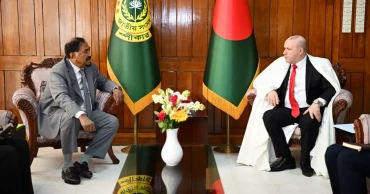
Speaker of the Jatiya Sangsad Hafiz Uddin Ahmad, Bir Bikram, on Sunday said democracy was endangered in Bangladesh during the 16-year rule of Sheikh Hasina.
“Democracy was at stake in Bangladesh during the 16 years under Sheikh Hasina’s rule. A reign of fear was established through repression of opposition parties and extrajudicial killings,” he said.
He made the remarks when Ambassador of Algeria to Bangladesh Abdelouahab Saidani paid a courtesy call on him at his office in the Jatiya Sangsad Bhaban, according to a press release.
During the meeting, the Speaker recalled the sacrifice of late Prime Minister Begum Khaleda Zia in this long process of restoring democracy. “The people of Bangladesh have regained their democratic rights through the exercise of their franchise in the recently held national election,” he said.
Highlighting bilateral ties, Hafiz Uddin Ahmad said the future joint progress of Bangladesh and Algeria relationship would be strengthened based on strong people-to-people contact and cultural exchange.
1 month ago

ADB to provide $70 billion for Asia-Pacific energy, digital infrastructure development
The Asian Development Bank (ADB) will back $70 billion in new energy and digital infrastructure initiatives by 2035, aiming to connect power grids, expand cross-border electricity trade, and improve broadband access across Asia and the Pacific.
The Pan-Asia Power Grid Initiative will connect national and subregional power systems so renewable energy can flow across borders, while the Asia-Pacific Digital Highway will help close the digital infrastructure gap and enable the region to benefit from AI-driven growth.
Under the Pan-Asia Power Grid Initiative, ADB will work with governments, utilities, the private sector, and development partners to mobilize $50 billion by 2035 for cross-border power infrastructure that can unlock renewable energy at scale, said a press release.
The initiative will focus on transmission and grid integration, including cross-border lines, substations, storage, and grid digitalization.
It will also support power generation linked to electricity trade, including renewable energy export projects, regional renewable hubs, and hybrid generation-storage facilities.
By 2035, ADB aims to integrate about 20 gigawatts of renewable energy across borders, connect 22,000 circuit-kilometers of transmission lines, improve energy access for 200 million people, create 840,000 jobs, and cut regional power sector emissions by 15%.
ADB expects to finance about half of the $50 billion initiative from its own resources and raise the rest through cofinancing, including from the private sector.
Up to $10 million in technical assistance will support efforts to align regulations, adopt common technical standards, prepare feasibility studies and advance other work needed for major projects.
The Pan-Asia Power Grid Initiative marks a shift from country-to-country energy links to a regional approach to power trade.
It builds on existing subregional cooperation initiatives, including the South Asia Subregional Economic Cooperation program, the Bay of Bengal Initiative for Multi-Sectoral Technical and Economic Cooperation grid interconnection planning, the ASEAN Power Grid, and the Central Asia Regional Economic Cooperation Energy Strategy 2030.
The Asia-Pacific Digital Highway will mobilize $20 billion by 2035 to finance digital corridors, data infrastructure, and AI-ready economies.
Investments will focus on connected infrastructure, including terrestrial and subsea fiber networks, satellite links and regional data centers.
ADB will also provide policy and regulatory support, including on cybersecurity risk management, and invest in skills programs to strengthen digital and AI readiness.
By 2035, the initiative aims to provide first-time broadband access to 200 million people and faster, more reliable digital connectivity for another 450 million people across the region.
It is expected to cut connectivity costs in remote and landlocked areas by about 40% and help create 4 million jobs.
ADB expects to finance $15 billion of the $20 billion initiative from its own resources and raise $5 billion through cofinancing, including from the private sector.
The Center for AI Innovation and Development will be established in Seoul to support the initiative. Backed by a $20 million contribution from the Government of the Republic of Korea, the center will promote responsible and inclusive AI adoption and help train about 3 million people in digital and AI-related skills by 2035.
ADB President Masato Kanda said that Energy and digital access will define the region’s future.
“These two initiatives build the systems Asia and the Pacific need to grow, compete, and connect. By linking power grids and digital networks across borders, we can lower costs, expand opportunity, and bring reliable power and digital access to hundreds of millions of people.”
1 month ago

LPG price to remain steady for May
The Bangladesh Energy Regulatory Commission (BERC) announced on Sunday that it will keep the liquefied petroleum gas (LPG) price unchanged for May, giving consumers a breather after two consecutive hikes last month.
In a notice issued in the afternoon, BERC said LPG will sell at April's fixed rates in May, keeping the price of the widely-used 12-kg cylinder at Tk 1,940.
The decision comes after the LPG price was revised upward twice in April: by Tk 32.30 per kg on April 2, and again by Tk 17.62 per kg on April 19, pushing the 12-kg cylinder price from Tk 1,728 to Tk 1,940.
For autogas, BERC fixed the consumer-level price at Tk 89.52 per litre (VAT inclusive) for May, a marginal increase of Tk 0.02 per litre over the revised April rate.
Autogas also saw two upward adjustments in April. On April 2, the price rose by Tk 17.94 per litre to Tk 79.77 (VAT inclusive), followed by a further hike of Tk 9.73 per litre on April 19, setting it at Tk 89.50 per litre.
1 month ago

Titas shuts gas supply at Gulshan, Banani after pipeline damage
Titas Gas Transmission and Distribution PLC suspended gas supply to the capital's Gulshan, Banani, Baridhara and adjacent areas on Sunday following damage to one of its pipelines.
In a notice, the state-run gas distributor said a gas line was damaged in Gulshan-Badda Link Road area, prompting authorities to shut valves as a precautionary measure to prevent casualties and property loss.
Repair works are underway at the affected sections of the pipeline, the company said.
Titas did not specify when supply would be restored but expressed regret over the inconvenience caused to residents of the affected areas.
1 month ago

Rampal power plant sets record with over 760 million units generation in April
Bangladesh-India Friendship Power Company Limited (BIFPCL) has set a new record in national power generation, producing over 760 million units of electricity from Rampal power plant in April this year.
Maitree Super Thermal Power Plant in Rampal contributed more than 9 percent of the country’s total electricity generation during the month, according to a press release issued by the power plant authorities on Sunday.
This marks the fifth time the Rampal plant has crossed the milestone of generating over 700 million units in a single month.
Anwarul Azim, Deputy General Manager (Public Relations) of BIFPCL said the plant operated at an impressive 97 percent plant load factor (PLF) during the first week of April, when electricity demand surged due to a heatwave, helping stabilise the national grid.
Ramanath Pujari, Managing Director of BIFPCL said operating the plant at near full capacity during peak demand highlights its robust design and the dedication of its workforce.
1 month ago
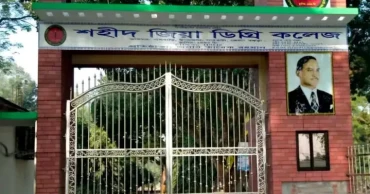
PM’s pledge fulfilled as Shaheed Zia Degree College in Bogura set for nationalisation
The government has initiated the process of nationalising Shaheed Zia Degree College in Gabtali upazila of Bogura, fulfilling a commitment made by Prime Minister Tarique Rahman during his recent visit to the district.
The Ministry of Education issued a circular on April 29 asking the relevant authorities to take all necessary steps for nationalising the college, saying the Prime Minister has given in principle his approval to the matter.
According to the circular, several administrative and legal steps have been ordered as part of the nationalisation process.
These include a restriction on new recruitment and the transfer of moveable and immovable property, the submission of reports following an on-site inspection of the institution, and on its financial status, legal matters and other relevant issues.
The ministry asked for a legal opinion from the legal adviser of the Directorate of Secondary and Higher Education on whether the institution is facing any cases, along with a formal affidavit from the head of the institution.
Officials concerned have been instructed to complete the required procedures and submit their reports to the ministry as quickly as possible.
During his visit to Bogura on April 20 last, the Prime Minister attended a public programme at the college ground in Bagbari of Gabtali, where local residents and students displayed banners and chanted slogans demanding that the institution be nationalised.
Responding to the demand, Tarique Rahman immediately announced government takeover of the college. “Your demand is that this college should be nationalised? Consider it done. The paperwork will reach you,” he had said.
The nationalisation of the college is expected to expand access to higher education in the area, particularly benefiting students from the birthplace of Shaheed President Ziaur Rahman.
1 month ago
Govt starts process to form Media Commission to strengthen media freedom, accountability: Information Minister
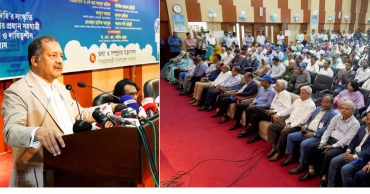
Information and Broadcasting Minister Zahir Uddin Swapon on Sunday said the government has initiated the process of forming a strong Media Commission aimed at building an independent and responsible media framework in the country.
“Regulation does not mean control; rather, the government wants to play the role of a facilitator in ensuring a healthy and normal environment,” the minister said at a discussion, marking the World Press Freedom Day, 2026 at the ministry in the capital.
This year’s Bangladesh theme for the observance of the day is: “Independent and Responsible Media: A Key Partner in Establishing a Culture of Accountability.”
The minister said the media sector is a vast and complex system and that the government does not want to impose decisions unilaterally.
“We will form an advisory committee involving representatives from all sides under the leadership of a widely accepted media expert. Based on the committee’s well-considered recommendations, a permanent Media Commission will be established. We believe this will ensure full freedom and protection for the media,” he said.
He said the initiative would be implemented through continued dialogue with the Editors’ Council, journalists’ organisations, media owners and other relevant stakeholders.
Reaffirming the government’s commitment to journalists’ professional safety and legal protection, the minister said no journalist would be jailed without committing an offence.
“As a matter of policy, the government will ensure professional protection for all journalists under the law. Defamation cases and other legal complexities will be brought under institutional management through the Press Council,” he added.
Zahir Uddin said the global media landscape is currently passing through a complex reality where journalists face growing risks in conflict zones while the rapid expansion of digital platforms, social media and artificial intelligence (AI) is transforming the nature of information flow.
“As a result, new challenges surrounding the media have emerged, and these can no longer be addressed through conventional thinking,” he said.
He said the issue of media freedom and responsibility remains highly significant and the government wants to build an independent, strong and responsible media system in the country.
The minister said the government does not believe in interfering in the media and reiterated its commitment to fearless, objective and unbiased journalism.
To combat the spread of misinformation and disinformation in the digital era, he emphasised the need for strong fact-checking mechanisms within every media organisation.
“No news should be published without verification and institutional mechanisms must be developed for this purpose,” he said.
He also noted that the media is not merely a business or industry but a crucial component in maintaining balance within the state and society, adding that the sector would receive necessary policy support and patronage.
Speaking at the event, Bangladesh Press Council Chairman Justice A K M Abdul Hakim said efforts are underway to make the Press Council more effective in ensuring journalists’ professional rights and legal protection.
“Without media freedom, democracy and the rule of law cannot be established. However, accountability must accompany freedom. Rights are inseparably linked with duties and responsibilities. Ignoring limits and jurisdictions in many cases can create disorder in society. Journalists must maintain high ethical standards and professional discipline,” he said.
S M Shamim Reza, professor of the Department of Mass Communication and Journalism at University of Dhaka, presented the keynote paper at the event.
Among the speakers at the discussion were Matiur Rahman Chowdhury, president of the Newspapers Owners Association of Bangladesh (NOAB) and Editor-in-Chief of Manabzamin; Abdus Salam, secretary general of Association of Television Channel Owners (ATCO) and chairman of Ekushey Television; Dewan Hanif Mahmud, general secretary of the Editors’ Council and editor of Bonik Barta and Hasan Hafiz, president of the Jatiya Press Club.
Additional Secretary of the Ministry of Information and Broadcasting Md Shah Alam delivered the welcome speech at the programme.
Earlier in the morning, a colourful rally was organised to mark World Press Freedom Day 2026.
Senior officials from the Ministry of Information and Broadcasting and its affiliated departments and agencies joined the rally.
1 month ago