others

EC to meet press Thursday noon
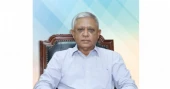
The Election Commission headed by Chief Election Commissioner Kazi Habibul Awal will meet the media at 12 pm on Thursday for the first time after the fall of deposed Prime Minister Sheikh Hasina’s regime.
The commission will exchange views with journalists at Nirbachan Bhaban in the city’s Agargaon area, said Public Relations Officer of the EC Secretariat Shariful Islam on Wednesday.
The Kazi Habibul Awal-led commission has maintained silence since Sheikh Hasina was ousted on August 5 last. It didn’t take any initiative to conduct any local body election in the last one month.
However, the CEC wrote an article that was published in a Bengali daily on August 24 claiming that the Election Commission is in a crisis amid the successful post-revolution constitutional situation.
The current commission drew strong criticism from various quarters including BNP and other political parties for holding the lopsided general election on January 7, 2024, which created the way for Awami League to go to power for the fourth consecutive term.
Different local body elections held under his commission were also questioned by different political parties.
On February 27, 2022, former secretary Kazi Habibul Awal took the charge of the Chief Election Commissioner, while four others -- former district and sessions judge Rashida Sultana, Brig Gen (retd) Md Ahsan Habib Khan, and former secretaries Md Alamgir and Anisur Rahman, took the charges as election commissioners.
The current commission was constituted through a search committee for the first time under a law mandated by the constitution. The search committee held a series of meetings with eminent citizens and civil society representatives and sought names from the registered political parties for the posts.
A number of political parties including Awami League gave the names, but BNP and some other political parties didn’t send any name to the search committee.
1 year ago
Safiqul Rahman appointed as Biman MD and CEO
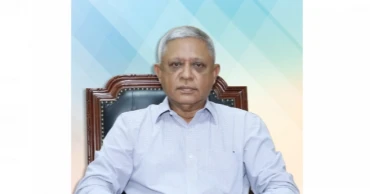
Dr Md Safiqul Rahman has been appointed as the managing director (MD) and chief executive officer (CEO) of Biman Bangladesh Airlines.
Biman Board of Directors made the appointment on Wednesday, according to a press release.
Shafiqul, a former Director of Marketing and Sales at Biman, began his career with the airline in 1986 as a Trainee Commercial Officer. Over the years, he has held various significant positions including Director of Administration and Human Resources, Director of Procurement and Logistics Support, and Director of Marketing and Sales.
He has also worked in departments such as Tariffs, Market Research, Reservations, and Cargo. Additionally, Dr. Rahman has served as the Country Manager for Biman in Singapore, Thailand, and Greece. He retired in 2017 after a distinguished career.
Shafiqul earned his Bachelor's and Master's degrees in Economics from the University of Dhaka. He also holds an MBA in Marketing from the University of Southern Queensland, Australia, and completed a Doctor of Business Administration at Southern Cross University, Australia, in 2011. He has pursued multiple diplomas and training in aviation from the International Air Transport Association and the Bangladesh Airlines Training Centre.
1 year ago
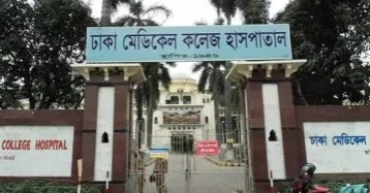
Man injured in attack by Ansar members at Secretariat dies at DMCH
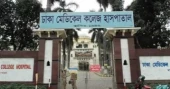
A 45-year-old man, who sustained injuries in an attack by some Ansar members at the Secretariat on August 25, died at Dhaka Medical College and Hospital early Wednesday.The deceased was identified as Shaheen Hawladar, 45, driver of a rental car service and son of Sobhan Hawladar of Mongla upazila of Bagerhat district.Quoting Bishal Ahmed, son of Shaheen, Inspector Bachchu Mia, in-charge of Dhaka Medical College and Hospital police camp, said he used to live in Khilgaon's Goran area.
Another student shot during student movement dies at DMCHOn August 25, Shaheen went to the Secretariat in search of his son Bishal, who was trapped during the besiege programme of Ansar members.After getting a phone call from Bishal, Shaheen went there around 9 pm.When he arrived at the Secretariat, the Ansar members attacked Shaheen amid the chaos.Later, he was taken to Dhaka Medical College and Hospital and he underwent a surgery.He was put on life support at the Intensive Care Unit (ICU) of the hospital where the doctors declared him dead on Wednesday morning.
1 year ago

Freeze assets laundered by Bangladeshis: TIB, 4 UK anti-graft bodies urge global action
Transparency International Bangladesh (TIB) and four UK-based anti-corruption organizations have called for the immediate freezing of illegal assets held by Bangladeshis in several countries including the US, the UK and EU nations.
This call, made in a letter to the UK Secretary of State for Foreign, Commonwealth and Development Affairs, aims to recover money that has been laundered from Bangladesh to countries like the UK, USA, Switzerland, EU countries, Australia, Singapore, Malaysia, Hong Kong, and the UAE, according to a press release on Wednesday.
In the letter, TI-UK, the UK Anti-Corruption Coalition, the International Lawyers Project, Spotlight on Corruption and TIB highlighted the importance of fostering active collaboration with the Bangladeshi government.
They emphasised the importance of working together to ensure that those who possess illegal assets are held accountable and to facilitate the return of these assets.
This initiative is viewed as a crucial step towards creating a future for the envisioned "New Bangladesh" that is transparent, accountable, democratic and free from corruption, said the release.
Dr. Iftekharuzzaman, Executive Director of Transparency International Bangladesh, said: “Most of the countries where money and assets from Bangladesh have been laundered to are among our development, trade and investment partners who are committed to fighting corruption nationally and internationally. Now is the time for them to take such commitments to a new level of effectiveness by immediate necessary actions to freeze illegal assets owned by all Bangladeshi individuals and entities in their respective jurisdictions. “
He said they call upon governments of UK,USA, Switzerland, Canada, Australia, EU countries as well as Singapore, Malaysia, Hong Kong and UAE to freeze such assets as the step to repatriate the same to Bangladesh and hold the perpetrators to account.
Susan Hawley, Executive Director of Spotlight on Corruption, said, the UK really needs to put its money where its mouth is when it comes to helping developing countries like Bangladesh track down stolen assets that the UK is harbouring, and to ensuring accountability of corrupt actors.
By bolstering anti-corruption efforts at this crucial moment for Bangladesh, the UK could play a decisive role in ensuring the country achieve the secure democratic and inclusive future that the UK has promised to help it achieve, she said.
Duncan Hames, Director of Policy at Transparency International UK, said the British government should now work closely with allies around the world and civil society within Bangladesh to introduce a sanctions regime which freezes the assets of these corrupt figures and their enablers, ensuring they do not enjoy their ill-gotten gains.
In the letter to the UK Secretary of State on August 30, it was highlighted that the extensive corruption by beneficiaries of the ousted authoritarian government is being uncovered in Bangladesh, which is currently in transition.
The assets smuggled by these beneficiaries rightfully belong to the citizens of Bangladesh. In order to contribute to the reforming of a “New Bangladesh”, it is essential to promptly locate and retrieve these concealed assets from different countries across the globe. This will help improve transparency, accountability, democracy, and inclusivity in the country.
The letter seeks cooperation from the the UK Secretary of State to support this effort.
The letter urges the UK Government to promptly address three crucial matters, in line with their commitment to support the Interim Government of Bangladesh.
First, the five anti-corruption organizations request that the UK’s National Crime Agency proactively investigate whether money laundered by Bangladeshi individuals or companies is present in the UK. They urge the agency to take all necessary measures, including freezing these assets, as an initial step toward repatriating the funds to Bangladesh.
Second, they seek UK government assistance in reforming key Bangladeshi institutions such as the Anti-Corruption Commission, Financial Intelligence Unit, Criminal Investigation Department, National Board of Revenue, Office of the Attorney General, and law enforcement agencies.
1 year ago

Join hands in building new Bangladesh with honesty, accountability: Prof Yunus tells secretaries
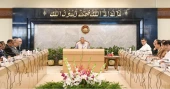
Chief Adviser Prof Muhammad Yunus on Wednesday urged the top bureaucrats to join hands in building a new Bangladesh demonstrating their honesty, devotion and accountability in respective fields, standing on the conviction and fearless spirit that the students gave the country in the July-August uprising to build a humane country without discrimination.
In a meeting with the secretaries, the chief adviser said it is essential to get out of rigid thinking with a reformed thought process and conduct activities in a creative way keeping public interest on top of everything.
“The highest satisfaction of the people should be achieved by rooting out corruption and easing services,” chief adviser’s press wing quoted him as issuing directives to the secretaries at the meeting held at Chief Adviser’s Office
Prof Yunus said emphasis on ensuring optimum utilisation of public funds and said fair competition should be ensured in public procurement and obstacles should be removed to ensure transparency and accountability.
The chief adviser gave 'marching orders' to adopt and implement reform programmes at all levels of government.
He said discussions should take place and opinions need to be received from the persons concerned in formulating the reform programme.
Prof Yunus said every ministry/department with a creative, citizen-friendly mindset will submit time-bound action plans for short, medium and long-term reform programmes, which will be regularly evaluated and monitored.
He said the positive perception that has been created worldwide about the new Bangladesh due to the popular uprising of the students should be used in the best way for the sake of the country.
1 year ago

Adviser Hassan Ariff warns “outsiders” inciting worker unrest in Ashulia and beyond
In response to ongoing worker unrest in Ashulia and other parts of the country, which officials believe is largely driven by outsiders, the government has announced plans to take a firm stance to protect the nation’s economy and its workers. Local Government, Rural Development and Co-operatives Adviser AF Hassan Ariff made the announcement following an emergency meeting at the Home Ministry on Wednesday.
During the meeting, attended by key advisers including Dr. Asif Nazrul (Legal Affairs), Farida Akhter (Fisheries and Livestock), Adilur Rahman (Industries), and Asif Mahmud Sajib Bhuiyan (Labor and Employment), concerns were raised about the escalating unrest in the garment sector.
Will try to minimise the mistakes in LGRD Ministry: Adviser Arif
“We have received reports that the real workers are not involved in these acts of sabotage, as they would not destroy their own workplaces, which are their source of livelihood. These actions are being perpetrated by outsiders,” Hassan Ariff said.
“We urge the workers to resist these outsiders. If you stand against them, we will support you. However, these individuals have blended in so well that it has become difficult to segregate them,” he added.
He further highlighted that the most significant disruptions have occurred at major factories, such as the Pran company’s plant in Cumilla, which was set ablaze. “Pran has never experienced worker unrest before,” the adviser said.
11pc people at risk of arsenic: LGRD Minister
The adviser emphasized the need for decisive action to protect local factories and the broader economy. “If our local factories are destroyed, who stands to gain? Clearly, the real workers are not behind this chaos. Most of those involved are outsiders, and we need to be tougher in dealing with them,” he said.
When asked about the nature of these measures, he indicated that further deliberations are needed but hinted that arrests or detentions could be possible.
1 year ago

Youth shot dead in ‘gunfight’ at Mohammadpur Geneva Camp
A 32-year-old man was shot dead in a reported gunfight between two groups at Geneva Camp in the capital’s Mohammadpur area on Wednesday.
The deceased was identified as Md Manu, son of Md Babul.
Inspector Bachhu Mia, in-charge of Dhaka Medical College and Hospital police camp, said the gunfight took place between two groups when Manu sustained bullet injuries.
Later, he was taken to Dhaka Medical College and Hospital where the doctors declared him dead.
A tense situation has been prevailing at the Geneva camp ‘over controlling drug business’ and the gunfight took place over the issue, said locals.
1 year ago

Export-import between Bangladesh, India via railway resume through Benapole land port after 47 days
Export and import activities between Bangladesh and India have resumed via railway through Benapole land port on Wednesday morning, after being suspended for 47 days.
The trade resumed, following discussions between high-level officials from both countries. Benapole Land Port Deputy Director Rezaul Karim confirmed the matter.
According to the port sources, in July, during the Anti-discrimination Student Movement and public protests, the Indian government took several measures citing security concerns. Among these measures was the suspension of cargo transportation and passenger travel by railway between the two countries from July 19.
However, after the fall of the Awami League government on August 5 following a public uprising, an interim government was established, and the situation normalised. On August 12, the rail authorities of Bangladesh sent a letter to their Indian counterparts calling for resuming trade and passenger services.
Mohsin Milon, President of the Benapole Import-Export Association, said that traders were relieved following the resumption of trade via railway through the land port.
He said that various goods, including stones, gypsum, and materials for cement production, are imported through this route. Additionally, garment products, chemicals, and motor vehicles are also imported.
1 year ago
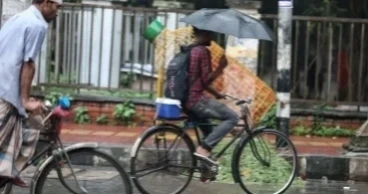
BMD forecasts light to moderate rain across country in next 24hr
Bangladesh Meteorological Department (BMD) on Wednesday predicted light to moderate rains across the country in 24 hours commencing 9 am.
“Light to moderate rain or thunder showers accompanied by temporary gusty wind is likely to occur at many places over Rajshahi, Rangpur, Mymensingh and Sylhet divisions and at a few places over Dhaka, Khulna, Barishal and Chattogram divisions with moderately heavy to heavy falls at places over Rajshahi, Rangpur, Mymensingh and Sylhet divisions,” Met office said.
Day temperature may rise slightly and night temperature may remain nearly unchanged over the country.
BMD forecasts light to moderate rain in parts of BangladeshThe well-marked low over Madhya Pradesh and adjoining area moved westwards, weakened into a low pressure area and merged with monsoon axis.
The axis of monsoon troughs runs through Rajasthan, Madhya Pradesh, Uttar Pradesh, Bihar, West Bengal to Assam across central part of Bangladesh.
Rain, thundershowers expected over eight divisions: BMD
Monsoon is fairly active over Bangladesh and moderate over North Bay.
1 year ago
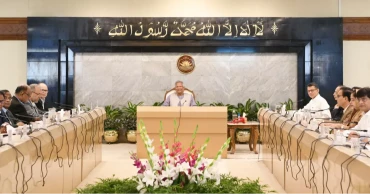
Chief Adviser holding meeting with secretaries
As part of a series of discussions, Chief Adviser Prof Muhammad Yunus is holding a meeting with Secretaries.
The meeting began at 11:30 am at the Chief Adviser's Office.
Earlier, political parties and editors met the Chief Adviser.
1 year ago