others

Banning Jamaat was AL’s political maneuvering: Law Adviser
The Awami League government did not ban Jamaat from any principled stance, rather it used this issue for political maneuvering, said Law, Justice, and Parliamentary Affairs Adviser Asif Nazrul on Wednesday."For many years, there has been a demand from certain quarters of our society to ban Jamaat-e-Islami. The Awami League never did this despite being in power for 15 years. Then they did it at a specific moment. They attempted to brutally suppress the movement by labeling the people's uprising as terrorist activities and Jamaat-BNP's terrorism. You have received many pieces of evidence of this multiple times," he said.Asif made the statement while speaking with journalists in his office at the Secretariat."Our Home Ministry has examined this, and as part of that narrative of labeling Jamaat-BNP's activities as terrorism, they suddenly banned Jamaat and issued a notification," said the law adviser."The narrative that Awami League wanted to portray the people's revolution as terrorist activities, we cannot be a part of that narrative," he said."We cannot be a part of an unjust narrative of a defeated and rejected party in the people's revolution," he added.The executive order banning Bangladesh Jamaat-e-Islami and its student organisation Bangladesh Islami Chhatra Shibir during Awami League's time has been revoked.A gazette was issued from the Public Security Division of the Ministry of Home Affairs on Wednesday canceling the earlier notification.The law adviser also condemned the attacks on former ministers and other accused on court premises, stating that such violence is unacceptable.
He mentioned that he had spoken with major political parties to prevent such incidents and that while parties said they have given clear instructions, spontaneous reactions cannot always be controlled.
1 year ago

Aiding Flood Victims: Guideline for Relief Operations and Safe Volunteering
Recent floods in Bangladesh, particularly in Feni, Cumilla, and Noakhali, have highlighted the need for immediate assistance. In these critical times, proper coordination and understanding of the local challenges are essential to deliver targeted assistance in flood-stricken regions. This article highlights the critical insights volunteers must possess to manage relief distribution and rescue operations during floods efficiently.
Essential Relief Supplies for Flood-Affected People
Readymade Foods
In flood conditions, where water levels can be chest-high, the immediate priority is saving lives. Cooking facilities may be inaccessible, making cooked or readymade foods crucial. Substitute rice, lentils, oil, and sugar with items like puffed rice, flattened rice, dates, bread, and boiled potatoes. Packaged foods such as biscuits, nuts, oat bars, and cakes can provide long-lasting energy. If feasible, khichuri would be better.
Safe Drinking Water and Water Purification Tablets
Access to clean drinking water is critically limited during floods. Carry bottled water or water-purifying tablets and alum to enable individuals to purify water themselves, particularly benefiting those who are housebound.
Baby Food and Clothing
Children of all ages are at high risk during floods. Provide baby food in addition to general supplies, including powdered milk, rice cereal, semolina, juice, packets of soup, and chips. Additionally, dry clothes and diapers are essential to protect against wet and cold conditions, preventing health complications.
Read more: How to Avoid Electric or Gas-related Accidents during Flood
Medicines and Medical Equipment
Stock essential medicines for waterborne diseases, skin conditions, high blood pressure, cold, fever, cough, and headache. Saline is crucial for treating diarrhea. Equip with first aid supplies, including bandages and antiseptic solutions for wound care.
Repellents for Snakes, Mosquitoes, and Insects
Floods often bring increased risks of snake bites and insect infestations. Marigold flowers, wormwood, garlic, clove oil, and vinegar can be used to deter snakes. Mosquito coils, sprays, skin lotions, and insect-repellent devices should also be included.
Safety instructions for these items must be followed, as sprays can be harmful to newborns and coils may pose fire risks.
Clothing for Wet Conditions
Prolonged exposure to rain and flood waters can lead to discomfort and illness. The supply list includes dry clothes, umbrellas, and raincoats. Life jackets and sanitary pads are necessary for safety and health. Waterproof bags or plastic zippers are essential for protecting documents and electronics.
Read more: How to Stay Safe from Snakes During and After Flood
Cleaning Supplies
To combat diseases caused by polluted water and humidity, the supplies include soap, detergent, dishwashing powder, and disinfectants like Bheem Bar for sanitation.
Battery-Powered Torchlight
Power outages during floods make battery-powered torches essential for safety after dark. Using candles or lamps should be avoided due to the risk of gas leaks, which can lead to fire hazards.
Food for Cattle and Stray Animals
Many flood victims rely on livestock for their livelihood. The food encompasses husks, salt, and hay. Additionally, stray dogs and cats, which face significant hardships during floods, should also be provided with food and care.
1 year ago

Hi-Tech parks to be renamed after their respective districts: Authority
The Executive Committee of the Bangladesh Hi-Tech Park Authority has decided to rename the country's hi-tech parks, software technology parks, and IT training and incubation centers after their respective districts.This decision was made during the 32nd meeting of the Executive Committee of the Bangladesh Hi-Tech Park Authority, held today at the ICT Tower in Agargaon, Dhaka with Adviser to the Ministry of Posts, Telecommunications, and Information Technology Mohammad Nahid Islam in the chair.The Adviser said there have been numerous complaints regarding the allocation and cancellation of land for the hi-tech parks.
He emphasized the need to investigate whether any irregularities or corruption were involved in these processes.Nahid Islam also mentioned that the hi-tech parks have not achieved their intended results. He suggested conducting a review to understand the extent of political interference, corruption, or capability gaps that may have contributed to this underperformance.
He stressed the importance of studying how other countries operate in this domain and how Bangladesh can progress within its capacity. He further commented that it is essential to focus on practical actions rather than setting overly ambitious goals.During the meeting, a proposal was made to name the dormitories of the hi-tech parks after several individuals, including Mugdha and Abu Sayed, who were martyred in anti-discrimination movement.The meeting also decided to relieve the Property Management Company (PMC) of the Sheikh Hasina Software Technology Park in Jashore and to appoint a new PMC through an open tender process in a short period.Additionally, there was a discussion about whether the current tenants of the Janata Tower at Karwan Bazar could pay their overdue rents and whether the tower could be renovated without displacing them.Furthermore, the meeting addressed ways to facilitate loans for investors in the hi-tech parks.
1 year ago
‘Branding Bangladesh’ Conference in London: NRBs voice concerns and demands for new government
The “Branding Bangladesh” World Conference Series 2024, organized by the Centre for NRB, was held on August 26 at a hotel in London. The event brought together community leaders and expatriate Bangladeshis to discuss the future of Bangladesh and its diaspora. The conference was presided over by Centre for NRB Chairperson M.S. Shekil Chowdhury and moderated by Wadud Ansari.
The chief guest of the event was Barrister Saifuddin Khaled, a prominent Bangladeshi-origin politician and the Speaker of the Tower Hamlets Council in London. The conference began with a recitation from the Holy Quran by Mohammad Mahmud Hossain.
Expatriates attending the conference expressed their views on giving the newly formed government in Bangladesh enough time to carry out its overall activities. They also showed interest in participating in the country’s reform process. Furthermore, they urged the new government to take effective measures to ensure the safety and security of expatriates’ assets back in Bangladesh.
Elderly expatriate leaders highlighted the complications surrounding the “Power of Attorney” system and the difficulties in obtaining National ID cards. They called on the interim government to simplify these processes. Additionally, they demanded stringent legal actions against financial criminals and those involved in money laundering abroad, regardless of political affiliations.
Key Issues Raised by Expatriates
The conference also saw expatriates raise several crucial issues that require immediate attention from the new government:
Biman and Ticketing Issues: Concerns were voiced over the disorder in the flag carrier, Biman Bangladesh Airlines, and the complexities surrounding online ticketing systems.
Political Neutrality and Diplomatic Appointments: Attendees demanded the limitation or prohibition of Bangladeshi politics abroad and the appointment of competent, non-partisan diplomats in foreign missions.
Economic Reforms and Anti-Corruption Measures: They urged for the introduction of a special savings scheme for remittance senders and a call for strict adherence to the rule of law across all sectors of the administration. Expatriates also sought measures to ban corrupt individuals from holding political positions.
Several prominent expatriate leaders spoke at the event, including community leaders Barrister Ataur Rahman, former mayors Serwan Chowdhury, Saiful Alam, Parvez Ahmed, and former speakers Ayas Mia, Sabina Akhter, Ahbab Hossain. Other notable figures included Deputy Mayor Shahid Ali, Mahmud Hasan MBE, and academics such as Dr. Zaki Rizwana Anwar and Dr. Ansar Ahmed Ullah, among others.
Special Recognition for Contributions to “Branding Bangladesh”
In recognition of his significant contributions to the “Branding Bangladesh” initiative in 2023, London-based expatriate Abul Hossain was awarded the “Branding Award 2024” during the event.
The conference concluded with a renewed call for the new government to take concrete steps to address these concerns, reinforcing the expatriate community’s commitment to playing a constructive role in Bangladesh's development.
1 year ago

Flood: Death toll jumps to 31, Over 58 lakh people affected
The death toll from the recent flood in 11 districts has risen to 31 with four more deaths in Cumilla, Noakhali and Feni district, according to the report of Disaster Management and Relief Ministry.
Among the deceased, twelve people died in Cumilla, five in Chattogram , two in Feni, six in Noakhali, three in Cox’s Bazar and one each in Brahmanbaria, Khagrachhari and Lakshmipur districts.
Besides, 12, 27, 554 families have been stranded in 73 upazilas of 11 flood-hit districts--Feni, Cumilla, Chattogram, Khagrachhari, Noakhali, Moulvibazar, Habiganj, Brahmanbaria, Sylhet, Lakshmipur and Cox’s Bazar.
Flood victims in remote areas struggle as aid fails to reach them
Moreover, 58, 22, 734 people have been affected in 528 municipalities or unions of the 11 districts.
Two people still remain missing in Moulvibazar district.
Meanwhile, at least 5, 40,510 people have taken shelter in 4,003 shelter centres while 39, 531 domestic animals were kept there, according to data from the ministry.
Death toll from floods stands at 27; Over 56 lakh people affected
A total of 619 medical teams are providing medical services in the flood affected areas.
So far, a sum of Tk 4.52 crore has been allocated in the flood-stricken districts while 20,650 tonnes of rice, 15,000 pieces of dry foods or other foods and baby foods and fodder worth Tk 35 lakh each were allocated, said the ministry.
1 year ago

Flood situation to improve in next 24 hours: Disaster Management Ministry
The flood situation in the country is expected to improve within 24 hours, according to the Ministry of Disaster Management and Relief. Water levels in all rivers are receding, and there is no forecast of heavy rainfall.
Additional Secretary K.M. Ali Reza of the ministry provided an update on the ongoing relief efforts at a press conference held on Wednesday.
He reported that the recent flood has affected over 12 lakh families, impacting a total of 58 lakh people across 11 districts. The flood has claimed 31 lives so far. The deceased include 12 from Cumilla, 2 from Feni, 5 from Chattogram, 1 from Khagrachhari, 6 from Noakhali, 1 from Brahmanbaria, 1 from Lakshmipur, and 3 from Cox’s Bazar. Additionally, two people remain missing in Moulvibazar.
To support those displaced by the floods, the government has opened 4,003 shelters, providing refuge to 540,510 people and 39,531 livestock. A total of 619 medical teams have been deployed in the affected districts to offer healthcare services to those in need.
The ministry assured that sufficient relief materials are available across all districts. Both government and non-government organizations are working tirelessly to distribute aid in the flood-hit areas.
In collaboration with the Department of Disaster Management, the Anti-Discrimination Student Movement has sent 88,500 packets of dry food, clothing, and water to the affected regions. Continuous communication is being maintained between the department and the movement’s coordinators to ensure smooth relief operations.
Deputy Commissioners in the flood-affected areas have been instructed to coordinate with the Bangladesh Army, Navy, Air Force, Fire Service and Civil Defense, medical teams, and volunteers to ensure effective disaster management and relief distribution.
1 year ago

Mokhlesur Rahman appointed as senior secretary to Public Administration Ministry
Md. Mokhlesur Rahman has been appointed as the senior secretary to the Ministry of Public Administration for two years.
Besides, incumbent senior secretary to the ministry Mohammad Mezbah Uddin Chowdhury has been made an Officer on Special Duty (OSD).
The Public Administration Ministry issued two separate messages in this regard on Wednesday.
Mokhlesur Rahman had retired from the government service as an additional secretary.
He has been appointed as per to Section49 of the 'Government Service Act, 2018, and it will take effect from the date of his joining, the notification said.
1 year ago

Ehsanul Haque appointed Dhaka Metropolitan Public Prosecutor
The government has appointed Ehsanul Haque Samaji, a senior lawyer, as the Dhaka Metropolitan Public Prosecutor.
The Ministry of Law, Justice and Parliamentary Affairs issued a gazette notification in this regard on Wednesday.
The appointment of current Public Prosecutor of Dhaka Metropolitan Session Judge Court, Abdullah Abu, has been cancelled, said the notice.
Law ministry to expand duration of nat’l helpline service to provide free legal aid
1 year ago
Air pollution shortens life expectancy in Bangladesh by average 4.8 yrs: AQLI
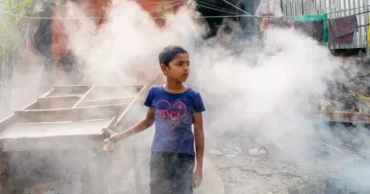
Bangladesh is the world’s most polluted country and fine particulate air pollution (PM2.5) shortens the average Bangladeshi resident’s life expectancy by 4.8 years, relative to what it would be if the World Health Organization (WHO) guideline of 5 µg/m³ was met, says a new global report released on Wednesday.
Some areas of Bangladesh fare much worse than others, such as the Gazipur and Narsingdi districts, where air pollution is shortening lives by more than 6 years, it said.
KEY TAKE-AWAYS
All of Bangladesh’s 166.4 million people live in areas where the annual average particulate pollution level exceeds both the WHO guideline and 96.8 percent of the country’s population live in regions that don’t meet the country’s own national standard of 35 µg/m³. Even in the least polluted district of Sylhet, particulate pollution is 6.7 times the WHO guideline.
While particulate pollution takes 4.8 years off the life of the average Bangladeshi, tobacco use takes off 2 years and child and maternal malnutrition takes off 1.4 years.
In 2022, particulate pollution was 22 percent lower relative to 2021—a contrast to the increasing trend between 2015-2021. If the reduction in 2022 is sustained, an average Bangladeshi resident would live 1 year longer compared to what they would if they were exposed to the average pollution levels over the last decade.
In some of the most polluted districts of the country spread across the states of Dhaka and Chittagong, 75.9 million residents or 45.6 percent of Bangladesh’s population are on track to lose 5.4 years of life expectancy on average relative to the WHO guideline.
If Bangladesh were to reduce particulate pollution to meet the WHO guideline, residents in Dhaka—the most populous district in Bangladesh—would gain 5.6 years of life expectancy. In Chittagong—the country’s second most populous district—residents would gain 5.2 years. Even if pollution levels in Dhaka and Chittagong were to meet Bangladesh’s national standard, life expectancy in these districts would increase by 2.6 and 2.3 years, respectively.
Air Pollution Remains the Greatest External Risk to Human Health
While pollution slightly dipped due largely to a trend reversal in South Asia, more than three-quarters of countries around the world have not set or aren’t meeting national pollution standards.
Though global pollution was slightly lower in 2022, its burden on life expectancy remains, according to new data from the Air Quality Life Index (AQLI).
If the world were to permanently reduce fine particulate pollution (PM2.5) to meet the World Health Organization’s (WHO) guideline, the average person would add 1.9 years onto their life expectancy—or a combined 14.9 billion life-years saved worldwide.
This data makes clear that particulate pollution is the world’s greatest external risk to human health. Its impact on life expectancy is comparable to that of smoking, more than 4 times that of high alcohol use, more than 5 times that of transport injuries like car crashes, and more than 6 times that of HIV/AIDS.
Yet, the pollution challenge worldwide is vastly unequal, with people living in the most polluted places on earth breathing air that is six times more polluted than the air breathed by those living in the least polluted places—and seeing their lives cut short by 2.7 years more because of it.
“While air pollution remains a global problem, its largest impacts are concentrated in a relatively small number of countries—cutting lives short several years in some places and even more than 6 years in some regions,” says Michael Greenstone, the Milton Friedman Distinguished Service Professor in Economics and creator of the AQLI along with colleagues at the Energy Policy Institute at the University of Chicago (EPIC).
“All too often, high pollution concentrations reflect low ambition in setting policy or a failure to successfully enforce existing policies. As countries balance their economic, health, and environmental goals, the AQLI will continue to shine a light on the longer lives that air pollution reductions deliver.”
National standards are an important tool to set strong policies and improve air quality. These standards—some strong and some weak—reflect the multiple policy goals countries have as they balance economic, environmental and health goals.
However, a third of the world’s population lives in regions that don’t meet the standards that their countries have set.
If those countries did meet their own benchmarks, these 3 billion people would live an average of 1.2 years longer.
“Setting ambitious standards is only one part of the puzzle,” says Tanushree Ganguly, the director of the AQLI. “Equally important is implementing policies and monitoring mechanisms that help enforce these standards. Some countries are succeeding in this, and that gives proof that air pollution is a solvable problem.”
While 37 out of 94 countries with standards aren’t meeting them, more than half of all countries and territories have not set a standard at all. Together, 77 percent of countries and territories worldwide have either not met or do not have a national standard.
Of the countries with no standard, almost none (less than 1 percent) of the governments provide fully open pollution data and two-thirds don’t have any government pollution monitoring. With little data, it is difficult to set pollution standards and enforce them.
To help confront this challenge, this year EPIC launched the EPIC Air Quality Fund to support local groups and organizations in installing monitors and providing open data to communities that could benefit the most.
“Highly polluted countries that have little or no air quality data often fall into a bad feedback cycle where having little data leads to little attention or policy investment in the issue which reinforces little demand for data,” says Christa Hasenkopf, the director of the Clean Air Program at EPIC.
“Fortunately, there is a massive opportunity to stop this cycle with even a small amount of persistent, open air quality data. Such data has been shown to be essential for crafting and reinforcing national standards.”
South Asia
Global pollution declined in 2022 due almost entirely to a trend reversal in South Asia. While pollution had been on the rise for more than a decade, it declined by 18 percent in one year.
While it’s difficult to know for sure the reasons for this decline, meteorological causes—such as above normal rainfall—likely played a strong role and only time will tell whether policy changes are having an impact.
Even with the decline, the region remains the most polluted in the world, accounting for 45 percent of total life years lost due to high pollution.
The average person living in these countries would gain 3.5 years onto their lives if pollution were permanently reduced to meet the World Health Organization guideline.
1 year ago

Govt's executive authority to raise power and gas prices cancelled through ordinance
The government issued a gazette notification cancelling its executive authority to raise power and gas prices without public hearing by the Bangladesh Energy Regulatory Commission (BERC).
The gazette, issued by Ministry of Law, Justice and Parliamentary Affairs, dated on August 27, 2024, said that through this amendment the section 34Ka of the BERC Act 2003 will be abolished.
Officials of the Power and Energy Ministry said that this Section 34Ka was introduced by the previous Awami League government giving the government an authority to set the prices of power and gas through executive power without a public hearing.
The new amendment came in line with the Advisor of the Ministry Power, Energy and Mineral Resources of the interim government Dr Muhammad Fouzul Kabir Khan’s recent statement that the government will not raise gas and power prices without public hearing.
After this latest amendment, if any entity of the government wants to raise the price of power or gas, it has to submit a proposal to the BERC and then after examination BERC will hold a public hearing and then announce its decision on the issue within 90 days.
1 year ago