others

UNB to donate one day's staff salary to help flood victims
Staff members of the United News of Bangladesh (UNB) and Dhaka Courier magazine have decided to donate a day's salary for people affected by devastating floods in several districts of Bangladesh.
UNB Editor-in-Chief Enayetullah Khan made the announcment at a staff meeting on Sunday.
Cosmos Foundation, a philanthropic arm of the Cosmos Group, will also contribute to help the flood-affected people.
Cosmos Atelier 71 will raise funds through selling its artworks which will be donated for the flood victims. Twenty eminent artistes of the country will join the painting session. Gallery Director Tehmina Enayet is organising the art event.
At least 10 lakh families have been stranded in 73 upazilas under 11 flood-hit districts till Sunday afternoon, according to the Disaster Management and Relief Ministry.
So far, 18 people have died and at least 52,09,798 affected as floods wreaked havoc in the eleven districts. The districts are Feni, Cumilla, Chattogram, Khagrachari, Noakhali, Moulvibazar, Habiganj, Brahmanbaria, Sylhet, Laxmipur and Cox’s Bazar.
1 year ago

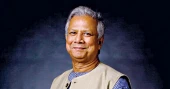
Chief Adviser urges everyone to work together to ease flood-affected people's sufferings; Tk 20 crore allocated
Interim Government Chief Adviser Prof Muhammad Yunus on Sunday called upon all concerned to continue their efforts to rescue the people trapped in the flood and to provide them with all necessary assistance including emergency treatment.
He made the call during a meeting of the National Taskforce held at State guesthouse Jamuna.
Chairing the meeting, Prof Yunus also mentioned the allocation of Tk 20 crore to meet the cost of rescue and immediate relief operations, said office of the Chief Adviser.
The Chief Adviser gave various instructions to unite all in this crisis of the country and alleviate the misery and suffering of the flood-affected people.
Prof Yunus instructed to use the allocated money fairly and appropriately for the rescue and relief efforts and help the affected people.
He suggested buying baby food, water purification tablets, oral saline and other essential items.
The Chief Adviser directed to expedite efforts for restoration of the recently disconnected telecommunication system in the flood affected areas.
Twenty-one towers have already been activated.
Stating that the water begins to recede, the Chief Adviser sought everyone's cooperation to reduce the suffering of the people in the affected areas.
1 year ago

Banglalink signs MoU with Bangladesh Army for immediate food relief
In response to the recent catastrophic floods in southeastern and eastern regions across Bangladesh, Banglalink has signed a Memorandum of Understanding (MoU) with the Bangladesh Army on Saturday to urgently deliver immediate relief to the flood-affected people.
The devastating flood has submerged homes, farmlands, and roads, causing thousands of people to get stranded and face numerous challenges, like access to clean water, food, and transportation.
In the face of this immense crisis, the Bangladesh Army is distributing essential relief materials, including food and water, across the most affected regions.
“To reach the hardest-hit and most challenging areas, the Bangladesh Army is deploying helicopters, ensuring aid reaches those who need it the most.”
Banglalink, in partnership with the Bangladesh Army, is standing side by side with the people in the crisis.
The initiative reflects a strong commitment to supporting communities in times of crisis and underscores their dedication to society. The company is also working tirelessly to maintain network connectivity in the impacted regions, ensuring uninterrupted communication during such a critical time.
Furthermore, they are actively exploring potential options to support post-flood recovery efforts, representing their commitment to social responsibility.
Taimur Rahman, Chief Corporate and Regulatory Affairs Officer, said, " We recognize the urgency of the situation and are committed to providing immediate support in partnership with the Bangladesh Army. The collaboration will allow us to efficiently deliver vital relief materials to those in need, even in the most challenging and hard-to-reach areas. Looking ahead, we are also exploring ways to contribute to the post-flood recovery phase, helping communities rebuild and recover. Our efforts reflect Banglalink's promise to social responsibility and our dedication to standing by our fellow citizens in times of crisis."
1 year ago
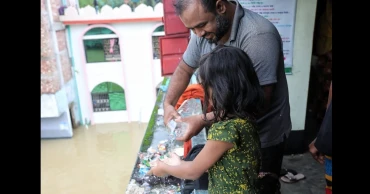
Shortage of drinking water lands flood-hit people in distress
The devastating floods that left over 50 lakh people stranded in eleven districts of the country, have led to a severe crisis of drinkable water.
Flood waters have completely submerged Feni, Cumilla, Chattogram, Khagrachari, Noakhali, Moulvibazar, Habiganj, Brahmanbaria, Sylhet, Laxmipur and Cox’s Bazar districts, causing drinking water to mix with dirty and sewage water.
Visiting Feni's Katalia area, UNB noticed that most of the people are struggling with various issues but lack of clean, drinkable water is number one.
Members of Bangladesh Air Force and Army were seen distributing relief materials in various areas in Feni.
Although various volunteers’ organizations are coming with flood materials, they are struggling to reach the right destination as they are not familiar with roads and other things.
Talking to UNB, an elderly man from Feni's Lal Pol area said that the situation is very bad and he went to visit his daughter and grandchildren without finding any trace of clean water for 3 days. “The main problem is finding drinking water,” he added.
Fatema Akter Jhorna, a 48-year-old widow in Enayetnagar area under Yakubpur union of Daganbhuiyan upazila in Feni, told UNB that she has never seen such a flood in her entire life.
“Our entire house was badly flooded forcing us to take shelter at a neighbour’s house to save life,” she said, adding that she along with family members has now been staying at her father’s house in Noakhali’s Senbagh which is now also being affected by the flood.
“Though we could survive, most of our valuables washed away with the high tide of the flood,” Jhorna, whose husband died a few years back, repented.
She urged the government and solvent of the society to come forward to address the unprecedented flood in her living memory.
At least 10 lakh families have been stranded in 73 upazilas under 11 flood-hit districts till Sunday afternoon, according to the Disaster Management and Relief Ministry.
However, no new deaths were reported till 3 pm today. Two people remained missing in Moulvibazar.
So far, 18 people have died and at least 52,09,798 affected as floods wreaked havoc in the eleven districts. The districts are Feni, Cumilla, Chattogram, Khagrachari, Noakhali, Moulvibazar, Habiganj, Brahmanbaria, Sylhet, Laxmipur and Cox’s Bazar.
1 year ago
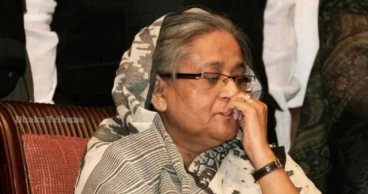
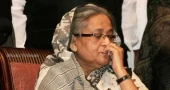
Murder case filed in Bogura against Sheikh Hasina and 156 others over BNP leader’s killing
A murder case has been filed in Bogura, naming former Prime Minister Sheikh Hasina, her son Sajeeb Wazed Joy, and 156 others in connection with the killing of BNP leader Jillur Sardar.
The case was lodged on Saturday night, August 24, at Bogura Sadar Police Station by Khadija Bewa, the wife of the deceased Jillur Sardar. Along with the 157 named individuals, the case also includes 300-400 unidentified persons as accused.
Bogura Sadar Police Station’s Officer-in-Charge (OC), Saihan Oliullah, confirmed the filing of the case.
The complaint identifies Sheikh Hasina and Obaidul Quader as the instigators of the murder. Among the prominent accused are Sajeeb Wazed Joy, former ministers Anisul Huq, Asaduzzaman Khan Kamal, Zunaid Ahmed Palak, several members of parliament from the Awami League, judges, police officials, and leaders and activists of the Awami League and its affiliated organizations.
Jillur Sardar was killed on August 4 during a student and public demonstration demanding a one-point agenda in the Jhautola area of the city.
This is not the first time a case has been filed against Sheikh Hasina in Bogura. She has previously been implicated in four other cases in the area, including three murder cases and one attempted murder case.
1 year ago
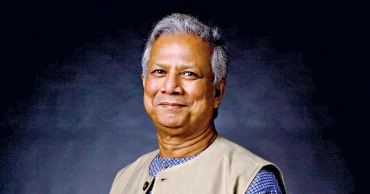
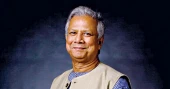
Timing of election entirely a political decision: Prof Yunus
Interim government’s Chief Adviser Prof Muhammad Yunus on Sunday said the timing of the national election will be determined by political decisions rather than by his administration.
"When the election will be held is entirely a political decision, not one for us to make. It’s up to the country’s people when you’ll let us leave the office. We came into office in response to the students' call and they are our primary appointing authority. The general public of the country has endorsed our appointment,” the chief adviser said.
In his televised address to the nation, he, however, said a free, fair, and participatory election will be arranged after completing necessary reforms in the administration, judiciary, election commission and electoral system, law and order, and information flow to bring the student-led mass upsurge to a successful conclusion.
He also said it will be up to the people of the country to decide when the interim government’s tenure will conclude.
“Everyone is keen to know when our government will end its tenure. The answer to this question is in your hands—when you will let us go. We are not individuals who seek to rule the country. We take pleasure in our respective professions,” the chief adviser said.
He said they took on the responsibility to govern the country in response to the students' call during a time of national crisis. “We are committed to fulfilling this duty with all our strength. Our advisory council is also inspired towards this goal, working together as a team.”
Prof Yunus said they will continually remind everyone so that the question of when the interim government will leave office does not arise suddenly. ”We’ll leave the office when they tell us to do so.”
As part of state reforms, Dr Yunus said they will also work to reform the Election Commission to ensure that it is always prepared for a fair and ideal election.
Stating that they have initiated various reform tasks, the chief adviser urged the people to start a discussion about what minimum work the current government should complete.
“Through this discussion, we can get some direction. But the final decision will be a political one, and it will come from political discussions. Without this direction, we cannot proceed firmly in discussions with donor governments and international financial institutions,” he said.
Dr Yunus assured that they will not raise any questions about extending the term of the government from their side.
He urged all to pray for them so that the advisers can contribute to overcoming the country's crisis to the best of their ability. “The opportunity to build a new Bangladesh, earned through the blood of students and the public, must not be squandered due to our disagreements. We are committed to ensuring this. If we lose this opportunity, we will be defeated as a nation.”
Have Patience
Prof Yunus urged the country’s people to be patient and allow time for the mountain-like challenges to be overcome gradually, rather than insisting on immediate solutions.
“I would like to say, you have to be patient. We must avoid forcing all demands to be met now, entering the institution and threatening individuals, pressing for accepting the case and tendency to punish arrested individuals in the court before their trial,” he said.
In his televised address to the nation, Prof Yunus warned that unruly behavior could undermine the glory and potential of the people's revolution and hinder efforts to build a new Bangladesh.
Stating that it has been only two weeks since the current government took office; the chief adviser sincerely thanked the people for their support during the initial phase of state reforms.
“We understand that you have high expectations from us, and we are committed to fulfilling them. The long period of democratic deficit and 15 years of fascist rule that have left us with mountain-like challenges in nearly every sector. We are prepared to face these challenges.”
Dr Yunus, the 2006 Nobel peace laureate, said it is difficult to overcome the current situation of the country overnight as his government is working to rebuild the country standing on a structure that is quite contrary to the public interest.
“We want to build the country in such a way so that its people truly become the source of all power. We want it to be recognized as a humane and welfare-oriented nation on the global stage. We must succeed in state reforms to honor the sacrifices of the younger generation, students, and the people. There is no alternative to this,” he observed.
The chief adviser said local government institutions will be empowered and decentralization of power will be ensured to strengthen democracy.
Mentioning that the current government has taken a clear stance against corruption, he said all the advisors will present their asset details within the shortest possible time. “Gradually, this will become a regular and mandatory practice for all government officials.”
To address corruption at the state level, the chief adviser said an ordinance must be promulgated for the appointment of an ombudsman as promised in Article 77 of the Constitution.
He said a committee has already been formed to prepare a white paper on the corruption, money laundering, and anti-public interest agreements of the past 15 years.
“I have been meeting with ambassadors from different countries and representatives of donor organizations…I am requesting their support for all forms of economic and other assistance needed for rebuilding the country following the student-led mass upsurge,” Dr Yunus said.
One Family, One Goal
The Chief Adviser said that all necessary steps have been taken to restore normalcy in the flood-affected regions of Bangladesh.
He emphasized the importance of both domestic and regional cooperation to tackle such crises in the future.
“We are one family. We have one goal,” Prof Yunus declared. “We are committed to fulfilling the aspirations of our youth, and we are ready to take on this challenge.”
He called on the nation to support these efforts wholeheartedly, stressing the need to focus on long-term solutions rather than seeking immediate fixes or resorting to vigilante justice.
During his speech, the Nobel Peace Laureate also revealed plans to establish a ‘July Mass Killing Memorial Foundation’. This marked his second national address since assuming the role of Chief Adviser on August 8.
Prof Yunus said after the fascist government left the country in the face of a popular movement, they want to build a country where the human rights of every citizen will be fully protected.
“Our goal is one—a liberal, democratic, non-discriminatory, non-communal Bangladesh. We are one family. We have one goal. We are committed to not let any differences hinder our dreams,” he said.
Prof Yunus said only two weeks have passed since the current government assumed responsibility. “Thank you very much for the support I am getting from you in the first stage of the work of reforming the state.”
He said they understand that people’s expectations from the government are high and they are determined to fulfill this expectation.
Fifteen years of fascist rule left a mountain of challenges in almost every area, Prof Yunus said.
“But we are ready to accept this challenge. Today, I have come before you to seek your prayers and cooperation on behalf of the government. I will only say, you have to be patient,” he said.
The interim government has already started various reforms, he said.
"Political decisions will come from political discussions. If we do not get this direction, we cannot move forward firmly in discussions with donor organizations and international economic institutions,” he said.
He said the advisers have taken this responsibility at the call of students during the country's crisis. “We will fulfill this responsibility with all our strength. Our advisory board is also motivated by this goal and everyone is working as a team.”
UN Investigation
Prof Yunus has said they invited the head of the United Nations Human Rights Commission to come to Bangladesh to start their investigation to ensure a transparent probe into the tragic incidents of use of force and casualties during the popular uprising in July-August.
“This process of investigation will start this week. Their first team (primary team) has already arrived,” he said in a televised speech to the nation on Sunday evening.
Prof Yunus said they have already withdrawn most of the false and harassing cases filed to thwart the student revolution and arranged for the release of the detained students.
Families of all martyrs will be rehabilitated and justice will be ensured, he said, adding that the government will bear the full medical expenses of all the injured students and the public.
For that purpose, a complete list is being prepared with the help of two advisers representing the anti-discrimination student movement in the Advisory Council under the leadership of the Ministry of Health.
For these activities and to preserve the memory of the martyrs of the mass uprising, he said, the government quickly finalized the process of establishing a ‘July Mass Killing Memorial Foundation’.
“All of you, and our brothers and sisters living abroad are requested to send donations to this organization. I have personally accepted the post of chairman of this organization,” he said.
The team from the Office of the UN High Commissioner for Human Rights, led by Chief of the Asia-Pacific section Rory Mungoven, will be visiting Dhaka until August 29 for preliminary discussions with the interim government and other stakeholders.
The UN OHCHR team currently in Dhaka is engaging with the interim government, advisors, ministries, civil society, and a broad section of Bangladesh’s society to understand the country’s priorities for promoting human rights.
The team is also exploring how the Office of the High Commissioner can assist in fact-finding and investigations, supporting national processes as they move forward.
After his meeting with Foreign Secretary Masud Bin Momen on Thursday, Rory Mungoven said they are in Dhaka to hold some preliminary and exploratory discussion with the interim government and see how their office can support the interim government and people of Bangladesh at this historic time.
“We see this is a historic opportunity for the country in restoring democracy, renewing institutions and advancing human rights,” he said.
Rory Mungoven said they would like to hear Bangladesh’s priorities and its needs going forward and explore some areas where the office could assist.
This is in response to a request from the interim government. Once the details are finalized, a separate fact-finding team will be dispatched in the coming weeks to conduct the investigation.
1 year ago
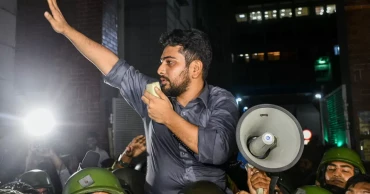
Several injured as DU students and Ansar members clash at Secretariat
Several people were injured as a clash broke out between Dhaka University students and Ansar members at the Secretariat on Sunday night.
The clash started after 9 pm, following reports that key figures from the Anti-Discrimination Student Movement including Sarjis Alam and Hasnat Abdullah are under siege at the Secretariat.
As the news spread, students from several halls of Dhaka University gathered at the Raju Bhashkorjo on campus. They marched towards the Secretariat area, demanding the release of the coordinators.
1 year ago
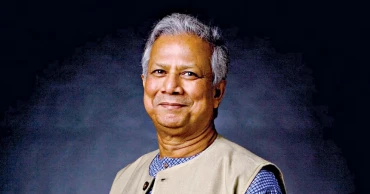
When election will be held is a political decision; countrymen have to decide when they want us to leave: Prof Yunus
Interim government Chief Adviser, Professor Muhammad Yunus, said on Sunday that all necessary steps have been taken to restore normalcy in the flood-affected regions of Bangladesh. Speaking in a televised address, Prof Yunus emphasized the importance of both domestic and regional cooperation to tackle such crises in the future.
“We are one family. We have one goal,” Prof Yunus declared. “We are committed to fulfilling the aspirations of our youth, and we are ready to take on this challenge.”
He called on the nation to support these efforts wholeheartedly, stressing the need to focus on long-term solutions rather than seeking immediate fixes or resorting to vigilante justice.
During his speech, the Nobel Peace Laureate also revealed plans to establish a ‘July Mass Killing Memorial Foundation’. This marked his second national address since assuming the role of Chief Adviser on August 8.
Prof Yunus said after the fascist government left the country in the face of a popular movement, they want to build a country where the human rights of every citizen will be fully protected.
“Our goal is one—a liberal, democratic, non-discriminatory, non-communal Bangladesh. We are one family. We have one goal. We are committed to not let any differences hinder our dreams,” he said.
Prof Yunus said only two weeks have passed since the current government assumed responsibility. “Thank you very much for the support I am getting from you in the first stage of the work of reforming the state.”
He said they understand that people’s expectations from the government are high and they are determined to fulfill this expectation.
Fifteen years of fascist rule left a mountain of challenges in almost every area, Prof Yunus said.
“But we are ready to accept this challenge. Today, I have come before you to seek your prayers and cooperation on behalf of the government. I will only say, you have to be patient,” he said.
The interim government has already started various reforms, he said.
"Political decisions will come from political discussions. If we do not get this direction, we cannot move forward firmly in discussions with donor organizations and international economic institutions,” he said.
He said the advisers have taken this responsibility at the call of students during the country's crisis. “We will fulfill this responsibility with all our strength. Our advisory board is also motivated by this goal and everyone is working as a team.”
He said, "When the election will be held is a completely political decision, not our decision. The countrymen have to decide when you want us to leave.”
The students are their primary appointers and the vast public of the country has supported their appointment, said Prof Yunus.
He said they will constantly remind everyone about this so that the question does not suddenly arise when they will leave.
The Election Commission will also be reformed, said the head of the interim government.
He said that the Election Commission aims to prepare for a model election at any time.
1 year ago

High Court petition challenges laws on security for Bangabandhu's family members
A writ petition challenging the "Father of the Nation Family Members' Security Act 2009" and the "Special Security Force Act 2021" has been filed in the High Court.
The writ was submitted on Sunday, to the High Court bench of Justice AKM Asaduzzaman and Justice Muhammad Mahbub Ul Islam.
Supreme Court lawyer and Assistant Secretary-General of the Human Rights Support Society (HRSS), Mohammad Moniruzzaman, filed the petition in the public interest.
The petition names the Law Secretary, Home Secretary, Finance Secretary, Director-General of the Special Security Force, and former Prime Minister Sheikh Hasina, Sheikh Rehana, Sajeeb Wazed Joy, Saima Wazed Putul, Radwan Mujib Siddiq Bobby, Tulip Siddiq, and Azmina Siddiq Rupu as respondents.
The petition seeks to declare several sections of the "Father of the Nation Family Members' Security Act 2009" and the "Special Security Force Act 2021" as unconstitutional and illegal, specifically targeting sections 2(b), 2(c), 8(1), 8(3), 8(4), and 9(2), which provide for the protection of Bangabandhu Sheikh Mujibur Rahman's family members.
Additionally, the petition requests the recovery of benefits and properties that have been granted to Bangabandhu's family members under these laws. It also urges the court to direct the Law Secretary, Home Secretary, Finance Secretary, and Director-General of the Special Security Force to immediately cease providing special security to these family members.
1 year ago
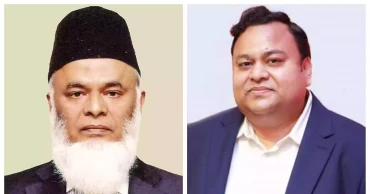
BFIU freezes accounts of Nazrul Islam and Nafeez Sarafat
The bank accounts of Bangladesh Association of Banks (BAB) and Exim Bank chairman Nazrul Islam Majumdar and his wife Nasreen Islam have been seized.
At the same time, they have been asked to suspend transactions in their children's personal bank accounts.
The Bangladesh Financial Intelligence Unit (BFIU) also asked banks to freeze the accounts of Padma Bank's former chairman Chowdhury Nafeez Sarafat, his wife, and his son. Apart from their personal bank accounts, the BFIU directed the banks to keep the bank accounts of their business entities frozen for the next 30 days.
On Sunday (August 25), BFIU, Bangladesh Bank's financial intelligence unit, sent instructions to banks and financial institutions to freeze the accounts.
According to the instructions, all transactions through the personal and business accounts of those whose accounts have been frozen will be stopped. For the next 30 days, they will not be able to make any transactions. If necessary, the transaction will be extended during suspension.
1 year ago