others

Budget cut for Janmashtami to aid flood victims, announces Bangladesh Puja Celebration Council
Due to the nationwide flood situation, the Bangladesh Puja Celebration Council will reduce the budget for this year's Janmashtami celebrations to allocate more resources for flood relief and other assistance, according to Santosh Sharma, General Secretary of the council.
On Friday, Santosh Sharma shared these plans during a press briefing at Dhakeshwari National Temple, organized by the Bangladesh Puja Celebration Council and the Metropolitan Public Puja Celebration Committee.
In a written statement, Sharma noted that this year's Janmashtami will be observed under different circumstances. A relief cell has been formed to assist flood victims, and the decision has been made to cut expenses while maintaining the religious sanctity of the event. Expenses related to lighting and other non-essential decorations that do not impact the worship will be minimized.
Sharma also acknowledged the voluntary support for the protection of Dhakeshwari National Temple. He thanked various groups that have stood by them, including BNP, Jamaat-e-Islami, the Islamic Shashantantra Andolon, CPB leaders, and leaders of the anti-discrimination student movement. He highlighted an unprecedented display of solidarity from political party members and student activists in the protection of temples, homes, and businesses of minorities across the country in the absence of administrative support following political changes.
This year, Dhakeshwari National Temple will host a two-day central Janmashtami festival. The celebrations will begin on August 26 at 8 AM with the traditional Geetajagya for the well-being of the nation.
1 year ago

Registration Department officials, family members asked to submit property statements
The Ministry of Law, Justice, and Parliamentary Affairs has issued a directive requiring Registration Department officials and their family members to submit their wealth statements within the next 10 working days.
The notice, issued on Thursday, aims to enhance transparency and accountability within the department.
“In order to ensure the transparency and accountability , all officers of the Registration Department working under Directorate of Registration and their family members (husband/wife, son-daughter and parents) have been ordered to submit statements of their movable and immovable assets located both in the country and abroad within the next working ten days,” it said.
1 year ago

Journalist Azad Majumder appointed deputy press secretary to chief advisor
Journalist Mohammad Abul Kalam Azad Majumder has been appointed as Deputy Press Secretary to the Interim Government’s Chief Adviser Prof Dr Muhammad Yunus on a contractual basis.
The Public Administration Ministry issued a gazette notification to this end on Thursday.
The notification mentioned that Majumder will remain in office for the duration of the chief adviser’s term or subject to his satisfaction from the date of his joining and subject to the severance of working relationships with other institutions and organisations.
The order was issued in the public interest, reads the notice.
Azad Majumder served as News Editor at Business Post and Joint News Editor at New Age.
Earlier, the interim government appointed Shafiqul Alam as press secretary and Apurba Jahangir as Deputy Press Secretary to Chief Adviser Prof Muhammad Yunus.
1 year ago

Gonotraan: How TSC became a beacon of hope for flood victims
Since playing its part in removing what most of the students considered a fascist government, Dhaka University has taken on the task of building a better nation more earnestly than ever before. In the latest and most important example so far, it has converted itself into a massive camp for collecting funds and relief for the flood victims, facilitating a desire on the part of the people of the capital to do what they can to help the affected population.
In response to the Anti-Discrimination Student Movement’s call, a relief collection drive called “Gonotraan” is going on for a second consecutive day at TSC of Dhaka University to aid the people affected by devastating floods in 11 districts of the country.
The relief collection booth has been set at the main-gate of the Teachers and Students Centre (TSC) of Dhaka University. Thousands of families, friends, and people from all walks of life have turned up from all parts of the city and beyond.
The students are collecting both money and goods. Visiting the collection booth, it was seen that the students are accepting money and enlisting every small and large amount with due accountability. All the products of the relief have also been enlisted properly. Students from colleges and schools have also been seen as proactive in voluntary work.
From the morning onward, people from different parts of the capital have been continuously coming to Dhaka University with relief in accordance with their capability. People are donating both money and necessary goods including basic medicines, dry food, clothes, sanitary napkins, water, life jackets etc.
Talking to a woman named Saima Akter, who came to TSC from Mirbag to donate some dry food, she told UNB: “As a citizen, it is my responsibility to stand by the people of my country in tough times. I have donated according to my ability. I gave a bag of puffed rice and some bottles of water. If I were more able, I would have donated more."
Mobassir Bin Kashem, another donor, said, “I am glad to stand by the people of the country. Everyone is coming here spontaneously with what they have. All should cooperate with the government and the volunteers from their respective positions.”
Visiting the TSC area it was seen that volunteers were busy keeping the area clear as every moment vans, pickups and trucks were arriving with relief materials. The games room and the TSC cafeteria of the TSC have already been filled with relief goods and the cafeteria seems like it has been turned into a storehouse. Last night, the DUCSU cafeteria was also filled with the goods of relief.
A total of TK 29,76,173 was collected from only the TSC fund collection booth, apart from other collections of Halls and departments of the university. Talking to the volunteers, they said the number of donors is several times higher than yesterday.
Talking with another donor named Shibli who came from Mirpur, said, “We got an independent country. It is time to build up the country and show our power and unity. India is trying to break us but we stood together. It is our moral duty to stand against the aggression of India.”
"Our new interim government is not stable yet even though they did not get the minimum time. If we do not stand by our countrymen then who do we expect to come forward?" he added with a smiling face.
Some rickshaw pullers were also seen donating money at the fund collection booth of TSC.
Talking to one of the rickshaw pullers, he said, "It’s my happiness to be a part of this."
For better management, the volunteer students have been divided into groups. Some are clearing traffic, some are receiving money, some are receiving relief goods, some are directing the people who do not know the area and some students are mixing and packaging goods for final delivery.
Being divided into groups, the students of Dhaka University are also collecting funds from the busy intersections.
Last night, they donated their extra clothes to aid the water stranded people. The volunteer groups from every hall collected dresses from the rooms and packed them in bags.
However, a concert has also been arranged at the premises of Anti-terrorism Raju sculpture of the university to crowd funding.
Asked about his feelings about the situation of Dhaka University and mass-relief collection project, Mohammad Moniruzzaman, a student of Dhaka University, said, "This is the Dhaka University perhaps I dreamed of. It Sounds like heaven. Every single moment, people are coming here with aid and support. I realized that Dhaka University has turned into a place of trust of common people and it is kindling the light of hope."
1 year ago
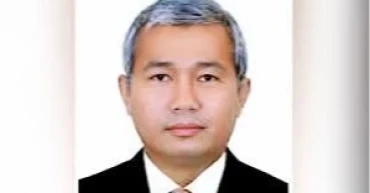
Every flood affected family will be fully assisted, says Adviser Supradeep Chakma
Advisor to the Ministry of Chittagong Hill Tracts Affairs, Supradeep Chakma, said that the government has given instructions to protect everyone in the flood.
"Every affected family will be fully supported," he was speaking during a views-exchange meeting with the civil society in Khagrachhari on Friday.
The adviser also said that there is enough food grain stock in the country.
He further stated that the present government is determined to work by maintaining neutrality in every field. That is why he advised everyone to live in brotherhood.
Besides, he discussed the reorganization of three hill district councils including Khagrachhari where two representatives from anti-discrimination students movement will be kept in the new council.
A large area was inundated by the flood in Khagrachhari on Thursday. Thousands of people were stranded in floodwater.
1 year ago
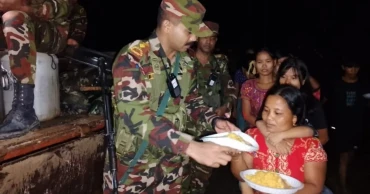
Army members donate one-day salary to support flood victims
Members of Bangladesh Army have donated their one-day salary to aid people affected by devastating floods in various districts in Bangladesh.
According to ISPR, an amount equivalent to one day's salary of all ranks of Bangladesh Army has been donated to the Chief Adviser's Relief Fund in support of the flood victims.
"This money was paid in the service of humanity to help the victims of the recent floods in Feni, Chattogram, Cumilla, Noakhali, Sunamganj and Habiganj," it added.
Meanwhile, the ongoing floods have claimed the lives of 13 people, with more than 44 lakh people affected across 11 districts, the Ministry of Disaster Management and Relief provided this update on Friday.
The floods have submerged 77 upazilas, impacting 584 unions and municipalities. Over 887,000 families are suffering from the devastation, added the ministry.
1 year ago

Govt welcomes public support for flood victims
The interim government has welcomed the eagerness of people to extend their assistance and cooperation to the victims of the recent devastating floods in the southern part of the country.
Interested people can contribute by sending aid to the following the account ‘Chief Adviser's Relief and Welfare Fund’ and with the number ‘0107333004093’ addressed at Sonali Bank Corporate Branch, Chief Advisor's Office, said a media release signed by Chief Adviser’s Press Secretary Shafiqul Alam on Friday.
Funds from this account will be used for relief and welfare activities. The government gratefully accepts the contributions and will maintain proper records of all donations.
1 year ago

CPJ urges procedural rights of journalist couple Shakil and Rupa, ensure their safety
The Committee to Protect Journalists (CPJ) has expressed concern over the arrests of journalist couple Shakil Ahmed, former Head of News at Ekattor Television, and Farzana Rupa, the channel's former principal correspondent.
“We urge authorities to respect the reporters' procedural rights, ensure their safety, and drop any investigation brought in retaliation for their journalistic work,” it posted on X.
The journalist couple was arrested by immigration police at Hazrat Shahjalal International Airport in Dhaka on Wednesday while attempting to leave for France. They were subsequently handed over to the Detective Branch of the Dhaka Metropolitan Police.
Later, a Dhaka court on Thursday granted a four-day remand for them in connection with the murder of government employee Md Fazlul Karim.
1 year ago
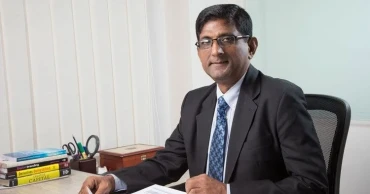
Abdul Hafiz appointed special assistant to Chief Adviser Yunus
Lt Gen (retd) Abdul Hafiz has been appointed as the Special Assistant to the Chief Adviser of the Interim Government Prof Muhammad Yunus.
The Chief Adviser made this appointment on Thursday (August 22), according to a notification from the Cabinet Division.
Hafiz will provide necessary support to the Chief Adviser in carrying out duties related to defense and national unity development.
As a Special Assistant, Lt Gen (retd) Hafiz will receive the rank, salary, allowances, and other ancillary benefits associated with the position of adviser.
Lieutenant General Abdul Hafiz (Retd) was commissioned in Bangladesh Army in the corps of infantry on 08 may 1977. He served as the Chief of General Staff [CGS] of Bangladesh Army. A recipient of UN Medal, Lt General Abdul Hafiz also served as Force Commander UNOCI in Ivory Coast and Force Commander MINURSO in Western Sahara for two terms. He was a Military Observer in ‘United Nations Iraq-Kuwait Observer Mission’ in 1991-1992. He also served as Chief Military Liaison Officer in Croatia. He was Head of the United Nations Military Liaison Officers in Ivory Coast and later served as the Deputy Force Commander in United Nations Operation in Ivory Coast (UNOCI) in 2003 -2005.
He is a graduate of Defence Services Command and Staff College (DSCSC), Mirpur. He did his Infantry Officers’ Advance Course in USA. He is a graduate of ‘Inter Services War College’, France and a graduate of National Defence College, Mirpur. He obtained his Bachelor of Arts (BA) from Dhaka University in 1981 and holds Master’s in Defence Studies (MDS) from National University.
General Hafiz served as Directing Staff (DS) in the Defence Services Command and Staff College (DSCSC), Mirpur, as Battalion Commander of Bangladesh Military Academy (BMA) and as Instructor in the School of Infantry and Tactics.
He held the appointment of the Commandant of Bangladesh Military Academy. He was a Brigade Commander in Comilla before he took over the Command of 33 Infantry Division as General Officer Commanding (GOC) and Area Commander, Comilla Area. Later, he commanded Bangladesh Ansar & VDP, a para-military force, as its Director General two times. He also commanded 11 Infantry Division as GOC. He retired from Bangladesh Army in November 2014.
A widely traveled person, General Hafiz is fluent in French which enabled him to perform as UN Force Commander in Francophone countries
An eminent guest speaker at various seminars and symposiums, General Hafiz takes keen interest in global security issues and role of United Nations in Peace Support Operations.
He is currently working as a Trustee at MKWT, a non-profit social welfare NGO based in Dhaka.
1 year ago

Public Security Division forms ‘Coordination Cell' amidst ongoing flood
In response to the ongoing flood situation in Bangladesh, the Public Security Division of the Ministry of Home Affairs has formed a "Disaster Management Assistance Coordination Cell" to facilitate disaster response efforts.
The cell will be overseen by Joint Secretary Md. Harun-or-Rashid, who will supervise its daily activities, according to a press release from thee home ministry on Friday.
For emergency contact, the cell has provided several telephone numbers: 02-47118700, 02-47118701, 02-47118702, 02-47118703, 02-47118704, and 02-47118705. Additionally, mobile numbers 01317749980 and 01820117744 are available for urgent communication.
The coordination cell will maintain continuous communication with all relevant disaster management entities, keep authorities informed of received information, and ensure consistent follow-up on ongoing efforts.
1 year ago