others
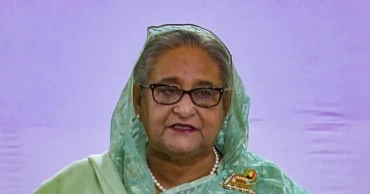
Sheikh Hasina moved to a secure location; not leaving India on Monday
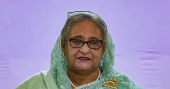
Following her resignation as Prime Minister of Bangladesh and leaving Dhaka earlier on Monday, Sheikh Hasina will reportedly remain in India until granted political asylum in a third country.
Indian media sources indicate that Hasina is seeking asylum in the UK.
According to PTI, she has been moved to a secure location within India and is unlikely to depart on Monday night.
Earlier, NDTV reported that Hasina met with Indian National Security Advisor Ajit Doval at the Hindon Air Force base in Ghaziabad, roughly 30 km from Delhi.
The 76-year-old leader’s resignation follows a period of intense unrest in Bangladesh, where over 300 people have been killed in violent protests against a controversial government job quota system.
1 year ago
Courts reopen on Tuesday
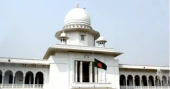
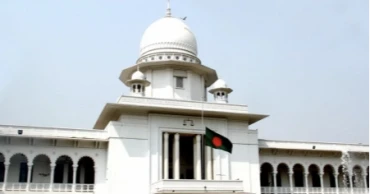
The Supreme Court has announced that all courts across the country will resume operations on Tuesday.
Mohammad Shafiqul Islam, the Supreme Court’s Public Relations Officer, confirmed this in a statement issued on Monday night (August 5).
The statement indicates that from Tuesday, the subordinate courts will carry out their judicial and administrative functions as usual.
Furthermore, starting Wednesday, both divisions of the Supreme Court (the Appellate Division and the High Court Division) will also resume their judicial and administrative activities.
1 year ago
President's meeting with stakeholders decides to free Khaleda Zia immediately
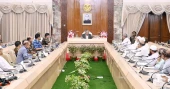
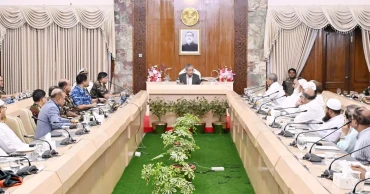
A meeting of chief of three services, political leaders, representatives of civil society and quota leaders was held at Bangabhaban with the army chief aiming to form the interim government, where a decision was also taken to free Khaleda Zia immediately from house arrest.
President Mohammed Sahabuddin chaired the meeting where a condolence resolution was taken in memory of those killed in the anti-quota movement and prayers were sought for forgiveness and peace for their departed souls, said a press release.
The meeting decided to form an interim government soon.
The meeting unanimously decided to release BNP Chairperson Begum Khaleda Zia immediately.
Besides, it was decided to release all the prisoners detained in the anti-discrimination movement and recently in various cases. Consensus was also established in the meeting that the communal harmony should not be destroyed in any way.
The delegation included BNP's Mirza Fakhrul Islam Alamgir and Mirza Abbas, Jatiya Party's GM Quader, Mojibul Haque Chunnu and Anisul Islam, Mahmudur Rahman Manna of Nagrik Oikya, Hefazat-e-Islam's Mamunul Haque, Mufti Monir Kasemi and Mahabubur Rahman, Jamaat-e-Islam's Dr Shafiqur Rahman and Sheikh Md Masood, Major General Fazle Rabbi (retd), Shamim Haider of Zaker Party, Maulana Jalal Uddin Ahmad of Bangladesh Khilafat Majlis, Junaid Saki of Mass Solidarity Movement, Advocate Golam Sarwar Jewel of Mass Rights Council, Dhaka University teacher Asif Nazrul and Firoz Ahmad and Abdullah Al Hossain, Arif Talukder, Omar Faruq and Mobashwera Karim Mimi, coordinators of the anti-discrimination student movement, and engineer Md Anisur Rahman.
1 year ago

All educational, govt and pvt institutions to open from Tuesday: ISPR
The curfew will be in effect from midnight until 6 am, Tuesday (August 6).
Starting tomorrow morning, all government, semi-government, autonomous, semi-autonomous, and private institutions, as well as factories, schools, colleges, madrasas, and universities throughout Bangladesh will open.
This announcement was made by the Inter-Services Public Relations(ISPR) Directorate in a statement released on Monday night.
1 year ago
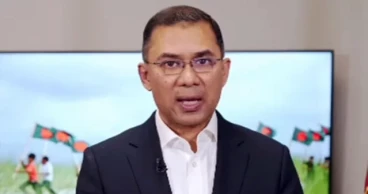
‘Don't be retaliatory or vindictive’: Tarique Rahman
Applauding the brave students and masses for ensuring the fall of the Sheikh Hasina regime, BNP Acting Chairman Tarique Rahman on Monday urged all to celebrate the victory peacefully instead of taking the law into their own hands and indulging in any vindictive acts.
“Heroic congratulations to the brave students of Bangladesh at this glorious historical moment. I humbly request that the joy of victory is magnified when the defeated are safe to the victors,” he said in a statement.
The BNP leader further said, “Celebrate this auspicious time of victory, this historic moment of getting rid of the devil, calmly. Please don't be retaliatory or vindictive. No one should take the law into their own hands.”
He also called upon all to remain alert and watchful so that the achieved victory does not go astray.
To reach the ultimate goal of the historical revolution of the masses, Tarique said a free, fair and impartial election must be arranged as soon as possible.
“Power must be transferred to representatives elected by the people. Every democratic political party of Bangladesh, including BNP, will cooperate to hold a free and fair election to establish a democratic Bangladesh without discrimination,” he said.
He said “killer Hasina,” who carried out genocide, was ousted through the historic revolution of the people in exchange for the lives of hundreds of martyrs.
“Through this historical revolution, it has been proved once again that no one can defeat Bangladesh if they are united regardless of party or opinion,” the BNP leader said.
He also conveyed sympathy to many students and people who were injured in making the historic revolution of the masses a success.
The BNP leader demanded the release of those arrested in connection with the movement and the withdrawal of all cases filed against them.
He hoped that the government (interim one) would take the first step so students could return to halls and classes, and appear for exams as usual.
1 year ago

Sheikh Hasina’s rise and fall: A timeline
The political journey of Sheikh Hasina, one of Bangladesh’s most prominent leaders, has been marked by significant highs and dramatic lows.
Born on September 28, 1947, Sheikh Hasina began her political journey as a student leader. She was elected Vice President of the Students Union at Eden College between 1966 and 1967 and later became the General Secretary of the women's unit at Dhaka University's Rokeya Hall. These early experiences laid the foundation for her future political career.
On August 15, 1975, tragedy struck when her father, Bangabandhu Sheikh Mujibur Rahman, and other family members were assassinated. At the time, Sheikh Hasina and her sister Sheikh Rehana were in West Germany. They accepted political asylum in India, offered by then-Prime Minister Indira Gandhi, and lived in New Delhi for six years.
After being elected President of the Awami League on February 16, 1981, Sheikh Hasina returned to Bangladesh on May 17, 1981. Her return marked the beginning of a new chapter in her political career, characterized by both struggle and perseverance.
Throughout the 1980s, Sheikh Hasina faced repeated detentions under martial law. She was placed under house arrest in February and November 1984, and again in March 1985 for another three months. Despite these challenges, she continued to fight for democracy and justice.
In 1986, Hasina and the Awami League participated in the general election under President Hussain Muhammad Ershad, where she served as the leader of the parliamentary opposition. She led an eight-party alliance against Ershad’s regime, demanding fair elections and democratic reforms.
As the political landscape of Bangladesh became increasingly volatile, Hasina’s leadership was put to the test. In December 1987, Ershad dissolved parliament, prompting mass uprisings in Dhaka. The protests resulted in several deaths, including that of Awami League activist Noor Hossain.
Sheikh Hasina’s resilience paid off when she became Prime Minister in 1996 after winning the general election. Her tenure lasted until 2001.
During the 2006–2008 political crisis, Hasina was detained on extortion charges, a move seen by many as politically motivated. Despite these challenges, she won the 2008 election, solidifying her position as a key political figure.
In 2014, Hasina was re-elected for a third term in an election boycotted by the opposition BNP, raising questions about the legitimacy of her government. Nevertheless, she continued to lead the country and won her fourth term after the 2018 election.
In 2024, Sheikh Hasina secured her fifth term as Prime Minister, making her the world’s longest-serving female head of government. However, her final term was marred by controversy and violence.
Around 300 people (unofficially more) lost their lives in Bangladesh due to violent protests stemming from the controversial quota system for government jobs. Anti-government demonstrators marched into Dhaka on Monday following a weekend of intense violence that claimed over 90 lives.
Protesters were demanding the resignation of Prime Minister Sheikh Hasina and justice for those killed during the clashes. The protests escalated on July 16 when clashes between security forces and pro-government activists and students turned violent. The Supreme Court intervened to roll back the quota decision, but the unrest continued.
A renewed wave of anti-government demonstrations over the weekend saw violent clashes reignite, drawing hundreds of thousands of protesters and further destabilizing the nation.
Sheikh Hasina resigned from her position on August 5, 2024. Shortly after her resignation, Hasina, accompanied by her sister Sheikh Rehana, left Dhaka via helicopter, landing in Agartala, the capital of the Indian state of Tripura, according to Indian media reports.
In the wake of Hasina’s resignation, Bangladesh Army Chief General Waker-Uz-Zaman announced plans to form an interim government.
1 year ago

Protecting minorities: Who to contact in the Army, all over Bangladesh
The Army has provided a list of numbers to call for Hindu families or mandirs, and this applies to other denominations as well, in case they are under attack or in any sort of danger all over Bangladesh:
1. Dinajpur
Lt Col Raushanul Islam
01769682454
2. Mymensingh
Capt Faisal
01769208174
3. Sirajganj
Capt Shudipto
01769510524
4. Rampura
CO- Lt Col Rehgir Al Shahid,
01769053150
5. Rangpur
Capt Ashraf
01615332446
6. Rangpur
Capt Maariz
01745207469
7. Kishoreganj (Bhairab)
01769202354
Capt Raihan
Adjt: 01769202366
8. Jashore
Capt Sabbir
01886-910514
9. Rajbari
Capt Enam
01795-615950
10. Dhaka (Jatrabari)
Capt Hemel, 01766162077
11. Uttara , Airport, Diabari
CO: 01769024280
Adjt: 01769024284
Capt Sazzad (Parvez):01769510457
12. Cox’s Bazar
Capt Muztahid: 01769119988
13. Thakurgaon
Lt Faiz -01769510866
Capt Mohtashim -01769009855
14. Mirpur Area
Capt Mahomud : 01833585736
01769024256
Adjt: 01769024254
FOR DHAKA
1. Capt Saikat: 017 6951 0515 (Mohammadpur)
2. Capt Ridnan Saleh: +880 16 4196 8237 (Mohammadpur)
3. Capt Ashik: +880 17 3899 8458 (Segunbagicha)
4. Capt Abrar: +880 17 4156 9832 (Uttara)
5. Capt Atahar Ishtiaq: +880 17 6951 1144 (Mirpur)
6. Capt Zarraf: 01708375371 (Stadium, Polton)
7. Capt Nasif: +880 17 6951 0803 (Baridhara)
8. Lt Imrul 81: +880 17 0526 0019 (Agargaon)
9. Adjt 21 Engrs Bn: 01769013094 (Gulshan/Banani)
10. Capt Shihab: 017 6604 7323 (Motijheel, Bangladesh Bank KPI)
1 year ago
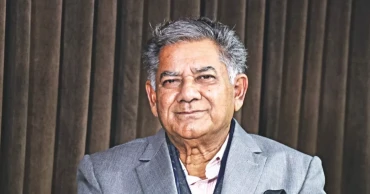
Sheikh Hasina was a classic autocrat: M. Sakhawat Hossain
Sheikh Hasina was a classic autocrat who dismissed the people, and this disdain has led to her current predicament, according to Brigadier General (Retd.) M. Sakhawat Hossain, an election analyst and former military officer. In a special interview with UNB over the phone, he expressed these views.
He stated that today's events were inevitable and were bound to happen. “We have seen similar situations in Tunisia, Libya, and Syria. Popular uprisings are unstoppable. The student quota reform movement could have been resolved easily, but due to Prime Minister Sheikh Hasina's stubbornness, so many people lost their lives.”
Hossain criticized the media’s portrayal of the casualties, claiming that the true number is closer to 400, with a significant portion being students and young people. He questioned the whereabouts of the remaining bodies, mass graves, and the extent of innocent lives lost. “She has gone, but who will answer for this?” he asked.
He accused the ruling government of carrying out the “most heinous massacre” and of misleading the public by blaming criminals while those responsible were, in fact, their own countrymen. “Such things should not happen in a free country,” he remarked.
Hossain also noted that for the past 15 years, people have been unable to vote properly, with widespread election fraud. He stated that Sheikh Hasina should have understood her and her party’s unpopularity, and questioned who would be held accountable for the bloodshed. He criticized the severe lack of good governance, which he believes Sheikh Hasina failed to provide.
Furthermore, he alleged that Sheikh Hasina has created criminal gangs within the country and turned the police and Rapid Action Battalion (RAB) into her personal enforcers.
Reflecting on the plight of the family members of the so-called Father of the Nation, he questioned why they had to face such a tragic fate, attributing it to Hasina’s arrogance and pride. He drew a parallel with the 2009 BDR mutiny, where 57 army officers were killed, and questioned who would answer for that incident as well.
He criticized Sheikh Hasina’s control over TV media and her suppression of free speech, citing it as a reason he avoided talk shows. He claimed he had urged the Prime Minister in various meetings to ensure good governance, but was labeled as an agent of the opposition for his criticisms.
“Today, Sheikh Hasina has fled the country, and now the army has had to take responsibility for the nation’s situation,” he concluded.
1 year ago
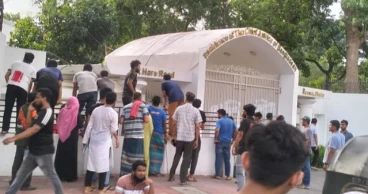
Students now guarding residences of Chief Justice, SP of Dhaka
Leaders of the Anti- Discrimination Student Movement (ADSM) are now giving protection to the vandalised residences of Chief Justice and the superintendent of police (SP) of Dhaka in Ramna area.
At 7:30 pm when this correspondent was visiting the official residences of the two, he found that a group of the leaders of the platform was trying to protect the ransacked furniture of the two residences from the masses. .
Tawhidul Islam, a leader of the students’ platform and also a student of Tejgaon College, informed UNB that a group of people came to these houses and ransacked the furnitures and other valuables after the news of resignation of Sheikh Hasina spread across the country.
of them took away some of the furniture and valuables from the two residences”, he said.He said there are no police or security personnel to guard the two residences. All the guards left the houses immediately after the residents of the houses had left.
“As per the decision of the two leadership of the platform, we’re not allowing anybody to enter the residences and take away furniture and other valuables”, he said.
1 year ago

Student leader Nahid urges vigilance to protect national assets
Amid the unfolding situation in Bangladesh, Nahid Islam, a key coordinator of the Anti-Discrimination Student Movement, has called on students and locals to safeguard the nation’s valuables from potential looters.
Speaking to Channel 24 in the evening, Nahid emphasized the importance of maintaining vigilance on the streets. "Our state property should be protected by us, and no one should get a chance to loot, taking advantage of the situation," he urged.
Nahid, alongside eight other coordinators, appealed for peaceful street demonstrations until their objectives are met. He encouraged students and residents to actively obstruct any looting attempts.
The group also demanded the formation of an interim government inclusive of students, teachers, and civil society members. They proposed that this interim government would eventually transfer power to duly elected public representatives.
1 year ago