others
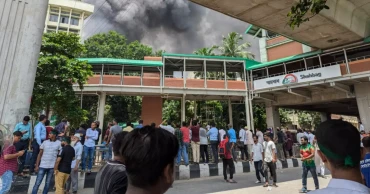
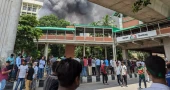
Some vehicles torched near BSMMU Hospital amid clash between protesters, AL activists
Some vehicles parked in front of Bangabandhu Sheikh Mujib Medical University (BSMMU) hospital were set ablaze on Sunday morning during clashes between protesters and Awami League activists.
Witnesses said that several motorcycles and other vehicles which were parked along the road in front of the hospital were set on fire.
Police, protesters clash in Sylhet; One bullet-hit
Protesters alleged that those were set ablaze by ruling party activists.
Efforts to control the fire were hindered as the vehicles of Fire Service and Civil Defence headquarters' control room was unable to reach the location promptly due to road blockades.
Witnesses said when some Awami League and Chhatra League activists tried to obstruct protesters near the hospital the protesters chased them.
1 year ago
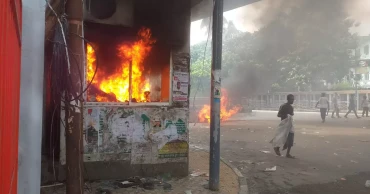
At least 100 injured in clash with police near Jatiya Press Club, says Sammilito Peshajibi Parishad
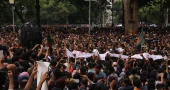
At least 100 people were injured in a clash between Sammilito Peshajibi Parishad and police in front of Jatiya Press Club in Dhaka on Sunday noon as the ‘All-out non-cooperation’ programme called by the Anti-Discrimination Student Movement is underway in the country.
UNB’s special correspondent reported from the spot that the Peshajibi Parishad was staging a rally in front of the Press Club in favour of the ‘All-out non-cooperation.’
Police coming from the Supreme Court area suddenly attacked them around 12:35pm, members of the Peshajibi Parishad said.
At one stage, the protesters took position in several alleys and got involved in chases and counter-chase with the police, leaving at least 100 people injured, the UNB correspondent reported.
Later, the protesters set fire to tyres and other objects on the street under the metro rail station.
Moreover, the protesters set fire to a police box by the JPC.
As of filing this report around 1:20pm, the clash was still going on.
Kader Gani, member secretary of the Peshajibi Parishad, alleged that police used sound grenades and lobbed tear gas shells to disperse them and said that over 100 people got injured.
1 year ago

Police, protesters clash in Sylhet; One bullet-hit
Clashes broke out between police and protesters at Sylhet city's Court Point area Sunday noon, leaving an unspecified number of people injured including one with bullet.
As part of the non-cooperation movement, the protesters gathered in the city's Court Point area around 11 am. People from different walks of life also joined the students.
Police fired tear gas shells and sound grenades to disperse the protesters, triggering the clash at 12 pm.
Houses of five Ctg BNP leaders attacked, torched
At one stage, the protesters left the main road and took position in the adjacent lanes after being obstructed by the police. But after a while, they again came to the court point. They are currently staying there.
One of the injured was taken to a hospital with gunshot wounds, said witnesses. But police did not confirm any casualties or arrests in the clashes.
Non-cooperation movement announced by Anti-Discrimination Student Movement started from today demanding the resignation of the government.
There are various important government offices including the Deputy Commissioner's Office, the Office of the Superintendent of Police, the City Corporation in the area. A large number of police took position in the area with armored vehicles even before the protesters took position.
No buses leave from Natore, commuters suffer
Meanwhile, auto-rickshaws, motorcycles and rickshaws are plying in Sylhet city but public transport movement remained suspended. Besides, the city's shopping malls are closed.
Sylhet Metropolitan Police Deputy Commissioner Azbahar Ali Sheikh said police were deployed at every intersection to control the law and order. When the protesters started throwing brickbats at the police, the police dispersed them.
1 year ago
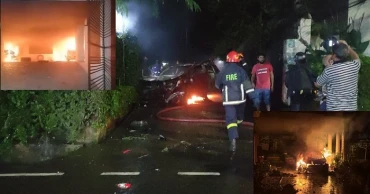
Houses of five Ctg BNP leaders attacked, torched
Amid the ongoing movement, attackers set fire to the houses of four BNP leaders in Chattogram just an hour after attacks on the residences of Education Minister Mohibul Hasan Chowdhury Nowfel and city mayor Rezaul Karim Chowdhury.
On Saturday night from 8pm and 9pm, miscreants targeted the homes of BNP Standing Committee member Amir Khosru Mahmud Chowdhury in Mehedibagh, City BNP Convenor Ershad Ullah near the Eastern Gate of Chittagong Medical College in Panchlaish, and former convenor Dr. Shahadat Hossain on Badsha Mia Road.
Moreover, the homes of BNP leaders Mir Mohammad Nasir Uddin and Mir Helal on Chatteswari Road were also attacked.
BNP leaders alleged that the Awami League and their associate bodies carried out the attacks, a charge they deny.
Grocer injured in Ctg firing died
Idris Ali, office secretary of the city unit BNP, confirmed the incidents saying that Awami League activists, in a procession, attacked Dr. Shahadat Hossain's residence on Badsha Mia Road, setting fire to at least 7 to 8 vehicles parked below around 8:15pm.
Moreover, around 8:30pm, Ershad Ullah's residence near the Eastern Gate of the medical college was attacked, followed by an assault on Amir Khosru Mahmud Chowdhury's home in Mehedibagh at around 8:45pm, he alleged.
Asked about the incidents, Chattogram Metropolitan Police Additional Deputy Commissioner (Public Relations) Tarek Aziz said that he had no information in these matters.
1 year ago

Traffic thin on Dhaka streets, commuters in trouble
The ‘all-out non-cooperation’ called by Anti-Discrimination Student Movement got underway in the country including capital Dhaka since Sunday morning, paralysing normal life.
The disruption of traffic movement caused immense sufferings to commuters on the first working day of the week while many were seen walking to work places and on light vehicles.
The presence of public transports is markedly low while some private cars, motorbikes, CNGs and bikes were seen operating.
Though the government and private organizations didn’t announce leave for Sunday, staffers were the worst sufferers and had to count an extra amount of money to reach their workplaces.
Many commuters were seen standing at several stoppages for public transports in Dhaka while many were in dilemma whether they would move for the destinations.
Matiar Rahman, a private jobholder, said he had to face difficulties to reach his workplace in Gulshan-1 from Azimpur residence on Sunday morning due to lack of public transport.
Earlier he usually used to pay Tk 40 to 45 to reach the workplace but today he had to count Tk 110, he said.
Like him, many shared the same experience.
Meanwhile, the protesters are now staying in busy Shahbagh and Science Lab intersections where no police personnel were seen.
Abul Hasan, Officer-in-charge (OC) Jatrabari Police Station said, "Since morning, no buses or any other vehicles have been seen on the roads. Even the buses that were supposed to leave Dhaka for different destinations like Chattogram, Cumilla, Feni, and Noakhali did not depart."
Kamrul Islam, Officer-in-charge (OC) Darus Salam Police Station said, "no vehicles departed from Gabtoli bus station. However, local bus services are still operating normally within the city."
Rifat Rashed and Mahin, two coordinators of the anti-discrimination student movement, announced the non-cooperation on their Facebook page on Friday.
Meanwhile, local Awami League leaders and activists gathered at Mirpur-10 intersection since 10 am and were preparing to take to the streets.
1 year ago

No buses leave from Natore, commuters suffer
No passenger buses left here for Dhaka and other parts of the country as the ‘all-out non-cooperation’ movement called by the Anti-Discrimination Student Movement got underway since Sunday morning.
The disruption of traffic movement caused immense sufferings to commuters on the first working day of the week while many were seen walking to work places and on light vehicles.
Visiting Boro Harishpur Central Bus Terminal in the district headquarters, UNB’s correspondent found most of the bus counters closed in the morning.
Moreover, authorities of Dhaka-bound bus transport suspended their trips on Saturday night and returned previously sold tickets to passengers.
The same scene prevailed at Bhabanigan Bus Terminal as no buses left from the station in the district.
District Bus Minibus Owners Association President Lakkhan Poddar said they suspended movement of the buses on security grounds upon the student movement.
1 year ago

Around 200 BUP faculty members demand immediate release of all detained students
Faculty members of Bangladesh University of Professionals (BUP) gathered at the Mirpur DOHS gate for a peaceful human chain in support of the constitution and human rights at 12:00pm on saturday.
The participants marched in silence from the DOHS gate to Sagufta, according to a press release.
This peaceful demonstration was held in response to the ongoing nationwide repression, killings, harassment, and arrests of students, teachers and the general public.
Faculty members of BUP addressed the gathering, strongly condemning these incidents and demanding the immediate release of all detained students, including those from BUP.
Earlier on August 2, in a statement signed by approximately 200 BUP faculty members expressed their concerns and called for an end to the injustices faced by students, teachers and citizens across the country.
1 year ago

Sumaiya Feroze: USAID’s Tiger Champion from Bangladesh Safeguarding South Asia's Big Cat
On International Tiger Day, celebrated on July 29, USAID honored three foreign service nationals for their outstanding contributions to tiger conservation in South Asia. The awardees are Sumaiya Feroze from Bangladesh, Soumitri Das from India, and Netra Sharma Sapkota from Nepal. USAID celebrated these dedicated individuals for their relentless efforts to ensure the survival and wellbeing of these magnificent creatures for future generations.
In 2010, USAID launched a mission to protect tigers, when only 3,200 of these majestic animals roamed the wild. Through collaborative conservation efforts, the global tiger population increased to 5,574 by 2023. However, despite these gains, tigers remain endangered due to persistent threats to forests and ecosystems. Their survival is essential for regulating prey populations and maintaining the balance of the entire food cycle.
1 year ago
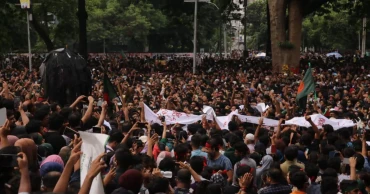
Anti-Discrimination Student Movement announces one-point demand
The key coordinators of the Anti-Discrimination Student Movement on Saturday announced their one-point demand seeking resignation of Prime Minister Sheikh Hasina and her cabinet members, terming it as the “demand of students.”
Nahid Islam, Sargis Alam and other key coordinators of the quota reform movement, made the announcement from a massive rally at the Central Shaheed Minar in Dhaka.
They also gave a 24-hour ultimatum to reopen all university halls for students.
Elaborating the points for non-cooperation movement, he said they will enforce the movement from Sunday.
1 year ago
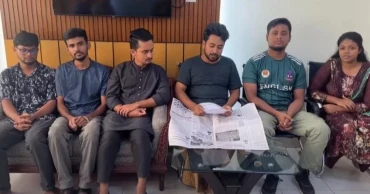
Student protesters reject PM’s call for dialogue
Anti-Discrimination Student Movement leaders have rejected Prime Minister Sheikh Hasina’s call for holding a dialogue.
Asif Mahmud, one of the coordinators of the platform, wrote in a Facebook post: “Many are asking about this, especially journalist friends. We are not willing to sit for any dialogue with this murderer government; hence, discussion with the political party Awami League is out of the question.”
“We have no plans to talk with them. Our demand is very clear; if they have any statement, they can put them through the media in front of the people of the country. The decision of the protesting students and people is our decision. There is no dialogue with bullets and terror,” Asif’s post reads.
Prime Minister Sheikh Hasina on Saturday said the doors of Ganabhaban are always open to the student protesters for dialogue to resolve the ongoing situation.
“Doors of Ganabhaban are open, whenever the protesters want to talk to resolve the issue I am ready to sit with them,” she said.
1 year ago