others
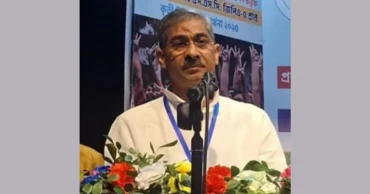
Teesta project to be cleared following expert opinions: Anee
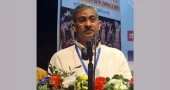
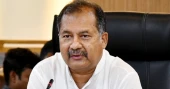
Water Resources Minister Shahiduddin Chowdhury Anee on Saturday said the government would approve the Teesta mega project after the experts report is received.
“We’ve started talking with experts and will consult more with the experts. Once the expert team provides us with their opinion on how the Teesta mega project should be implemented, then we will take the final decision to implement it for the sake of the national interest,” he said.
The Minister made the remarks, while addressing a discussion arranged by a non-government organisation ‘Nongor Trust’ at the National Press Club here, marking National River Day 2026.
He said his ministry had already begun consultations with experts and would continue discussions more before approving the project.
Anee cited that Prime Minister Tarique Rahman had repeatedly committed to implementing the Teesta project both before and after the election.
However, he stressed that the project would be implemented carefully and responsibly. “Anything cannot be done whimsically in the Teesta project. Whatever we do, we will do so with proper understanding and consideration for the people living along the Teesta basin, the surrounding districts, and the country as a whole,” he added.
Noting that Bangladesh is a riverine country where the fate of the nation is deeply connected with its rivers, the minister said, “If rivers survive, the country will survive.”
He said Bangladesh has nearly 1,415 small and large rivers, each of which should be treated as a living entity.
The Water Resources Minister stressed the need to increase people's engagement in river management.
He said over the next five years, around 20,000 kilometres of canals, rivers, and reservoirs would be excavated and re-excavated across the country.
Alongside excavation work, the government would also take steps to prevent illegal encroachment and pollution of canals and rivers, he added.
About the recently approved Padma Barrage project, Anee said construction of the barrage would help protect livelihoods, agriculture, fisheries, and environmental balance in 24 districts in the country’s southwestern and northwestern regions as the project would restore navigability in rivers in these regions.
Lawmaker Anisur Rahman Khokon (Madaripur-3) and BGC Trust University Bangladesh Vice-Chancellor Prof Monjurul Kibria, among others, were present at the discussion, presided over by Nongor Trust Chairman Suman Shams.
12 days ago
Multi-systemic risks due to institutional weaknesses affecting governance, fiscal environment: ADB
Bangladesh’s overall governance and macro fiscal environment are facing multi-systemic risks rooted in deep-seated structural and institutional weaknesses, despite minor progress in financial digitalisation, according to a recent assessment by the Asian Development Bank (ADB).
The publication, titled Governance and Macrofiscal Pillars (GMaP) Assessment, highlights that weak governance systems are blurring the lines between national plans and agency-level implementation, leading to persistent fiscal indiscipline, budget execution failures, and massive losses in State Owned Enterprises (SOEs).
ADB to provide $70 billion for Asia-Pacific energy, digital infrastructure development
The report comes on the heels of a massive political transition in Bangladesh, which saw a student-led uprising in 2024, the establishment of an interim government, and the subsequent election of a new administration in February 2026.
This political reset coincides with urgent economic pressures, including low revenue yields, widening external imbalances, and a narrowing policy space ahead of Bangladesh's graduation from the Least Developed Country (LDC) status.
The ADB report criticised the government's public financial and expenditure management systems. While the country has introduced notable improvements like the Integrated Budget and Accounting System (iBAS++) and adopted the International Public Sector Accounting Standards (IPSAS) Cash Basis, the actual effects are heavily diminished by weak oversight.
Major fiscal discrepancies identified include massive gaps between total budgeted amounts and actual expenditures.
Persistent procurement delays and underspending by implementing agencies have led to a bunching of expenditures at the end of the fiscal year, driving up costs and severely lowering allocative efficiency.
Furthermore, the efficiency of the Treasury Single Account is being obstructed because numerous government accounts, including those of SOEs, remain completely outside its purview.
The iBAS++ system also fails to monitor financial arrears, subnational governments, or extra-budgetary operations.
The report reveals an alarming deterioration in Bangladesh's extensive SOE portfolio, which held total assets worth 61.4 billion dollars in fiscal year 2022.
Between 2018 and 2022, SOE performance plummeted drastically, while total liabilities and government guarantees surged.
Specifically, the Return on Equity (ROE) dropped by 88 percent, and the Return on Assets (ROA) declined by 78 percent over the same period.
The ADB blames these losses on a total absence of a clear ownership policy, a weak legal framework, major gaps in monitoring capacities, and a lack of risk evaluation systems, which together escalate the government's overall fiscal risk exposure.
Independent oversight institutions continue to operate under severe constraints. Although the Office of the Comptroller and Auditor General conducts regular audits, its efficiency is consistently hampered by limited capacity, restricted access to digital systems, and bureaucratic pushback from other agencies.
Similarly, while Bangladesh’s Anti-Corruption Commission has reported an increase in convictions, it continues to face widespread criticism questioning its independence and objectivity due to institutional enforcement weaknesses and political interference.
Furthermore, Civil Society Organizations (CSOs) face restricted civic spaces, complex registration processes, and delays in accessing detailed government data, which limits meaningful collaboration on human rights, democratic reforms, and anti-corruption initiatives.
To address these macrofiscal and governance risks, the Manila-based lender has outlined a comprehensive, holistic reform pathway focused on eight key institutional areas:
1. Revenue Administration: Reorganising the National Board of Revenue (NBR) to eliminate internal conflicts of interest (such as the consolidation of tax policy and tax administration roles), accelerating digitalisation, and curbing illicit financial flows.
2. Debt Management: Institutionalising the Medium-Term Debt Management Strategy and establishing a dedicated public debt management office with explicit legal mandates for front-, middle-, and back-office functions.
3. Planning and Budgeting: Operationalising medium-term fiscal frameworks, improving the credibility of revenue forecasts, and integrating capital and recurrent budgeting to prevent year-end spending spikes.
4. Internal Control and Audit: Institutionalising internal audit functions across agencies, shifting to risk-based audit planning, and professionalizing audit staff.
5. Public Investment Management and Procurement: Reforming procurement regulations to remove restrictive practices and expanding the e-government procurement system to improve appraisal and costing.
6. SOE Reforms: Establishing a clear ownership policy for SOEs, strengthening the government's SOE Monitoring Cell, and mandating transparent financial disclosures.
7. Oversight and Accountability: Strengthening the independence of oversight bodies, improving annual fiscal reporting, and accelerating the public release of audit findings.
8. Civil Society Engagement: Simplifying the non-governmental organization (NGO) registration process and institutionalizing structured engagement mechanisms between the government and CSOs to support public governance.
The ADB emphasized that addressing these weaknesses through institutional and legal overhauls is critical if Bangladesh is to navigate its current economic transition and sustain long-term macroeconomic stability.
12 days ago
ADP implementation limps just over 40% in ten months of fiscal
The implementation of the Revised Annual Development Programme (RADP) recorded a slow pace during the first ten months (July-April) of the current 2025-2026 fiscal year, hitting an execution rate of 41.41 percent.
According to the latest report released by the Implementation Monitoring and Evaluation Division (IMED) of the Ministry of Planning, government agencies spent Tk 86,516.08 crore out of the total RADP allocation of Tk 2,08,935.53 crore earmarked for the fiscal year.
This performance indicates a notable slowdown in project execution compared to previous fiscal years, highlighting persistent challenges in administrative momentum and development spending following recent structural and political changes.
An analysis of the IMED data reveals a consistent downward trajectory in both RADP allocations and execution rates over the last few fiscal years.
In the current FY 2025-2026, out of a reduced RADP allocation of Tk 2,08,935.53 crore, the ten-month expenditure stands at Tk 86,516.08 crore, reflecting an execution rate of 41.41 percent.
During the same July-April period of FY 2024-2025, the expenditure was Tk 93,424.83 crore against an allocation of Tk 2,26,166.88 crore, yielding an implementation rate of 41.31 percent.
In FY 2023-2024, the implementation rate stood significantly higher at 49.26 percent with an expenditure of Tk 1,25,315.68 crore out of a Tk 2,54,391.64 crore allocation.
For FY 2022-2023, the execution rate was 50.33 percent with Tk 1,19,064.39 crore spent out of Tk 2,36,560.67 crore.
In FY 2021-2022, the 10-month implementation reached 54.57 percent, with an expenditure of Tk 1,19,829.74 crore out of Tk 2,19,601.91 crore.
The monthly progress for April also reflected a sluggish development drive.
In April 2026 alone, the government managed to implement only 5.22percent of the development budget, translating to an expenditure of Tk 10,908.84 crore.
This single-month progress is slightly higher in percentage than the previous year's performance, where April 2025 recorded a 4.66 percent implementation rate with a spending of Tk 10,530.75 crore, but it remains heavily constrained compared to historical trends. Planning Ministry officials cited multiple structural issues contributing to the slower release and utilisation of development funds this fiscal year.
The primary setbacks include the ongoing rigorous review of development projects to realign national priorities, which has temporarily paused funds for several major initiatives.
Furthermore, administrative reshuffles, delays in appointing new project directors, and strict compliance checks on new procurements have extended execution timelines.
The exit or inactivity of several contracting firms following political transitions late last year has also left numerous physical infrastructure projects partially stalled.
With only two months left in the current fiscal year (May and June), ministries and execution agencies face tremendous pressure to fast-track their pending bills and accelerate construction phases if they are to prevent large sums of development funds from returning unutilized.
12 days ago
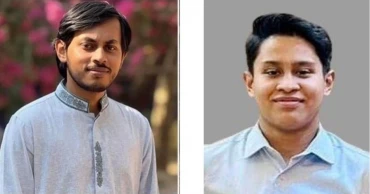
Debate for Democracy mourns deaths of two BRAC University students
Debate for Democracy Chairman Hasan Ahmed Chowdhury Kiran has expressed deep shock and sorrow at the untimely deaths of two BRAC University students, Azwat Tausif Riasat and Labib Wadi Sopon, who drowned while bathing in a pond in Munshiganj.
The incident occurred on Friday afternoon in Deovog area of Munshiganj when the two students went into a pond with friends for a swim and drowned, according to family sources.
Riasat was the second child of Major (retd) Md Fazli Mukit and Asfia Tasnim Neeta, vice principal of Mirpur Cantonment Public School and College. Sopon was the younger son of late Mostakur Rahman of Munshiganj.
Both were second-year students of the Computer Science and Engineering (CSE) department at BRAC University.
After the incident, both bodies were recovered and later buried following funeral prayers on Saturday.
Riasat was laid to rest at Banani Military Graveyard in Dhaka after his funeral prayer at Mirpur, while Sopon was buried at a local social graveyard in Deovog after his funeral at a mosque in Munshiganj.
In a condolence message, Debate for Democracy Chairman Hasan Ahmed Chowdhury Kiran prayed for the eternal peace of the departed souls and conveyed sympathy to the bereaved families.
He also expressed hope that such tragic incidents would raise awareness among young people about water safety and precautionary measures.
12 days ago

2 killed in road accident in Chattagram
Chittagong,May 23,(UNB)-Two teenagers have died in a collision between a bus and a motorcycle in Patiya, Chattagram. The accident took place on the Chattogram-Cox's Bazar highway in front of the Ansar camp in the upazila at around 12:30 pm on Saturday.
The two deceased are Mohammad Shahadat Hossain (16), son of Akhtar Hossain of Sheikh Mohammad Para in Kachuai Union of the upazila, and Walid Al Taslim (17), son of Jahedul Islam of the same area. Among them, Tasnim Abdus Sobahan Rahat Ali, a ninth-grade student of Chakrashala Agricultural High School in Shahadat Upazila.
In the same incident, a young man named Tanvir Hossain (18) was injured. He is the son of Mohammad Abdul of the same area. He was also on the motorcycle. He has been admitted to Chittagong Medical College Hospital in an injured condition.
Local residents and witnesses said that the two teenagers and a young man were on a motorcycle going to a local sacrificial animal market to see cows. The motorcycle was being driven by Shahadat Hossain. On the way to the market, the motorcycle collided with a bus from the opposite direction in the Ansar Camp area. At that time, all three were thrown off the motorcycle. Shahadat died on the spot. The other two were taken to the Patiya Upazila Health Complex in serious condition. There, the doctor declared Tasnim dead.
Patiya OC Harnur Rashid said, "After the accident, local residents seized the bus and handed it over to the police. The body of the deceased has been kept at the Patiya Upazila Health Complex. Necessary steps will be taken in this regard."
12 days ago
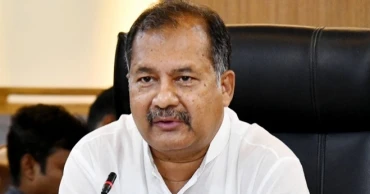
Ramisa's killing is national shame: Information Minister
Information Minister Zahir Uddin Swapon on Saturday described the rape and killing of eight-year-old Ramisa Akter as a ‘national pain’ and ‘national shame’, saying that the perpetrators must be brought to justice as quickly as possible under the existing laws.
“The government has taken all measures to bring the criminals to justice as soon as possible under the existing laws of the country,” he said.
The minister made the remarks, while responding to questions from journalists after a financial assistance distribution programme for disadvantaged children organised by the Sher-e-Bangla AK Fazlul Huq Foundation in the city’s Pallabi area.
Noting that such brutal incidents, including Ramisa's one, are extremely tragic, he said the entire nation is grieving and outraged over this incident. Prime Minister Tarique Rahman, on behalf of the nation, expressed deep sympathy and condolence with the bereaved family of the slain child.
At this time, the Information Minister praised the role of the media in this regard. The anger and awareness created among the people over such incidents are the result of the responsible role played by the media, he said.
Based on the public opinion generated by journalists, the government will be able to adopt more effective laws and measures to eradicate such heinous crimes from society, he added.
Praise for Sher-e-Bangla
In a separate event, Zahir Uddin Swapon said Sher-e-Bangla AK Fazlul Huq was not only a political leader but also a pioneer of the redemption of Bengal’s peasants, common people, and the deprived sections of society and a non-communal social reformer.
“Because of his historic role, Bengal’s farming community found a path to freedom from landlords’ exploitation, the trap of moneylenders’ loans, and a way out of deprivation from education,” he said.
The Information Minister made the remarks while addressing at the event arranged by the same foundation to distribute financial assistance among underprivileged children at the International Mother Language Institute in the city.
He said Sher-e-Bangla emerged as the first elected Prime Minister of undivided Bengal through the 1937 election and secured a unique place in the political history of Muslims in the subcontinent by presenting the Lahore Resolution in 1940.
Swapon said although Sher-e-Bangla’s direct political legacy may not be clearly visible today, his philosophy of social reform remains highly relevant.
He urged the Sher-e-Bangla Foundation to expand its activities beyond charity and donations and undertake broader initiatives.
The Information Minister expressed interest in contributing to the foundation’s future plans and assured full cooperation from the government.
Former secretary and adviser of the Sher-e-Bangla AK Fazlul Huq Foundation Syed Margub Morshed and Foundation President Md Abu Hanif were present at the event, said a PID handout.
12 days ago

Bangladesh launches offshore bidding round 2026, offers sweeping incentives to IOCs
State-owned Petrobangla on Saturday launched the Offshore Bidding Round-2026, inviting international oil companies (IOCs) to explore hydrocarbons across 26 offshore blocks in Bangladesh's maritime territory.
Of the 26 blocks on offer, 11 are shallow-sea and 15 are deep-sea blocks. Successful bidders will sign agreements under the Bangladesh Offshore Model Production Sharing Contract (MPSC) 2026. Companies may submit bids individually or in joint ventures for one or more blocks, Petrobangla informed in a press note.
To attract investment, the bidding framework offers a range of incentives, including full repatriation of profits, no signature bonus or royalty obligations, gas pricing linked to international Brent crude, duty exemption on equipment imports, and tax liability of contractors to be borne by Petrobangla.
The contract also provides 100 percent cost recovery, subject to an annual cap of 75 percent. The mandatory minimum work obligation is limited to a 2D seismic survey, though bidders must also submit additional work programmes.
For shallow-sea blocks, eligible bidders must have experience producing at least 5,000 barrels of oil per day or 75 MMscfd of gas from at least one offshore field. For deep-sea blocks, the threshold is 10,000 barrels per day or 100 MMscfd. All bidders must also have upstream experience in at least one country outside their home jurisdiction.
Sale of information packages begins June 1, priced at USD 100. A promotional package including bidding documents, mandatory for participation, is priced at USD 7,000.
The deadline for bid submission is November 30 at 1:00pm, with bid opening scheduled the same day at 2:00pm at Petrobangla's headquarters in Dhaka.
Under the framework, state-owned BAPEX will hold a 10 percent carried interest in shallow-sea blocks. Contractors will also have the option to sell gas to third parties domestically or export it, subject to Petrobangla's preferential purchase rights.
12 days ago
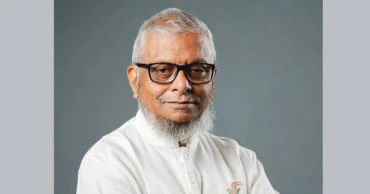
Labour Minister's initiative: Bangladeshi woman rescued from Cambodia, 7 workers recover passports in Iraq
A Bangladeshi woman who fled a scam centre in Cambodia is set to return home within a week, while seven Bangladeshi workers in Iraq have recovered their confiscated passports, both outcomes secured through the personal intervention of Labour and Employment Minister Ariful Haque Choudhury.
The Ministry of Labour and Employment said Saturday that the 34-year-old woman, who escaped her captors on May 20, contacted Minister Ariful directly via WhatsApp the following morning from an undisclosed location, appealing for help to return home.
According to the ministry, the woman had travelled to Cambodia in August 2025 through a local travel agency after being promised computer-based work and a high salary. Upon arrival, her passport was seized and she was confined to a scam centre, where she was forced to carry out online financial fraud, including swindling money through mobile and internet platforms.
Despite multiple failed attempts to escape, she finally slipped past her captors on May 20. After receiving her WhatsApp call, the minister immediately directed the labour counsellor at the Bangladesh Embassy in Bangkok to provide assistance. Embassy officials confirmed her whereabouts through a video call and, with support from the Bangladeshi community in Cambodia, rescued her from the capital Phnom Penh on Thursday.
The ministry said travel pass arrangements are currently underway in coordination with the Cambodian government to facilitate her return.
Passports Recovered in Iraq
In a separate development, seven Bangladeshi workers in Iraq recovered their passports on Thursday after the Bangladesh Embassy intervened following a complaint lodged on May 20.
Acting on the minister's directive, embassy officials investigated and found the passports had been withheld by a company employing the workers. Following their recovery, the workers said they wished to continue their employment in Iraq and had independently arranged their own work.
In another Iraq case, two Bangladeshi workers: Riju Mia and Aylan Mia were repatriated on May 7 following a complaint by their families alleging physical abuse and food deprivation at the hands of brokers. Embassy officials located the two men at a rented building in Baghdad's Arasat residential area, though they found no evidence of physical mistreatment or food deprivation.
The duo were nonetheless returned to Bangladesh through their recruiting agency at their own request, with embassy support.
12 days ago

Dhaka joins global “One Run-2026” in celebration of sport, unity
Over a thousand sports enthusiasts, including members of the diplomatic corps, corporate leaders, youth, children, and athletes, on Saturday participated in the international half marathon “One Run-2026” in the capital, aiming to create awareness about health and the environment.
State Minister for Youth and Sports Md Aminul Haque and Barrister Zaima Rahman, daughter of Prime Minister Tarique Rahman, attended the awards ceremony as guests.
Cosmos Art Echo hosts 10th session featuring artist Mahbubur Rahman
12 days ago
Not emotion-driven politics, Bangladesh needs evidence-based constructive civic engagement: Webinar
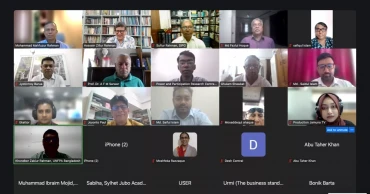
Power and Participation Research Centre (PPRC) Chair Dr Hossain Zillur Rahman on Saturday said Bangladesh’s civic discourse must move beyond emotion-driven politics toward careful, evidence-based analysis and constructive public engagement.
Speaking at the PPRC’s flagship webinar series ‘Ajker Agenda’, he warned against an entrenched “tag culture,” where political opponents are labeled for cynical purposes, noting that such practices continue to poison public life and obstruct honest assessments of governance and policy performance.
Reflecting on the broader national context, the economist and social thinker said if their elected government succeeds, that is ultimately good for all of them as citizens.
“We must learn from the mistakes of the past while taking responsibility for improving the present. Building consensus within society cannot be the responsibility of the state alone,” he said, noting that civic and business actors have to bring evidence-based accountability pressures on the government while strengthening national unity through credible public discourse.
Policy analysts, legal experts, private sector leaders, security and geopolitical strategists came together to examine the early governance signals and medium-term implications of the new administration at the event titled “3 Months of the New Government: A Preliminary Review.”
The session was moderated by PPRC Chair Hossain Zillur Rahman and included panelists Bangladesh Supreme Court advocate Jyotirmoy Barua, former President of Bangladesh Knitwear Manufacturers and Exporters Association (BKMEA) Fazlul Haque, Chairman of Osmani Center for Peace and Security Studies Lieutenant General (Retired) Dr Mohammad Mahfuzur Rahman and former Ambassador Sufiur Rahman.
Stronger Policy Direction
While participants acknowledged the difficult context in which the government assumed office, they also emphasised the importance of moving beyond blame politics toward practical reforms, institutional accountability, meritocracy, and stronger policy direction in the coming months.
Focusing on the institutional dimension of governance, Barrister Jyotirmoy Barua spoke on institutional reform, politicisation within state institutions, and the continued weaknesses in administrative and judicial culture.
“The key question for these three months is whether we have moved away from the politicization of institutions. Progress has not so far been visible. Civil administration appointments have signaled old patterns and police morale remains to recover fully. Mob violence and weak law and order continue to be serious concerns,” he said.
Former BKMEA President Fazlul Haque said the government has had to absorb the failures of the interim administration, while also confronting the added pressure of the Middle East crisis.
He stressed that with private sector credit at its lowest level, exports declining, and an investment-friendly environment yet to be fully established, Bangladesh urgently needs a bold contractionary budget and decisive measures to capitalize on the country’s $800 billion garments market opportunity.
“The effects of the war are not limited to rising oil prices alone. Multiple markets and the tourism sector have also been affected, leading to significant cost-cutting at the consumer level. As a result, we are gradually losing market share of our products as well,” he said, adding that the impact of the war has therefore been multilayered and has added considerable pressure on the government from the very beginning.
Bangladesh’s Strategic Environment
Chairman of Osmani Center for Peace and Security Studies Lieutenant General (Retired) Dr Mohammad Mahfuzur Rahman said with the shifting regional landscape marked by intensifying great power rivalry, Bangladesh’s strategic environment is increasingly shaped by forces that are no longer distant but directly embedded in its immediate neighborhood.
He talked about competing influences from India and China, a deepening US presence in the Bay of Bengal, and the growing securitisation of shared resources such as water are compounding national anxieties, alongside the unresolved Rohingya crisis and uneven patterns of international burden-sharing.
“Bangladesh must master the art of adversarial cooperation with meritocracy, balancing ambiguous relationships across the India-US-Bangladesh and China-Pakistan-Bangladesh axes to survive and secure its interests,” Mahfuzur said.
Participants noted that while the change of government generated public hope, visible progress on institutional depoliticization, law and order reform, investment climate improvement, and strategic geopolitical positioning remains uneven.
The challenge of inherited structural burdens - fiscal, institutional, and diplomatic - was acknowledged, but panelists stressed these cannot indefinitely serve as justification for delayed action.
Former Ambassador Sufiur Rahman emphasised that national unity is essential for strengthening Bangladesh’s position in both multilateral and bilateral negotiations and cautioned against the tendency to dismiss all previous initiatives solely for political reasons.
He noted that deeper engagement with ASEAN remains strategically important for long-term economic and diplomatic gains, while also cautioning that China’s regional dominance continues to be a critical factor shaping the country’s policy space.
Sufiur argued that meaningful progress requires recognizing valuable past experiences and building upon them where necessary.
12 days ago