others
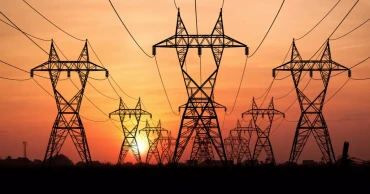
BPDB seeks up to 21% hike in wholesale power tariff
The Bangladesh Power Development Board (BPDB) has proposed raising wholesale electricity tariffs by Tk 1.20 to Tk 1.50 per unit, a move that implies a 17 percent to 21 percent hike over existing rates.
The proposal was formally placed on Wednesday during a public hearing organised by the Bangladesh Energy Regulatory Commission (BERC) at the Krishibid Institution Bangladesh (KIB) auditorium in the capital.
The initiative triggered fierce opposition from an array of stakeholders, including political figures, business leaders, and consumer rights organisations, who warned that the hike will severely impact an already struggling economy.
Defending the proposal, BPDB Chairman Engineer Mohammad Rezaul Karim revealed that the power sector is reeling from massive financial pressure.
He estimated a staggering deficit of Tk 62,000 crore for the current fiscal year, which is projected to climb to Tk 65,000 crore in the next year.
Rezaul Karim warned that the failure to adjust the tariffs will expose the entire sector to "serious risk."
He pointed out that electricity prices were last revised in February 2024. Since then, the costs of gas, coal, and liquid fuels have risen.
Furthermore, because both public and private power producers frequently clear fuel bills in US dollars, the sharp depreciation of the Bangladeshi Taka against the dollar has escalated domestic generation costs.
Dismissing claims that Bangladesh imports 70 percent of its electricity, the BPDB Chairman clarified that only 15 to 16 percent is currently imported from India, with the rest generated domestically – though he admitted local production relies heavily on imported fuel.
He emphasised that the proposed hike is not meant to yield profits but to partially alleviate the government’s immense subsidy burden.
Opposing the move, Advocate Humayun Kabir Bhuiyan, General Secretary of the Consumers Association of Bangladesh (CAB), argued that the timing is entirely wrong. "It will further burden marginal consumers who are already under significant stress," he said.
Other consumer rights activists alleged a lack of transparency and accountability within BERC, claiming that inefficiencies and power theft are routinely passed on to the public under the guise of "system losses."
Prof Dr Syed Miznur Rahman of Daffodil University criticised the process, alleging that many irregularities are executed under legal cover and that BERC’s public hearings have become a mere "eyewash" serving vested interests.
Representing the industrial sector, Mohammad Jamal Uddin Mia, Director of the Bangladesh Knitwear Manufacturers and Exporters Association (BKMEA), termed the tariff-hike proposal "a final blow to an already struggling sector."
He noted that Bangladesh’s export sector is facing a severe downturn, losing its competitive edge in international markets where it once comfortably held the second position behind China.
Ruhin Hossain Prince, former General Secretary of the Communist Party of Bangladesh (CPB), echoed these concerns, stating that higher power tariffs will spike industrial production costs, resulting in severe macroeconomic consequences. He called for the immediate scrapping of the hearing.
Addressing the concerns, BERC Chairman Jalal Ahmed acknowledged that a major reason behind Bangladesh's inflated electricity costs is excess installed generation capacity, which currently sits far above the ideal 20 to 25 percent cushion over actual demand.
He noted that ensuring an uninterrupted power supply could phase out nearly 6,000 MW of inefficient, captive power generation units.
Jalal Ahmed stressed that conventional power generation models must change in step with the global transition toward green energy.
Highlighting international benchmarks, he noted that renewable energy accounts for nearly half of the European Union's electricity, while solar and wind power heavily support grid systems in India and Pakistan.
"If Bangladesh can move further towards solar power, with BPDB playing a supportive role, electricity production costs will fall in the future," Ahmed said, adding that this shift would ultimately shield consumers from persistent financial pressure.
BERC is scheduled to hold another public hearing on Thursday regarding proposed electricity tariff hikes at the retail level before delivering its final verdict.
15 days ago

12-year-old boy dies after falling from train roof in Banani
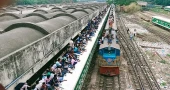
An unidentified boy, aged around 12, died after falling from the roof of a train in the Sainik Club area under Banani Police Station in the capital on Wednesday.
He was taken to Dhaka Medical College Hospital (DMCH) with critical injuries around 5:30pm, where doctors declared him dead upon arrival at the emergency department.
Synthia Akhter, a pedestrian who helped take the child to hospital, said the boy fell from a moving train roof around 3pm and sustained serious injuries.
He was first taken to Kurmitola General Hospital, but was later shifted to DMCH as his condition deteriorated.
Inspector Md Faruk, in-charge of the DMCH police camp, said the body has been kept at the hospital morgue.
The matter has been reported to the concerned Railway Police Station, he added.
15 days ago
Govt encouraging shift to EVs to reduce carbon emissions: Mintoo
Environment, Forest and Climate Change Minister Abdul Awal Mintoo has said the government plans to introduce electric vehicles in larger scale than they are today, in a bid to reduce carbon emission and build an environment-friendly transportation system in the country.
“The government is already planning to introduce 'electric vehicles' to develop an environmentally friendly transportation system and reduce carbon emissions,” he said.
Bangladesh playing key role globally on climate, environment issues: Mintoo
The minister made this remark, when International Labour Organization (ILO) Country Director for Bangladesh Max Tuñón met him at his ministry office on Tuesday, said a PID handout on Wednesday.
He told the IL0 Country Director that the government has taken various effective initiatives under the ‘Extended Producer Responsibility (EPR)’ policy to ensure sustainable waste management. The government is working relentlessly to make plastic waste management more organised and mandatory, he said.
The Environment Minister said his ministry has taken various initiatives to strengthen Effluent Treatment Plant (ETP) installation for industrial waste management.
Besides, he said the government has taken initiatives to install large-scale solar panels (solar power) nationwide to reduce pressure on electricity and increase the use of renewable energy.
ILO Country Director for Max Tuñón expressed interest in expanding ongoing cooperation in Bangladesh’s environment, forest and climate sectors and placed special emphasis on Just Transition in issues of mutual interest involving the Environment Ministry and other ministries.
Noting that the Extended Producer Responsibility (EPR) workshop would be held in Gazipur next month, he emphasized the pioneering role of
the Environment Ministry in maintaining international standards in plastic recycling, waste management and environmental protection
He urged for working in coordination with various non-governmental organizations and development partner countries in this regard.
During the meeting, they also discussed strengthening cooperation in tackling plastic pollution, conservation of environment, sustainable development, pollution control, expansion of renewable energy, carbon credits, climate financing, circular economy and biodiversity conservation.
Two additional secretaries of the Environment Ministry and senior officials from the ILO country office in Bangladesh were present at the meeting.
15 days ago
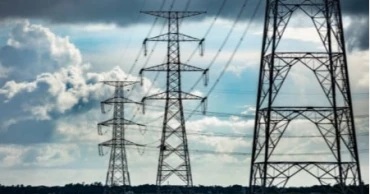
BERC Hearing: Stakeholders reject BPDB proposal to hike bulk power prices by up to Tk 1.50 per unit
Politicians, business leaders, and consumer rights activists on Wednesday strongly rejected a proposal by the Bangladesh Power Development Board (BPDB) to increase bulk electricity tariffs by Tk 1.20 to Tk 1.50 per unit.
The opposition was voiced during a public hearing organized by the Bangladesh Energy Regulatory Commission (BERC) at the Krishibid Institution Bangladesh (KIB) auditorium in the capital’s Farmgate area today (Wednesday). BERC Chairman Jalal Ahmed and other commission members were present at the hearing.
During the session, the BERC Technical Evaluation Committee left the final decision on the tariff hike to the government, contingent upon the allocation of required state subsidies.
Citing the depreciation of the Taka against the US dollar and soaring fuel procurement costs, the BPDB proposed hiking the bulk electricity price by Tk 1.20 to Tk 1.50 per unit. Currently, BPDB sells wholesale electricity at Tk 7.04 per unit, requiring a government subsidy of Tk 5.47 per unit to bridge the production-to-sales deficit.
The BERC Technical Evaluation Committee noted that wholesale electricity prices would need to be hiked by 77 percent to entirely eliminate government subsidies.
Strongly opposing the move, Dr. Syed Mizanur Rahman, Organizing Secretary of the Consumers Association of Bangladesh (CAB), criticized the focus on reducing subsidies at the expense of ordinary citizens.
"Everyone is consumed with managing state funds or corporate margins, while completely ignoring the severe financial distress it will inflict on common people," he said.
He further urged BERC to overhaul its structural regulations to better protect consumers under the new governance landscape following the August 5 mass uprising.
Communist Party of Bangladesh (CPB) central leader Ruhin Hossain Prince termed the public hearing a "mere formality," arguing that the commission should immediately suspend such hearings until its internal regulations are reformed to ensure actual public interest.
Representing the manufacturing sector, Jalaluddin, a leader of the Bangladesh Knitwear Manufacturers and Exporters Association (BKMEA), warned that any further increase in power tariffs would deal a devastating blow to the industrial sector, which is already grappling with a downturn in exports.
"We expected electricity prices to go down under the new administration, but instead, we are facing proposals for further hikes," said Mohiuddin, a leader of the Mobile Phone Consumers' Association.
The hearing disclosed that the government provided approximately Tk 40,000 crore in power sector subsidies during the last fiscal year.
For the current fiscal year, the Power Division has requested an additional Tk 20,000 crore, potentially raising the total subsidy burden to Tk 60,000 crore.
Defending the proposal, BPDB Chairman Rezaul Karim clarified that the suggested tariff hike would not fully bridge the deficit but would help lower the government's subsidy burden from one-fifth to one-fourth.
BERC Chairman Jalal Ahmed assured stakeholders that the commission would carefully evaluate all arguments, feedback, and committee evaluations before delivering its final decision on the power tariff adjustment.
15 days ago
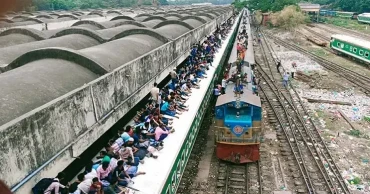
Police warn train passengers to stay alert against stone-throwing during Eid travel
Bangladesh Police on Wednesday asked passengers to remain alert against stone-throwing incidents during train journeys and to keep their belongings secure during Eid travel.
Bangladesh Police issued a set of safety guidelines for the public to ensure safe and smooth celebrations of the upcoming holy Eid-ul-Azha.
It also discouraged travelling without tickets on trains.
It also advised people planning to travel to their hometowns with sufficient time before and after Eid to avoid severe last-minute crowding at train stations, bus terminals, launch and ferry ghats.
They urged citizens not to travel on rooftops of buses, trains, launches, steamers, trucks, pickups or other goods-carrying vehicles, warning that such practices are life-threatening.
Passengers have been advised not to press drivers to speed and to ensure that drivers follow traffic rules and avoid risky overtaking.
Authorities also cautioned against allowing unprofessional, tired or unwell drivers to operate vehicles.
The guidelines discourage the use of unsafe vehicles such as Nasimon, Karimon and Bhotbhoti on highways and warn against operating unfit or expired vehicles.
In case of water transport, police advised against travelling in unsafe weather conditions.
Boat owners have been instructed to keep life-saving equipment, including life jackets and buoys with 100–150 feet ropes, on board.
Extra caution has been urged during boarding and disembarking from launches and ferries.
Passengers have also been warned to remain alert against fraud gangs, including “unconscious gangs” and “ointment gangs”.
People are advised not to accept food or drinks from strangers and to immediately inform nearby police or call 999 if suspicious individuals are spotted.
Regarding sacrificial animal transportation, police said livestock should not be overloaded on trucks, launches or boats, and cattle markets should not be set up on highways or beside rail lines.
They also instructed that buyers should pay officially fixed fees at cattle markets and report any attempts of extortion or excessive charges to police.
Vehicles carrying sacrificial animals should display banners indicating the destination or cattle market. Such vehicles cannot be stopped en route without valid reasons.
Police also warned that transport carrying animal hides near border areas could be linked to smuggling activities and urged people to report suspicious movements.
The guidelines also prohibit carrying passengers in vehicles transporting sacrificial animals or goods.
People have been advised to use banking channels for large financial transactions at cattle markets and to seek police assistance for cash transport if necessary.
They cautioned against counterfeit currency and urged compliance with Bangladesh Bank instructions.
Citizens were also advised not to share mobile financial service PIN numbers such as bKash, Rocket, UCash and Nagad with anyone.
For shopping mall security, authorities recommended the use of CCTV cameras, archways and metal detectors.
For assistance, the public can contact Police Headquarters Control Room at 01320001300, 01320001299, Highway Police Headquarters at 01320182598, Railway Police Headquarters at 01320177598, and Naval Police Headquarters at 01320169598, as well as Rapid Action Battalion (RAB) at 01777720029 and the national emergency service 999.
15 days ago
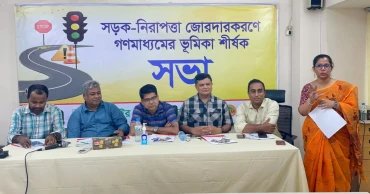
Call to remove unfit vehicles from roads ahead of Eid travel
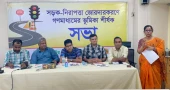
Speakers at a media discussion in Dhaka on Wednesday called for the immediate removal of unfit vehicles from roads and highways to ensure safe and hassle-free travel for holidaymakers during the upcoming Eid vacation.
The recommendations came during a media discussion titled “The Mass Media Role in Road Safety” held on Wednesday at the meeting room of the Health Sector of Dhaka Ahsania Mission in Shyamoli, Dhaka.
Keynote presenter Sharmeen Rahman, Project Coordinator, Health Sector of Dhaka Ahsania Mission, made some urgent recommendations to the government, saying that road crashes and fatalities during the Eid pilgrimage have increased alarmingly in 2026 compared to 2025, which has once again brought to the fore the weakness of the system.
She said that the situation could become even more dire if effective initiatives are not taken now to make the Eid journey safe. Therefore, Dhaka Ahsania Mission has emphasized on controlling the speed of vehicles on the highway, stopping the movement of unfit vehicles, ensuring adequate rest for drivers, and operating mobile courts at important points.
Muhammad Jahangir Alam, General Secretary of the Shipping and Communication Reporters Forum (SCRF) and Special Correspondent of United News of Bangladesh (UNB), stressed the importance of deploying an adequate number of highway police personnel to reduce road crashes.
He also urged the government to ensure that unfit buses are not allowed to leave the terminals.
Senior Reporter of The Daily Ittefaq, Jamiul Ahsan Shipu, said that long queues at toll plazas and bridges during Eid often create severe traffic congestion. To ease congestion, he recommended increasing the number of toll booths during Eid.
Senior Reporter of Daily Naya Diganta, Aminul Islam, said that although many laws exist in the country, loopholes within those laws often allow offenders to escape punishment.
He noted that the Road Transport Act also contains several weaknesses and limitations, making effective enforcement difficult and preventing a significant reduction in road crashes.
Touhiduzzaman Tanmoy, Staff Correspondent of JagoNews24.com, said that while road crash incidents are regularly reported in the media, the underlying causes and follow-up investigations are often missing from news coverage. He emphasized the need for comprehensive follow-up reporting on road crashes.
The moderator Shuvra Deb, Senior Reporter, Crime of Daily Manabzamin, said road safety is not the responsibility of any single organization or individual; rather, it requires coordinated efforts from all stakeholders, including the media.
The journalists also emphasized the importance of mandatory use of BSTI-approved helmets, limiting motorcycle passengers to two persons including the rider, preventing reckless lane changing, designating the left lane for motorcycles on highways, and strengthening monitoring to stop dangerous overtaking.
They also called for wider public awareness campaigns on road safety. The journalists at the discussion further observed that the quicker the government formulates and strictly implements a comprehensive Safe System Approach-based Road Safety Law, the sooner it will be possible to reduce disorder and fatalities on the roads.
They urged the government to prioritize the enactment and enforcement of such a law to ensure safer and more enjoyable journeys during Eid and throughout the year.
15 days ago
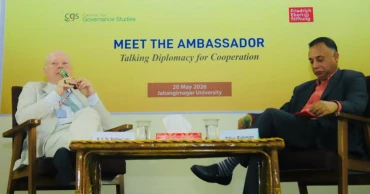
Germany keen to deepen collaboration with Bangladesh in strategic sectors
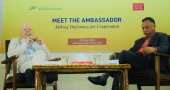
German Ambassador to Bangladesh Dr Rüdiger Lotz on Wednesday expressed Germany’s strong interest in expanding collaboration with Bangladesh in strategic sectors, including technology, skilled manpower, renewable energy, research and innovation-driven industries.
“Germany is currently one of Bangladesh’s largest export destinations and an important trade partner in Europe. Beyond the ready-made garment sector, there are significant opportunities to expand cooperation in technology, skilled human resources, renewable energy, research, and innovation-based industries,” he said.
The Ambassador made the remarks while speaking at the second session of the “Meet the Ambassador” series held at the Senate Hall of Jahangirnagar University.
The event organised by the Centre for Governance Studies (CGS), in collaboration with the Friedrich-Ebert-Stiftung (FES) Bangladesh, brought together diplomats, academics, political leaders, students, researchers, and media professionals.
Discussions focused on Bangladesh-Germany relations, academic cooperation, youth engagement, and areas of mutual interest.
Rüdiger Lotz further stated that the world is entering a multipolar international order, where dialogue and cooperation between states are becoming increasingly important. In this context, Bangladesh and Germany both value democratic principles, international cooperation, and dialogue-based engagement.
He emphasised that people-to-people contact, education, and skills development will further strengthen bilateral relations in the future.
Expressing his pleasure at visiting Jahangirnagar University, the Ambassador said the campus was highly inspiring and vibrant. He noted that today’s students will become the future leaders of Bangladesh – as diplomats, policymakers, researchers, and development professionals – and therefore must develop skills, knowledge, and a strong sense of responsibility.
He also highlighted Germany’s cooperation with Bangladesh in areas such as climate change mitigation, renewable energy, labour rights, skills development, technical training, and good governance. He added that Germany continues to provide humanitarian support in addressing the Rohingya crisis.
During the question-and-answer session, moderator CGS President Zillur Rahman raised key issues, including bilateral relations, trade, higher education, skills development, migration, climate change, and the Rohingya crisis.
Responding to a question on the future of Bangladesh-Germany relations, Rüdiger Lotz said there is significant potential for further strengthening ties. He noted that Germany is already playing an important role in trade, investment, skills development, climate cooperation, and higher education, and that future cooperation could expand further in technology transfer, industrial diversification, and human resource development.
On the issue of visa delays for Bangladeshi students applying for higher education in Germany, he explained that there is currently a large backlog of applications – around 60,000 cases under process.
The Ambassador noted that many applicants apply multiple times and that each application requires thorough verification of documents. In some cases, false or inaccurate documentation is also identified, requiring additional scrutiny and time-consuming evaluation.
He further stated that in some instances, students attempt to enter the labour market instead of pursuing studies, which also requires careful assessment by visa authorities. However, he expressed optimism that once the backlog is reduced, visa processing time will improve significantly.
Rüdiger Lotz reaffirmed Germany’s interest in welcoming more Bangladeshi students for higher education.
JU Vice Chancellor Prof Dr Md Kamrul Ahsan said initiatives like the “Meet the Ambassador” provide students with valuable opportunities to understand global politics, higher education, and international cooperation.
FES Bangladesh Resident Representative Dr Felix Gerdes emphasised that such dialogues help young people better understand global politics, diplomacy, and international relations.
15 days ago
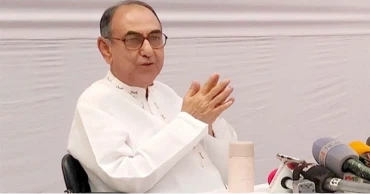
Mirza Abbas urges countrymen to pray for his early recovery
BNP Standing Committee Member Mirza Abbas on Wednesday said he is recovering gradually while undergoing treatment at a specialised hospital in Malaysia and sought prayers from the country’s people for his speedy recovery.
Speaking to journalists over an audio call from Malaysia in the afternoon, the senior BNP leader said he is still under treatment and receiving regular therapy.
“I am doing well. I am still under treatment and taking therapy,” he said when asked about his physical condition.
Requesting prayers from the country’s people, Mirza Abbas said, “Please ask the people of the country to pray for me. I seek prayers from everyone. I am grateful to Almighty Allah… He is great.”
In reply to a question about when he will return home, he said he will come back once he recovers fully. “I will return to the country as soon as I get better. I will inform everyone. I am still under treatment,” he added.
The BNP leader also said is now able to take food properly.
His wife Afroza Abbas, who was beside him during the conversation, said he has improved significantly and is now in better condition. “He is much better now. He is staying at the hospital and receiving regular therapy,” she said.
Mirza Abbas was admitted to Prince Court Medical Centre in Malaysia on April 14 for physiotherapy.
Earlier, on March 11, he suddenly fell unconscious during iftar and was admitted to Evercare Hospital in Dhaka’s Bashundhara area.
A medical team performed emergency brain surgery on him. Following the operation, he was flown to Singapore General Hospital by an air ambulance on March 15 for better treatment.
After nearly a month of intensive care in Singapore, doctors advised physiotherapy, leading to his admission at the specialised Prince Court Medical Centre in Malaysia.
15 days ago
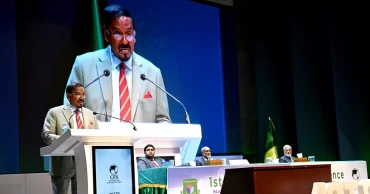
Security sans accountability can never ensure global stability: Speaker
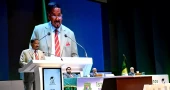
Speaker Hafiz Uddin Ahmad on Wednesday said security without accountability can never ensure global stability in the changing world order.
He also stressed the need for investing in developing new leadership in the face of the rapid expansion of technology.
“Such efforts will demonstrate responsibility towards building the nation’s future while strengthening people’s trust and confidence,” the Speaker said while addressing the closing session of a two-day international conference.
Australian Speaker Milton Dick meets Speaker Hafiz Uddin Ahmad
The Centre for Future Studies of Bangladesh University of Professionals organised the conference titled “National Security in South Asia in the Context of the New World Order”, focusing on redefining national security in South Asia, transactional multipolarity and regional cooperation, energy security, migration and refugees in South Asia, combating misinformation and disinformation, and regional cooperation in a changing world.
15 days ago
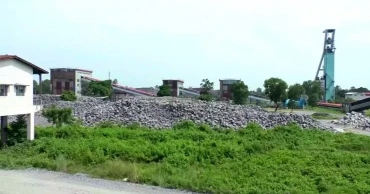
Stone extraction halted at Maddhapara mine amid ammonium nitrate shortage
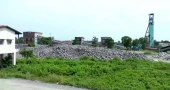
Stone extraction at Maddhapara Granite Mining Company Limited (MGMCL) in Parbatipur upazila of Dinajpur district has been suspended again due to a shortage of ammonium nitrate, anexplosive material used for breaking underground rock layers.
Contractor Company Germania Trench Consortium (GTC) stopped stone extraction from Tuesday due to the shortage.
Officials hope that the operations will resume in the first week of June after a fresh consignment of ammonium nitrate arrives from Thailand.
Managing Director of MGMCL, Engineer DM Zobaed Hossain, said ammonium nitrate is being imported from Thailand but global factors have caused delays in shipment.
Various types of explosives including ammonium nitrate are required to break rock layers inside the mine, he said.
The mine requires explosives worth Tk 5-6 crore annually all of which must be imported from abroad.
According to mine authorities, stone extraction at the mine had previously remained suspended because of explosive shortages for 22 days in 2014, two months in 2015, and seven days in 2018.
15 days ago