others

River ports asked to hoist cautionary signal No 1
River ports in some regions have been asked to hoist cautionary signal no 1 as a temporary west or northwesterly gusty or squally wind is likely to occur in many parts of the country, according to the special bulletin Bangladesh Meteorological Department (BMD).
“In association with rain or thunder showers temporary west or northwesterly gusty or squally wind speed 45-60 kph is likely to occur over the regions of Pabna, Bogura, Tangail, Mymensingh, Dhaka, Faridpur, Madaripur, Jashore, Kushtia, Khulna, Barishal, Patuakhali, Cumilla, Noakhali, Chattogram, Cox’s Bazar & Sylhet wherein river ports shall hoist cautionary signal No 1,” said a special bulletin of Met office.
The warning for Inland River ports to remain valid till 1 am on May 11, according to a bulletin.
25 days ago
Inclusive economy key to taking ‘Bangladesh story’ global: Khosru
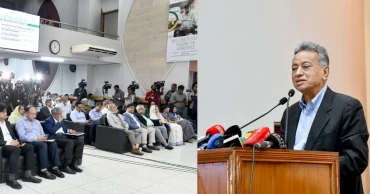
Finance Minister Amir Khosru Mahmud Chowdhury on Sunday said Bangladesh’s economy must become more participatory and inclusive so that every citizen can take part in economic activities, stressing that cooperation from all stakeholders is essential to take the ‘Bangladesh story’ to the global arena.
“Political democracy alone is not enough. We also want democratisation of the economy,” he said while addressing the inauguration of the second phase of the RAISE project titled “Stepping Forward” at the PKSF auditorium in the capital.
Financial Institutions Division Secretary Nazma Mobarek attended the event as special guest, while World Bank Acting Division Director for Bangladesh and Bhutan Dr Gayle Martin spoke as guest of honour. PKSF Chairman Zakir Ahmed Khan presided over the programme and PKSF Managing Director Md. Fazlul Kader delivered the welcome speech.
He said the government has introduced strict benchmarks for project approval to ensure transparency, accountability and proper use of public funds.
“We are now evaluating projects based on return on investment, employment generation and environmental considerations. If a project does not meet these standards, we will not undertake it,” he said.
Khosru said taxpayers’ money must be used carefully and people should know the rationale, expected outcomes and public benefits of every project.
Referring to the government’s broader economic philosophy, he said the administration is focusing more on social programmes and public welfare instead of mega projects.
He said many ordinary people had long remained outside economic participation due to “oligarchic and patronage-based economic practices”, while poverty continued to rise.
The minister said the government has introduced several people-oriented initiatives, including Family Cards, Farmers Cards and expanded healthcare programmes, to strengthen purchasing power, social protection and local economies.
Explaining the Family Card initiative, he said women who manage households often receive little recognition despite carrying the burden of family management.
Khosru said the government is also moving towards universal healthcare as out-of-pocket health expenditure in Bangladesh remains very high.
“We want to strengthen preventive and primary healthcare services, and this will be reflected in the upcoming budget through increased allocations to health, education and social sectors,” he added.
Highlighting the importance of utilising the country’s demographic dividend, he said the remaining window of opportunity must be fully harnessed through skill development, employment and entrepreneurship programmes.
The minister also underscored the importance of the “creative economy”, saying traditional artisans, cottage industries and cultural workers must be integrated into mainstream economic activities.
He said the government plans to provide artisans with financial support, design assistance, branding, marketing and access to international markets through digital platforms.
Referring to the “One Village, One Product” concept, he said villages specialising in products such as “Shital Pati” would receive loans, skill development training, branding support and online marketing opportunities to improve incomes and export potential.
Drawing examples from Thailand, he said coordinated government support for local producers can transform rural economies and create globally competitive products.
The minister also stressed the economic importance of culture, theatre, music and sports, saying these sectors should be recognised as part of the country’s creative industries and contributors to GDP.
“GDP is not only about manufacturing. Creative industries, sports economy and cultural activities also generate employment and economic value,” he said.
Khosru said the government is working under significant domestic and global pressures, including geopolitical tensions and economic challenges, but remains committed to its long-term vision.
“With cooperation from all, we want to present the story of Bangladesh before the world,” he said.
PKSF has launched the second phase of the RAISE skills development project aiming to provide skills training and financial support to an additional 200,000 youth and small entrepreneurs.
Under the project, jointly financed by the World Bank and PKSF, around 205,000 young people have already received training and loan support to enhance the capacity of informal sector entrepreneurs and create sustainable employment opportunities across the country.
Speakers at the event said a total of 423,100 people are expected to directly benefit from the project by 2030.
25 days ago
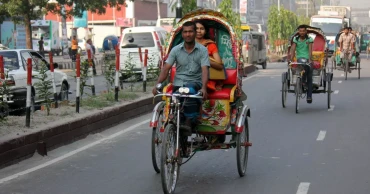
Autorickshaw pullers demand jobs if barred from roads
Battery-run autorickshaw pullers blocked the Dhaka-Aricha Highway in Savar on Saturday, demanding an end to alleged police harassment and extortion and calling for alternative employment if authorities bar them from operating on the roads.
“If the government does not allow us to drive auto-rickshaws, then it should also provide us with jobs so that we can support our families,” several protesters said during the demonstration.
Hundreds of drivers gathered at Pakija More around noon and parked their rickshaws across the highway, disrupting traffic for nearly two hours and causing long tailbacks on both sides of the busy route.
The protesters alleged that despite restrictions on three-wheelers on highways, many are forced to operate for their livelihoods and are regularly stopped by highway police, who allegedly compel them to pay Tk 2,600 without receipts.
Drivers said they often earn only Tk 600 to Tk 700 a day after working long hours in the heat and are forced to borrow money to secure the release of seized vehicles.
“We want relief from this harassment. If rickshaws are not allowed on the roads, then the factories producing them should also be shut down, or we should be given alternative employment,” one protester said.
The blockade caused severe traffic congestion from Savar Bazar bus stand to Genda and Hemayetpur, leaving passengers stranded in intense heat. Ambulances and emergency vehicles were also caught in the gridlock.
Around 1:45pm, the protesters withdrew the blockade after Savar Model Police Station Inspector (Operations) Helal Uddin assured them that the issue would be discussed with highway police authorities.
Responding to the allegations, Officer-in-Charge Sheikh Shahjahan of Savar Highway Police Station denied claims of extortion, saying police were enforcing existing laws that prohibit the movement of three-wheelers, CNG-run vehicles and e-bikes on highways.
He said the Tk 2,600 collected was part of the legal process for releasing seized vehicles, including a Tk 2,500 fine and a Tk 100 bank charge under Section 39 of the law.
26 days ago
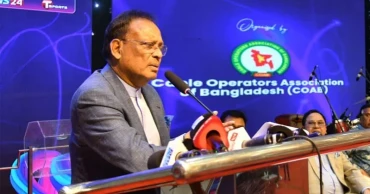
Govt to support cable operators to address their challenges: Minister
The government will continue to support cable operators, internet service providers (ISPs) and broadcasting-related institutions that play a significant role in creating employment and supporting the livelihoods of millions of people across the country, said Posts, Telecommunications and Information Technology, and Science and Technology Adviser Faqir Mahbub Anam.
He said ensuring the sustainability of this sector and modernising it in line with emerging technological developments remain important responsibilities of the government.
The adviser made the remarks while addressing the closing ceremony of the International Cable TV, Broadcasting and Communication (ICBC) Expo 2026 as the chief guest at the International Convention City Bashundhara on Saturday.
He said Bangladesh’s cable television, broadcasting and telecommunications sectors are entering a new era amid rapid technological transformation.
According to him, the expansion of smart technologies, fibre-optic networks, IPTV services and digital content management systems has turned the sector into a major driving force for national development, job creation and the country’s ICT-based economy.
Faqir Mahbub Anam said the government is giving top priority to infrastructure development, policy support, skilled human resource development and technological innovation to modernise the sector.
He acknowledged the long-standing contribution of cable operators in strengthening the country’s information and entertainment industry and assured continued government support.
The adviser also stressed the ethical use of technology, protection of customer data privacy and the need to ensure quality services.
He called for stronger international partnerships and encouraged the development of high-quality local content.
The three-day expo, which began on May 7, concluded on Saturday.
A total of 67 local and international companies showcased their latest cable television, broadcasting and communication technologies and services at the event.
The programme was chaired by ABM Saiful Hossain Sohel, President of the Cable Operators Association of Bangladesh (COAB). Among others present were Md. Shafiqul Islam Khan, Administrator of Dhaka North City Corporation; Md. Abdus Salam, Administrator of Dhaka South City Corporation; ATCO General Secretary and Chairman of Ekushey Television Abdus Salam; and COAB leaders and members, said PID handout.
Following the closing ceremony, the Minister visited various stalls at the expo.
26 days ago
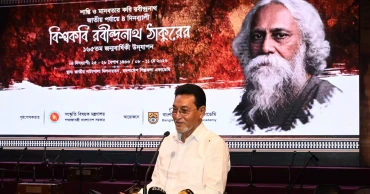
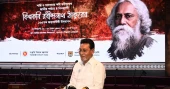
Tagore's poetry inspires freedom-loving Bangladeshis: Chief Whip
Chief Whip Md Nurul Islam on Saturday said the poetry of Nobel laureate Rabindranath Tagore has long served as a source of inspiration for the people of Bangladesh, including during their struggle against autocracy.
Speaking at a programme marking the 165th birth anniversary of Tagore at the National Theatre Hall of Bangladesh Shilpakala Academy in the capital, he said people of the country fought for 17 years, drawing strength from the poet’s words and ideals.
“The people of Bangladesh loved the hard truth and endured a long struggle. That struggle did not betray them; rather, it brought them a new dawn,” he said, quoting Tagore’s famous line: “Truth is hard, but I have loved the hard, and it never deceives.”
The four-day event has been organised by Bangladesh Shilpakala Academy with support from the Ministry of Cultural Affairs.
Nurul Islam said Tagore’s writings remain deeply relevant to Bangladesh’s national life and social movements.
Referring to Tagore’s poem “Ore Nobin, Ore Amar Kancha”, he said the poet always believed in the power of youth to break social stagnation and lead society forward.
“During our Liberation War too, Tagore’s poems and songs inspired our people,” he added.
The Chief Whip described Tagore as a versatile literary figure who enriched Bengali literature, music and culture through poetry, songs, novels and acting.
He said Rabindra Sangeet carries a unique appeal that remains closely linked to the growth of Bengali language, culture and education.
Calling on the younger generation to read Tagore’s works, he urged them to contribute to building a culturally enriched and progressive Bangladesh.
He also expressed concern over the growing influence of “distorted and foreign cultures” and stressed the need to create a society free from drugs, evil forces and autocracy.
At the beginning of the programme, the Chief Whip was presented with a commemorative crest and honoured with a traditional shawl.
Among others, Director General of Bangladesh Shilpakala Academy Rezauddin Stalin, officials of the Ministry of Cultural Affairs and media personnel were present at the event.
26 days ago
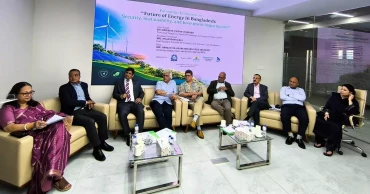
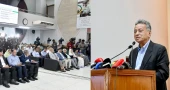
Energy crisis threatens industrial survival; experts call for a radical shift to solar and LNG
Speakers at a discussion on Saturday emphasized an urgent shift toward imported Liquefied Natural Gas (LNG), solar power, and energy-efficient technologies to sustain industries and employment as domestic gas production declines by 100 MMCF per year.
They made the remarks at a roundtable discussion titled ‘The Future of Energy in Bangladesh,’ organized by Bangladesh Chamber of Industries (BCI) on Saturday (May 9) at its Motijheel office. The event was held in collaboration with Bangladesh Sustainable and Renewable Energy Association (BSREA) and the Greentech Foundation.
“The era of cheap labor and inexpensive gas, once the primary drivers of Bangladesh’s industrial growth, has come to an end. With domestic gas production declining at a rate of 100 MMCF (million cubic feet) per year, an urgent shift toward imported LNG, solar power, and energy-efficient technologies is needed,” they opined.
Speaking as the chief guest, Dr. Hossain Zillur Rahman, Executive Chairman of the Power and Participation Research Centre (PPRC) and former advisor to the caretaker government, emphasized the need to move beyond traditional thinking to ensure energy security.
"We must embrace innovative ideas, particularly land-based FSRUs (Floating Storage and Regasification Units) and the use of energy-efficient machinery," Dr. Rahman said.
He further identified a lack of coordination as a major hurdle and proposed the formation of a Public-Private Partnership (PPP) Monitoring Cell to observe and manage the energy situation effectively.
BCI President Anwar-ul Alam Chowdhury Parvez highlighted that since 2022, the advantage of low-cost energy has vanished. He stressed that energy remains the most critical factor for maintaining industrial operations and creating jobs.
"Neither the businesses nor the government wants industries to shut down," Parvez noted.
He urged stakeholders to present specific technical proposals to the government to find a sustainable path out of the current crisis.
The keynote paper was presented by Shafiqul Alam, Lead Analyst at the Institute for Energy Economics. The discussion also featured insights from:
David Hasanat, President of the Bangladesh Independent Power Producers Association (BIPPA), Enamul Haque Khan, Senior Vice President of the Bangladesh Garment Manufacturers and Exporters Association (BGMEA), Mostafa Al Mahmud, President of BSREA, among others, spoke in the event.
The speakers collectively agreed that a collaborative approach between the government and the private sector is essential to implement sustainable energy solutions and protect the nation's economic backbone.
26 days ago
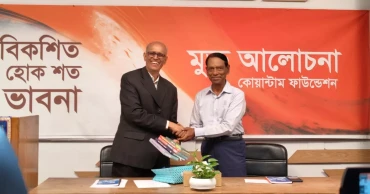
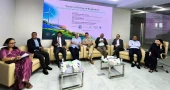
Speakers highlight Salim Ali’s enduring legacy in bird conservation, scientific research
Speakers at a discussion organised by Quantum Foundation on Friday highlighted the extraordinary life, scientific contributions and enduring legacy of renowned ornithologist Dr Salim Ali, widely known as the “Birdman of India.”
The event, titled “Renowned Ornithologist of the Subcontinent Dr Salim Ali: Life and Works,” featured reflections from wildlife researchers, conservationists and bird experts on the life and influence of the legendary naturalist.
Among the speakers were Prof Dr Md Anwarul Islam, wildlife and biodiversity researcher, former professor of Dhaka University and Jahangirnagar University, and Chief Executive Officer of WildTeam, and Enam Ul Haque, adventurer, bird researcher, writer, founder of Bangladesh Bird Club and chairman of WildTeam.
Prof Anwarul Islam described Dr Salim Ali as a towering figure in ornithology whose influence shaped generations of bird researchers across South Asia.
He recalled his long-held dream of meeting Dr Ali and shared how he narrowly missed seeing him during the ornithologist’s visit to Bangladesh in 1980 due to an overwhelming crowd.
Later, through his teacher Dr Ali Reza Khan—the first Bangladeshi student of Dr Salim Ali—he got the opportunity to work directly under the legendary ornithologist.
Prof Anwar recounted his journey by train to meet Dr Ali, saying a three-hour delay had felt like “agony” because of his eagerness to meet the scientist.
Upon arrival, Dr Ali assigned him to study specific bird species in the Himalayas and South India and instructed him to conduct detailed observations of bird behaviour throughout the day.
“He told me to spend one hour and one minute observing birds carefully, noting where they stayed in the morning, noon and evening,” he said.
Following those instructions, Prof Anwar said he spent countless hours in forests and natural habitats, often under harsh conditions, building makeshift hides to observe birds closely.
He documented nesting behaviour, feeding patterns and roosting habits, describing the experience as a transformative period that deepened his connection with nature and scientific research.
He also recalled how Dr Ali insisted on strict discipline, requiring reports to be submitted by the seventh day of every month and refusing to tolerate delays.
26 days ago

UPDF member shot dead in Sajek
A member of the United People's Democratic Front (UPDF of Prasit Bikash Khisa) was shot dead by unidentified armed men in the remote Shuknachhara area of Sajek Union in Baghaichhari upazila of Rangamati early Saturday.
The deceased was identified as Hegera Chakma 50.
According to local sources, the incident took place around 6:50 am on the Marishya-Dighinala road when several armed men opened fire on him. He died on the spot.
Locals said Hegera was known as a collector for the UPDF-Prasit group in the area.
Superintendent of Police Muhammad Abdur Rakib said police and army personnel were heading to the spot and details would be known after they reached the remote area.
In protest against the killing, the UPDF-Prasit group announced a half-day road blockade on the Dighinala-Sajek-Baghaichhari road on Monday.
The programme was announced at a protest rally at Ujo Bazar in Sajek on Saturday noon, where leaders demanded immediate arrest and punishment of those responsible.
26 days ago
Body of Rajbari’s Murad returned home after 15 days following Saudi road accident
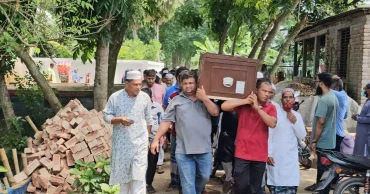
The body of Bangladeshi worker Murad Sheikh, 34, who was killed in a road accident in Jubail area of Dammam city in Saudi Arabia, arrived in the country on Saturday morning, 15 days after his death.
The body reached his village home at Daraper Dangi in Uzanchar union of Goalanda upazila in Rajbari around 9:15am.
Earlier, the flight carrying his body landed at Hazrat Shahjalal International Airport at around 4:30am. His elder brother Golam Mostafa received the body at the airport around 6:00am and later departed for the village home.
The funeral prayer was held at Dudukhankandi Hafizia Madrasa field at 11:00am, after which he was buried at a local graveyard.
According to family sources, Murad died on April 23 at around 4:30pm while returning from work. His microbus had broken down in the Jubail area of Dammam, and he was hit by a speeding vehicle while attempting to cross the road. He died on the spot.
His body was later kept at the morgue of a general hospital in Dammam.
Murad, son of Abdul Khaleq of Daraper Dangi village, had gone to Saudi Arabia about 14 months ago in search of better livelihood opportunities.
His wife Anjuara Khatun, said Murad had planned to return home soon after completing his work permit process. “He used to say our younger daughter is like my mother, take care of him,” she said in tears.
Murad is survived by his wife, a 10-month-old son and two daughters aged 13 and 6. Relatives said the children have now become orphaned.
Murad’s younger brother Kausar Hossain, a Kuwait expatriate, said Murad had previously worked locally in a private organisation but went to Saudi Arabia through his brother-in-law due to financial hardship. He added that the employer did not provide any assistance after his death.
Murad’s elder brother Golam Mostafa said the family has lost its sole earning member. “If government or private assistance is provided, it would help ensure the future of his three children,” he added.
26 days ago
Govt determined to reopen closed state-owned sugar mills: Muktadir
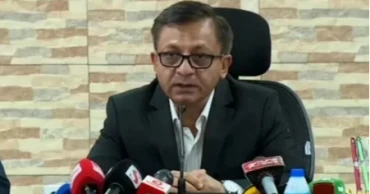
Industries and Commerce Minister Khandakar Abdul Muktadir on Saturday said the current government is determined to reopen the closed state-owned sugar mills.
“But in this (reopening) process, decisions will be made with utmost importance to the factors – the interests of sugarcane farmers and workers, and the long-term profitable operation of the mills,” he said.
The minister made the remarks while addressing a view-exchange meeting with sugarcane farmers, arranged by Panchagarh Sugar Mills Limited in Panchagarh, said a PID handout.
He said the mills are assets of the people of Bangladesh. "So, it is the responsibility of the government to ensure effective operation of the mills," he said.
“We want closed industrial mills and factories to return to production, create jobs, and bring new momentum to the local economy,” Muktadir added.
He said several sugar mills are now out of production, while many operational ones are facing various limitations.
The minister pointed out that most of these mills are 50 to 70 years old, making effective revival difficult without modernisation, renovation, and the integration of new technology.
He said some sugar mills would need to be restarted by installing new machinery, others require structural reforms, and even in the case of some mills, alternative plans must be considered.
“However, in all cases, the interests of sugarcane farmers, employment for workers, and profitable management will be ensured,” Muktadir said.
He said the reopening of the closed mills is crucial for the country’s overall economic activity and poverty reduction.
Panchagarh Sugar Mills Limited was established between 1966 and 1969 with a daily crushing capacity of 1,016 metric tons. It had gone into final production in the 1969-70 fiscal year and currently operates under the BSFIC.
Barrister Nawshad Zamir, MP for Panchagarh-1, and Industries Secretary Obaidur Rahman also spoke at the event presided over by Chairman of the Bangladesh Sugar and Food Industries Corporation (BSFIC) Jahangir Alam.
26 days ago