others

Police Week begins Sunday
Police Week 2026 will begin on Sunday under the theme, “Amar Police, Amar Desh, Sobar Age Bangladesh.”
The annual event will be held from May 10 to 13, with the opening ceremony featuring the annual police parade at the Rajarbagh Police Lines in the capital.
Prime Minister Tarique Rahman will inspect the parade, receive the salute and deliver a speech to members of the force.
On the occasion, President Mohammed Shahabuddin, Prime Minister Tarique Rahman, Home Minister Salahuddin Ahmed, Senior Secretary of the Ministry of Home Affairs Manjur Morshed Chowdhury and Inspector General of Police (IGP) Md Ali Hossain Fakir issued separate messages.
In his message, the President said the country's stability, good governance and development largely depend on the integrity, professionalism and discipline of the police force.
He said police members must be equipped with advanced technologies, including artificial intelligence, data analytics, CCTV surveillance and digital forensics, to tackle increasingly complex crimes such as cybercrime, financial fraud, militancy, drug trafficking and human trafficking.
In his message, the Prime Minister said restoring public confidence in the police and improving the law-and-order situation are among the government's top priorities.
He said police must play a more effective role in preventing mob violence, juvenile gangs and the spread of narcotics.
The Home Minister said every police member should become a symbol of service and trust and ensure that victims receive proper legal support, while innocent people are not harassed.
The Senior Secretary said Bangladesh Police has been playing a commendable role with dedication, professionalism and sacrifice in maintaining law and order and ensuring public safety.
The IGP said the force is committed to making policing more people-friendly, dynamic and accountable through increased technological capacity and modernisation.
The annual parade will be led by Deputy Commissioner of the Dhaka Metropolitan Police Hasan Mohammad Naser Rikabdar.
At the ceremony, Bangladesh Police Medal (BPM), President Police Medal (PPM), BPM-Service and PPM-Service will be awarded to police personnel in recognition of gallantry, bravery, professionalism and distinguished service in 2025. The Prime Minister will hand over the medals.
Ministers, lawmakers, diplomats, senior police officials, metropolitan police commissioners, range deputy inspectors general and district superintendents of police will attend the parade.
Other key events during the week include the Prime Minister's visit to the stall of the Bangladesh Police Women Welfare Association, welfare parade, IG's Badge, shield parade, awards for arms and drug seizures and conferences with police officers.
During the working sessions, police officials will review activities of the past year and set priorities for the coming year.
Police Week 2026 will conclude on May 13.
26 days ago
Speakers call for rail connectivity, private sector role in port management
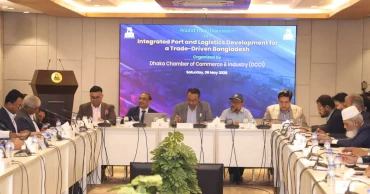
Industry leaders, policymakers and development partners on Saturday stressed the urgent need for structural reforms, railway-port connectivity and private sector involvement in port operations to overhaul Bangladesh's costly and fragmented logistics system.
The call came at a roundtable titled ‘Integrated Port and Logistics Development for a Trade-Driven Bangladesh,’ organised by the Dhaka Chamber of Commerce and Industry (DCCI) at its auditorium in the capital.
In his welcome address, DCCI Senior Vice President Razeev H Chowdhury said Bangladesh's export competitiveness is being severely undermined by infrastructural bottlenecks and poor institutional coordination in the logistics sector, leaving the country behind its regional rivals.
He pointed to lengthy cargo clearance procedures at ports, slow road and rail freight movement, and inadequate cold-chain infrastructure as key drivers of supply chain inefficiency.
He called for paperless automated port systems, PPP-based infrastructure investment and expanded cold-chain capacity to attract both local and foreign investment.
Md. Salim Ullah, Director General of Bangladesh Institute of Management (BIM), who attended as special guest, said the country remains significantly behind in integrated port and logistics management, with the gap continuously pushing up the cost of doing business.
He urged coordinated action among all stakeholders to accelerate sector development.
Md Habibur Rahman, Additional Secretary and former Member (Admin and Planning) of the Chittagong Port Authority, said there is little room left to expand the Dhaka-Chattogram highway and that railway connectivity is the only sustainable long-term solution.
He proposed dedicated rail links to ports for faster, lower-cost cargo movement and recommended allowing the private sector to operate at least one seaport, a move he said would inject competition into a government-dominated sector, raise service standards and potentially bring down tariffs.
Md. Shamsul Hoque, Professor of Civil Engineering at BUET, said development planning in Bangladesh often lacks practical grounding, preventing projects from delivering expected outcomes.
He stressed that communication infrastructure must be integrated rather than built in silos and called for deeper structural reforms within government institutions.
SK Masadul Alam Masud, Managing Director of Shahariar Steel Mills Ltd., flagged the absence of scanning equipment at Pangaon Port as a deterrent for entrepreneurs and said inadequate inland waterway infrastructure is driving up industrial transportation costs.
Nusrat Nahid Babi, Senior Transport Specialist at the World Bank Bangladesh, said customs clearance in Bangladesh has yet to be fully modernised, with digital systems remaining largely unimplemented at land ports, prolonging clearance times and increasing business costs.
Humayun Kabir, Senior Project Officer (Transport) at the Asian Development Bank, said ADB is currently developing the Dhirashram Inland Container Depot and a multimodal logistics hub.
He also underscored the importance of end-to-end digitisation and automation across logistics services.
DCCI Vice President Md. Salem Sulaiman, members of the DCCI Board of Directors and representatives from government and the private sector also attended the event.
26 days ago

Food safety needs coordinated govt-private efforts: State Minister Tuku
Fisheries and Livestock State Minister Sultan Salauddin Tuku on Saturday stressed the need for building social awareness at every level to ensuring food safety, saying the uncontrolled use of harmful substances and antibiotics in food poses a severe threat to public health.
“Coordinated efforts from both government and private organisations are essential to protect public health and ensure a sustainable food system,” the state minister said at the 8th National Scientific Conference on ‘Food Safety and Health’, organised by the Bangladesh Society for Safe Food (BSSF) in a city hotel.
Themed ‘Ensuring Safe Food for a Sustainable Future’, the conference brought together researchers, scientists, and food safety experts from universities and institutions across the country.
Highlighting the critical role of research, Tuku urged scientists to step up work on preserving biodiversity and natural resources. “Bangladesh was once known as the land of ‘Maach-e-Bhate Bangali’. We must take effective measures to boost fish production and protect aquatic biodiversity.”
Acknowledging the scale of the challenge, he said feeding a large population safely remains difficult but the government under Prime Minister Tarique Rahman is working to ensure a nutritious and sustainable food system for future generations.
The state minister also raised concern over the drug menace, describing it as a major social crisis and called on families, communities, and the state to act together to protect the youth.
BSSF President Professor Dr Md. Khaled Hossain presided over the conference.
Director General of the Department of Livestock Services Md. Shahzaman Khan and Bangladesh Food Safety Authority Chairman (Additional Charge) Md Anwarul Islam Sarkar attended as special guests. Bangladesh Poultry Industries Central Council (BPICC) President Moshiur Rahman was the guest of honour.
Dr Md Monirul Islam, former Member Director (Fisheries) of the Bangladesh Agricultural Research Council, presented the keynote paper.
26 days ago

Canal re-excavation must be integrated into spatial planning framework: BIP
Bangladesh Institute of Planners (BIP) on Saturday urged the government to treat the ongoing canal re-excavation programme not merely as a dredging exercise but as a core component of integrated spatial planning, water governance and climate adaptation.
The institute presented its position paper titled “Canal Re-excavation Programme: In the Context of Water Management, Climate Adaptation and Spatial Planning.”
Canal re-excavation is a necessary beginning, but to achieve lasting results, it must be linked to land use control, natural drainage preservation, waste management, climate adaptation, biodiversity conservation and long-term maintenance, BIP said in the paper.
Govt targets 20,000km canal excavation in five years: Anee
BIP cited research indicating that Dhaka's rapid urbanisation and encroachment on natural waterways has severely weakened the city's drainage capacity.
A 2023 study warned that continued damage to canals and natural drainage corridors could nearly double flood-affected areas in parts of Dhaka by 2042, raising them from 4.05 percent to 8.47 percent.
The institute said re-excavation would restore water flow and reduce waterlogging in some areas but warned that without assured connectivity between drains, canals and rivers, and without regular desiltation, excavated canals risk becoming clogged again within a short period.
BIP drew attention to findings from a 2024 study showing that Dhaka lost approximately 69 percent of its wetlands between 1990 and 2020. During the same period, land surface temperatures rose by between 3.44°C and 9.35°C, most sharply in areas where wetlands had disappeared fastest.
Without protective measures, the study projected that between 74 and 90 percent of Dhaka's remaining wetlands could be lost by 2050.
BIP called for wetland conservation zones, ecological buffer strips along canal banks, prohibition of illegal structures and mandatory blue-green network requirements in urban planning regulations.
Citing an ActionAid Bangladesh initiative in Badokhali Beel in Barguna, BIP noted that community-led re-excavation of a three-kilometre canal restored natural water flow, increased crop and vegetable production, and helped farmers and fishermen recover their livelihoods, demonstrating that participatory implementation yields more sustainable results.
In the drought-prone Barind region of northwest Bangladesh, BIP referenced a research, showing that re-excavated canals, ponds and wetlands could support Managed Aquifer Recharge, a method of directing surplus rainwater or treated wastewater into the ground to replenish depleted underground aquifers.
BIP warned that re-excavation without simultaneous action on pollution would be self-defeating.
Uncontrolled solid waste, domestic sewage and industrial effluent discharge would rapidly degrade water quality in restored canals, triggering eutrophication, a process where excess nutrients cause unchecked algal growth, depleting oxygen and killing aquatic life.
The institute said re-excavation must be accompanied by functional sewage treatment plants, effluent treatment plants, solid waste collection systems and strict enforcement against direct discharge into waterways.
BIP identified five structural weaknesses undermining current efforts: the absence of a coordinated national water body plan; recurring re-encroachment after excavation; unclear long-term maintenance funding and accountability; weak coordination among water development, local government, urban development, environment, agriculture, fisheries and planning agencies; and inadequate linkage between re-excavation programmes and frameworks such as the Bangladesh Delta Plan 2100 and the National Adaptation Plan 2023–2050.
“Unless these limitations are addressed, the canal re-excavation programme will generate short-term public optimism but will not deliver the results the country needs,” BIP cautioned.
BIP put forward an eleven-point recommendation calling for: a national water resource plan mapping all rivers, canals, beels, wetlands and drainage corridors; river-basin-based planning integrating upstream-downstream and urban-rural linkages; GIS, remote sensing and LiDAR-based digital monitoring; mandatory alignment with the Bangladesh Delta Plan 2100 and NAP 2023–2050; parallel rollout of sewage and waste management infrastructure; environmental impact assessments and soil quality testing for all projects; ecological buffer zones and biodiversity corridors along canal banks; community-based management involving farmers, fishers and local residents; designated maintenance funding and citizen reporting systems; professional planners' involvement in technical oversight; and strict enforcement against re-encroachment.
BIP said it stands ready to provide technical assistance, policy advisory support, spatial planning frameworks, GIS and remote sensing-based analysis, stakeholder consultation and monitoring framework development.
Water management is not merely an engineering matter, it encompasses land use, environment, society, economics, livelihoods and administrative coordination,” the institute said.
It called on the government to reframe the canal re-excavation programme as a broader national initiative for waterway restoration and spatial planning.
26 days ago


Mortal remains of Bangladeshi student Brishti arrive in Dhaka from US
The mortal remains of Nahida Sultana Brishti, one of the two Bangladeshi doctoral students at the University of South Florida who were murdered in the United States, have been brought home.
A flight of Emirates Airlines carrying the mortal remains of Birsti arrived at Hazrat Shahjalal International Airport in Dhaka around 9:10 am.
Family members including her parents were present at the airport.
Murdered in US: Flight carrying Bristy’s body leaves Florida for home
Foreign Secretary Asad Alam Siam, who was also present at the airport, told reporters that the government is working to ensure a fair investigation and proper justice in connection with the killing of the students.
26 days ago

Man beaten to death in Chuadanga over financial dispute
A 55-year-old man was beaten to death in an attack over a financial dispute at Shankarchandra in Sadar upazila of Chuadanga district on Friday.
The deceased was identified as Alim Uddin, son of Jharu Mondal of Shankarchandra village.
Quoting the victim’s brother Kalu Mondal, Mizanur Rahman, officer-in-charge of Sadar Police Station, said that Arif, son of Liaquat Ali from the same village, had borrowed Tk 14.17 lakh from Zia, son of Golam Rasul, for business purposes.
Although he had repeatedly promised to repay the money over a long period, the payment was not made. Several local arbitration meetings had been held over the issue.
A fresh arbitration meeting was arranged on Friday night in front of the residence of Shankarchandra Union Parishad Chairman Mahiul Alam Sujon around 8 pm.
Zia, his uncle Alim Uddin and several others were sitting there when Liaquat Ali, his son Alamin and Arif’s son Arafat arrived at the scene.
They allegedly beat Alim Uddin mercilessly, leaving him critically injured. He was taken to a local hospital where doctors declared him dead.
A tense situation has been prevailing in the area following the incident.
On information, police rushed to the spot and brought the situation under control.
Police also arrested Liaquat Ali in connection with the incident.
27 days ago
Dhaka's air 5th worst in the world this morning
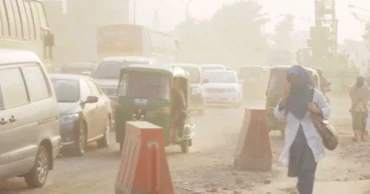
Dhaka, the overcrowded capital city of Bangladesh, has ranked fifth on the list of cities with the worst air quality with an AQI index of 151 at 09:20 am on Saturday.
Dhaka’s air was classified as 'unhealthy', according to the air quality and pollution city ranking.
Indonesia’s Jakarta, Pakistan’s Lahore, India's Delhi and Kyrgyzstan’s Bishkek occupied the first four spots in the list, with AQI scores of 188, 179, 163 and 153, respectively.
An AQI between 151 and 200 is considered 'unhealthy' while 201-300 is 'very unhealthy' and 301-400 is considered 'hazardous', posing severe health risks to residents.
The AQI, an index for reporting daily air quality, informs people how clean or polluted the air of a certain city is and what associated health effects might be a concern for them.
The AQI in Bangladesh is based on five pollutants: particulate matter (PM10 and PM2.5), NO2, CO, SO2, and ozone.
Dhaka has long been grappling with air pollution issues. Its air quality usually turns unhealthy in winter and improves during the monsoon.
27 days ago
Bangladesh prisons to generate own electricity under solar power project
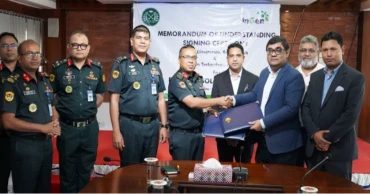
Aiming to generate an estimated 15 to 18 megawatts of electricity through solar panels installed on the rooftops of existing prison buildings across Bangladesh, a contract was signed between the Prison Directorate and InGen Technology Limited on May 5, 2026, under the government’s net metering policy using the OPEX (operational expenditure) model.
Under the agreement, electricity generated from the solar panels will be supplied to the national transmission grid through the net metering system, while also meeting the internal power demand of the prisons.
Any surplus electricity will be fed into the national grid, which is expected to ensure financial savings in the prison sector as well as for the government.
Officials said the initiative has been accelerated in line with the government’s recent directives on renewable energy production.
The project involves no investment from the government or prison authorities, as it is being implemented entirely through private sector investment.
Authorities said such multi-dimensional initiatives will continue with the aim of transforming prisons into production-oriented institutions.
27 days ago
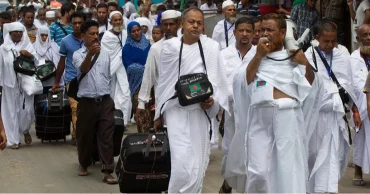
Govt urges Bangladeshi pilgrims to obtain Hajj permits via official channels
The government has urged Bangladeshi pilgrims to obtain Hajj permits only through official channels.
The call came after Saudi Arabia’s Ministry of Hajj and Umrah advised pilgrims to secure Hajj permits through officially approved procedures and comply with all Hajj-related rules and instructions to ensure smooth service delivery, according to a PID handout issued on Friday.
The Saudi ministry said the Hajj visa is the only valid visa that allows a person to perform Hajj.
It also said the permit process must be completed through official channels in line with approved procedures to ensure an organised journey from arrival to completion of the rituals.
According to the ministry, compliance with permit requirements enables pilgrims to fully benefit from services provided at the holy sites and strengthens safety through an integrated system for crowd management and organised movement.
It also warned pilgrims against dealing with unofficial channels or fake offers promising unauthorised permits or visas.
Such activities may prevent pilgrims from performing Hajj rituals and could expose them to legal action, it said.
The ministry stressed that obtaining Hajj permits through official channels helps ensure a smooth pilgrimage experience and guarantees access to services in a safe and organised environment.
27 days ago