others
Misinformation is not free speech: Deputy Speaker
Deputy Speaker Barrister Kayser Kamal on Wednesday said freedom of expression is recognised as a fundamental right in the Constitution, but spreading misinformation through social media to create social disorder cannot be considered part of that right.
He stressed the need for greater awareness and engagement among lawmakers and stakeholders on the issue.
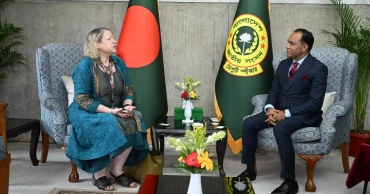
The remarks came when a delegation of the UNESCO, led by its Head of Office and Representative to Bangladesh Dr Susan Vize, paid a courtesy call on him at his Jatiya Sangsad Bhaban office.
Kayser Kamal said UNESCO’s activities in education, culture and information technology are benefiting children and the wider community.
He also underscored the importance of raising public awareness about laws related to cybercrime and cybersecurity.
During the meeting, UNESCO representatives expressed interest in working jointly to strengthen media and information literacy, promote professional standards in journalism and enhance citizens’ access to information.
The two sides also discussed several bilateral issues, including education, information technology, artificial intelligence and cybersecurity.
29 days ago

BGB asked to stay alert to possible push-ins from India: Salahuddin
Home Minister Salahuddin Ahmed on Wednesday said Border Guard Bangladesh (BGB) has been instructed to remain vigilant along borders to prevent any possible push-ins from India following the BJP’s victory in the West Bengal Assembly polls.
He made the remarks while talking to reporters after the third session on the fourth and final day of the Deputy Commissioners’ Conference at the Osmani Memorial Auditorium in the capital.
Replying to a question on whether push-ins of Muslims into Bangladesh might increase following the BJP’s win in West Bengal, the minister said the government has already taken precautionary measures.
“We have instructed the BGB to stay alert along borders. Although we do not see such a possibility, we have taken precautions in advance so that we can address the situation if it arises,” he said.
Asked about directives to the Deputy Commissioners on maintaining law and order, Salahuddin Ahmed said it is part of their routine responsibilities.
“Maintaining law and order is one of their primary duties. The police, district administration and judiciary work in coordination in this regard. It is not about specific directives, but about ensuring effective cooperation within themselves,” he said.
The minister also said the ongoing drives against drugs and illegal weapons will continue maintaining a zero-tolerance policy.
“Drugs and online gambling are serious threats. If these cannot be controlled, social stability will be undermined,” he said.
On online gambling apps, Salahuddin Ahmed said relevant agencies, including Bangladesh Bank and the Criminal Investigation Department (CID) of police, are taking action.
“As we move further into a technology-driven world, the nature of crime is evolving. We are planning to enact necessary laws to address these challenges. A committee has already been formed,” he said.
The minister added that authorities are trying to block illegal websites and platforms as much as possible. “Online gambling, drugs and related crimes are now among our top priorities, and we are determined to curb them,” he said.
29 days ago

ToguMogu to host two-day Mother’s Day festival in Dhaka
ToguMogu, the country’s first parenting app, will organise a two-day special event in the capital on the occasion of Mother’s Day.
The event will be held on May 8 and 9 at the ToguMogu Parenting Hub on Sonargaon Janpath Road in Uttara Sector 12.
The family-focused festival will offer a range of entertainment and learning activities for both children and parents.
The programme will include puppet shows, magic performances, interactive stage events, craft sessions and children’s performances.
In addition, expert-led sessions on parenting and early childhood development will be held during the two days. Live music performances will take place every evening, adding a festive atmosphere.
ToguMogu CEO Dr Nazmul Arefin said mothers play an immense role in raising children, adding that the initiative aims to honour their sacrifice and love on Mother’s Day.
He added that such events can help promote positive parenting practices in urban life and contribute to stronger family bonds and greater community engagement.
The festival will be open to all, and families have been invited to participate.
29 days ago

Trade deals alone won't save Bangladesh after LDC without reforms: SANEM
As Bangladesh is entering one of the most consequential economic transitions in its post-independence history, a major new policy study warns that the country's trade policy apparatus is not yet equipped to handle what lies ahead.
The paper titled “Strengthening Trade Competitiveness: Bangladesh's Strategy for Effective FTAs and EPAs”, authored by Prof Selim Raihan of Dhaka University and Executive Director of the South Asian Network on Economic Modeling (SANEM), was published recently under a joint SANEM and Australian High Commission policy paper series.
Using the Global Trade Analysis Project (GTAP) general equilibrium model, it simulates 10 distinct trade scenarios to measure the actual impact on Bangladesh's welfare, GDP, exports, and industrial structure under different policy choices.
Bangladesh's graduation from Least Developed Country (LDC) status, formally scheduled for 2026, has long been framed as a development milestone. The paper acknowledges that reality but immediately pivots to the risks it carries.
Bangladesh’s structural advantage of preferential market access, particularly the European Union's Everything But Arms (EBA) initiative, is now eroding as the recently concluded India-EU free trade agreement, the paper warns, will narrow Bangladesh's historical margin sharply, if not eliminate it altogether.
Bangladeshi exports will face standard tariff regimes when the EU and UK transition periods for Bangladesh's LDC preferences expire by 2029, unless new arrangements are secured.
The GTAP model quantifies the cost of inaction. In the post-LDC baseline scenario, where Bangladesh graduates with no compensating trade agreements, welfare falls by 2.4 percent of GDP, real GDP contracts by 1.5 percent, and exports shrink by 8.7 percent.
The sharpest blow lands on textiles and clothing, which contracts by nearly 8 percent. The paper calls this the "cliff-edge" effect.
"Trade agreements can support growth," the paper states, "but domestic reforms are the primary driver of sustained and inclusive welfare gains."
Japan EPAThe paper gives particular attention to the Economic Partnership Agreement (EPA) signed with Japan in February, Bangladesh's most comprehensive bilateral trade deal to date, and its first substantive preferential agreement beyond a limited arrangement with Bhutan inked in 2020.
The model projects the Japan EPA will deliver a welfare gain of 0.7 percent of GDP, a GDP rise of 0.8 percent, and export growth of 3.0 percent. The paper characterises these as "reliable and broad-based", the kind of stable, manageable adjustment appropriate for a country in transition.
But it cautions against complacency. The agreement covers over 7,000 tariff lines and extends into services, investment, intellectual property, labour standards, and regulatory cooperation.
The paper said customs systems must be modernised, rules of origin compliance strengthened, and quality and hygiene standards met for Japanese import approval. Without institutional upgrading, preferential access will remain largely theoretical.
"The Japan EPA is both an opportunity and a test," the paper states. "It imposes a need for preparedness that goes beyond the normal trade policy agenda."
China and RCEP
The two scenarios generating the largest export figures – a China FTA and RCEP accession – come with a prominent structural warning that the paper treats as among its most important findings.
In both cases, the textiles and clothing sector booms dramatically, up 10.99 percent under a China FTA and 13.36 percent under RCEP accession. But light manufacturing contracts by approximately 9 to 10 percent and heavy manufacturing by 8 to 10 percent in both scenarios.
The paper described this as "a classic case of specialisation driven by comparative advantage, but in a potentially unbalanced way."
Pursuing these deals risks deepening Bangladesh's dependence on garments while hollowing out broader industrial capacity through import competition from stronger regional partners, it said.
"This is a critical cautionary point," the paper notes. "The rise in exports is significant, but this structural result may not be so positive if it means over-relying on one sector and the erosion of industrial diversity."
The paper also flags an important modelling caveat: both scenarios assume full tariff liberalisation, whereas real-world RCEP commitments involve phased reductions, sensitive lists, and varying degrees of openness. Actual gains would be lower and more gradual, as would adjustment costs.
India FTA and The US FrameworkThe India FTA scenario reveals a pattern the paper considers diagnostically important. Exports rise by 5.7 percent, a solid headline figure, but welfare gains amount to only 0.2 percent of GDP and GDP growth just 0.3 percent.
The paper attributes this divergence to the fact that India already grants duty-free or near-duty-free access to a large share of Bangladeshi exports.
The incremental tariff benefit of a formal FTA is therefore limited. Meanwhile, import competition from India, particularly in light manufacturing, which contracts by 4.06 percent under this scenario, erodes gains elsewhere.
"The India FTA seems to solidify Bangladesh's comparative advantage in garments, but at the expense of undermining other sectors of industry," the paper concludes.
It evaluates the emerging bilateral trade framework with the United States (US) with notable candour. The arrangement under discussion offers selective tariff relief rather than comprehensive liberalisation, including conditions such as zero-tariff access on US imports, procurement commitments for American aircraft and energy products, and regulatory alignment in certain sectors.
The paper identifies a potential imbalance between the obligations Bangladesh would assume and the export gains it stands to receive.
It does not recommend withdrawal from negotiations, acknowledging that engagement with Washington carries geopolitical and investment-signalling value. But it warns that Bangladesh must enter such discussions with clear priorities and avoid binding itself to long-term commitments that do not serve its development interests.
Gulf FTAThe Gulf Cooperation Council (GCC) scenario, a newer inclusion in the modelling exercise, produces modest but targeted results: welfare up 0.2 percent, with exports and imports each rising 1.7 percent. The standout sectoral gain is in processed food, which registers the highest food-sector performance across all ten scenarios.
The paper argues the GCC holds genuine diversification potential, particularly given Bangladesh's large expatriate community and the expanding global halal economy spanning food, pharmaceuticals, and consumer goods.
However, it stresses that tapping this market requires credible halal certification systems, reliable supply chains, and compliance with international quality standards, none of which are yet fully in place.
Critical GapsAlongside the modelling, the paper conducts an extensive audit of Bangladesh's institutional readiness and identifies several critical shortfalls.
On negotiating capacity, it finds a shortage of skilled trade negotiators and legal experts capable of handling the complexity of modern FTAs and EPAs.
Responsibilities are fragmented across multiple ministries, institutional memory is weak, and private sector consultation is informal and inconsistent.
On trade defence, the paper notes that tools such as anti-dumping duties and safeguard measures, essential as markets open, are rarely deployed. The Bangladesh Trade and Tariff Commission lacks sufficient staffing and technical expertise. Awareness among affected firms of how to file cases is low, leaving domestic industries exposed to unfair import competition without adequate remedy.
On the fiscal dimension, the paper raises a concern that trade policy discussions frequently overlook: import duties constitute a major share of government revenue.
As Bangladesh liberalises tariffs under FTAs, fiscal pressures will mount. This must be addressed through a parallel transition to stronger domestic taxation, particularly a modernised VAT system and cannot be deferred.
Four-Pillar Framework
Drawing on both the modelling results and the institutional audit, the paper advances a four-pillar strategic framework.
The first pillar calls for sequencing trade partners by strategic priority, beginning with quality agreements such as Japan that build institutional capacity and establish compliance benchmarks, then engaging China and India more carefully in the medium term, and approaching broader regional frameworks like RCEP only after domestic readiness is secured.
The second pillar recommends establishing a dedicated FTA Negotiating Cell within the Ministry of Commerce, a permanent, multidisciplinary team capable of providing evidence-based negotiating positions, retaining institutional memory across negotiations, and coordinating across government.
The third pillar focuses on domestic reform as the primary driver of competitiveness: simplifying the tariff structure, modernising customs administration through a National Single Window, and investing in export diversification into pharmaceuticals, footwear, agro-processing, and higher-value-added garment segments.
The fourth pillar emphasises proactive trade diplomacy, engaging the WTO actively to preserve post-LDC policy flexibilities, building coalitions with other developing countries to strengthen Bangladesh's negotiating voice, and securing generous transition periods within agreements to allow industries adequate time to adjust.
The paper's overarching argument is captured in a phrase it returns to repeatedly: bridging the gap between access and ability. Trade agreements can open markets, but they cannot ensure that firms are ready to compete. They can reduce tariffs, but not structural weaknesses in productivity, logistics, or compliance.
The paper recommends the creation of a National FTA Roadmap with specific milestones and annual performance assessments, situating trade agreements within a cross-governmental and economy-wide strategy rather than treating them as isolated diplomatic achievements.
"The effectiveness of Bangladesh's FTA and EPA strategy will not be judged by the number of agreements signed," the paper concludes. "It will be judged by outcomes, whether exports grow and diversify, whether firms become more competitive, and whether new opportunities translate into better jobs and higher incomes."
29 days ago
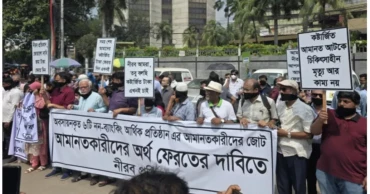
Depositors of six distressed NBFIs seek urgent BB action for refund recovery
An alliance representing more than 12,000 depositors of six non-banking financial institutions (NBFIs) currently under liquidation on Wednesday demanded immediate action by the Bangladesh Bank to recover funds that have remained trapped in the troubled institutions for nearly seven years.
The demand was made from a silent human formed in front of the central bank headquarters in the capital under the banner of “Alliance of Six NBFIs Depositors for Recovery.”
During the protests, the demonstrators wore black clothes over their mouths in protest against what they described as the authorities’ prolonged silence and as a symbol of their grievances.
The institutions are People's Leasing and Financial Services Ltd, International Leasing and Financial Services Ltd, FAS Finance & Investment Limited, First Finance Limited, Bangladesh Industrial Finance Company Limited and Premier Leasing & Investment Limited.
In a written statement issued during the protest, the victims highlighted the severe financial uncertainty and mental distress they have faced. They noted that many depositors are currently battling many deadly diseases, including cancer, kidney disease and heart conditions, but are unable to afford life-saving medical treatment because their funds are inaccessible.
"We are living through a humanitarian crisis," the statement reads. "Several depositors have already passed away without treatment due to a lack of funds. Our hard-earned savings are being held while we face absolute ruin."
The protesters emphasised that as the primary regulator of all scheduled banks and NBFIs, the central bank bears the ultimate responsibility for protecting public deposits.
Their core demands include the immediate announcement of a realistic and effective roadmap for the return of funds, aligned with the Bangladesh bank Governor's previously mentioned July 2026 deadline, implementing a system that prioritises individual retail depositors over institutional investors during the refund process, and urgent and humane intervention by the central bank to mitigate the ongoing crisis.
The depositors expressed their deep disappointment over the slow pace of the liquidation process. While the Bangladesh Bank has previously acknowledged the systemic issues within these six NBFIs, the victims argue that without a concrete plan, the July 2026 timeline remains an empty promise.
"We firmly believe that the state's highest financial regulator must play a swift and effective role in safeguarding the public's money," the protesters stated, calling for the BB Governor’s direct intervention to resolve the deadlock.
29 days ago

Inflation rises to 9.04% in April
Bangladesh’s point-to-point inflation rose to 9.04 percent in April, 2026, up from 8.71 percent in March, according to the latest data from the Bangladesh Bureau of Statistics (BBS).
However, it was slightly lower than the 9.17 percent recorded in April last year.
The data shows that inflation increased in both food and non-food categories during the month.
Food inflation at the national level rose to 8.39 percent in April from 8.24 percent in March.
Non-food inflation also climbed, reaching 9.57 percent compared to 9.09 percent a month earlier.
In April 2025, food inflation stood at 8.63 percent, while non-food inflation was 9.61 percent.
The BBS said the inflation figures were calculated on a point-to-point basis using data from 154 markets across all 64 districts.
In rural areas, overall inflation increased to 9.05 percent in April from 8.72 percent in March. Rural food inflation rose to 8.23 percent from 8.02 percent, while non-food inflation jumped to 9.81 percent from 9.38 percent.
In April last year, rural food and non-food inflation were 8.40 percent and 9.86 percent respectively.
Urban areas also saw an upward trend. Urban inflation rose to 9.02 percent in April from 8.68 percent in March.
Food inflation in cities edged up slightly to 8.81 percent from 8.78 percent, while non-food inflation increased more sharply to 9.15 percent from 8.62 percent.
In April 2025, urban food and non-food inflation stood at 9.13 percent and 9.88 percent respectively.
Long-term trend shows decline
Despite the monthly rise, the 12-month average inflation showed a downward trend.
The average inflation rate for May 2025 to April 2026 stood at 8.59 percent, significantly lower than 10.21 percent recorded during the same period a year earlier.
Meanwhile, wage growth also saw a slight increase in April.
The national wage rate index rose to 8.16 percent in April from 8.09 percent in March. In April 2025, wage growth stood at 8.19 percent.
By sector, wage growth in agriculture increased to 8.19 percent from 8.11 percent in March. In industry, it rose to 8.09 percent from 8.02 percent, while the services sector recorded 8.31 percent, up from 8.23 percent.
A year earlier, wage growth stood at 8.40 percent in agriculture, 7.87 percent in industry, and 8.42 percent in services.
The BBS said the wage rate index is compiled using data collected from all 64 districts of the country.
29 days ago
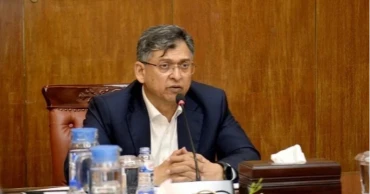
Govt to scrutinise cases filed during the tenure of interim govt: Home Minister
The government has decided to review the crimes against humanity cases filed during the tenure of the interim government, said Home Minister Salahuddin Ahmed on Wednesday.
The deputy commissioners (DCs) have been instructed to send district-wise case lists to the Ministry of Home Affairs for scrutiny, he said while talking to reporters after the third session of the final day of the DC Conference held at Osmani Memorial Auditorium in the capital.
The minister said a number of cases were filed after August 5 in connection with the anti-discrimination movement including allegations of committing crimes against humanity linked to what he described as fascist activities.
“We will verify and examine these cases carefully as thousands of people were named in many of them. Investigators will determine the actual accused and ensure quick disposal of the cases,” he said.
The minister further said that individuals who were included in cases with malicious intent would be given relief through legal procedures.
When asked about the timeframe given to DCs for sending the case lists, the minister said they have been asked to submit them as soon as possible preferably within one month.
He said district-level committees headed by deputy commissioners, with members including additional deputy commissioners, superintendents of police, public prosecutors and others, have already been formed to review such cases.
These committees will verify politically motivated or false cases and applicants will need to submit forms along with FIRs, charge sheets or ejahars and related documents.
Verified cases will be recommended for withdrawal, he said.
“Such cases will first be sent to the Home Ministry which will not take immediate action but forward them to the Ministry of Law.”
A committee headed by the Law Minister will review and vet the cases and only those deemed appropriate for withdrawal will be sent back to the Home Ministry for final action under Section 494 of the Criminal Procedure Code (CrPC), said Salahuddin.
After assuming responsibility, the interim government began reviewing and withdrawing some of those cases, although certain categories such as murder, arms, women and child abuse, drug trafficking and human trafficking were initially excluded, he said.
29 days ago
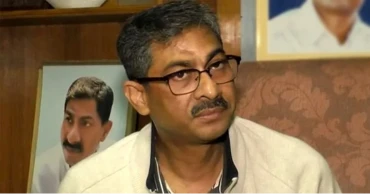
Decision on Padma Barrage project soon: Minister Anee
The government will soon take a decision on the Padma Barrage project as its technical, survey and feasibility studies have almost been completed, Water Resources Minister Shahid Uddin Chowdhury Anee said on Wednesday.
He made the remarks while briefing reporters after a meeting with Prime Minister Tarique Rahman at Secretariat.
“The study report, technical aspects and feasibility assessment of the Padma Barrage project are nearly complete,” the minister said.
He said the government will take a final decision on the project after discussion. “We hope the project will be placed at an ECNEC meeting very soon, where it will be discussed and a decision will be taken.”
The meeting on water resource management was held at the Prime Minister’s Office at around 10:00 am with the Prime Minister in the chair.
Prime Minister’s Additional Press Secretary Atikur Rahman Rumon said issues related to canal excavation, irrigation facilities during the dry season and major projects including the Padma Barrage were discussed at the hour-long meeting.
After the meeting, Minister Anee said the Padma Barrage project is one of the country’s largest and is expected to benefit a significant portion of the population, particularly in northern districts.
Besides irrigation, the project will help maintain water flow, improve groundwater levels, and support fisheries and agriculture, he said.
The minister also said the Teesta master plan was discussed at the meeting, noting that its feasibility study is currently underway. “Further studies will be required. We discussed how to ensure benefits for the people of the area and the country taking into account all technical aspects and surveys.”
Replying to a question, he said canal excavation programmes are ongoing and the Prime Minister is expected to inaugurate such activities in Chandpur on May 16 and in Feni on May 25 before the monsoon season begins.
Anee also said the government has taken a plan to excavate around 20,000 kilometres of canals across the country over the next five years.
29 days ago
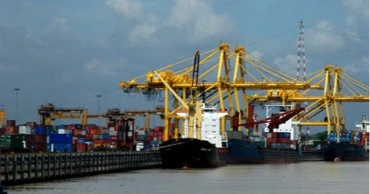
Eastern Refinery set to resume full production as crude oil shipment arrives in Chattogram
After weeks of uncertainty, a vessel carrying 1 lakh tonnes of crude oil arrived at Chattogram Port on Wednesday, paving the way for the resumption of full operations at the country’s lone state-owned refinery, Eastern Refinery Limited (ERL).
The vessel, MT Nyneamia, berthed at the port in the afternoon.
Managing Director of Eastern Refinery, Md. Sharif Hasnat, said , "The vessel arrived at the port this noon. Following the unloading, we will begin the refining process and restore full production capacity."
Officials at Eastern Refinery PLC (ERL) said once the unloading process is completed, the refinery is expected to resume full-scale production by May 8 or 9.
Operations at the refinery had been severely hampered throughout March and April as geopolitical tensions in the Middle East disrupted shipping schedules.
Due to the failure of scheduled vessels to arrive, the refinery’s reserves depleted rapidly, forcing authorities to slow down and eventually halt crude oil refining altogether.
According to Bangladesh Petroleum Corporation (BPC) officials, the shipment was originally supposed to depart from Saudi Arabia's Ras Tanura port.
However, due to conflict-related risks, the vessel instead departed from the Yanbu port on April 24.
This alternative route and the current market volatility have nearly doubled the import costs.
The shipment is valued at approximately US$100.84 million, with a price of $126.28 per barrel, while logistical changes have resulted in an additional cost of around Tk 607 crore.
The resumption of the refinery is critical for the domestic market, as ERL typically fulfills about 20 percent of the country's total fuel demand by processing crude oil into diesel, petrol, and other essential fuels.
The remaining 80 percent of Bangladesh’s demand is met through the direct import of refined petroleum.
29 days ago

Social Welfare Minister Zahid Hossain’s mother dies
Begum Jebunnesa, mother of Social Welfare, Women and Children Affairs Minister Abu Zafar Md. Zahid Hossain, passed away at a hospital in the capital on Wednesday. She was 83.
Begum Jebunnesa breathed her last at a hospital in the capital early Wednesday.
BNP Chairman Tarique Rahman expressed deep shock and sorrow over the death of Begum Jebunnesa.
The BNP chairman also expressed deep sympathy to the bereaved family members over her demise.
In a message, he said, “She was a highly dedicated teacher who, through her talent and competence, educated numerous students—many of whom are now established in society and contributing to the nation. As an ideal mother as well, she raised her children with proper education and values. Begum Jebunnesa was widely respected as a noble woman among all concerned.”
He also prayed also prayed for the eternal peace of the departed souls and expressed sympathy to the grieving family, admirers and well-wishers.
29 days ago