others
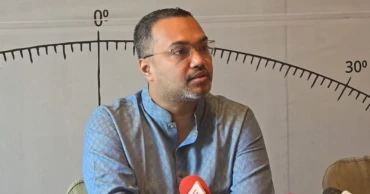
Bangladesh’s energy situation better than many countries: Mahdi Amin
Prime Minister’s Adviser Mahdi Amin on Wednesday said Bangladesh’s energy sector remains in a comparatively stronger position than many countries, with fuel prices under control and supply being maintained in line with demand despite global challenges.
“We are in a much better position in the energy sector compared to many other countries. Fuel prices are relatively controlled, and we have been able to keep supply stable in line with demand,” he said.
He made the remarks at a seminar titled “Cooperation on Markets, Policy, Alignment, Security, and Sovereignty”, organised by the Institute of Strategy and Tactics Research at a hotel in the capital.
Mahdi said the country has managed to turn global challenges into opportunities and expressed optimism about continued progress.
“Despite global challenges, we are taking each challenge as an opportunity and moving the country forward,” he said.
The government has addressed initial challenges through consultations with domestic and international stakeholders, negotiations and exploring alternative sourcing options.
He also said the law and order situation in the country remains stable.
Highlighting the government’s priorities, he said public welfare remains at the core of policymaking.
“As an elected government, we are accountable to people. Our goal is to uphold independence, sovereignty and public interest while building a transparent and accountable state,” he said.
He said the government under the leadership of Prime Minister Tarique Rahman is working to ensure prosperity and self-reliance for all citizens.
He said the prime minister has already begun implementing election pledges within a short period after the polls, describing it as ‘unprecedented’.
Mahdi also mentioned the ongoing discussions at the Deputy Commissioners’ (DC) Conference on how to effectively implement government policies at the field level.
He highlighted what he described as a ‘vibrant Parliament’, where both treasury and opposition members are engaging in open discussions, criticism and debate on public issues.
“This coexistence and mutual respect among political parties will shape the future of Bangladesh,” he said stressing the importance of democracy, human rights, rule of law and freedom of expression.
29 days ago

Young girl found dead in Cox’s Bazar shop
Police recovered the body of an unidentified young girl from a shop along Laboni point of Cox’s Bazar sea beach early Wednesday.
Local people first spotted the girl, aged about 22-23, lying on the floor of a fast food shop in an unconscious state around 3:30 am and informed police.
The identity of the deceased has not yet been confirmed, said Mohamamd Sami Uddin, Officer-in-Charge of Cox’s Bazar Sadar Model Police Station.
The body was sent to the Cox’s Bazar Sadar Hospital morgue for autopsy to ascertain the exact cause of death, said the OC.
29 days ago
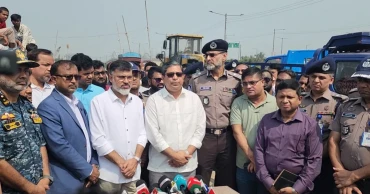
State minister Shahe Alam assures extortion-free cattle transportation ahead of Eid
State Minister for Local Government, Rural Development and Co-operatives Mir Shahe Alam on Wednesday assured that cattle transport ahead of Eid-ul-Azha will be free from extortion.
“We assure that there will be no extortion targeting those transporting sacrificial animals. If any such incident occurs, law enforcement agencies will take strict action,” he said.
He made the remarks while talking to reporters after inspecting the progress of management improvements at Gabtoli cattle market in the city and the construction of a new road to Gabtoli bus terminal in the capital.
The state minister expressed hope that cattle markets and major highways will remain hassle-free during the Eid rush.
“Law enforcement agencies and relevant ministries will remain alert to ensure smooth cattle market operation and uninterrupted vehicular movement on highways,” he added.
Responding to a question about past incidents of extortion and disputes involving cattle-laden trucks, he said such issues were more prevalent during the long tenure of the previous government.
“This time, an elected government is in place. The Prime Minister is directly overseeing matters that affect public convenience,” he said, adding that authorities are working under his instructions to ensure discipline in cattle transportation.
Regarding market boundaries extending onto main roads, he said authorities are preparing for unexpected situation.
“At Gabtoli, the target is to accommodate one lakh cattle but sometimes the number may exceed expectations. Traders do not inform us in advance about how many cattle they will bring or purchase,” he said.
He said monitoring is ongoing and officials will conduct further inspections, he added.
Additional coordination meetings will also be held to ensure proper management, said the state minister.
29 days ago

Accused madrasha teacher held over rape of 11-year old girl in Netrokona
Members of Rapid Action Battalion (Rab) in a drive arrested the accused Madrasha teacher from Gouripur upazila of Mymensingh district on Wednesday in a case over rape and impregnation of an 11-year old girl in Netrokona.
The arrestee is Aman Ullah Sagar, 30, founder of Hazrat Fatema Tuz Zohra Women Quawmi Madrasha and a teacher of the institution in Madan upazila of Netrakona district.
Tipped off, a team of Rab-14 conducted a drive in the area around 4 am and arrested Sagar, said commanding officer of Rab-14 Noymul Hasan at a press briefing at its office.
Mother of the girl filed a case with Madan Police Station on April 23 in this connection.
According to the case statement, the mother took her daughter to a local diagnostic centre seeing her health condition where she came to know about her pregnancy.
The girl said the teacher of the madrasha asked her to clean the veranda of the madrasha on October 2.
Later, the teacher forcibly took her to an abandoned room and violated her. The teacher also threatened her not to disclosed the matter to anyone.
The girl used to live with her grandmother as her mother worked as a domestic help in Sylhet.
The incident recently went viral on social media.
Meanwhile, in an attempt to evade arrest, the accused teacher went live on Facebook claiming his innocence and alleging that it was a conspiracy.
29 days ago
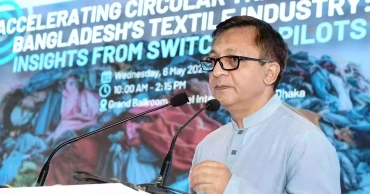
Circular economy key to Bangladesh’s industrial competitiveness: Minister
Commerce Minister Khandaker Abdul Muktadir on Wednesday said the transition to a circular economy is a key prerequisite for strengthening Bangladesh’s industrial competitiveness, sustainable growth and global market position.
“The global market is changing rapidly. Sustainable production is now a key determinant of competitiveness in international trade. Buyers, investors and consumers are increasingly interested in production systems that reflect efficiency, responsibility and long-term stability,” he said.
He made the remarks while speaking as the chief guest at a seminar titled “Accelerating circular economy transformation in Bangladesh through SWITCH2CE pilot initiative,” jointly organised by the Ministry of Commerce and the Bangladesh Garment Manufacturers and Exporters Association (BGMEA) at a hotel in Dhaka.
Commerce Ministry Secretary (routine charge) Md Abdur Rahim Khan chaired the event.
EU Ambassador to Bangladesh Michael Miller and BGMEA President Mahmud Hasan Khan also spoke as special guests.
The minister said the pilot activities under the “SWITCH to Circular Economy” programme have already demonstrated that the transition to a circular economy is not a theoretical concept, but a practical and achievable process already in implementation.
29 days ago

No more fairs to be allowed on playgrounds: State Minister Aminul
State Minister for Youth and Sports Md. Aminul Haque said permission will no longer be given to hold fairs at stadiums.
The state minister came up with the remark while talking to reporters on Wednesday after the first session of the fourth and final day of the DC Conference at Osmani Memorial Auditorium in the capital.
The session was held with the Ministry of Social Welfare, the Ministry of Women and Children Affairs and the Ministry of Youth and Sports.
Responding to a question about sports activities being disrupted due to fairs at district-level playgrounds, the State Minister said “The ‘Notun Kuri Sports’ programme is currently being held in district stadiums across all 64 districts. In the past, the Ministry of Youth and Sports often granted permission for fairs. But since I assumed responsibility, no permission has been given for organising any fair. We will not allow stadiums to be used for fairs in future.”
When asked about the two city corporations’ plans to rehabilitate hawkers at playgrounds, Aminul said the two city corporations along with three ministers and relevant secretaries, have already inspected the grounds.
“Those which are suitable for sports will certainly not be used for hawker rehabilitation. If necessary, we will discuss the matter with them to ensure this,” he added.
The State Minister also said that a project has been undertaken to renovate and make functional district stadiums, sports complexes and swimming complexes across Bangladesh, so that efforts to develop athletes from the grassroots can be properly implemented.
The aim is to build effective coordination so that youth at the grassroots and future generations can be connected and employment opportunities can be ensured, he added.
Regarding the Notun Kuri Sports initiative, he expressed hope that after the first session, a second phase will be launched.
If this continuity is maintained, within the next few years through coordination from district to upazila and union levels a significant qualitative transformation can be achieved at the family, social, and national levels, he said.
29 days ago
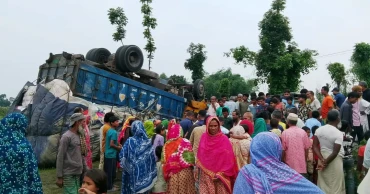
Road safety crisis deepens as fatalities cross 400 in April
Road accidents across Bangladesh killed 404 people and injured 709 others in April, according to a monthly report by the Road Safety Foundation, highlighting persistent safety concerns on the country’s roads.
The report documented 463 road crashes during the month. Among the deceased were 53 women and 48 children.
Motorcycles remained the deadliest mode of transport, with 142 crashes causing 113 deaths, accounting for 27.97 percent of total fatalities.
Pedestrians were also heavily affected, with 102 deaths, representing 25.24 percent of total fatalities. In addition, 46 drivers and helpers were killed, making up 11.38 percent.
In the capital Dhaka, 36 road accidents resulted in 24 deaths and 67 injuries.
Highways and regional roads most dangerous
The analysis shows that 41.68 percent of accidents occurred on regional roads, while 36.28 percent took place on national highways.
Dhaka Division recorded the highest number of accidents (109) and fatalities (102), while Sylhet Division had the lowest with 12 accidents and 12 deaths.
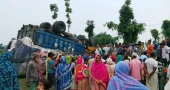
Two trucks set on fire after trader killed in Rajshahi road accident
Causes of accidents
Loss of vehicle control was the leading cause, responsible for 194 accidents (41.90 percent). Head-on collisions caused 97 crashes (20.95 percent).
Vehicle involvement and fatalities
Motorcyclists and passengers accounted for the highest number of deaths (113). Three-wheeler passengers such as CNG auto-rickshaws and easy bikes followed with 61 deaths. Truck and covered van passengers accounted for 51 deaths, while bus passengers numbered 30. Private car and microbus passengers accounted for 24 deaths.
The victims included professionals from various sectors, including teachers, journalists, police personnel, doctors, engineers, lawyers, NGO workers, businesspeople, students, and garment workers.
A total of 49 students were killed in road accidents.
Key causes and recommendations
The Road Safety Foundation identified major causes of road crashes, including faulty vehicles and roads, speeding, reckless driving, unskilled drivers, poor traffic management, and weak enforcement of traffic laws.
It also highlighted systemic issues such as unregulated working hours for drivers, unsafe mixing of slow and fast vehicles on highways, and rising motorcycle use among young riders.
The organization recommended restructuring the National Road Safety Council and strengthening key transport authorities along with stricter law enforcement and improved road safety awareness campaigns to reduce fatalities.
29 days ago

Rain, thunderstorms likely in parts of country: BMD
Bangladesh Meteorological Department (BMD) has predicted rain or thundershowers in parts of Bangladesh in 24 hours from 9 am on Wednesday.
“Rain or thunder showers accompanied by temporary gusty or squally wind and lightning flashes is likely to occur at a few places over Rangpur, Rajshahi, Mymensingh and Sylhet divisions and at one or two places over Dhaka, Khulna, Barishal and Chattogram divisions,” said a Met office regular bulletin.
Day temperature may remain nearly unchanged and nigh temperature may fall slightly over the country.
29 days ago

DMP magistrates dispose of 5,205 criminal, 302 traffic cases in April
Special Metropolitan Magistrates of Dhaka Metropolitan Police (DMP) disposed of 5,205 criminal and 302 traffic cases through summary trials in April ,2026.
DMP Law Officer (District and Sessions Judge) Mohammad Ataul Haque said a total of 5,205 cases were settled by DMP’s Motijheel, Tejgaon, Wari, Gulshan, Mirpur, Ramna, Lalbagh and Uttara divisions during the month.
Among them, 10,155 accused were arrested and 5,894 were sentenced to imprisonment.
Besides, Tk 38,82,440 was realised in fine while Tk 2,45,460 through auction or confiscation.
A total of 57 special drives were conducted jointly by Special Metropolitan Magistrates and DMP police in April to maintain law and order in the capital.
Meanwhile, 1,470 cases were filed in April under the Road Transport Act, 2018 for traffic violations.
Among them, 302 cases were disposed of, involving 1,216 accused. Fines worth Tk 4,49,700 were realised and two accused were sentenced to imprisonment.
29 days ago

Emakers Bangladesh gets franchise rights for Miss Intercontinental pageant
Emakers Bangladesh has been appointed as the national director for the internationally acclaimed beauty pageant Miss Intercontinental in Bangladesh.
Under this arrangement, the company will oversee all official activities of the pageant in the country, including contestant selection and participation in the global competition.
The announcement was made on the official social media platforms of the Miss Intercontinental Organization, naming Nayem Ashraf, Chief Executive Officer of Emakers Bangladesh, as the National Director for Bangladesh.
Founded in 1971, Miss Intercontinental is regarded as one of the oldest and most prestigious international beauty pageants. The upcoming edition will mark its 53rd edition, where contestants from around the world—including Bangladesh—will compete on the global stage.
Emakers Bangladesh has previously organised several major events in the country’s entertainment sector, including concerts featuring Arijit Singh and Neha Kakkar in Dhaka. The company has also hosted international events such as the Nepal-Bangladesh Friendship Concert and “Concert for Nepal” to support earthquake victims.
Speaking on the development, Nayem Ashraf said the organisation plans to launch a reality show to select “Miss Intercontinental Bangladesh,” leveraging international standards and experience.
He added that the platform will create new opportunities for young women and help showcase Bangladesh’s culture and talent on the global stage.
30 days ago