USA

US airlines cancel over 2,500 weekend flights amid government shutdown
More than 2,500 flights were canceled across the United States over the weekend as the Federal Aviation Administration (FAA) continued to limit air traffic due to the ongoing government shutdown, officials said Saturday.
The slowdown affected some of the nation’s busiest airports but did not immediately cause widespread travel chaos. However, experts warn the disruption could escalate, particularly with the Thanksgiving travel period approaching. Concerns are mounting over its impact on tourism and holiday shipping.
Flight cancellations surged Saturday, traditionally a slower travel day, with over 1,500 flights called off, following more than 1,000 cancellations on Friday, according to FlightAware. By Saturday evening, U.S. airlines had already canceled another 1,000-plus flights scheduled for Sunday. Major disruptions were reported at airports in Atlanta, Chicago, Charlotte, and Newark, with ongoing staffing shortages at radar centers and control towers contributing to delays.
The FAA’s reductions, initially affecting 4% of flights at 40 key airports, are set to increase to 10% by Friday. Transportation Secretary Sean Duffy cautioned that further cuts could be necessary if the shutdown persists and more air traffic controllers remain off duty.
Controllers, many working without pay for nearly a month, have faced mandatory overtime and some are taking second jobs to make ends meet, according to the National Air Traffic Controllers Association. On Saturday, the union delivered 1,600 handwritten letters from members to Congress urging an end to the shutdown.
Passengers have faced uncertainty, though most were able to rebook canceled flights quickly. International flights have largely remained unaffected so far. Some travelers have canceled trips entirely or incurred extra costs for hotels and accommodations due to last-minute disruptions.
Experts warn that the consequences could extend beyond passenger travel. Nearly half of U.S. air freight is transported in passenger planes, meaning flight disruptions could raise shipping costs and consumer prices. Tourism, manufacturing, and local economies may also be affected.
“This shutdown is going to impact everything from cargo aircraft to business travel to tourism,” said Greg Raiff, CEO of Elevate Aviation Group. “Hotel taxes, city revenues, and broader economic activity will all feel the cascading effects.”
Source: AP
6 months ago

US government shutdown halts pay at some overseas military bases
The longest U.S. government shutdown on record is doing more than grind activities to a halt at home; an ocean away in Europe, local workers at U.S. military bases have started to feel the pain.
Thousands of people working at overseas bases in Europe have had their salaries interrupted since the shutdown began almost six weeks ago. In some cases, governments hosting the U.S. bases have stepped in to foot the bill, expecting the United States to eventually make good. In others, including in Italy and Portugal, workers have simply kept working unpaid as the gridlock in Washington drags on.
“It’s an absurd situation because nobody has responses, nobody feels responsible,” said Angelo Zaccaria, a union coordinator at the Aviano Air Base in northeastern Italy.
“This is having dramatic effects on us Italian workers,” he told The Associated Press.
An array of needed jobs
The jobs foreign nationals do at U.S. bases around the world range from food service, construction, logistics, maintenance and other, more specialized roles. In some cases, foreign workers are employed by private companies contracted by the U.S. government while others are direct hires.
How local employees are paid varies by country and is based on specific agreements the U.S. government has with each host nation, said Amber Kelly-Herard, a public affairs spokesperson for the U.S. Air Forces in Europe and Africa.
During the shutdown, Kelly-Herard said local employees were expected to continue to perform their jobs in accordance with their work contracts.
The AP reached out to the Pentagon with multiple questions on the pay disruption, but was only provided a brief statement that did not acknowledge it.
“We value the important contributions of our local national employees around the world,” it said. The official declined to answer any follow-up questions.
American bases feeling the pinch overseas
In Germany, the government has stepped in to pay the salaries of nearly 11,000 civilian employees that work on U.S. military bases, the nation's finance ministry said in a statement. American facilities in Germany include the Ramstein Air Base, a critical hub for operations in the Mideast and Africa and headquarters to the U.S. Air Forces in Europe and Africa.
Workers in other countries have not been so fortunate.
More than 4,600 Italian nationals work at the five U.S. bases in Italy, said union coordinator Zaccaria. Of those, about 2,000 workers — mostly at bases in Aviano and Vicenza — were not paid in October, Italy's foreign ministry said Saturday.
The ministry said in a statement it had discussed the issue with U.S. officials, and that the U.S. Army and Air Force were in talks with the Pentagon about using their own funds to pay the salaries of Italian workers.
“There are workers struggling to pay their mortgages, to support their children or even to pay the fuel to come to work,” Zaccaria said.
In Portugal, a similar situation was playing out at the Lajes Field base in the Azores archipelago in the Atlantic Ocean, where more than 360 Portuguese workers have not been paid, according to Paula Terra, head of the Lajes base workers’ committee.
Terra said unpaid staff are still turning up because furloughs aren’t legally recognized in a U.S.-Portugal agreement on the base. Staying away could leave them open to disciplinary proceedings, she added.
But this week, the Azores Islands regional government approved a bank loan to pay the Portuguese workers at the base in the interim. Terra said she was waiting to hear when workers could claim the money.
Germany is counting on being repaid once the shutdown ends, the finance ministry's spokesperson told the AP, adding that during previous shutdowns, civilians were paid by the U.S. government.
The governments of Poland, Lithuania and Greenland did not respond to a request for comment from the AP about whether they, too, have also stepped in to pay local workers.
Most vulnerable, at-risk workers
Linda Bilmes, a professor of public policy at the Harvard Kennedy School and an expert on public finance, said local workers at U.S. military bases who work as contractors are generally most at-risk of losing pay during U.S. government shutdowns.
She added that the U.S. government in the past always paid back full-time employees, including those working at overseas facilities who may be foreign nationals — but that contractors are not always covered, which is why some add extra fees in their contracts to cover potential government funding stoppages.
“But I doubt anyone anticipated this length of delay,” Bilmes said.
In Spain, where the U.S. operates the Moron and Rota military bases in the south, a union representing more than 1,000 Spanish workers said a delay in payments had been resolved last month with the help of the Spanish government.
Spain's defense ministry did not respond to multiple requests seeking to confirm its involvement in resolving the pay issue.
6 months ago

Washington’s economy reels from prolonged government shutdown
The nation’s capital is facing mounting economic strain from the ongoing government shutdown, mass layoffs of federal employees, and cuts to food aid programs. The Capital Area Food Bank, which supports more than 400 partner organizations in Washington, northern Virginia, and Maryland, says it must provide 8 million more meals this year — a 20% increase — as demand surges ahead of the holidays.
“This city has been hit especially hard by the sequence of events this year,” said Radha Muthiah, the food bank’s president. The shutdown, now the longest in U.S. history, has furloughed hundreds of thousands of workers and halted assistance payments, worsening an already fragile local economy.
Washington, home to about 150,000 federal workers, has seen transit ridership drop by a quarter and small businesses suffer major losses. Many restaurants, still recovering from earlier disruptions, now face sharp declines in sales. “We still had empty seats for a Premier League game — that never happens,” said Ryan Gordon, co-owner of The Queen Vic bar, noting business is down by half.
Economists warn the financial fallout could outlast the shutdown. “Missing paychecks is creating serious cash flow problems,” said Tracy Hadden Loh of Brookings Metro, noting rising risks of loan defaults and closures among small businesses reliant on federal workers’ spending.
For many, the crisis is forcing life changes. Thea Price, a former federal employee, lost her job in March and is relocating to Seattle after losing SNAP benefits. “We can’t afford to stay any longer,” she said.
At the Capital Area Food Bank, operations are running nonstop. “People are borrowing against their futures just to afford necessities,” Muthiah said.
6 months ago
Mamdani’s New York win raises concern in Israel
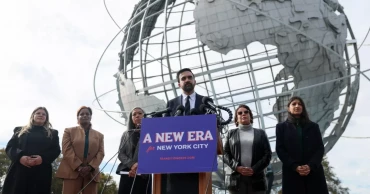
The election of Zohran Mamdani as New York City’s mayor has alarmed many in Israel, officials and analysts said Friday. Mamdani, known for his pro-Palestinian views, won in a city with the world’s second-largest Jewish population.
Israelis across political lines worry his victory could signal cooler relations between the U.S. and Israel. Nearly one-third of Jewish voters supported Mamdani, adding to concerns.
Mamdani, 34, focused on local issues like housing and child care during his campaign. But in Israel, his pro-Palestinian stance drew most attention. He has called the Gaza war a genocide and has criticized policies favoring Jews over others.
Israeli officials and analysts sharply condemned Mamdani, labeling him anti-Israel. Still, he won about 30% of the Jewish vote and has pledged to fight antisemitism while maintaining ties with Jewish leaders.
Some Israelis fear his control of New York’s police could affect the city’s Jewish community. Israel’s ambassador to the U.N. and diaspora minister expressed concern on social media, while the prime minister’s office emphasized the U.S.-Israel relationship remains strong.
Meanwhile, Palestinians in the West Bank welcomed Mamdani’s win. They said it reflects growing awareness of the Palestinian issue among younger voters, including young Jewish Americans.
Mamdani’s election highlights a potential shift in U.S. domestic politics, showing younger voters may be less uniformly pro-Israel than previous generations.
6 months ago

Diabetic or obese? You could be denied a US visa under Trump’s new directive
The United States may now deny visa applications from individuals with common health conditions such as diabetes, heart disease, or obesity under a new directive from President Donald Trump’s administration, which broadens the grounds for medical ineligibility.
According to a cable issued Thursday by the State Department and obtained by KFF Health News, consular officers have been instructed to assess a wide range of chronic or high-cost medical conditions — including cardiovascular, respiratory, neurological, and mental health disorders — when determining visa eligibility.
The document says the aim is to prevent applicants who could become a “public charge,” or financial burden on the government, from entering the country. Officers are directed to assess whether applicants possess sufficient financial resources to cover medical expenses “over their entire expected lifespan” without relying on public aid.
This policy marks a sharp shift from previous standards. Health screenings traditionally focused on infectious diseases such as tuberculosis and ensuring vaccination compliance, but the new directive extends well beyond that scope. Experts told CBS the change grants significant discretion to visa officers — most of whom lack medical training — to make subjective judgments about applicants’ health and financial stability.
Charles Wheeler, senior attorney at the Catholic Legal Immigration Network, told CBS that the policy “encourages consular officers to speculate about potential medical costs based on bias or limited knowledge.” He said the directive contradicts the State Department’s own Foreign Affairs Manual, which bars visa denials based on speculative “what if” scenarios.
The cable also instructs officials to assess applicants’ dependents, taking into account whether family members’ disabilities or chronic illnesses could affect the applicant’s ability to remain financially independent.
Immigration and health experts have criticised the move as part of the Trump administration’s wider effort to restrict immigration, citing policies such as mass deportations, refugee limits, and visa reforms aimed at favouring wealthier, healthier applicants.
Sophia Genovese, an immigration lawyer at Georgetown University, told CBS that the guidance “goes well beyond the traditional medical exam” and effectively allows visa officers to deny applications based on “speculative medical costs or conditions that are extremely common worldwide.”
Globally, around one in ten people live with diabetes, while cardiovascular diseases are the world’s leading cause of death. Genovese warned the policy could disqualify millions of would-be applicants: “If the US begins treating chronic illness as disqualifying, it raises serious ethical and humanitarian questions about who deserves entry.”
6 months ago

Flight cancellations surge across US amid government shutdown order
U.S. airlines began canceling hundreds of flights Thursday due to the Federal Aviation Administration’s order to reduce traffic at the country’s busiest airports starting Friday because of the government shutdown.
More than 760 planned Friday flights were cut from airline schedules, according to FlightAware, a website that tracks flight disruptions. That number, already four times higher than Thursday’s daily total, was likely to keep climbing.
The 40 airports selected by the FAA span more than two dozen states and include hubs such as Atlanta, Dallas, Denver, Los Angeles and Charlotte, North Carolina, according to a list distributed to the airlines. In some metropolitan areas, including New York, Houston, Chicago and Washington, multiple airports will be impacted.
The FAA said in its official order published Thursday evening that the reductions will start at 4% on Friday and ramp up to 10% by Nov. 14. They are to be in effect between 6 a.m. to 10 p.m. local time and impact all commercial airlines.
The decision to reduce service at “high-volume” markets is meant to maintain travel safety as air traffic controllers exhibit signs of strain during the shutdown. It also comes as the Trump administration is ramping up pressure on Democrats in Congress to end the shutdown.
“With continued delays and unpredictable staffing shortages, which are driving fatigue, risk is further increasing, and the FAA is concerned with the system’s ability to maintain the current volume of operations,” the order reads.
Hours before the reductions went into place, airlines were scrambling to figure out where to cut. American Airlines said it reduced its schedule at the listed airports by 4% from Friday through Monday, about 220 cancellations each day, and would increase from there to the 10% target. The carrier said its international schedule was expected to remain untouched.
Passengers with plans for the weekend and beyond waited nervously to see if their flights would take off as scheduled. Some travelers began changing or canceling itineraries preemptively.
6 months ago

Nancy Pelosi to retire from US Congress after decades of service
Longtime US lawmaker Nancy Pelosi has announced her retirement from Congress, ending a decades-long political career that made her one of the most influential figures in Washington.
In a video message on Thursday, the 85-year-old California Democrat said she would not seek re-election when her current term ends in January 2027.
Pelosi made history as the first woman to serve as Speaker of the US House of Representatives, leading the Democratic Party in the lower chamber from 2003 to 2023.
“As we go forward, my message to the city I love is this: San Francisco, know your power,” Pelosi said in her farewell message.
Source: BBC
6 months ago
US to end temporary protected status for South Sudan nationals
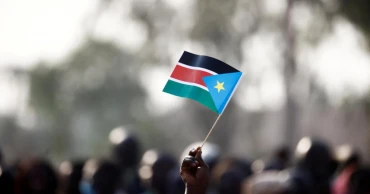
The United States will end Temporary Protected Status (TPS) for citizens of South Sudan, a program that has allowed them to live and work legally in the US for over a decade to escape ongoing conflict at home, officials announced Thursday.
The Department of Homeland Security (DHS) said the decision will take effect on January 5. Homeland Security Secretary Kristi Noem determined that conditions in South Sudan “no longer meet the TPS statutory requirements” after consulting with other federal agencies.
According to the DHS statement, South Sudanese nationals who report their departure through the Customs and Border Protection mobile app could qualify for “a complimentary plane ticket, a $1,000 exit bonus, and possible opportunities for legal reentry in the future.”
The decision comes as a major setback for South Sudanese immigrants and refugees still facing instability and humanitarian crises in their homeland.
Edmund Yakani, a leading civic activist in South Sudan, criticized the move, suggesting it reflected strained ties between Juba and Washington. He said South Sudan’s refusal to accept a second group of deportees from the US had angered the Trump administration, prompting it to end TPS protections.
Earlier this year, at least eight South Sudanese were deported from the US under a program to remove undocumented migrants.
The US first granted South Sudan TPS in 2011, following the country’s independence from Sudan, and had renewed it every 18 months since then. The Trump administration has rolled back several similar protections, including those for Venezuelans and Haitians previously covered under President Joe Biden’s policies.
South Sudan continues to face severe challenges, including political tension, economic hardship, and widespread hunger. Aid agencies warn that parts of the country are nearing famine conditions, while a fragile 2018 peace deal between President Salva Kiir and his former deputy Riek Machar is showing signs of collapse after Machar’s arrest on treason charges earlier this year.
6 months ago

Zohran Mamdani’s NYC Win Inspires Ugandans
Zohran Mamdani’s victory in the New York City mayoral race has sparked hope among Ugandans, showing that young leaders can succeed in politics, even if the success feels distant for those at home.
Joel Ssenyonyi, an opposition lawmaker in Kampala, said Mamdani’s win is “a big encouragement,” but added, “we have a long way to get there.” Uganda has been under President Yoweri Museveni’s rule for nearly four decades, with opposition efforts repeatedly blocked. Museveni, seeking reelection in January, has resisted calls to step down, raising concerns about political stability.
Mamdani, born in Uganda in 1991, left the country at age five to follow his father, scholar Mahmood Mamdani, to South Africa and later moved to the United States. He retained his Ugandan citizenship even after naturalizing as a U.S. citizen in 2018. His mother, filmmaker Mira Nair, maintains strong ties to Kampala, where the family regularly returns.
His father, a Columbia University professor, is a major influence on Mamdani’s political outlook. Mahmood Mamdani has been critical of Museveni, contrasting his rule with that of the late dictator Idi Amin in his 2025 book, Slow Poison. Observers say Zohran follows the family tradition of challenging norms and thinking independently.
Retired media executive Robert Kabushenga noted Mamdani’s unconventional approach, calling him “a beacon of hope” for activists and a reminder to give youth meaningful political opportunities. Literature professor Okello Ogwang said Mamdani’s success underscores the importance of investing in young leaders.
As a teenager, Mamdani dabbled in music with rap groups Young Cardamom and HAB. He later became a New York assembly member in 2021, after working as a community activist in Queens, helping vulnerable residents facing eviction.
His mayoral campaign emphasized progressive policies such as free city buses, free child care, rent freezes for some apartments, and government-run grocery stores funded by taxes on the wealthy. Despite Republican criticism and threats to challenge his citizenship, Mamdani emerged victorious, showing resilience and inspiring others.
Kabushenga said Mamdani “breaks new ground” and is willing to pursue initiatives in unfamiliar spaces. Ssenyonyi added that while the achievement may feel far away for Ugandans, it is nonetheless inspiring: “Mamdani is Ugandan-born, like us.”
6 months ago

Mamdani tells Trump that New York is ready to fight
Newly elected New York City Mayor Zohran Mamdani made it clear immediately after his win that he intends to stand up to President Donald Trump, who had threatened to defund the city and even take action against him personally. Speaking at his victory celebration in Brooklyn on Tuesday, Mamdani addressed Trump directly: “Turn the volume up… To get to any of us, you will have to get through all of us.”
Born in Uganda and now a naturalized U.S. citizen, Mamdani cast himself as a symbol of resistance. “New York will remain a city of immigrants, powered by immigrants and, as of tonight, led by an immigrant,” he declared. His message highlighted the city’s identity as a diverse, immigrant-driven metropolis.
Mamdani, a democratic socialist, won the mayoralty running on progressive policies and a hopeful, optimistic vision, contrasting sharply with Trump’s confrontational approach. Despite Trump’s repeated attacks and threats, including the potential withdrawal of federal funding, Mamdani’s campaign prevailed. Trump had previously labeled Mamdani a communist, warned of severe consequences for the city, and attempted to interfere in the election through intermediaries urging outgoing Mayor Eric Adams to withdraw from the race.
The Republican president has consistently targeted Democratic-led cities, often threatening federal action or funding cuts. New York, however, largely avoided the brunt of such measures during Trump’s prior administration, unlike cities such as Los Angeles or Washington, D.C. Yet his warnings and aggressive stance against Mamdani became central talking points for opponents during the campaign.
Critics like former Governor Andrew Cuomo argued that Mamdani’s youth and inexperience would make him vulnerable to Trump’s pressure. The National Republican Congressional Committee also criticized Mamdani’s progressive platform, accusing Democrats of embracing far-left policies and endangering public safety.
Mamdani’s rise mirrors some elements of Trump’s own early political path, including grassroots momentum, media attention, and bold messaging. However, Mamdani positioned himself as a direct counter to Trump rather than a parallel, emphasizing democratic values, immigrant contributions, and progressive governance.
Campaign volunteers and supporters anticipate continued challenges from the president but remain determined to protect the city’s autonomy and progressive agenda. Wacef Chowdhury, a Mamdani campaign volunteer, said, “We know he’s going to try, but we’re ready. We fought back the establishment, and we’re going to do the same to the president.”
Mamdani’s victory represents both a political and symbolic statement in Trump’s hometown, setting the stage for a tense relationship between the new mayor and the former president in the months ahead.
6 months ago