usa
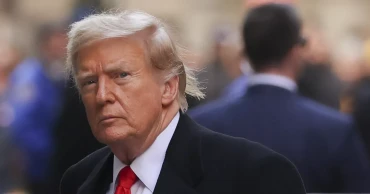
Trump will be first ex-president on criminal trial. Here’s what to know about the hush money case
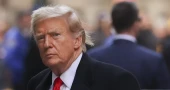
Donald Trump will make history as the first former president to stand trial on criminal charges when his hush money case opens Monday with jury selection.
The case will force the presumptive Republican presidential nominee to juggle campaigning with sitting in a Manhattan courtroom for weeks to defend himself against charges involving a scheme to bury allegations of marital infidelity that arose during his first White House campaign in 2016.
It carries enormous political ramifications as potentially the only one of four criminal cases against Trump that could reach a verdict before voters decide in November whether to send him back to the White House.
Here’s what to know about the hush money case and the charges against Trump:
WHAT’S THIS CASE ABOUT?
The former president is accused of falsifying internal Trump Organization records as part of a scheme to bury damaging stories that he feared could hurt his 2016 campaign, particularly as Trump’s reputation was suffering at the time from comments he had made about women.
The allegations focus on payoffs to two women, porn actor Stormy Daniels and Playboy model Karen McDougal, who said they had extramarital sexual encounters with Trump years earlier, as well as to a Trump Tower doorman who claimed to have a story about a child he alleged Trump had out of wedlock. Trump says none of these supposed sexual encounters occurred.
Trump’s former lawyer and fixer, Michael Cohen, paid Daniels $130,000 and arranged for the publisher of the National Enquirer supermarket tabloid to pay McDougal $150,000 in a journalistically dubious practice known as “catch-and-kill” in which a publication pays for exclusive rights to someone’s story with no intention of publishing it, either as a favor to a celebrity subject or to gain leverage over the person.
Prosecutors say Trump’s company reimbursed Cohen and paid him bonuses and extra payments, all of which were falsely logged in Trump Organization records as legal expenses. Cohen has separately pleaded guilty to violating federal campaign finance law in connection with the payments.
WHAT ARE THE CHARGES?
Trump is charged with 34 felony counts of falsifying business records. The charge carries up to four years in prison, though whether he will spend time behind bars if convicted would ultimately be up to the judge.
The counts are linked to a series of checks written to Cohen to reimburse him for his role in paying off Daniels. Those payments, made over 12 months, were recorded as legal expenses in various internal company records.
To win on the felony charge, prosecutors must show that Trump not only falsified or caused business records to be entered falsely — which would be a misdemeanor — but that he did so with intent to commit or conceal a second crime.
Manhattan District Attorney Alvin Bragg did not specify the other crime in Trump’s indictment, but has since said that evidence shows his actions were meant to conceal state and federal campaign finance and tax crimes. Some experts argue it’s an unusual legal strategy that could backfire.
HOW WILL JURY SELECTION WORK?
The process to choose 12 jurors, plus six alternates, will begin with Judge Juan M. Merchan bringing scores of people into his courtroom to begin weeding out people for potential biases or other reasons they cannot serve. The judge has said he will excuse anyone who indicates by a show of hands that they can’t serve or can’t be fair and impartial before calling groups of those who remain into the jury box to answer 42 questions. Potential jurors will be known only by number, as the judge has ordered their names to be kept secret from everyone except prosecutors, Trump and their legal teams.
Among the questions potential jurors will be asked: Whether they follow the former president on social media, have ever worked for a Trump organization and have ever attended a Trump rally — or anti-Trump organizations or rallies and whether potential jurors are supporters or followers of far-right groups, such as the Proud Boys and Oath Keepers, whose members were among the pro-Trump mob that stormed the U.S. Capitol on Jan. 6, 2021, or of the far-left-leaning collective known as antifa, which resists fascists and neo-Nazis, especially at demonstrations.
WHO’S EXPECTED TO TESTIFY?
Cohen, a Trump loyalist turned critic, is expected to be a key prosecution witness, as he was the one who orchestrated the payoffs. Before testifying in front of the grand jury that brought the indictment last year, Cohen said his goal was “to tell the truth” and insisted he is not seeking revenge but said Trump “needs to be held accountable for his dirty deeds.” Cohen served prison time after pleading guilty in 2018 to federal charges, including campaign finance violations, for arranging the payouts to Daniels and McDougal.
Other expected witnesses include Daniels, whose real name is Stephanie Clifford. Daniels alleges that she had a sexual encounter with Trump in 2006 that she didn’t want, but didn’t say no to. Trump says it never happened.
WHAT WILL TRUMP’S DEFENSE BE?
Trump has denied any wrongdoing and has slammed the case as an effort to hurt his 2024 presidential campaign. Trump has acknowledged reimbursing Cohen for the payment and that it was designed to stop Daniels from going public about the alleged encounter. But Trump said in 2018 it had nothing to do with the campaign.
Trump’s lawyers will likely attack the case by trying to undermine the credibility of prosecution witnesses like Cohen and Daniels. Trump has described the two as liars, testing the limits of a gag order that the judge imposed. It seeks to curtail the president’s inflammatory rhetoric about the case. Trump’s lawyers are expected to paint Cohen as a con man and point to his conviction on multiple federal crimes as well as his disbarment to try to persuade jurors that he can’t be believed.
Trump recently posted on social media a picture of a 2018 written statement from Daniels, in which she denied they had a sexual relationship. Not long after, Daniels recanted the statement and said that a sexual encounter had occurred. She said her denials were due to a non-disclosure agreement and that she signed the statement because the parties involved “made it sound like I had no choice.”
WHAT ABOUT TRUMP’S OTHER CASES?
Trump’s three other criminal cases have gotten bogged down in legal fights and appeals, which may mean jurors won’t hear about them before the November election.
The 2020 election interference case brought by special counsel Jack Smith remains on hold while Trump pursues his claim that he is immune from prosecution for actions he took while in the White House. The U.S. Supreme Court is scheduled to hear arguments on the matter in late April.
The other case brought by Smith accuses Trump of illegally retaining classified documents at his Mar-a-Lago estate. The trial had been scheduled to begin in May, but the judge heard arguments last month to set a new trial date and has yet to do so.
No trial date has been set in the Georgia case accusing Trump and his allies of conspiring to overturn his 2020 election loss in the state. Prosecutors have suggested a trial date of August, but defense attorneys are now urging an appeals court to consider whether Fulton County District Attorney Fani Willis should be disqualified from the prosecution over a romantic relationship she had with a former top prosecutor who recently withdrew from the case.
Trump has pleaded not guilty in all three cases and says he did nothing wrong.
2 years ago
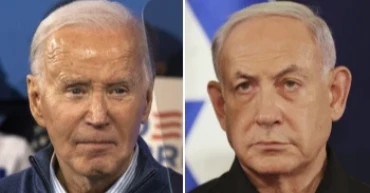
Biden warns Netanyahu against major Rafah offensive as divide between the 2 leaders grows
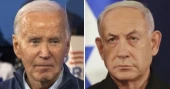
President Joe Biden on Monday urgently warned Israeli Prime Minister Benjamin Netanyahu against launching an offensive in the southern Gaza city of Rafah as the divide between the two leaders continues to grow along with the mounting Palestinian death toll.
The call between Biden and Netanyahu came as Israel appeared to be moving closer to a major military operation to root out Hamas militants in Rafah — something that Biden and his top aides have repeatedly told Israeli officials will only lead to more death and worsen the despair in the war-ravaged territory.
Both leaders are facing growing public pressure — Biden from protests on college campuses and Netanyahu from the families of some Israeli hostages — for a cease-fire deal.
“The president doesn’t want to see operations in Rafah that put at greater risk the more than a million people that are seeking refuge there,” White House national security spokesman John Kirby said.
The White House described the leaders' 30-minute conversation as “constructive." Privately, however, administration officials' concern was mounting as Israel on Monday ordered about 100,000 Palestinians to evacuate from Rafah and began carrying out “targeted” strikes in the eastern part of the city.
White House officials were carefully watching the unfolding, intensified Israeli action in Rafah with deep worry, but did not believe it amounted to the widescale attack Netanyahu has been threatening, according to a person familiar with administration thinking who was not authorized to comment publicly.
More than 34,000 Palestinians have been killed in the war that started after Hamas launched an attack on Israel on Oct. 7 that killed 1,200. Some 250 people were also taken hostage in the brazen attack.
Meanwhile, the humanitarian situation is rapidly deteriorating in huge swaths of Gaza. The head of the United Nations World Food Program, Cindy McCain, said Sunday that northern Gaza has entered “full-blown famine” after nearly seven months of war.
Ahead of the leaders' call, Israel announced it was ordering Palestinians to begin evacuating from Rafah. Soon after the order, Hamas said in a statement it has accepted an Egyptian-Qatari proposal for a cease-fire.
Israeli military spokesman Rear Adm. Daniel Hagari said Israel would continue its operations in Gaza as officials deliberate the cease-fire proposal approved by Hamas. And the Israeli War Cabinet voted unanimously to approve a Rafah military operation but said it would continue cease-fire efforts.
The new targeted strikes in eastern Rafah appeared aimed at keeping the pressure on Hamas as talks continue.
Kirby said Biden had been briefed on Hamas' response that it would accept a hostage deal. CIA Director William Burns, who was in Qatar for hostage talks with regional officials, was discussing the Hamas statement with allies in the region. Kirby declined to discuss the parameters of what Hamas is saying it has agreed to.
“Bill Burns is looking at that response. He’s talking to the Israelis about it," Kirby told reporters. “And we’ll see where this goes. Hopefully, it can lead to those hostages getting out real, real soon.”
In recent days, Egyptian and Hamas officials have said the cease-fire would take place in a series of stages during which Hamas would release hostages it is holding in exchange for Israeli troop pullbacks from Gaza.
Biden also told Netanyahu he still believes reaching a cease-fire with Hamas is the best way to protect the lives of Israeli hostages held in Gaza, officials said. Israel says Hamas is holding about 100 hostages and the remains of more than 30 others in Gaza. The leaders' call occurred before Hamas announced it had accepted a cease-fire proposal.
Following his call with Netanyahu, Biden hosted King Abdullah II of Jordan for a private lunch meeting at the White House for talks on the war and hostage talks. Jordan's embassy in Washington said in a posting on the social media site X after the meeting that Abdullah warned that an Israeli operation on Rafah “threatens to lead to a new massacre.”
On Sunday, Netanyahu rejected international pressure to halt the war in Gaza in a fiery speech marking the country’s annual Holocaust memorial day, declaring, “If Israel is forced to stand alone, Israel will stand alone.”
“I say to the leaders of the world: No amount of pressure, no decision by any international forum will stop Israel from defending itself,” he said, speaking in English. “Never again is now.”
In their phone call, Netanyahu told Biden he would ensure the Kerem Shalom crossing between Gaza and Israel would remain open for humanitarian aid deliveries, according to the White House.
Israeli officials last week briefed Biden administration officials on a plan to evacuate Palestinian civilians ahead of a potential operation, according to U.S. officials familiar with the matter.
Pentagon press secretary Maj. Gen. Pat Ryder said Defense Secretary Lloyd Austin had previously stressed with Israeli Defense Minister Yoav Gallant that Israel needed a “credible plan” to evacuate those civilians and maintain humanitarian aid. Ryder said Austin had seen “the concepts” from the Israelis on their plan for an operation in Rafah “but nothing detailed at this point.”
2 years ago

Nervous about falling behind the GOP, Democrats are wrestling with how to use AI
President Joe Biden’s campaign and Democratic candidates are in a fevered race with Republicans over who can best exploit the potential of artificial intelligence, a technology that could transform American elections — and perhaps threaten democracy itself.
Still smarting from being outmaneuvered on social media by Donald Trump and his allies in 2016, Democratic strategists said they are nevertheless treading carefully in embracing tools that trouble experts in disinformation. So far, Democrats said they are primarily using AI to help them find and motivate voters and better identify and overcome deceptive content.
″Candidates and strategists are still trying to figure out how to use AI in their work. People know it can save them time — the most valuable resource a campaign has,” said Betsy Hoover, director of digital organizing for President Barack Obama’s 2012 campaign and co-founder of the progressive venture capital firm Higher Ground Labs. “But they see the risk of misinformation and have been intentional about where and how they use it in their work.”
Campaigns in both parties for years have used AI — powerful computer systems, software or processes that emulate aspects of human work and cognition — to collect and analyze data.
The recent developments in supercharged generative AI, however, have provided candidates and consultants with the ability to generate text and images, clone human voices and create video at unprecedented volume and speed.
That has led disinformation experts to issue increasingly dire warnings about the risks posed by AI’s ability to spread falsehoods that could suppress or mislead voters, or incite violence, whether in the form of robocalls, social media posts or fake images and video.
Those concerns gained urgency after high-profile incidents that included the spread of AI-generated images of former President Donald Trump getting arrested in New York and an AI-created robocall that mimicked Biden’s voice telling New Hampshire voters not to cast a ballot.
The Biden administration has sought to shape AI regulation through executive action, but Democrats overwhelmingly agree Congress needs to pass legislation to install safeguards around the technology.
Biden calls Japan and India ‘xenophobic’ nations that do not welcome immigrants
Top tech companies have taken some steps to quell unease in Washington by announcing a commitment to regulate themselves. Major AI players, for example, entered into a pact to combat the use of AI-generated deepfakes around the world. But some experts said the voluntary effort is largely symbolic and congressional action is needed to prevent AI abuses.
Meanwhile, campaigns and their consultants have generally avoided talking about how they intend to use AI to avoid scrutiny and giving away trade secrets.
The Democratic Party has “gotten much better at just shutting up and doing the work and talking about it later,” said Jim Messina, a veteran Democratic strategist who managed Obama’s winning reelection campaign.
The Trump campaign said in a statement that it “uses a set of proprietary algorithmic tools, like many other campaigns across the country, to help deliver emails more efficiently and prevent sign up lists from being populated by false information.” Spokesman Steven Cheung also said the campaign did not “engage or utilize” any tools supplied by an AI company, and declined to comment further.
The Republican National Committee, which declined to comment, has experimented with generative AI. In the hours after Biden announced his reelection bid last year, the RNC released an ad using artificial intelligence-generated images to depict GOP dystopian fears of a second Biden term: China invading Taiwan, boarded up storefronts, troops lining U.S. city streets and migrants crossing the U.S. border.
A key Republican champion of AI is Brad Parscale, the digital consultant who in 2016 teamed up with scandal-plagued Cambridge Analytica, a British data-mining firm, to hyper target social media users. Most strategists agree that the Trump campaign and other Republicans made better use of social media than Democrats during that cycle.
DEMOCRATS TREADING CAREFULLY
Scarred by the memories of 2016, the Biden campaign, Democratic candidates and progressives are wrestling with the power of artificial intelligence and nervous about not keeping up with the GOP in embracing the technology, according to interviews with consultants and strategists.
They want to use it in ways that maximize its capabilities without crossing ethical lines. But some said they fear using it could lead to charges of hypocrisy — they have long excoriated Trump and his allies for engaging in disinformation while the White House has prioritized reining in abuses associated with AI.
The Biden campaign said it is using AI to model and build audiences, draft and analyze email copy and generate content for volunteers to share in the field. The campaign is also testing AI’s ability to help volunteers categorize and analyze a host of data, including notes taken by volunteers after conversations with voters, whether while door-knocking or by phone or text message.
It has experimented with using AI to generate fundraising emails, which sometimes have turned out to be more effective than human-generated ones, according to a campaign official who spoke on the condition of anonymity because he was not authorized to publicly discuss AI.
Biden campaign officials said they plan to explore using generative AI this cycle but will adhere to strict rules in deploying it. Among the tactics that are off limits: AI cannot be used to mislead voters, spread disinformation and so-called deepfakes, or deliberately manipulate images. The campaign also forbids the use of AI-generated content in advertising, social media and other such copy without a staff member’s review.
Biden says 'order must prevail' during campus protests over Gaza
The campaign’s legal team has created a task force of lawyers and outside experts to respond to misinformation and disinformation, with a focus on AI-generated images and videos. The group is not unlike an internal team formed in the 2020 campaign — known as the “Malarkey Factory,” playing off Biden’s oft-used phrase, “What a bunch of malarkey.”
That group was tasked with monitoring what misinformation was gaining traction online. Rob Flaherty, Biden’s deputy campaign manager, said those efforts would continue and suggested some AI tools could be used to combat deepfakes and other such content before they go viral.
“The tools that we’re going to use to mitigate the myths and the disinformation is the same, it’s just going to have to be at a higher pace,” Flaherty said. “It just means we need to be more vigilant, pay more attention, be monitoring things in different places and try some new tools out, but the fundamentals remain the same.”
The Democratic National Committee said it was an early adopter of Google AI and uses some of its features, including ones that analyze voter registration records to identify patterns of voter removals or additions. It has also experimented with AI to generate fundraising email text and to help interpret voter data it has collected for decades, according to the committee.
Arthur Thompson, the DNC’s chief technology officer, said the organization believes generative AI is an “incredibly important and impactful technology” to help elect Democrats up and down the ballot.
“At the same time, it’s essential that AI is deployed responsibly and to enhance the work of our trained staff, not replace them. We can and must do both, which is why we will continue to keep safeguards in place as we remain at the cutting edge,” he said.
PROGRESSIVE EXPERIMENTS
Progressive groups and some Democratic candidates have been more aggressively experimenting with AI.
Higher Ground Labs — the venture capital firm co-founded by Hoover — established an innovation hub known as Progressive AI Lab with Zinc Collective and the Cooperative Impact Lab, two political tech coalitions focused on boosting Democratic candidates.
The goal was to create an ecosystem where progressive groups could streamline innovation, organize AI research and swap information about large language models, Hoover said.
Higher Ground Labs, which also works closely with the Biden campaign and DNC, has since funded 14 innovation grants, hosted forums that allow organizations and vendors to showcase their tools and held dozens of AI trainings.
More than 300 people attended an AI-focused conference the group held in January, Hoover said.
Jessica Alter, the co-founder and chair of Tech for Campaigns, a political nonprofit that uses data and digital marketing to fight extremism and help down-ballot Democrats, ran an AI-aided experiment across 14 campaigns in Virginia last year.
The US is building a pier off Gaza to bring in humanitarian aid. Here's how it would work
Emails written by AI, Alter said, brought in between three and four times more fundraising dollars per work hour compared with emails written by staff.
Alter said she is concerned that the party might be falling behind in AI because it is being too cautious.
“I understand the downsides of AI and we should address them,” Alter said. “But the biggest concern I have right now is that fear is dominating the conversation in the political arena and that is not leading to balanced conversations or helpful outcomes.”
HARD TO TALK ABOUT AN ‘AK-47’
Rep. Adam Schiff, the Democratic front-runner in California’s Senate race, is one of few candidates who have been open about using AI. His campaign manager, Brad Elkins, said the campaign has been using AI to improve its efficiency. It has teamed up with Quiller, a company that received funding from Higher Ground Labs and developed a tool that drafts, analyzes and automates fundraising emails.
The Schiff campaign has also experimented with other generative AI tools. During a fundraising drive last May, Schiff shared online an AI-generated image of himself as a Jedi. The caption read, “The Force is all around us. It’s you. It’s us. It’s this grassroots team. #MayThe4thBeWithYou.”
The campaign faced blowback online but was transparent about the lighthearted deepfake, which Elkins said is an important guardrail to integrating the technology as it becomes more widely available and less costly.
“I am still searching for a way to ethically use AI-generated audio and video of a candidate that is sincere,” Elkins said, adding that it’s difficult to envision progress until there’s a willingness to regulate and legislate consequences for deceptive artificial intelligence.
The incident highlighted a challenge that all campaigns seem to be facing: even talking about AI can be treacherous.
“It’s really hard to tell the story of how generative AI is a net positive when so many bad actors — whether that’s robocalls, fake images or false video clips — are using the bad set of AI against us,” said a Democratic strategist close to the Biden campaign who was granted anonymity because he was not authorized to speak publicly. “How do you talk about the benefits of an AK-47?”
2 years ago

Arrests of Israel-Hamas war protesters exceed 2,300 as police clear more US campus encampments
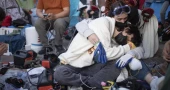
Police ordered pro-Palestinian protesters to abandon a tent encampment at New York University early Friday, following weeks of demonstrations and police crackdowns at college campuses nationwide that have resulted in more than 2,300 arrests.
About a dozen protesters who refused police orders to leave were arrested and about 30 more left voluntarily, according to NYU spokesperson John Beckman. The school asked the New York Police Department to intervene “to minimize the likelihood of injury" and disruption, Beckman said.
Classes will proceed as scheduled on Friday, he said. A larger NYU encampment was dismantled on April 22, when more than 130 protesters were arrested.
Tent encampments of protesters calling on universities to stop doing business with Israel or companies they say support the war in Gaza have spread across U.S. campuses in a student movement unlike any other this century.
Israel has branded the protests antisemitic, while Israel’s critics say it uses those allegations to silence opposition. Although some protesters have been caught on camera making antisemitic remarks or violent threats, protest organizers — some of whom are Jewish — call it a peaceful movement to defend Palestinian rights and protest the war.
President Joe Biden has defended the students’ right to protest peacefully but decried the violence and disruption of campus life.
NYPD officers on Friday also cleared an encampment at The New School in Greenwich Village, where students were not able to attend classes in at least two buildings because of the protesters. Deputy Commissioner of Operations Kaz Daughtry posted on the social platform X that the school asked the department to disperse the protesters.
Video posted by Daughtry shows dozens of helmeted officers massed outside the school. No arrests were announced.
Authorities said a further 133 protesters were arrested when police broke up a pro-Palestinian encampment at the State University of New York at New Paltz starting late Thursday, while nine protesters were also arrested at the University of Tennessee. Chancellor Donde Plowman said Friday that seven of those arrested are students who will also be sanctioned under the school's code of conduct.
The student protest movement began April 17 at Columbia University, where student protesters built an encampment to call for an end to the Israel-Hamas war. More than 34,000 Palestinians have been killed in the conflict in the Gaza Strip, according to the Health Ministry there. Israel launched its offensive in Gaza after Oct. 7, when Hamas militants killed about 1,200 people, mostly civilians, and took roughly 250 hostages in an attack on southern Israel.
More than 100 people were arrested late Tuesday when police broke up the Columbia encampment. One officer accidentally discharged his gun inside Hamilton Hall during that operation, but no one was injured, NYPD said late Thursday. He was trying to use the flashlight attached to his gun but instead fired a single round that struck a frame on the wall, police said.
At University of California, Los Angeles, more than 200 people were taken into custody early Thursday, after hundreds of protesters defied orders to leave, some forming human chains as police fired flash-bangs to break up the crowds. Police tore apart a fortified encampment’s barricade of plywood, pallets, metal fences and dumpsters, then pulled down canopies and tents.
UCLA Chancellor Gene Block told alumni on a call Thursday afternoon that administrators tried to find a peaceful solution and that things had been stable on campus until counterdemonstrators attacked the pro-Palestinian encampment late Tuesday.
Campus administrators and police did not intervene or call for backup for hours. No one was arrested that night, but at least 15 protesters were injured.
By Wednesday, the encampment had become “much more of a bunker” and there was no other solution but to have police dismantle it, Block said. Officers warned over loudspeakers that there would be arrests if the crowd did not disperse. Hundreds left voluntarily, while another 200-plus remained and were arrested.
Arrests have been made during at least 58 crackdowns on protesters at 44 colleges or universities since April 18, according to figures based on Associated Press reporting and statements from universities and law enforcement agencies.
University of Minnesota officials reached an agreement with protesters not to disrupt commencements, and similar compromises have been made at Northwestern University in suburban Chicago, Rutgers University in New Jersey and Brown University in Rhode Island.
2 years ago
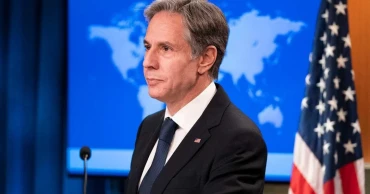
US urges every nation to do more to protect journalists
The United States has called on every nation to do more to protect journalists, and reiterated their unwavering support for free and independent media around the world.
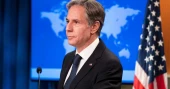
"Governments that fear truthful reporting have proved willing to target individual journalists, including through the misuse of commercial spyware and other surveillance technologies," said US Secretary of State Antony J. Blinken marking the World Press Freedom Day.
Each year on World Press Freedom Day, the world celebrates the importance of journalism and recognizes the integral role a vibrant, independent media plays in democratic societies.
"The free flow of accurate information, ideas, and opinions, including dissenting ones, is essential for transparent, responsive, and inclusive governance," said Blinken
In their pursuit of truth, journalists face unprecedented danger just for doing their jobs, he said.
More journalists were killed in 2023 than in any year in recent memory, Blinken noted.
Authoritarian governments and non-state actors continue to use disinformation and propaganda to undermine social discourse and impede journalists’ efforts to inform the public, hold governments accountable, and bring the truth to light, he said.
2 years ago
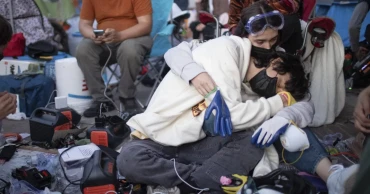
Nearly 2,200 people have been arrested during pro-Palestinian protests on US college campuses
Police have arrested nearly 2,200 people during pro-Palestinian protests at college campuses across the United States in recent weeks, sometimes using riot gear, tactical vehicles and flash-bang devices to clear tent encampments and occupied buildings. One officer accidentally discharged his gun inside a Columbia University administration building while clearing out protesters camped inside, authorities said.
No one was injured by the officer's mistake late Tuesday inside Hamilton Hall on the Columbia campus, the NYPD said Thursday. He was trying to use the flashlight attached to his gun at the time and instead fired a single round that struck a frame on the wall.
There were other officers but no students in the immediate vicinity, officials said. Body camera footage shows when the officer's gun went off, but the district attorney's office is conducting a review, a standard practice.
More than 100 people were taken into custody during the Columbia crackdown, just a fraction of the total arrests stemming from recent campus protests over the Israel-Hamas war. A tally by The Associated Press recorded at least 56 incidents of arrests at 43 different U.S. colleges or universities since April 18. The figures are based on AP reporting and statements from universities and law enforcement agencies.
Early Thursday, officers surged against a crowd of demonstrators at University of California, Los Angeles, ultimately taking at least 200 protesters into custody after hundreds defied orders to leave, some forming human chains as police fired flash-bangs to break up the crowds. Police tore apart a fortified encampment’s barricade of plywood, pallets, metal fences and dumpsters, then pulled down canopies and tents.
Like at UCLA, tent encampments of protesters calling on universities to stop doing business with Israel or companies they say support the war in Gaza have spread across other campuses nationwide in a student movement unlike any other this century.
Israel has branded the protests antisemitic, while Israel’s critics say it uses those allegations to silence opposition. Although some protesters have been caught on camera making antisemitic remarks or violent threats, protest organizers — some of whom are Jewish — call it a peaceful movement to defend Palestinian rights and protest the war.
President Joe Biden on Thursday defended the right of students to peaceful protest but decried the disorder of recent days.
The demonstrations began at Columbia on April 17 with students calling for an end to the Israel-Hamas war, which has killed more than 34,000 Palestinians in the Gaza Strip, according to the Health Ministry there. Israel launched its offensive in Gaza after Hamas militants killed about 1,200 people, mostly civilians, on Oct. 7 and took roughly 250 hostages in an attack on southern Israel.
On April 18, the NYPD cleared Columbia's initial encampment and arrested roughly 100 protesters. The demonstrators set up new tents and defied threats of suspension, and escalated their actions early Tuesday by occupying Hamilton Hall, an administration building that was similarly seized in 1968 by students protesting racism and the Vietnam War.
Roughly 20 hours later, officers stormed the hall. Video showed police with zip ties and riot shields streaming through a second-floor window. Police had said protesters inside presented no substantial resistance.
The officer's gun went off at 9:38 p.m., the NYPD said, about 10 minutes after police started pouring into Hamilton Hall. The department did not name the officer, whose actions were first reported by news outlet The City on Thursday.
The confrontations at UCLA also played out over several days this week. UCLA Chancellor Gene Block told alumni on a call Thursday afternoon that the trouble started after a permitted pro-Israel rally was held on campus Sunday and fights broke out and “live mice” were tossed into the pro-Palestinian encampment later that day.
In the following days, administrators tried to find a peaceful solution with members of the encampment and expected things to remain stable, Block said.
That changed late Tuesday, he said, when counterdemonstrators attacked the pro-Palestinian encampment. Campus administrators and police did not intervene or call for backup for hours. No one was arrested that night, but at least 15 protesters were injured. The delayed response drew criticism from political leaders, including California Gov. Gavin Newsom, and officials pledged an independent review.
By Wednesday, the encampment had become “much more of a bunker” and there was no other solution but to have police dismantle it, Block said.
The hourslong standoff went into Thursday morning as officers warned over loudspeakers that there would be arrests if the crowd — at the time more than 1,000 strong inside the encampment as well as outside of it — did not disperse. Hundreds left voluntarily, while another 200-plus remained and were ultimately taken into custody.
Meanwhile, protest encampments at other schools across the U.S. have been cleared by police — resulting in more arrests — or closed voluntarily. But University of Minnesota officials reached an agreement with protesters not to disrupt commencements, and similar compromises have been made at Northwestern University in suburban Chicago, Rutgers University in New Jersey and Brown University in Rhode Island.
2 years ago
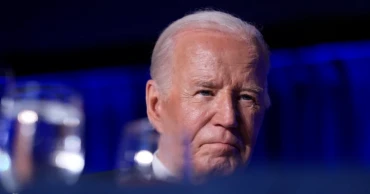
Biden says 'order must prevail' during campus protests over Gaza
President Joe Biden on Thursday defended the right to protest but insisted that “order must prevail” as college campuses across the country face unrest over the war in Gaza.
“Dissent is essential for democracy," he said at the White House. "But dissent must never lead to disorder.”
The Democratic president also said the protests have not caused him to reconsider his approach to the war. Biden has occasionally criticized Israel's conduct but continued to supply it with weapons.
Biden said the campus protests haven’t prompted him to rethink his Middle East policies, and he opposes sending in National Guard.
THIS IS A BREAKING NEWS UPDATE. AP’s earlier story follows below.
WASHINGTON (AP) — President Joe Biden will speak about student protests over the war in Gaza on Thursday, according to a White House official, breaking days of silence as police crack down on campus encampments.
The official declined to be identified ahead of Biden's remarks.
Republicans have tried to turn scenes of unrest into a campaign cudgel against Democrats.
Tension at colleges and universities has been building for days as some demonstrators refuse to remove encampments and administrators turn to law enforcement to clear them by force, leading to clashes that have seized attention from politicians and the media.
But Biden's last public comment came more than a week ago, when he condemned “antisemitic protests” and “those who don’t understand what’s going on with the Palestinians.”
The White House, which has been peppered with questions by reporters, has gone only slightly further than the president. On Wednesday, press secretary Karine Jean-Pierre said Biden is “monitoring the situation closely," and she said some demonstrations had stepped over a line that separated free speech from unlawful behavior.
“Forcibly taking over a building," such as what happened at Columbia University in New York, "is not peaceful," she said. "It’s just not.”
Biden has never been much for protesting. His career in elected office began as a county official when he was only 28 years old, and he’s always espoused the political importance of compromise over zealousness.
As college campuses convulsed with anger over the Vietnam War in 1968, Biden was in law school at Syracuse University.
“I’m not big on flak jackets and tie-dyed shirts,” he said years later. “You know, that’s not me.″
Despite the White House's criticism and Biden's refusal to heed protesters' demands to cut off U.S. support for Israel, Republicans blame Democrats for the disorder and have used it as a backdrop for press conferences.
“We need the president of the United States to speak to the issue and say this is wrong," House Speaker Mike Johnson, a Louisiana Republican, said on Tuesday. "What’s happening on college campuses right now is wrong.”
Johnson visited Columbia with other members of his caucus last week. House Republicans sparred with protesters while speaking to the media at George Washington University in Washington, D.C., on Wednesday.
Former President Donald Trump, his party's presumptive nominee, also criticized Biden in an interview with Sean Hannity on Fox News.
“Biden has to do something,” he said. “Biden is supposed to be the voice of our country, and it’s certainly not much of a voice. It’s a voice that nobody’s heard.”
He repeated his criticisms on Wednesday during a campaign event in Waukesha, Wisconsin.
“The radical extremists and far-left agitators are terrorizing college campuses, as you possibly noticed," Trump said. “And Biden’s nowhere to be found. He hasn’t said anything."
Kate Berner, who served as deputy communications director for Biden’s campaign in 2020, said Republicans already tried the same tactic four years ago during protests over George Floyd’s murder by a police officer.
“People rejected that,” she said. “They saw that it was just fearmongering. They saw that it wasn’t based in reality.”
Apart from condemning antisemitism, the White House has been reluctant to directly engage on the issue.
Jean-Pierre repeatedly deflected questions during a briefing on Monday.
Asked whether protesters should be disciplined by their schools, she said “universities and colleges make their own decisions” and "we’re not going to weigh in from here.”
Pressed on whether police should be called in, she said “that's up to the colleges and universities.”
When quizzed about administrators rescheduling graduation ceremonies, she said “that is a decision that they have to decide" and “that is on them.”
Biden will make his own visit to a college campus on May 19 when he's scheduled to deliver the commencement address at Morehouse University in Atlanta.
2 years ago
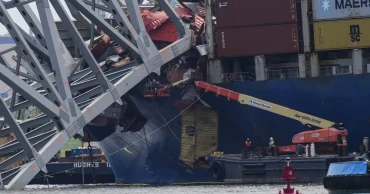
Body of 5th missing worker found more than a month after Baltimore bridge collapse, officials say
Authorities said they have recovered the body of a fifth person who was missing after the collapse of the Francis Scott Key Bridge more than a month ago.
The Key Bridge Response Unified Command announced that the victim found Wednesday was identified as Miguel Angel Luna Gonzalez, 49, of Glen Burnie, Maryland.
At collapsed Baltimore bridge, focus shifts to the weighty job of removing the massive structure
Six members of a roadwork crew plunged to their deaths on March 26 when a container ship lost power and crashed into one of the bridge’s supporting columns. Five bodies have now been recovered, but one worker, Jose Mynor Lopez, has not been found. They were all Latino immigrants who came to the United States from Mexico, Guatemala, El Salvador and Honduras.
Salvage teams found one of the missing construction vehicles Wednesday and notified the Maryland State Police, officials said. State police investigators and Maryland Transportation Authority Police officers and the FBI responded to the scene and recovered the body inside a red truck. The state police underwater recovery team and crime scene unit also assisted.
Cargo ship had engine maintenance in port before it collided with Baltimore bridge, officials say
“We remain dedicated to the ongoing recovery operations while knowing behind each person lost in this tragedy lies a loving family,” Maryland State Police Superintendent Roland Butler said in a statement. “Along with our local, state and federal partners, we ask that everyone extend their deepest sympathies and support to the families during this difficult time.”
Baltimore bridge collapse: ‘Heroes’ scrambled to stop traffic; construction crew feared dead
The Dali container ship has been stationary amid the wreckage since the collapse, but crews plan to refloat and remove the ship, allowing more maritime traffic to resume through Baltimore’s port. Officials expect to have it removed by May 10, according to a Port of Baltimore news release.
2 years ago
Columbia University threatens to expel student protesters occupying an administration building
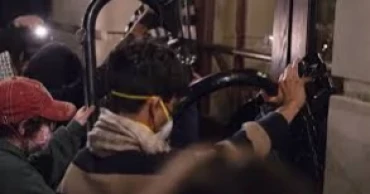
Dozens of protesters took over a building at Columbia University in New York early Tuesday, barricading entrances and unfurling a Palestinian flag from a window in the latest escalation of demonstrations against the Israel-Hamas war on college campuses nationwide. The school promised they would face expulsion.
The occupation at Columbia — where protesters had shrugged off an earlier ultimatum to abandon a tent encampment Monday or be suspended — unfolded as other universities stepped up efforts to clear out encampments. Police swept through some campuses, spurring confrontations with protesters and plenty of arrests. In rarer instances, university officials and protest leaders have struck agreements to restrict the disruption to campus life.
And as cease-fire negotiations appeared to gain steam Tuesday, it wasn’t clear whether those talks would inspire campus protesters to ease their efforts.
Protesters on Columbia's Manhattan campus locked arms in front of Hamilton Hall early Tuesday and carried furniture and metal barricades to the building, among several that were occupied during a 1968 civil rights and anti-Vietnam War protest. Posts on an Instagram page for protest organizers shortly after midnight urged people to protect the encampment and join them at Hamilton Hall. A “Free Palestine” banner hung from a window.
“An autonomous group reclaimed Hind’s Hall, previously known as ‘Hamilton Hall,’ in honor of Hind Rajab, a martyr murdered at the hands of the genocidal Israeli state at the age of six years old,” CU Apartheid Divest posted on the social platform X early Tuesday.
Hamilton Hall opened in 1907 and is named for Alexander Hamilton — one of the founding fathers of the United States — who attended King's College, Columbia's original name.
The takeover occurred nearly 12 hours after Monday’s 2 p.m. deadline for the protesters to leave an encampment of around 120 tents or face suspension.
In a statement Tuesday, Columbia spokesperson Ben Chang said, “Students occupying the building face expulsion.” Chang said the university had given protesters a chance to leave peacefully and finish the semester, but that those who didn't agree to the terms from Monday were being suspended — restricted from all academic and recreational spaces, allowed only to enter their residences, and, for seniors, ineligible to graduate.
“Protesters have chosen to escalate to an untenable situation — vandalizing property, breaking doors and windows, and blockading entrances — and we are following through with the consequences we outlined yesterday,” he said.
The public safety department said in a statement that access to the campus was limited to students living in the residential buildings and essential employees. There was just one access point into and out of campus.
New York Police Department Chief Jeffrey Maddrey said Tuesday that officers won’t enter Columbia’s campus without a request from college administration or an imminent emergency.
Protesters have insisted they will remain at the hall until the university agrees to three demands: divestment, financial transparency and amnesty.
At many campuses, including Columbia, the conflict over protests appeared to be coming to a head.
The standoffs have drawn concern from the White House. National Security Council spokesperson John Kirby said President Joe Biden believes students occupying an academic building is “absolutely the wrong approach,” and “not an example of peaceful protest.”
The office of the U.N. human rights chief, Volker Türk, meanwhile, expressed concern about “heavy-handed steps” taken to dismantle protests on U.S. campuses, while stressing that antisemitic, anti-Arab and anti-Palestinian comments were “totally unacceptable and deeply disturbing.”
U.N. Secretary-General Antonio Guterres later told reporters that "it is up to the university authorities to have the wisdom to properly manage situations like the ones we have witnessed.”
At California State Polytechnic University, Humboldt, where protesters occupied two buildings, dozens of police officers in helmets and carrying batons marched onto campus and cleared both halls overnight. The university said 25 were arrested and there were no injuries. The sweep was broadcast on the Facebook page of KAEF-TV, a satellite of KRCR-TV, until police detained the reporter.
Video posted by the campus newspaper showed students sitting in the campus quad as officers started detaining protesters. One yelled: “You don’t need to do this!”
The campus remains closed to anyone without authorization.
President Tom Jackson Jr. lamented the situation, saying “nobody wanted to see things come to this.”
"Unfortunately, serious criminal activity that crossed the line well beyond the level of a protest had put the campus at ongoing risk,” Jackson said in a statement.
At Virginia Commonwealth University in Richmond, police and demonstrators clashed Monday night as officers took down tents, charged the line of demonstrators, deployed chemical agents to disperse the crowd, and made arrests, the Richmond Times-Dispatch reported. Some protesters hurled water bottles and other objects at police.
Yale authorities on Tuesday morning cleared an encampment after protesters heeded final warnings to leave, university officials said. No arrests were reported. Demonstrators said on social media that they were moving their gathering to a sidewalk area. The encampment was set up Sunday, six days after police arrested nearly 50 people, including 44 students, and took down dozens of tents.
Dozens of people were arrested Monday during protests at universities in Texas, Utah, Virginia and New Jersey, while Columbia said hours before the takeover of Hamilton Hall that it had started suspending students. At the University of Texas at Austin, 79 people involved in the Monday protest were jailed, according to the Travis County sheriff’s department, most charged with criminal trespass.
A small group of students at Portland State University in Oregon broke into the university’s library late Monday, drawing a sharp rebuke from city officials and the district attorney. The downtown campus, where protesters had been demonstrating mostly peacefully, was closed Tuesday.
Also Tuesday, police cleared an encampment at the University of North Carolina at Chapel Hill and detained about 30 people. At the University of Connecticut, police made arrests after protesters refused to remove tents.
The nationwide campus protests began in response to Israel’s offensive in Gaza after Hamas launched a deadly attack on southern Israel on Oct. 7. Militants killed about 1,200 people, most of them civilians, and took roughly 250 hostages. Vowing to stamp out Hamas, Israel has killed more than 34,000 Palestinians in the Gaza Strip, according to the local health ministry.
Israel and its supporters have branded the university protests as antisemitic, while Israel's critics say it uses those allegations to silence opposition. Although some protesters have been caught on camera making antisemitic remarks or violent threats, organizers of the protests, some of whom are Jewish, say it is a peaceful movement aimed at defending Palestinian rights and protesting the war.
In a rare case, Northwestern University said it reached an agreement with students and faculty who represent the majority of protesters on its campus near Chicago. It allows peaceful demonstrations through the end of spring classes in exchange for some concessions.
At the University of Southern California, organizers of a large encampment sat down with university President Carol Folt for about 90 minutes Monday. Folt declined to discuss details but said talks would continue Tuesday.
USC officials banned the valedictorian, who has publicly supported Palestinians, from making a commencement speech, scrapped the keynote speech and declined to award honorary degrees. They have since canceled USC's main graduation event.
2 years ago
The US is building a pier off Gaza to bring in humanitarian aid. Here's how it would work
The U.S. and allies are scrambling to pull together a complex system that will move tons of humanitarian aid into Gaza by sea. Nearly two months after President Joe Biden gave the order, U.S. Army and Navy troops are assembling a large floating platform several miles off the Gaza coast that will be the launching pad for deliveries.
But any eventual aid distribution — which could start as soon as early May — will rely on a complicated logistical and security plan with many moving parts and details that are not yet finalized.
The relief is desperately needed, with the U.N. saying people in Gaza are on the brink of famine. But there are still widespread security concerns, and some aid groups say the focus should instead be on pushing Israel to ease obstacles to the delivery of aid on land routes.
Setting up the system is expected to cost at least $320 million, the Pentagon said Monday. Here's how it will work:
IT ALL STARTS IN CYPRUS
Humanitarian aid bound for Gaza through the maritime route will be delivered by air or sea to Cyprus, an island at the eastern edge of the Mediterranean Sea.
Cyprus Foreign Minister Constantinos Kombos has said the aid will undergo security checks at Larnaca port. Using that one departure point will address Israel's security concerns that all cargo be inspected to ensure that nothing is loaded on ships that Hamas could use against Israeli troops.
The screening will be strict and comprehensive, including the use of mobile X-ray machines, according to a Cyprus government official who spoke on condition of anonymity to publicly disclose details about the security operation. The process will involve Cypriot customs, Israeli teams, the U.S. and the United Nations Office for Project Services.
An American military official said the U.S. has set up a coordination cell in Cyprus to work with the government there, the U.S. Agency for International Development and other agencies and partners. The group will focus on coordinating the collection and inspection of the aid, said the official, who also spoke on condition of anonymity to discuss operation details.
THEN TO THE FLOATING PLATFORM
Once the pallets of aid are inspected, they will be loaded onto ships — mainly commercial vessels — and taken about 200 miles to the large floating pier being built by the U.S. military off the Gaza coast.
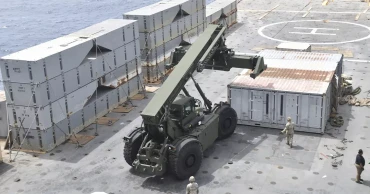
There, the pallets will be transferred onto trucks that in turn will be loaded onto two types of smaller Army boats — Logistic Support Vessels, or LSVs, and Landing Craft Utility boats, LCUs. The U.S. military official said the LSVs can hold 15 trucks each and the LCUs about five.
The Army boats will then shuttle the trucks from the pier to a floating causeway, which will be several miles away and anchored into the beach by Israeli Defense Forces.
Since Biden has made clear that no U.S. forces will step foot in Gaza, the troops doing the construction and driving and crewing the boats will be housed and fed on other ships offshore near the large floating pier.
The British Royal Navy support ship RFA Cardigan Bay will provide accommodations for hundreds of U.S. sailors and soldiers working to establish the pier. Another contracted ship will also be used for housing, but officials did not identify it.
SMALL BOATS TO THE CAUSEWAY
The small Army boats will sail to the two-lane, 550-meter (1,800-foot) causeway.
The U.S. military official said an American Army engineering unit has teamed up with an Israeli engineering unit in recent weeks to practice the installation of the causeway, training on an Israeli beach just up the coast. The U.K. Hydrographic Office also has worked with the U.S. and the Israeli military to analyze the shoreline and prepare for the final installation.
U.S. vessels will push the floating causeway into place, shoving it into the shoreline, where the Israeli Defense Forces will be ready to secure it.
Trucks loaded with the pallets of aid will drive off the Army boats onto the causeway and down to a secure area on land where they will drop off the aid and immediately turn around and return to the boats. The trucks will repeat that loop over and over, and they will be confined to that limited route to maintain security.
They will be driven by personnel from another country, but U.S. officials have declined to say which one.
DISTRIBUTION TO AID AGENCIES AND CIVILIANS
Aid groups will collect the supplies for distribution on shore, at a port facility built by the Israelis just southwest of Gaza City. Officials say they expect about 90 truckloads of aid a day initially and that it will quickly grow to about 150 a day.
The U.N. is working with USAID to set up the logistics hub on the beach.
There will be three zones at the port: one controlled by the Israelis where aid from the pier will be dropped off, another where the aid will be transferred and a third where Palestinian drivers contracted by the U.N. will wait to pick up the aid before taking it to distribution points.
SECURITY ON SHORE AND OFF
A key concern is security — both from militants and the Israeli military, which has been criticized for its killing of aid workers.
Sonali Korde, a USAID official, said key agreements for security and handling the aid deliveries are still being negotiated. Those include how Israeli forces will operate in Gaza to ensure that aid workers are not harmed.
Aid groups have been shaken by the Israeli airstrike that killed seven World Central Kitchen aid workers on April 1 as they traveled in clearly marked vehicles on a delivery mission authorized by Israel.
And there has already been one mortar attack at the site by militants, reflecting the ongoing threats from Hamas, which has said it would reject the presence of any non-Palestinians in Gaza.
U.S. and Israeli officials have declined to provide specifics on the security. But the U.S. military official said it will be far more robust when deliveries begin than it is now. And there will be daily assessments of the force protection needs there.
The IDF will handle security on the shore, and the U.S. military will provide its own security for the Army and Navy forces offshore.
2 years ago