usa

TikTok attorney: China can't get U.S. data under plan
Under intense scrutiny from Washington that could lead to a potential ban, the top attorney for TikTok and its Chinese parent company ByteDance defended the social media platform’s plan to safeguard U.S. user data from China.
“The basic approach that we’re following is to make it physically impossible for any government, including the Chinese government, to get access to U.S. user data," said general counsel Erich Andersen during a wide-ranging interview with The Associated Press at a cybersecurity conference in Sausalito, California on Friday sponsored by Hewlett-Packard Foundation and Aspen Digital and featuring top government officials, tech executives and journalists.
Andersen also said ByteDance will continue to develop its new app called Lemon8.
“We’re obviously going to do our best with the Lemon8 app to comply with U.S. law and to make sure we do the right thing here," Andersen said, referring to the new social app developed by ByteDance that resembles Instagram and Pinterest. “But I think we got a long way to go with that application — it's pretty much a startup phase.”
ByteDance’s most known app, TikTok, is under intense scrutiny over concerns it could hand over user data to the Chinese government or push pro-Beijing propaganda and misinformation on its behalf. Lemon8 was introduced across app stores in Japan in April 2020 and has been rolled out in more countries since then. It's available for download in the U.S. and could face similar scrutiny to TikTok.
Leaders at the FBI, CIA and officials at other government agencies have warned that ByteDance could be forced to give user data — such as browsing history, IP addresses and biometric identifiers — to Beijing under a 2017 law that compels companies to cooperate with the government for matters involving China’s national security. Another Chinese law, implemented in 2014, has similar mandates.
To assuage concerns from U.S. officials, TikTok has been emphasizing a $1.5 billion proposal, called Project Texas, to store all U.S. user data on servers owned and maintained by the software giant Oracle. Under the plan, access to U.S. data would be managed by U.S. employees through a separate entity called TikTok U.S. Data Security, which is run independently of ByteDance and monitored by outside observers.
Read more: China says TikTok ban reflects US insecurities
Some lawmakers have said that’s not enough. But despite skepticism about the project, TikTok says it is moving forward anyway.
“We’re investing in a system where people don’t have to believe the Chinese government and they don’t have to believe us,” Andersen said.
He also wondered if the skepticism was being driven by something else.
“Where are we falling short here?” he said. “At some point you get beyond the cybersecurity risk assessment, etcetera, and you get to ‘We don’t like your nationality.’”
TikTok CEO Shou Zi Chew has said the company started deleting all historic U.S. user data from non-Oracle servers this month and expects that process to be completed this year. During a congressional hearing held last week, Chew said migrating the data to Oracle will keep it out of China’s hands, but also acknowledged China-based employees may still have access to it before the process wraps up.
TikTok maintains it has never been requested to turn over any kind of data and won’t do so if asked. But whether those promises, or Project Texas, will allow it to stay operating in the U.S. remains to be seen.
The U.S., as well as Britain, the European Union and others, have banned TikTok on government devices. And the Biden administration is reportedly threatening a U.S. ban on the app unless its Chinese owners divest their stakes in the company.
On Friday, Andersen said a ban would be "basically giving up".
“Banning a platform like TikTok is a defeat, it’s a statement that we aren’t creative enough to find another way,” he said.
China has said it would oppose a possible sale, a declaration that makes it more difficult for TikTok to position itself and ByteDance as a global enterprise instead of a Chinese company. In 2020, the country had also come out in fierce opposition to executive orders by then President Donald Trump that sought to ban TikTok and the messaging app WeChat.
"They were clear about their point of view back in 2020 timeframe when we faced an existential challenge from executive orders under the Trump administration,” Andersen said.
Read more: Why does US see Chinese-owned TikTok as a security threat?
Courts blocked Trump’s efforts, and President Joe Biden rescinded Trump’s orders after taking office. The company has since been in talks about privacy concerns with the Committee on Foreign Investment in the United States, a multi-agency panel that sits under the Treasury department.
Meanwhile, lawmakers on Capitol Hill have been pushing bills that would effectively ban TikTok or give the administration more authority to do so. One bill by U.S. Sen. Josh Hawley was blocked this week by Sen. Rand Paul, the only Republican who has come out in opposition to a TikTok ban. A small number of progressive lawmakers have also said they would oppose a ban, and argued the U.S. should implement a national privacy law to curtail the problem.
Andersen said Friday TikTok would support broad-based privacy legislation.
"Our view is that we would really welcome broad-based legislation that applies broadly and evenly,” he said. “What we don’t like, frankly, is legislation that is sort of targeted at one company.”
TikTok could also be banned through another bill, called the RESTRICT Act, that has garnered broad bipartisan support in the Senate and backing from the White House. The legislation does not call out TikTok but would give the Commerce Department power to review and potentially restrict foreign threats to technology platforms.
3 years ago

Trump indictment and hush money investigation explained
New York, Mar 31 (AP/UNB) - Donald Trump has become the first former president to be indicted in a criminal case after a grand jury investigation into hush money payments made on his behalf during the 2016 presidential campaign.
The unprecedented indictment comes as the Republican faces other legal investigations and launches a bid to return to the White House in 2024.
The indictment will test the Republican Party already divided over whether to support Trump next year, in part due to his efforts to undermine his 2020 election loss.
Trump has denied any wrongdoing and accuses prosecutors of engaging in a politically motivated "witch hunt" to damage his campaign.
Here's a look at the hush money case, the grand jury investigation and possible ramifications for Trump's presidential campaign:
What's this case about?
The grand jury spent weeks meeting in secret to probe Trump's involvement in a $130,000 payment made in 2016 to the porn actor Stormy Daniels to keep her from going public about a sexual encounter she said she had with him years earlier. Trump lawyer Michael Cohen paid Daniels, whose real name is Stephanie Clifford, through a shell company before being reimbursed by Trump, whose company, the Trump Organization, logged the reimbursements as legal expenses.
Earlier in 2016, Cohen also arranged for former Playboy model Karen McDougal to be paid $150,000 by the publisher of the supermarket tabloid The National Enquirer, which then squelched her story in a journalistically dubious practice known as "catch and kill."
Trump denies having sex with either woman.
Trump's company "grossed up" Cohen's reimbursement for the Daniels payment to defray tax payments, according to federal prosecutors who filed criminal charges against the lawyer in connection with the payments in 2018. In all, Cohen got $360,000 plus a $60,000 bonus, for a total of $420,000.
Cohen pleaded guilty to violating federal campaign finance law in connection with the payments. Federal prosecutors say the payments amounted to illegal, unreported assistance to Trump's campaign. But they declined to file charges against Trump himself.
What are the charges?
The indictment has not yet been unsealed, so it's not totally clear.
Some experts have said they believe Trump could be charged with falsifying business records, which can be a misdemeanor or a felony under New York law. To secure a conviction on the felony charge, prosecutors would have to prove that records were falsified with the intention of committing or concealing a second crime. It's not clear what prosecutors may allege as the second crime.
What has Trump's lawyer said?
Trump's lawyer, Joe Tacopina, said Thursday that the former president didn't commit any crime and vowed to "vigorously fight this political prosecution in court."
Tacopina has accused prosecutors of "distorting laws" to try to take down the former president. He has described Trump as a victim of extortion who had to pay the money because the allegations were going to be embarrassing to him "regardless of the campaign."
"He made this with personal funds to prevent something from coming out — false, but embarrassing to himself, his family, his young son. That's not a campaign finance violation, not by any stretch," Tacopina said on ABC's "Good Morning America" before the indictment.
What happens next?
Law enforcement officials have been making security preparations for days for the possibility of an indictment and a court appearance by the president.
Trump was expected to surrender to authorities next week, though details were still being worked out, according to a person familiar with the matter who was not authorized to discuss a matter that remained under seal.
What's this grand jury and who testified?
A grand jury is made up of people drawn from the community, similar to a trial jury. But unlike juries that hear trials, grand juries don't decide whether someone is guilty or innocent. They only decide whether there is sufficient evidence for someone to be charged.
Proceedings are closed to the public, including the media. New York grand juries have 23 people. At least 16 must be present to hear evidence or deliberate and 12 have to agree there is enough evidence in order to issue an indictment.
David Pecker, a longtime Trump friend and the former chief executive of the parent company of The National Enquirer, returned to the courthouse this week where the grand jury was meeting.
Pecker's company, American Media Inc., secretly assisted Trump's campaign by paying $150,000 to McDougal in August 2016 for the rights to her story about an alleged affair with Trump. The company then suppressed McDougal's story until after the election.
The grand jury also heard from Cohen, as well as Robert Costello, who was once a legal adviser to Cohen.
The men have since had a falling out, and Costello indicated he has information he believes undercuts Cohen's credibility and contradicts his incriminating statements about Trump. Costello testified at the invitation of prosecutors, presumably as a way to ensure that the grand jury had an opportunity to consider any testimony or evidence that might weaken the case for moving forward with an indictment.
Trump was also invited to testify, but didn't.
What are the political ramifications for Trump?
Neither the indictment itself nor a conviction would prevent Trump from running for or winning the presidency in 2024.
Last week in Waco, Texas, Trump took a defiant stance at a rally by disparaging the prosecutors investigating him and predicting his vindication as he rallied supporters in a city made famous by deadly resistance against law enforcement.
"You will be vindicated and proud," Trump said in a speech brimming with resentments and framing the probes as political attacks on himself and his followers. "The thugs and criminals who are corrupting our justice system will be defeated, discredited and totally disgraced."
Before the charges were handed down, many party leaders had also already begun to defend the former president.
During a visit this month to Iowa, former Vice President Mike Pence called the idea of indicting a former president "deeply troubling." Another 2024 Republican prospect, New Hampshire Gov. Chris Sununu, has said there is a sense that the former president is being unfairly attacked.
Former South Carolina Gov. Nikki Haley, a declared candidate who also served as Trump's U.N. ambassador, has called Bragg's case an attempt at scoring "political points," adding, "You never want to condone any sort of prosecution that's being politicized."
Florida Gov. Ron DeSantis, who is considering joining the 2024 Republican field, slammed the investigation as politically motivated. But he also threw one of his first jabs at the former president in a quip likely to intensify their rivalry. DeSantis said he personally doesn't "know what goes into paying hush money to a porn star to secure silence over some kind of alleged affair."
What about other Trump investigations?
The New York case is just one of many legal woes Trump is facing.
The Justice Department is also investigating his retention of top secret government documents at his Florida estate, Mar-a-Lago, after leaving the White House. Federal investigators are also still probing the Jan. 6, 2021, insurrection at the U.S. Capitol and efforts to overturn the 2020 election that Trump falsely claimed was stolen.
In Georgia, Fulton County District Attorney Fani Willis has been investigating whether Trump and his allies illegally meddled in the 2020 election. The foreperson of a special grand jury, which heard from dozens of witnesses, said last month that the panel had recommended that numerous people be indicted, and hinted Trump could be among them. It is ultimately up to Willis to decide whether to move forward.
3 years ago

Donald Trump indicted: Expected to surrender next week
Donald Trump has been indicted by a Manhattan grand jury, a historic reckoning after years of investigations into his personal, political and business dealings and an abrupt jolt to his bid to retake the White House.
The exact nature of the charges was unclear Friday because the indictment remained under seal, but they stem from payments made during the 2016 presidential campaign to silence claims of an extramarital sexual encounter. Prosecutors said they were working to coordinate Trump's surrender, which could happen early next week. They did not say whether they intended to seek prison time in the event of a conviction, a development that wouldn't prevent Trump from seeking and assuming the presidency.
The indictment, the first against a former U.S. president, injects a local district attorney's office into the heart of a national presidential race and ushers in criminal proceedings in a city that the ex-president for decades called home. Arriving at a time of deep political divisions, the charges are likely to reinforce rather than reshape dueling perspectives of those who see accountability as long overdue and those who, like Trump, feel the Republican is being targeted for political purposes by a Democratic prosecutor.
Trump, who has denied any wrongdoing and has repeatedly assailed the investigation, called the indictment "political persecution" and predicted it would damage Democrats in 2024. In a statement confirming the charges, defense lawyers Susan Necheles and Joseph Tacopina said Trump "did not commit any crime. We will vigorously fight this political prosecution in court."
A spokesman for the Manhattan district attorney's office confirmed the indictment and said prosecutors had reached out to Trump's defense team to coordinate a surrender. Trump was asked to surrender Friday but his lawyers said the Secret Service needed additional time as they made security preparations, two people familiar with the matter told The Associated Press. The people, who couldn't publicly discuss security details, said Trump is expected to surrender early next week.
District Attorney Alvin Bragg left his office Thursday evening without commenting.
The case centers on well-chronicled allegations from a period in 2016 when Trump's celebrity past collided with his political ambitions. Prosecutors for months scrutinized money paid to porn actor Stormy Daniels and former Playboy model Karen McDougal, whom he feared would go public with claims that they had extramarital sexual encounters with him.
The timing of the indictment appeared to come as a surprise to Trump campaign officials following news reports that criminal charges were likely weeks away. The former president was at Mar-a-Lago, his Florida estate, on Thursday and filmed an interview with a conservative commentator earlier in the day.
For a man whose presidency was defined by one obliterated norm after another, the indictment sets up yet another never-before-seen spectacle — a former president having his fingerprints and mug shot taken, and then facing arraignment. For security reasons, his booking is expected to be carefully choreographed to avoid crowds inside or outside the courthouse.
The prosecution also means that Trump will have to simultaneously fight for his freedom and political future, while also fending off potentially more perilous legal threats, including investigations into attempts by him and his allies to undo the 2020 presidential election as well as into the hoarding of hundreds of classified documents.
In fact, New York was until recently seen as an unlikely contender to be the first place to prosecute Trump, who continues to face long-running investigations in Atlanta and Washington that could also result in charges. Unlike those inquiries, the Manhattan case concerns allegations against Trump that occurred before he became president and are unrelated to his much-publicized efforts to overturn the election.
The indictment comes as Trump seeks to reassert control of the Republican Party and stave off a slew of one-time allies who may threaten his bid for the presidential nomination. An expected leading rival in the race, Florida Gov. Ron DeSantis, called the indictment "un-American" in a statement Thursday night that pointedly did not mention Trump's name.
In bringing the charges, Bragg, the Manhattan district attorney, is embracing an unusual case that was investigated by two previous sets of prosecutors, both of which declined to take the politically explosive step of seeking Trump's indictment. The case may also turn in part on the testimony of a key witness, Trump's former lawyer and fixer Michael Cohen, who pleaded guilty to federal charges arising from the hush money payments, including making false statements.
The probe's fate seemed uncertain until word got out in early March that Bragg had invited Trump to testify before a grand jury, a signal that prosecutors were close to bringing charges.
Trump's attorneys declined the invitation, but a lawyer closely allied with the former president briefly testified in an effort to undercut Cohen's credibility.
Trump himself raised anticipation that he would be indicted soon, issuing a statement earlier this month in which he predicted an imminent arrest and called for protests. He did not repeat that call in a fresh statement Thursday, but the New York Police Department told its 36,000 officers to be fully mobilized and ready to respond to any potential protests or unrest.
Late in the 2016 presidential campaign, Cohen paid Daniels $130,000 to keep her silent about what she says was a sexual encounter with Trump a decade earlier after they met at a celebrity golf tournament.
Cohen was then reimbursed by Trump's company, the Trump Organization, which also rewarded the lawyer with bonuses and extra payments logged internally as legal expenses. Over several months, Cohen said, the company paid him $420,000.
Earlier in 2016, Cohen also arranged for the publisher of the supermarket tabloid the National Enquirer to pay McDougal $150,000 to squelch her story of a Trump affair in a journalistically dubious practice known as "catch-and-kill."
The payments to the women were intended to buy secrecy, but they backfired almost immediately as details of the arrangements leaked to the news media.
Federal prosecutors in New York ultimately charged Cohen in 2018 with violating federal campaign finance laws, arguing that the payments amounted to impermissible help to Trump's presidential campaign. Cohen pleaded guilty to those charges and unrelated tax evasion counts and served time in federal prison.
Trump was implicated in court filings as having knowledge of the arrangements — obliquely referred to in charging documents as "Individual 1" — but U.S. prosecutors at the time balked at bringing charges against him. The Justice Department has a longtime policy against indicting a sitting president in federal court.
Bragg's predecessor as district attorney, Cyrus Vance Jr., then took up the investigation in 2019. While that probe initially focused on the hush money payments, Vance's prosecutors moved on to other matters, including an examination of Trump's business dealings and tax strategies.
Vance ultimately charged the Trump Organization and its chief financial officer with tax fraud related to fringe benefits paid to some of the company's top executives.
The hush money matter became known around the D.A.'s office as the "zombie case," with prosecutors revisiting it periodically but never opting to bring charges.
Bragg saw it differently. After the Trump Organization was convicted on the tax fraud charges in December, he brought fresh eyes to the well-worn case, hiring longtime white-collar prosecutor Matthew Colangelo to oversee the probe and convening a new grand jury.
Cohen became a key witness, meeting with prosecutors nearly two-dozen times, turning over emails, recordings and other evidence and testifying before the grand jury.
Trump has long decried the Manhattan investigation as "the greatest witch hunt in history." He has also lashed out at Bragg, calling the prosecutor, who is Black, racist against white people.
The criminal charges in New York are the latest salvo in a profound schism between Trump and his hometown — a reckoning for a one-time favorite son who grew rich and famous building skyscrapers, hobnobbing with celebrities and gracing the pages of the city's gossip press.
Trump, who famously riffed in 2016 that he "could stand in the middle of Fifth Avenue and shoot somebody" and "wouldn't lose voters," now faces a threat to his liberty in a borough where more than 75% of voters — many of them potential jurors — went against him in the last election.
3 years ago

2 US Army helicopters crash in Kentucky, deaths feared
Two military helicopters crashed Wednesday night in southwestern Kentucky during a routine training mission, the U.S. Army's Fort Campbell said in a statement.
The status of the crew members was unknown, it added.
The two HH-60 Blackhawk helicopters, part of the 101st Airborne Division, crashed around 10 p.m. Wednesday in Trigg County, Kentucky, according to the statement, which was posted on Facebook.
“The command is currently focused on caring for the service members and their families,” the statement said.
Kentucky Governor Andy Beshear wrote on Twitter that “fatalities are expected,” adding that police and emergency officials were responding.
The crash is under investigation.
3 years ago

Taiwan's president begins US visit to shore up support
Taiwan's president is beginning a swing through the United States and Central America, a visit aimed at showing that her self-ruled island has allies as it faces a rising threat from China.
Taiwan was carefully calibrating President Tsai Ing-wen's stops in the United States, and as always forgoing any official meetings with senior U.S. leaders in Washington, in an effort to contain what China said would be a strong but as yet unspecified response.
Tsai arrived in New York on Wednesday and was scheduled to spend Thursday in the city, but few details of the trip were made public.
A senior Chinese diplomat in Washington, embassy charge d'affaires Xu Xueyan, pointed to an expected meeting between Tsai and House Speaker Kevin McCarthy elsewhere in the country. The meeting would have serious repercussions overall and a "serious, serious, serious" impact on U.S.-China relations, she said in a virtual session with reporters on Wednesday.
Sen. Robert Menendez, a New Jersey Democrat and chairman of the Senate Foreign Relations Committee, said he hopes any U.S. officials meeting unofficially with the president convey that American support for Taiwan is "strong and unequivocal."
Taiwan is an important partner for Washington in the Indo-Pacific and a major recipient of U.S. military aid. The U.S., Taiwan and their allies in the region are boosting their military readiness with the aim of deterring or defending against any future military action by China, which claims the island as its own.
Last August, Beijing responded to the visit of then-House Speaker Nancy Pelosi to Taiwan by launching missiles, deploying warships across the median line of the Taiwan Strait and simulating a blockade of the island. China also temporarily suspended dialogue with the U.S. on climate and other major issues and restricted military-to-military communication with the Pentagon.
Tsai has made six trips through the U.S. during her presidency, meeting with members of Congress and members of the Taiwanese diaspora. Administration officials are underscoring that her coming trip, which Taiwan calls a "transit," is in line with what she and her predecessors have done in the past.
Tsai's "transit is consistent with our long-standing unofficial relationship with Taiwan and is consistent with the United States' one-China policy, which remains unchanged," White House national security spokesman John Kirby told reporters Wednesday.
"The People's Republic of China should not use this transit as a pretext to step up any aggressive activity around the Taiwan Strait," Kirby said. "The United States and China have differences when it comes to Taiwan. But we have managed those differences for more than 40 years."
Tsai told reporters before boarding her plane to the United States that "Taiwan will resolutely safeguard the values of freedom and democracy."
"External pressure will not obstruct our resolution to engage with the world," she said.
Tsai is expected to meet with the American Institute in Taiwan chair, Laura Rosenberger. AIT is the U.S. government-run nonprofit that carries out unofficial relations with Taiwan.
Her stops in Central America are expected to shore up Taiwan's partnerships there, after Honduras this month switched its diplomatic relations from Taiwan to China. Tsai accused China of using "dollar diplomacy" to lure away Honduras. Just 13 countries now officially recognize Taiwan.
Republican Rep. Mike Gallagher of Wisconsin, the chairman of the House Select Committee on China, said the visit is a chance for Tsai "to convey to the Congress how important the partnership between the U.S. and Taiwan is, and what's necessary to preserve peace and stability across the Taiwan Strait."
Xu, the Chinese diplomat in Washington, accused Taiwan and the U.S. of harboring other aims for her trip.
"It should be clear to all that the so-called transit is merely a disguise to her true intention of seeking breakthrough and advocating Taiwan independence," she said.
Tensions between Washington and Beijing have grown as China under President Xi Jinping seeks to expand its regional and global influence. Passage of what the U.S. said was a Chinese spy balloon across the U.S. this winter heightened Americans' sense of challenge from China. China says it was a research balloon that was blown off course.
3 years ago

Biden starts democracy summit with $690M pledge for programs
President Joe Biden is opening his second Summit for Democracy with a pledge for the U.S. to spend $690 million bolstering democracy programs around the globe.
The Biden administration wants to use the two-day summit that begins Wednesday to zero in on making “technology work for and not against democracy,” according to a senior administration official. Some 120 global leaders have been invited to participate.
Biden frequently speaks of the U.S. and like-minded allies being at a critical moment in which democracies need to demonstrate they can out-deliver autocracies. The summits, something Biden promised as a Democratic 2020 presidential candidate, have become an important piece of his administration's effort to try to build deeper alliances and nudge autocratic-leaning nations toward at least modest reforms.
The new funding will focus on programs that support free and independent media, combat corruption, bolster human rights, advance technology that improves democracy, and support free and fair elections.
The official, who previewed the summit on the condition of anonymity, said the administration has also come to an agreement with 10 other nations on guiding principles for how the governments should use surveillance technology.
The surveillance tech agreement comes after Biden signed an executive order earlier this week restricting the U.S. government's use of commercial spyware tools that have been used to surveil human rights activists, journalists and dissidents around the world.
The world has had a tumultuous 15 months since Biden's first democracy summit in December 2021. Countries emerged from the coronavirus pandemic, and Russia launched its invasion of Ukraine, the largest-scale war in Europe since World War II. Biden has also tangled with Beijing, speaking out repeatedly about China's military and economic influence in the Indo-Pacific and beyond.
"Worldwide, we see autocrats violating human rights and suppressing fundamental freedoms; corrupting — and with corruption eating away at young people’s faith in their future; citizens questioning whether democracy can still deliver on the issues that matter most to their lives and to their livelihoods," Secretary of State Antony Blinken said at a pre-summit virtual event on Tuesday.
The U.S. hosted the last summit on its own. This time, it recruited four co-hosts — Costa Rica, the Netherlands, South Korea and Zambia — after ambassadors from China and Russia criticized the first summit and accused Biden of causing a global divide with a Cold War mentality.
Still, some countries would rather not get between Washington and Beijing.
Pakistan announced, as it did in 2021, that it received an invitation but would skip the summit, a move seen in part as an effort by the impoverished Islamic nation to assuage longtime ally China, which was not invited.
The Biden administration has also expanded its invitation list. Bosnia-Herzegovina, Gambia, Honduras, Ivory Coast, Lichtenstein, Mauritania, Mozambique and Tanzania were extended invitations to this year’s summit after being left off the list in 2021.
The first day of the summit will be a virtual format and will be followed on Thursday by hybrid gatherings in each of the host countries, with representatives from government, civil society and the private sector participating.
Costa Rica will focus on the role of youth in democratic systems. The Dutch are taking on media freedom. South Korea is looking at corruption. Zambia is centering on free and fair elections
The U.S. is no stranger to the challenges facing democracies, including deep polarization and pervasive misinformation.
Lies spread about the 2020 presidential election by then-President Donald Trump and his supporters have convinced a majority of Republicans that Biden was not legitimately elected, normalized harassment and death threats against election officials, and been used to justify efforts in Republican-controlled legislatures to adopt new voting restrictions.
Later this year, the U.S. Supreme Court will rule in a racial gerrymandering case from Alabama that voting rights advocates fear could virtually dismantle the nearly 60-year-old Voting Rights Act. Congressional efforts to shore up that federal law and increase voting access have failed.
Biden came into office vowing that human rights and democracy would play significant roles in his approach to foreign policy. But he's faced criticism from some human rights activists for being too soft on Saudi Arabia and Egypt over their human rights records. The administration sees both nations as important partners in bringing stability to the Middle East.
More recently, Biden administration officials have been at odds with close Mideast ally Israel, as conservative Prime Minister Benjamin Netanyahu tries to push forward a far-reaching judicial overhaul that the administration worries will diminish Israel's democracy.
Marti Flacks, the director of the Human Rights Initiative at the Center for Strategic and International Studies in Washington, said “there's been a disconnect” between the Biden administration's messaging and actions on human rights. The administration may get higher marks from allies for how it has approached stresses on democracy at home.
“The fact that the Biden administration has been very open and transparent about the challenges that the U.S. is facing domestically on the democracy front has increased their credibility on these issues externally,” said Flacks, a State Department and National Security Council official during the Obama administration. "Because one of the big questions that I think they faced coming in is how can you begin to talk about human rights and democracy overseas if you can’t address those problems here at home.”
Following his appearance at the plenary session of the summit, Biden will host President Alberto Fernández of Argentina for talks in the Oval Office.
Fernández, who was also taking part in the summit, is looking for backing from Biden as his country tries to renegotiate the country’s $44 billion lending program with the International Monetary Fund.
Argentina is asking the IMF to revise its requirements for release of the latest installment of the deal, arguing that it has been negatively impacted by a drought and by higher energy prices caused by Russia’s war in Ukraine. ___
3 years ago
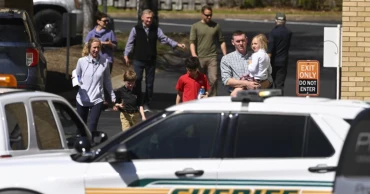
From Columbine to Nashville: Mass school shootings in US kill 175
Mass shooters have killed hundreds of people throughout U.S. history in realms like stores, theaters and workplaces, but it is in schools and colleges where the carnage reverberates perhaps most keenly — places filled with children of tender ages, older students aspiring to new heights and the teachers planting the seeds of knowledge, their journeys all cut short.
If a mass shooting is defined as resulting in the death of four or more people, not including the perpetrator, 175 people have died in 15 such events connected to U.S. schools and colleges — from 1999′s Columbine High School massacre to Monday’s shooting in Nashville, Tennessee. That’s according to a database compiled by The Associated Press, USA Today and Northeastern University, in addition to other AP reporting:
THE COVENANT SCHOOL, March 2023, 6 dead
A 28-year-old female shooter wielding two “assault-style” rifles and a pistol killed three students and three adults at a private Christian school in Nashville. The suspect also died after being shot by police.
ROBB ELEMENTARY SCHOOL, May 2022, 21 dead
An 18-year-old gunman opened fire Tuesday at an elementary school in Uvalde, Texas, killing 19 children and two adults, officials said. Law enforcement killed the attacker.
OXFORD HIGH SCHOOL, November 2021, 4 dead
A sophomore student is accused of killing four people and wounding others at his school in Oxford, Michigan, near Detroit. His parents are charged with involuntary manslaughter; authorities say they failed to secure a gun and ignored the mental health needs of their son before the shootings.
SANTA FE HIGH SCHOOL, May 2018, 10 dead
A shooter opened fire at a Houston-area high school, killing 10 people, most of them students, authorities said. The 17-year-old suspect has been charged with murder.
MARJORY STONEMAN DOUGLAS HIGH SCHOOL, February 2018, 17 dead
An attack left 14 students and three staff members dead at the school in Parkland, Florida, and injured many others. The shooter was sentenced to life without parole.
UMPQUA COMMUNITY COLLEGE, October 2015, 9 dead
A man killed nine people at the school in Roseburg, Oregon, and wounded nine others, then killed himself.
MARYSVILLE-PILCHUCK HIGH SCHOOL, October 2014, 4 dead
A 15-year-old used text messages to draw several cousins and friends to his cafeteria table at Marysville-Pilchuck High School in Washington state. He fatally shot four of them before killing himself.
UNIVERSITY OF CALIFORNIA, SANTA BARBARA, May 2014, 6 dead
A 22-year-old college student frustrated over sexual rejections fatally stabbed or shot six students near the school in Isla Vista, California, and injured several others before he killed himself.
SANDY HOOK ELEMENTARY SCHOOL, December 2012, 27 dead
A 19-year-old man killed his mother at their home in Newtown, Connecticut, then went to the nearby Sandy Hook Elementary School and killed 20 first graders and six educators. He took his own life.
OIKOS UNIVERSITY, April 2012, 7 dead
A former nursing student fatally shot seven people at the small private college in East Oakland, California. He died in prison in 2019.
NORTHERN ILLINOIS UNIVERSITY, February 2008, 5 dead
A 27-year-old former student shot and killed five people and wounded more than 20 others at the school in DeKalb, Illinois, before killing himself.
VIRGINIA TECH, April 2007, 32 dead
A 23-year-old student killed 32 people on the campus in Blacksburg, Virginia, in April 2007; more than two dozen others were wounded. The gunman then killed himself.
WEST NICKEL MINES AMISH SCHOOL, October 2006, 5 dead
A 32-year-old man entered an Amish schoolhouse near Lancaster, Pennsylvania, dismissed the boys, bound the girls, and fatally shot five of them before killing himself. Five others were wounded.
RED LAKE HIGH SCHOOL, March 2005, 9 dead
A 16-year-old student killed his grandfather and the man’s companion at their Minnesota home, then went to nearby Red Lake High School, where he killed five students, a teacher and a security guard before shooting himself.
COLUMBINE HIGH SCHOOL, April 1999, 13 dead
Two students killed 12 of their peers and one teacher at the school in Littleton, Colorado, and injured many others before killing themselves.
3 years ago

FDIC: First Citizens Bank to acquire Silicon Valley Bank
North Carolina-based First Citizens will buy Silicon Valley Bank, the tech industry-focused financial institution that collapsed earlier this month, rattling the banking industry and sending shockwaves around the world.
The sale involves the sale of all deposits and loans of SVB to First-Citizens Bank and Trust Co., the FDIC said in a statement late Sunday. Customers of SVB automatically will become customers of First Citizens, which is headquartered in Raleigh. The 17 former branches of SVB will open as First Citizens branches Monday.
The collapse of Silicon Valley Bank on March 10 prompted the FDIC and other regulators to act to protect depositors to prevent wider financial turmoil.
The bank, based in Santa Clara, California, failed after depositors rushed to withdraw money amid fears about the bank’s health. It was the second-largest bank collapse in U.S. history after the 2008 failure of Washington Mutual.
On March 12, New York-based Signature Bank was seized by regulators in the third-largest bank failure in the U.S.
In both cases, the government agreed to cover deposits, even those that exceeded the federally insured limit of $250,000, so depositors at Silicon Valley Bank and Signature Bank were able to access their money.Mid-sized San Francisco-based First Republic Bank, which serves a similar clientele as Silicon Valley Bank and appeared to be facing a similar crisis, was in turn battered by investors worried that it, too, might collapse. That led 11 of the biggest banks in the country to announced a $30 billion rescue package.
The acquisition of SVB by First Citizens gives the FDIC shares in the latter worth $500 million. Both the FDIC and First Citizens will share in losses and the potential recovery on loans included in a loss-share agreement, the FDIC said.
First Citizens Bank was founded in 1898 and says it has more than $100 billion in total assets, with more than 500 branches in 21 states as well as a nationwide bank. It reported net profit of $243 million in the last quarter.
3 years ago

Chocolate plant blast kills 2, leaves 9 missing in US
An explosion at a chocolate factory in Pennsylvania Friday killed two people and left nine people missing, authorities said.
Several other people were injured by the explosion at the R.M. Palmer Co. plant, said West Reading Borough Police Department Chief of Police Wayne Holben, who did not confirm the exact number of injured.
The explosion just before 5 p.m. sent a plume of black smoke into the air, destroying one building and damaging a neighboring building that included apartments.
“It’s pretty leveled,” West Reading Borough Mayor Samantha Kaag said of the explosion site. “The building in the front, with the church and the apartments, the explosion was so big that it moved that building four feet forward."
Also Read: Coroner: 7 dead in tornado that ripped through US South
The cause of the blast in the community about 60 miles (96 kilometers) northwest of Philadelphia was under investigation, Holden told reporters.
Eight people were taken to Reading Hospital Friday evening, Tower Health spokeswoman Jessica Bezler said.
Two people were admitted in fair condition and five were being treated and would be released, she said in an email. One patient was transferred to another facility, but Bezler provided no further details.
Also Read: US Embassy expects investigation of alleged assault on journo Zulkarnain's brother
Kaag said people were asked to move back about a block in each direction from the site of the explosion but no evacuations were ordered.
Dean Murray, the borough manager of West Reading Borough, said some residents were displaced from the damaged apartment building.
Kagg said borough officials were not in immediate contact with officials from R.M. Palmer, which Murray described as “a staple of the borough.”
The company's website says it has been making “chocolate novelties” since 1948 and now has 850 employees at its West Reading headquarters.
3 years ago

Mississippi tornadoes kill 23, injure dozens overnight
Powerful tornadoes tore through parts of the Deep South on Friday night, killing at least 23 people in Mississippi, obliterating dozens of buildings and leaving an especially devastating mark on a rural town whose mayor declared, “My city is gone.”
The Mississippi Emergency Management Agency said in a Twitter post that search and rescue teams from local and state agencies were deployed to help victims impacted by the tornadoes. The agency confirmed early Saturday that 23 people had died, four were missing and dozens were injured.
A few minutes later, the agency warned the casualty toll could go higher, tweeting: “Unfortunately, these numbers are expected to change.”
The National Weather Service confirmed a tornado caused damage about 60 miles (96 kilometers) northeast of Jackson, Mississippi. The rural towns of Silver City and Rolling Fork reported destruction as the tornado swept northeast at 70 mph (113 kph) without weakening, racing towards Alabama through towns, including Winona and Amory, into the night.
Rolling Fork Mayor Eldridge Walker told CNN that his town was essentially wiped out. Video shot as daylight broke showed houses reduced to piles of rubble, cars flipped on their sides and trees stripped of their branches. Occasionally, in the midst of the wreckage, a home would be spared, seemingly undamaged.
“My city is gone. But we are resilient and we are going to come back strong,” he said.
The National Weather Service issued an alert Friday night as the storm was hitting that didn’t mince words: “To protect your life, TAKE COVER NOW!”
“You are in a life-threatening situation,” it warned. “Flying debris may be deadly to those caught without shelter. Mobile homes will be destroyed. Considerable damage to homes, businesses, and vehicles is likely and complete destruction is possible.”
Cornel Knight told The Associated Press that he, his wife and their 3-year-old daughter were at a relative’s home in Rolling Fork when the tornado struck. He said the sky was dark but “you could see the direction from every transformer that blew.”
He said it was “eerily quiet” as that happened. Knight said he watched from a doorway until the tornado was, he estimated, less than a mile away. Then he told everyone in the house to take cover in a hallway. He said the tornado struck another relative’s home across a wide corn field from where he was. A wall in that home collapsed and trapped several people inside. As Knight spoke to AP by phone, he said he could see lights from emergency vehicles at the partially collapsed home.
The tornado looked so powerful on radar as it neared the town of Amory, about 25 miles (40 kilometers) southeast of Tupelo, that one Mississippi meteorologist paused to say a prayer after new radar information came in.
“Oh man,” WTVA’s Matt Laubhan said on the live broadcast. “Dear Jesus, please help them. Amen.”
The damage in Rolling Fork was so widespread that several storm chasers — who follow severe weather and often put up livestreams showing dramatic funnel clouds — pleaded for search and rescue help. Others abandoned the chase to drive injured people to the hospitals themselves.
The Sharkey-Issaquena Community Hospital on the west side of Rolling Fork was damaged, WAPT reported.
The Sharkey County Sheriff’s Office in Rolling Fork reported gas leaks and people trapped in piles of rubble, according to the Vicksburg News. Some law enforcement units were unaccounted for in Sharkey, according to the the newspaper.
According to poweroutage.us, 40,000 customers were without power in Tennessee; 15,000 customers were left without power in Mississippi; and 20,000 were without power in Alabama.
Rolling Fork and the surrounding area has wide expanses of cotton, corn and soybean fields and catfish farming ponds. More than a half-dozen shelters were opened in the state by emergency officials.
Mississippi Gov. Tate Reeves said in a Twitter post Friday night that search and rescue teams were active and that officials were sending in more ambulances and emergency assets.
“Many in the MS Delta need your prayer and God’s protection tonight,” the post said. “Watch weather reports and stay cautious through the night, Mississippi!”
This was a supercell, the nasty type of storm that brews the deadliest tornado and most damaging hail in the United States, said University of Northern Illinois University meteorology professor Walker Ashley. What’s more, this was a nighttime one which is “the worst kind,” he said.
Meteorologists saw a big tornado risk coming for the general region, not the specific area, as much as a week in advance, said Ashley, who was discussing it with his colleagues as early as March 17. The National Weather Service’s Storm Prediction Center put out a long-range alert for the area on March 19, he said.
Tornado experts like Ashley have been warning about increased risk exposure in the region because of people building more.
“You mix a particularly socioeconomically vulnerable landscape with a fast-moving, long-track nocturnal tornado, and, disaster will happen,” Ashley said in an email.
Earlier Friday, torrential rainfall in Missouri caused flooding that was blamed for the deaths of two people who were in a car that was swept away by high water. Another person was missing in another Missouri county hit by flash floods.
3 years ago