Others
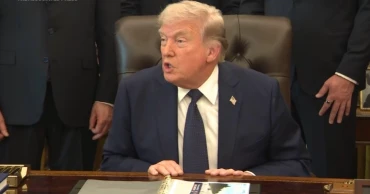
Israel and Lebanon agree to extend ceasefire by 3 weeks: Trump
Israel and Lebanon agreed to extend a ceasefire with Hezbollah by three weeks after White House talks on Thursday, U.S. President Donald Trump said.
The meeting was the second high-level negotiation between the two countries since last week.
The initial 10-day ceasefire, which took effect last Friday, had been due to expire Monday.
He, however, has ordered the U.S. military to “shoot and kill” Iranian small boats that deploy mines to choke traffic through the Strait of Hormuz.
In a social media post Thursday morning, he said the military is intensifying its mine-clearing efforts in the critical waterway.
The move escalates the U.S.-Iran standoff in the Persian Gulf.
1 month ago
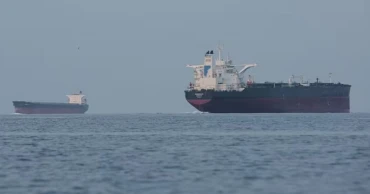
US military seizes oil tanker linked to Iran
The U.S. military seized another tanker Thursday associated with smuggling Iranian oil.
The U.S. Defense Department said it seized the oil tanker Majestic X in the Indian Ocean.
“We will continue global maritime enforcement to disrupt illicit networks and interdict vessels providing material support to Iran, wherever they operate,” the Defense Department said.
The seizure comes after Iran attacked three cargo ships Wednesday in the Strait of Hormuz, capturing two of them.
The Defense Department released footage of the seizure of the vessel, showing U.S. troops on the deck of the vessel.
Ship-tracking data showed the Majestic X in the Indian Ocean between Sri Lanka and Indonesia, roughly the same location as the oil tanker Tifani, earlier seized by American forces. It had been bound for Zhoushan, China.
The Majestic X is a Guyana-flagged oil tanker. It previously had been named Phonix and had been sanctioned by the U.S. Treasury in 2024 for smuggling Iranian crude oil in contravention of American sanctions on the Islamic Republic.
“Iran relies upon a sprawling network of tankers and ship management firms in multiple jurisdictions to transport its petroleum to overseas customers — using tactics such as false documentation, manipulation of vessel tracking systems, and constant changes to the names and flags of vessels,” the Treasury said at the time.
There was no immediate response from Iran on the news of the seizure.
Since the start of the war between Iran, Israel and the United States, over 30 ships have come under attack in the waters of the Persian Gulf, the Strait of Hormuz and the Gulf of Oman. The threat of attack, rising insurance premiums and other fears have stopped traffic from moving through the strait, through which 20% of all crude oil and natural gas traded passes.
Iran’s ability to restrict traffic through the strait, which leads from the Persian Gulf to the open ocean, has proved a major strategic advantage.
After the attacks Wednesday, White House press secretary Karoline Leavitt told Fox News Channel that American officials that Iran’s seizure of the ships didn’t violate truce terms because “these were not U.S. or Israeli ships, these were two international vessels.”
However, the ceasefire has been strained by dueling American attacks on Iranian ships and those by Iran on commercial vessels. It also remains unclear when, or if, the two sides will meet again in Islamabad, where Pakistani officials say they are still trying to bring the countries together to reach a diplomatic deal.
END/UNB/AP/SIS
1 month ago
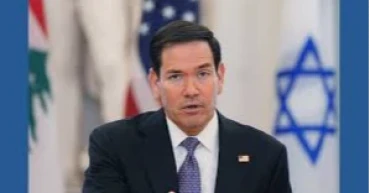
Lebanon, Israel to hold fresh direct talks in Washington on extending truce
Lebanon and Israel are set to begin a second round of rare direct talks in Washington on Thursday, focusing on extending the ongoing ceasefire between Israel and the Hezbollah group and exploring future negotiations.
The meeting will bring together Lebanese Ambassador to the United States Nada Hamadeh Moawad and her Israeli counterpart Yechiel Leiter. It follows their first direct engagement held just days ago, marking the first such contact between the two countries in nearly 30 years.
Lebanon’s President Joseph Aoun said discussions are underway to prolong the current 10-day ceasefire that started last Friday.
According to his office, Hamadeh will propose extending the truce and call for an end to Israeli demolitions of homes in areas occupied after fighting broke out on March 2.
Aoun said broader negotiations are also being prepared, aiming to fully stop Israeli attacks, secure the withdrawal of Israeli troops from Lebanon, ensure the release of Lebanese detainees held in Israel, deploy Lebanese forces along the border and begin reconstruction efforts.
Israel’s Foreign Minister Gideon Saar urged Lebanon to cooperate in disarming Hezbollah, which is backed by Iran, ahead of the Washington talks.
“We don't have any serious disagreements with Lebanon. There are a few minor border disputes that can be solved,” Saar said during remarks marking Israel’s Independence Day, where he described Lebanon as a “failed state.”
“The obstacle to peace and normalization between the countries is one: Hezbollah,” he added, saying Lebanon could achieve sovereignty and independence free from Iranian influence.
The latest conflict began when Hezbollah launched rockets into northern Israel, shortly after Israel and the United States carried out strikes on Iran. Israel responded with heavy airstrikes and a ground operation, capturing several towns and villages along the border.
Israeli forces now control a buffer zone extending up to 10 kilometers inside southern Lebanon, saying it is meant to prevent attacks on northern Israel.
Despite Hezbollah’s strong opposition, the talks are seen as a significant step between the two countries, which have no formal diplomatic ties and have technically been at war since 1948.
The Lebanese government hopes the discussions will lead to a lasting end to the conflict. While Iran has linked regional ceasefires to any future talks with Washington, Lebanon has stressed it is negotiating independently.
Wafiq Safa, a senior figure in Hezbollah’s political council, told AP that the group would not accept any outcome from the direct talks.
Since the ceasefire began last week, both sides have reported several violations.
The recent fighting has killed around 2,300 people in Lebanon, including many women and children, and forced more than 1 million people from their homes.
Last week’s meeting marked the first direct talks between Lebanon and Israel since 1993, with previous communication largely handled through mediators such as the United States or the UN peacekeeping mission in southern Lebanon.
Lebanon’s leadership, which criticised Hezbollah’s rocket attacks on March 2, had pushed for direct talks early on in hopes of preventing further escalation and avoiding a ground invasion.
1 month ago

Ex-Philippine president Duterte to stand trial over crimes against humanity charges
Judges at the International Criminal Court on Thursday upheld crimes against humanity charges against former Philippine president Rodrigo Duterte over the deadly anti-drug campaign carried out during his tenure.
A three-judge panel unanimously concluded that there are “substantial grounds” to believe the former leader was responsible for multiple killings, both during his time as mayor of Davao City and later as president.
Duterte, 80, was arrested in the Philippines last year, though legal proceedings have been delayed due to concerns about his health.
1 month ago
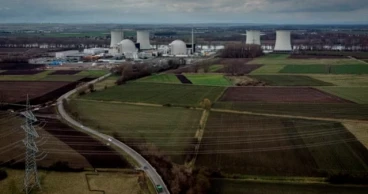
Global nuclear energy sees strong comeback four decades after Chernobyl
Nuclear energy is making a strong global comeback about 40 years after the Chernobyl disaster, as countries look for reliable and low-carbon electricity amid rising energy demand and geopolitical tensions.
The 1986 Chernobyl accident in then Soviet Ukraine triggered widespread fear about nuclear power and slowed its expansion across Europe and other regions. Later, Japan’s Fukushima disaster in 2011 further weakened public support. But experts say the trend is now reversing.
Today, more than 400 nuclear reactors are operating in 31 countries, while around 70 new reactors are under construction. Nuclear power now generates about 10% of global electricity and roughly a quarter of low-carbon energy worldwide.
The industry has also improved over time with stronger safety systems and lower construction and operating costs.
Fatih Birol, executive director of the International Energy Agency, said nuclear power is regaining momentum globally. He linked the renewed interest partly to recent wars and energy security concerns.
“I am 100% sure nuclear is coming back,” Birol said, adding that the technology is increasingly seen as a secure source of electricity across the Americas, Europe and Asia.
The United States is the world’s largest producer of nuclear power with 94 operating reactors, contributing about 30% of global nuclear electricity output. Washington is now aiming to quadruple its nuclear capacity by 2050. A senior US official recently said nuclear power is essential for industry growth, artificial intelligence demand and long-term energy security.
China operates 61 reactors and is building nearly 40 more, positioning itself to become the global leader in nuclear capacity. Russia is also expanding rapidly, both at home and abroad, building 20 reactors in different regions including Europe, Asia, Africa and the Middle East.
In Europe, the European Commission now considers nuclear power part of its clean energy mix alongside wind and solar. Commission President Ursula von der Leyen has called Europe’s earlier reduction of nuclear power a “strategic mistake” and said the bloc is now rethinking its approach to energy security and climate goals.
France remains Europe’s nuclear leader, generating nearly 70% of its electricity from 57 reactors. President Emmanuel Macron has announced plans for new reactors to strengthen energy independence and cut emissions.
Other European countries remain divided. Germany shut down its last nuclear reactors in 2023 after decades of opposition, while Belgium has extended the life of its plants. Spain still plans a gradual phase-out of nuclear power.
Japan has restarted 15 reactors after safety reviews following Fukushima, with more expected to resume operations.
In Africa, South Africa remains the only country with a nuclear plant, while Egypt is building one with Russian support and several others are exploring the technology.
Russia, the pioneer of several nuclear projects, is also modernizing its domestic fleet and expanding exports. It continues to build reactors in multiple countries and has strengthened older Soviet-era designs with new safety upgrades.
The renewed global interest reflects a broader shift in energy thinking. Rafael Grossi, head of the International Atomic Energy Agency, said countries now recognize that stable and low-carbon electricity will be essential to meet rising demand.
From Chernobyl’s legacy to today’s energy challenges, nuclear power is once again becoming a key part of global energy strategies.
1 month ago

War could drive up prices for years, warns EU energy chief
The European Union’s top energy official is warning that the massive energy crisis sparked by the U.S.-Israeli war on Iran is set to hit prices for months, even years, to come.
EU Energy Commissioner Dan Jørgensen said Wednesday that “this is not a short-term, small increase in prices. This is a crisis that is probably as serious as the 1973 and the 2022 crises combined.”
Jørgensen says the war is costing Europe around 500 million euros ($600 million) each day and that “we are looking into some very difficult months, or maybe even years” ahead. “Even in a best-case scenario, it’s still bad,” he told reporters.
1 month ago
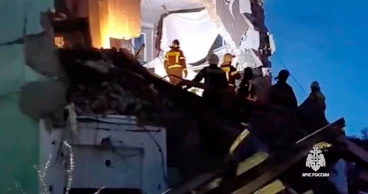
Ukraine pushes for Zelenskyy-Putin summit to revive stalled peace efforts
Ukraine is seeking a direct meeting between President Volodymyr Zelenskyy and Russian President Vladimir Putin in a bid to revive slow-moving US-led peace talks, the country’s top diplomat said.
Foreign Minister Andrii Sybiha said Kyiv believes a face-to-face summit could help bring fresh momentum to diplomatic efforts aimed at ending Russia’s invasion, which has been ongoing for more than four years.
At the same time, Russian officials reported that a Ukrainian drone strike hit a residential building deep inside Russia, killing a woman and a child.
Ukraine has asked Turkey to help arrange the high-level talks and has contacted other countries as possible hosts. Kyiv said it is open to holding the meeting in any country except Russia and Belarus.
“We are advocating for a summit now to inject new energy into diplomacy,” Sybiha told reporters.
Talks mediated by the United States over the past year between Russian and Ukrainian representatives have made little progress on key issues, including the fate of four Ukrainian regions that Moscow claims but does not fully control. With Washington now focused on tensions involving Iran, the peace process has largely stalled.
Zelenskyy has agreed to an unconditional ceasefire proposed by US President Donald Trump, but Putin has rejected it. Analysts say Moscow believes time is on its side, expecting Western support for Ukraine to weaken over time.
Fighting continues along a roughly 1,250-kilometer front line stretching across eastern and southern Ukraine, with heavy losses reported on both sides. Western officials estimate that Russia is suffering tens of thousands of casualties each month, though such figures cannot be independently confirmed.
Ukraine has also expanded its domestic arms production, developing long-range drones and missiles capable of hitting targets deep inside Russia, including oil and military-related facilities.
In the Russian city of Syzran, about 800 kilometers from the Ukrainian border, a drone strike caused part of a residential building to collapse. Authorities said the bodies of a woman and a child were recovered from the debris, while 12 others were injured.
Images from the scene showed a section of the four-story building reduced to rubble as rescue workers searched through the wreckage. Reports said a Rosneft refinery, often targeted in Ukrainian strikes, is located on the same street.
Russian officials say Ukraine’s drone attacks have surged sharply, rising from around 6,200 in 2024 to over 23,000 in 2025.
1 month ago

Two US officials killed in Mexico crash were CIA officers after anti-drug operation
Two US officials who died in a vehicle crash after returning from an anti-drug operation in northern Mexico over the weekend were working for the CIA, according to a US official and two other people familiar with the matter.
Two Mexican investigators were also killed in the crash. Mexican authorities said the convoy had been returning after a mission targeting drug laboratories run by criminal groups. However, differing accounts from US and Mexican officials have raised questions over the exact nature of the operation.
The CIA link was confirmed Tuesday by sources familiar with the incident, who spoke on condition of anonymity due to the sensitivity of intelligence matters. The Washington Post had earlier reported that the officials were CIA personnel.
The incident comes amid confusion and conflicting statements from both governments about US involvement in the raid in Chihuahua state, where drug labs were reportedly destroyed.
The lack of clarity has renewed debate over how deeply the United States is involved in security operations inside Mexico, especially as pressure grows from US President Donald Trump’s administration for stronger action against drug cartels.
Trump has taken a tougher stance on Latin America, including military operations in the region and repeated offers of direct US action against Mexican cartels, which Mexican President Claudia Sheinbaum has rejected as unnecessary.
US Ambassador to Mexico Ron Johnson initially described the deceased officials as embassy personnel. The US Embassy later said they were supporting efforts by Chihuahua state authorities but did not confirm their identities or agency ties.
Mexican officials first suggested cooperation with US forces in the operation but later softened their statements after the matter drew political attention in Mexico.
President Sheinbaum said she was not aware of any formal joint operation involving US agencies and Mexican forces, although she acknowledged that some level of coordination had taken place between local and US authorities.
The controversy highlights the sensitive nature of US intelligence activity in Mexico, where cooperation against drug cartels often clashes with concerns over national sovereignty.
Security analysts say covert US operations in Mexico have become more common in recent years, particularly under the Trump administration’s intensified anti-drug strategy, though both governments often avoid publicly acknowledging them.
1 month ago
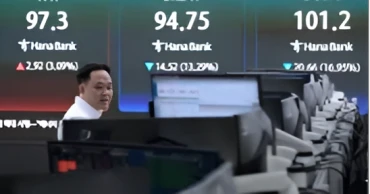
Oil dips, global shares mostly rise amid uncertainty over US-Iran talks
Oil prices edged lower and global equities mostly advanced on Tuesday across Europe and Asia, as uncertainty persisted over potential US-Iran negotiations to end the ongoing conflict.
Brent crude fell 0.7% to $94.81 per barrel, while US benchmark crude declined 0.9% to $86.63.
The الحرب has disrupted oil shipments through the Strait of Hormuz, a crucial global shipping route, driving prices significantly higher in recent weeks.
US President Donald Trump has called for the waterway to reopen fully to international shipping and has imposed a blockade on Iranian ports. He also said Vice President JD Vance would travel to Islamabad for possible talks with Iran. However, Tehran has not confirmed participation, particularly following the recent seizure of an Iranian-flagged vessel by the US Navy.
In European trading, Germany’s DAX gained 0.6% to 24,558.9, while France’s CAC 40 remained nearly unchanged at 8,333.05. Britain’s FTSE 100 inched up 0.1% to 10,620.92.
US futures for both the S&P 500 and the Dow Jones Industrial Average rose slightly, each adding just over 0.1%.
Asian markets also showed strength. Japan’s Nikkei 225 climbed 0.9%, supported by technology stocks such as Tokyo Electron, which rose 3.5%. SoftBank Group surged 8.5% on continued optimism around artificial intelligence-driven gains.
South Korea’s Kospi jumped 2.7%, while Taiwan’s Taiex advanced 1.8%.
Hong Kong’s Hang Seng rose 0.5%, and China’s Shanghai Composite added 0.1%. Meanwhile, Australia’s S&P/ASX 200 was little changed, slipping marginally.
Oil prices had risen earlier amid escalating tensions between Washington and Tehran, though recent gains have been less sharp compared to earlier in the conflict. US stocks, meanwhile, pulled back slightly from record highs.
On Monday, the S&P 500 fell 0.2%, the Dow slipped marginally, and the Nasdaq declined 0.3%.
Investor sentiment remains cautious due to concerns that continued disruptions in the Strait of Hormuz could impact global oil supply.
Attention is now focused on the looming ceasefire deadline between the US and Iran, set to expire late Tuesday US time.
Analysts say the situation remains delicately balanced, with hopes that renewed talks could lead to a breakthrough agreement to end the conflict.
Despite recent volatility, oil prices remain below their peak levels seen earlier in the war, and US equities continue to trade above pre-conflict levels.
Strong corporate earnings and resilient consumer spending have helped support the US economy, with most companies reporting better-than-expected profits for the first quarter of 2026.
Key earnings reports expected this week include UnitedHealth Group, Tesla and Procter & Gamble.
In currency markets, the US dollar strengthened to 159.21 Japanese yen, while the euro weakened slightly to $1.1767.
1 month ago
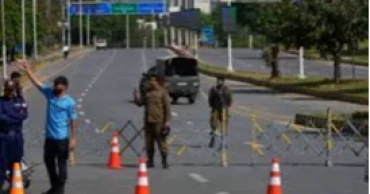
Pakistan hopeful of Iran-US talks amid fragile ceasefire
Pakistan continued preparations on Tuesday for a second round of Iran-US talks in Islamabad, despite uncertainty over whether Tehran would participate, as a fragile ceasefire remained at risk.
Rhetoric from both sides stayed tense. US President Donald Trump warned of heavy military escalation if no agreement is reached before the ceasefire deadline, which he set for Wednesday. Meanwhile, Iran’s chief negotiator said Tehran has “new cards” yet to be revealed.
The two-week ceasefire, which began on April 8, is likely to be extended if negotiations proceed. US officials have indicated Vice President JD Vance would head the American delegation, but Iran has not confirmed its participation. Iranian state television reported that no delegation had yet arrived in Islamabad.
The broadcast, often reflecting hard-line views within Iran, highlighted internal debate over how to respond to the recent US seizure of an Iranian container ship.
Control over the Strait of Hormuz remains central to the dispute. The US has imposed a blockade on Iranian ports to pressure Tehran, while Iran’s grip on the strategic waterway has driven global oil prices higher, with Brent crude nearing $95 per barrel.
Before the conflict, the strait was open to international shipping, and Washington is pushing for unrestricted passage to resume.
European officials, meeting in Brussels, are also assessing the impact on energy supplies after warnings of limited jet fuel reserves.
Although Iran acknowledged receiving new proposals from Washington, significant differences persist, particularly over its nuclear programme, regional influence and control of the strait.
Iranian parliamentary speaker and chief negotiator Mohammed Bagher Qalibaf accused the US of seeking Iran’s surrender, saying Tehran would not negotiate under threats.
Despite tensions, Pakistani officials remain optimistic that Iran will send representatives, allowing talks to proceed.
Foreign Minister Ishaq Dar has been engaged in diplomatic efforts, including discussions with Egypt and China, both key regional players. China described the situation as a critical transition between war and peace and urged all sides to remain committed to dialogue.
Security has been tightened in Islamabad, with increased deployments and patrols, suggesting preparations for possible high-level visits if progress is made.
Analysts say Pakistan appears ready to host senior leaders from both countries should negotiations advance toward an agreement.
Separately, diplomatic efforts are also underway elsewhere in the region. Talks between Israel and Lebanon are expected to resume in Washington, following rare direct contacts aimed at easing tensions and potentially reaching a peace deal.
The broader conflict has resulted in thousands of casualties across the region, underscoring the urgency of renewed diplomatic efforts.
1 month ago