Others
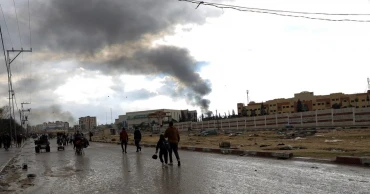
UN chief calls for urgent steps to de-escalate situation in Gaza, surrounding areas
UN Secretary-General Antonio Guterres on Wednesday urgently appealed for measures to reduce tensions in Gaza and its neighboring regions.
"I call for urgent steps to de-escalate the situation and spare the region from more violence before it is too late," the top UN official told the meeting of the Committee on the Exercise of the Inalienable Rights of the Palestinian People.
"As we seek to address mounting needs in Gaza, we also remain focused on the deteriorating situation in the occupied West Bank, including East Jerusalem," said the secretary-general. "I am extremely alarmed by the high levels of settler violence in the occupied West Bank. Palestinian attacks against Israelis also continue."
"All of this violence must stop, and the perpetrators held accountable," he said.
Read: Israel military operation destroys a Gaza cemetery. Israel says Hamas used the site to hide a tunnel
The secretary-general commended the vital role of the committee amid the protracted Question of Palestine and escalating violence, particularly highlighted by the Oct. 7 attack by Hamas in Israel and Israel's ensuing military operations in Gaza.
Describing the aftermath in Gaza as "a scar on our shared humanity and conscience," the secretary-general lamented the "death, destruction, displacement, hunger, loss, and grief" over the past 120 days.
Highlighting the relentless bombardment and conflict, he said, "The ongoing conflict and relentless bombardment by Israeli forces across Gaza have resulted in killings of civilians and destruction at a pace and scale unlike anything we have witnessed in recent years."
He expressed horror at the military strikes that "have killed and maimed civilians," emphasizing that over "26,750 Palestinians have reportedly been killed in Gaza alone - more than two-thirds women and children."
Guterres pointed out the severe impact on civilian infrastructure, with "over 70 percent... including homes, hospitals, schools, water, and sanitation facilities in Gaza - have been destroyed or severely damaged," leading to 1.7 million displacements.
Reaffirming the principles of international humanitarian law, he stressed that "no party to an armed conflict is above international law."
Read: Fighting across Gaza as UN aid agency faces more cuts
The secretary-general also addressed serious allegations against staff members of the United Nations Relief and Works Agency for Palestine Refugees in the Near East (UNRWA), saying that "I was personally horrified by these accusations." He outlined steps being taken to address them, highlighting the importance of UNRWA's "vital work."
With Gaza's humanitarian system on the brink of collapse and 2.2 million people facing "inhumane conditions," the secretary-general called for "rapid, safe, unhindered, expanded and sustained humanitarian access throughout Gaza."
He emphasized the need for more crossing points to ease congestion and ensure continuous humanitarian access, alongside a plea for an "immediate humanitarian ceasefire."
Guterres concluded with a call for progress toward a two-state solution. "Only the two-state solution... can ensure the realization of the inalienable rights of the Palestinian people as well as a just and lasting peace and stability in the region."
He urged the international community to remain steadfast in its commitment to advancing a meaningful peace process.
2 years ago

‘Sorry for everything you’ve all been through,’ Zuckerberg says to parents of child victims
Sexual predators. Addictive features. Suicide and eating disorders. Unrealistic beauty standards. Bullying. These are just some of the issues young people are dealing with on social media — and children's advocates and lawmakers say companies are not doing enough to protect them.
On Wednesday, the CEOs of Meta, TikTok, X and other social media companies went before the Senate Judiciary Committee to testify at a time when lawmakers and parents are growing increasingly concerned about the effects of social media on young people’s lives.
The hearing began with recorded testimony from kids and parents who said they or their children were exploited on social media. Throughout the hourslong event, parents who lost children to suicide silently held up pictures of their dead kids.
"They’re responsible for many of the dangers our children face online,” Senate Majority Whip Dick Durbin, who chairs the committee, said in opening remarks. “Their design choices, their failures to adequately invest in trust and safety, their constant pursuit of engagement and profit over basic safety have all put our kids and grandkids at risk.”
Meta's initial decisions to remove 2 videos of Israel-Hamas war is reversed by Oversight Board
In a heated question and answer session with Mark Zuckerberg, Republican Missouri Sen. Josh Hawley asked the Meta CEO if he has personally compensated any of the victims and their families for what they have been through.
“I don't think so,” Zuckerberg replied.
“There's families of victims here,” Hawley said. “Would you like to apologize to them?”
Zuckerberg stood, turned away from his microphone and the senators, and directly addressed the parents in the gallery.
“I’m sorry for everything you have all been through. No one should go through the things that your families have suffered,” he said, adding that Meta continues to invest and work on “industrywide efforts” to protect children.
But time and time again, children’s advocates and parents have stressed that none of the companies are doing enough.
One of the parents who attended the hearing was Neveen Radwan, whose teenage daughter got sucked in to a “black hole of dangerous content” on TikTok and Instagram after she started looking at videos on healthy eating and exercise at the onset of the COVID lockdowns. She developed anorexia within a few months and nearly died, Radwan recalled.
“Nothing that was said today was different than what we expected,” Radwan said. “It was a lot of promises and a lot of, quite honestly, a lot of talk without them really saying anything. The apology that he made, while it was appreciated, it was a little bit too little, too late, of course.”
But Radwan, whose daughter is now 19 and in college, said she felt a “significant shift” in the energy as she sat through the hearing, listening to the senators grill the social media CEOs in tense exchanges.
“The energy in the room was, very, very palpable. Just by our presence there, I think it was very noticeable how our presence was affecting the senators,” she said.
Hawley continued to press Zuckerberg, asking if he'd take personal responsibility for the harms his company has caused. Zuckerberg stayed on message and repeated that Meta's job is to “build industry-leading tools” and empower parents.
“To make money,” Hawley cut in.
Israeli defense minister says war on Hamas will last months as US envoy discusses timetable
South Carolina Sen. Lindsay Graham, the top Republican on the Judiciary panel, echoed Durbin's sentiments and said he's prepared to work with Democrats to solve the issue.
“After years of working on this issue with you and others, I’ve come to conclude the following: Social media companies as they’re currently designed and operate are dangerous products," Graham said.
The executives touted existing safety tools on their platforms and the work they’ve done with nonprofits and law enforcement to protect minors.
Snapchat broke ranks ahead of the hearing and is backing a federal bill that would create a legal liability for apps and social platforms that recommend harmful content to minors. Snap CEO Evan Spiegel reiterated the company’s support on Wednesday and asked the industry to back the bill.
TikTok CEO Shou Zi Chew said the company is vigilant about enforcing its policy barring children under 13 from using the app. CEO Linda Yaccarino said X, formerly Twitter, doesn’t cater to children.
“We do not have a line of business dedicated to children,” Yaccarino said. She said the company will also support Stop CSAM Act, a federal bill that makes it easier for victims of child exploitation to sue tech companies.
Yet child health advocates say social media companies have failed repeatedly to protect minors.
Profits should not be the primary concern when companies are faced with safety and privacy decisions, said Zamaan Qureshi, co-chair of Design It For Us, a youth-led coalition advocating for safer social media. “These companies have had opportunities to do this before they failed to do that. So independent regulation needs to step in.”
Republican and Democratic senators came together in a rare show of agreement throughout the hearing, though it’s not yet clear if this will be enough to pass legislation such as the Kids Online Safety Act, proposed in 2022 by Sens. Richard Blumenthal of Connecticut and Marsha Blackburn of Tennessee.
“There is pretty clearly a bipartisan consensus that the status quo isn’t working," said New Mexico Attorney General Raúl Torrez, a Democrat. “When it comes to how these companies have failed to prioritize the safety of children, there’s clearly a sense of frustration on both sides of the aisle.”
Meta is being sued by dozens of states that say it deliberately designs features on Instagram and Facebook that addict children to its platforms. New Mexico filed a separate lawsuit saying the company has failed to protect them from online predators.
New internal emails between Meta executives released by Blumenthal’s office show Nick Clegg, the company's president of global affairs, and others asking Zuckerberg to hire more people to strengthen "wellbeing across the company” as concerns grew about effects on youth mental health.
“From a policy perspective, this work has become increasingly urgent over recent months. Politicians in the U.S., U.K., E.U. and Australia are publicly and privately expressing concerns about the impact of our products on young people’s mental health,” Clegg wrote in an August 2021 email.
The emails released by Blumenthal’s office don’t appear to include a response, if there was any, from Zuckerberg. In September 2021, The Wall Street Journal released the Facebook Files, its report based on internal documents from whistleblower Frances Haugen, who later testified before the Senate. Clegg followed up on the August email in November with a scaled-down proposal but it does not appear that anything was approved.
“I’ve spoken to many of the parents at the hearing. The harm their children experienced, all that loss of innocent life, is eminently preventable. When Mark says ‘Our job is building the best tools we can,’ that is just not true,” said Arturo Béjar, a former engineering director at the social media giant known for his expertise in curbing online harassment who recently testified before Congress about child safety on Meta’s platforms. “They know how much harm teens are experiencing, yet they won’t commit to reducing it, and most importantly to be transparent about it. They have the infrastructure to do it, the research, the people, it is a matter of prioritization.”
Béjar said the emails and Zuckerberg's testimony show that Meta and its CEO “do not care about the harm teens experience” on their platforms.
“Nick Clegg writes about profound gaps with addiction, self-harm, bullying and harassment to Mark. Mark did not respond, and those gaps are unaddressed today. Clegg asked for 84 engineers of 30,000,” Béjar said. “Children are not his priority.”
Read more: Facebook parent Meta hit with record fine for transferring European user data to US
2 years ago
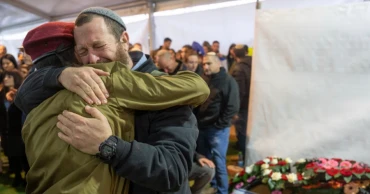
150 people are killed in Gaza in 24 hours, Health Ministry says
Gaza’s Health Ministry says 150 people have been killed in the territory in the last 24 hours and an additional 313 were wounded as Israeli forces continue to battle militants, even in the northern part of the territory.
The north, where entire neighborhoods have been flattened, was the initial target of Israel's ground offensive in late October.
Israel's military said Wednesday that its forces killed more than 15 Hamas militants in northern Gaza over the past day and targeted militant infrastructure in a school.
Israel military operation destroys a Gaza cemetery. Israel says Hamas used the site to hide a tunnel
The latest deaths bring the Palestinian death toll from Israel’s offensive to 26,900, according to the Hamas-controlled Health Ministry. It does not distinguish between civilian and combatant deaths but says most of those killed were women and children.
U.N. Secretary-General António Guterres reiterated his call for a cease-fire in Gaza.
Fighting across Gaza as UN aid agency faces more cuts
Hamas’ Oct. 7 attack in southern Israel that sparked the war killed 1,200 people, mostly civilians, and about 250 people were taken hostage, according to Israeli authorities.
2 years ago
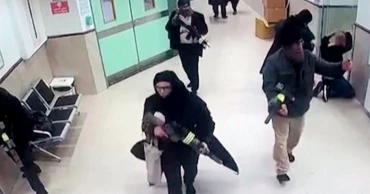
Israeli forces dressed as civilian women and medics kill 3 suspected militants in West Bank hospital
Israeli forces disguised as civilian women and medics stormed a hospital Tuesday in the occupied West Bank, killing three Palestinian “militants” in a dramatic raid.
Prime Minister Benjamin Netanyahu meanwhile ruled out a military withdrawal from Gaza or the release of thousands of jailed militants — Hamas' main two demands for any cease-fire — casting doubt on the latest efforts to end a war that has destabilized the broader Middle East.
The Palestinian Health Ministry said Israeli forces opened fire inside the Ibn Sina Hospital in the West Bank town of Jenin. A hospital spokesperson said there was no exchange of fire, indicating it was a targeted killing.
Israel's military said the militants were using the hospital as a hideout, without providing evidence. It alleged that one of those targeted had transferred weapons and ammunition to others for a planned attack, purportedly inspired by Hamas' Oct. 7 assault on southern Israel that triggered the war in Gaza.
Israel military operation destroys a Gaza cemetery. Israel says Hamas used the site to hide a tunnel
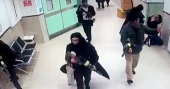
Security camera footage from the hospital shows about a dozen undercover forces, most of them armed, wearing Muslim headscarves, hospital scrubs or white doctor’s coats. One carried a rifle in one arm and a folded wheelchair in the other.
NETANYAHU REJECTS HAMAS' KEY DEMANDSNetanyahu, speaking at an event elsewhere in the West Bank, denied reports of a possible cease-fire deal to end the war in Gaza and repeated his vow to keep fighting until “absolute victory” over Hamas.
“We will not end this war without achieving all of our goals,” said Netanyahu, who is under mounting pressure from families of the hostages and the wider public to reach a deal. “We will not withdraw the Israeli military from the Gaza Strip and we will not release thousands of terrorists,” he said.
On Tuesday, Hamas’ top political leader Ismail Haniyeh said the group was studying the latest terms for a deal, but that the priority was the “full withdrawal” of Israeli forces from Gaza and that any agreement should lead to a long-term cease-fire.
He said Hamas’ leadership had been invited to Cairo to continue talks. The militant group, which has reached lopsided exchange deals with Israel in the past, is expected to demand the release of thousands of Palestinian prisoners — including high-profile militants — in exchange for the remaining hostages.
Israel notes 'significant gaps' after cease-fire talks with US, Qatar, Egypt but says constructive
Qatar and Egypt, which mediate with Hamas, have held talks with Israel and the United States in recent days. U.S. officials said negotiators had made progress toward a deal, including the phased release of the remaining hostages over a two-month period and the entry of more humanitarian aid into Gaza.
The war in Gaza began when hundreds of Hamas-led militants stormed into southern Israel, killing about 1,200 people, mostly civilians, and abducting about 250 others. Over 100 were released during a weeklong cease-fire in November in exchange for 240 Palestinians imprisoned by Israel.
Israel's offensive has killed more than 26,700 people in Gaza, according to the Health Ministry in the Hamas-run territory. The ministry count does not distinguish between fighters and civilians, but it says about two-thirds of the dead are women and minors.
A strike on a residential building in the central town of Deir al-Balah on Tuesday killed 11 people, including four children, according to Associated Press reporters who saw the bodies at a hospital.
The war has leveled vast swaths of the tiny coastal enclave, displaced 85% of its population, and pushed a quarter of residents to starvation.
HOSPITALS HAVE BECOME BATTLEGROUNDS
Israel has come under heavy criticism for its raids on hospitals in Gaza, which have treated tens of thousands of Palestinians wounded in the war and provided critical shelter for displaced people.
Gaza’s health care system, which was already feeble before the war, is on the verge of collapse, buckling under the scores of patients as well as a lack of fuel and medical necessities because of Israeli restrictions and fighting in and near the facilities.
Israel says militants use hospitals as cover. The military says it has found underground tunnels in the vicinity of hospitals and located weapons and vehicles used in the Oct. 7 attack on hospital grounds.
The Palestinian Red Crescent said Israeli forces raided the Al-Amal Hospital in the southern Gaza city of Khan Younis on Tuesday, where about 7,000 displaced people were sheltering.
The rescue service said Israeli tanks lined up outside the hospital were firing live ammunition and smoke grenades at the people inside. Raed al-Nims, a spokesperson for the aid group, said everyone was ordered to evacuate.
The Israeli military said without elaborating that its forces were operating in the area of the hospital but not inside it.
WEST BANK CRACKDOWNViolence in the West Bank has also surged since Oct. 7, as Israel has cracked down on suspected militants, killing more than 380 Palestinians, according to the Palestinian Health Ministry. Most were killed in confrontations with Israeli forces during arrest raids or violent protests.
The military said that in Tuesday's hospital raid, forces killed Mohammed Jalamneh, 27, who it said was planning an imminent attack. The two other men killed, brothers Basel and Mohammed Ghazawi, were hiding inside the hospital and were involved in attacks, the military said.
The army statement said Jalamneh was armed with a pistol but made no mention of an exchange of fire.
Hamas claimed the three men as members, calling the operation “a cowardly assassination.”
Hospital spokesperson Tawfiq al-Shobaki said there was no exchange of fire, and that Basel Ghazawi had been a patient since October, with partial paralysis.
“What happened is a precedent,” he said. “There was never an assassination inside a hospital. There were arrests and assaults, but not an assassination.”
Tuesday's raid took place in the West Bank town of Jenin, long a bastion of armed struggle against Israel and the frequent target of Israeli raids, even before the war began.
Israel captured the West Bank, along with the Gaza Strip and east Jerusalem, in the 1967 Mideast war.
Israel withdrew troops and settlers from Gaza in 2005, but imposed a stifling blockade on the territory, along with Egypt, when Hamas came to power in a violent takeover in 2007. It maintains an open-ended occupation of the West Bank, where more than half a million Israelis now live in settlements.
The Palestinians claim these territories as part of their future independent state, hopes for which have increasingly dimmed since the war began.
2 years ago

At trendy Japanese cafés, customers enjoy cuddling with pigs
First there were cafés that allowed pets. Then came cat cafés, where lattes took second place to feline interaction. The latest craze in Japan: The pig café.
“It was wonderful. Very relaxing and enjoyable,” said Brad Loomis, a software engineer from Pullman, Washington, after visiting Tokyo’s Mipig Café with his 21-year-old daughter, Paige.
They were among dozens of customers on a recent morning, taking selfies and breaking into huge smiles. The pigs, a miniature breed, trotted about the room, looking for a cozy lap to cuddle up.
The pigs are surprisingly quiet, although they do snort now and then. They don’t like to be alone, making for great companionship. Unlike the stereotype, they're very clean and don’t smell.
Customers pay 2,200 yen ($15) for the first 30 minutes in the company of the pigs. A reservation is required.
“Each pig is unique. Each one has his or her own personality. You may notice one may be strong-headed, and another may be gentle,” said Shiho Kitagawa, an executive at Mipig who refers to the pigs as “buta-san,” using an honorific.
The Mipig Café in fashionable Harajuku is among 10 such pig cafes the operator has opened around Japan. The first one opened in Tokyo in 2019. Two more are in the works for later this year.
The animals, known as “micro pigs,” don’t get bigger than a corgi dog, even as adults. The cafés also feature adorable baby pigs the size of toy poodles.
Pig lovers say they make great pets. They can be purchased for about 200,000 yen ($1,350) from Mipig, have already been toilet-trained and are used to being with people. Micro pig food is also for sale. Mipig says it has sold 1,300 pigs as pets.
A drink dispensing machine is in the corner of the café, but hardly anyone was bothering to get a drink, being too occupied with the pigs.
Foreign tourists visiting the café said they found out about it on Instagram and other social media. The café does not invest in advertising. They made sure to include a visit during their trip to Japan, along with the usual tourist spots like the ancient capital of Kyoto, they said.
Australian Ben Russell smiled when a pig finally climbed into his lap. Although this was his first encounter with a real pig, they have always been his favorite animal, he said, although he wasn’t sure exactly why.
Sophie Mo’unga from New Zealand, in Japan with her husband and two children, was a big hit with the pigs, with several of them fighting over her lap.
“They were cute. I think they were all keeping each other warm,” she said.
The pig café is the latest in a series of animal coffee shops that have popped up in Japan, including ones that feature owls, hedgehogs, birds and even snakes.
Some people have raised ethical questions about whether the animals enjoy the experience as much as the humans.
“It must be stressful to be touched and fondled by a bunch of strangers,” said Sachiko Azuma, head of Tokyo-based PEACE, which stands for Put an End to Animal Cruelty and Exploitation.
“The animals have become tools for a money-making business,” she said.
Her group mainly opposes animal experiments and “petting zoos.” Cafés tend to be tiny and don't provide enough of a natural environment for cats or small pigs, and those that entrap wildlife are abhorrent, Azuma said. She approves of cafés run by shelters trying to find owners for abandoned pets.
Dr. Bruce Kornreich, professor of clinical sciences at Cornell University's College of Veterinary Medicine in Ithaca, N.Y., said interacting with animals can lower one’s blood pressure and reduce headaches and the risk of cardiovascular disease. It also enhances a sense of well-being and helps people cope with stress, he said.
“How they do these things, I’m not sure we know the answer,” said Kornreich, who is also part of the Cornell Feline Health Center, which advocates the study and well-being of cats.
“There is mounting evidence that associating with and owning pets can provide mental health and physical health benefits for people,” he said in a Zoom interview.
Even with dogs, it’s not clear if it’s walking the dog that helps the owner’s health or being in the presence of a friendly animal.
Whatever it is, with dogs or pigs, people are soothed and happy.
“Very cute and very sleepy,” Paige Loomis said of the pigs. “They made me sleepy.”
2 years ago

A person killed in attack on Catholic church in Istanbul, 2 ISIS members detained
Two masked assailants attacked a Roman Catholic church in Istanbul during a Sunday Mass, killing one person, Turkish officials said.
The armed assailants attacked the Santa Maria Church in the Sariyer district at 11:40 a.m., Interior Minister Ali Yerlikaya said in a statement on the X platform. He didn't specify what kind of weapons were used or whether anyone was wounded.
Turkish authorities didn’t formally identify the victim, but local media said the person killed had the initials C.T. and was 52 years old.
Hours later, Yerlikaya announced that two men he described as members of the Islamic State extremist movement had been arrested as the suspected attackers. One of the supects is from Tajikistan and the other from Russia, he said at a news conference just after midnight.
Yerlikaya said police had raided 30 locations and detained a total of 47 people as part of the investigation into the attack.
Read: Turkey detains 33 people suspected of spying on behalf of Israel
“We will never tolerate those who try to disrupt the peace of our country — terrorists, their collaborators, both national and international criminal groups, and those who aim at our unity and solidarity,” Yerlikaya said.
A short video circulating on social media apparently shows the moment of the attack, with two masked men entering the church and opening fire, with all service-goers hitting the floor. The two men then flee.
Turkish authorities instituted a media ban on coverage of the attack.
Sukru Genc, mayor of the Sariyer district where the attack took place, told the newspaper Birgun that the gunmen fled when their weapon jammed after having fired two rounds. Genc said that among the attendees was Polish Consul General Witold Lesniak and his family, who were all unharmed in the attack.
Turkish President Recep Tayyip Erdogan called Lesniak and Santa Maria's priest, Rev. Anton Bulai, to offer his condolences. Istanbul Mayor Ekrem Imamoglu offered his condolences and support for religious minorities in the city, which like Turkey as a whole is primarily Muslim.
“There are no minorities in this city or this country. We are all actual citizens,” he told reporters.
Pope Francis noted the attack in remarks to the public at St. Peter’s Square in Vatican City on Sunday.
Read: Magnitude 5.1 earthquake shakes northwest Turkey
“I express my closeness to the community of (the church) in Istanbul, which during the Mass suffered an armed attack with one dead and some wounded,” the pontiff said.
The church is run by an Italian order of Franciscan friars. Italian Foreign Minister Antonio Tajani said his ministry was following the situation along with the Italian Embassy in Turkey's capital, Ankara, and the consulate in Istanbul.
“I express my condolence and firm condemnation for the vile attack on Santa Maria Church,″ Tajani tweeted. He added that “I am certain that the Turkish authorities will arrest those responsible.”
2 years ago

The world's largest cruise ship has 20 decks, 7 pools and would cover almost 4 city blocks
The world's largest cruise ship — the size of almost four city blocks — is set to begin its maiden voyage Saturday as it leaves from the Port of Miami.
Royal Caribbean's Icon of the Seas runs nearly 1,200 feet (365 meters) from bow to stern.
The ship, which is leaving South Florida for its first seven-day island-hopping voyage through the tropics, was officially christened Tuesday with help from soccer legend Lionel Messi and his Inter Miami teammates.
“Icon of the Seas is the culmination of more than 50 years of dreaming, innovating and living our mission – to deliver the world’s best vacation experiences responsibly," Royal Caribbean Group President and CEO Jason Liberty said earlier this week. “She is the ultimate multigenerational family vacation, forever changing the status quo in family travel and fulfilling vacation dreams for all ages on board.”
The ship sets sail as Royal Caribbean’s cruises are having a moment online. Since December, the company’s 9-month “Ultimate World Cruise” has captivated — and confused — a following of avid watchers on social media.
Millions are following the journey through the eyes of the passengers, as they live and post their lives aboard a vessel they’ll be on for nearly a year. If it sounds like a reality show, that’s exactly what some watchers have turned it into.
When the Icon of the Seas was first revealed in October 2022, the ship spurred the single largest booking day and the highest volume booking week in Royal Caribbean’s then 53-year history, according to the cruise line.
The Icon of the Seas is divided into eight neighborhoods across 20 decks. The ship includes six waterslides, seven swimming pools, an ice skating rink, a theater and more than 40 restaurants, bars and lounges. The ship can carry up to 7,600 passengers at maximum capacity, along with 2,350 crew members.
It is powered by six dual-fuel engines, which can be powered by liquefied natural gas (LNG), a fuel alternative that the Cruise Lines International Association says reduces sulfur and greenhouse gas emissions. However, some environmentalists worry LNG-powered ships increase methane emissions. Other say that vacationers generate eight times more carbon on a cruise than they do on land.
Royal Caribbean says every kilowatt used on the Icon of the Seas “is scrutinized for energy efficiencies and emission reductions.”
2 years ago

UN chief calls on countries to resume funding Gaza aid agency after allegations of militant ties
The secretary-general of the United Nations on Sunday called on countries to continue funding the main agency providing aid in Gaza after several of its employees were accused of taking part in the Hamas attack on Israel that ignited the war four months ago.
The dispute engulfing the biggest provider of vital aid to Palestinians came as U.S. officials said negotiators were closing in on a cease-fire agreement. The emerging deal would bring a two-month halt to the deadliest-ever Israeli-Palestinian violence, which has stoked instability across the Middle East.
Antonio Guterres warned that the U.N. agency for Palestinian refugees, known as UNRWA, would be forced to scale back aid to more than 2 million Palestinians as soon as February. The coastal enclave is in the grip of a severe humanitarian crisis, with a quarter of the population facing starvation.
“The abhorrent alleged acts of these staff members must have consequences,” Guterres said in a statement.
Read: Not a good time for Rohingya repatriation, UN Resident Coordinator says
“But the tens of thousands of men and women who work for UNRWA, many in some of the most dangerous situations for humanitarian workers, should not be penalized. The dire needs of the desperate populations they serve must be met,” he added.
He said that of the 12 employees accused of taking part in the attack, nine had been immediately terminated, one was confirmed dead and “the identity of the two others is being clarified.” He said all would be held accountable, including through criminal prosecution.
UNRWA has 13,000 staffers in Gaza, nearly all of them Palestinians. It provides basic services, from medical care to education, for Palestinians families who fled or were driven out of what is now Israel during the 1948 war surrounding its creation — a majority of Gaza's population. It has expanded operations during the war, running shelters housing hundreds of thousands of newly displaced people.
More than 2 million of the territory’s 2.3 million people depend on it for “sheer survival,” including food and shelter, UNRWA director Philippe Lazzarini said, warning this lifeline can “collapse any time now.”
The United States, which is the largest donor to the agency, immediately suspended funding over the weekend, followed by several other countries, including Britain, Germany and Italy.
The Israel-Hamas war has killed more than 26,000 Palestinians, according to local health officials, destroyed vast swaths of Gaza and displaced nearly 85% of the territory’s people. The Hamas attack in southern Israel killed about 1,200 people, mostly civilians, and about 250 hostages were taken.
PROGRESS IN CEASE-FIRE TALKSTwo senior Biden administration officials said U.S. negotiators were making progress on a potential agreement under which Israel would pause military operations against Hamas for two months in exchange for the release of more than 100 hostages.
The officials, who requested anonymity to discuss the sensitive negotiations, said that emerging terms of the yet-to-be sealed deal would play out over two phases, with the remaining women, elderly and wounded hostages to be released by Hamas in a first 30-day phase. The emerging deal also calls for Israel to allow more humanitarian aid into Gaza.
More than 100 hostages, mainly women and children, were released in November in exchange for a weeklong cease-fire and the release of 240 Palestinians imprisoned by Israel.
Read: Embattled UN agency warns its aid operation in Gaza is 'collapsing' over a wave of funding cuts
CIA Director Bill Burns is expected to discuss the contours of the emerging agreement when he meets Sunday in France with David Barnea, the head of Israel’s Mossad intelligence agency, Qatari Prime Minister Mohammed bin Abdulrahman Al Thani, and Egyptian intelligence chief Abbas Kamel for talks centered on the hostage negotiations.
Despite the apparent progress, Israeli Prime Minister Benjamin Netanyahu reiterated in a televised news conference late Saturday that the war would continue until “complete victory,” including crushing Hamas.
ISRAEL UNDER SCRUTINY AFTER UN COURT RULINGThe dispute over UNRWA came as the International Court of Justice ruled Friday that Israel must do its utmost to limit death and destruction in its Gaza offensive.
The top United Nations court has asked Israel for a compliance report in a month, placing added scrutiny on Israel's military. The court's binding ruling stopped short of ordering a cease-fire, but its orders were in part a rebuke of Israel's conduct in its nearly 4-month war against Gaza's Hamas rulers.
The case brought by South Africa to the U.N. court alleged Israel is committing genocide, which Israel vehemently denies. A final ruling is expected to take years.
The court also ordered Israel to urgently get aid to Gaza. The amount of aid entering the territory remains well below the daily average of 500 trucks before the war, and U.N. agencies say distribution within Gaza has been severely hampered by the fighting and delays at Israeli checkpoints.
Israel holds Hamas responsible for civilian casualties, saying the militants embed themselves in the local population. Israel says its air and ground offensive in Gaza has killed more than 9,000 militants.
The offensive caused vast destruction in northern Gaza, where Israel says it has largely dismantled Hamas. The fighting is now focused on the southern city of Khan Younis and a cluster of built-up refugee camps in central Gaza dating back to 1948.
The World Health Organization and the medical charity MSF have issued urgent warnings about the largest health facility in Khan Younis, Nasser Hospital, saying remaining staff could barely function with supplies running out and intense fighting nearby.
WHO footage showed people in the crowded facility being treated on blood-smeared floors as frantic loved ones shouted and jostled. Cats scavenged on a mound of medical waste.
The United States, Israel’s closest ally, has increasingly called for restraint and for more humanitarian aid to be allowed into Gaza while supporting the offensive.
2 years ago
How genocide officially became a crime, and why South Africa is accusing Israel of committing it
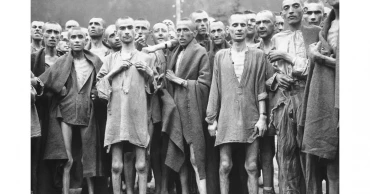
In the aftermath of World War II and the murder by Nazi Germany of 6 million Jews in the Holocaust, the world united around a now-familiar pledge: Never again.
A key part of that lofty aspiration was the drafting of a convention that codified and committed nations to prevent and punish a new crime, sometimes called the crime of crimes: genocide.
The convention was drawn up in 1948, the year of Israel's creation as a Jewish state. Now that country is being accused at the United Nations' highest court of committing the very crime so deeply woven into its national identity.
The reason the genocide convention exists "is related directly to what the (Nazi) Third Reich attempted to do in eliminating a people, the Jewish people, not only of Germany, but of Eastern Europe, of Russia," said Mary Ellen O'Connell, a professor of law and international peace studies at Notre Dame University's Kroc Institute.
Now, in response to Israel's devastating military offensive in Gaza that was triggered by murders and atrocities perpetrated by Hamas militants on Oct. 7, South Africa has gone to the International Court of Justice and accused Israel of genocide. Israel rejects the claim and accuses Pretoria of providing political cover for Hamas.
South Africa also asked the 17-judge panel to make nine urgent orders known as provisional measures. They are aimed at protecting civilians in Gaza while the court considers the legal arguments of both sides. First and foremost is for the court to order Israel to "immediately suspend its military operations in and against Gaza."
On Friday, the court's American president, U.S. judge Joan E. Donoghue, will read out its decision at a public hearing.
Here is more information about the crime of genocide and other cases in the past.
WHAT IS GENOCIDE?
The 1948 Convention on the Prevention and Punishment of the Crime of Genocide, defines the crime as acts "committed with intent to destroy, in whole or in part, a national, ethnical, racial or religious group, as such." It lists the acts as killing; causing serious bodily or mental harm; deliberately inflicting conditions of life calculated to bring about the group's physical destruction in whole or in part; imposing measures intended to prevent births; and forcibly transferring children.
The text is repeated in the Rome Statute, the founding treaty of the International Criminal Court, as one of the crimes under its jurisdiction, along with war crimes, crimes against humanity and the crime of aggression. The ICC prosecutes individuals and is separate to the International Court of Justice, which rules in disputes between nations.
In its written filings and at a public hearing earlier this month, South Africa alleged genocidal acts by Israel forces including killing Palestinians in Gaza, causing serious mental and bodily harm, and deliberately inflicting conditions meant to "bring about their physical destruction as a group."
Israel has vehemently taken issue with South Africa's claims, arguing that it is acting in self-defense against what it calls the genocidal threat to its existence posed by Hamas.
HOW DO YOU PROVE GENOCIDE?
As well as establishing one or more of the underlying crimes listed in the convention, the key element of genocide is intent — the intent to destroy, in whole or in part, a national, ethnical, racial or religious group. It's tough to prove.
"The most important thing is that whatever happens is done with the specific intent to destroy a group, so there's no plausible alternative reason why those crimes have been committed," said Marieke de Hoon, an associate professor of international law at the University of Amsterdam.
Said O'Connell: "Can you show that the widespread killing of these people was intended by the government? Or ... was the government waging a war and during that war large numbers of this particular group died, but that was not the intent of the government?"
At public hearings earlier this month and in its detailed written submission to the ICJ, South Africa cited comments by Israeli officials that it claimed demonstrate intent.
Malcolm Shaw, an international law expert on Israel's legal team, called the comments South Africa highlighted "random quotes not in conformity with government policy."
HAS THE ICJ EVER RULED BEFORE ON GENOCIDE?
In 2007, the court ruled that Serbia "violated the obligation to prevent genocide" in the 1995 Srebrenica massacre, when Bosnian Serb forces rounded up and murdered some 8,000 mostly Muslim men and boys in the Bosnian region.
Two other genocide cases are currently on the court's docket. Ukraine filed a case shortly after Russia's invasion nearly two years ago that accuses Moscow of launching the military operation based on trumped-up claims of genocide and that Russia was planning acts of genocide in Ukraine. In that case, the court ordered Russia to halt its invasion, an order that Russia flouted.
Another case involves Gambia, on behalf of Muslim nations, accusing Myanmar of genocide against the Rohingya Muslim minority. Gambia filed the case on behalf of the Organization of Islamic Cooperation.
Both Gambia and South Africa have filed ICJ cases in conflicts they are not directly involved in. That's because the genocide convention includes a clause that allows individual states — even uninvolved ones — to call on the United Nations to take action to prevent or suppress acts of genocide.
HAVE OTHER INTERNATIONAL COURTS PROSECUTED GENOCIDE?
Two now defunct U.N. tribunals — for the former Yugoslavia and Rwanda — both dealt with genocide, among other crimes.
The Yugoslav court convicted defendants including former Bosnian Serb leader Radovan Karadzic and his military chief Gen. Ratko Mladic on genocide charges for their involvement in the Srebrenica massacre.
The Rwanda tribunal, headquartered in Arusha, Tanzania, was the first international court to hand down a genocide conviction when it found Jean Paul Akayesu guilty of genocide and other crimes and sentenced him to life imprisonment in 1998. He was convicted for his role in Rwanda's 1994 genocide, when militants from the Hutu majority slaughtered some 800,000 people, mostly minority Tutsis. The tribunal convicted 62 defendants for their roles in the genocide.
The International Criminal Court has charged ousted Sudanese leader Omar al-Bashir with genocide in the Darfur region. He has not been handed to the court to stand trial. Al-Bashir's government responded to a 2003 insurgency with a campaign of aerial bombings and unleashed militias known as Janjaweed, who are accused of mass killings and rapes. Up to 300,000 people were killed and 2.7 million were driven from their homes.
A hybrid domestic and international court in Cambodia convicted three men members of the Khmer Rouge whose brutal 1970s rule caused the deaths of an estimated 1.7 million people. Two of them were found guilty of genocide.
2 years ago

UN court to issue ruling Friday on South Africa's request for order to halt Israel's Gaza offensive
The United Nations’ top court will issue a decision Friday on South Africa’s request for interim orders in a genocide case against Israel, including that Israel halt its offensive in Gaza.
The decision is a preliminary stage of a case filed by South Africa at the International Court of Justice alleging that Israel’s military action in its war with Hamas in Gaza amounts to genocide. Israel strongly rejects the accusation and has asked the court to throw out the case.
The court in The Hague, Netherlands, announced the timing of the interim ruling on Wednesday. South Africa's Foreign Ministry said Foreign Minister Naledi Pandor would travel to The Hague to represent the country at Friday's ruling.
Read: 21 Israeli soldiers are killed in the deadliest single attack on the army since the war began
Israel launched its massive air and ground assault on Gaza soon after Hamas militants stormed through Israeli communities on Oct. 7 and killed some 1,200 people, mainly civilians.
Israel often boycotts international tribunals and U.N. investigations, saying they are unfair and biased. But the country’s leaders sent a high-level legal team to two days of hearings earlier this month. That was a sign of how seriously they regard the case and an indication of likely concerns that any court order to halt operations would be a major blow to the country’s international standing.
If the court grants some or all of South Africa’s eight requests for so-called provisional measures, it is unclear if Israel will comply.
Israeli Prime Minister Benjamin Netanyahu has vowed to press ahead with the offensive until “complete victory” against Hamas, which started the war with its assault across the border on Oct. 7, killing some 1,200 people and abducting another 250.
Gaza’s Health Ministry says the offensive has killed at least 25,490 people — the majority women and children — and wounded another 63,354. Its count does not differentiate between civilians and combatants. U.N. officials have expressed fears that even more people could die from disease, with at least one-quarter of the population facing starvation.
Israel’s attacks have driven nearly 85% of Gaza’s population of 2.3 million from their homes. Much of northern Gaza, including Gaza City, has been reduced to rubble.
Friday's ruling will not be on the merits of South Africa’s claims. Israel can still challenge the court’s jurisdiction and the admissibility of the case before any hearings on the legal merits of the case.
For it to order so-called “provisional measures," the 17-judge panel must decide that the court appears to have jurisdiction in the case, that there is a dispute between South Africa and Israel about the 1948 Genocide Convention and that there is an urgent need to order emergency measures while the case continues.
Read: Saudi Arabia says it won’t recognize Israel without a path to a Palestinian state
At hearings earlier this month, South African lawyers said that acts by Israel’s military and statements by senior officials demonstrated intent to commit genocide against Palestinians in Gaza.
“The scale of destruction in Gaza, the targeting of family homes and civilians, the war being a war on children, all make clear that genocidal intent is both understood and has been put into practice. The articulated intent is the destruction of Palestinian life,” said lawyer Tembeka Ngcukaitobi.
He said the case’s “distinctive feature” was “the reiteration and repetition of genocidal speech throughout every sphere of the state in Israel.”
Malcolm Shaw, part of Israel’s legal team at hearings in The Hague, rejected the accusation of genocidal intent and called remarks cited by South Africa “random quotes not in conformity with government policy.”
Israeli legal advisor Tal Becker told the court that the country is fighting a “war it did not start and did not want.”
“In these circumstances, there can hardly be a charge more false and more malevolent than the allegation against Israel of genocide,” he added, noting that the horrible suffering of civilians in war was not enough to support an allegation of genocide.
The case strikes at the national identity of Israel, which was founded as a Jewish state after the Nazi slaughter of 6 million Jews during World War II.
South Africa’s own identity is key to it bringing the case. Its governing party, the African National Congress, has long compared Israel’s policies in Gaza and the West Bank to its own history under the apartheid regime of white minority rule, which restricted most Black people to “homelands” before ending in 1994.
2 years ago