Others

40 years after bombing that killed Americans in Beirut, US troops again deploy east of Mediterranean
Forty years after one of the deadliest attacks against U.S. troops in the Middle East, some warn that Washington could be sliding toward a new conflict in the region.
On Oct. 23, 1983, a suicide bomber hit an American military barracks at Beirut International Airport, killing 241 U.S. service members, most of them Marines – still the deadliest attack on Marines since the World War II Battle of Iwo Jima. A near-simultaneous attack on French forces killed 58 paratroopers.
Washington blames the bombings on the Lebanese militant group Hezbollah, a claim the Iranian-backed Hezbollah denies. The U.S. and French forces were in Beirut as part of a multinational force deployed amid Israel's 1982 invasion of Lebanon. The force oversaw the withdrawal of Palestinian fighters from Beirut and stayed afterward to help a Western-backed government at the time. The bombing prompted a U.S. withdrawal from Lebanon.
US says will continue to call on all stakeholders in Bangladesh to refrain from violence and intimidation
The United States is now deploying forces again in the region in connection to a war between Israel and its enemies.
The aircraft carrier USS Gerald R. Ford has been positioned in the eastern Mediterranean along with other American warships – with a second carrier on the way – in what is widely seen as a message to Iran and Hezbollah not to open new fronts as Israel fights Hamas.
Longtime tensions between the U.S. and Iran have been hiked by the two-week-old war between Israel and Hamas, in which the Palestinian militant group's Oct. 7 surprise attack on southern Israeli towns brought devastating Israeli bombardment of the Gaza Strip.
The war risks spiraling into a wider regional conflict. The biggest worry is over the Lebanon-Israel border, where Israel and Hezbollah exchange fire on a daily basis.
But there are other spots where the U.S. could be dragged directly into the fight. There are roughly 2,500 U.S. troops in Iraq and around 900 others in eastern Syria, on missions against the Islamic State group. In both countries, Iran has militias loyal to it that already have opened fire on the Americans since the Gaza war erupted.
Pentagon rushes defenses and advisers to Middle East as Israel's ground assault in Gaza looms
A Hezbollah supporter who goes by the name of Haj Mohammed posted a video on Tiktok on Oct. 13 that drew a threatening parallel between the barracks bombing 40 years ago and present-day events.
"It seems that Uncle Joe did not tell the commanders of these warships and aircraft carriers about what happened on October 23, 1983," the man said, referring to President Joe Biden. Sitting in front of a poster of Jerusalem's Dome of the Rock, he wondered aloud whether U.S. troops will return home in coffins again.
Iran-backed groups have issued threats against the U.S. if it joins the war on the side of Israel.
Top Hezbollah official Hachem Safieddine said in a speech that there are tens of thousands of fighters around the region "whose fingers are on the trigger."
Creation of Palestine state urgent; US key actor in bringing this to reality: Dr Yunus
The commander of a powerful Iranian-backed militia in Iraq posted a photo of himself on social media standing by the Lebanon-Israel border in an apparent show that his fighters are ready for war.
If the U.S. intervenes directly in the Israel-Hamas war, "then the American presence in the region becomes legitimate targets for resistance fighters whether in Iraq or elsewhere," the commander -- Abu Alaa al-Walae of Iraq's Kataib Sayyid al-Shuhada -- told Beirut-based Al-Mayadeen TV.
Since Wednesday, suicide drones and rockets have hit several bases housing U.S. troops in Iraq and Syria. The attacks were either claimed by or blamed on Iranian-backed militias.
A U.S. Navy warship on Thursday intercepted three missiles and several drones fired by Iranian-backed Houthi rebels from Yemen, potentially toward targets in Israel, the Pentagon said.
American forces could also come under attack if Israel launches a ground invasion of Gaza and appears about to destroy Hamas, as it has vowed to do.
Blinken, Austin say US is ready to respond if US personnel become targets of Israel-Hamas war
An official with one Iranian-backed group warned that if Israel tries to go all the way for a complete defeat of Hamas, Iranian allies can ignite a conflict throughout the Middle East. He said the volleys at U.S. forces were meant to send this message. The official spoke on condition that he and his group not be identified because he was not authorized to comment publicly.
Following a tour in the region where he met leaders of Hezbollah, Hamas and the Palestinian Islamic Jihad, Iran's foreign minister warned in mid-October that "pre-emptive action is possible" if Israel moves closer to a ground offensive and that Israel would suffer "a huge earthquake."
On Sunday, U.S. Secretary of State Antony Blinken and Defense Secretary Lloyd Austin said Washington expects the Israel-Hamas war to escalate through involvement by proxies of Iran, adding that the Biden administration is prepared to respond if American personnel or armed forces are targeted.
"This is not what we want, not what we're looking for. We don't want escalation," Blinken said. "We don't want to see our forces or our personnel come under fire. But if that happens, we're ready for it."
Austin said they see the "prospect of a significant escalation of attacks on our troops and our people throughout the region."
Biden repeatedly has used one word to warn Israel's enemies against trying to take advantage of the situation: "Don't."
US Embassy contests home minister’s claim that Haas queried road closures on BNP rally day
Iran leads the so-called "axis of resistance" that includes Tehran-backed factions from Lebanon, Iraq, Yemen, Afghanistan and Pakistan as well as Syria. Hezbollah, Lebanon's most powerful group, has tens of thousands of rockets and missiles as well as a drone arsenal that pose a serious threat if the group fully joins the war against Israel.
Still, many analysts say an all-out regional war that would risk dragging the U.S. and Iran into direct confrontation remains unlikely.
"Until this moment the two sides don't want a confrontation" and are communicating that to each other, said Iranian political analyst and political science professor Emad Abshenass about Tehran and Washington.
But "the situation could turn on its head" if Israel's army enters Gaza and seems likely defeat Hamas, Abshenass said.
In 1983, the barracks bombing was seen as a lesson in the danger for the U.S. from stepping in the middle of a conflict between Israel and one of its neighbors.
Ukrainians prepare firewood and candles to brace for a winter of Russian strikes on the energy grid
Sam Heller of The Century Foundation said that, as in 1983, "I don't trust that the U.S. forces the Biden administration has sent to the region are enough to really intimidate and deter local actors."
"Iran and its allies are exposed in their own way," Heller said, but they have "very serious capabilities today that could be (used) against U.S. targets regionwide."
2 years ago
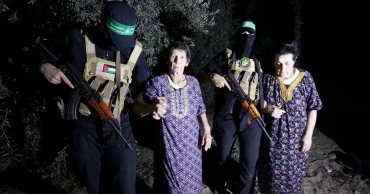
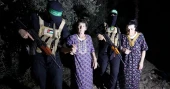
Hamas frees two Israeli women as US advises delaying ground war to allow talks on captives
Hamas on Monday released two elderly Israeli women held hostage in Gaza as the United States expressed increasing concern that the escalating Israel-Hamas war will spark a wider conflict in the region, including attacks on American troops.
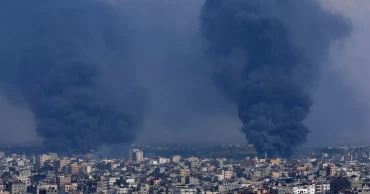
The death toll in Gaza rose rapidly as Israel ramped up airstrikes that flattened buildings in what it said was preparation for an eventual ground assault. The United States advised Israel to delay the expected invasion to allow time to negotiate the release of more hostages taken by Hamas during its brutal incursion two weeks ago.
A third small aid convoy from Egypt entered Gaza, where the population of 2.3 million has been running out of food, water and medicine under Israel’s sealed border. With Israel still barring entry of fuel, the U.N. said its distribution of aid would grind to a halt within days when it can no longer fuel its trucks. Gaza hospitals flooded by a constant stream of wounded are struggling to keep generators running to power lifesaving medical equipment and incubators for premature babies.
Read: Iranian, Egyptian FMs urge immediate end to attacks on Palestinians
The two freed hostages, 85-year-old Yocheved Lifshitz and 79-year-old Nurit Cooper, were taken out of Gaza at the Rafah crossing into Egypt, where they were put into ambulances, according to footage shown on Egyptian TV. The two women, along with their husbands, were snatched from their homes in the kibbutz of Nir Oz near the Gaza border during Hamas’ Oct. 7 rampage into southern Israeli communities. Their husbands, ages 83 and 84, were not released.
“While I cannot put into words the relief that she is now safe, I will remain focused on securing the release of my father and all those — some 200 innocent people — who remain hostages in Gaza," Lifshitz' daughter, Sharone Lifschitz, said in a statement.
Lifschitz, an artist and academic in London who uses a different spelling for her name, told reporters last week that her parents were peace activists, and her father would drive to the Gaza border to take Palestinians to east Jerusalem for medical treatment.
Kindness, she said last week, could somehow save them.
“I grew up, you know, with all these Holocaust stories about how all my uncles' lives were saved because" of acts of kindness, she said.
Read: Pro-Palestinian activists occupy international court entry, demanding action against Israeli leader
“Do I want that to be the story here?” she asked. "Yeah.”
Hamas apparently received nothing in exchange for the release of the two hostages, who were freed days after an American woman and her teenage daughter. Hamas and other militants in Gaza are believed to have taken roughly 220 people, including an unconfirmed number of foreigners and dual citizens.
Israel has vowed to destroy Hamas. Iranian-backed fighters around the region are warning of possible escalation, including the targeting of U.S. forces deployed in the Mideast, if a ground offensive is launched in Gaza.
The U.S. has told Iranian-backed Hezbollah in Lebanon and other groups not to join the fight. Israel and Hezbollah have traded fire almost daily across the Israel-Lebanon border, and Israeli warplanes have struck targets in the occupied West Bank, Syria and Lebanon in recent days.
National Security Council spokesman John Kirby said there has been an uptick in rocket and drone attacks by Iranian-backed militias on U.S. troops in Iraq and Syria, and the U.S. was “deeply concerned about the possibility for any significant escalation” in the coming days.
Read: Pentagon rushes defenses and advisers to Middle East as Israel's ground assault in Gaza looms
He said U.S. officials were having “active conversations” with Israeli counterparts about the potential ramifications of escalated military action.
The U.S. advised Israeli officials that delaying a ground offensive would give Washington more time to work with regional mediators on the release of more hostages, according to a U.S. official.
Israeli tanks and ground forces have been massed at the Gaza border, and Defense Minister Yoav Gallant told troops there Monday to keep preparing for an offensive “because it will come.” He said it will be a combined offensive from air, land and sea, but he did not give a time frame.
A ground offensive is likely to dramatically increase casualties in what is already the deadliest by far of five wars fought between Israel and Hamas since the militant group took power in Gaza in 2007.
More than 1,400 people in Israel have been killed — mostly civilians slain during the initial Hamas attack. At least 222 people were captured and dragged back to Gaza, including foreigners, the military said Monday, updating a previous figure.
More than 5,000 Palestinians, including some 2,000 minors and around 1,100 women, have been killed, the Hamas-run Health Ministry said Monday. That includes the disputed toll from an explosion at a hospital last week. The toll has climbed rapidly in recent days, with the ministry reporting 436 additional deaths in just the last 24 hours.
Israel said it struck 320 militant targets throughout Gaza over the last 24 hours. The military says it does not target civilians, and that Palestinian militants have fired over 7,000 rockets at Israel since the start of the war.
Read: A large demonstration in Brussels calls for ceasefire in Gaza
Inside Gaza, the civilian death toll continued to mount.
Fifteen members of the same family were among at least 33 Palestinians buried Monday in a shallow, sandy mass grave at a Gaza hospital after being killed in Israeli airstrikes.
The bodies were laid to rest side by side in the courtyard of al-Aqsa Hospital in Deir al-Balah. Men discussed where to fit the shrouded corpse of a small child. “Bring them all,” a gravedigger called out.
Israel carried out limited ground forays into Gaza. On Sunday, Hamas said it destroyed an Israeli tank and two armored bulldozers inside Gaza. The Israeli military said a soldier was killed and three others were wounded by an anti-tank missile during a raid inside Gaza.
On Monday, the Palestinian Red Crescent said 20 trucks entered Gaza carrying food, water, medicine and medical supplies through the Rafah crossing with Egypt, the only way into Gaza not controlled by Israel. It was the third delivery in as many days, each around the same size.
The aid coming in so far is “a drop in the ocean” compared with the needs of the population, said Thomas White, the Gaza director of the U.N. agency for Palestinian refugees, UNRWA. The U.N. has said 20 trucks amounts to 4% of an average day’s imports before the war and that hundreds of trucks a day are needed.
White said the agency had only three days of fuel left for its trucks. The supplies coming through Rafah are reloaded onto UNRWA vehicles and the Red Crescent trucks to take to hospitals and U.N. schools in the south of Gaza, where hundreds of thousands of people are taking shelter, running low on food and largely drinking contaminated water.
At least 1.4 million Palestinians in Gaza have fled their homes, and nearly 580,000 of them are sheltering in U.N.-run schools and shelters, the U.N. said Monday.
No aid will be distributed in Gaza City and other parts of the north, where hundreds of thousands of people remain. Gaza City’s main al-Shifa Hospital, with a normal capacity of 700 patients, is currently overwhelmed with 5,000 patients, and around 45,000 displaced people are gathered in and around its grounds for shelter, the U.N. said.
2 years ago

Pentagon rushes defenses and advisers to Middle East as Israel's ground assault in Gaza looms
The Pentagon has sent military advisers, including a Marine Corps general versed in urban warfare, to Israel to aid in its war planning and is speeding multiple sophisticated air defense systems to the Middle East days ahead of an anticipated ground assault into Gaza.
One of the officers leading the assistance is Marine Corps Lt. Gen. James Glynn, who previously helped lead special operations forces against the Islamic State and served in Fallujah, Iraq, during some of the most heated urban combat there, according to a U.S. official who was not authorized to discuss Glynn’s role and spoke on the condition of anonymity.
Glynn will also be advising on how to mitigate civilian casualties in urban warfare, the official said.
Israel is preparing a large-scale ground operation in an environment in which Hamas militants have had years to prepare tunnel networks and set traps throughout northern Gaza's dense urban blocks. Glynn and the other military officers who are advising Israel “have experience that is appropriate to the sorts of operations that Israel is conducting,” National Security Council spokesman John Kirby said Monday. The advisers will not be engaged in the fighting, the unidentified U.S. official said.
Read: Hamas frees two Israeli women as US advises delaying ground war to allow talks on captives
The military team is one of many fast-moving pieces the Pentagon is getting in place to try and prevent the already intense conflict between Israel and Hamas from becoming a wider war. It also is trying to protect U.S. personnel, who in the last few days have come under repeated attacks that the Pentagon has said were likely endorsed by Iran.
Kirby said Iran was "in some cases actively facilitating these attacks and spurring on others who may want to exploit the conflict for their own good, or for that of Iran. We know that Iran’s goal is to maintain some level of deniability here. But were not going to allow them to do that.”
On Monday, the U.S. military garrison at an-Tanf, Syria, came under attack again, this time by two drones. The drones were shot down and no injuries were reported. It was the latest episode of more than a half-dozen times in the last week that U.S. military locations in the Middle East had come under rocket or drone attack since a deadly blast at a Gaza hospital.
Read: Pro-Palestinian activists occupy international court entry, demanding action against Israeli leader
Last Thursday the destroyer USS Carney shot down four land-attack cruise missiles launched from Yemen that the Pentagon has said were potentially headed toward Israel.
In response, over the weekend the Pentagon announced it was sending multiple Patriot missile defense system battalions and a Terminal High Altitude Area Defense system to the Middle East, as well as repositioning the Eisenhower strike group to the U.S. Central Command area of responsibility. The ship had previously been en route to the Eastern Mediterranean.
The shift means that the Navy will have a carrier strike group off the shore of Israel — the Ford carrier strike group — and another, the Eisenhower, potentially maneuvered to defend U.S. forces and Israel from the Red Sea or the Gulf of Oman.
“We’re going to continue to do what we need to do to protect and safeguard our forces and take all necessary measures,” Ryder said. “No one wants to see a wider regional conflict. But we will not hesitate to protect our forces.”
The U.S. has also advised Israeli officials to consider a delay in any ground assault, saying it would give more time to allow the U.S. to work with its regional partners to release more hostages, according to a U.S. official familiar with Biden administration thinking on the matter. The official, who requested anonymity to discuss the private discussions, said it was unclear how much the argument will “move the needle” on Israeli thinking.
Read: Dwindling fuel supplies for Gaza's hospital generators put premature babies in incubators at risk
The official noted that with the help of Qatar mediating with Hamas, the U.S. was able to win the release of two captives, Judith and Natalie Raanan. The process that led to their release — just two of more than 200 people in Israel who were taken hostage in the Oct. 7 attacks — started soon after the Hamas operation. The official noted arranging for the release of the Raanans took longer to come together than many people realized.
Asked during a brief exchange with reporters at the White House on Monday if the U.S. would be supportive of a ceasefire-for-hostage deal, President Joe Biden replied, “We should have those hostages released and then we can talk.”
The International Committee of the Red Cross said Monday that Hamas had released two more hostages. They were identified by Israeli media as Yocheved Lifshitz and Nurit Cooper of the Israeli kibbutz of Nir Oz.
Glynn's assignment to Israel was first reported by Axios.
2 years ago
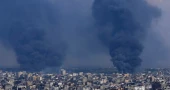
Iranian, Egyptian FMs urge immediate end to attacks on Palestinians
Iranian Foreign Minister Hossein Amir-Abdollahian and his Egyptian counterpart Sameh Shoukry highlighted the necessity to immediately stop the attacks on Palestinians and send humanitarian aid to the Gaza Strip.
In a phone conversation on Sunday night, the two foreign ministers also voiced their strong opposition to the forced displacement of Palestinians in the Gaza Strip, according to a statement published on the Iranian Foreign Ministry's website on Monday.
Read: Palestinian death toll in West Bank surges as Israel pursues militants following Hamas rampage
The Iranian foreign minister praised Egypt, which hosted the Cairo Summit for Peace on Saturday to discuss the ongoing crisis in Gaza, for its efforts to put an end to the conflict and send aid to Gaza.
Amir-Abdollahian said the Iranian Red Crescent Society was ready to send humanitarian aid to Gaza through Egypt.
The top Iranian diplomat said Israel's ultimate goal is "to force the citizens of Gaza and West Bank to migrate to the Sinai Peninsula in Egypt and parts of Jordan."
The Egyptian foreign minister, for his part, welcomed Iran's humanitarian aid for Gaza, highlighting the necessity to continue consultations and coordination among all Muslim and Arab states on the Palestinian issue.
Read: Dwindling fuel supplies for Gaza's hospital generators put premature babies in incubators at risk
Shoukry voiced Egypt's opposition to the expansion of the conflict, saying Egypt maintains that Palestinians must remain in their homeland.
The Palestinian Islamic Resistance Movement (Hamas) launched a surprise attack on Israel on Oct. 7, firing thousands of rockets and sending its militants into Israeli territory, to which Israel responded with massive airstrikes and punitive measures, including a siege on the enclave with supplies of water, electricity, fuel, and other necessities being cut off.
Having entered its 17th day, the ongoing Israel-Hamas conflict has killed over 1,400 people in Israel and wounded 5,431 others, according to official statistics.
Meanwhile, Israeli airstrikes on the Gaza Strip have killed 5,087 Palestinians and wounded 15,273 others, the Hamas-run Health Ministry said on Monday.
2 years ago

Dwindling fuel supplies for Gaza's hospital generators put premature babies in incubators at risk
A premature baby squirms inside a glass incubator in the neonatal ward of al-Aqsa Hospital in the central Gaza Strip. He cries out as intravenous lines are connected to his tiny body. A ventilator helps him breathe as a catheter delivers medication and monitors flash his fragile vital signs.
His life hinges on the constant flow of electricity, which is in danger of running out imminently unless the hospital can get more fuel for its generators. Once the generators stop, hospital director Iyad Abu Zahar fears that the babies in the ward, unable to breathe on their own, will perish.
“The responsibility on us is huge,” he said.
Doctors treating premature babies across Gaza are grappling with similar fears. At least 130 premature babies are at “grave risk” across six neonatal units, aid workers said. The dangerous fuel shortages are caused by the Israeli blockade of Gaza, which started — along with airstrikes — after Hamas militants attacked Israeli towns on Oct. 7.
At least 50,000 pregnant women in Gaza are unable to access essential health services, and some 5,500 are due to give birth in the coming month, according to the World Health Organization.
At least seven of the almost 30 hospitals have been forced to shut down due to damage from relentless Israeli strikes and lack of power, water and other supplies. Doctors in the remaining hospitals said they are on the brink. The U.N. agency for Palestinian refugees said Sunday it has enough fuel to last three days to serve critical needs.
“The world cannot simply look on as these babies are killed by the siege on Gaza ... A failure to act is to sentence these babies to death,” said Melanie Ward, chief executive of the Medical Aid for Palestinians aid group.
Read: Palestinian death toll in West Bank surges as Israel pursues militants following Hamas rampage
None of the 20 aid trucks that crossed into Gaza on Saturday, the first since the siege was imposed, contained fuel, amid Israeli fears it will end up in Hamas' hands. Limited fuel supplies inside Gaza were being sent to hospital generators.
Seven tankers took fuel from a U.N. depot on the Gaza side of the border, but it was unclear if any of that was destined for the hospitals.
But will eventually run out if more is not permitted to enter.
Tarik Jašarević, a WHO spokesman, said 150,000 liters (40,000 gallons) of fuel are required to offer basic services in Gaza’s five main hospitals.
Abu Zahar worries about how long his facility can hold out.
“If the generator stops, which we are expecting in the coming few hours due to the heavy demands of different departments in the hospital, the incubators in the intensive care unit will be in a very critical situation,” he said.
Guillemette Thomas, medical coordinator for Doctors Without Borders in the Palestinian territories, said some of the babies could die within hours, and others in a couple of days, if they don’t receive the special care and medication they urgently need.
Read: At least 60% of Gaza's population displaced due to Israeli attacks: UN
“It’s sure that these babies are in danger,” she told The Associated Press. “It’s a real emergency to take care of these babies, as it is an emergency to take care of the population of Gaza who are suffering from these bombings since the past two weeks.”
The hospital must care for patients in northern and central Gaza since several hospitals shut down, he said, forcing it to more than double its patient capacity. That also puts a strain on the limited electricity.
Nesma al-Haj brought her newborn daughter to the hospital from Nuseirat, where she was recently displaced from northern Gaza, after she suffered from oxygen deprivation and extreme pain, she said.
The baby girl was born three days ago but soon developed complications. “The hospital is lacking in supplies,” she said, speaking from al-Aqsa. “We are afraid that if the situation gets worse, there won’t be any medicine left to treat our kids.”
The problems are exacerbated by the dirty water many have been forced to use since Israel cut off the water supply. Abu Zahar says mothers are mixing baby formula with the contaminated water to feed their infants. It has contributed to the rise in critical cases in the ward.
In the al-Awda Hospital, a private facility in northern Jabalia, up to 50 babies are born almost every day, said hospital director Ahmed Muhanna. The hospital received an evacuation order from the Israeli military, but continued to work.
“The situation is tragic in every sense of the word,” he said. “We have recorded a large deficit in emergency medicines and anesthetic," as well as other medical supplies.
To ration dwindling supplies, Muhanna said all scheduled operations were stopped and the hospital devoted all its resources to emergencies and childbirths. Complex neo-natal cases are sent to al-Aqsa.
Read: Israel says two Americans held hostage by Hamas, a mother and daughter, have been released
Al-Awda has enough fuel to last four days at most, Muhanna said. “We have appealed to many international institutions, the World Health Organization, to supply hospitals with fuel, but to no avail so far,” he said.
Thomas said women have already given birth in U.N.-run schools where tens of thousands of displaced people have sought shelter.
“These women are in danger, and the babies are in danger right now,” she said. “That’s a really critical situation.”
2 years ago

Philippines says a coast guard ship and supply boat were rammed by Chinese vessels at disputed shoal
A Chinese coast guard ship and an accompanying vessel rammed a Philippine coast guard ship and a military-run supply boat Sunday off a contested shoal, Philippine officials said, in an encounter that heightened fears of an armed conflict in the disputed South China Sea.
A top Philippine security official told The Associated Press there were no injuries among the Filipino crew members and the damage to both vessels was being assessed.
The official said that the two incidents near Second Thomas Shoal, where China has repeatedly tried to isolate a Philippine marine outpost, could have been worse if the vessels were not able to maneuver rapidly away from the Chinese ships. The official spoke on condition of anonymity due to a lack of authority to publicly discuss the matter.
China's sweeping territorial claims in the South China Sea, including over islands closer to the Philippine shore, have raised tensions and brought the United States, a longtime treaty ally of the Philippines, into the fray.
The U.S. ambassador to Manila, MaryKay Carlson, wrote on the X social media platform that “the United States condemns the PRC’s latest disruption of a legal Philippine resupply mission to Ayungin shoal, putting the lives of Filipino service members at risk.”
Read: Philippines Nobel laureate Maria Ressa acquitted of tax evasion though she faces 2 more legal cases
She used the initials for China’s formal name, the People’s Republic of China, and the name the Philippines uses for Second Thomas Shoal. She added that Washington was standing with its allies to help protect Philippine sovereignty and to support a free and open Indo-Pacific region.
State Department spokesperson Matthew Miller also reaffirmed that the 1951 U.S.-Philippines Mutual Defense Treaty extended to attacks on Philippine forces and vessels in the South China Sea.
The Chinese coast guard said the Philippine vessels “trespassed” into what it said were Chinese waters “without authorization” despite repeated radio warnings, prompting its ships to stop them. It blamed the Philippine vessels for causing the collisions.
"The Philippine side’s behavior seriously violates the international rules on avoiding collisions at sea and threatens the navigation safety of our vessels,” the Chinese coast guard said in a statement posted on its website.
The Chinese authorities said that they were stopping Philippines ships that carried “illegal construction” materials.
Read: EU leader pays rare visit to Philippines after stormy ties with past president over human rights
A Philippine government task force dealing with the South China Sea said the collisions occurred as two Philippine supply boats escorted by two Philippine coast guard ships were heading to deliver food and other supplies to the military outpost that has been under a Chinese blockade.
The actions of the Chinese ships were “in utter blatant disregard of the United Nations Charter, the United Nations Convention on the Law of the Sea” and international regulations that aim to prevent sea collisions, it said.
Near-collisions have happened frequently as Philippine vessels deliver supplies to Filipino marines and sailors stationed on the disputed shoal. But this was the first time Philippine officials have reported their vessels being hit by China’s ships.
In the past, Chinese officials have played down claims that the Chinese vessels enforcing Beijing's territorial claims were in fact paramilitary ships disguised as fishing boats.
Despite the Chinese efforts, one of the two boats managed to maneuver and deliver supplies to the small contingent stationed on board a marooned warship, the BRP Sierra Madre, the task force said.
Read: Chinese navy ship pays port call to Philippines in goodwill tour of region
The South China Sea is one of the world’s busiest trade routes. The disputes involve China, the Philippines, Vietnam, Malaysia, Taiwan and Brunei, and are regarded as a flashpoint in a delicate fault line in U.S.-China rivalry in the region.
In early August, a Chinese coast guard ship used a water cannon against one of two Philippine supply boats to prevent it from approaching Second Thomas Shoal. It outraged President Ferdinand Marcos Jr. and prompted the Department of Foreign Affairs in Manila to summon the Chinese ambassador to convey a strongly worded protest.
At the time, the Chinese Foreign Ministry accused Washington of “threatening China” by raising the possibility of activating the U.S.-Philippine mutual defense treaty. Beijing has repeatedly warned the U.S. not to meddle in regional territorial disputes.
The European Union ambassador to Manila, Luc Veron, said the incidents, “their repetition and intensification, are dangerous and very disturbing.” The EU, he added, joins the Philippines “in its call for the full observance of international law in the South China Sea.”
A 2016 arbitration ruling set up under the U.N. Convention on the Law of the Sea invalidated Beijing’s claims on historical grounds to virtually the entire South China Sea. China refused to participate in the arbitration sought by the Philippines, rejects the decision and continues to defy it.
2 years ago

Blinken, Austin say US is ready to respond if US personnel become targets of Israel-Hamas war
Secretary of State Antony Blinken and Defense Secretary Lloyd Austin said Sunday that the United States expects the Israel-Hamas war to escalate through involvement by proxies of Iran, and they asserted that the Biden administration is prepared to respond if American personnel or armed forces become the target of any such hostilities.
“This is not what we want, not what we're looking for. We don't want escalation,” Blinken said. "We don't want to see our forces or our personnel come under fire. But if that happens, we're ready for it.”
Austin, echoing Blinken, said “what we’re seeing is a prospect of a significant escalation of attacks on our troops and our people throughout the region.”
He said the U.S. has the right to self-defense “and we won't hesitate to take the appropriate action.”
The warning from the high-ranking U.S. officials came as Israel's military response to a deadly Oct. 7 attack by Hamas on civilians in communities in southern Israel entered its third week.
Read: Second aid convoy reaches Gaza as Israel attacks targets in Syria and occupied West Bank
Israeli warplanes struck targets across Gaza overnight and into Sunday, as well as two airports in Syria and a mosque in the occupied West Bank allegedly used by militants as the war threatened to engulf more of the Middle East.
Israel has traded fire with Lebanon’s Hezbollah militant group on a near-daily basis since the war began, and tensions are soaring in the Israeli-occupied West Bank, where Israeli forces have battled militants in refugee camps and carried out two airstrikes in recent days.
The U.S. announced Sunday that non-essential staff at its embassy in Iraq should leave the country.
Blinken, who recently spent several days in the region, spoke of a “likelihood of escalation” while saying no one wants to see a second or third front to the hostilities between Israel and Hamas, which rules Gaza.
The secretary said he expects “escalation by Iranian proxies directed against our forces, directed against our personnel,” and added: “We are taking steps to make sure that we can effectively defend our people and respond decisively if we need to.” Iran is an enemy of Israel.
Read: Little light, no beds, not enough anesthesia: A view from the 'nightmare' of Gaza's hospitals
Blinken, appearing on NBC's “Meet the Press,” noted that additional military assets had been deployed to the region, including two aircraft carrier battle groups, “not to provoke, but to deter, to make clear that if anyone tries to do anything, we're there.”
President Joe Biden, repeatedly has used one word to warn Israel’s enemies against trying to take advantage of the situation: “Don’t.”
Meanwhile, trucks loaded with food, water and other supplies that Palestinians living in Gaza desperately need continued to enter the enclave on Sunday after a key crossing at the border with Egypt was opened a day earlier to allow humanitarian assistance to begin flowing.
But Cindy McCain, executive director of the U.N. World Food Program, said the situation in Gaza remained “catastrophic." She said even more aid needs to be allowed in.
Read: Palestinian death toll in West Bank surges as Israel pursues militants following Hamas rampage
She said her organization was able to feed 200,000 people dinner on Saturday “but that's not enough. That's a drop. We need secure and sustainable access in there, in that region, so we can feed people.”
Four hundred aid trucks were entering Gaza daily before the latest war, she said.
“This is a catastrophe happening and we just simply have to get these trucks in,” she said.
Biden, who was at his home on the Delaware coast, was briefed by his national security team on the latest developments, the White House said. Biden also discussed the situation during separate conversations with Israeli Prime Minister Benjamin Netanyahu and Pope Francis.
Biden and Netanyahu talked about “the need to prevent escalation in the region and to work toward a durable peace in the Middle East," the White House said. Israel has promised a military ground invasion of Gaza to destroy Hamas.
Read: Tens of thousands of pro-Palestinian protesters march in London as Israel-Hamas war roils the world
Biden also convened a call with the leaders of Canada, France, Germany, Italy and the United Kingdom to discuss the conflict. Among topics discussed, the White House said the leaders committed to working closely to keep the war from spreading, while seeking a political solution.
The State Department on Sunday ordered non-essential U.S. diplomats and their families at the U.S. Embassy in Iraq and the U.S. consulate in Irbil to leave the country due to the heightened tensions. In an updated message to Americans in Iraq, the department said the security situation in Iraq made it impossible to carry out normal operations.
Austin and McCain spoke on ABC's “This Week.”
2 years ago

Palestinian death toll in West Bank surges as Israel pursues militants following Hamas rampage
Deadly violence has been surging in the West Bank as the Israeli military pursues Palestinian militants in the aftermath of the Hamas attack from Gaza, with at least 90 Palestinians killed in the Israeli-occupied territory in the past two weeks, mainly in clashes with Israeli troops.
The violence threatens to open another front in the 2-week-old war, and puts pressure on the internationally recognized Palestinian Authority, which administers parts of the West Bank and is deeply unpopular among Palestinians, in large part because it cooperates with Israel on security matters.
The tally includes five Palestinians killed in separate incidents on Sunday, including two who died in an airstrike on a mosque in the volatile Jenin refugee camp that Israel said was being used by militants. Israel carried out an airstrike during a battle in another West Bank refugee camp last week, in which 13 Palestinians, including five minors, and a member of Israel's paramilitary Border Police were killed.
Read: At least 60% of Gaza's population displaced due to Israeli attacks: UN
Israel rarely uses air power in the occupied West Bank, even as it has bombarded Hamas-ruled Gaza since the militant group stormed across the border on Oct. 7.
More than 1,400 people have been killed in Israel since the war began, mostly civilians killed in the initial Hamas assault. The Hamas-run Health Ministry in Gaza says over 4,300 Palestinians have been killed.
The Palestinian Health Ministry in the West Bank says 90 Palestinians have been killed there since Oct. 7, a dramatic jump from 197, according to an Associated Press count, from the start of the year until the Hamas attack. In addition to the raids, Palestinians have been killed in violent anti-Israel protests and in some instances in attacks by Jewish settlers.
Israel clamped down on the territory immediately after the Hamas assault, closing crossings and checkpoints between Palestinian towns. Israel says its forces have detained over 700 suspects in the West Bank, including 480 members of Hamas, since the start of hostilities.
Read: Israel says two Americans held hostage by Hamas, a mother and daughter, have been released
Israel’s resumption of aerial attacks — which in a July operation in Jenin reached a level of intensity not seen since the Palestinian uprising against Israel two decades ago — suggests a shift in military tactics.
The military described the Al-Ansar Mosque in Jenin as a militant compound belonging to Hamas and Islamic Jihad, a smaller and more radical Palestinian militant group. It said the militants had carried out several attacks in recent months and were planning another imminent assault.
The intensified violence follows more than a year of escalating raids and arrests in the West Bank and deadly Palestinian attacks on Israelis.
Israel captured the West Bank, along with Gaza and east Jerusalem, in the 1967 war. The Palestinians want all three territories for a future state. Over 500,000 Israelis live in settlements across the West Bank that most of the international community considers illegal, while the territory's more than 2.5 million Palestinians live under Israeli military rule.
The Palestinians view the settlements as the greatest obstacle to resolving the conflict with Israel. The last serious and substantive peace talks broke down over a decade ago.
Settler violence against Palestinians has also intensified since the Hamas attack. At least five Palestinians have been killed by settlers, according to Palestinian authorities, and rights groups say settlers have torched cars and attacked several small Bedouin communities, forcing them to evacuate to other areas.
Read: Israel will let Egypt deliver some aid to Gaza, as doctors struggle to treat hospital blast victims
The West Bank Protection Consortium, a coalition of non-governmental organizations and donor countries, including the European Union, says at least 470 Palestinians have been forcibly displaced in the West Bank due to settler violence since Oct. 7. That's in addition to over 1,100 displaced since 2022.
2 years ago

At least 60% of Gaza's population displaced due to Israeli attacks: UN
At least 60 percent of the population in the Gaza Strip has been displaced as a result of the ongoing Israeli attacks, according to a UN organization.
"About 1.6 million people were forced to be displaced from their houses since the start of the current Hamas-Israel bloody conflict 15 days ago," the UN Office for the Coordination of Humanitarian Affairs (OCHA) said in a press statement sent to Xinhua on Saturday.
The OCHA said that more than 544,000 people reside in 147 educational districts and schools affiliated with the United Nations Relief and Works Agency for Palestine Refugees (UNRWA), including 367,500 in central and southern Gaza, and 70,000 in 67 schools not affiliated with UNRWA.
According to the statement, about 101,000 people took refuge in the Orthodox center, churches in Gaza City, hospitals, and other public buildings.
Read: Egypt-Gaza border crossing opens, letting desperately needed aid flow to Palestinians
In addition, the Palestinian Ministry of Social Development estimates that there are about 700,000 displaced people with host families.
According to the statement, institutions affiliated with the UNRWA Educational Operations Department in the central and southern regions of the Gaza Strip have become increasingly overcrowded at a time when severe shortages of basic resources such as water, food, and medicine are reported.
In some educational districts, UNRWA was forced to ration drinking water consumption, providing only one liter of water per person per day.
Overcrowding and lack of basic supplies have raised tensions among internally displaced people, along with reports of gender-based violence, according to the statement.
Read: Israel says two Americans held hostage by Hamas, a mother and daughter, have been released
On Oct. 19, UNRWA established the first camp for internally displaced people in Khan Yunis, consisting of 60 tents and hosting hundreds of internally displaced people.
The statement said that there was anecdotal evidence that some displaced people were returning to the northern Gaza Strip, due to the ongoing bombing in the southern part of the Palestinian enclave and failure to find reasonable accommodation.
The displacement of civilians and the associated poor access to basic services has raised concerns for the most vulnerable people, including children, the elderly, those in need of medical care, people with disabilities, and pregnant women, the statement noted.
It is feared that they will be exposed to psychological and social distress, conflict and tension among internally displaced people, deprivation of access to information, and the possibility of abuse or exploitation.
Meanwhile, the Israeli forces continued to intensify their strikes on the occupied Gaza Strip.
Read: Palestinians in Gaza feel nowhere is safe amid unrelenting Israeli airstrikes
The Hamas-run Gaza Health Ministry said Friday that 4,137 Palestinians have been killed and more than 13,000 others wounded since the outbreak of Israel-Hamas conflict on Oct. 7. More than 1,400 people in Israel have been killed, mostly in the initial Hamas attacks on Israel on Oct. 7.
2 years ago

Ukrainian officials say civilians were killed and wounded in Russian overnight attacks
At least two civilians were killed and others wounded across Ukraine as Russian forces continued to shell frontline areas and other parts of the country, local Ukrainian officials reported Saturday.
In Kryvyi Rih, President Volodymyr Zelenskyy's hometown in central Ukraine, a 60-year-old man died on Friday evening when a Russian missile slammed into an industrial facility, according to Telegram posts by Mayor Oleksandr Vilkul. Vilkul added that the man's wife was hospitalized with serious shrapnel wounds.
Early on Saturday, Vilkul reported that Russian missiles and drones overnight hit the same site again, causing unspecified damage and sparking a fire that was put out by morning. Vilkul did not elaborate on the site's nature or whether it was linked to Ukraine's war effort. He said nobody was hurt in the second strike.
Read: Palestinians in Gaza feel nowhere is safe amid unrelenting Israeli airstrikes
In Ukraine's front-line Kherson region in the south, one civilian was killed and another suffered wounds as Russian forces launched “mass shelling” attacks, Gov. Oleksandr Prokudin reported on Saturday. In a Telegram post, Prokudin said that Russian troops used mortars, artillery, tanks, drones, and multiple-rocket launchers to target the province, striking some residential areas.
Russian shelling over the past day also wounded one civilian in the front-line city of Avdiivka, in Ukraine’s eastern Donetsk region, acting local Gov. Ihor Moroz reported on Saturday. Avdiivka has been fiercely contested by Russian and Ukrainian forces over the past weeks as Kyiv’s forces try to hold off waves of Russian attacks. Moroz said that exploding drones, missiles, mortars and artillery shells fired by Russian troops also struck other parts of the province.
In the northeastern Kharkiv region, a 39-year-old civilian man was hospitalized with wounds as Russian shelling hit two village homes near the embattled town of Kupiansk, local Gov. Oleh Syniehubov reported on Saturday. Russian forces have for weeks been pressing an offensive to retake territory near Kupiansk and the nearby town of Lyman.
Read:World Food Program appeals for $19 million to provide emergency food in quake-hit Afghanistan
Local Ukrainian authorities also reported Russian attacks on Friday and overnight on the northern Sumy and southern Zaporizhzhia provinces, but made no mention of casualties.
2 years ago