Others

UN Security Council rejects Russia's resolution on Gaza that fails to mention Hamas
The U.N. Security Council rejected a Russian resolution Monday night that condemned violence and terrorism against civilians but made no mention of Hamas, whose surprise attack that killed 1,300 Israelis was the worst Jewish massacre since the World War II Nazi Holocaust.
Only four countries joined Russia in voting for the resolution — China, United Arab Emirates, Mozambique and Gabon. Four countries voted against it — the United States, Britain, France and Japan. The other six countries abstained. For a resolution to be adopted it needs a minimum of nine “yes” votes in the 15-member council.
The U.N.’s most powerful body, which is charged with maintaining international peace and security, has failed to respond to Hamas’ Oct. 7 attack on Israel that killed some 1,300 people and to Israel’s retaliatory airstrikes that have killed 2,750 and its order to Gazans in the north to head south to avoid an expected ground war.
Britain’s U.N. ambassador, Barbara Woodward, said it would be “unconscionable for this council to ignore the largest terror attack in Israel’s history.”
Read: With humanitarian aid blocked at Egyptian border, Gaza draws closer to total collapse
With the Russian resolution rejected, she said negotiations will continue on a rival Brazilian resolution. It also “firmly condemns all violence and hostilities against civilians and all acts of terrorism.” But it “unequivocally rejects and condemns the heinous terrorist attacks by Hamas” that started Oct. 7.
It was unclear if the council would vote on the Brazilian resolution Monday night.
Before the vote on Russia's draft, Russian Ambassador Vassily Nebenzia urged support for the resolution, saying it responds to the “unprecedented exacerbation of the current crisis,” with the number of people killed and injured “growing every hour.” He again condemned the deaths of civilians in Israel and Gaza.
After the vote, Nebenzia said that “the council once again has found itself a hostage to the selfish intentions of the Western bloc of countries” and failed to send a collective message aimed at de-escalating “the most serious explosion of violence over the past decades.”
U.S. Ambassador Linda Thomas-Greenfield countered that Hamas, whose purpose is to destroy Israel and kill Jews, unleashed terror on Israel but the Russian resolution didn't mention the militant group, which controls Gaza.
Read: Biden will head to Israel and Jordan as concerns mount that Israel-Hamas conflict will spread
“By failing to condemn Hamas, Russia is giving cover to a terrorist group that brutalizes innocent civilians,” she said. “Hamas’ actions have led to the dire humanitarian crisis facing the people of Gaza.”
Thomas-Greenfield said civilians shouldn’t have to suffer for “Hamas’ atrocities” and she urged the council and the international community to help address Gaza's humanitarian crisis, condemn Hamas and reaffirm Israel’s right to self-defense.
The Russian draft resolution would have called for “an immediate, durable and fully respected humanitarian cease-fire ” and strongly condemned "all violence and hostilities directed against civilians and all acts of terrorism,” with no mention of Hamas.
The Brazilian draft resolution calls for “humanitarian pauses” in addition to condemning Hamas and all violence and terrorist acts against civilians.
Apparently expecting the defeat of its resolution, Russia earlier Monday proposed two amendments to the Brazilian draft resolution to be voted on separately after the vote on the Russian resolution but before the entire Brazilian resolution would be put to a vote.
Read: Urban battle from past Gaza war offers glimpse of what an Israeli ground offensive might look like
One amendment would add a call “for an immediate, durable and fully respected humanitarian ceasefire.”
The second proposed amendment “also unequivocally condemns indiscriminate attacks against civilians as well as against civilian objects in the Gaza Strip depriving civilian population of means indispensable for their survival, in violation of international law.”
The Security Council had met behind closed doors Friday for the second time in five days on the Israel-Hamas war, but couldn’t reach a united approach. Russia proposed its draft resolution and Brazil, the current council president, circulated its rival draft over the weekend.
2 years ago
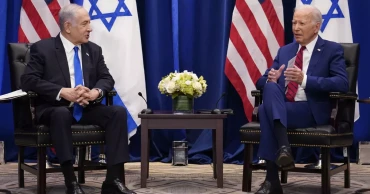
Biden will head to Israel and Jordan as concerns mount that Israel-Hamas conflict will spread
President Joe Biden will travel to Israel and on to Jordan Wednesday to meet with both Israeli and Arab leadership, as concerns increase that the raging Israel-Hamas war could expand into a larger regional conflict.
U.S. Secretary of State Antony Blinken announced Biden’s travel to Israel as the humanitarian situation in the Gaza Strip grows more dire and as Israel prepares for a possible ground attack on the 141-square-mile (365-square-kilometer) territory to root out Hamas militants responsible for what U.S. and Israeli officials say was the most lethal assault against Jews since the Holocaust.
Biden is looking to send the strongest message yet that the U.S. is behind Israel. His Democratic administration has pledged military support, sending U.S. carriers and aid to the region. Officials have said they would ask Congress for upward of $2 billion in additional aid for both Israel and Ukraine, which is fighting Russia’s invasion.
It's a chance for Biden to burnish his national security credentials to U.S. voters with the 2024 election just over a year away. It's also an opportunity to demonstrate that he's making good on his campaign promise of exercising American leadership after four years of former President Donald Trump's “America First” foreign policy.
Read: Palestinians scramble to find food, safety and water as Israeli ground invasion looms
But Biden’s presence could be seen as a provocative move by Hamas’ chief sponsor, Iran, or potentially viewed as tone-deaf by Arab nations as civilian casualties mount in Gaza. Blinken has already been traveling around the Mideast this past week trying to prevent the war with Hamas from igniting a broader regional conflict.
Blinken made the announcement early Tuesday after more than seven hours of talks with Israeli Prime Minister Benjamin Netanyahu and other top Israeli officials.
“He is coming here at a critical moment for Israel, for the region and for the world,” Blinken said.
Blinken added that Biden will be briefed by Israeli officials on their war aims and strategy and would hear about how they intend to conduct operations “in a way that minimizes civilian casualties and enables humanitarian assistance to flow to civilians in Gaza in a way that does not benefit Hamas.”
Shortly after in Washington, White House National Security Council spokesman John Kirby announced that Biden would also go to Jordan to meet with King Abdullah II, Egyptian President Abdel Fattah el-Sissi and Palestinian President Mahmoud Abbas.
“We’ve been crystal clear about the need for humanitarian aid to be able to continue to flow into Gaza," Kirby said. “That has been a consistent call by President Biden and certainly by this entire administration.”
Read: Death toll rises to 2,670 in Gaza: Ministry
Truckloads of aid idled Monday at Egypt’s border with Gaza, barred from entry, as residents and humanitarian groups pleaded for water, food and fuel for dying generators, saying the tiny Palestinian territory sealed off by Israel after last week’s rampage by Hamas was near total collapse.
Biden had been scheduled to travel to Pueblo, Colorado, on Monday but decided to postpone the visit so he could consult with his aides and speak with fellow leaders about the unfolding situation in the Middle East.
The announcements came after Biden consulted with a trio of world leaders and his own national security team on Monday amid growing global concern about the humanitarian crisis unfolding in the Gaza Strip and fears that the Israel-Hamas war could metastasize into a broader regional conflict.
Biden spoke by phone with Egypt's el-Sissi, Iraqi Prime Minister Mohammed Shia al-Sudani and German Chancellor Olaf Scholz about the fallout from Hamas militants’ surprise attacks on Israel that left 1,400 dead and retaliatory strikes that have killed at least 2,778 Palestinians.
Read: Gaza's crowded hospitals near breaking point as Israeli ground invasion looms
European Union leaders will hold an emergency summit on Tuesday as concern mounts that the war between Israel and Hamas could fuel tensions in Europe and bring more refugees in search of sanctuary.
Biden’s call with the Egyptian leader came one day after el-Sissi met with Blinken in Cairo. Egypt’s state-run media said el-Sissi told Blinken that Israel’s Gaza operation has exceeded “the right of self-defense” and turned into “a collective punishment.”
Kirby declined to comment on el-Sissi's concerns about how Israel is conducting the war.
“The humanitarian situation was high on the list of the discussion with President el-Sissi,” Kirby said.
Iran’s foreign minister warned Monday that “preemptive action is possible” if Israel moves closer to its looming ground offensive in the Gaza Strip.
Iran is a chief financial sponsor of Hamas militants in Gaza and Hezbollah in Lebanon. The comments by Hossein Amirabdollahian follow a pattern of escalating rhetoric from Iran.
“Leaders of the resistance will not allow the Zionist regime to do whatever it wants in Gaza and then go after other resistance groups after it’s done with Gaza,” he told state television. “Therefore any preemptive action is possible in the coming hours.”
Read: UN Security Council rejects Russia's resolution on Gaza that fails to mention Hamas
Kirby said the U.S. has not seen any signs that Iran might try to get directly involved in the Israel-Hamas conflict.
White House officials have said that U.S. intelligence shows that Iran has been broadly aware that Hamas had been preparing for a possible strike against Israel. But the U.S. says it has yet to uncover evidence of direct Iranian involvement in the Oct. 7 attack.
Israel is also preparing for the potential of a new front opening on its northern border with Lebanon, where it has exchanged fire repeatedly with the Iranian-backed Hezbollah group. The military ordered residents of 28 Israeli communities near the border to evacuate.
Air raid sirens interrupted Blinken’s meetings with Israeli officials on three different occasions Monday, including twice as he huddled with Netanyahu and his war cabinet.
In Washington, Biden was briefed in the Oval Office by his national security team on the situation on the ground in Israel and Gaza. White House chief of staff Jeff Zients joined the briefing led by national security adviser Jake Sullivan, Director of National Intelligence Avril Haines and Central Intelligence Agency Director Bill Burns, according to the White House.
Blinken was in Israel on Monday for his second visit in less than a week for talks with Israeli leaders. He has been crisscrossing the Middle East with stops in Jordan, Bahrain, Qatar, Egypt, Saudi Arabia and the United Arab Emirates.
Blinken, in talks Monday with Netanyahu and other Israeli officials, carried back some of the feedback he received from Arab leaders. He also “underlined his firm support for Israel’s right to defend itself from Hamas’ terrorism and reaffirmed U.S. determination to provide the Israeli government with what it needs to protect its citizens,” State Department spokesman Matthew Miller said in a statement.
White House officials said Biden's talks with Arab leaders in Amman will largely focus on humanitarian concerns for Gaza's 2.3 million people. He'll also make clear that Hamas does not stand for the Palestinian people’s right to dignity and self-determination.
Still, White House officials bristled about whether Biden would ask Netanyahu and Israel officials to show restraint or set any conditions on any new U.S. military aid that could be in the pipeline.
“We are not putting conditions on the military assistance that we are providing to Israel," Kirby said. "They have a right to defend themselves. They have a right to go after this terrorist threat.”
2 years ago

Urban battle from past Gaza war offers glimpse of what an Israeli ground offensive might look like
A battle that killed dozens of civilians and more than a dozen Israeli soldiers nearly a decade ago offers a glimpse of the type of fighting that could lie ahead if Israeli forces roll into Gaza as expected to punish Hamas for its rampage across southern Israel last week.
It was July 19, 2014, during Israel's third war against Hamas. The target was Shijaiyah, a densely populated neighborhood of Gaza City that the army said Hamas had transformed into a “terrorist fortress,” filled with tunnels, rocket launchers and booby traps.
The battle came on the third day of a ground offensive that had been preceded by a 10-day air campaign. Then, as now, Palestinian civilians had been told to leave the neighborhood, Then, as now, many stayed, either because Hamas told them to or because they had nowhere else to go.
As Israeli forces pushed into Shijaiyah, a jumble of squat concrete buildings and narrow alleys, militants unleashed a withering barrage of automatic gunfire, anti-tank missiles and rocket-propelled grenades, the army said at the time.
An armored personnel carrier broke down. When two soldiers got out to fix it, a militant fired an anti-tank missile at the vehicle, blowing it up and killing all seven soldiers inside. In the ensuing chaos, Hamas fighters managed to drag away the remains of one of the soldiers and are still holding them.
In the panicked aftermath, soldiers were ordered to climb into their armored vehicles as artillery battalions fired 600 shells and aircraft struck from overhead. The next day, Israeli warplanes dropped 100 one-ton bombs on the area, Israeli media reported later.
Read: Death toll rises to 2,670 in Gaza: Ministry
“The gate of hell has opened, and shrapnel came through the windows,” a Palestinian resident told the AP at the time.
In 2014, “there was a feeling of craziness in how much fire was used,” an Israeli soldier told Breaking the Silence, a group of veterans who are critical of Israel’s policies and collect anonymous testimony from soldiers.
Fifty-five civilians were killed during the two-day battle, including 19 children and 14 women, a U.N. report found, as well as an unknown number of militants. Thirteen Israeli soldiers were killed.
Amir Avivi, a retired Israeli general who was serving alongside top commanders during the 2014 battle, said this time would be “completely different,” because the artillery and airstrikes will come first.
“It will be a massive maneuver with a lot of air and artillery — a very, very strong entrance. We’re going to try to minimize as much as possible our troops’ casualties, and for this, we need a lot of cover.” He said less firepower would be needed if it is used at the start and not when soldiers are in distress.
The tremendous firepower may have stemmed the army's losses, but it took a heavy toll on civilians and flattened much of the neighborhood. Some 670 buildings were destroyed and nearly 1,200 were moderately to severely damaged, the U.N. report said. Investigators counted 270 craters.
Read: Gaza's crowded hospitals near breaking point as Israeli ground invasion looms
“It's a hell of a pinpoint operation,” then-Secretary of State John Kerry said sarcastically about the battle, in a moment caught on a hot mic.
Israel has ordered an unprecedented evacuation of nearly half of Gaza's 2.3 million Palestinians from the northern part of the besieged territory to the south. Avivi, the retired general, said that is intended to spare them. But not everyone is able or willing to flee.
“When the artillery will start, those who haven’t evacuated yet will evacuate,” he said.
The U.N. report found "strong indications" that the Shijaiyah operation involved indiscriminate fire that "may amount to a war crime." The International Criminal Court is investigating possible war crimes committed by both sides during the 2014 war.
Israel, which has long accused U.N. bodies of being biased against it, refused to cooperate with either probe.
The war continued for more than a month after Shijaiyah, through similarly destructive battles. It ended with a shaky truce and Hamas still firmly in control despite the deaths of 2,251 Palestinians — mostly civilians — and widespread destruction. On the Israeli side, 74 people were killed, including six civilians.
In 2021 the two sides fought another devastating war, though there was no ground invasion.
And then on Saturday, a still unbowed Hamas stormed out of Gaza and rampaged through southern Israel, killing hundreds and dragging some 200 hostages back into the narrow, coastal territory.
Israeli Prime Minister Benjamin Netanyahu, who was also in power in 2014, has vowed to destroy Hamas. The group's leaders say they are prepared for all scenarios.
Read: What military support the U.S. is providing to Israel's military
Israel has promised a “very broad” air, ground and naval offensive in the near future. It has massed tanks and tens of thousands of troops along the Gaza border.
If they move in, Shijaiyah will be among their first targets.
2 years ago

Gaza's crowded hospitals near breaking point as Israeli ground invasion looms
Palestinians in besieged Gaza crowded into hospitals and schools on Monday, seeking shelter and running low on food and water. More than a million people have fled their homes ahead of an expected Israeli ground invasion aimed at destroying Hamas after its fighters rampaged through southern Israel.
Much of Hamas' military infrastructure is concealed in urban areas, where street-by-street fighting would likely cause mounting casualties on both sides. Israel has given no timetable for a ground incursion.
All eyes were on the Rafah crossing between Gaza and Egypt, where the U.S. and international mediators appeared close to reaching a deal for a humanitarian cease-fire that would allow aid in and allow foreigners to exit Gaza. Rafah was shut down nearly a week ago because of Israeli airstrikes.
Israeli Prime Minister Benjamin Netanyahu's office said Monday there was no cease-fire "at the moment."
The enclave's food, water and medicine supplies are dwindling. Hospitals say they are on the verge of collapse and unable to heed Israeli demands to evacuate patients. More than a week of devastating Israeli airstrikes have demolished entire neighborhoods but failed to stem militant rocket fire into Israel.
Read: Death toll rises to 2,670 in Gaza: Ministry
The Gaza Health Ministry said 2,670 Palestinians have been killed and 9,600 wounded since the fighting erupted, more than in the 2014 Gaza war, which lasted over six weeks. That makes this the deadliest of the five Gaza wars for both sides.
More than 1,400 Israelis have died, the vast majority civilians killed in Hamas' Oct. 7 assault. At least 155 others, including children, were captured by Hamas and taken into Gaza, according to Israel. It's the deadliest war for Israel since the 1973 conflict with Egypt and Syria.
Israel has ordered more than 1 million Palestinians — almost half the territory’s population — to move to Gaza's south. The military says it is trying to clear away civilians ahead of a major campaign against Hamas in the north, where it says the militants have extensive networks of tunnels and rocket launchers.
Hamas has urged people to stay in their homes, and the Israeli military on Sunday released photos it said showed a Hamas roadblock preventing traffic from moving south.
For a third day, Israel's military announced a safe corridor for people to move from north to south between the hours of 8 a.m. and noon. It said more than 600,000 people have already evacuated the Gaza City area.
Hospitals in Gaza are expected to run out of generator fuel in the next 24 hours, endangering the lives of thousands of patients, according to the U.N. Gaza’s sole power plant shut down for lack of fuel after Israel completely sealed off the 40-kilometer (25-mile) long territory following the Hamas attack.
The World Health Organization said hospitals are “overflowing” as people seek safety. "We are concerned about disease outbreaks due to mass displacement and poor water and sanitation,” it said. Four hospitals in northern Gaza are no longer functioning and 21 have received Israeli orders to evacuate. Doctors have refused, saying it would mean death for critically ill patients and newborns on ventilators.
Israel's decision to cut off water supplies, combined with a lack of fuel for pumps and desalination stations, has caused shortages, putting 3,500 patients in 35 hospitals across Gaza at risk.
Read: Palestinians rush to buy food and struggle under strikes as Israel readies possible ground operation
“Water is needed to ensure sanitary conditions on inpatient wards, in operation rooms, and emergency departments. It is essential for the prevention of hospital associated infections and for the prevention of outbreaks in hospitals," the WHO said.
2 years ago

Death toll rises to 2,670 in Gaza: Ministry
The number of Palestinian deaths has risen to 2,670, with more than 9,600 injuries reported, according to the Gaza-based Health Ministry.
Ashraf Al-Qudra, a spokesman of the ministry, said the Israeli attacks "continue with all brutality," noting that the attacks have targeted residential neighborhoods and destroyed homes "on the heads of the residents."
Read: What military support the U.S. is providing to Israel's military
He added that rescue operations "are facing great difficulties" as a result of the massive destruction in residential neighborhoods and the roads leading to hospitals.
Read: Palestinians flee northern Gaza after Israel orders 1 million to evacuate as ground attack looms
The Gaza-ruling Palestinian Islamic Resistance Movement (Hamas) launched a surprise attack on Israeli towns adjacent to the Gaza Strip a week ago, killing more than 1,300 people in Israel and prompting Israel to launch retaliatory strikes on Gaza.
2 years ago

Man killed Muslim boy and wounded woman in hate crime motivated by Israeli-Hamas war, police say
A 71-year-old Illinois man accused of fatally stabbing a 6-year-old boy and seriously wounding a 32-year-old woman was charged with a hate crime Sunday. Police allege he singled out the victims because of their Islamic faith and as a response to the war between Israel and Hamas.
In recent days, police in U.S. cities and federal authorities have been on high alert for violence driven by antisemitic or Islamophobic sentiments. FBI officials, along with Jewish and Muslim groups, have reported an increase of hateful and threatening rhetoric.
In the Chicago-area case, officers found the woman and boy late Saturday morning at a home in an unincorporated area of Plainfield Township, about 40 miles (65 kilometers) southwest of Chicago, the Will County Sheriff's Office said in a statement on social media.
The boy was pronounced dead at a hospital. The woman had multiple stab wounds and was expected to survive, according to the statement. An autopsy on the child showed he had been stabbed dozens of times.
“Detectives were able to determine that both victims in this brutal attack were targeted by the suspect due to them being Muslim and the on-going Middle Eastern conflict involving Hamas and the Israelis,” the sheriff's statement said.
READ: Jacksonville killings: What we know about the hate crime
According to the Will County sheriff’s office, the woman had called 911 to report that her landlord had attacked her with a knife, adding she then ran into a bathroom and continued to fight him off.
The man suspected in the attack was found Saturday outside the home and “sitting upright outside on the ground near the driveway of the residence” with a cut on his forehead, authorities said.
Joseph M. Czuba of Plainfield was charged with first-degree murder, attempted first-degree murder, two counts of hate crimes and aggravated battery with a deadly weapon, according to the sheriff's office. He was in custody Sunday and awaiting a court appearance.
Attempts to reach Czuba or a family member were unsuccessful Sunday. His home phone number was unlisted. Messages left for possible relatives in online records and on social media were not immediately returned. The sheriff’s office and county public defender's office did not immediately return messages about Czuba's legal representation.
Authorities did not release the names of the two victims.
READ: 10 dead in Buffalo supermarket attack police call hate crime
But the boy's paternal uncle, Yousef Hannon, spoke at a news conference Sunday hosted by the Chicago chapter Council on American-Islamic Relations. There the boy was identified as Wadea Al-Fayoume, a Palestinian-American boy who had recently turned 6. The organization identified the other victim as the boy's mother.
“We are not animals, we are humans. We want people to see us as humans, to feel us as humans, to deal with us as humans, because this is what we are,” said Hannon, a Palestinian-American who emigrated to the U.S. in 1999 to work, including as a public school teacher.
The Muslim civil liberties organization called the crime “our worst nightmare,” and part of a disturbing spike in hate calls and emails since the outbreak of the Israel-Hamas war. The group cited text messages exchanged among family members that showed the attacker had made disparaging remarks about Muslims.
“Palestinians basically, again, with their hearts broken over what’s happening to their people,” said Ahmed Rehab, the group's executive director, “have to also worry about the immediate safety of life and limb living here in this most free of democracies in the world."
In response to the increased threats, the Illinois State Police are communicating with federal law-enforcement and reaching out to Muslim communities and religious leaders to offer support, according to a Sunday press release from Illinois Democratic Gov. JB Pritzker.
READ: US Congress OKs bill to tackle hate crimes against Asian Americans
“To take a six-year-old child’s life in the name of bigotry is nothing short of evil," said Pritzker. "Wadea should be heading to school in the morning. Instead, his parents will wake up without their son. This wasn’t just a murder—it was a hate crime. And every single Illinoisan — including our Muslim, Jewish, and Palestinian neighbors — deserves to live free from the threat of such evil.”
FBI Director Chris Wray said on a call with reporters Sunday that the FBI is also moving quickly to mitigate the threats.
A senior FBI official who spoke on condition of anonymity under ground rules set by the Bureau said the majority of the threats that the FBI has responded to were not judged to be credible, adding that the FBI takes them all seriously nonetheless.
The official also said that agents have been encouraged to be “aggressive” and proactive in communicating over the last week with faith-based leaders. The official said the purpose is not to make anyone feel targeted but rather to ask clerics and others to report to law enforcement anything that seems suspicious.
2 years ago

Putin's visit to Beijing underscores China’s economic and diplomatic support for Russia
Russian President Vladimir Putin is expected to meet this week with Chinese leaders in Beijing on a visit that underscores China’s economic and diplomatic support for Moscow during its war in Ukraine.
The two countries have forged an informal alliance against the United States and other democratic nations that's now complicated by the Israel-Hamas war. China has sought to balance its ties with Israel with its economic relations with Iran and Syria, which are strongly backed by Russia.
Putin’s visit is also a show of support for Chinese leader Xi Jinping’s signature Belt and Road drive to build infrastructure and expand China’s overseas influence.
The Russian leader will be among the highest profile guests at a gathering marking the 10th anniversary of Xi's announcement of the policy, which has laden countries such as Zambia and Sri Lanka with heavy debt after they signed contracts with Chinese companies to build roads, airports and other public works they could not otherwise afford.
Putin's visit has not been confirmed, but Chinese officials have suggested he will be arriving late Monday.
Asked by reporters Friday about a visit to China, Putin said it would encompass talks on Belt and Road-related projects, which he said Moscow wants to link with efforts taken by an economic alliance of ex-Soviet Union nations mostly located in Central Asia to “achieve common development goals.” He also downplayed the impact of China's economic influence in a region that Russia has long considered its backyard and where it has worked to maintain political and military clout.
READ: Australian-Chinese journalist detained for 3 years in China returns to Australia
“We don’t have any contradictions here, on the contrary, there is a certain synergy,” Putin said.
Putin noted that he and Xi will also discuss growing economic and financial ties between Moscow and Beijing.
“One of the main areas is financial relations and creating further incentives for payments in national currencies,” Putin said. “The volume is growing rapidly, there are good prospects in high-tech areas, in the energy sector.”
Alexander Gabuev, director of Carnegie Russia Eurasia Center, said that from China's view "Russia is a safe neighbor that is friendly, that is a source of cheap raw materials, that’s a support for Chinese initiatives on the global stage and that’s also a source of military technologies, some of those that China doesn’t have.”
“For Russia, China is its lifeline, economic lifeline in its brutal repression against Ukraine,” Gabuev told The Associated Press.
READ: China accuses Taiwan's government of using economic and trade issues to seek independence
“It’s the major market for Russian commodities, it’s a country that provides its currency and payment system to settle Russia’s trade with the outside world — with China itself, but also with many other countries, and is also the major source of sophisticated technological imports, including dual use goods that go into the Russian military machine.”
Gabuev said that while Moscow and Beijing will be unlikely to forge a full-fledged military alliance, their defense cooperation will grow.
“I don’t expect that Russia and China will create a military alliance,” Gabuev said. “Both countries are self-sufficient in terms of security and they benefit from partnering, but neither really requires a security guarantee from the other. And they preach strategic autonomy.”
“There will be no military alliance, but there will be closer military cooperation, more interoperability, more cooperation on projecting force together, including in places like the Arctic and more joint effort to develop a missile defense that makes the U.S. nuclear planning and planning of the U.S. and its allies in Asia and in Europe more complicated,” he added.
READ: United States and China launch economic and financial working groups with aim of easing tensions
China and the former Soviet Union were Cold War rivals for influence among left-leaning states, but have since partnered in the economic, military and diplomatic spheres. Just weeks before Russia's full-fledged invasion of Ukraine last February, Putin met with Xi in Beijing and the sides signed an agreement pledging a “no-limits” relationship, and Beijing's attempts to pose itself as a neutral peace broker in Russia's war on Ukraine have been widely dismissed by the international community.
Xi visited Moscow in March as part of a flurry of exchanges between the sides. China has condemned international sanctions imposed on Russia, but hasn't directly addressed the arrest warrant issued for Putin by the International Criminal Court on charges of alleged involvement in the abductions of thousands of children from Ukraine.
2 years ago

'Ring of fire' eclipse brings cheers and shouts of joy as it moves across the Americas
First came the darkening skies, then the crescent-shaped shadows on the ground, and finally an eruption of cheers by crowds that gathered Saturday along the narrow path of a rare “ring of fire” eclipse of the sun.
It was a spectacular show for millions of people across the Americas as the moon moved into place and blocked out all but a brilliant circle of the sun's outer edge.
Hundreds of people filed into the planetarium in the Caribbean resort city of Cancún to watch the eclipse. Some peered through box projectors, while others looked through telescopes and special glasses.
Excited children whistled, as some adults raised their arms toward the sky as if to welcome the eclipse.
Vendors selling plants outside observed the dance between the moon and the sun in a more natural way — with the help of trees as the shifting sunlight filtered through the leaves, casting unique shadows on the sidewalk.
“There was silence and like a mist, as if it was dusk, but only a few minutes later the birds were singing again,” said Carmen Jardines, 56, one of the vendors.
Artemia Carreto, was telling passersby about her experience as a child in southern Mexico, when they were told to look instead at the river where it reflected beautifully on the sand beneath the water.
While she wasn't near a river this time, Carreto said she was carried away by the sensations induced by changing temperatures and a feeling of heaviness that she pegged to the rotation of the Earth.
For Pilar Cáceres, there was a sense of energy.
"It is something that nature brings us and that we must watch,” said the 77-year-old retired elementary school teacher who watched the eclipse by following its shadow through a piece of cardboard.
2 years ago
What military support the U.S. is providing to Israel's military
Within hours of the horrific attack by Hamas, the U.S. began moving warships and aircraft to the region to be ready to provide Israel with whatever it needed to respond.
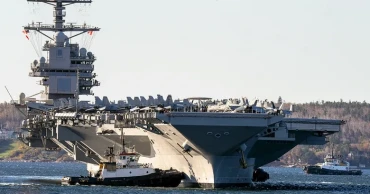
A second U.S. carrier strike group departs from Norfolk, Virginia, on Friday. Scores of aircraft are heading to U.S. military bases around the Middle East. Special operations forces are now assisting Israel's military in planning and intelligence. The first shipment of additional munitions has already arrived.
More is expected, soon. Defense Secretary Lloyd Austin will arrive in Israel Friday to meet with Israeli leaders to discuss what else the U.S. can provide.
Read: Day 9 of the latest Israel-Hamas war
For now, the buildup reflects U.S. concern that the deadly fighting between Hamas and Israel could escalate into a more dangerous regional conflict. So the primary mission for those ships and warplanes is to establish a force presence that deters Hezbollah, Iran or others from taking advantage of the situation. But the forces the U.S. sends are capable of more than that.
A look at what weapons and options the U.S. military could provide:
WEAPONS AND SPECIAL OPERATIONS FORCES
The U.S. is providing some personnel and much-needed munitions to Israel. Defense Secretary Lloyd Austin announced that a small special operations cell was now assisting Israel with intelligence and planning, and providing advice and consultations to the Israeli Defense Forces on hostage recovery efforts. Those forces, however, have not been tasked with hostage rescue, which would put them on the ground fighting in the conflict. That's something the Biden administration has not approved and White House spokesman John Kirby has said the Israelis do not want.
The U.S. is also getting U.S. defense companies to expedite weapons orders by Israel that were already on the books. Chief among those are munitions for Israel's Iron Dome air defense system.
Read: Israel's Netanyahu vows to 'destroy' Hamas, says Gaza offensive still in early stages
“We’re surging additional military assistance, including ammunition and interceptors to replenish Iron Dome,” President Joe Biden said Tuesday. “We’re going to make sure that Israel does not run out of these critical assets to defend its cities and its citizens.”
Iron Dome’s missiles target rockets that approach its cities. According to Raytheon, Israel has 10 such systems in place. Beginning with Saturday's attack, Hamas has fired more than 5,000 rockets at Israel, most of which the system has been able to intercept, according to the Israel Defense Forces.
Raytheon produces most of the missile components for Iron Dome in the U.S., and the Army has two systems in its stockpile.
The Iron Dome munitions the U.S. provides to Israel will likely be above and beyond what Israel has ordered and will be part of ongoing military assistance packages. Those packages will also include small diameter bombs and JDAM kits — essentially a tail fin and navigation kit that turns a “dumb” bomb into a “smart” bomb and enables troops to guide the munition to a target, rather than simply dropping it.
NAVY SHIPS AND PLANES
One of the most visible examples of the U.S. response was the announcement just hours after the attacks that the Pentagon would redirect the Gerald R. Ford carrier strike group to sail toward Israel. The carrier had just completed an exercise with the Italian Navy when the ship with its crew of about 5,000 was ordered to quickly sail to the Eastern Mediterranean.
One week after the attacks, as Israel positioned for a major ground offensive into Gaza City, Austin announced a second carrier group would be sailing toward Israel, as he ordered the USS Dwight D. Eisenhower carrier strike group to join the Ford in the Eastern Mediterranean. In a statement announcing the move, Austin said he was sending the Eisenhower too “as part of our effort to deter hostile actions against Israel or any efforts toward widening this war following Hamas’s attack on Israel.”
The carriers provide a host of options. They serve as primary command and control operations centers and can conduct information warfare. They can launch and recover E2-Hawkeye surveillance planes, recognizable by their 24-foot (7-meter) diameter disc-shaped radars. The planes provide early warnings on missile launches, conduct surveillance and manage the airspace, not only detecting enemy aircraft but also directing U.S. movements.
They also serve as a floating airbase for F-18 fighter jets that can fly intercepts or strike targets. And the carriers can flex to provide significant capabilities for humanitarian work, including onboard hospitals with ICUs, emergency rooms, medics, surgeons and doctors. They also sail with helicopters that can be used to airlift critical supplies in or victims out.
Read: US defence secretary is in Israel to meet with its leaders and see America's security assistance
The Eisenhower had already been scheduled to deploy to the Mediterranean on a regular rotation, and the Ford is near the end of its scheduled deployment. But the Biden administration for now has decided to have both carriers there.
AIR FORCE WARPLANES
The Pentagon has also ordered additional warplanes to bolster A-10, F-15 and F-16 squadrons at bases throughout the Middle East. More are to be added if needed.
Air Force Secretary Frank Kendall said Tuesday at an Atlantic Council event that the service was directing units that were about to come home to remain in place along with their replacements.
The U.S. Air Force already has significant airpower in the region to conduct manned and unmanned operations, most notably in Syria where an Air Force F-16 last week was ordered to shoot down a Turkish drone that was posing a threat to U.S. ground forces.
Kendall also said Air Force C-17s have landed in and departed from Israel since the attacks. The transport planes were picking up U.S. military personnel who were there for a military exercise that hadn't started yet when the attacks began, the Air Force said in a statement.
Neither the Air Force nor Central Command would comment on what additional missions U.S. airpower might take on in response to the conflict.
2 years ago

Powerful earthquake shakes west Afghanistan a week after devastating quakes hit same region
A powerful 6.3 magnitude earthquake struck western Afghanistan on Sunday, just over a week after strong quakes and aftershocks killed thousands of people and flattened entire villages in the same region.
The U.S. Geological Survey said the latest quake's epicenter was about 34 kilometers (21 miles) outside Herat, the provincial capital, and eight kilometers (five miles) below the surface.
Read: Two earthquakes strike Nepal, sending tremors through the region
There were no immediate official reports of possible casualties or damage.
The earthquakes on Oct. 7 flattened whole villages in Herat, in one of the most destructive quakes in the country’s recent history.
More than 90% of the people killed a week ago were women and children, U.N. officials reported Thursday.
Taliban officials said the earlier quakes killed more than 2,000 people across the province. The epicenter was in Zenda Jan district, where 1,294 people died, 1,688 were injured and every home was destroyed, according to U.N. figures.
The initial quake, numerous aftershocks and a second 6.3-magnitude quake on Wednesday flattened villages, destroying hundreds of mud-brick homes that could not withstand such force. Schools, health clinics and other village facilities also collapsed.
Read:6.3 magnitude earthquake shakes part of western Afghanistan where earlier quake killed over 2,000
Besides rubble and funerals after that devastation, there was little left of the villages in the region’s dusty hills. Survivors are struggling to come to terms with the loss of multiple family members and in many places, living residents are outnumbered by volunteers who came to search the debris and dig mass graves.
2 years ago