Others

3 scientists win Nobel Prize in chemistry for their work on tiny quantum dots
The Nobel Prize in chemistry has been awarded to Moungi Bawendi, Louis Brus and Alexei Ekimov for their work on tiny quantum dots.
3 scientists win Nobel Prize in physics for looking at electrons in atoms during split seconds
Quantum dots are tiny particles, just a few atoms in diameter, whose electrons have constrained movement. This effects how they absorb and release visible light, allowing for very bright colors. They are used in many electronics, like LED displays.
“These tiny particles have unique properties and now spread their light from television screens and LED lamps. They catalyze chemical reactions and their clear light can illuminate tumor tissue for a surgeon,” according to the Royal Swedish Academy of Sciences.
Hans Ellegren, the secretary-general of the academy, announced the award Wednesday in Stockholm.
The Nobel Prizes carry a cash award of 11 million Swedish kronor ($1 million). The money comes from a bequest left by the prize’s creator, Swedish inventor Alfred Nobel, who died in 1896.
THIS IS A BREAKING NEWS UPDATE. AP’s earlier story follows below.
STOCKHOLM (AP) — Swedish media reported Wednesday that the Royal Swedish Academy of Sciences may have announced the winners of this year’s Nobel Prize in chemistry prematurely.
Public broadcaster SVT said the academy sent a press release by mistake early Wednesday that contained the names of the winners.
The Associated Press did not receive the press release and has decided not to publish the names until they're confirmed.
Philippines Nobel laureate Maria Ressa acquitted of tax evasion though she faces 2 more legal cases
“Unfortunately, I cannot comment on what has been published yet. What is important to know is that the Academy of Sciences has not yet met and there is no decision on who will be awarded this year’s Nobel Prize in Chemistry,” academy spokeswoman Eva Nevelius said in an email.
Heiner Linke, an expert on the Nobel Committee for chemistry, told Swedish newspaper Dagens Nyheter that no decision had been made Wednesday morning and that if a press release had gone out it would “definitely” have been a mistake.
According to SVT, the press release said the prize went to three scientists for the “discovery and synthesis of quantum dots."
The Royal Swedish Academy of Sciences, which awards the physics, chemistry and economics prizes, asks for nominations a year in advance from thousands of university professors and other scholars around the world.
A committee for each prize then discusses candidates in a series of meetings throughout the year. At the end of the process, the committee presents one or more proposals to the full academy for a vote. The deliberations, including the names of nominees other than the winners, are kept confidential for 50 years.
The prize is set to be announced at 11:45 a.m. in Sweden (0945 GMT).
On Tuesday, the physics prize went to French-Swedish physicist Anne L’Huillier, French scientist Pierre Agostini and Hungarian-born Ferenc Krausz for producing the first split-second glimpse into the superfast world of spinning electrons.
The tiny part of each atom races around the center and is fundamental to virtually everything: chemistry, physics, our bodies and our gadgets.
Former Fed chair Bernanke shares Nobel for research on banks
On Monday, Hungarian-American Katalin Karikó and American Drew Weissman won the Nobel Prize in medicine for discoveries that enabled the creation of mRNA vaccines against COVID-19.
Last year, Americans Carolyn R. Bertozzi and K. Barry Sharpless, and Danish scientist Morten Meldal were jointly awarded the Nobel Prize in chemistry for developing a way of “ snapping molecules together” that can be used to explore cells, map DNA and design drugs that can target diseases such as cancer more precisely.
The chemistry prize means Nobel season has reached its halfway stage. The prizes in literature, peace and economics follow, with one announcement every weekday until Oct. 9.
The Nobel Foundation raised the prize money by 10% this year to 11 million kronor (about $1 million). In addition to the money, winners receive an 18-carat gold medal and diploma when they collect their Nobel Prizes at the award ceremonies in December.
2 years ago

Saudi Arabia says it will maintain production cuts that have helped drive oil prices up
Saudi Arabia on Wednesday confirmed that it will maintain a production cut of 1 million barrels of oil a day through the end of the year.
Many renowned Saudi companies interested to invest in Bangladesh: Ambassador
The announcement could further prop up oil prices, which are hovering around $90 a barrel. Production cuts first announced by Saudi Arabia and Russia in July have driven up prices at the pump, enriched Moscow's war chest and complicated global efforts to bring down inflation.
The Saudi Energy Ministry reaffirmed that the cuts would continue through the end of the year in a brief statement posted on its website Wednesday attributed to “an official source.” It said the kingdom would continue to produce 9 million barrels per day in November and December.
“The source stated that this voluntary cut decision will be reviewed next month to consider deepening the cut or increasing production,” the statement said.
Sky is the limit, Saudi minister says on opportunities in Bangladesh
Benchmark U.S. crude oil for November delivery rose 41 cents to $89.23 a barrel Tuesday. Brent crude for December delivery rose 21 cents to $90.92 a barrel.
Saudi Arabia will host Ukrainian-organized peace summit in Aug, official says
Saudi Arabia is counting on high oil prices to help fund Vision 2030, an ambitious plan by Crown Prince Mohammed bin Salman to overhaul the economy, reduce the kingdom's dependence on oil and create jobs for young people.
2 years ago

Killing of Sikh separatist: India tells Canada to withdraw over 40 diplomatic staff, reports say
The Indian government has asked Canada to withdraw over 40 of its diplomats from the country, the Financial Times has reported.
New Delhi has set a deadline of October 10 for the repatriation, reads the report.
Canada has 62 diplomats in India, and earlier, New Delhi had said the total number should be reduced by 41, the report said.
Read: Despite dispute, Canada remains committed to its relationship with India: Trudeau
India had asked Canada to curtail its diplomatic presence in the country as relations between the two countries plunged to the lowest point following Ottawa's allegations against New Delhi over the killing of a Khalistani separatist on Canadian soil.
Read: Blinken meets Indian foreign minister as row between India and Canada simmers
However, India has outright rejected the claim, calling it absurd.
External Affairs Minister S. Jaishankar recently said there was a "climate of violence" and an "atmosphere of intimidation" against Indian diplomats in Canada.
Read: Intelligence from 'Five Eyes' nations helped Canada link India to Sikh’s killing, US diplomat says
2 years ago

Facing increasing pressure from customers, some miners are switching to renewable energy
Red hot sparks fly through the air as a worker in a heat-resistant suit pokes a long metal rod into a nickel smelter, coaxing the molten metal from a crucible at a processing facility on the Indonesian island of Sulawesi.
The smelter run by global mining firm Vale and powered by electricity from three dams churns out 75,000 tons of nickel a year for use in batteries, electric vehicles, appliances and many other products.
While the smelting creates heavy emissions of greenhouse gases, the power used is relatively clean. Such possible reductions in emissions come as demand for critical minerals like nickel and cobalt is surging as climate change hastens a transition to renewable energy.
Robust regional cooperation in electricity sector to help increase renewable energy integration: Whiteley
Mining operations account for some 4%-7% of global greenhouse gas emissions, according to global consulting firm McKinsey & Company. But some miners are moving to reduce use of fossil fuels in extracting and refining, partly due to pressure from downstream customers that want more sustainable supply chains.
Located beside a crystal-blue lake in the lush jungle of Sorowako, South Sulawesi, Vale Indonesia — a subsidiary of Vale international — runs its smelters entirely from hydroelectricity. Vale says that can reduce its emissions by over 1.115 million tons of carbon dioxide equivalent a year, compared to using diesel. Vale claims it has reduced its greenhouse gas emissions nearly a fifth since 2017.
As demand for materials needed for batteries, solar panels and other components vital for cutting global emissions rises, carbon emissions by miners and refiners will likewise rise unless companies actively work to decarbonize.
UAE keen to invest in Bangladesh’s renewable energy: UAE minister tells PM Hasina
Experts say improved technology, pressure from customers and enforcement of clean energy policies all are needed to keep moving toward more sustainable mining and refining practices while raising output to keep pace with global needs for pivoting away from reliance on polluting fossil fuels.
Other companies and countries around the world also are reducing use of fossil fuels in their mining operations. Solar plants in Chile help power the mining sector, which consumes much of the country's electricity demand to produce copper, lithium and other materials. In recent years, wind power has helped electrify the Raglan Mine in Canada.
Companies are learning from past mistakes of the industrial revolution, where reliance on fossil fuels was paramount for development, said Michael Goodsite, a pro vice chancellor and professor of civil and environmental engineering at the University of Adelaide in Australia.
Norway keen to invest in Bangladesh’s renewable energy sector
"I think as you see the future of certain operations, you'll see them transitioning," he said. "The way that they transition and how they move from fossil fuel operations to other energy sources can and should be learned from by others."
Indonesia is the world's largest nickel producer and Indonesian President Joko Widodo has promoted the country developing its own industries.
The push to cut emissions and use cleaner energy has been helped by investment and interest from governments and multinational companies. Volvo, Mercedes, Hyundai, Apple and other manufacturers need materials made in a more sustainable way to meet their own environmental, social and governance, or ESG, commitments.
China eager to boost cooperation with Bangladesh in renewable energy: Chinese vice-minister
Widodo visited Vale Indonesia's Sorowako facilities in March, the same month a deal was signed for a $4.5 billion nickel procession plant to be built by Vale Indonesia with investment by Ford Motor Co.
"Ford can help ensure that the nickel that we use in electric vehicle batteries is mined, produced within the same ESG standards as ... our business around the world," Christopher Smith, Ford's chief government affairs officer, said at a signing ceremony for a new $4.5 billion nickel processing plant in Indonesia with Vale Indonesia in March this year.
Even companies already taking steps to decarbonize are still reliant on at least some fossil fuels.
G7 countries should end supporting fossil fuels, accelerating transition to renewable energy: CPD
At Vale Indonesia in Sorowako, coal is still used to power drying and reduction kilns. The company's CEO, Febriany Eddy, said she plans to switch such operations to liquefied natural gas — cleaner but still another fossil fuel.
It's the best option available given current technology, she said in an interview with The Associated Press.
"I have two options in front of me: I continue to say that there is no viable option, that we will wait until that perfect solution is to come, which (could take) 15 or 20 years to come. Or I work with LNG first, knowing it is not a perfect solution, knowing it is a transition only," Eddy said. "But with conversion to LNG, I can reduce 40% of my emissions."
The use as LNG as a "bridge fuel" has been contested by climate experts, as the fuel releases climate-warming methane and carbon dioxide when it's produced, transported and burned.
Initial costs for switching to, expanding and building new renewable infrastructure are another steep barrier.
It took decades to recoup costs from building the three hydropower dams in the remote, sparsely populated area, that are used to power Vale's Sorowako facilities. But now, having that infrastructure means big savings at a time when global energy prices are high.
G7 vows to step up moves to renewable energy, zero carbon
"Hydropower isn't just reducing our carbon emissions, but also reducing our costs today because we are no longer that (vulnerable) to fuel and coal costs— because we have hydropower," Eddy said.
Having mining operations powered by renewable sources instead of fossil fuels could also help unlock green financing and attract future investors, said Aimee Boulanger, executive director of the Initiative for Responsible Mining Assurance.
"The finance and investment sector is more tuned in than it ever has before to the environmental and social responsibility of supply chains and their investments in them. And they're looking at greenhouse gas emissions," she said. "When the world is recovering from a global pandemic and facing the global crisis of climate change, there's never been a time when they've been more interested in these issues."
Bangladesh needs $26.5 billion to generate 40 percent of electricity from renewable energy sources by 2041
While many companies are stepping up efforts to decarbonize their supply chains, others — such as many of those making green energy materials in China, have less stringent requirements for their materials.
"We can find jurisdictions around the world that — if they're able to do things cheaply because they have access to fossil fuels and they already have the capital assets and the capital expenditures— they're going to continue doing that," Goodsite said when asked about Chinese businesses.
Ultimately, investors and consumers play a vital role in getting companies to clean up their operations, he said.
But phasing out the mining industry's reliance on fossil fuels will be costly, especially as the United States and other countries build up the capacity to bring production of critical materials onshore.
"If the end users care about them coming from ...a green energy based process... then we all need to be prepared to pay a significant premium for that," Goodsite said.
2 years ago

Karikó, Weissman win Nobel in medicine for enabling development of vaccines against COVID-19
Two scientists won the Nobel Prize in medicine on Monday for discoveries that enabled the development of effective mRNA vaccines against COVID-19.
Katalin Karikó is a professor at Sagan’s University in Hungary and an adjunct professor at the University of Pennsylvania. Drew Weissman performed his prizewinning research together with Karikó at the University of Pennsylvania.
Thomas Perlmann, secretary of the Nobel Assembly, announced the award Monday in Stockholm.
Read: Things to know about the Nobel Prizes
The Nobel Prize in physiology or medicine was won last year by Swedish scientist Svante Paabo for discoveries in human evolution that unlocked secrets of Neanderthal DNA which provided key insights into our immune system, including our vulnerability to severe COVID-19.
The award was the second in the family. Paabo’s father, Sune Bergstrom, won the Nobel Prize in medicine in 1982.
Nobel announcements continue with the physics prize on Tuesday, chemistry on Wednesday and literature on Thursday. The Nobel Peace Prize will be announced Friday and the economics award on Oct. 9.
Read: 'PM Hasina should get Nobel prize for hosting Rohingyas'
The prizes carry a cash award of 11 million Swedish kronor ($1 million). The money comes from a bequest left by the prize’s creator, Swedish inventor Alfred Nobel, who died in 1896.
The prize money was raised by 1 million kronor this year because of the plunging value of the Swedish currency.
The laureates are invited to receive their awards at ceremonies on Dec. 10, the anniversary of Nobel’s death. The prestigious peace prize is handed out in Oslo, according to his wishes, while the other award ceremony is held in Stockholm.
Read more: Recap of the 2022 Nobel Prizes awarded so far
2 years ago

Biden says there’s ‘not much time’ to keep aid flowing to Ukraine and Congress must ‘stop the games’
President Joe Biden said Sunday that American aid to Ukraine will keep flowing for now as he sought to reassure allies of continued U.S. financial support for the war effort. But time is running out, the president said in a warning to Congress.
"We cannot under any circumstances allow America's support for Ukraine to be interrupted," Biden said in remarks from the Roosevelt Room after Congress averted a government shutdown by passing a short-term funding package late Saturday that dropped assistance for Ukraine in the battle against Russia.
"We have time, not much time, and there's an overwhelming sense of urgency," he said, noting that the funding bill lasts only until mid-November. Biden urged Congress to negotiate an aid package as soon as possible.
Attorney General Garland says in interview he'd resign if Biden asked him to take action on Trump
"The vast majority of both parties — Democrats and Republicans, Senate and House — support helping Ukraine and the brutal aggression that is being thrust upon them by Russia," Biden said. "Stop playing games, get this done.''
But many lawmakers acknowledge that winning approval for Ukraine assistance in Congress is growing more difficult as the war grinds on. Republican resistance to the aid has been gaining momentum and the next steps are ahead, given the resistance from the hard-right flank.
While Senate Majority Leader Chuck Schumer, D-N.Y., has begun a process to potentially consider legislation providing additional Ukraine aid, House Speaker Kevin McCarthy, R-Calif., faces a more difficult task in keeping the commitment he made over the objections of nearly half of his GOP majority.
Biden warns US democracy in peril from 'extremist' Trump
He told CBS' "Face on the Nation" that he supported "being able to make sure Ukraine has the weapons that they need," but that his priority was security at the U.S.-Mexico border.
"I firmly support the border first," he said. "So we've got to find a way that we can do this together."
By omitting additional Ukraine aid from the measure to keep the government running, McCarthy closed the door on a Senate package that would have funneled $6 billion to Ukraine, roughly one-third of what has been requested by the White House. Both the House and Senate overwhelmingly approved the stopgap measure, with members of both parties abandoning the increased aid in favor of avoiding a costly government shutdown.
Now Biden is working to reassure U.S. allies that more money will be there for Ukraine.
"Look at me," he said turning his face to the cameras at the White House. "We're going to get it done. I can't believe those who voted for supporting Ukraine -- overwhelming majority in the House and Senate, Democrat and Republican -- will for pure political reasons let more people die needlessly in Ukraine."
House Republicans make their case for Biden impeachment inquiry at first hearing
Foreign allies, though, were concerned. European Union foreign policy chief Josep Borrell said Sunday from Kyiv that he believed it wouldn't be the last word, but he noted the EU's continued substantial financial support for Ukraine and a new proposal on the table.
"I have a hope that this will not be definitive decision and Ukraine will continue having the support of the U.S.," he said.
The latest actions in Congress signal a gradual shift in the unwavering support that the United States has so far pledged Ukraine in its fight against Russia, and it is one of the clearest examples yet of the Republican Party's movement toward a more isolationist stance. The exclusion of the money for Ukraine came little more than a week after lawmakers met in the Capitol with Ukrainian President Volodymyr Zelenskyy. He sought to assure them that his military was winning the war, but stressed that additional assistance would be crucial.
After that visit, Schumer said that one sentence summed up Zelenskyy's message in his meeting with the Senate: "'If we don't get the aid, we will lose the war," Schumer said.
McCarthy, pressured by his right flank, has gone from saying "no blank checks" for Ukraine, with the focus being on accountability, to describing the Senate's approach as putting "Ukraine in front of America."
The next funding deadline, which comes during the U.S.-hosted meeting in San Francisco of Asia-Pacific Economic Cooperation leaders, is likely to become a debate over border funding in exchange for additional Ukraine aid.
This was the scenario that Mitch McConnell, the Senate Republican leader who has championed Ukraine aid, was trying to avoid back in summer when he urged the White House team not to tangle the issue in the government shutdown debate, according to people familiar with his previously undisclosed conversations with the administration who spoke on condition of anonymity to discuss the private talks. Now, all sides are blaming the other for the failure, straining to devise a path forward.
Voting in the House this past week pointed to the potential trouble ahead. Nearly half of House Republicans voted to strip $300 million from a defense spending bill to train Ukrainian soldiers and purchase weapons. The money later was approved separately, but opponents of Ukraine support celebrated their growing numbers.
The U.S. has approved four rounds of aid to Ukraine in response to Russia's invasion, totaling about $113 billion, with some of that money going toward replenishment of U.S. military equipment that was sent to the front lines. In August, Biden called on Congress to provide for an additional $24 billion.
2 years ago
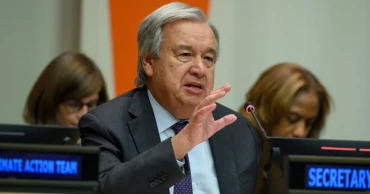
Let’s pledge to build inclusive, safe, sustainable human settlements for all: UN chief
United Nations Secretary-General Antonio Guterres has sought joint efforts to build inclusive, safe, resilient, and sustainable human settlements for all people, everywhere.
“Local action is vital, and global cooperation indispensable. On this World Habitat Day, let us pledge to build inclusive, safe, resilient, and sustainable human settlements for all people, everywhere,” he said in a message marking the World Habitat Day that falls on October 2.
This year’s World Habitat Day focuses attention on ‘Resilient Urban Economies’ and the potential of cities as drivers of inclusive, green, and sustainable growth.
Also read: UN chief for green investments to build tourism sector that delivers for people, planet
To fulfil this promise, the UN chief said, cities must confront a range of challenges – from economic shocks and escalating climate emergencies to widening inequalities.
“Through our Local 2030 Coalition, we are mobilizing the entire United Nations system to tackle these crises from the ground up and advance sustainable urbanization,” he said.
Guterres said local zero waste initiatives are supporting the creation of circular economies. Public efforts to expand green spaces help cool urban landscapes during heatwaves. “And community action to reduce food waste and promote local production are key steps in transforming our food systems.”
Also read: Build resilience against adverse impact of climate change: World leaders tell UN meet
“Building greater resilience and better protecting vulnerable populations requires far greater investments in sustainable infrastructure, early warning systems, and affordable, adequate housing for all,” said the UN chief.
Also read: A unified strategy and more funding are urgently needed to end the crisis in Myanmar, UN chief says
“At the same time, we must work to improve access to electricity, water, sanitation, transport, and other basic services – while investing in education, skills development, digital innovation, and entrepreneurship,” he said.
2 years ago
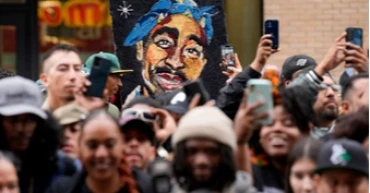
An arrest has been made in Tupac Shakur's killing. Here's what we know about the case and the rapper
An arrest has been made in Tupac Shakur's killing, the latest twist in one of the biggest unsolved cases in hip-hop history.
Duane “Keffe D” Davis was arrested on suspicion of murder early Friday morning and has been indicted on a murder charge in Las Vegas.
The case returned to the spotlight in July when Nevada authorities served a search warrant in connection with the rap star’s shooting death.
Here’s what to know about one of the most infamous fatal shootings in hip-hop history:
WHAT’S NEW IN THE INVESTIGATION?
Authorities on Friday arrested Davis, who's name has long been linked with Shakur's death. He is the relative of a man who emerged as a suspect shortly after the rapper’s killing.
Shakur was gunned down while riding in a car on the Las Vegas strip on Sept. 7, 1996.
In July, authorities executed a warrant in the nearby city of Henderson at Davis' house. He's the uncle of Orlando Anderson, one of Shakur’s known rivals who authorities long suspected shot the rapper. Anderson denied involvement in Shakur’s killing at the time, and died two years later in an unrelated gang shooting in Compton, California.
Details from the warrant obtained by The Associated Press shows detectives collected multiple computers, a cellular telephone, “documentary documents,” a Vibe magazine that featured Shakur, several .40-caliber bullets, two “tubs containing photographs” and a copy of Davis’ 2019 memoir, ”Compton Street Legend.”
WHAT HAPPENED THE NIGHT SHAKUR WAS SHOT?
The 25-year-old rapper was traveling in a black BMW driven by Death Row Records founder Marion “Suge” Knight in a convoy of about 10 cars, apparently headed to a nightclub, after watching Mike Tyson knock out Bruce Seldon in a championship fight at the MGM Grand.
After the bout, Shakur, Knight and associates were involved in a fight at the hotel.
Read: Jacksonville killings: What we know about the hate crime
While driving down the Las Vegas Strip, a white Cadillac with four men inside pulled alongside the BMW while it was stopped at a red light. One person opened fire, riddling the passenger side of Knight’s car with bullets, police said. Sitting in the passenger seat, Shakur was shot four times, at least twice in the chest. Knight was grazed by a bullet fragment or shrapnel from the car.
Shakur was rushed to a hospital, where he died six days later.
WHAT IS THE RAPPER’S LEGACY?
Shakur is one of the most prolific figures in hip-hop, also known by his stage names 2Pac and Makaveli. His professional music career only lasted five years, but he sold more than 75 million records worldwide, including the diamond-certified album “All Eyez on Me,” which was packed with hits including “California Love (Remix),” “I Ain’t Mad at Cha” and “How Do U Want It.”
Shakur had five No. 1 albums including “Me Against the World” in 1995 and “All Eyez on Me” in 1996, along with three posthumous releases: 1996’s “The Don Killuminati: The 7 Day Theory,” 2001’s “Until the End of Time” and 2004’s “Loyal to the Game.”
The six-time Grammy-nominated artist was inducted into the Rock & Roll Hall of Fame by Snoop Dogg in 2017.
As a rising actor, Shakur starred in several popular films such as John Singleton's “Poetic Justice" with Janet Jackson and Ernest Dickerson's “Juice.” He also played major roles in “Gang Related” and “Above the Rim.”
In April, a five-part FX docuseries called “ Dear Mama: The Saga of Afeni and Tupac Shakur” delved into the past of the rapper’s mother, Afeni Shakur, as a female leader in the Black Panther Party, while exploring Tupac’s journey as a political visionary and becoming one of the greatest rap artists of all time.
Earlier this year, Shakur received a posthumous star on the Hollywood Walk of Fame.
“He defied the distinction between art and activism,” said radio personality Big Boy, who emceed the ceremony.
Shakur has been remembered with museum exhibits, including “Tupac Shakur. Wake Me When I’m Free” in 2021 and “All Eyez on Me” at the Grammy Museum in 2015. Oakland officials have said a stretch of an Oakland street will be renamed after him.
Read: What we know about the Titanic-bound submersible that's missing with 5 people onboard
WHAT ABOUT HIS BIGGEST RIVALRY?
Shakur’s death came amid his feud with rap rival the Notorious B.I.G., who was fatally shot six months later. At the time, both rappers were in the middle of the infamous East Coast-West Coast rivalry, which primarily defined the hip-hop scene during the mid-1990s.
The feud was ignited after Shakur was seriously wounded in another shooting during a robbery in the lobby of a midtown Manhattan hotel in 1994. He was shot several times and lost $40,000.
Shakur openly accused B.I.G. and Sean “Diddy” Combs of having prior knowledge of the shooting, which both vehemently denied. The shooting sparked enough of a feud that created a serious divide within the hip-hop community and fans.
The New York-born Shakur represented the West Coast after he signed with the Los Angeles-based Death Row Records. He often traded verbal jabs with New York-natives B.I.G. and Combs, who hailed from the East Coast while representing New York City-based Bad Boy Records.
Diss tracks were delivered to drive home their ferocious points across. Shakur released the aggressive single “Hit ’Em Up,” which took aim at B.I.G., who on the other hand returned with “Who Shot Ya?,” a record that was received as a taunt. However, B.I.G. claimed the song was not directed toward Shakur.
MORE ON SHAKUR'S LIFE AND CAREER
Shakur was born June 16, 1971, in New York City. He later moved to Baltimore and attended the Baltimore School for the Arts, where he began writing raps. He eventually made his way to Marin City, California, near San Francisco, and continued to write and record.
Read more: What we know so far on the leaked Pentagon documents
As a member of the Grammy-nominated group Digital Underground, Shakur appeared on the 1991 track “Same Song″ from ”This Is an EP Release″ and on the album "Sons of the P.″
That same year, Shakur achieved individual recognition with the album "2Pacalypse Now,″ which spawned the successful singles "Trapped" and "Brenda’s Got a Baby."
The album, with references to police officers being killed, drew notoriety when a lawyer claimed a man accused of killing a Texas trooper had been riled up by the record. Then-Vice President Dan Quayle targeted "2Pacalypse Now″ in his 1992 battle with Hollywood over traditional values.
In 1993, Shakur followed up with the sophomore album, which produced songs ”I Get Around," "Keep Ya Head Up″ and "Papa’z Song,″ and he was nominated for an American Music Award as best new rap hip-hop artist.
The following year he appeared with hip-hop group Thug Life on the "Above The Rim″ soundtrack and on the group’s album "Volume 1.″ In a photo on the album liner, he framed his face between his two extended middle fingers.
He was convicted of sexually abusing a fan in 1994 and served several months in a New York prison .
While incarcerated, Shakur indicated he was rethinking his lifestyle. He had support from Black leaders including the Rev. Jesse Jackson and the Rev. Al Sharpton, who counseled him while he was locked up.
“Thug Life to me is dead. If it’s real, let somebody else represent it, because I’m tired of it,″ Shakur told Vibe magazine. ”I represented it too much. I was Thug Life.″
Shakur was up-front about his troubled life in the 1995 release “Me Against The World,″ a multimillion-selling album that contained the ominously titled tracks ”If I Die 2Nite″ and “Death Around The Corner.″
“It ain’t easy being me. ... Will I see the penitentiary, or will I stay free?″ Shakur rapped on the album, which produced the Grammy-nominated "Dear Mama″ and standout singles "So Many Tears″ and ”Temptations.″
The Las Vegas shooting occurred as Shakur’s fourth solo album, "All Eyez on Me,″ remained on the charts, with some 5 million copies sold.
2 years ago

Things to know about the Nobel Prizes
Fall has arrived in Scandinavia, which means Nobel Prize season is here.
The start of October is when the Nobel committees get together in Stockholm and Oslo to announce the winners of the yearly awards.
First up, as usual, is the Nobel Prize in medicine or physiology, which will be announced Monday by a panel of judges at the Karolinska Institute in the Swedish capital. The prizes in physics, chemistry, literature, peace and economics will follow, with one announcement every weekday until Oct. 9.
Philippines Nobel laureate Maria Ressa acquitted of tax evasion though she faces 2 more legal cases
Here are some things to know about the Nobel Prizes:
AN IDEA MORE POWERFUL THAN DYNAMITE
The Nobel Prizes were created by Alfred Nobel, a 19th-century businessman and chemist from Sweden. He held more than 300 patents but his claim to fame before the Nobel Prizes was having invented dynamite by mixing nitroglycerine with a compound that made the explosive more stable.
Dynamite soon became popular in construction and mining as well as in the weapons industry. It made Nobel a very rich man. Perhaps it also made him think about his legacy, because toward the end of his life he decided to use his vast fortune to fund annual prizes “to those who, during the preceding year, have conferred the greatest benefit to humankind.”
The first Nobel Prizes were presented in 1901, five years after his death. In 1968, a sixth prize was created, for economics, by Sweden’s central bank. Though Nobel purists stress that the economics prize is technically not a Nobel Prize, it’s always presented together with the others.
PEACE IN NORWAY
For reasons that are not entirely clear, Nobel decided that the peace prize should be awarded in Norway and the other prizes in Sweden. Nobel historians suspect Sweden’s history of militarism may have been a factor.
During Nobel’s lifetime, Sweden and Norway were in a union, which the Norwegians reluctantly joined after the Swedes invaded their country in 1814. It’s possible that Nobel thought Norway would be a more suitable location for a prize meant to encourage “fellowship among nations.”
To this day, the Nobel Peace Prize is a completely Norwegian affair, with the winners selected and announced by a Norwegian committee. The peace prize even has its own ceremony in the Norwegian capital of Oslo on Dec. 10 — the anniversary of Nobel’s death — while the other prizes are presented in Stockholm.
'PM Hasina should get Nobel prize for hosting Rohingyas'
WHAT’S POLITICS GOT TO DO WITH IT?
The Nobel Prizes project an aura of being above the political fray, focused solely on the benefit of humanity. But the peace and literature awards, in particular, are sometimes accused of being politicized. Critics question whether winners are selected because their work is truly outstanding or because it aligns with the political preferences of the judges.
The scrutiny can get intense for high-profile awards, such as in 2009, when President Barack Obama won the peace prize less than a year after taking office.
The Norwegian Nobel Committee is an independent body that insists its only mission is to carry out the will of Alfred Nobel. However, it does have links to Norway's political system. The five members are appointed by the Norwegian Parliament, so the panel's composition reflects the power balance in the legislature.
To avoid the perception that the prizes are influenced by Norway’s political leaders, sitting members of the Norwegian government or Parliament are barred from serving on the committee. Even so, the panel isn't always viewed as independent by foreign countries. When imprisoned Chinese dissident Liu Xiaobo won the peace prize in 2010, Beijing responded by freezing trade talks with Norway. It took years for Norway-China relations to be restored.
GOLD AND GLORY
One reason the prizes are so famous is they come with a generous amount of cash. The Nobel Foundation, which administers the awards, raised the prize money by 10% this year to 11 million kronor (about $1 million). In addition to the money, the winners receive an 18-carat gold medal and diploma when they collect their Nobel Prizes at the award ceremonies in December.
Most winners are proud and humbled by joining the pantheon of Nobel laureates, from Albert Einstein to Mother Teresa. But two winners refused their Nobel Prizes: French writer Jean-Paul Sartre, who turned down the literature prize in 1964, and Vietnamese politician Le Duc Tho, who declined the peace prize that he was meant to share with U.S. diplomat Henry Kissinger in 1973.
French writer Annie Ernaux wins Nobel Literature Prize 2022
Several others were not able to receive their awards because they were imprisoned, such as Belarusian pro-democracy activist Ales Bialiatski, who shared last year’s peace prize with human rights groups in Ukraine and Russia.
LACK OF DIVERSITY
Historically, the vast majority of Nobel Prize winners have been white men. Though that’s started to change, there is still little diversity among Nobel winners, particularly in the science categories.
To date, 60 women have won Nobel Prizes, including 25 in the scientific categories. Only four women have won the Nobel Prize in physics and just two have won the economics prize.
In the early days of the Nobel Prizes, the lack of diversity among winners could be explained by the lack of diversity among scientists in general. But today critics say the judges need to do a better job at highlighting discoveries made by women and scientists outside Europe and North America.
The prize committees say their decisions are based on scientific merit, not gender, nationality or race. However, they are not deaf to the criticism. Five years ago, the head of the Royal Swedish Academy of Sciences said it had started to ask nominating bodies to make sure they don’t overlook “women or people of other ethnicities or nationalities in their nominations.”
2 years ago

Is climate change bad for democracy? Future-watchers see threats, and some opportunities
Instability driven by climate change could threaten democracies in the future, even though representative governments are best equipped to provide solutions, experts gathered at an annual conference have argued.
The Athens Democracy Forum, an event backed by the United Nations, wrapped up in the Greek capital Friday with attention focused on the impact that rising temperatures and extreme weather could have on democratic stability.
Princeton University climate scientist Michael Oppenheimer warned that authorities globally are responding too slowly to damage caused by weather disasters despite a rise in their frequency.
“As time goes on and on, the interval for recovery is shrinking,” said Oppenheimer, a professor of geosciences and international affairs and director at the Center for Policy Research on Energy and the Environment at Princeton.
“We’re in a situation where the services that governments provide – and one of the key services is protection of life and limb – are not happening the way they should. And to my mind, this is just another pressure that’s going to happen on democracy,” he said.
Read: Climate change and the shift to cleaner energy push Southeast Asia to finally start sharing power
The three-day Athens event gathered leading academics as well as politicians and community project managers and took place as national authorities have struggled to cope with widespread flooding in central Greece, weeks after the country suffered its worst wildfire on record.
Rising global temperatures and an acceleration of migration in parts of the world have sustained concerns that governments in the upcoming decades could turn more autocratic to retain control of increasingly scarce resources and deal with civil unrest.
In the long term, that would be a bad idea, argued Ann Florini, a fellow at the New America Political Reform Program, part of a U.S.-based think tank.
“Autocracy is the worst possible response to the climate emergency, because what you need is a lot of local empowerment,” Florini said.
“They may be very good at building a big solar power industry … but the idea that an autocracy is going to have the information systems and the flexibility and the resilience to deal with the climate emergency for the next several generations to me is self-evidently ludicrous.”
Read: Biden tells Pacific islands leaders that he hears their warnings about climate change and will act
Only open societies, she insisted, could foster the systemic transformations in energy, agriculture, and water systems required due to their far-reaching ecological impact.
Daniel Lindvall, a senior researcher with the Department of Earth Sciences at Sweden’s Uppsala University, said democratic governments needed to share the benefits of renewable energy with people at a local level.
“If you build a wind farm and part of the benefits and profits are going back to the local communities, then you will have people supporting it instead of protesting against" it, he said.
“All the benefits of energy independence would then sap the power from autocratic regimes like Putin’s (Russia) and Saudi Arabia.”
Read more: Build resilience against adverse impact of climate change: World leaders tell UN meet
2 years ago