Others
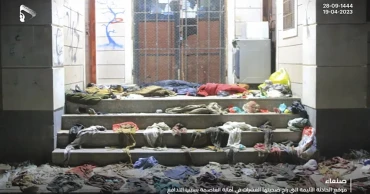
Stampede in Yemen’s capital kills at least 78, officials say
A crowd apparently spooked by gunfire and an electrical explosion stampeded at an event to distribute financial aid during the Muslim holy month of Ramadan in Yemen’s capital late Wednesday, killing at least 78 people and injuring at least 73 others, according to witnesses and Houthi rebel officials.
The tragedy was the deadliest in years that was not related to Yemen’s long-running war, and came ahead of the Muslim holiday of Eid al-Fitr, which marks the end of Ramadan later this week.
Armed Houthis fired into the air in an attempt at crowd control, apparently striking an electrical wire and causing it to explode, according to two witnesses, Abdel-Rahman Ahmed and Yahia Mohsen. That sparked a panic, and people, including many women and children, began stampeding, they said.
Video posted on social media showed dozens of bodies, some motionless, and others screaming as people tried to help. Separate footage of the aftermath released by Houthi officials showed bloodstains, shoes and victims’ clothing scattered on the ground. Investigators were seen examining the area.
The crush took place in the Old City in the center of Sanaa, where hundreds of poor people had gathered for a charity event organized by merchants, according to the Houthi-run Interior Ministry. Distributing financial aid is a ritual during Ramadan, when the faithful fast from dawn to dusk.
People had gathered to receive about $10 each from a charity funded by local businessmen, witnesses said. Wealthy people and businessmen often hand out cash and food, especially to the poor during Ramadan.
Interior Ministry spokesperson Brig. Abdel-Khaleq al-Aghri, blamed the crush on the “random distribution” of funds without coordination with local authorities.
Also read: Pakistani police arrest 8 after deadly Ramadan food stampede
Motaher al-Marouni, a senior health official, said 78 people were killed, according the rebels’ Al-Masirah satellite TV channel. At least 73 others were injured and taken to the al-Thowra Hospital in Sanaa, according to hospital deputy director Hamdan Bagheri.
The rebels quickly sealed off a school where the event was being held and barred people, including journalists, from approaching.
The Interior Ministry said it had detained two organizers and an investigation was under way.
The Houthis said they would pay some $2,000 in compensation to each family who lost a relative, while the injured would get around $400.
Yemen’s capital has been under the control of the Iranian-backed Houthis since they descended from their northern stronghold in 2014 and removed the internationally recognized government.
That prompted a Saudi-led coalition to intervene in 2015 to try to restore the government.
The conflict has turned in recent years into a proxy war between Saudi Arabia and Iran, killing more than 150,000 people, including fighters and civilians and creating one of the world’s worst humanitarian disasters.
More than 21 million people in Yemen, or two-thirds of the country’s population, need help and protection, according to the U.N. Office for the Coordination of Humanitarian Affairs. Among those in need, more than 17 million are considered particularly vulnerable.
In February the United Nations said it had raised only $1.2 billion out of a target of $4.3 billion at a conference aimed at generating funds to ease the humanitarian crisis.
3 years ago

9 Indonesian fishermen feared dead, 11 rescued off Australia
Nine Indonesian fishermen are feared drowned and another 11 have been rescued after spending six days without food or water on a barren island off the northwest Australian coast in the aftermath of a powerful tropical cyclone, authorities said Wednesday.
Two primitive wooden Indonesian fishing boats were caught in the path of Cyclone Ilsa, which on Friday became the most powerful storm in eight years to cross the Australian coast, with winds gusting at an apparent record of 289 kilometers (180 miles) per hour.
One of the boats, Putri Jaya, sank in “extreme weather conditions” on April 11 or 12 while Ilsa was gathering strength over the Indian Ocean as it tracked southeast toward the coast, Australian Maritime Safety Authority said in a statement, citing survivors.
The other boat, Express 1, ran aground with 10 men aboard in the early hours of April 12 on Bedwell Island, a sandy outcrop some 300 kilometers (200 miles) west of the Australian coastal tourist town of Broome, the authority said. The only known survivor from the Putri Jaya spent 30 hours in the water before washing ashore on the same island, the statement said.
"They all remained (on Bedwell Island) for six days without food and water before being rescued on Monday night,” the authority said.
The survivors were spotted Monday by the Australian Border Force, which patrols Australia’s northern approaches for smuggling and other illegal activity, from a plane on a routine surveillance mission. A Broome-based rescue helicopter was deployed and winched all 11 aboard in failing light.
Gordon Watt, a manager at helicopter provider PHI Aviation, said the rescue helicopter crew had been unable to land on the sand.
“They had to conduct winch recoveries which, in itself, is a challenging task,” Watt told Australian Broadcasting Corp. “The time of day meant that nightfall was upon the crew during the rescue, so they had to transition to using night vision goggles."
The survivors were taken to Broome Hospital where authorities reported them in good health. They are expected to be flown back to Indonesia soon.
The missing Indonesian fishermen are expected to be the only fatalities from Ilsa, which was a maximum Category 5 cyclone when it crossed the Pilbara region coast of Western Australia state southwest of Broome.
A gust of 289 kph (180 mph) recorded on an island off the Pilbara coast was the fastest ever recorded by Australia's weather bureau equipment in the country. While the reading remains preliminary and requires further analysis, the bureau said Tuesday it beats the previous record of 267 kph (166 mph) set by Cyclone Vance on the Pilbara coast in 1999.
3 years ago

Apple Inc bets big on India as it opens first flagship store
Apple Inc. opened its first flagship store in India in a much-anticipated launch Tuesday that highlights the company's growing aspirations to expand in the country it also hopes to turn into a potential manufacturing hub.
The company's CEO Tim Cook posed for photos with a few of the 100 or so Apple fans who had lined up outside the sprawling 20,000-square-foot store in India's financial capital, Mumbai, its design inspired by the iconic black-and-yellow cabs unique to the city. A second store will open Thursday in the national capital, New Delhi.
“India has such a beautiful culture and an incredible energy, and we’re excited to build on our long-standing history," Cook said in a statement earlier.
The tech giant has been operating in India for more than 25 years, selling its products through authorized retailers and the website it launched a few years ago. But regulatory hurdles and the pandemic delayed its plans to open a flagship store.
The new stores are a clear signal of the company's commitment to invest in India, the second-largest smartphone market in the world where iPhone sales have been ticking up steadily, said Jayanth Kolla, analyst at Convergence Catalyst, a tech consultancy. The stores show “how much India matters to the present and the future of the company," he added.
For the Cupertino, California-based company, India’s sheer size makes the market especially encouraging.
About 600 million of India's 1.4 billion people have smartphones, “which means the market is still under-penetrated and the growth prospect is huge,” said Neil Shah, vice president of research at technology market research firm Counterpoint Research.
Between 2020 and 2022, the Silicon Valley company has gained some ground in the smartphone market in the country, going from just about 2% to capturing 6%, according to Counterpoint data.
Still, the iPhone’s hefty price tag puts it out of reach for the majority of Indians.
Instead, iPhone sales in the country have thrived among the sliver of upper-middle-class and rich Indians with disposable incomes, a segment of buyers that Shah says is rising. According to Counterpoint data, Apple has captured 65% of the “premium” smartphone market, where prices range up from 30,000 rupees ($360).
In September, Apple announced it would start making its iPhone 14 in India. The news was hailed as a win for Prime Minister Narendra Modi’s government, which has pushed for ramping up local manufacturing ever since he came to power in 2014.
Apple first began manufacturing from India in 2017 with its iPhone SE and has since continued to assemble a number of iPhone models from the country.
Most of Apple’s smartphones and tablets are assembled by contractors with factories in China, but the company started looking at potentially moving some production to Southeast Asia or other places after repeated shutdowns to fight COVID-19 disrupted its global flow of products.
“Big companies got a jolt, they realized they needed a backup strategy outside of China — they couldn’t risk another lockdown or any geopolitical rift affecting their business,” said Kolla.
Currently, India makes close to 13 million iPhones every year, up from less than 5 million three years ago, according to Counterpoint Research. This is about 6% of iPhones made globally — and only a small slice in comparison to China, which still produces around 90% of them.
Last week, India’s Commerce Minister Piyush Goyal said the government was in regular touch with Apple to support their business here and that the company had plans to have 25% of their global production come out of India in the next five years.
The challenge for Apple, according to Shah of Counterpoint, is that the raw materials are still coming from outside India so the tech company will need to either find a local supplier or bring their suppliers, based in countries like China, Japan and Taiwan, closer to drive up production.
Still, he's optimistic this target could be met, especially with labor costs being lower in India and the government wooing companies with attractive subsidies to boost local manufacturing.
“For Apple, everything is about timing. They don’t enter a market with full flow until they feel confident about their prospects. They can see the opportunity here today — it’s a win-win situation,” Shah said.
3 years ago

China offers to facilitate Israel-Palestinian peace talks
China's foreign minister told his Israeli and Palestinian counterparts that his country is ready to help facilitate peace talks between the two sides, in its latest effort at mediation in the region.
In separate phone calls to the two officials on Monday, Qin Gang expressed China's concern over intensifying tensions between Israel and Palestinians and its support for a resumption of peace talks, the Foreign Ministry said in statements issued late Monday.
Last month, Saudi Arabia and Iran reached a deal in China to restore diplomatic ties that were cut off in 2016. It was a dramatic moment of diplomacy for China that Beijing touted as evidence of its ability to be a diplomatic player in the Middle East.
Qin stressed in his talks with Israeli Foreign Minister Eli Cohen that Saudi Arabia and Iran have set a good example of overcoming differences through dialogue, a statement about that phone call said.
He told Cohen that Beijing encourages Israel and the Palestinians to show political courage and take steps to resume peace talks. “China is willing to provide convenience for this,” he was quoted as saying.
Israel and the Palestinians have not held substantive peace talks on ending the century-long conflict in over a decade. Israeli Prime Minister Benjamin Netanyahu's government is committed to expanding settlements in the occupied West Bank — which most of the international community considers illegal and an obstacle to peace — and several of his key allies are staunchly opposed to the creation of an independent Palestinian state.
Cohen expressed his country's commitment to reducing tensions, but said the problem appeared to be difficult to resolve in the short term, the Chinese Foreign Ministry statement said.
Israel's Foreign Ministry said in a statement that Qin and Cohen discussed “the importance of maintaining quiet at the Temple Mount, particularly in the final days of Ramadan,” the Muslim holy month, but made no mention of peace talks with the Palestinians.
It said that Cohen conveyed “the threat that we see in Iran’s nuclear program” and called on China to help prevent Tehran from obtaining nuclear weapons.
Qin also told Palestinian Foreign Affairs Minister Riyad al-Maliki that China is willing to play an active role in the resumption of talks, a second statement said.
On Tuesday, Chinese Foreign Ministry spokesperson Wang Wenbin confirmed Qin's outreach to the two officials. “It is never too late to do the right thing,” he said.
This month, violence in Israel and the West Bank has increased, touched off by an Israeli police raid on Jerusalem’s most sensitive holy site, the compound home to the Al-Aqsa mosque. The Israeli military struck sites linked to the Palestinian group Hamas in southern Lebanon and the Gaza Strip after militants in the two territories fired rocket salvos at Israel. The mosque sits on a contested hilltop revered as the third-holiest site in Islam and the holiest site in Judaism.
3 years ago

Jailed US reporter in Russian court to appeal detention
Jailed American journalist Evan Gershkovich appeared in a Moscow court on Tuesday to appeal his detention on spying charges, part of a sweeping Kremlin crackdown on dissent amid the war in Ukraine. He and the U.S. government strenuously deny the allegations.
Dozens of journalists crowded together to catch a glimpse of the Wall Street Journal reporter, who is the first U.S. correspondent since the Cold War to be detained in Russia on spying allegations. Gershkovich looked calm as he stood inside a glass cage. U.S. Ambassador Lynne Tracy was in the room.
Russia’s Federal Security Service detained the 31-year-old in Yekaterinburg in March and accused him of trying to obtain classified information about a Russian arms factory.
Gershkovich, his employer and the U. S. government all deny he was involved in spying and have demanded his release. Last week, the U.S. government declared that he was “wrongfully detained” — a designation that means his case receives special attention from the State Department.
The Moscow City Court is considering a defense appeal of his detention on Tuesday.
Also Read: Russia arrests Wall Street Journal reporter on spying charge
Gershkovich could face up to 20 years in prison if convicted. Russian lawyers have said past investigations into espionage cases took a year to 18 months, during which time he could have little contact with the outside world.
He has been held in Moscow’s Lefortovo prison, which dates from the czarist era and has been a terrifying symbol of repression since Soviet times.
The arrest comes at a moment of bitter tensions between the West and Moscow over its invasion of Ukraine and as the Kremlin intensifies a crackdown on opposition activists, independent journalists and civil society groups.
The sweeping campaign of repression is unprecedented since the Soviet era. Activists say it often means the very profession of journalism is criminalized, along with the activities of ordinary Russians who oppose the war.
Last month, a Russian court convicted a father over social media posts critical of the war and sentenced him to two years in prison. On Monday, a Russian court convicted top opposition figure Vladimir Kara-Murza Jr. of treason for publicly denouncing the war and sentenced him to 25 years in prison.
The U.S. has pressed Moscow to grant consular access to Gershkovich. On Monday, Ambassador Tracy said she visited Gershkovich in prison for the first time since his detention. She said on Twitter that “he is in good health and remains strong,” reiterating a U.S. call for his immediate release.
U.S. President Joe Biden spoke to Greshkovich’s parents last week and again condemned his detention.
“We’re making it real clear that it’s totally illegal what’s happening, and we declared it so,” he said.
A top Russian diplomat said last week that Russia might be willing to discuss a potential prisoner swap with the U.S. involving Gershkovich after his trial. That means any exchange is unlikely to happen any time soon.
In December, American basketball star Brittney Griner was exchanged for Russian arms dealer Viktor Bout following her trial and conviction on drug possession charges. She had been sentenced to nine years in prison and ended up spending 10 months behind bars.
Another American, Michigan corporate security executive Paul Whelan, has been imprisoned in Russia since December 2018 on espionage charges, which his family and the U.S. government have called baseless.
3 years ago

Putin rallies his troops with 2nd Ukraine visit in 2 months
Russian President Vladimir Putin on Tuesday visited command posts of the Kremlin’s forces fighting in Ukraine in an apparent effort to rally his troops as the war approaches its 14th month and Kyiv readies a possible counteroffensive with Western-supplied weapons.
A video released by the Kremlin and broadcast by Russian state television showed Putin arriving by helicopter at the command post for Russian forces in the southern Kherson region and afterward flying to the headquarters of the Russian National Guard of the eastern Luhansk region
Dressed in a dark suit, and in an apparent demonstration of authority, Putin appeared to chair the meetings with his military top brass. It was his second trip in two months to the Russian-occupied territories in the neighboring country.
The locations of the military headquarters in the Kherson and Luhansk regions weren’t disclosed, so it wasn’t possible to assess how close they are to the front line.
Also Read:G7 'committed to' intensifying sanctions against Russia, to support Ukraine 'for as long as it takes'
Russia’s war in Ukraine has turned into a stalemate amid heavy fighting in the country’s east, particularly around the town of Bakhmut, which for 8½ months has been the stage for the war’s longest and bloodiest fight.
In both locations, Putin congratulated the military on Orthodox Easter, which was celebrated Sunday and presented them with icons.
Russia annexed the Kherson and Luhansk regions along with the Donetsk and Zaporizhzhia regions in September in a move that was rejected by much of the world as illegal.
It was impossible to independently verify the authenticity of the video footage.
Also Read: China protests US sanctioning of firms dealing with Russia
Last month, Putin visited the Russian-held Sea of Azov port city of Mariupol, which was captured by Russian troops in May after two months of fierce fighting.
Putin’s trips to the military headquarters come as Ukraine is preparing for a new counteroffensive to reclaim the occupied territories.
Ukrainian officials have said they’re buying time by depleting Russian forces in the battle while Kyiv prepares a counteroffensive. Ukrainian President Volodymyr Zelenskyy has argued that if Russia wins the Bakhmut battle, it could allow Putin to begin building international support for a deal that would require Ukraine to make unacceptable compromises to end the war.
Oleksiy Danilov, the secretary of Ukraine’s National Security and Defense Council, told The Associated Press in an interview in Kyiv that Ukraine’s allies are helping the government to achieve the level of technical equipment necessary to launch the attack, delivering heavy armored vehicles and ammunition.
He expressed confidence that Ukraine will be able to return all its occupied territories.
“We will defeat Russia,” he said. “If you have a strong inner spirit, you will definitely win. And we always had it strong. This is something that always annoyed the Russians.”
3 years ago

G7 'committed to' intensifying sanctions against Russia, to support Ukraine 'for as long as it takes'
Top diplomats from the Group of Seven wealthy democracies vowed a unified front against Russia's war of aggression in Ukraine, saying at the close of their meetings Tuesday that they were committed to boosting and enforcing tough sanctions against Moscow.
The G-7 communique laying out their commitments also included strong words meant to curb what the ministers see as increasing Chinese and North Korean aggressiveness in Northeast Asia.
But it was Russia's invasion of Ukraine that highlighted the three-day summit in this hot spring resort town.
“There can be no impunity for war crimes and other atrocities such as Russia’s attacks against civilians and critical civilian infrastructure,” the ministers said.
“We remain committed to intensifying sanctions against Russia, coordinating and fully enforcing them,” the communique said, and would support “for as long as it takes" Ukraine as it defends itself.
The foreign ministers' document was prepared as a template for global leaders to use at a G-7 summit that will be held in Hiroshima next month, and included language about Iran, Myanmar, Afghanistan, nuclear proliferation and other “grave threats.”
Read: G7 leaders wrap up summit meant to bolster Ukraine support
But two crises stood out: China’s increasing assertiveness against, and military maneuvers around, Taiwan, the self-governing democracy that Beijing claims as its own, and Russia’s invasion of Ukraine. Russia’s current offensive is largely stalled and Ukraine is preparing a counteroffensive, but there’s widespread global worry about the Russian leader’s repeated threats to use tactical nuclear weapons.
“Russia’s irresponsible nuclear rhetoric and its threat to deploy nuclear weapons in Belarus are unacceptable,” the ministers said.
The G-7 envoys from Japan, the United States, the United Kingdom, France, Germany, Canada, Italy and the European Union have underlined that their meeting in Karuizawa marks a crucial moment in the world’s response to Russian and Chinese aggression, two crises that are seen as challenges to the post-World War II rules-based international order. Global efforts to confront the matters at the United Nations have been stymied by Chinese and Russian intransigence on the Security Council.
Leaders and foreign ministers of G-7 countries, most recently France and Germany, have recently concluded visits to China, and there is growing worry after China recently sent planes and ships to simulate an encirclement of Taiwan. Beijing has also been rapidly adding nuclear warheads, taking a tougher line on its claim to the South China Sea and painting a scenario of impending confrontation.
The G-7 ministers said that peace and stability between China and Taiwan in the Taiwan Strait is “an indispensable element in security and prosperity in the international community,” and they called for “the peaceful resolution of cross-Strait issues.”
On Taiwan, “there is clear unanimity in the approach we are taking,” U.S. Secretary of State Antony Blinken told reporters of his talks with other ministers in Karuizawa.
"What I heard was a remarkable convergence on concerns related to (China) and what we’re doing to address those concerns,” he said.
On stalled discussions with the Chinese, Blinken said the United States placed a premium on keeping communications channels open as President Joe Biden and Chinese leader Xi Jinping agreed to last year.
Read: Russia intensifies attack on Ukraine, UN and G7 condemn
“My expectation would be that we will be able to move forward on that, but it does require China to make clear its own intentions in doing that,” Blinken said.
The communique also urged China to “abstain from threats, coercion, intimidation or the use of force. We remain seriously concerned about the situation in the East and South China Seas. ... There is no legal basis for China’s expansive maritime claims in the South China Sea, and we oppose China’s militarization activities in the region.”
Despite indications, notably comments from French President Emmanuel Macron, that the G-7 is split over China, U.S. officials said in Karuizawa that there is a shared worry among G-7 nations over China’s actions, and a desire to continue a coordinated approach on working with Beijing even as nations confront Chinese coercion and attempts to water down or circumvent international rules regarding trade and commerce.
Japan’s worry about China can be seen it its efforts to make a major break from its self-defense-only post-World War II principles, which include work to acquire preemptive strike capabilities and cruise missiles.
“For the first time as the G-7, we noted in a statement our commitment to a rules-based, free and open international order and our strong objection to unilateral attempts to change the status-quo anywhere in the world," Japanese Foreign Minister Yoshimasa Hayashi told reporters.
He said that Japan, as the only G-7 member in Asia, brought a focus to the Indo-Pacific region.
Besides China, a key worry is North Korea, which since the beginning of last year has test-fired around 100 missiles, including intercontinental ballistic missiles that showed the potential of reaching the U.S. mainland and a variety of other shorter-range weapons that threaten South Korea and Japan.
“We demand North Korea refrain from any other destabilizing or provocative actions, including any further nuclear tests or launches that use ballistic missile technology,” the communique said, adding that future actions “must be met with a swift, united and robust international response, including further significant measures to be taken by the UN Security Council.”
“It is critical that sanctions be fully and scrupulously implemented by all states and remain in place for as long as North Korea’s WMD (weapons of mass destruction) and ballistic missile programs exist,” the ministers said.
3 years ago

G-7 diplomats reject Chinese, N. Korean, Russian aggression
Top diplomats from the Group of Seven wealthy democracies are vowing a tough stance on China’s increasing threats to Taiwan and on North Korea's unchecked tests of long-range missiles, while building momentum on ways to boost support for Ukraine and punish Russia for its invasion.
Russia’s war in Ukraine will consume much of the agenda Monday as the envoys gather in this Japanese hot spring resort town for Day Two of talks meant to pave the way for action by G-7 leaders when they meet next month in Hiroshima.
The world is at “turning point” on the fighting in Ukraine and must “firmly reject unilateral attempts to change the status quo by force, and Russia’s aggression against Ukraine and its threats of the use of nuclear weapons,” Japanese Foreign Minister Yoshimasa Hayashi told his colleagues, according to a Japanese summary.
For the American delegation, the meeting comes at a crucial moment in the world’s response to Russia’s invasion of Ukraine and efforts to deal with China, two issues that G-7 ministers from Japan, the United States, the United Kingdom, France, Germany, Canada, Italy and the European Union regard as potent challenges to the post-World War II rules-based international order.
A senior U.S. official traveling with U.S. Secretary of State Antony Blinken told reporters that the Biden administration’s goal for the talks is to shore up support for Ukraine, including a major initiative on Ukraine’s energy infrastructure launched at last year’s G-7 gatherings in Germany, as well as to ensure the continued provision of military assistance to Kyiv. Ramping up punishment against Russia for the conflict, particularly through economic and financial sanctions that were first threatened by the G-7 in December 2021, before the invasion, will also be a priority, the official said.
Ukraine faces an important moment in coming weeks with Russia’s current offensive largely stalled and Ukraine preparing a counter-offensive. The U.S. official, who spoke on condition of anonymity to discuss Blinken’s priorities at the closed-door meetings, said there would be discussion about ways to deepen support for Ukraine’s long-term defense and deterrence capabilities. That might also improve Kyiv’s position for potential negotiations that could end the conflict on its terms.
The role of Japan — the only Asian member of the G-7 — as chairman of this year's talks provides an opportunity to discuss coordinated action on China. Leaders and foreign ministers of G-7 countries, most recently France and Germany, have recently concluded visits to China, and the diplomats in Karuizawa are expected to discuss their impressions of where the Chinese stand on numerous issues, including the war in Ukraine, North Korea, and Taiwan, which is a particular sore point in U.S.-Chinese relations.
At a private working dinner on Sunday night that was the diplomats’ first formal meeting, Hayashi urged continued dialogue with China on the many global challenges where participation from Beijing is seen as crucial. Among the Chinese interests that are intertwined with those of wealthy democracies are global trade, finance and climate efforts.
But the diplomats are also looking to address China’s more aggressive recent stance in Northeast Asia, where it has threatened Taiwan, the self-governing democracy that Beijing claims as its own.
Hayashi told ministers that outside nations must continue “building a constructive and stable relationship, while also directly expressing our concerns and calling for China to act as a responsible member of the international community,” according to a summary of the closed-door dinner.
China recently sent planes and ships to simulate an encirclement of Taiwan. Beijing has also been rapidly adding nuclear warheads, taking a tougher line on its claim to the South China Sea and painting a scenario of impending confrontation.
The worry in Japan can be seen it its efforts in recent years to make a major break from its self-defense-only post-WWII principles, working to acquire preemptive strike capabilities and cruise missiles to counter growing threats.
Blinken, the top U.S. diplomat, had been due to visit Beijing in February, but the trip was postponed because of a Chinese spy balloon incident over U.S. airspace and has yet to be rescheduled.
Blinken met briefly with China’s top diplomat, Wang Yi, on the sidelines of the Munich Security Forum, but high-level contacts between Washington and Beijing have become rare. Thus, Blinken will be seeking insight from his French and German counterparts on their interactions with the Chinese, the senior U.S. official said.
Despite indications, notably comments from French President Emmanuel Macron, that the G-7 is split over China, the official said there is shared worry among G-7 nations over China’s actions. The official added that the foreign ministers would be discussing how to continue a coordinated approach to China.
North Korea is also a key area of worry for Japan and other neighbors in the region.
Since last year, Pyongyang has test-fired around 100 missiles, including intercontinental ballistic missiles that showed the potential of reaching the U.S. mainland and a variety of other shorter-range weapons that threaten South Korea and Japan.
Hayashi “expressed grave concern over North Korea’s launch of ballistic missiles with an unprecedented frequency and in unprecedented manners, including the launch in the previous week, and the G-7 Foreign Ministers strongly condemned North Korea’s repeated launches of ballistic missiles,” according to the summary.
3 years ago

Son of Iran's last shah set to make first visit to Israel
Iran's exiled crown prince is scheduled to come to Israel this week on a visit that reflects the warm ties his father once had with Israel and the current state of hostility between Israel and the Islamic Republic.
Reza Pahlavi, the son of the last shah to rule Iran before the 1979 Islamic Revolution, said Sunday that he will be delivering “a message of friendship from the Iranian people.”
He is set to participate in Israel's annual Holocaust memorial ceremony on Monday night, said Israeli Intelligence Minister Gila Gamliel, who will host him. He is also set to visit a desalination plant, see the Western Wall and meet representatives of the local Bahai community and Israeli Jews of Iranian descent, she said.
Also Read: In first, Iran's president addresses Palestinians in Gaza
Gamliel praised the “brave decision” by Pahlavi to make what she said would be his first visit to Israel. “The crown prince symbolizes a leadership different from that of the ayatollah regime, and leads values of peace and tolerance, in contrast to the extremists who rule Iran,” she said.
Pahlavi left Iran at age 17 for military flight school in the U.S., just before his cancer-stricken father Mohammad Reza Pahlavi abandoned the throne for exile. The revolution followed, with the creation of the Islamic Republic, the takeover of the U.S. Embassy in Tehran and the sweeping away of the last vestiges of the American-backed monarchy.
Pahlavi, who still resides in the U.S., has called for a peaceful revolution that would replace clerical rule with a parliamentary monarchy, enshrine human rights and modernize its state-run economy.
Whether he can galvanize support for a return to power is unknown. His father ruled lavishly and repressively and benefitted from a CIA-supported coup in 1953. The late shah also had close diplomatic and military ties with Israel.
That ended in 1979, when the Iranian revolution’s leader, Ayatollah Khomeini, declared Israel an “enemy of Islam” and cut all ties. Today, the countries are arch-enemies. Israel considers Iran to be its greatest threat, citing the country's calls for Israel's destruction, its support of hostile militant groups on Israel's borders and its nuclear program. Iran denies accusations by Israel and its western allies that it is pursuing a nuclear bomb.
“I want the people of Israel to know that the Islamic Republic does not represent the Iranian people. The ancient bond between our people can be rekindled for the benefit of both nations,” Pahlavi said on Twitter.
3 years ago

Muslims around the world consider climate during Ramadan
In the heart of Jakarta, the grand Istiqlal Mosque was built with a vision for it to stand for a thousand years.
The mosque was conceived by Soekarno, Indonesia’s founding father, and was designed as an impressive symbol for the country's independence. Its seven gates — representing the seven heavens in Islam — welcome visitors from across the archipelago and the world into the mosque's lofty interior.
But they don't just see the light here. It fuels them.
A major renovation in 2019 installed upwards of 500 solar panels on the mosque's expansive roof, now a major and clean source of Istiqlal's electricity. And this Ramadan, the mosque has encouraged an energy waqf — a type of donation in Islam that continues to bear fruit over time — to grow its capacity to make renewable power.
Her Pramtama, deputy head of the Ri’ayah — or building management — division of Istiqlal Mosque, hopes that Islam's holiest month, when the faithful flock to mosques in greater numbers, can provide momentum to Istiqlal's solar project through donations.
The mosque's climate push is just one example of different “Green Ramadan” initiatives in Indonesia and around the world that promote an array of changes during the Muslim holy month, which has fasting and, in many cases, feasting elements as people gather to break their fasts.
In a month where restraint and charity are emphasized, recommendations can include using less water while performing the ritual washing before prayers, replacing plastic bottles and cutlery during community iftars with reusable ones and reducing food waste. Other suggestions include carpooling to mosques, using local produce, emphasizing recycling and using donations to fund clean energy projects.
For the world to limit the effects of climate change — which is already causing worsening droughts, floods and heat waves — the use of dirty fuels for electricity and transport, petrochemicals to make products like plastics and the emissions from food waste in landfills all need to be drastically slashed, scientists say. Though individual initiatives are just a small part of that transition, experts say growing momentum behind climate goals can have an effect.
Groups taking an Islamic-based approach often highlight environmental understandings of certain Quranic verses and sayings and practices of Prophet Muhammad about the earth, water and against wastefulness.
Last year, at a meeting of the Muslim Congress for Sustainable Indonesia, the country’s vice president Ma’ruf Amin called on clerics and community leaders “to play an active role in conveying issues related to environmental damage” and asked for concrete action on climate change including through donations to solar projects like those at Istiqlal Mosque.
Muhammad Ali Yusuf, a board member at the faith-based Nahdlatul Ulama’s Institution for Disaster Management and Climate Change in Indonesia, said spreading awareness about clean energy is a “shared responsibility” for Muslims, where mosques' own solar panel installations can be catalysts toward a greater transition.
In the United States and Canada, environmental groups that began springing up in Muslim communities in the mid-2000s independently from one another formed “green Muslim understandings” from within their religious traditions, according to Imam Saffet Catovic, a U.S. Muslim community environmental activist.
“In some cases, the mosques were receptive to it,” he said. In others, mosque leaders, “didn’t fully understand” the drive, he added.
Ramadan offers a “possibility for ecological training that’s unique to the Muslim community,” Catovic said. “Thirty days allow someone to change their habits."
The Islamic Society of North America website calls on Muslims to be “an eco-friendly community”, saying looking after the environment is “based upon the premise that Islam has ordained us to be the stewards and protectors of this planet.”
Some mosques and Muslims around the world are heeding such calls, one small step at a time.
Ahead of Ramadan this year, the mosque at Al Ma’hadul Islamic Boarding School in Indonesia received solar panels through Islamic donations, supplying enough energy for the mosque's entire needs. The electricity from the solar panels also lights up schools and roads in the vicinity.
The Nizamiye Mosque in Johannesburg, South Africa, with its towering minarets and spacious interior, has a roof dotted with domes and solar panels that help keep the power on at the mosque and its surrounding schools, clinic and bazaar.
The 143 panels cover over a third of the complex's energy use in a country that has struggled in recent years to provide enough electricity through its strained grid.
In Edison, New Jersey, Masjid Al-Wali¸ a mosque and community center, has been adopting changes such as selling reusable water bottles to members at cost and installing more water coolers to discourage the use of disposable plastic bottles, said board member Akil Mansuri.
“Preserving the environment is the Islamically right thing to do,” Mansuri said. “People accept the message, but adoption is always slower.”
Several years ago, Masjid Al-Wali, whose activities include an Islamic school and monthly community dinners, installed solar panels.
Meals this Ramadan for the mosque’s community iftars come in plastic pre-packaged boxes for now, Mansuri said. But mosque leaders encourage members to take leftovers and reuse the boxes, instead of throwing them away, he said, adding he hopes alternatives can be found next Ramadan.
In the United Kingdom, Projects Against Plastic, a Bristol-based charity, is leading a plastic-free Ramadan campaign.
“I feel like, as a Muslim, that mosques are the hub of the communities and they should take a little bit more leading role for sustainability and toward recycling,” PAP founder Naseem Talukdar said. “During the month of Ramadan is where I’ve really seen a ridiculous amount of plastic being used and thrown away.”
Mosques are urged to raise awareness on plastic pollution and reduce reliance on single-use plastic. Seven Bristol mosques participated in a pilot project last year, with varying results, and a national campaign, with more than 20 participating mosques, was rolled out this year.
Besides education, another challenge is when mosques don’t have enough funds to buy reusable cutlery, dishwashers and water fountains.
“We knew we were going to hit some hard walls and some pushbacks, but, to be honest, the engagement that we’ve seen so far, it was a little overwhelming,” Talukdar said. “Even though the progress is slow, but there’s a real appetite for this kind of initiative within the mosque."
Ummah for Earth, an alliance-led initiative that aims to empower Muslim communities facing climate change, is urging people to pledge to adopt one eco-friendly practice during Ramadan. Options include asking an imam to address environmental issues, donating to environmental charities and shopping sustainably.
“Many Muslims are not aware that there are environmental teachings in the Quran and the sayings of the prophet and that they have a role that they can play to protect the planet,” said Nouhad Awwad, Beirut-based campaigner and global outreach coordinator for the Ummah for Earth project at Greenpeace MENA.
As they work to raise awareness, campaigners often encounter the argument that climate change is “destined” and that “you cannot change God’s destiny,” Awwad said.
“We’re trying to change the narrative,” she said. “We have things that we can do on an individual level, on a community level and on a political level.”
3 years ago