Others

Japan PM Kishida to announce new Indo-Pacific plan in India
Japan’s Prime Minister Fumio Kishida on Monday invited his Indian counterpart Narendra Modi for the Group of Seven major industrial nations summit in May and was later expected to announce a new plan for a free and open Indo-Pacific aimed at countering China's growing influence in the region.
On his two-day trip to India, Kishida said Modi accepted his invitation to participate in the G-7 summit, which will be held in Japan’s western city of Hiroshima.
Kishida held delegation-level talks with Modi to deepen cooperation between Tokyo and New Delhi, while also addressing food security and development financing.
Also Read: Hasina, Modi inaugurate ‘Indo-Bangla Friendship Pipeline’ to boost energy cooperation
In his media statement, Kishida said he told Modi that at the upcoming G-7 summit he hopes to take up challenges faced by the global community from the viewpoint of upholding the rules-based international order and strengthening partnership with the international community that goes beyond G-7 and includes the Global South.
The two leaders also discussed their priorities for their respective presidencies of the G-7 and G-20, Modi said in a speech.
Kishida said late Sunday that he will present his new action plan for Japan’s free and open Indo-Pacific vision, a Tokyo-led initiative aimed at curbing China’s growing assertiveness in the region, during his India visit. The plan is expected to include Japan’s support for human development in maritime security, a provision of coast guard patrol boats and equipment and other infrastructure cooperation.
Also Read: Bangladesh, Australia discuss Indo-Pacific, IORA, security cooperation
India, which is heading this year’s Group of 20 industrial and emerging-market nations, says ties with Japan are key to stability in the region. The two nations, along with the United States and Australia, make up the Indo-Pacific alliance known as the Quad that is countering China’s rising influence in Asia.
India is the only Quad member that has not condemned Russia’s invasion of Ukraine. It has refrained from taking sides and abstained from voting against Russia at the United Nations or criticizing President Vladimir Putin.
Japan, meanwhile, has imposed financial sanctions to isolate Russia, including export controls on high-tech products.
In an article for the Indian Express newspaper Monday, Kishida said “the foundation of order in the international community was shaken by Russia’s aggression against Ukraine” and its impact on food access and fertilizer prices were felt by the international community, including in the Indo-Pacific region.
“In order to respond effectively to the various challenges that the international community is currently facing, cooperation between the G-7 and the G-20 has greater significance. Such pressing challenges include food security, climate and energy, fair and transparent development finance,” Kishida wrote.
India and Japan share strong economic ties. Trade between the two was worth $20.57 billion in fiscal year 2021-2022.
The Japanese investments in India touched $32 billion between 2000 and 2019. Japan has also been supporting infrastructure development in India, including a high-speed rail project.
3 years ago

China’s Xi meeting Putin in boost for isolated Russia leader
Chinese leader Xi Jinping is due to meet Vladimir Putin in Moscow in a political boost for the isolated Russian president after the International Criminal Court charged him with war crimes in Ukraine.
Xi’s government gave no details of what the Chinese leader hoped to accomplish. Xi and Putin declared they had a “no limits friendship” before last February’s attack on Ukraine, but China has tried to portray itself as neutral. Beijing called last month for a cease-fire, but Washington said that would ratify the Kremlin’s battlefield gains.
The Chinese government said Xi would visit Moscow from Monday to Wednesday but gave no indication when he departed. The Russian government said Xi was due to arrive at midday and meet later with Putin.
China looks to Russia as a source of oil and gas for its energy-hungry economy and a partner in opposing what both see as American domination of global affairs.
The meeting gives Putin and Xi a chance to show they have “powerful partners” at a time of strained relations with Washington, said Joseph Torigian, an expert in Chinese-Russian relations at American University in Washington.
“China can signal that it could even do more to help Russia, and that if relations with the United States continue to deteriorate, they could do a lot more to enable Russia and help Russia in its war against Ukraine,” Torigian said.
READ: How a warrant for Putin puts new spin on Xi visit to Russia
Beijing’s relations with Washington, Europe and its neighbors are strained by disputes over technology, security, human rights and the ruling Communist Party’s treatment of Hong Kong and Muslim minorities.
Some commentators have point to a possible parallel between Russia’s claims to Ukraine territory and Beijing’s claim to Taiwan. The Communist Party says the self-ruled island democracy, which split with China in 1949 after a civil war, is obliged to unite with the mainland, by force if necessary. Xi’s government has been stepping up efforts to intimidate the island by flying fighter jets nearby and firing missiles into the sea.
China has stepped up purchases of Russian oil and gas, helping to top up the Kremlin’s revenue in the face of Western sanctions. Beijing appears largely to have complied with U.S. warnings not to give military support.
This week’s meeting follows the ICC announcement Friday of charges that Putin is personally responsible for the abductions of thousands of children from Ukraine.
Governments that recognize the court’s jurisdiction would be obligated to arrest Putin if he visits. Putin has yet to comment on the announcement, but the Kremlin rejected the move as “outrageous and unacceptable.”
In a show of defiance, Putin over the weekend visited Crimea and the occupied Ukrainian port city of Mariupol to mark the ninth anniversary of Russia’s seizure of the Crimean peninsula from Ukraine. Russian news reports showed him chatting with Mariupol residents and visiting an art school and a children’s center in Sevastopol in Crimea.
Xi said in an article published Monday in the Russian newspaper Russian Gazette that China has “actively promoted peace talks” but announced no initiatives.
“My upcoming visit to Russia will be a journey of friendship, cooperation and peace,” Xi wrote, according to text released by the official Xinhua News Agency.
“A reasonable way to resolve the crisis” can be found if “all parties embrace the vision of common, comprehensive, cooperative and sustainable security,” Xi wrote.
The trip follows the surprise announcement of a diplomatic thaw between Iran and Saudi Arabia following a meeting in Beijing, a diplomatic coup for Xi’s government.
Xi wants to be seen as a global statesman who is “playing a constructive role” by talking about peace but is unlikely to press Putin to end the war, said Torigian.
Beijing is worried about “potential Russian losses on the battlefield” but doesn’t want to be seen to “enable Russia’s aggression,” said Torigian.
“They won’t spend political capital” on pressing Moscow to make peace, “especially if they don’t think it will get them anything,” he said.
3 years ago

Global Covid-19 cases cross 682 million
The total number of recorded Covid-19 cases around the world has now crossed 682 million.
According to the latest global data, the total Covid-19 case count mounted to 682,533,441, while the death toll reached 6,819,806 this morning.
The US has reported 105,972,038 Covid-19 cases so far, while 1,151,642 people have died from the virus in the country — both highest counts globally.
India saw a single-day rise of more than 1,000 fresh Covid-19 cases after 129 days, while the active cases increased to 5,915, according to the Union health ministry data updated on Sunday.
A total of 1,071 fresh cases were reported in the county in a span of 24 hours, while the death toll increased to 5,30,802 with three latest fatalities.
Read: New COVID origins data suggests pandemic linked to animals
According to the ministry data updated at 8 am, the infection tally stands at 4,46,95,420.
Meanwhile, France and Germany have registered 39,703,279 and 38,297,037 Covid-19 cases so far, occupying the third and fourth positions in the world number-wise, and 165,314 and 169,661 people have died in the European countries, as per Worldometer.
Covid-19 situation in Bangladesh
Bangladesh reported six more Covid-19 cases in 24 hours till Sunday morning.
With the new number, the country's total caseload rose to 2,037,969, according to the Directorate General of Health Services (DGHS).
However, the official death toll from the disease remained unchanged at 29,445 as no new fatalities were reported.
3 years ago

Pakistani police file terrorism charges against ex-PM Khan
Police in the Pakistani capital Sunday filed charges against former prime minister Imran Khan, 17 of his aides and scores of supporters, accusing them of terrorism and several other offences after the ousted premier's followers clashed with security forces in Islamabad the previous day.
For hours on Saturday, Khan's followers clashed with police outside a court where the former prime minister was to appear in a graft case. Riot police wielded batons and fired tear gas while Khan's supporters threw fire bombs and hurled rocks at the officers.
More than 50 officers were injured and a police checkpoint, several cars and motorcycles were torched. Police said 59 of Khan's supporters were arrested during the violence.
Khan never actually appeared inside the court to face charges that he had sold state gifts received while in office and concealed assets.
Besides Khan, the case filed Sunday also accuses former and current lawmakers, former ministers, a former National Assembly speaker and scores of Khan's supporters. The charges include terrorism, obstructing police officers in carrying out their tasks, attacks on police, wounding officers and threatening their lives.
The developments are the latest involving increasing violence surrounding the 70-year-old Khan, who was ousted in a no-confidence vote in Parliament last April. Since then, the former cricket star turned Islamist politician has claimed – without offering evidence – that his ouster was illegal and a conspiracy by the government of his successor, Shahbaz Sharif, and Washington. Both Sharif and the US have denied the allegations.
Also Saturday, violence erupted again outside Khan's home in the eastern city of Lahore, where officers and Khan's supporters had clashed for two straight days in a standoff earlier last week, after police arrived in the upscale neighborhood to arrest Khan.
Amid tear gas and clashes, police stormed Khan's residence, and later said they arrested 61 suspects and seized petrol bombs, weapons and ammunition. Khan was not at home, having traveled to Islamabad for the court appearance. After he failed to appear in court, the judge postponed that hearing until March 30.
In a recorded video message broadcast Sunday, Khan blamed police for his failure to appear in court Saturday, saying he never left his vehicle as the police were lobbing tear gas at his convoy and supporters.
Without offering anything to back his claim, Khan said his opponents are bent on either putting him in jail or killing him, and denounced the raid on his home in Lahore as "shameful tactics, conspiracies and plans."
Interior Minister Rana Sanaullah accused Khan of "creating all the drama just to avoid" the courts.
3 years ago
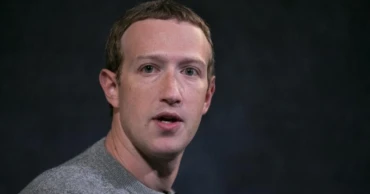
Agitated employees grill Meta CEO Zuckerberg following mass layoff announcement
Meta employees confronted Mark Zuckerberg at a meeting yesterday after learning of major layoffs at their company.
As part of the firm's "Year of Efficiency," Meta CEO Zuckerberg disclosed in a Facebook post on March 14 that the company plans to terminate 10,000 more employees and apply a new recruiting freeze, reports NDTV quoting The Washington Post.
According to the obtained transcript of the March 16 meeting, Zuckerberg answered questions and attempted to outline Meta's restructuring and reorganization approach.
"Zuckerberg was asked a question regarding how employees are expected to trust the company's leadership after two rounds of layoffs. He said that he would expect to be evaluated based on the company's performance and transparency about its mission, but that leaders should be allowed to change their thinking," reported the Post.
"I would guess that the way people would evaluate whether you trust me and want to work at this company is whether we are succeeding in making progress toward the overall stated goals," Zuckerberg said. "I think a lot of this is about the results we are able to deliver."
A question was also presented to Zuckerberg on the company's plans for remote employment. He stated that it was "an ongoing dialogue," but he did not rule out the prospect of return-to-office orders.
Another employee mentioned the psychological effects of the layoffs on the company's personnel. Zuckerberg acknowledged that the uncertainty that comes with announcing layoff plans in advance is genuine, but said, "it's not like we can just pause working while we are figuring this out."
3 years ago

How a warrant for Putin puts new spin on Xi visit to Russia
Chinese President Xi Jinping’s plans to meet with Russian President Vladimir Putin in Moscow next week highlighted China’s aspirations for a greater role on the world stage. But they also revealed the perils of global diplomacy: Hours after Friday's announcement of the trip, an international arrest warrant was issued for Putin on war crimes charges, taking at least some wind out of the sails of China's big reveal.
The flurry of developments — which followed China's brokering of an agreement between Saudi Arabia and Iran to resume diplomatic relations and its release of what it calls a “peace plan” for Ukraine — came as the Biden administration watches warily Beijing's moves to assert itself more forcefully in international affairs.
U.S. President Joe Biden said Friday he believes the decision by the International Criminal Court in The Hague to charge Putin was “justified.” Speaking to reporters as he left the White House for his Delaware home, he said Putin “clearly committed war crimes.”
While the U.S. does not recognize the court, Biden said it “makes a very strong point” to call out the Russian leader for his actions in ordering the invasion of Ukraine.
Other U.S. officials privately expressed satisfaction that an international body had agreed with Washington’s assessment that Russia has committed war crimes and crimes against humanity in Ukraine.
Also read: International court issues an arrest warrant for Putin
Asked about the Xi-Putin meeting, Biden said, “Well, we’ll see when that meeting takes place.”
The Biden administration believes China's desire to be seen as a broker for peace between Russia and Ukraine may be viewed more critically now that Putin is officially a war crime suspect, according to two U.S. officials. The officials, who spoke on condition of anonymity because they were not authorized to speak to the matter publicly, said the administration hopes the warrants will help mobilize heretofore neutral countries to weigh in on the conflict.
A look at the Xi-Putin meeting and how it may be affected by the warrant.
WHAT IS THE SIGNIFICANCE OF XI MEETING WITH PUTIN?
The visit to Russia will be Xi's first foreign trip since being elected to an unprecedented third term as China's president. It comes as Beijing and Moscow have intensified ties in steps that began shortly before Russia's invasion of Ukraine with a meeting between the two leaders in Beijing during last year's Winter Olympics at which they declared a “no limits” partnership.
Since then, China has repeatedly sided with Russia in blocking international action against Moscow for the Ukraine conflict and, U.S. officials say, is considering supplying Russia with weapons to support the war. But it has also tried to cast itself in a more neutral role, offering a peace plan that was essentially ignored.
The meeting in Moscow is likely to see the two sides recommit to their partnership, which both see as critical to countering what they consider undue and undeserved influence exerted by the U.S. and its Western allies.
WHAT IS THE SIGNIFICANCE OF THE ICC ARREST WARRANT ISSUED FOR PUTIN?
In the immediate term, the ICC's warrant for Putin and one of his aides is unlikely to have a major impact on the meeting or China's position toward Russia. Neither China nor Russia — nor the United States or Ukraine — has ratified the ICC's founding treaty. The U.S., beginning with the Clinton administration, has refused to join the court, fearing that its broad mandate could result in the prosecution of American troops or officials.
That means that none of the four countries formally recognizes the court's jurisdiction or is bound by its orders, although Ukraine has consented to allowing some ICC probes of crimes on its territory and the U.S. has cooperated with ICC investigations.
In addition, it is highly unlikely that Putin would travel to a country that would be bound by obligations to the ICC. If he did, it is questionable whether that country would actually arrest him. There is precedent for those previously indicted, notably former Sudanese President Omar Bashir, to have visited ICC members without being detained.
However, the stain of the arrest warrant could well work against China and Russia in the court of public opinion and Putin's international status may take a hit unless the charges are withdrawn or he is acquitted.
WHAT IS THE VIEW FROM WASHINGTON?
U.S. officials have not minced words when it comes to Xi's planned visit to Moscow. White House National Security Council spokesman John Kirby called Beijing’s push for an immediate cease-fire in Ukraine a “ratification of Russian conquest” and warned that Russians could use a cease-fire to regroup their positions “so that they can restart attacks on Ukraine at a time of their choosing.”
“We do not believe that this is a step towards a just, durable peace,” he said. Biden’s national security adviser Jake Sullivan this week called on Xi to also speak with President Volodymyr Zelenskyy and the Ukrainian leader has also expressed interest in talks with Xi.
WHAT IS THE VIEW FROM KYIV?
Speaking before the ICC warrant was unveiled, Ukrainian analysts cautioned against falling into a potential trap ahead of the Xi-Putin meeting. “We need to be aware that such peace talks are a trap for Ukraine and its diplomatic corps,” said Yurii Poita, who heads the Asia section at the Kyiv-based New Geopolitics Research Network.
“Under such conditions, these peace talks won’t be directed toward peace,” said Nataliia Butyrska, a Ukrainian analyst on politics related to Eastern Asia. She said the visit reflects not so much China's desire for peace but its desire to play a major role in whatever post-conflict settlement may be reached.
“China does not clearly distinguish between who is the aggressor and who is the victim. And when a country begins its peacekeeping activities or at least seeks to help the parties, not distinguishing this will affect objectivity,” Butyrska said. “From my perspective, China seeks to freeze the conflict.”
WHAT IS THE VIEW FROM MOSCOW?
Even if China stops short of providing military assistance to Russia as the U.S. and its allies fear, Moscow sees Xi's visit as a powerful signal of Chinese backing that challenges Western efforts to isolate Russia and deal crippling blows to its economy.
Kremlin spokesman Yuri Ushakov noted that Putin and Xi have “very special friendly and trusting personal ties” and hailed Beijing’s peace plan. “We highly appreciate the restrained, well-balanced position of the Chinese leadership on this issue,” Ushakov said.
Observers say that despite China’s posturing as a mediator, its refusal to condemn the Russian action leaves no doubt about where Beijing’s sympathy lies.
“The Chinese peace plan is a fig leaf to push back against some Western criticism on support for Russia,” said Alexander Gabuev, a senior fellow at the Carnegie Endowment for International Peace. “The optics that it creates is that China has a peace plan, both parties of war endorsed it and were ready to explore the opportunities and then it was killed by the hostile West.”
WHAT IS THE VIEW FROM BEIJING?
Chinese officials have been boasting about their new-found clout in the international arena as their country's foreign policy has become increasingly assertive under Xi.
In announcing the Xi visit, China's foreign ministry said Beijing's ties with Moscow are a significant world force. “As the world enters a new period of turbulence and change, as a permanent member of the UN Security Council and an important power, the significance and influence of China-Russia relations go far beyond the bilateral scope,” it said.
It called the visit “a journey of friendship, further deepening mutual trust and understanding between China and Russia, and consolidating the political foundation and public opinion foundation of friendship between the two peoples for generations.”
___
3 years ago

China appeals for fair treatment after latest TikTok bans
China appealed Friday to other governments to treat its companies fairly after Britain and New Zealand joined the United States in restricting use of TikTok due to fears the Chinese-owned short video service might be a security risk.
Governments are worried TikTok’s owner, ByteDance, might give browsing history or other data about users to China’s government or promote propaganda and disinformation.
“We call on the countries concerned to recognize the objective facts, effectively respect the market economy” and provide “a non-discriminatory environment" for all companies, said foreign ministry spokesperson Wang Wenbin.
Also Read: New Zealand lawmakers banned from TikTok amid data use fears
TikTok is one focus of conflicts between China and other governments over technology and security that are disrupting processor chip, smartphone and other industries.
Legislators and employees in New Zealand’s Parliament will be prohibited from having TikTok ’s app on phones, the government said Friday. Britain announced a ban Thursday on TikTok on all government phones.
In February, the White House told federal agencies to delete TikTok from government-issued mobile devices within 30 days. Congress, the U.S. armed forces and more than half of American state governments prohibit use of the app by their employees.
Also Read: Belgium bans TikTok from government phones after US, EU
India has banned TikTok and dozens of other Chinese apps, including the WeChat message service, on security and privacy grounds.
The United States also has imposed restrictions on access by Chinese companies to processor chip and other technology on security and human rights grounds.
The Chinese government accused Washington of spreading false information about TikTok following a report by The Wall Street Journal that U.S. authorities were considering a ban if ByteDance doesn’t sell the company.
Also Read: TikTok dismisses calls for Chinese owners to sell stakes
The ruling Communist Party blocks most internet users in China from seeing TikTok and thousands of social media and other websites. ByteDance operates a sister short-video service, Douyin, that can be seen in China.
3 years ago

Singapore’s Changi best airport in the world: Skytrax ranking
Singapore’s Changi Airport has been named the world’s best airport for the 12th time by London-based research firm Skytrax.
Skytrax, a UK-based airline and airport review and ranking website, compiles its list by surveying international visitors and asking them to score the entire airport experience — from check-in to departures and beyond.
Changi Airport previously topped Skytrax's list for eight years in a row, but dropped a few points down the list in 2021 and 2022 as passenger counts fell during the pandemic, with Hamad International Airport in Doha, Qatar, taking the top spot instead, CNN reports.
In a statement, Lee Seow Hiang, Chief Executive Officer for Changi Airport Group, said: “Changi Airport is honoured to be named World’s Best Airport for the 12th time. This recognition is great encouragement to our airport community, who stood firmly together to battle the challenges of Covid-19 over the past two years. We thank them for their dedication to serve Changi’s passengers and the perseverance to keep Singapore connected to the world.”
Also Read: Bangladesh has capacity to patrol land and maritime borders, improved cargo and passenger airport screening: US report
At the 2023 World Airport Awards ceremony held on Wednesday at the Passenger Terminal Expo in Amsterdam, Changi Airport was also named Best in Asia, Best in the World for Leisure Amenities, and Best in the World for Airport Dining.
3 years ago
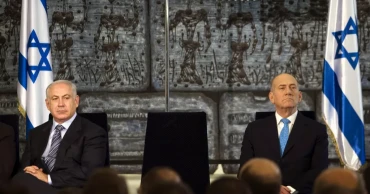
Former Israeli premier urges world leaders to shun Netanyahu
Israel’s former prime minister on Thursday urged world leaders to shun Israel’s current prime minister, Benjamin Netanyahu, as he presses ahead with a plan to overhaul the country's justice system. The United States and Germany, two of Israel’s closest allies, called on Netanyahu to slow down.
The rare calls for restraint and international intervention came as thousands of Israelis once again took to the streets to protest Netanyahu’s plan.
Ehud Olmert, who served as prime minister from 2006-2009, told The Associated Press that global leaders should refuse to meet with Netanyahu. He appealed specifically to British Prime Minister Rishi Sunak, who is expected to host Netanyahu in the coming weeks.
“I urge the leaders of the friendly countries to the state of Israel to refrain from meeting with the Israeli prime minister,” Olmert said.
He added that he was aware his call, as a former Israeli prime minister, “is quite extraordinary" but that the situation calls for it. "I think that the present government of Israel is simply anti-Israeli,” Olmert said.
He took aim at Netanyahu’s far-right coalition, an alliance of ultra-Orthodox and ultranationalist parties that oppose Palestinian independence and support increased settlement construction in occupied territories claimed by the Palestinians.
Netanyahu's coalition allies today have close ties with the West Bank settler movement and have a history of statements offensive to Palestinians, women, LGBTQ people and minorities.
Itamar Ben-Gvir, the current minister for national security was convicted in the past of incitement to racism and supporting a terror group. Netanyahu's finance minister, Bezalel Smotrich, recently called for a Palestinian village in the occupied West Bank to be “erased,” though he later apologized after an international uproar over the comments.
"Those who are in favor of the state of Israel should be against the prime minister of the state of Israel,” Olmert said.
A spokesman for Netanyahu did not immediately respond to a request for comment.
Netanyahu and his allies are now barreling ahead with a plan that aims to weaken Israel’s Supreme Court and give his parliamentary coalition control over the appointment of judges.
Netanyahu says the plan will correct an imbalance that he says has given the courts too much sway in how Israel is governed. Critics say the overhaul will upend the country’s system of checks and balances and would give the prime minister too much power. They also say Netanyahu, who is on trial for corruption charges, could escape justice once the court system is revamped.
Israel’s figurehead president, Isaac Herzog, offered a compromise proposal to the nation late Wednesday. But Netanyahu quickly rejected the package as “one sided” and favoring his opponents.
The overhaul has plunged Israel into one of its worst domestic crises. Tens of thousands of people have taken to the streets over the past two and a half months, and the plan has sparked an uproar from top legal officials, business leaders who say it will damage the economy and from within the country’s military, the most trusted institution among Israel’s Jewish majority. Reservists have pledged not to serve under what they see as a shift toward autocracy.
Protesters held a “day of disruption” for a third week on Thursday, with thousands of people blocking roads, including the main highway of the seaside metropolis of Tel Aviv. Protesters in Jerusalem drew a large red and pink streak on city streets leading to the Supreme Court and a small flotilla of bloats blocked the shipping lane off the coast of the northern city of Haifa.
“The elected government is doing a legislative blitz that aims to give absolute power to the executive. And absolute power to the executive with no checks and balances is simply a dictatorship. And this is what we’re fighting against,” said Shlomit Tassa, a protester in Tel Aviv, waving an Israeli flag.
Five opposition party leaders staged a joint press conference and called on Netanyahu to accept the president’s proposal. Yair Lapid, the Knesset opposition leader, said they “welcome the president’s proposal because in a civil war, there will only be losers.”
Key Israeli allies also waded into the debate. At a joint news conference with Netanyahu in Berlin, German Chancellor Olaf Scholz voiced concern about the overhaul plan and praised the Israeli president’s attempts to seek a “broad basic consensus.”
“As close friends of Israel with shared democratic values, we are following this debate very closely, and I cannot hide the fact that we’re following it with great concern,” Scholz said at a news conference alongside Netanyahu. “The independence of the judiciary is a precious democratic asset.”
Netanyahu showed no sign of being swayed. “I am attentive to what is happening in the nation, but we need to bring something that is in line with the mandate we received,” he told reporters.
The White House also praised Herzog’s effort to broker a compromise.
“The genius of our democracy — and frankly Israel’s democracy — is that they’re built on strong institutions, that they include checks and balances that foster an independent judiciary,” White House National Security Council spokesman John Kirby said. He said Herzog's efforts are "consistent with those same democratic principles.”
Olmert was once one of Netanyahu’s fiercest rivals in the hard-line Likud Party. But over time, Olmert veered far to the left. As prime minister, he held months of intense peace talks with the Palestinians before he was forced to resign to face his own legal troubles.
Olmert later spent 16 months in prison after being convicted of accepting bribes and obstructing justice for acts committed years before he was prime minister.
Olmert announced his resignation in 2008, long before he was indicted. At the time, Netanyahu, then in the opposition, led the calls for him to step down, saying he was unfit to rule while facing a criminal probe.
Asked about Netanyahu’s refusal to step down in similar circumstances, Olmert said he had different values than his old rival. He said that at a certain point, he realized the country’s interests were more important than his personal interests.
“The state of Israel comes first,” he said. “I retired a year before I was indicted because I felt that it is not right.” ___
Bentov reported from Tel Aviv, Israel. Associated Press writers Geir Moulson in Berlin and Aamer Madhani in Washington contributed to this report.
3 years ago

China leader Xi to visit Moscow in show of support for Putin
China says President Xi Jinping will visit Russia from Monday to Wednesday in an apparent show of support for Russian President Vladimir Putin.
The Kremlin on Friday also announced the visit, saying it will take place “at the invitation of Vladimir Putin.”
Xi and Putin will discuss “issues of further development of comprehensive partnership and strategic interaction between Russia and China,” as well as exchange views “in the context of deepening Russian-Chinese cooperation in the international arena,” the Kremlin said in a statement.
The two leaders will also sign “important bilateral documents,” the statement read.
China has declared a “no-limits” friendship with Russia and refused to condemn Moscow’s invasion — even while declaring that the sovereignty and territorial integrity of all countries be respected.
Beijing has also condemned Western sanctions and accused NATO and the United States of provoking Russia.
Putin invited Xi to visit Russia during a video conference call the two held in late December. The visit, Putin said, could “demonstrate to the whole world the strength of the Russian-Chinese ties” and “become the main political event of the year in bilateral relations.”
In a rare phone conversation with his Ukrainian counterpart Thursday, China’s foreign minister said Beijing is concerned about the year-old grinding conflict with Russia spinning out of control and urged talks on a political solution with Moscow.
Qin Gang told Dmytro Kuleba that China has “always upheld an objective and fair stance on the Ukraine issue, has committed itself to promoting peace and advancing negotiations and calls on the international community to create conditions for peace talks,” China’s Foreign Ministry said in a statement posted on its website.
Kuleba later tweeted that he and Qin “discussed the significance of the principle of territorial integrity.”
“I underscored the importance of (Ukrainian President Volodymyr Zelenskyy’s)’s Peace Formula for ending the aggression and restoring just peace in Ukraine,” wrote Kuleba, who spoke the same day with U.S. Secretary of State Antony Blinken.
3 years ago