Others
Iranian students hold first large anti-government protests since deadly crackdown
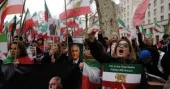
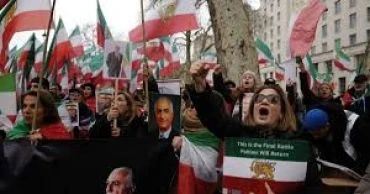
Students from several Iranian universities have staged anti-government demonstrations—the largest since last month’s deadly security crackdown.
The BBC has verified footage showing protesters marching across the campus of Sharif University of Technology in Tehran on Saturday. Clashes were later reported between demonstrators and pro-government supporters.
Other demonstrations included a sit-in at Shahid Beheshti University in the capital and a rally in the northeast city of Mashhad. Students were commemorating those killed in mass protests in January.
Meanwhile, the US has been increasing its military presence near Iran, and President Donald Trump has indicated that a limited military strike is under consideration. The US and European allies have expressed concerns over Iran’s nuclear ambitions, which Tehran continues to deny.
US and Iranian officials met in Switzerland on Tuesday, reporting progress in negotiations aimed at limiting Iran’s nuclear program. Nevertheless, Trump later warned that the world would know within about ten days whether a deal would be reached or if military action would follow. He has previously expressed support for Iranian protesters, even suggesting that “help is on its way.”
Verified footage from Sharif University shows hundreds of students, many waving Iranian flags, marching peacefully while chanting slogans such as “death to the dictator,” directed at Supreme Leader Ayatollah Ali Khamenei. Nearby, supporters of a pro-government rally were also present, and confrontations reportedly broke out between the two groups.
Similar demonstrations were verified at Amir Kabir University of Technology, and in Mashhad, students reportedly shouted “Freedom, freedom” and “Students, shout for your rights.” Additional protests were reported in other locations, with calls for further rallies on Sunday. There are no immediate reports of arrests.
The protests last month, initially sparked by economic grievances, escalated into the largest demonstrations since the 1979 Islamic Revolution. According to the US-based Human Rights Activists News Agency (Hrana), at least 6,159 people were killed during that period, including 5,804 protesters, 92 children, and 214 government-affiliated individuals, with investigations continuing into another 17,000 reported deaths. Iranian authorities have acknowledged more than 3,100 deaths, mostly security personnel or bystanders, blaming “rioters” for the fatalities.
Saturday’s protests come amid heightened tensions, with Iranian authorities preparing for potential conflict with the US. Exiled opposition groups have urged Trump to take action against the Iranian government, while other factions oppose foreign intervention. Both sides have also engaged in social media campaigns, attempting to shape international narratives about the will of the Iranian people.
Source: BBC
3 months ago
Pakistan strikes militant hideouts along Afghan border after deadly attacks
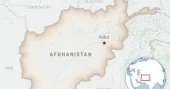
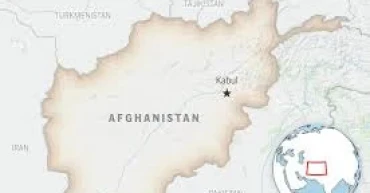
Pakistan announced early Sunday that it had conducted strikes along its border with Afghanistan, targeting hideouts of Pakistani militants it holds responsible for a recent wave of deadly attacks inside the country.
While Pakistan did not specify the exact locations of the strikes or provide further details, reports circulating on social media indicated that the operations took place within Afghan territory. Kabul has yet to comment on the strikes.
In a statement posted on X before dawn, Information Minister Attaullah Tarar described the military’s actions as “intelligence-based, selective operations,” aimed at seven camps belonging to the Pakistani Taliban, also known as Tehrik-e-Taliban Pakistan (TTP), as well as its affiliates. He also confirmed that an affiliate of the Islamic State (ISIS) group was targeted in the border region.
Earlier in October, Pakistan had conducted similar strikes inside Afghanistan, targeting militant hideouts.
Trump's Afghanistan claim sparks anger in UK
Tarar emphasized that Pakistan “has always strived to maintain peace and stability in the region,” but affirmed that the safety and security of its citizens remained a top priority.
These latest strikes follow a surge in violence, including a suicide bombing earlier in the week in Bajaur district, which borders Afghanistan. A vehicle laden with explosives was rammed into a security post, collapsing part of the compound and killing 11 soldiers and a child. Authorities later identified the attacker as an Afghan national.
Just hours before the cross-border strikes, another suicide bombing targeted a security convoy in nearby Bannu district, killing two soldiers, including a lieutenant colonel. Following the violence, Pakistan’s military issued a stern warning, stating it would not “exercise any restraint” and would continue operations against those responsible, “irrespective of their location,” signaling growing tensions between Islamabad and Kabul.
Tarar further stated that Pakistan had “conclusive evidence” linking the recent attacks — including a suicide bombing that killed 31 worshippers at a Shiite mosque in Islamabad earlier this month — to militants operating under the direction of Afghanistan-based leaders. He claimed that despite repeated requests for action, Afghanistan’s Taliban rulers had failed to take meaningful steps to prevent militant groups from using Afghan soil to stage attacks on Pakistan.
Pakistan has urged the international community to press the Taliban in Afghanistan to honor their commitments under the Doha Agreement, specifically the pledge not to allow Afghan territory to be used for attacks against other countries.
The surge in militant violence in Pakistan has largely been attributed to the TTP and banned separatist groups from Balochistan. While the TTP is not directly affiliated with Afghanistan’s Taliban, the two share close ties. Pakistan accuses the TTP of operating from safe havens inside Afghanistan, a claim that both the group and Kabul deny.
Relations between Pakistan and Afghanistan have been strained since October, when deadly border clashes resulted in numerous casualties, including soldiers, civilians, and militants. These clashes followed bombings in Kabul, which Afghan officials blamed on Pakistan.
Though a ceasefire mediated by Qatar has mostly held, talks in Istanbul failed to reach a formal agreement, and tensions between the two countries remain high.
3 months ago
Trump announces plan to raise tariffs to 15% following Supreme Court ruling
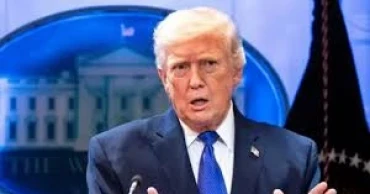
President Donald Trump stated on Saturday that he intends to increase global tariffs to 15%, up from the 10% he had previously announced a day earlier, after the U.S. Supreme Court struck down many of the extensive import taxes he had imposed in the past year.
Trump's social media post signals that despite the court's limitation on his powers, the Republican president remains determined to escalate tariffs in unpredictable ways. Tariffs have been a key tool for Trump to reshape global trade and exert international pressure.
The Supreme Court's decision on Friday invalidated tariffs Trump had applied on nearly all countries using emergency powers. In response, Trump stated he would pursue an alternative, though more restricted, legal authority.
He had already signed an executive order to bypass Congress and impose a 10% tax on global imports, which was set to take effect on Tuesday, the same day as his State of the Union address. However, these tariffs will last only 150 days unless extended by legislation.
The White House has yet to respond to inquiries about when Trump will sign an updated order to raise tariffs to 15%.
In his social media post, Trump explained that his decision was based on a "thorough, detailed, and complete review" of what he called a "ridiculous, poorly written, and extraordinarily anti-American" Supreme Court ruling on tariffs.
By a 6-3 vote, the justices declared that Trump cannot unilaterally impose and alter tariffs, as the authority to tax resides with Congress.
In addition to the temporary 15% tariffs, Trump also indicated he would pursue tariffs under other sections of federal law, which require an investigation by the Commerce Department.
He stated on Saturday that the Trump Administration would "determine and issue the new and legally permissible Tariffs" in the coming months, continuing the process of "Making America Great Again."
After the Supreme Court ruling, Trump launched a personal attack on the justices who voted against him, including two of his own appointees, Justices Neil Gorsuch and Amy Coney Barrett. At a news conference on Friday, he called the decision "an embarrassment to their families." He continued to criticize them on social media, also attacking Chief Justice John Roberts, who joined the majority opinion. On Saturday morning, Trump declared Justice Brett Kavanaugh his "new hero" for writing a dissenting opinion, and praised Justices Clarence Thomas and Samuel Alito, who also dissented.
Tariffs have been a cornerstone of Trump’s economic policies, which he claims address issues like trade imbalances, reviving U.S. manufacturing, and pressuring foreign nations to take action on matters such as drug trafficking and international conflicts.
Despite evidence to the contrary, Trump has frequently stated that foreign governments, not American consumers and businesses, would bear the cost of these tariffs.
As of December, federal data showed that the Treasury had collected over $133 billion from the tariffs imposed under emergency powers. Trump has suggested that the funds could be used for purposes such as reducing the national debt or sending dividend checks to taxpayers. The Supreme Court’s ruling did not address the fate of these collected funds.
Democrats quickly criticized Trump's tariff proposal. Members of the House Ways and Means Committee accused Trump of "pickpocketing the American people" with his new tariff increase.
California Governor Gavin Newsom, a long-time Trump critic, added that "he does not care about you."
3 months ago
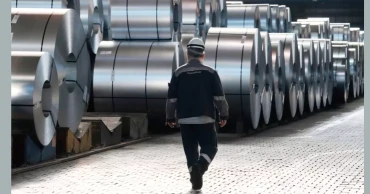
Global leaders, businesses pore over fallout of more US tariff swoons
South Korean trade officials scrambled Saturday to assess the impact of a U.S. Supreme Court ruling to invalidate some Trump administration tariffs, as business and governments around the world pored over the possible fallout from moves in Washington on the global economy.
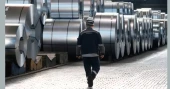
The emergency meeting announced by the Trade Ministry in Seoul came as officials from South Korea to South America and beyond acknowledged tariffs would remain on some specific exports to the U.S., like automobiles and steel, that aren't affected by the U.S. high court decision.
It marked yet another swoon in the U.S. tariff posture since President Donald Trump returned to office 13 months ago, upending dozens of trading relationships with the world's biggest economy.
In Paris, French President Emmanuel Macron hailed the checks and balances in the United States, praising the “rule of law. during a visit to a Paris agricultural fair: “It’s a good thing to have powers and counter-powers in democracies. We should welcome that.”
But he cautioned against any triumphalism.
Officials were going over the language of bilateral or multilateral deals struck with the U.S. in recent months, even as they braced for new swings. Trump said Friday he plans new 10% global tariffs, under different rules.
“I note that President Trump, a few hours ago, said he had reworked some measures to introduce new tariffs, more limited ones, but applying to everyone,” Macron said. “So we’ll look closely at the exact consequences, what can be done, and we will adapt.”
Businesses brace south of the border — and beyond
Alluding to the new 10% tariff threat, Sergio Bermúdez, head of an industrial parks company in Ciudad Juárez, Mexico, along the Texas border, said Trump “says a lot of things, and many of them aren’t true. All of the businesses I know are analyzing, trying to figure out how it’s going to affect them."
The impact could be felt especially in Juarez: Much of its economy depends on factories producing goods to export to consumers in the U.S., the result of decades of free trade between the U.S. and Mexico.
The policy swoons in the United States over the last year have made many global business leaders cautious, as they struggle to forecast and see investment take a hit.
Economy Secretary Marcelo Ebrard on Friday said Mexico was watching the tariffs with a “cool head,” noting that 85% of Mexico’s exports face no tariff, largely because of the United States-Mexico-Canada agreement. He plans a trip to the U.S. to meet with economic officials next week.
CEO Alan Russell of Tecma, which helps American businesses set up operations in Mexico, has seen his job grow increasingly complicated over the past year — his company's workload has surged as much as fourfold as it grapples with new import requirements. He worries the last U.S. moves will only make things more difficult.
“We wake up every day with new challenges. That word ‘uncertainty’ has been the greatest enemy,” said Russell, who is American. “The difficult part has been not being clear what the rules are today or what they’re going to be tomorrow.
Looking for a piece of possible tariff refunds
Some U.S. importers who paid what may turn out to be excess tariffs are looking for possible refunds — likely a very complex process — and some foreign companies may want to get their piece, too.
Bernd Lange, chairman of the European Parliament’s trade committee, insisted on Deutschland radio that excess tariffs “must be refunded.” He estimates German companies or their U.S. importers alone overpaid more than 100 billion euros ($118 billion).
Swissmem, a top technology industry association in Switzerland, hailed a “good decision” from the Supreme Court, writing on X that its exports to the U.S. fell 18% in the fourth quarter alone -- a period when Switzerland was facing much higher U.S. tariffs than most neighboring countries in Europe.
“The high tariffs have severely damaged the tech industry," Swissmem President Martin Hirzel said on X, while acknowledging the dust is far from settled. “However, today’s ruling doesn’t win anything yet.”
3 months ago

Ukraine to boycott Paralympics opening over Russian, Belarusian participation
Ukraine will boycott the opening ceremony of the Milano Cortina 2026 Paralympics on March 6 due to the participation of Russian and Belarusian athletes under their national flags, the country’s Paralympic Committee said.
The International Paralympic Committee (IPC) allocated 10 slots for Russian and Belarusian athletes, sparking protests from Ukraine over the ongoing war. Ukraine called the move “disappointing and outrageous” and demanded that its flag not be used at the ceremony.
Ukrainian Sports Minister Matvii Bidnyi confirmed officials will boycott the event, though Ukrainian athletes will still compete. The country’s skeleton racer Vladyslav Heraskevych criticized the IPC for allowing athletes supporting the war to carry their flags.
Russia has two slots each in Para alpine skiing, cross-country skiing, and snowboarding, while Belarus received four places in cross-country skiing. Ukraine said neither country went through the qualification process and condemned their inclusion amid the “horrific military aggression” in Ukraine.
The IPC said it is in contact with Ukraine’s committee and will discuss the matter internally.
With inputs from ALJAZEERA
3 months ago
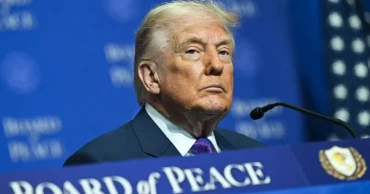
Trump-Iran tensions expose US policy dilemma
Rising tensions between the United States and Iran have highlighted deep contradictions in President Donald Trump’s foreign policy, as he calls for peace while simultaneously threatening military action against Tehran.
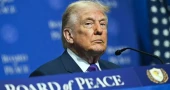
Speaking at a meeting of the Board of Peace, a Middle East coalition he helped form, Trump issued his latest warning to Iran, underscoring the clash between diplomacy and force that has defined much of his second term. While he has said he prefers a negotiated deal to halt Iran’s nuclear weapons programme, the White House has also sharply increased pressure, both rhetorically and militarily.
US officials say Iran would be “very wise” to reach an agreement, but at the same time Washington has overseen what analysts describe as the largest US military buildup in the Middle East since the 2003 Iraq War. Warships, fighter jets and other assets have been deployed near Iran, fuelling fears of a major escalation.
Trump’s threats are being taken seriously, particularly after the US followed through on military action against Venezuela earlier this year, an operation that ended with the capture of former President Nicolás Maduro. Unlike that strike, however, Washington’s objectives in Iran remain unclear.
The US president insists that last year’s strike on Iran “obliterated” its nuclear facilities, but has not explained why further military action may now be necessary, what new targets would be hit, or what the broader political goal would be.
Iran, weakened by sanctions and internal protests against its leadership under Supreme Leader Ayatollah Ali Khamenei, has signalled openness to talks on uranium enrichment. But negotiations have stalled, largely over US demands that Tehran also limit its ballistic missile programme and support for regional proxy groups.
Key questions remain unanswered, including whether Washington seeks regime change in Iran, how it would respond to Iranian retaliation against US bases in the region, and how a prolonged conflict could affect other Middle East priorities, such as efforts to rebuild Gaza under the Board of Peace framework.
Israel’s role is also uncertain. Israel previously joined US strikes on Iran and is widely expected to be involved again if a new campaign begins. Israeli Prime Minister Benjamin Netanyahu discussed the situation with Trump during a recent White House meeting.
Domestically, Trump faces growing political pressure. He returned to office promising to pull the US out of foreign conflicts, a message popular with his support base. Yet since taking office, he has authorised military actions in Syria, Venezuela, Iran and the Caribbean.
A large-scale air campaign against Iran could alienate some supporters ahead of the US midterm elections, particularly as voters express frustration over issues such as immigration and the economy. It could also clash with Trump’s repeated claims that he deserves the Nobel Peace Prize for ending multiple wars, a claim widely disputed.
Despite the uncertainty, Trump appears comfortable keeping allies and adversaries guessing. He has embraced the image of a global dealmaker, hosting high-profile summits and presiding over negotiations on trade, security and diplomacy.
On Iran, however, he has offered only a warning.
“We have to make a meaningful deal,” Trump said. “Otherwise, bad things happen.”
With inputs from BBC
3 months ago
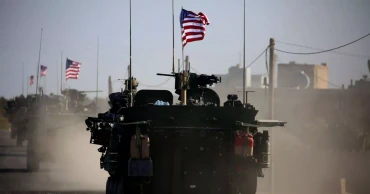
US boosts military presence as Iran fortifies key site
The United States has stepped up the movement of military aircraft and naval assets across Europe and towards the Middle East amid reports that President Donald Trump is weighing possible military action against Iran, while new satellite images indicate Tehran is reinforcing a sensitive military facility.
Flight-tracking data reviewed by BBC Verify show a surge in US military aircraft activity, including refuelling tankers, surveillance planes and transport aircraft operating from bases in Spain, Greece and Italy and heading towards the eastern Mediterranean and Gulf region. Analysts say the scale and pace of these movements are unusually high and suggest preparations for large-scale air operations.
Among the aircraft observed were KC-135 aerial refuelling tankers, E-3 surveillance jets and C-17 transport planes operated by the US Air Force. Data from Flightradar24 also indicated that HC-130J aircraft were flying from Europe to Al Udeid Air Base in Qatar, a key hub for US operations in the region.
At the same time, satellite imagery analysed by the Institute for Science and International Security shows Iran has added new layers of protection to a facility at the Parchin military site near Tehran. Images reveal that a concrete shell covering a newly built structure has been sealed with earth, with nearby soil piles suggesting the site could be further buried and transformed into a hardened bunker.
The Washington-based think tank assessed that the arched building may house a high-explosives test chamber and said the additional fortifications point to strategic importance. Parchin has previously been linked by Western analysts to explosives manufacturing and, historically, to nuclear-related testing.
Separately, Iranian state television broadcast footage of naval drills conducted jointly with Russia, including a simulated ship rescue operation. Satellite images showed a Russian navy warship docked at the Bandar Abbas military port. However, experts said the exercises were likely scheduled well in advance and were not necessarily connected to current tensions with Washington.
US military movements have also included the reported presence of the aircraft carrier USS Gerald R Ford near Morocco, reinforcing assessments that Washington is positioning forces across multiple theatres.
Defence analysts cautioned that the highly visible nature of the deployments means the US has lost the element of surprise, potentially requiring a broader or more sustained campaign if military action were to be launched.
Meanwhile, Trump has again criticised the United Kingdom’s plan to transfer the Chagos Islands to Mauritius while leasing back the Diego Garcia military base, marking his third change of position on the deal within a year.
US officials have not confirmed any imminent strike, but the combination of intensified military movements and Iran’s fortification work has heightened regional and international concern over a possible escalation.
With inputs from BBC
3 months ago
Former South Korean President Yoon given life term over martial law decree
Former South Korean President Yoon Suk Yeol was sentenced to life imprisonment on Thursday for imposing martial law during what became the country’s most severe political turmoil in decades.
Yoon was removed from office after attempting to bypass an opposition-dominated National Assembly by declaring martial law and deploying troops around the legislature on Dec. 3, 2024.
Judge Jee Kui-youn of the Seoul Central District Court found Yoon guilty of rebellion, ruling that he unlawfully mobilized military and police forces in a bid to take control of the liberal-led Assembly, detain political leaders and consolidate sweeping authority for a prolonged period.
Martial Law Move Revived Memories of Authoritarian Era
The declaration — South Korea’s first in more than 40 years — evoked memories of past military-backed governments, when emergency decrees enabled the deployment of armed forces and armored vehicles to suppress dissent.
As lawmakers rushed to the Assembly, Yoon’s martial law command announced broad powers, including suspending political activities, restricting media operations and permitting arrests without warrants.
The order remained in effect for about six hours before lawmakers broke through a military blockade, secured a quorum and unanimously voted to revoke it.
Yoon was impeached on Dec. 14, 2024, suspended immediately and formally removed by the Constitutional Court in April 2025. He has been detained since July while facing multiple criminal cases, with the rebellion charge carrying the harshest penalty.
Defense Rejects Verdict
One of Yoon’s attorneys, Yoon Kap-keun, criticized the ruling as a “foregone conclusion” based solely on the prosecution’s arguments and claimed the country’s rule of law had collapsed. He said the legal team would consult on whether to appeal.
Yoon told the court that his declaration of martial law was intended only to alert the public to what he described as legislative obstruction by liberals and that he would have accepted lawmakers’ decision had they voted against the measure.
Prosecutors argued that Yoon sought to cripple the Assembly and block lawmakers from overturning the decree — actions that exceeded his constitutional authority even under martial law.
Judge Jee said the deployment of troops to the legislature was central to the rebellion conviction, noting that Yoon aimed to prevent lawmakers from assembling, deliberating or voting, thereby paralyzing the Assembly’s constitutional functions.
Supporters and Critics Gather
Heavy police presence surrounded the court as Yoon supporters rallied outside, chanting as the bus carrying him arrived. Critics also gathered nearby, calling for capital punishment. No major violence was reported after the ruling.
Although prosecutors had sought the death penalty, analysts widely anticipated a life sentence because the failed power grab did not result in fatalities. South Korea has effectively maintained a moratorium on executions since 1997.
Other Officials Also Punished
The court also sentenced several former officials involved in implementing the martial law decree. Former Defense Minister Kim Yong Hyun received 30 years in prison for his key role in orchestrating the move and mobilizing troops.
Last month, Yoon was handed a separate five-year sentence for resisting arrest, falsifying the martial law proclamation and bypassing a required full Cabinet meeting.
The Seoul Central District Court also convicted other Cabinet members, including Prime Minister Han Duck-soo, who was sentenced to 23 years for attempting to legitimize the decree and falsifying official records. Han has appealed.
Yoon is the first former South Korean leader to receive a life sentence since ex-military ruler Chun Doo-hwan, who was sentenced to death in 1996 over his 1979 coup, the deadly 1980 crackdown in Gwangju and corruption. His sentence was later commuted to life imprisonment, and he was pardoned in 1997. Chun died in 2021.
3 months ago
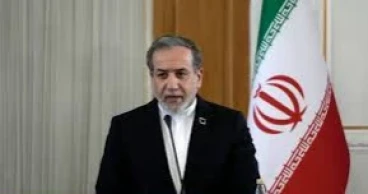
Iran, US step up military posturing as nuclear talks remain uncertain
Iran and the United States intensified shows of military strength on Thursday as fragile nuclear negotiations between the two sides remained uncertain, with Tehran conducting joint drills with Russia and Washington moving another aircraft carrier closer to the Middle East.
The maneuvers highlight rising tensions. Iran this week carried out live-fire exercises in the Strait of Hormuz, the strategic waterway at the entrance to the Persian Gulf that handles about one-fifth of globally traded oil. At the same time, the USS Gerald R. Ford aircraft carrier moved nearer to the region, positioning close to the Mediterranean.
While the deployment of additional U.S. warships and aircraft does not necessarily signal an imminent strike on Iran, it provides President Donald Trump with that option if he chooses. Trump has so far refrained from military action after warning Tehran over its crackdown on peaceful protesters and mass executions, even as Washington resumed nuclear discussions that had been derailed by the Iran-Israel conflict in June.
In a post on Truth Social, Trump suggested the United States could use bases such as Diego Garcia and the airfield at Fairford if Iran fails to reach an agreement, as he also pressed the United Kingdom over plans concerning the Chagos Islands.
Domestically, Iran continues to face unrest following its suppression of protests. Memorial ceremonies marking 40 days since the deaths of demonstrators have drawn mourners, with some gatherings echoing anti-government slogans despite official warnings.
Joint Drill with Russia
Iranian forces and Russian naval personnel conducted exercises in the Gulf of Oman and the Indian Ocean, according to Iran’s state news agency IRNA. The drills were aimed at enhancing operational coordination and sharing military expertise.
China, which participated in previous “Security Belt” drills, was not mentioned as taking part this time. Recent sightings indicated the presence of a Russian Steregushchiy-class corvette at the Iranian port of Bandar Abbas.
Iran also issued warnings to pilots in the region about planned rocket launches, signaling potential anti-ship missile tests during the exercise.
Meanwhile, ship-tracking data showed the USS Gerald R. Ford off Morocco’s Atlantic coast on Wednesday, suggesting it could soon pass through the Strait of Gibraltar and head toward the eastern Mediterranean alongside its guided-missile destroyers.
Positioning the carrier there would enhance U.S. air and missile defense capabilities, potentially bolstering protection for regional allies such as Israel and Jordan in the event of conflict. Similar deployments were made during the Israel-Hamas war in Gaza amid fears of Iranian retaliation.
Protests and Rising Death Toll
Mourning ceremonies for those killed during last month’s protests have gained momentum. In keeping with tradition, Iranians often hold memorials 40 days after a death. Large gatherings were reported at Tehran’s Behesht-e Zahra cemetery, where some participants chanted against the ruling clerical establishment while singing patriotic songs.
The protests initially erupted on Dec. 28 at Tehran’s Grand Bazaar over the sharp depreciation of the rial before spreading nationwide. Tensions escalated further on Jan. 8 following calls for demonstrations by exiled crown prince Reza Pahlavi.
The Iranian government has reported 3,117 deaths linked to the unrest. However, the U.S.-based Human Rights Activists News Agency estimates that more than 7,000 people have been killed, with additional casualties feared.
3 months ago
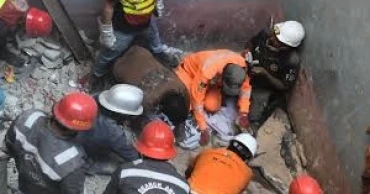
Gas blast kills 16 as apartment building partially vollapses in Southern Pakistan
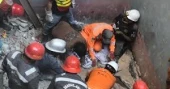
A powerful gas explosion tore through a residential apartment building in Karachi on Thursday, leaving at least 16 people dead, including women and children, and injuring several others after part of the structure caved in, officials said.
The blast occurred in a residential neighborhood of Karachi, the capital of Sindh province, as residents were preparing their pre-dawn meal to mark the first day of the holy month of Ramadan, said local police chief Rizwan Patel. Rescue teams continued clearing debris in search of possible survivors trapped beneath the rubble.
Authorities had earlier confirmed 13 deaths, but the toll climbed to 16 after three more bodies were recovered from the wreckage, Patel added.
President Asif Ali Zardari conveyed his condolences to the bereaved families and instructed officials to provide the best possible medical care to the injured. He also urged a swift completion of rescue efforts and called on the Sindh provincial government to strictly enforce building regulations, ensure the safety of gas cylinders and conduct a comprehensive investigation to prevent such tragedies in the future.
Like much of Pakistan, most homes and apartment buildings in Karachi use natural gas for cooking. Due to low gas pressure, however, many households also depend on liquefied petroleum gas (LPG) cylinders.
In a similar incident in July, a gas explosion at a house in Islamabad following a wedding reception killed eight people, including the newlywed couple, according to authorities.
3 months ago