Others

37 dead, 26 hospitalized after toxic gas leak at Nigeria mine
At least 37 people died and 26 others were hospitalized after a toxic gas leak at a mine in north-central Nigeria, police said.
The incident took place early Tuesday in Kampani Zurak community in the Wase area of Plateau state, according to police spokesperson Alfred Alabo.
Preliminary findings indicate that the miners were exposed to a sudden release of lead oxide along with other harmful gases, including sulphur and carbon monoxide, which are highly toxic, especially in enclosed or poorly ventilated spaces, he said. The bodies of the victims have been handed over to their families for burial in line with their religious customs.
Authorities have shut down the mining site, and an investigation into the cause of the leak is ongoing.
Nigeria’s Minister of Solid Minerals Development Dele Alake said the miners were unaware of the dangerous nature of the emissions and continued working despite the exposure.
It remains unclear what mineral was being extracted at the site or whether the operation was legal. Nigeria has been grappling with illegal gold mining activities for years, with hundreds of fatalities reported in related incidents.
3 months ago

Larry the cat celebrates 15 years as No 10’s iconic chief mouser
Larry the Cat has completed 15 years as the resident mouse catcher at 10 Downing Street, becoming one of the most recognisable and enduring figures in British public life.
The 19-year-old tabby, whose official title is chief mouser to the Cabinet Office, has served under six prime ministers and grown into a familiar sight outside the famous black door in central London.
Frequently seen lounging on the doorstep, chasing pigeons or attracting media attention, Larry has become as much a part of Downing Street’s identity as the building itself.
Larry was adopted in February 2011 from the Battersea Dogs and Cats Home by then prime minister David Cameron and his wife Samantha. Cameron had said at the time that he was delighted to welcome Larry and believed the cat would charm visitors to No 10, reports BBC.
As chief mouser, Larry’s role is to keep the rodent population under control, although his effectiveness has often been a subject of public debate.
The position has a long tradition, with cats serving in government buildings since at least the 1920s, and records of feline residents dating back to the time of King Henry VIII.
Larry was the first official chief mouser since Humphrey, a stray adopted in 1989 during the premiership of Margaret Thatcher, who retired in 1997.
Now the feline equivalent of over 90 human years, Larry reportedly made his first successful catch in April 2011 and has since provided moments of light relief during some of the UK’s most turbulent political periods.
3 months ago

UN Security Council to hold high-level meeting on Gaza before Trump's Board of Peace convenes
The U.N. Security Council will hold a high-level session on Wednesday to discuss the Gaza ceasefire agreement and Israel’s moves to tighten control in the West Bank, ahead of world leaders traveling to Washington for the first meeting of President Donald Trump’s proposed Board of Peace on the future of the Palestinian territories.
The council meeting in New York had initially been set for Thursday but was brought forward after Trump scheduled the board’s gathering for the same day, which would have complicated travel for diplomats wishing to attend both events. The change highlights concerns about possible overlapping and competing agendas between the United Nations’ most powerful body and Trump’s new initiative, which aims to mediate global conflicts and has drawn unease in some countries.
Palestinian U.N. Ambassador Riyad Mansour said he hopes the international community will “stop Israel and end their illegal effort against annexation,” whether discussions occur in Washington or New York.
Foreign ministers from the United Kingdom, Israel, Jordan, Egypt and Indonesia, among others, are expected to join the monthly Middle East meeting of the 15-member council. Many Arab and Islamic nations had requested that Gaza and Israel’s controversial settlement expansion in the West Bank be discussed before some of them travel to Washington.
Trump’s Board of Peace was originally envisioned as a small group overseeing his 20-point plan for Gaza’s future. However, his broader ambition to use the body as a mediator for conflicts worldwide has prompted skepticism among key allies. More than 20 countries have accepted invitations so far, but close U.S. partners including France and Germany have yet to join and have instead reaffirmed their support for the United Nations, which is undergoing reforms and facing funding cuts.
U.S. ambassador to the U.N. Mike Waltz rejected concerns about the board’s makeup, telling conservative radio host Hugh Hewitt that relevant countries such as Qatar and Egypt — both in contact with Hamas leadership — have accepted invitations and are aligned with Washington.
The council session comes a day after nearly all its 15 members, except the United States, along with dozens of diplomats, joined Mansour in issuing a statement on behalf of 80 countries and several organizations condemning Israel’s recent steps in the West Bank. The statement called for an immediate reversal and stressed strong opposition to any form of annexation.
Israel is moving ahead with a controversial land regulation process that would deepen its authority in the occupied territory. Israeli Energy Minister Eli Cohen described the policy as amounting to “de facto sovereignty” that would block the creation of a Palestinian state. Palestinians, Arab states and human rights groups say the moves amount to illegal annexation of land where about 3.4 million Palestinians live and hope to form a future state.
The meeting will also review the U.S.-brokered ceasefire that began on Oct. 10 after more than two years of war between Israel and Hamas. The United Kingdom, which holds the council presidency, said briefings will be delivered by U.N. political chief Rosemary DiCarlo, along with Israeli and Palestinian civil society representatives — the first such participation since the Oct. 7 attacks.
Some parts of the ceasefire have progressed, including Hamas freeing all hostages it held and an increase in humanitarian aid entering Gaza, though the United Nations says assistance levels remain inadequate. A new technocratic committee has also been formed to manage Gaza’s daily governance.
However, major challenges remain, including deploying an international security force, disarming Hamas and rebuilding Gaza. Trump said Board of Peace members have pledged $5 billion for reconstruction and will contribute thousands of personnel for stabilization and policing forces, though he provided no specifics. Indonesia’s military has indicated up to 8,000 troops could be ready by late June for a possible humanitarian and peace mission deployment to Gaza.
3 months ago
Shark filmed for first time in Antarctica’s near-freezing depths
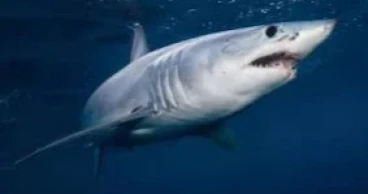
Scientists have captured the first-ever footage of a shark swimming in the icy waters of the Antarctic Ocean, challenging long-held assumptions that sharks do not inhabit the region.
The shark — identified as a sleeper shark — was recorded in January 2025 by a camera operated by the Minderoo-UWA Deep-Sea Research Centre. The device had been deployed off the South Shetland Islands near the Antarctic Peninsula. Researchers had not expected to encounter sharks at such southern latitudes.
Alan Jamieson, founding director of the research centre at the University of Western Australia, said many experts believed sharks were absent from Antarctic waters. “There’s a general assumption that you don’t find sharks in Antarctica,” he said, noting that the specimen was sizeable — estimated at 3 to 4 meters (10 to 13 feet) long. “It’s not small. These animals are like tanks,” he added.
The shark was filmed at a depth of 490 meters (1,608 feet), where the water temperature was just 1.27 degrees Celsius (34.29 degrees Fahrenheit). A skate — a close relative of sharks — was also visible resting on the seabed, though its presence was not unusual as skates are known to inhabit such southern waters.
Jamieson said he could find no prior record of a shark documented within the Antarctic Ocean, also known as the Southern Ocean, which lies south of the 60-degree latitude line. Conservation biologist Peter Kyne of Charles Darwin University, who was not involved in the research, agreed that sharks had never before been recorded so far south.
While climate change and rising ocean temperatures could potentially influence shark distribution, Kyne noted that limited data from the remote Antarctic region makes it difficult to confirm shifts in range. He suggested sleeper sharks may have long existed there undetected.
Researchers believe the shark maintained a depth of around 500 meters because it represented the warmest layer within a stratified water column. Antarctic waters are heavily layered to depths of roughly 1,000 meters due to differences in temperature and density, with colder, denser water below mixing poorly with fresher meltwater near the surface.
Jamieson said the Antarctic sleeper shark population is likely sparse and hard to observe. He suspects others may inhabit similar depths, feeding on the carcasses of whales, giant squid and other marine animals that sink to the ocean floor.
Research cameras at such depths are rare in Antarctic waters and can only operate during the Southern Hemisphere’s summer months from December to February. For the rest of the year, little observation occurs.
“That’s why we still encounter surprises like this,” Jamieson said, describing the footage as a significant discovery.
3 months ago

New Mexico lawmakers open ‘truth commission’ probe into Jeffrey Epstein’s remote ranch
Lawmakers in New Mexico on Tuesday announced the launch of an investigation into activities that allegedly took place at a remote desert ranch once owned by disgraced financier and convicted sex offender Jeffrey Epstein, including whether local authorities ignored potential wrongdoing.
A bipartisan panel of four members from the state House of Representatives has formed a “truth commission” to examine claims that the ranch was used to facilitate sexual abuse and sex trafficking. Legislators also aim to determine why Epstein was not listed as a sex offender in New Mexico after pleading guilty in 2008 to soliciting prostitution from a minor, and whether any public officials were involved in misconduct.
Democratic state Rep. Marianna Anaya of Albuquerque, who serves on the commission, called on potential witnesses to come forward with information about alleged abuse linked to Epstein and others who may have enabled him.
“No one could operate a sex ring or commit financial crimes of this scale alone,” Anaya said at a news conference. “If there were enablers — including the state itself — they must be held accountable.” She assured that anyone sharing information would be granted confidentiality.
Recent disclosures of connections to Epstein have led to resignations and removals of several prominent figures.
Epstein bought the expansive Zorro Ranch in 1993 from former Democratic Gov. Bruce King and later constructed a 26,700-square-foot hilltop mansion with a private airstrip.
The property was sold in 2023 by Epstein’s estate, with proceeds directed to creditors, to the family of Don Huffines, a Republican candidate for Texas state comptroller. Huffines said in a post on X that the estate has been renamed San Rafael Ranch and will operate as a Christian retreat. He added that his family would fully cooperate with any law enforcement requests for access.
Epstein died by suicide in a Manhattan jail in 2019 while awaiting trial on federal charges accusing him of sexually abusing and trafficking dozens of underage girls.
Truth commission chair and state Rep. Andrea Romero of Santa Fe said multiple survivors have indicated that trafficking activities extended to the ranch, located about 35 miles south of Santa Fe.
“For years, there have been allegations and rumors about what happened here, but federal investigations have not produced a comprehensive public record,” Romero said. “This commission aims to uncover the missing details.”
Other members of the panel include Republican state Rep. William Hall, a retired FBI agent from Aztec, and Rep. Andrea Reeb of Clovis, a former district attorney. The state House voted unanimously on Monday to establish the commission, granting it subpoena power and a budget exceeding $2 million.
Although Epstein was never charged in New Mexico, the state attorney general’s office confirmed in 2019 that it had interviewed potential victims connected to the ranch.
In 2023, New Mexico Attorney General Raúl Torrez ordered a review of financial institutions used by Epstein and their compliance obligations. The probe resulted in agreements with two banks to allocate $17 million toward anti-human trafficking efforts, according to a spokesperson for the attorney general’s office.
3 months ago

Iran says guiding principles agreed with US at Geneva nuclear talks
Iran said it has reached an understanding with the United States on key guiding principles aimed at resolving the long-running dispute over Tehran’s nuclear programme following indirect talks in Geneva.
Iranian Foreign Minister Abbas Araghchi said some work still remains, while Washington acknowledged that progress was made during the discussions.
Oman, which is mediating the talks, said the negotiations ended with good progress toward identifying shared goals and technical issues. Omani Foreign Minister Badr Albusaidi described the outcome as constructive.
The meeting came amid heightened tensions, including repeated US military warnings over Iran’s nuclear activities and its crackdown on protests. US President Donald Trump earlier said he believed Tehran was interested in reaching a deal.
The US and its European allies have long accused Iran of seeking to develop nuclear weapons, a claim Tehran has consistently denied. Iran has said the talks focus on its nuclear programme and the possible lifting of US economic sanctions, while Washington has indicated interest in discussing other issues, including Iran’s missile programme.
A US official said the sides would continue discussions, with Iran expected to return with detailed proposals in the coming weeks to narrow remaining gaps. US Vice President JD Vance said some US red lines were yet to be addressed.
Trump, speaking earlier, said Iran wanted to avoid the consequences of failing to reach an agreement, referring to past US military action against Iranian nuclear sites.
Iran has meanwhile warned against threats, with Supreme Leader Ayatollah Ali Khamenei saying attempts to predetermine the outcome of negotiations would be wrong.
The latest round followed earlier indirect talks held in Oman, which both sides had described as a positive start.
With inputs from BBC
3 months ago
US, Iran to hold second round of nuclear talks in Geneva
The United States and Iran are set to convene a second round of negotiations over Tehran’s nuclear program on Tuesday in Geneva, amid heightened US military deployments in the Middle East and ongoing large-scale Iranian naval exercises.
US President Donald Trump has repeatedly warned that Washington could resort to military action if Iran refuses to curb its nuclear activities. Tehran has responded that it would retaliate against any such move. Trump has also criticized Iran over its deadly suppression of recent nationwide protests.
The initial round of discussions took place on Feb. 6 in Oman and were conducted indirectly. Vehicles bearing US flags entered the palace venue only after Iranian officials had apparently departed. Details about the format of Tuesday’s meeting have not been disclosed.
Trump’s envoys Steve Witkoff and Jared Kushner are traveling for the talks. US Secretary of State Marco Rubio, speaking during a visit to Budapest, said Washington remains hopeful about reaching an agreement despite challenges. “I’m not going to prejudge these talks,” Rubio said, adding that the president prefers diplomatic solutions.
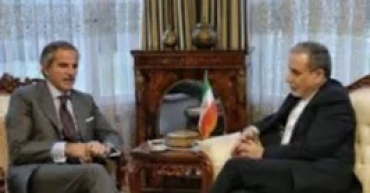
Iran’s Foreign Minister Abbas Araghchi, who is leading Tehran’s delegation, met Monday in Geneva with the head of the UN nuclear watchdog. Writing on X, Araghchi said he had arrived “with real ideas to achieve a fair and equitable deal,” while emphasizing that Iran would not yield to threats.
Speaking to reporters aboard Air Force One en route to Washington, Trump said he would be involved in the negotiations indirectly and described them as crucial. He characterized Iran as a tough negotiating partner and expressed hope that Tehran would take a more reasonable approach, adding that he believes Iran wants to avoid the consequences of failing to secure a deal.
Meanwhile, the US is also hosting discussions in Geneva between Russian and Ukrainian envoys ahead of the fourth anniversary of Russia’s full-scale invasion of Ukraine.
Protest crackdown anniversary
Iran is marking 40 days since one of the deadliest episodes in last month’s protest crackdown, in line with the traditional Muslim mourning period. Activists say at least 7,015 people were killed, many during a violent overnight operation between Jan. 8 and 9.
The US-based Human Rights Activists News Agency reported the latest figures, though The Associated Press has been unable to independently verify the toll due to internet and communication restrictions in Iran.
State media said authorities would hold a memorial ceremony at the Grand Mosalla mosque in Tehran and blamed the unrest on armed groups allegedly backed by foreign intelligence services.
Naval drills amid US buildup
Iran said its paramilitary Revolutionary Guard launched exercises early Monday in the Strait of Hormuz, the Persian Gulf and the Gulf of Oman — key global shipping routes through which about 20% of the world’s oil supply passes.
Security firm EOS Risk Group reported that mariners received warnings about a potential live-fire drill in Iranian waters of the Strait of Hormuz on Tuesday. Iranian state television did not confirm the live-fire element.
Last week, Trump announced that the USS Gerald R. Ford aircraft carrier would be redeployed to the Middle East, joining the USS Abraham Lincoln and accompanying destroyers already stationed there. US forces recently shot down an Iranian drone that approached the Lincoln, on the same day Iran attempted to halt a US-flagged vessel in the Strait of Hormuz.
Gulf Arab states have cautioned that any escalation could trigger a broader regional conflict, as tensions remain high following the Israel-Hamas war in Gaza.
Sanctions relief key for Tehran
The Trump administration is seeking to limit Iran’s nuclear activities and ensure it does not develop nuclear weapons. Tehran maintains its program is peaceful and has resisted calls to halt uranium enrichment or surrender its uranium stockpile.
Iran’s Deputy Foreign Minister Majid Takht-Ravanchi indicated Tehran may consider compromise but stressed that any agreement must include relief from US-led sanctions.
“The ball is in America’s court,” he told the BBC, saying progress would depend on Washington demonstrating sincerity.
Earlier negotiations were derailed in June after Israel launched a 12-day war against Iran. During the conflict, the US targeted Iranian nuclear facilities, likely damaging centrifuges enriching uranium to near weapons-grade levels, while Israeli strikes weakened Iran’s air defenses and missile capabilities.
Before the June conflict, Iran had enriched uranium to 60% purity, a level close to weapons-grade, though it continues to insist its nuclear program is solely for civilian purposes.
3 months ago

Five killed, five injured in apartment fire in northeast Spain
A fire that tore through an apartment building in northeastern Spain has left five people dead and five others with minor injuries, regional emergency officials said late Monday.
The blaze began in a storage area of a five-story residential building in Manlleu, a town of about 21,000 residents located north of Barcelona, authorities in the Catalonia region said in a statement.
Authorities said the victims were unable to escape from the attic storage room for reasons that remain unclear. The cause of the fire has not yet been determined. Identification of the victims is expected later Tuesday, as several bodies were severely burned.
According to Catalan police, all five of the deceased were young people and were not residents of the building.
Salvador Illa, head of the regional government, expressed his condolences on X, saying he was “deeply saddened by the death of five people” and extended sympathy to their families.
Emergency services said four of the injured were discharged from hospital, while another person did not require hospitalization.
Police have launched an investigation to determine the cause of the blaze, but have not indicated whether it is being treated as a potential homicide case.
3 months ago
US boosts naval and air presence near Iran
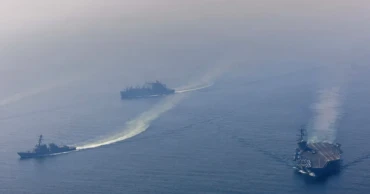
The United States has significantly increased its naval and air deployments in the Middle East, with satellite images confirming the presence of the aircraft carrier USS Abraham Lincoln near Iran, as Washington continues to apply pressure over Tehran’s military programme and its recent crackdown on protests.
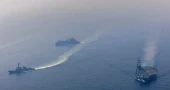
BBC Verify said satellite imagery placed the carrier in the Arabian Sea, about 700 kilometres off the coast of Oman. The Lincoln, which leads a strike group of three guided-missile destroyers, carries about 90 aircraft including F-35 fighter jets and has a crew of nearly 5,700. It was reportedly deployed to the region in late January but had not been clearly visible until now.
US and Iranian officials are scheduled to meet in Switzerland on Tuesday for a second round of discussions. Iran has said the talks will focus on its nuclear programme and the possible lifting of US economic sanctions, while Washington has signalled it wants broader issues on the agenda.
The US has also reportedly sent the world’s largest warship, the USS Gerald R Ford, towards the Middle East, with reports suggesting it could reach the region within weeks.
According to BBC Verify, the arrival of the Abraham Lincoln adds to a wider US military build-up in recent weeks. Satellite imagery has tracked at least 12 US naval vessels across the region, including destroyers and combat ships positioned in the Gulf, the eastern Mediterranean and the Red Sea. Several vessels are stationed at a naval base in Bahrain, while others have been seen near a US base at Souda Bay.
US air activity has also increased. Analysts have observed more F-15 and EA-18 fighter jets at a military base in Jordan, along with a rise in US cargo, refuelling and communications aircraft moving from the US and Europe into the Middle East.
Iran has responded with its own show of force. The Islamic Revolutionary Guard Corps recently launched naval drills in the Strait of Hormuz, a vital global oil shipping route through which around a fifth of the world’s oil and gas passes. Iranian media showed missiles being launched from naval vessels during the exercises.
Military experts say the current US deployments appear broader and more sustainable than previous operations in the region, suggesting a posture designed not only for potential strikes but also for long-term deterrence. They note that the scale of naval assets, aircraft and existing US bases would allow Washington to sustain intensive operations while countering possible Iranian responses across the Middle East.
With inputs from BBC
3 months ago

China opens visa-free entry to UK, Canada travellers
China has confirmed that nationals of the United Kingdom and Canada will be able to enter mainland China without a visa for stays of up to 30 days from February 17.
China’s foreign ministry said the visa-free entry will apply to travel for tourism, business and visits to family or friends, and the policy will initially remain in force until December 31 this year.
The announcement follows British Prime Minister Keir Starmer’s official visit to China last month, during which he and Chinese President Xi Jinping agreed to ease travel arrangements between the two countries.
In a statement issued on Sunday, China’s foreign ministry said the move would further facilitate people-to-people exchanges between China and other countries.
The decision brings the UK and Canada into line with around 50 other countries whose citizens are already eligible for visa-free entry to China, including France, Germany, Italy, Australia and Japan.
According to official figures from the UK, about 620,000 British nationals travelled to China in 2024, meaning hundreds of thousands of travellers could potentially benefit from the new arrangement.
During his January visit, Starmer said UK businesses were seeking greater opportunities to expand their presence in China. The two sides also agreed to deepen cooperation in areas such as services, healthcare, green technology and finance, though no comprehensive free trade agreement was announced.
The visit marked the first trip to China by a British prime minister since Theresa May in 2018.
With inputs from BBC
3 months ago