others

Nottingham police say man fatally stabbed 3, stole van and ran down 3 more in English city
A knife-wielding assailant stabbed two college students to death in the streets of the English city of Nottingham and then fatally stabbed a middle-aged man, stole his van and ran down three pedestrians in a shocking rampage early Tuesday morning, police said.
Police arrested a 31-year-old man on suspicion of murder. The Nottinghamshire Police force said investigators believe the perpetrator acted alone and detectives were working with counterterrorism officers to try to establish a motive.
“This is a horrific and tragic incident which has claimed the lives of three people,” Chief Constable Kate Meynell said.
A man who was among the people struck in the hit-and-run was hospitalized in critical condition. The dead included two 19-year-old students from the University of Nottingham.
“All of us at Nottingham are deeply shocked and saddened by the deaths of two of our students," Vice Chancellor Shearer West said in a statement.
A graduation ball scheduled for Tuesday evening was canceled. Many college students joined a vigil at St. Peter's Church, in the city center, late Tuesday to mourn the victims. Some lit candles, while others laid flowers beneath the altar.
The knife attack on the students occurred around dawn in an area near student housing a short walk from the university’s Jubilee Campus. A caller reported that two stabbing victims were lying in the street.
Police think the attacker then killed a man in his 50s and took his van, Meynell said. His body was found on a different street more than a mile from the first crime scene.
About 90 minutes after the initial attack, witnesses were horrified as they watched the van plow into pedestrians and flee.
Lynn Haggitt was on her way to work when a white van pulled up beside her at 5:30 a.m. She saw the driver look in his mirror and spot a police car approaching slowly from behind without its emergency lights on. The driver then accelerated and struck a man and woman at a street corner, she said.
“He went straight into them. He didn’t even bother to turn," Haggitt told reporters. “The woman went on the curb, the man went up in the air, there was such a bang, I wish I never saw it. It’s really shaken me up."
The driver then sped through the city center with police on his tail, she added.
Haggitt said the wounded man appeared to have a head injury but was helped to his feet. The woman was sitting on the curb and appeared to be OK. A third pedestrian was struck on the same street, police said.
Two of the hit-and-run victims had minor injuries, Meynell said.
“We believe these three incidents are all linked, and we have a man in custody,” the police chief said. “We are keeping an open mind as we investigate the circumstances surrounding these incidents and are working alongside Counter Terrorism Policing to establish the facts, as we would normally do in these types of circumstances.”
After stopping the van, officers subdued the suspect with a Taser before detaining him.
University of Nottingham student Kane Brady said he awoke to loud shouts of “armed police” and heard what sounded like a gunshot outside.
He said he saw officers holding stun guns and a man being dragged out of the van and pinned on the ground.
“I saw him getting arrested, him trying to resist," Brady told British broadcaster GB News. “When they opened the van, I saw a large knife being pulled out and then straight away, that’s when police closed off both roads.”
Photos showed the hood of the van dented and cracks in the windshield.
Also read: Police constable dies from gunshot in city: Colleagues
British Prime Minister Rishi Sunak called it a shocking incident and asked that police be given time to investigate the crime.
“My thoughts are with those injured, and the family and loved ones of those who have lost their lives,” Sunak said.
Nottingham is a city of about 350,000 people some 110 miles (175 kilometers) north of London.
Images on social media showed police, some with rifles, standing near cordons at several locations in the city center.
Also read: Russia fires 30 cruise missiles at Ukrainian targets; Ukraine says 29 were shot down
The city’s tram network said it suspended all services._
2 years ago

Trump pleads not guilty to federal charges that he illegally kept classified documents
Donald Trump became the first former president to face a judge on federal charges as he pleaded not guilty in a Miami courtroom Tuesday to dozens of felony counts accusing him of hoarding classified documents and refusing government demands to give them back.
The history-making court date, centered on charges that Trump mishandled government secrets that as commander-in-chief he was entrusted to protect, kickstarts a legal process that will unfold at the height of the 2024 presidential campaign and carry profound consequences not only for his political future but also for his own personal liberty.
Trump approached his arraignment with characteristic bravado, posting social media broadsides against the prosecution from inside his motorcade en route to the courthouse and insisting — as he has through years of legal woes — that he has done nothing wrong and was being persecuted for political purposes. But inside the courtroom, he sat silently, scowling and arms crossed, as a lawyer entered a not guilty plea on his behalf in a brief arraignment that ended without him having to surrender his passport or otherwise restrict his travel.
The arraignment, though largely procedural in nature, was the latest in an unprecedented reckoning this year for Trump, who faces charges in New York arising from hush money payments during his 2016 presidential campaign as well as ongoing investigations in Washington and Atlanta into efforts to undo the results of the 2020 race.
Also read:Trump arrives in Florida as history-making court appearance approaches in classified documents case
Always in campaign mode, he swiftly pivoted from the solemn courtroom to a festive restaurant, stopping on his way out of Miami at Versailles, an iconic Cuban spot in the city’s Little Havana neighborhood where supporters serenaded Trump, who turns 77 on Wednesday, with “Happy Birthday.” The back-to-back events highlight the tension for Trump in the months ahead as he balances the pageantry of campaigning with courtroom stops accompanying his status as a twice-indicted criminal defendant.
Yet the gravity of the moment was unmistakable.
Until last week, no former president had ever been charged by the Justice Department, let alone accused of mishandling top-secret information. The indictment unsealed last week charged Trump with 37 felony counts — many under the Espionage Act — that accuse him of illegally storing classified documents in his bedroom, bathroom, shower and other locations at Mar-a-Lago and trying to hide them from the Justice Department as investigators demanded them back. The charges carry a yearslong prison sentence in the event of a conviction.
Also read: Trump indicted in classified documents case in a historic first for a former president
Trump has relied on a familiar playbook of painting himself as a victim of political persecution. He attacked the Justice Department special counsel who filed the case as a “thug” and “deranged,” pledged to remain in the race no matter what and addressed supporters Tuesday night at his Bedminster, New Jersey, golf club, where he delivered a roughly half-hour speech full of repeated falsehoods and incendiary rhetoric and threatened to go after President Joe Biden and his family if elected.
“The seal is broken by what they’ve done. They should never have done this,” Trump said of the indictment.
But Attorney General Merrick Garland, an appointee of President Joe Biden, sought to insulate the department from political attacks by handing ownership of the case last November to a special counsel, Jack Smith, who on Friday declared, “We have one set of laws in this country, and they apply to everyone.”
Smith attended Tuesday’s arraignment, sitting in the front row behind his team of prosecutors.
The court appearance unfolded against angst over potential protests, with some high-profile backers using barbed rhetoric to voice support. Though city officials said they prepared for possible unrest, there were few signs of significant disruption.
Trump didn’t say a word during the court appearance, other than to occasionally turn and whisper to his attorneys who were seated on either side of him. He fiddled with a pen and clasped his hands on the table in front of him as the lawyers and the judge debated the conditions of his release.
While he was not required to surrender a passport — prosecutors said he was not considered a flight risk — the magistrate judge presiding over the arraignment directed Trump to not discuss the case with certain witnesses. That includes Walt Nauta, his valet who was indicted last week on charges that he moved boxes of documents at Trump’s direction and misled the FBI about it.
Nauta did not enter a plea Tuesday because he did not have a local lawyer with him.
Trump attorney Todd Blanche objected to the idea of imposing restrictions on the former president’s contact with possible witnesses, noting they include many people close to Trump, including staff and members of his protection detail.
“Many of the people he interacts with on a daily basis — including the men and women who protect him — are potential witnesses in this case,” Blanche said.
Trump, who has repeatedly insisted that he did nothing wrong, showed no emotion as he was led by law enforcement out of the courtroom through a side door.
Even for a man whose presidency and post-White House life have been defined by criminal investigations, the documents probe had long stood out both because of the volume of evidence that prosecutors had seemed to amass and the severity of the allegations.
A federal grand jury in Washington had heard testimony for months, but the Justice Department filed the case in Florida, where Trump’s Mar-a-Lago resort is located and where many of the alleged acts of obstruction occurred.
Though Trump appeared Tuesday before a federal magistrate, the case has been assigned to a District Court judge he appointed, Aileen Cannon, who ruled in his favor last year in a dispute over whether an outside special master could be appointed to review the seized classified documents. A federal appeals panel ultimately overturned her ruling.
It’s unclear what defenses Trump is likely to invoke as the case moves forward. Two of his lead lawyers announced their resignation the morning after his indictment, and the notes and recollections of another attorney, M. Evan Corcoran, are cited repeatedly throughout the 49-page charging document, suggesting prosecutors envision him as a potential key witness.
The indictment Friday accuses Trump of illegally retaining national security documents that he took with him from the White House to Mar-a-Lago after leaving office in January 2021. The documents he stored, prosecutors say, included material on nuclear programs, defense and weapons capabilities of the U.S. and foreign governments and a Pentagon “attack plan,” prosecutors say. He is accused of showing off some to people who didn't have security clearances to view them.
Beyond that, according to the indictment, he repeatedly sought to obstruct government efforts to recover the documents, including by directing Nauta to move boxes and also suggesting to his own lawyer that he hide or destroy documents sought by a Justice Department subpoena.
2 years ago
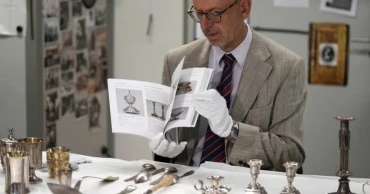
As a stolen silver sleuth, German curator returns heirlooms Jewish families lost in the Holocaust
Matthias Weniger put on a pair of white cloth gloves and carefully lifted a tarnished silver candleholder, looking for a yellowed sticker on the bottom of it.
The candlestick is one of 111 silver objects at the Bavarian National Museum that the Nazis stole from Jews during the Third Reich in 1939. That's when they ordered all German Jews to bring their personal silver objects to pawn shops across the Reich — one of many laws created to humiliate, punish and exclude Jews.
Also Read: Holocaust survivors flee from Ukraine to Germany for safety
What started with anti-Jewish discrimination and persecution in 1933, after the Nazis were voted to power in Germany, led to the murder of 6 million European Jews and others in the Holocaust before World War II ended with Germany's surrender in 1945.
Weniger, who is a curator at the Munich museum and oversees its restitution efforts, has made it his mission to return as many of the silver objects as possible to the descendants of the original owners.
"These silver objects handed in at the pawn shops are often the only material things that remain from an existence wiped out in the Holocaust," Weniger told The Associated Press in an interview last week at the museum's workshop where he displayed some silver items that have yet to be restituted.
"Therefore it's really important to try to find the families and give back the objects to them," he added.
Also Read: Zelenskyy evokes Holocaust as he appeals to Israel for aid
Thousands of the pieces taken from the Jews were melted into around 135 tons of silver, and used to help Germany's war efforts. But several museums ended up with hundreds of silver pieces such as candlesticks used to light candles on the eve of Shabbat, Kiddush cups to bless the wine, silver spoons and cake servers.
Some of the items were returned to Holocaust survivors in the 1950s and 1960s, if they came forward and actively tried to retrieve their stolen possessions. But many former owners were murdered in the Holocaust or, if they succeeded to flee from the Nazis, had ended up in far-flung corners of the globe.
"Two thirds of the last owners did not survive the Shoah," Weniger said.
Also Read: GOP leaders condemn Greene over Holocaust comments
Despite these odds, and with a combination of thorough detective work, dedication and deep knowledge of history, Weniger has so far managed to return about 50 objects to the family members and relatives of the original owners.
He's convinced that he may be able to return almost all remaining objects by the end of this year.
First, he searches for the identity of the original owners. The little yellowed paper stickers on some of the pieces often help his efforts. They were put on the objects by the pawn shops — a testament to Germans' obsessive bureaucracy even in times of dictatorship and war. The numbers on the stickers are also listed on more than 80-year-old documents naming the Jews who had to give away their silver — sometimes beloved heirlooms that had been passed down in families for many generations.
Once Weniger discovers the names of the original owners, he starts looking up Jewish obituary and genealogy databases, in hopes that direct descendants or more distant relatives may have posted their names online.
"And so you get from one generation to the next generation and you end up with telephone books … with LinkedIn, with Facebook, with Instagram or email addresses that correspond to a member of the younger generation of that family," the researcher explained.
In most of the cases, Weniger says he gets lucky and is able to track down the right relatives.
The majority of descendants live in the United States and Israel, but the museum has already or is in the process of also restituting silver pieces to France, the United Kingdom, Australia and Mexico.
Weniger makes a point of personally delivering the pieces to the families. He traveled to the U.S. earlier this year, and last week, he returned 19 pieces to families in Israel.
There, Weniger met up with Hila Gutmann, 53, and her father Benjamin Gutmann, 86, at his home in Kfar Shmaryahu north of Tel Aviv, and gave them a small silver cup.
Weniger had managed to track down the family with the help of the tracing service of Magen David Adom — Israel's version of the International Committee of the Red Cross.
The cup was likely used for Kiddush to bless the wine on the eve of Shabbat — but nobody knows for sure because the original owners, Bavarian cattle dealer Salomon Gutmann and his wife Karolina, who were the grandparents of Benjamin, were murdered by the Nazis in the Treblinka extermination camp.
"It was a mixed feeling for us to get back the cup," Hila Gutmann said. "Because you understand it's the only thing that's left of them."
While the grandparents of Benjamin Gutmann were murdered in the Holocaust, their son Max — Benjamin's father — survived because he fled from the Nazis to the British-mandated territory of Palestine, in what is now Israel.
Despite the pain triggered by the loss and return of the silver cup, the Gutmanns say they're happy to have it back and plan to use it in a ceremony with all their other relatives on Rosh Hashanah, the Jewish New Year, in September.
As for Weniger, the bearer of the cup, the Gutmann's have nothing but praise for him and his work.
"He's really dedicated to it," Hila Gutmann said. "He treats these little objects with so much care — like they are holy."
2 years ago

Billions of dollars in Covid-19 relief aid stolen or wasted in the US
The greatest grift in U.S. history was brazen, even simple. Criminals and gangs grabbed the money. So did an U.S. soldier in Georgia, the pastors of a defunct church in Texas, a former state lawmaker in Missouri and a roofing contractor in Montana.
Over the last three years, thieves plundered billions of dollars in federal COVID-19 relief aid intended to combat the worst pandemic in a century and to stabilize an economy in free fall.
Here are some key takeaways from an Associated Press analysis of what may have been stolen or wasted.
Also Read: Trump signs massive measure funding government, COVID relief
HOW MUCH WAS STOLEN?
An Associated Press analysis found that fraudsters potentially stole more than $280 billion in COVID-19 relief funding; another $123 billion was wasted or misspent. Combined, the loss represents a jarring 10% of the $4.2 trillion the U.S. government has so far disbursed in COVID-relief aid.
That number is certain to grow as investigators dig deeper into thousands of potential schemes.
There are myriad reasons for the staggering loss. Investigators and outside experts say the government, in seeking to quickly spend trillions in relief aid, conducted too little oversight during the pandemic's early stages and instituted too few restrictions on applicants. In short, they say, the grift was just way too easy.
Also Read: Congress seals agreement on $900 billion Covid relief bill
"Here was this sort of endless pot of money that anyone could access," said Dan Fruchter, chief of the fraud and white-collar crime unit at the U.S. Attorney's office in the Eastern District of Washington. "Folks kind of fooled themselves into thinking that it was a socially acceptable thing to do, even though it wasn't legal."
The U.S. government has charged more than 2,230 defendants with pandemic-related fraud crimes and is conducting thousands of investigations.
Also Read: Trump threatens to torpedo COVID relief with new demands
The pilfering was wide but not always as deep as the eye-catching headlines about cases involving many millions of dollars. But all of the theft, big and small, illustrate an epidemic of scams and swindles at a time America was grappling with overrun hospitals, school closures and shuttered businesses. Since the pandemic began in early 2020, more than 1.13 million people in the U.S. have died from COVID-19, according to the Centers for Disease Control and Prevention.
WHERE DID SCAM ARTISTS GET THE MONEY?
Before leaving office, former President Donald Trump approved emergency aid measures totaling $3.2 trillion, according to figures from the Pandemic Response Accountability Committee. President Joe Biden's 2021 American Rescue Plan authorized the spending of another $1.9 trillion. About a fifth of the $5.2 trillion has yet to be fully paid out, according to the committee's most recent accounting.
Never has so much federal emergency aid been injected into the U.S. economy so quickly. "The largest rescue package in American history," U.S. Comptroller General Gene Dodaro told Congress.
WHAT AGENCIES WERE HIT THE HARDEST?
The health crisis thrust the Small Business Administration, an agency that typically gets little attention, into an unprecedented role. In the seven decades before the pandemic struck, for example, the SBA had doled out $67 billion in disaster loans.
When the pandemic struck, the agency was assigned to manage two massive relief efforts --the COVID-19 Economic Injury Disaster Loan and Paycheck Protection programs, which would swell to more than a trillion dollars. SBA's workforce had to get money out the door, fast, to help struggling businesses and their employees. COVID-19 pushed SBA's pace from a walk into an Olympic sprint. Between March 2020 and the end of July 2020, the agency granted 3.2 million COVID-19 economic injury disaster loans totaling $169 billion, according to an SBA inspector general's report, while at the same time implementing the huge new Paycheck Protection Program.
In the haste, guardrails to protect federal money were dropped. Prospective borrowers were allowed to "self-certify" that their loan applications were true. The CARES Act also barred SBA from looking at tax return transcripts that could have weeded out shady or undeserving applicants, a decision eventually reversed at the end of 2020.
"If you open up the bank window and say, give me your application and just promise me you really are who you say you are, you attract a lot of fraudsters and that's what happened here," said Michael Horowitz, the U.S. Justice Department inspector general who chairs the federal Pandemic Response Accountability Committee.
WHAT COULD THE U.S. GOVERNMENT HAVE DONE BETTER TO COMBAT FRAUD?
Horowitz criticized the government's failure early on to use the "Do Not Pay" Treasury Department database, designed to keep government money from going to debarred contractors, fugitives, felons or people convicted of tax fraud. Those reviews, he said, could have been done quickly.
"It's a false narrative that has been set out, that there are only two choices," Horowitz said. "One choice is, get the money out right away. And that the only other choice was to spend weeks and months trying to figure out who was entitled to it."
In less than a few days, a week at most, Horowitz said, SBA might have discovered thousands of ineligible applicants.
"24 hours? 48 hours? Would that really have upended the program?" Horowitz said. "I don't think it would have. And it was data sitting there. It didn't get checked."
WHO IS TO BLAME?
On politically divided Capitol Hill, lawmakers have not put the pandemic behind them and are engaged in a fierce debate over the success of the relief spending and who's to blame for the theft.
Too much government money, Republicans argue, breeds fraud, waste and inflation. Democrats have countered that all the financial muscle from Washington saved lives, businesses and jobs.
Republicans and Democrats did, however, did find common ground last year on bills to year to give the federal government more time to catch fraudsters. Biden in August signed legislation to increase the statute of limitations from five to 10 years on crimes involving the two major programs managed by the SBA.
The extra time will help federal prosecutors untangle pandemic fraud cases, which often involve identity theft and crooks overseas. But there's no guarantee they'll catch everyone who jumped at the chance for an easy payday. They're busy, too, with crimes unrelated to pandemic relief funds.
Gene Sperling, the White House American Rescue Plan coordinator, said any future crisis that requires government intervention doesn't have to be a choice between helping people in need and stopping fraudsters.
"The prevention strategy going forward is that in a crisis, you can focus on fast delivery to people in desperate situations without feeling that you can only get that speed by taking down common sense anti-fraud guardrails," he said.
2 years ago
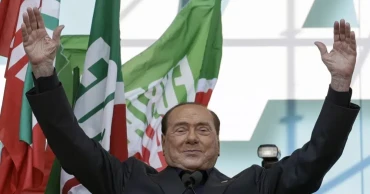
Silvio Berlusconi, scandal-scarred ex-Italian leader, dies at 86
Silvio Berlusconi, the boastful billionaire media mogul who was Italy's longest-serving premier despite scandals over his sex-fueled parties and allegations of corruption, died Monday, according to Italian media. He was 86.
Berlusconi’s Mediaset television network announced his death with a smiling photo of the man on its homepage and the headline: “Berlusconi is dead.”
Berlusconi was hospitalized on Friday for the second time in months for treatment of chronic leukemia. He also suffered over the years from heart ailments, prostate cancer and was hospitalized for COVID-19 in 2020.
Also Read: Italy-Bangladesh Friendship and Cooperation Association launched in Rome
A onetime cruise ship crooner, Berlusconi used his television networks and immense wealth to launch his long political career, inspiring both loyalty and loathing.
To admirers, the three-time premier was a capable and charismatic statesman who sought to elevate Italy on the world stage. To critics, he was a populist who threatened to undermine democracy by wielding political power as a tool to enrich himself and his businesses.
His Forza Italia political party was a coalition partner with current Premier Giorgia Meloni, a far-right leader who came to power last year, although he held no position in the government.
Also Read: Italy wants to promote legal pathways for migration: Ambassador Enrico Nunziata
His friendship with Russian President Vladimir Putin put him at odds with Meloni, a staunch supporter of Ukraine. On his 86th birthday, while the war raged, Putin sent Berlusconi best wishes and vodka, and the Italian boasted he returned the favor by sending back Italian wine.
Another former premier, Matteo Renzi, recalled Berlusconi’s divisive legacy in a message on Twitter. “Silvio Berlusconi made history in this country. Many loved him, many hated him. All must recognize that his impact on political life, but also economic, sport and television, has been without precedence."
League party leader Matteo Salvini called Berlusconi “a great man and a great Italian.”
As Berlusconi aged, some derided his perpetual tan, hair transplants and live-in girlfriends who were decades younger. For many years, however, Berlusconi seemed untouchable despite the personal scandals.
Also Read: Italy lauds development journey of Bangladesh
Criminal cases were launched but ended in dismissals when statutes of limitations ran out in Italy's slow-moving justice system, or he was victorious on appeal. Investigations targeted the tycoon's steamy so-called “bunga bunga” parties involving young women and minors, or his businesses, which included the soccer team AC Milan, the country's three biggest private TV networks, magazines and a daily newspaper, and advertising and film companies.
Only one led to a conviction — a tax fraud case stemming from a sale of movie rights in his business empire. The conviction was upheld in 2013 by Italy's top criminal court, but he was spared prison because of his age, 76, and was ordered to do community service by assisting Alzheimer’s patients.
He still was stripped of his Senate seat and banned from running or holding public office for six years, under anti-corruption laws.
He stayed at the helm of Forza Italia, the center-right party he created when he entered politics in the 1990s and named for a soccer cheer, “Let's go, Italy.” With no groomed successor in sight, voters started to desert it.
He eventually held office again -– elected to the European Parliament at age 82 and then last year to the Italian Senate.
Berlusconi’s party was eclipsed as the dominant force on Italy’s political right: first by the League, led by anti-migrant populist Matteo Salvini, then by Meloni's Brothers of Italy party, with its roots in neo-fascism. Following elections in 2022, Meloni formed a governing coalition with their help.
He suffered personal humiliations as well. Berlusconi lost his standing as Italy’s richest man, although his sprawling media holdings and luxury real estate still left him a billionaire several times over.
In 2013, guests at one of his parties included an under-age Moroccan dancer whom prosecutors alleged had sex with Berlusconi in exchange for cash and jewelry. After a trial spiced by lurid details, a Milan court initially convicted Berlusconi of paying for sex with a minor and using his office to try to cover it up. Both denied having sex with each other, and he was eventually acquitted.
The Catholic Church, at times sympathetic to his conservative politics, was scandalized by his antics, and his wife of nearly 20 years divorced him, but Berlusconi was unapologetic, declaring: “I’m no saint.”
Berlusconi insisted that voters were impressed by his brashness.
“The majority of Italians in their hearts would like to be like me and see themselves in me and in how I behave,” he said in 2009, during his third and final stint as premier.
His second term, from 2001-06, was perhaps his golden era, when he became Italy’s longest-serving head of government and boosted its global profile through his friendship with U.S. President George W. Bush. Bucking widespread sentiment at home and in Europe, Berlusconi backed the U.S.-led war in Iraq.
As a businessman who knew the power of images, Berlusconi introduced U.S.-style political campaigns — with big party conventions and slick advertising — that broke with the gray world of Italian politics, in which voters essentially chose parties and not candidates. His rivals had to adapt.
Berlusconi saw himself as Italy's savior from what he described as the Communist menace — years after the Berlin Wall fell. From the start of his political career in 1994, he portrayed himself as the target of a judiciary he described as full of leftist sympathizers. He always proclaimed his innocence.
When the anti-establishment 5-Star Movement gained strength, Berlusconi branded it as a menace worse than Communism.
His close friendship with longtime Socialist leader and former Premier Bettino Craxi was widely credited for helping him become a media baron. Still, Berlusconi billed himself as a self-made man, saying, “My formula for success is to be found in four words: work, work and work.”
He boasted of his libido and entertained friends and world leaders at his villas. At one party, newspapers reported the women were dressed as “little Santas.” At another, photos showed topless women and a naked man lounging poolside.
“I love life! I love women!” an unrepentant Berlusconi said in 2010.
He occasionally selected TV starlets for posts in his Forza Italia party. “If I weren’t married, I would marry you immediately,” Berlusconi reportedly said in 2007 to Mara Carfagna, who later became a Cabinet minister. Berlusconi’s wife publicly demanded an apology.
Berlusconi was nicknamed “Papi” — or “Daddy” — by an aspiring model whose 18th birthday bash he attended, also to his wife’s irritation. Later, self-described escort Patrizia D’Addario said she spent the night with him on the evening that Barack Obama was elected U.S. president in 2008.
From his cruise ship entertainer days, Berlusconi loved to compose and sing Neapolitan songs. Like millions of Italians, he had a passion for soccer, and often was in the stands at AC Milan.
He delighted in flouting political etiquette. He sported a bandanna when hosting British Prime Minister Tony Blair at his estate on the Emerald Coast of Sardinia, and it was later revealed he was concealing hair transplants. He posed for photos at international summits making an Italian gesture — which can be offensive or superstitious, depending on circumstances — in which the index and pinkie fingers are extended like horns.
He stirred anger after the Sept. 11, 2001, terrorist attacks in the United States by claiming Western civilization was superior to Islam.
When criticized in 2003 at the European Parliament by a German lawmaker, Berlusconi likened his adversary to a concentration camp guard. Years later, he drew outrage when he compared his family's legal woes to what Jews must have encountered in Nazi Germany.
Berlusconi was born in Milan on Sept. 29, 1936, the son of a middle-class banker. He earned a law degree, writing his thesis on advertising. He started a construction company at 25 and built apartment complexes for middle-class families on Milan's outskirts, part of a postwar boom.
But his astronomical wealth came from the media. In the late 1970s and 1980s, he circumvented Italy's state TV monopoly RAI by creating a de facto network in which local stations all showed the same programming. RAI and his Mediaset network accounted for about 90% of the national market in 2006.
When the “Clean Hands” corruption scandals of the 1990s decimated the political establishment that had dominated postwar Italy, Berlusconi filled the void, founding Forza Italia in 1994.
His first government in 1994 collapsed after eight months when an ally who led an anti-immigrant party yanked support. But aided by an aggressive campaign that included mass mailings of glossy magazines recounting his success story, Berlusconi swept to victory in 2001.
Shuffling his Cabinet occasionally, he stayed in power for five years, setting a record for government longevity in Italy. It wasn't easy.
A Group of Eight summit he hosted in Genoa in 2001 was marred by violent anti-globalization demonstrations and the death of a protester shot by a police officer. Berlusconi faced fierce domestic opposition and alienated some allies by sending 3,000 troops to Iraq after the ouster of Saddam Hussein in 2003. For a time, Italy was the third-largest contingent in the U.S. coalition.
At home, he constantly faced accusations of sponsoring laws aimed at protecting himself or his businesses, but he insisted he always acted in the interest of all Italians. Legislation passed when he was premier allowing officeholders to own media businesses but not run them was deemed by his critics to be tailor made for Berlusconi.
An admirer of U.S. President Ronald Reagan and British Prime Minister Margaret Thatcher, Berlusconi passed reforms that partially liberalized the labor and pension systems, among Europe’s most inflexible. He also was chummy with Putin, who stayed at his Sardinian estate, and he visited the Russian leader, notably going to Crimea after Moscow illegally annexed the peninsula in 2014.
In 2006, as Italy was ridiculed as “the sick man of Europe,” with its economy mired in zero growth and its budget deficit rising, Berlusconi narrowly lost the general election to center-left leader Romano Prodi, who had been president of the European Union Commission.
In 2008, he bounced back for what would be his final term as premier. It ended abruptly in 2011, when financial markets lost faith in his ability to keep Italy from succumbing to the eurozone’s sovereign debt crisis. To the relief of economic powerhouse Germany, Berlusconi reluctantly stepped down.
Health concerns dogged him over the years. He underwent surgery for prostate cancer in 1997. In November 2006, he fainted during a speech, and the next month flew to the U.S., where he received a pacemaker at the Cleveland Clinic. He underwent more heart surgery in 2016.
During a political rally in 2009, a man threw a souvenir statuette of Milan’s cathedral at Berlusconi, fracturing his nose, cracking two teeth and cutting his lip.
Berlusconi was first married in 1965 to Carla Dall’Oglio, and their two children, Marina and Piersilvio, were groomed to hold top positions in his business empire. He married his second wife, Veronica Lario, in 1990, and they had three children, Barbara, Eleonora and Luigi.
2 years ago

Alex Soros takes control of father George Soros’ $25 billion empire
George Soros, US billionaire philanthropist, has delegated control of his $25 billion business and charity enterprise to his son Alex, the BBC reports.
The financier of Hungarian descent said in an interview with the Wall Street Journal that Alex had “earned it.”
The family’s fortune has been used to promote the “democratisation efforts” in numerous nations since the 1990s.
The specifics of the interview that was released on Sunday were confirmed to the BBC by a Soros representative.
One of the biggest funders to the US Democratic Party is George Soros. The 37-year-old history graduate Alex is the second-youngest among five siblings.
The Wall Street Journal reports that the vehicle handling the $25 billion for the family and the philanthropic foundation is called Soros Fund Management, and Alex is the sole family member on the investment committee.
Read: Empire State Building shows off new $165 million observatory
Alex became the chairman of the Open Society Foundations (OSF) last December. He also oversees his father’s “super PAC,” which is a US system for allocating money to political parties.
Although they have similar political beliefs in general, he told the Wall Street Journal that he is “more political” than his father and that he would work to defeat Donald Trump’s bid for a second term as president of the United States.
Alex was quoted as saying: “As much as I would love to get money out of politics, as long as the other side is doing it, we will have to do it, too.”
He claimed that the Open Society Foundations would continue to support liberal politicians and work towards the same causes as his father, including minority and refugee rights, criminal justice reform, and freedom of expression. Although pursuing a more domestic US-focused agenda, he also wants to incorporate voting rights, abortion, and gender parity policies.
George Soros was born in Hungary, where he witnessed the Nazi occupation as a young boy between 1944 and 1945. To survive, his family hid their Jewish heritage.
Following the war, he moved from Hungary to London before relocating to New York, where he amassed enormous wealth through hedge fund operations.
He rose to fame in the UK after successfully wagering $1 billion that the value of the pound would decline in 1992.
Read: NYC Empire State Building to open newly renovated 102nd floor observatory
He founded the Open Society Foundations (OSF) when the Berlin wall fell, with the aim to assist the installation of democratic governments in the former Soviet bloc. The OSF presently supports liberal causes, educational institutions, and human rights in more than 120 nations with an annual budget of around $1.5 billion.
The right wing has taken issue with some of its causes, such as addressing racial prejudice in the US court system.
In 2018, the OSF relocated its worldwide operations office from Budapest to Berlin in response to a public campaign against Soros personally and the activity of the organisation by the Hungarian government under Viktor Orban.
Alex Soros is known for his “high-flying” social life and attendance at high-profile events in Cannes and the Hamptons. He also joined the board of the human rights advocacy organisation Global Witness and has been to far-flung regions of the Amazon.
Read more: Bangladeshi man creates macadamia nuts empire in Kenya
2 years ago

Ukraine recaptures village as Russian forces hold other lines, fire on fleeing civilians elsewhere
Ukraine's military on Sunday reported recapturing a southeastern village as Russian forces claimed to repel multiple attacks in the area, while a regional official said three people were killed when Moscow's troops opened fire at a boat evacuating people from Russian-occupied areas to Ukrainian-held territory along a flooded front line far to the south.
The battlefield showdown in the southeast and chaotic scenes from inundated southern Ukraine marked the latest upheaval and bloodshed in Russia's war in Ukraine, now in its 16th month.
Also Read: Ukraine's dam collapse is both a fast-moving disaster and a slow-moving ecological catastrophe
Oleksandr Prokudin, governor of the Kherson region, said on his Telegram account that a 74-year-old man who tried to protect a woman was among those who died in the attack on evacuees, which wounded another 10. An Associated Press team on site saw three ambulances drop off injured evacuees at a hospital, one of whom was splattered with blood and whisked by stretcher into the emergency room.
The Kherson region straddles the Dnieper River and has suffered heavy flooding since last week's breach of a dam that Ukraine and Russia accuse each other of causing. Russian forces occupy parts of the region on the eastern side of the river.
Many civilians have said Russian authorities in occupied areas were forcing would-be evacuees to present Russian passports before taking them to safety. Since then, many small boats have shuttled from Ukrainian-held areas on the west bank across the river to rescue desperate civilians stuck on rooftops, in attics and other islands of dry amid the deluge.
Also Read: Top UN court allows a record 32 countries to intervene in Ukraine's genocide case against Russia
To the northeast, nearly half-way up the more than 1,000-kilometer (600-mile) front line, Ukrainian forces said they drove out Russian fighters from the village of Blahodatne, in the partially occupied Donetsk region. Ukraine's 68th Separate Hunting Brigade posted a video on Facebook that showed soldiers installing a Ukrainian flag on a damaged building in the village.
Myroslav Semeniuk, spokesman for the brigade, told The Associated Press that an assault team captured six Russian troops after entering several buildings where some 60 soldiers were holed up. "The enemy keeps shelling us but this won't stop us," Semeniuk said. "The next village we plan to reclaim is Urozhayne. After that, (we'll proceed) further south."
Deputy Defense Minister Hanna Maliar said Ukrainian troops in the area had advanced up to 1.5 kilometers (about a mile) and had taken control of another village, Makarivka.
Also Read: A dam collapses and thousands face the deluge — often with no help — in Russian-occupied Ukraine
President Volodymyr Zelenskyy said Saturday that Ukrainian counteroffensive actions were underway. But while the recapture of Blahodatne pointed to a small Ukrainian advance, Western and Ukrainian leaders have repeatedly cautioned that efforts to expel Russian troops more broadly are expected take time. Russia has made much of how its troops have held their ground elsewhere.
The Russian Defense Ministry on Sunday continued to insist that it was repelling Ukrainian attacks in the area. It said in a statement that Ukrainian attempts at offensive operations on the southern Donetsk and Zaporizhzhia axes of the frontline over the past 24 hours had been "unsuccessful."
Vladimir Rogov, a Russian-installed official in the Zaporizhzhia region, insisted that Blahodatne and two other villages in the region were in a "gray area" in terms of who controls them. However, Rogov said in a Telegram post that Russian fighters had been forced to leave the village of Neskuchne in the Donetsk region. In a video, fighters identifying themselves as members of a Ukrainian volunteer force claimed to have taken the village.
Russian President Vladimir Putin has asserted that that Ukraine's counteroffensive had started, and said Ukrainian forces were taking "significant losses."
Also Read: UN aid chief says Ukraine faces `hugely worse' humanitarian situation after the dam rupture
In other developments:
Ukrhydroenergo, Ukraine's hydropower generator, said Sunday that water levels on a reservoir above the ruptured Kakhovka dam continued to decline — at 9.35 meters (30 feet, 6 inches) on Sunday morning, marking a drop of more than seven meters since the dam break on Tuesday.
Meanwhile, below the dam, Prokudin said water levels on the Ukrainian-held west bank were receding, even if more than 32 settlements remained flooded. He said conditions were worse on the Russian-occupied eastern bank, which sits at a lower elevation and where water levels were slower to drop back down.
Also Sunday, the Russian military accused Ukrainian forces of attacking — albeit unsuccessfully — one of its ships in the Black Sea.
According to Russia's Defense Ministry, the attempted attack took place when six unmanned speedboats targeted Russia's Priazovye reconnaissance vessel that was "monitoring the situation and ensuring security along the routes of the TurkStream and Blue Stream gas pipelines in the southeastern part of the Black Sea."
All the speedboats were destroyed by the Russian military, and the ship didn't sustain any damage, the ministry said. The claim could not be independently verified, and Ukrainian officials made no immediate comment.
Ukraine and Russia reported exchanging scores of prisoners of war on Sunday; Russia said 94 of its soldiers were freed and Yermak said 95 Ukrainians were released.
Russia's Defense Minister Sergei Shoigu has signed a decree ordering all Russian volunteer formations to sign contracts with the ministry by July 1, according to his deputy Nikolai Pankov. The move would give the formations legal status and allow them to receive the same state benefits as contract soldiers.
Observers say the move likely targets the Wagner private military company. Wagner owner Yevgeny Prigozhin, who has a long-running feud with the Russian military, said Sunday that the group would not sign such contracts "precisely because Shoigu cannot manage military formations normally."
2 years ago

WHO condemns killing of civilians, WHO staff member in a complex hotel attack in Somalia
The World Health Organization (WHO) has condemned in the strongest possible terms the complex attack on the Pearl Beach Hotel and Restaurant located in the Abdiaziz district of Mogadishu, Somalia.
The attack on 9 June resulted in the deaths of 16 innocent civilians, including a WHO national staff member.
Read: FM visiting India to attend G20 development ministers' meeting
This tragic event also left more than 10 people injured.
“We are appalled by the tragic loss of life in this senseless attack, including the death of Nasra Hassan, a WHO national female staff member. Nasra, 27 years old, joined the WHO country office in Somalia to support the drought emergency response operations in Jubaland.
She was known for her dedication, ambition and commitment among her colleagues. We extend our deepest condolences to Nasra’s family, as well as to the families and friends of all those who died during the attack,” said Dr Ahmed Al-Mandhari, WHO Regional Director for the Eastern Mediterranean.
Read: Bangladesh, UN to work closely to achieve SDGs
"We condemn in the strongest terms this heinous attack on a hotel that claimed so many lives, including the precious life of one of our dearest colleagues Nasra. We condemn all attacks on innocent civilians and humanitarian aid workers and express our deepest condolences to the family members of all those who were killed in this attack,” said Dr Malik Mamunur, WHO Representative in Somalia.
WHO is committed to continuing efforts to preserve health and respond to emergencies in Somalia.
WHO affirms that the safety and security of its staff is a paramount factor in ensuring ongoing life-saving response operations.
2 years ago

China complains to South Korean ambassador in tit-for-tat move after Seoul summoned Beijing’s envoy
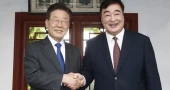
A Chinese official lodged a complaint with South Korea's ambassador to China, in a tit-for-tat move after Beijing's envoy to South Korea was summoned last week over his comments accusing Seoul of tilting toward the United States.
Assistant Foreign Minister Nong Rong expressed dissatisfaction with Seoul's response to last week's meeting between Chinese Ambassador Xing Haiming and a South Korean opposition leader, according to a statement Sunday from China's Foreign Ministry.
Also Read: South Korea, US troops to hold massive live-fire drills near border with North Korea
Nong said it was Xing's duty to meet with different people in South Korea and he hoped Seoul would reflect on the relationship between the two countries and work with China to promote healthy and stable ties, the statement added.
The diplomatic row between China and South Korea comes amid fierce competition between Washington and Beijing for global influence.
South Korea, whose economy depends greatly on exports of computer memory chips and other technology products, has struggled to strike a balance between the United States, its decades-long military ally, and China, the biggest buyer of its goods.
On Friday, South Korean First Vice Foreign Minister Chang Ho-jin warned Xing over his "senseless and provocative" remarks made during a meeting with South Korean Democratic Party leader Lee Jae-myung, a key rival of conservative President Yoon Suk Yeo.
Also Read: US confirms China has had a spy base in Cuba since at least 2019
In the meeting last week, Xing accused Yoon's government of leaning excessively toward Seoul's treaty ally, the U.S., and damaging its relations with China.
Xing said South Korea was entirely to blame for the "many difficulties" in bilateral relations, citing its growing trade deficit with China, which he attributed to "de-Chinaization" efforts, apparently referring to actions by South Korean companies to shift their supply chains away from China.
Also read: World leaders warn China and North Korea on nukes as Ukraine's Zelenskyy travels to G7 summit
His comments quickly drew ire from Seoul, which accused Xing of violating diplomatic protocols and interfering with South Korean domestic politics.
2 years ago

Meet the LGBTQ activist who challenged his Caribbean country’s anti-sodomy law and won
For years, Orden David was persecuted in his native Antigua and Barbuda — a frequent complaint by many LGBTQ people who fear for their safety across the conservative and mostly Christian Caribbean, where anti-gay hostility is widespread.
David was bullied and ridiculed. One time, a man stepped out of a car, made a comment about how a gay man was walking on the street late at night, then hit him in the head. More recently, another stranger struck him in the face in broad daylight, knocking him out. That's when he had enough.
Also Read: Biden signs gay marriage law, calls it ‘a blow against hate’
Facing ostracism and risking his life as the public face of the LGBTQ movement, David took his government to court in 2022 to demand an end to his country's anti-sodomy law.
"I realized that with our community, we've gone through a lot and there's no justice for us," Orden told The Associated Press. "We all have rights. And we all deserve the same treatment."
Last year, the Eastern Caribbean Supreme Court ruled the law unconstitutional. LGBTQ-rights activists say David's effort, with the help of local and regional advocacy groups, has set a precedent for a growing number of Caribbean islands. Since the ruling, St. Kitts & Nevis and Barbados, have struck down similar laws that often seek long prison sentences.
"It's been a legal and historic moment for Antigua and Barbuda," said Alexandrina Wong, director of the local non-governmental organization Women Against Rape, which joined the litigation coordinated by the Eastern Caribbean Alliance for Diversity and Equality.
"Our Caribbean governments are getting a good grip of what the world looks like and how we can reshape our history and … the future of the Caribbean people," Wong said.
The ruling said Antigua's 1995 Sexual Offences Act "offends the right to liberty, protection of the law, freedom of expression, protection of personal privacy and protection from discrimination on the basis of sex."
Also Read: Gunman kills 5 at Colorado Springs gay club, is subdued by patrons: Police
Antigua and Barbuda Prime Minister Gaston Browne told the AP that his government decided not to challenge the ruling: "We respected the fact that there should be no discrimination within society," he said. "As a government, we have a constitutional responsibility to respect the rights of all and not to discriminate."
The law stated that two consenting adults found guilty of having anal sex would face 15 years in prison. If found guilty of serious indecency, they faced five years in prison.
Such laws used to be common in former European colonies across the Caribbean but have been challenged in recent years. Courts in Belize and Trinidad and Tobago have found such laws unconstitutional; other cases in the region are pending.
Also Read: Daley protests LGBTQ+ intolerance at Commonwealth Games
Same-sex consensual intimacy is still criminalized in six Caribbean countries, according to Human Rights Watch and the London-based organization Human Dignity Trust. The countries include Dominica, Grenada, Guyana, St. Lucia, St. Vincent and the Grenadines, and Jamaica, which some LGBTQ-rights groups consider the Caribbean nation most hostile to gay people.
"Governments in these jurisdictions should be pro-active and repeal these laws now, instead of waiting for members of the LGBT community to force legal change," said Téa Braun, chief executive of Human Dignity Trust. "With three successful judgments last year and further legal challenges in the Caribbean ongoing, it is only a matter of time before these laws fall across the region."
Jamaica's government has argued that it doesn't enforce its 1864 anti-sodomy laws, but activists say keeping these laws on the books stokes homophobia and violence against the LGBTQ community in several Caribbean countries.
LGBT people in such countries, face "a constitution that criminalizes them on one end, and a religion that says they're an abomination," said Kenita Placide, executive director for The Eastern Caribbean Alliance for Diversity and Equality.
"It has created a culture of stigma and discrimination, which has now led to violence," she said. "And in each of those countries, including Antigua, we've seen LGBT persons who've fled because of certain levels of violence."
Growing up, Orden David was bullied in school and discriminated against outside its walls. People took photographs of him and posted them on social media, called him slurs and attacked him physically.
"What pushed me to go forward with this litigation case, to challenge the government, is that experience that I've gone through in life," David said, adding that in 2019 he was knocked out by a stranger who hit him on the face while he was working in a hospital.
Discrimination against LGBTQ people persists in the Caribbean. Some conservative lawmakers and religious leaders oppose the abolition of anti-gay laws invoking God in their arguments and calling gay relationships a sin.
"I don't think that God created man and woman to engage in that way," said Bishop Charlesworth Browne, a Christian pastor who is president of the Antigua and Barbuda Council of Church Leaders. For years, he has campaigned against easing the country's anti-gay laws.
"It's not just a religious issue. It's a health issue," Browne said. "It's for the sake of our children, the health of the nations, the preservation of our people."
Some major Christian denominations, including the Catholic Church, say all sexual activity outside of a marriage between a man and a woman is sinful. Other houses of worship, including many mainline Protestant churches and synagogues, have LGBTQ-inclusive policies.
When LGBTQ activist Rickenson Ettienne also was brutally attacked in Antigua for being gay, his church community sang and prayed for him outside the hospital while he recovered from a cracked skull. "It was traumatic," he said of the assault. "But even with that experience, I found out that there's humanity, there's the human side of people."
Although David didn't face outright intolerance at the Christian church where he grew up singing in the choir, he grew disenchanted by some parishioners who tried to introduce him to the scientifically discredited practice of so-called gay conversion therapy. He eventually stopped attending, but believes in God and prays at home.
"Christians need to realize that everybody's human at the end of the day. And if you're going to push Christianity and then think that being a homosexual is a sin … then you should put yourself in that same category, as a sinner," he said.
"Christians are supposed to love, accept and encourage people, not push people away … that's one of the things that I really don't believe in: When Christians use the word 'hate,'" said David. He has the Chinese word for "love" tattooed on his neck, and says that loving people is his "number one goal."
Working for Antigua's AIDS Secretariat, he tests people for sexually transmitted diseases, distributes condoms and counsels them on prevention, treatment and care. He's also president of Meeting Emotional and Social Needs Holistically, a group that serves the LGBTQ community. And he volunteers. On a recent night, he walked across dark alleys of downtown St. John's to hand out condoms to sex workers.
"It's important to offer the services to the LGBTQ community, and especially to sex workers," he said. "Because this population are more at risk."
2 years ago