others
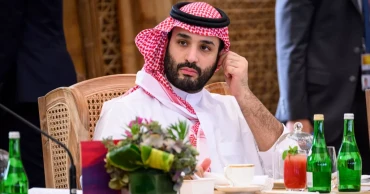
Biden aide, Saudi prince see ‘progress’ toward Yemen war end
White House national security adviser Jake Sullivan spoke by phone with Saudi Arabian Crown Prince Mohammed bin Salman on Tuesday amid signs that the Saudis and Iran-allied Houthis in Yemen are making “remarkable progress” toward finding a permanent end to their nine-year conflict, according to the Biden administration.
The crown prince, often referred to by his initials MBS, has had a strained relationship with President Joe Biden over human rights and oil production concerns. But the de facto Saudi leader and the president’s top national security adviser decided to talk amid encouraging signs on winding down the long and bloody war, a top priority for Biden.
The call came after Saudi diplomat Mohammed bin Saeed al-Jaber met with Houthi officials in Yemen's capital Sanaa on Sunday for talks that were aimed at accelerating negotiations on ending the war.
Also Read: Yemen: Saudis free 13 Houthis as Omani officials visit Sanaa
The White House said in statement that Sullivan “welcomed Saudi Arabia’s extraordinary efforts" to pursue a more comprehensive roadmap for ending the war and offered full U.S. support for those efforts. A nongovernmental official familiar with the ongoing negotiations said a deal is close at hand and could be reached within the next seven to 10 days. The official was not authorized to comment and requested anonymity to discuss the sensitive private talks.
Also Read: Yemen sides begin UN-brokered talks on prisoner exchange
The White House remains cautiously optimistic about the way ahead. But the two sides still have work to do and the negotiations remain complex, according to a senior Biden administration official familiar with the negotiations. The official, who was not authorized to comment publicly, added that a final agreement has not been reached and cautioned that the situation remains complex.
Biden’s special envoy for Yemen, Tim Lenderking, is being dispatched to the Saudi capital Riyadh this week for follow-up talks with Saudi officials, according to the White House. CIA Director William Burns traveled to Saudi Arabia last week to meet with intelligence officials.
Al-Jaber's visit to the Houthi-held Yemeni capital came after the Saudis reached a deal with Iran last month — in China — to restore diplomatic ties that were cut off in 2016. Iran is the Houthis’ main foreign backer in Yemen’s conflict.
It was a flashy moment of diplomacy for China — the United States' top global competitor — that Beijing touted as evidence of its ability to be a diplomatic player in the Middle East. White House officials note significant progress was made during several rounds of earlier talks hosted by Iraq and Oman, well before the deal was announced in China during last month’s ceremonial National People’s Congress.
Since last month's announcement, China has not taken a major role on resolving the Yemen conflict, according to the Biden administration official.
Sullivan and the crown prince largely focused on Yemen but also discussed Saudi Arabia and Iran's reestablishment of diplomatic ties, Iran's nuclear program, and other issues.
Iran-allied Houthis seized Sanaa in 2014 and forced the internationally recognized government into exile in Saudi Arabia. A Saudi-led coalition armed with U.S. weaponry and intelligence entered the war on the side of Yemen’s exiled government in 2015.
Years of inconclusive fighting created a humanitarian disaster and pushed the Arab world’s poorest nation to the brink of famine. Overall, the war has killed more than 150,000 people, including over 14,500 civilians, according to The Armed Conflict Location & Event Data Project.
A six-month cease-fire, the longest of the Yemen conflict, expired in October. Biden has made finding a permanent peace among his highest priorities in the Middle East.
The call also comes amid fresh concerns that the Riyadh-led OPEC+ alliance plans to cut oil production could stymie efforts to curb global inflation.
OPEC+ announced last week it would c ut oil production by 1.1 million barrels per da y, or roughly 1 percent of global production, beginning next month. The Saudis have said the production cuts were “precautionary,” helping to keep up prices as the world economy appears to be slowing and demand for oil is dropping.
But along with cuts announced in October, world oil supplies are down by 3%. April’s announcement could have a ripple effect on the U.S. economy in the form of higher gasoline prices, possibly forcing the Federal Reserve to be more aggressive in rate hikes to lower inflation.
The official said Sullivan and the crown prince discussed macroeconomic issues but did not dwell on the OPEC move.
As a candidate for the White House, Biden vowed that Saudi rulers would “pay the price” under his watch for their human rights record. But in July, amid rising prices at the pump around the globe, Biden decided to pay a visit to Saudi Arabia. During the visit, he greeted the crown prince, whom he once shunned, with a fist bump.
Relations hit another rocky patch last fall.
In October, the president said there would be “consequences” for Saudi Arabia as OPEC+ alliance moved to cut oil production. At the time, the administration said it was reevaluating its relationship with the kingdom in light of the oil production cut that White House officials said was helping another OPEC+ member, Russia, soften the financial blow caused by U.S. and Western sanctions imposed on Moscow for its ongoing war in Ukraine.
The administration's reaction to last week’s production cut was far more subdued, with Biden saying, “It’s not going to be as bad as you think.”
Separately, Sen. Lindsey Graham, R-S.C., met Tuesday with the crown prince in Jeddah, Saudi Arabia. Graham said they discussed ongoing reforms in the kingdom as well as trade between the countries. The Saudis announced last month that the two national airlines would order up to 121 jetliners from American aircraft manufacturer Boeing, a deal worth up to $37 billion.
“I look forward to working with the administration and congressional Republicans and Democrats to see if we can take the U.S.-Saudi relationship to the next level, which would be a tremendous economic benefit to both countries and bring much-needed stability to a troubled region,” Graham said.
3 years ago

UN to review presence in Afghanistan following Taliban ban
The United Nations said Tuesday it is reviewing its presence in Afghanistan after the Taliban barred Afghan women from working for the world organization — a veiled suggestion the U.N. could move to suspend its mission and operations in the embattled country.
Last week, Afghanistan’s Taliban rulers took a step further in the restrictive measures they have imposed on women and said that Afghan women employed with the U.N. mission could no longer report for work. They did not further comment on the ban.
The U.N. said it cannot accept the decision, calling it an unparalleled violation of women’s rights. It was the latest in sweeping restrictions imposed by the Taliban since they seized power in Afghanistan in August 2021 as U.S. and NATO troops were withdrawing from the country after 20 years of war.
The 3,300 Afghans employed by the U.N. – 2,700 men and 600 women -- have stayed home since last Wednesday but continue to work and will be paid, U.N. spokesman Stephane Dujarric said. The U.N.’s 600-strong international staff, including 200 women, is not affected by the Taliban ban.
The majority of aid distributed to Afghans is done through national and international non-governmental organizations, with the U.N. playing more of a monitoring role, and some assistance is continuing to be delivered, Dujarric said. There are some carve-outs for women staff, but the situation various province by province and is confusing.
“What we’re hoping to achieve is to be able to fulfil our mandate to help more than 24 million Afghan men, women, and children who desperately need humanitarian help without violating basic international humanitarian principles,” Dujarric told reporters at U.N. headquarters in New York.
The Taliban have banned girls from going to school beyond the sixth grade and women from most public life and work. In December, they banned Afghan women from working at local and nongovernmental groups — a measure that at the time did not extend to U.N. offices.
Tuesday’s statement by the U.N. said its head of mission in Afghanistan, Roza Otunbayeva, has “initiated an operational review period” that would last until May 5.
During this time, the U.N. will “conduct the necessary consultations, make required operational adjustments, and accelerate contingency planning for all possible outcomes,” the statement said.
It also accused the Taliban of trying to force the U.N. into making an “appalling choice” between helping Afghans and standing by the norms and principles it is duty-bound to uphold.
“It should be clear that any negative consequences of this crisis for the Afghan people will be the responsibility of the de facto authorities,” it warned.
Aid agencies have been providing food, education and health care support to Afghans in the wake of the Taliban takeover and the economic collapse that followed it. But distribution has been severely affected by the Taliban edict banning women from working at NGOs — and, now, also at the U.N.
The U.N. described the measure as an extension of the already unacceptable Taliban restrictions that deliberately discriminate against women and undermine the ability of Afghans to access lifesaving and sustaining assistance and services.
3 years ago

Prolonged high inflation dims outlook for world economy: IMF
The outlook for the world economy this year has dimmed in the face of chronically high inflation, rising interest rates and uncertainties resulting from the collapse of two big American banks.
That's the view of the International Monetary Fund, which on Tuesday downgraded its outlook for global economic growth. The IMF now envisions growth this year of 2.8%, down from 3.4% in 2022 and from the 2.9% estimate for 2023 it made in its previous forecast in January.
The fund said the possibility of a “hard landing," in which rising interest rates weaken growth so much as to cause a recession, has ”risen sharply," especially in the world's wealthiest countries. Those conditions are also increasing the risks to global financial stability, the fund warned.
“The situation remains fragile,'' Pierre-Olivier Gourinchas, the IMF’s chief economist, told reporters Tuesday. ”Downside risks predominate.''
The IMF, a 190-country lending organization, is forecasting 7% global inflation this year, down from 8.7% in 2022 but up from its January forecast of 6.6% for 2023.
“Inflation is much stickier than anticipated even a few months ago,’’ Gourinchas wrote in the IMF's latest World Economic Outlook.
Persistently high inflation is expected to force the Federal Reserve and other central banks to keep raising rates and to keep them at or near a peak longer to combat surging prices. Those ever-higher borrowing costs are expected to weaken economic growth and potentially destabilize banks that had come to rely on historically low rates.
Already, Gourinchas warned, higher rates are “starting to have serious side effects for the financial sector.’’
The fund's annual Global Financial Stability Report, also released Tuesday, issued recommendations for international decisionmakers:
“Policymakers may need to adjust the stance of monetary policy to support financial stability” — that is, possibly rethink the pace of interest rate hikes that are intended to cool inflation.
The fund foresees a 25% likelihood that global growth will fall below 2% for 2023. That has happened only five times since 1970, most recently when COVID-19 derailed global commerce in 2020.
The IMF also envisions a 15% possibility of a “severe downside scenario,” often associated with a global recession, in which worldwide economic output per person would shrink.
The global economy, the fund warned in Tuesday's report, is “entering a perilous phase during which economic growth remains low by historical standards and financial risks have risen, yet inflation has not yet decisively turned the corner.”
The IMF issued modest upgrades to the economies of the United States and Europe, which have proved more resilient than expected even with much higher interest rates and the shock of Russia’s invasion of Ukraine.
The fund now expects the United States, the world’s biggest economy, to grow 1.6% this year, down from 2.1% in 2022 but up from the 1.4% expansion that the IMF had predicted in January. A robust U.S. job market has supported steady consumer spending despite higher borrowing rates for homes, cars and other major purchases.
U.S. Treasury Secretary Janet Yellen shared a more optimistic view Tuesday on the state of the U.S. economy and the banking system, which she says “remains sound."
“I wouldn’t overdo the negativism about the global economy," she said. "I think countries have proven resilient, and a number of emerging-market and lower-income countries continue to show resilient growth.”
She pointed back to her statements during Group of 20 meetings in February in India.
"I said that the global economy was in a better place than many predicted last fall," Yellen said. "That basic picture remains largely unchanged. Still, we remain vigilant to the downside risks.”
For the 20 countries that share the euro currency, the IMF foresees lackluster growth of 0.8%. But that, too, marks a slight upgrade from its January forecast. Though Europe has suffered from the wartime cutoff of Russian natural gas, a surprisingly warm weather reduced demand for energy. And other countries, including the United States, were nimbler than expected in delivering natural gas to Europe to replace Russia’s.
China, the world’s second-biggest economy, is expected to grow 5.2% this year, unchanged from the IMF's January forecast. China is rebounding from the end of a draconian zero-COVID policy that had kept people home and had hobbled economic activity.
In the United Kingdom, where double-digit inflation is straining household budgets, the economy is expected to contract 0.3% this year. But even that is an upgrade from the 0.6% drop that the IMF had predicted in January for the U.K.
In the developing world, the IMF downgraded growth prospects for India, Latin America, the Middle East, Sub-Saharan Africa and the less-developed countries of Europe. Ukraine's war-ravaged economy is forecast to shrink by 3%.
The world economy has endured shock after shock in the past three years. First, COVID-19 brought global commerce to a near-standstill in 2020. Next came an unexpectedly strong recovery, fueled by vast government aid, especially in the United States. The surprisingly powerful rebound, however, triggered a resurgence of inflation, worsened after the Russian invasion of Ukraine drove up prices of energy and grain.
The Fed and other central banks responded by aggressively raising rates. Inflation has been easing, though it remains well above central banks' targets. Inflation is especially intractable in services industries, where worker shortages are putting upward pressure on wages and prices.
Higher rates have caused problems for the financial system, which had grown used to extraordinarily low interest rates.
On March 10, Silicon Valley Bank failed after making a disastrous bet on falling rates and absorbing heavy losses in the bond market, news of which triggered a bank run. Two days later, regulators shut down New York-based Signature Bank. The failures were the second- and third-largest in U.S. history. In the wake of the troubles, U.S. banks are expected to cut back on lending, which could hurt economic growth.
Darrell Duffie, a finance professor at Stanford University, suggested that the “weakness in banks caused by Silicon Valley has already done some of the Fed’s work in controlling inflation.”
"Regulators need to pay much closer attention to the safety and soundness of banks and change their policies and supervision,” Duffie said.
3 years ago

Black lawmaker who was expelled reinstated to Tennessee seat
One of the two Black Democrats who were expelled last week from the GOP-led Tennessee House was reinstated Monday after Nashville’s governing council voted to send him straight back to the Legislature.
The unanimous vote by the Nashville Metropolitan Council took only a few minutes to restore Rep. Justin Jones to office just four days after Republicans stripped him of his seat.
Moments later, Jones marched to the Capitol several blocks away. He took the oath of office on the steps and entered the building while supporters sang “This Little Light of Mine.”
A loud round of applause erupted as Jones walked into the chamber with Democratic Rep. Gloria Johnson, who was also targeted for expulsion, but spared by one vote.
“To the people of Tennessee, I stand with you,” Jones said in his first statement on the House floor. “We will continue to be your voice here. And no expulsion, no attempt to silence us will stop us, but it will only galvanize and strengthen our movement. And we will continue to show up in the people’s house.
“Power to the people,” he shouted, to cheers. Republican House Speaker Cameron Sexton told Jones’ supporters in the galleries to “please refrain from disrupting the proceedings.”
Republicans banished Jones and fellow lawmaker Justin Pearson over their role in a gun-control protest on the House floor in the aftermath of a deadly school shooting.
Pearson could be reappointed Wednesday at a meeting of the Shelby County Commission.
The expulsions on Thursday made Tennessee a new front in the battle for the future of American democracy and propelled the ousted lawmakers into the national spotlight. In the span of a few days, the two had raised thousands of campaign dollars and the Tennessee Democratic Party had received a new jolt of support from across the U.S.
Jones’ appointment is an interim basis. Special elections for the seats will take place in the coming months. Jones and Pearson have said they plan to run in the special election.
At the end of Monday’s evening session, Jones stood on the House floor and asked Sexton if he would be reappointed to legislative committees after being stripped of assignments last week. Jones also asked to receive full access to legislative buildings, which includes the the parking garage, and health care benefits. While Sexton referred some of the questions to human resources, the Republican leader said that traditionally in the past that appointed lawmakers do not receive committee assignments.
Pearson, meanwhile, told reporters Monday that “the lessons that we’ve gotten here is that people power works.”
“It is because thousands — millions — of people have decided that they will march, they will lift up their voices and elevate them to end gun violence to protect our communities and ensure that the voice of the people that we care to represent us are heard in the state Capitol and all across this country,” Pearson said.
As Jones was restored to his position, Nashville scored a win in court over a different move targeting the city by state-level Republican officials. A three-judge panel temporarily blocked implementation of a new law that would cut Nashville’s metro council in half, from 40 to 20 members.
Before the special session of Nashville’s governing council was to begin Monday, a couple of hundred people gathered in front of the Nashville courthouse, and more were pouring in. Some held signs reading, “No Justin, No Peace.” Inside the courthouse, a line of people waited outside the council chambers for the doors to open.
Rosalyn Daniel arrived early and waited in line to get a seat in the council chambers. She said she is not in Jones’ district but is a Nashville resident and concerned citizen.
“I grew up in Birmingham, Alabama, during the Civil Rights Movement, so I understand why this is so important,” she said.
House Majority Leader William Lamberth and Republican Caucus Chairman Jeremy Faison said they will welcome back the expelled lawmakers if they are reinstated.
“Tennessee’s constitution provides a pathway back for expulsion,” they said in a statement. “Should any expelled member be reappointed, we will welcome them. Like everyone else, they are expected to follow the rules of the House as well as state law.”
Jones and Pearson quickly drew prominent supporters. President Joe Biden spoke with them, and Vice President Kamala Harris visited them in Nashville. The expelled lawmakers have filled out their legal teams. Eric Holder, who served as attorney general under former President Barack Obama, now represents Jones.
“The world is watching Tennessee,” attorneys for Jones and Pearson wrote to Sexton in a letter Monday. “Any partisan retributive action, such as the discriminatory treatment of elected officials, or threats or actions to withhold funding for government programs, would constitute further unconstitutional action that would require redress.”
Johnson, the third Democrat targeted for expulsion, also attracted national attention.
Political tensions rose when the three joined with hundreds of demonstrators who packed the Capitol last month to call for passage of gun-control measures.
As protesters filled galleries, the lawmakers approached the front of the House chamber with a bullhorn and participated in a chant. The scene unfolded days after the shooting at the Covenant School, a private Christian school where six people were killed, including three children.
Johnson, a white lawmaker from Knoxville, was spared expulsion by a single vote. Republican lawmakers justified splitting their votes by saying Johnson had less of a role in the protest — she didn’t speak into the megaphone, for example.
Johnson also suggested race was likely a factor in why Jones and Pearson were ousted but not her. She told reporters it “might have to do with the color of our skin.”
GOP leaders have said the expulsions — a mechanism used only a handful times since the Civil War — had nothing to do with race and instead were necessary to avoid setting a precedent that lawmakers’ disruptions of House proceedings through protest would be tolerated.
Expulsion has generally been reserved as a punishment for lawmakers accused of serious misconduct, not used as a weapon against political opponents.
3 years ago

Exactly when will India overtake China as most populous nation in the world?
India will surpass China's population this month. Or maybe in July. Or, perhaps it's happened already?
Demographers are unsure exactly when India will take the title as the most populous nation in the world because they're relying on estimates to make their best guess. But they know it's going to happen soon, if it hasn't occurred by now.
China has had the most people in the world since at least 1950, the year United Nations population data began. Both China and India have more than 1.4 billion people, and combined they make up more than a third of the world's 8 billion people.
“Actually, there is no way we can know exactly when India will surpass China," said Bruno Schoumaker, a demographer at Université catholique de Louvain in Belgium. “There is some uncertainty, not only about India’s population, but also China’s population."
STILL, WHEN IS IT HAPPENING?
Mathematical calculations from a range of surveys, as well as birth and death records, project that India will overtake China sometime in the middle of April. But demographers warn that it should be taken with a grain of salt since the numbers are fuzzy and could be revised.
“It's a crude approximation, a best guess,” said Patrick Gerland, chief of the population estimates and projections section at the U.N. in New York.
Not long ago, India wasn't expected to become most populous until later this decade. But the timing has been sped up by a drop in China's fertility rate, with families having fewer children.
HOW IS IT CALCULATED?
Demographers at the U.N. Population Division make estimates based on projections from a wide variety of data sources to get what they believe are the most up-to-date demographic numbers. The last update to the data used for these calculations for both India and China was July 2022, said Sara Hertog, a U.N. population affairs officer in New York.
The demographers then use a statistical technique to infer when India's population has surpassed that of China, according to Stuart Gietel-Basten, a professor at Khalifa University of Science and Technology in Abu Dhabi.
“The reality, of course, is that these estimates are just that,” Gietel-Basten said. “But at least they are based on a relatively solid and consistent methodology.”
WHERE DO THE NUMBERS COME FROM?
The foundations of both nations' numbers are censuses, or head counts, conducted every decade.
China's last census was in 2020. Demographers used birth and death records, along with other administrative data, to calculate how the population has grown since then.
India's last census was in 2011. Its scheduled 2021 census was postponed by COVID-19. Without an actual door-to-door count for more than a decade, sample surveys have filled in the gaps to help demographers and India itself understand its population, said Alok Vajpeyi of the New Delhi-based non-government organization, Population Foundation of India.
Among the most important is the Sample Registration System, India's large-scale demographic survey that gathers data on such things as births, deaths, fertility and more.
Andrea Wojnar, the United Nations Population Fund's representative for India, said the agency is confident in the survey's numbers “because it uses a very robust methodology.”
WHY IS INDIA MOVING AHEAD?
China has an aging population with stagnant growth even after the government seven years ago retreated from a one-child policy, and just two years ago said couples could have three children.
India has a much younger population, a higher fertility rate and a decrease in infant mortality over the last three decades.
India has more babies born each year than in any other country, while China has joined many European countries in having more deaths each year than births, said Dudley Poston, Jr., an emeritus professor of sociology at Texas A&M University.
WHY DOES THIS MATTER?
There's more than bragging rights at stake over which nation is the world's most populous — there are social and economic consequences. In India, that means a growing labor force and growth that sparks economic activity. In China, that means fewer working-age adults able to support an aging population.
Once a country hits a low fertility level, it's often hard to recover population growth, even with changes in government policy to encourage more births, said Toshiko Kaneda, technical director of demographic research at the Population Reference Bureau in Washington.
“Psychologically, it will be tough for China, especially given the rivalry in other areas between the two countries,” Gietel-Basten said. “It is a big moment in human history as the baton is passed to India."
3 years ago

US, Philippines hold largest war drills near disputed waters
American and Filipino forces on Tuesday launched their largest combat exercises in decades to be highlighted by a ship-sinking rocket barrage in waters across the disputed South China Sea and the Taiwan Strait, where Washington has repeatedly warned China over its increasingly aggressive actions.
The annual drills by the longtime treaty allies called Balikatan — Tagalog for “shoulder-to-shoulder” — will run up to April 28 and involve more than 17,600 military personnel. It will be the latest display of American firepower in Asia, as the Biden administration strengthens an arc of alliances to better counter China, including in a possible confrontation over Taiwan, an island democracy that Beijing claims as its own.
That dovetails with efforts by the Philippines under President Ferdinand Marcos Jr. to defend its territorial interests in the South China Sea, which China claims virtually in its entirety, by boosting joint military exercises with the U.S. and allowing rotating batches of American forces to stay in additional Philippine military camps under a 2014 defense pact.
“The relationships that we have, that we build into these exercises, will make us faster to respond to conflict, crisis, humanitarian assistance and disaster relief,” U.S. Marine Maj. Gen. Eric Austin said.
About 12,200 U.S military personnel, 5,400 Filipino forces and 111 Australian counterparts are taking part in the exercises, the largest since Balikatan started three decades ago. The drills will showcase U.S. warships, fighter jets as well as Patriot missiles, HIMARS rocket launchers and anti-tank Javelins, according to U.S. and Philippine military officials.
In a live-fire drill the allies will stage for the first time, U.S. and Filipino forces will sink a target ship in the Philippine territorial waters off the western province of Zambales on April 26, in a coordinated inland and coastal artillery bombardment and airstrike, Col. Michael Logico, a Philippine spokesman for Balikatan, told reporters.
“We have to fire at a target that is closer to what we would expect in an actual threat, which is an intrusion coming from an adversary by sea,” Logico told reporters. “We are demonstrating that we are combat ready."
Asked if Marcos raised any concern that Beijing may be antagonized by the rocket-firing near the busy waterway that China considers its territory, Logico said that did not come up when he briefed the president about the event. Marcos wants to witness the live-fire drill, he said.
In western Palawan province, which faces the South China Sea, the exercises will involve retaking an island captured by enemy forces, Logico said.
Philippine military officials said the maneuvers were aimed at bolstering the country’s coastal defense and disaster-response capabilities and were not aimed at any country.
Such field scenarios will “test the allies’ capabilities in combined arms live-fire, information and intelligence sharing, communications between maneuver units, logistics operations, amphibious operations,” the U.S. Embassy in Manila said.
In a sign of deeping defense cooperation, the Philippine foreign and defense secretaries will meet their American counterparts in Washington on Tuesday to discuss the American military presence and proposed joint naval patrols, officials said.
Washington and Beijing have been on a collision course over the long-seething territorial disputes involving China, the Philippines and four other governments, and Beijing’s goal of annexing Taiwan, by force if necessary.
China last week warned against the intensifying U.S. military deployment to the region. Chinese Foreign Ministry spokesperson Mao Ning said in a regular news briefing in Beijing that it “would only lead to more tensions and less peace and stability in the region."
The Balikatan exercises opened in the Philippines a day after China concluded three days of combat drills that simulated sealing off Taiwan, following Taiwanese President Tsai Ing-wen’s meeting with House Speaker Kevin McCarthy last week in California that infuriated Beijing.
On Monday, the U.S. 7th Fleet deployed guided-missile destroyer USS Milius within 12 nautical miles off Mischief Reef, a Manila-claimed coral outcrop which China seized in the mid-1990s and turned into one of seven missile-protected island bases in the South China Sea’s hotly contested Spratlys archipelago. The U.S. military has been undertaking such freedom of navigation operations for years to challenge China’s expansive territorial claims.
“As long as some countries continue to claim and assert limits on rights that exceed their authority under international law, the United States will continue to defend the rights and freedoms of the sea guaranteed to all,” the 7th Fleet said.
3 years ago

Leaked US intel: Russia operatives claimed new ties with UAE
U.S. spies caught Russian intelligence officers boasting that they had convinced the oil-rich United Arab Emirates “to work together against US and UK intelligence agencies,” according to a purported American document posted online as part of a major U.S. intelligence breach.
U.S. officials declined to comment on the document, which bore known top-secret markings and was viewed by The Associated Press. The Emirati government on Monday dismissed any accusation that the UAE had deepened ties with Russian intelligence as “categorically false.”
But the U.S. has had growing concerns that the UAE was allowing Russia and Russians to thwart sanctions imposed over the invasion of Ukraine.
The document viewed by the AP includes an item citing research from March 9 with the title: “Russia/UAE: Intelligence Relationship Deepening.” U.S. officials declined to confirm the document's authenticity, which the AP could not independently do. However, it resembled other documents released as part of the recent leak.
The Justice Department has opened an investigation into the possible release of Pentagon documents that were posted on several social media sites. They appear to detail U.S. and NATO aid to Ukraine and U.S. intelligence assessments regarding U.S. allies that could strain ties with those nations.
Some of the documents may have been altered or used as part of a misinformation campaign, U.S. officials said. National Security Council spokesman John Kirby on Monday urged caution, “since we know at least in some cases that information was doctored.”
Referring to the main successor agency of the Soviet-era KGB, the document seen by the AP says: “In mid-January, FSB officials claimed UAE security service officials and Russia had agreed to work together against US and UK Intelligence agencies, according to newly acquired signals intelligence." Signals intelligence refers to intercepted communications, whether telephone calls or electronic messages.
“The UAE probably views engagement with Russian intelligence as an opportunity to strengthen growing ties between Abu Dhabi and Moscow and diversify intelligence partnerships amid concerns of US disengagement from the region,” the assessment concluded, referring to the UAE capital.
It’s not clear if there was any such agreement as described in the UAE-Russia document, or whether the alleged FSB claims were intentionally or unintentionally misleading.
But American officials are speaking out increasingly about a surge in dealings between the UAE and Russia.
A U.S. Treasury official, Assistant Secretary Elizabeth Rosenberg, in March singled out the UAE as a “country of focus." She said businesses there were helping Russia evade international sanctions to obtain more than $5 million in U.S. semiconductors and other export-controlled parts, including components with battlefield uses.
U.S. intelligence officials in recent years have pointed to possible links between the UAE and the Wagner Group, a Russian paramilitary group closely associated with the Kremlin and active in Ukraine and several African countries. In 2020, the U.S. Defense Intelligence Agency assessed “that the United Arab Emirates may provide some financing for the group’s operations.”
Andreas Krieg, an associate professor at King’s College in London, on Monday called the UAE “the most important strategic partner for Russia in both the Middle East and Africa.” The head of Russia’s Foreign Intelligence Service, Sergey Naryshkin, held extensive meetings with UAE leaders in Dubai in 2020.
Russia and the UAE share similar outlooks in some key conflicts in the Middle East and North Africa, and the influx of Russians into the UAE since Russia launched its war in Ukraine also has strengthened ties between the two, said Kristian Ulrichsen, a Middle East expert at Rice University's Baker Institute. But the reference to teaming up against U.S. and British intelligence agencies is surprising, said Ulrichsen.
Russian intelligence officials “probably have an interest in describing something in those terms,” he said. “If that was the way the UAE was describing it, I'd certainly take it ... quite differently.”
A U.S. official separately has told the AP that the United States also was worried about Russian money coming into Dubai's red-hot real estate market.
And in October, federal prosecutors in New York announced charges against two Dubai-based Russian men and others accused of stealing military technology from U.S. companies, smuggling millions of barrels of oil and laundering tens of millions of dollars for the oligarchs surrounding Russian President Vladimir Putin.
Prosecutors in that case quoted one of the Dubai-based Russians as assuring his partners “there were no worries” about using a UAE financial institution for the transactions. “This is the (worst) bank in the Emirates,” he was quoted as saying, using an expletive. “They pay to everything.”
In a statement Monday to the AP about the apparent intelligence document, the United Arab Emirates said UAE officials had not seen the document and claims regarding the FSB were “categorically false.”
“We refute any allegation regarding an agreement to deepen cooperation between the UAE and other countries' security services against another country,” the statement said. “The UAE has deep and distinguished relations with all countries, reflecting its principles of openness, partnership, building bridges, and working to serve the common interests of countries and peoples to achieve international peace and security.”
The leak of the purported document comes as Emirati officials have recalibrated their foreign policy in the Middle East after a series of attacks attributed to Iran. Attacks claimed by Yemen’s Iranian-backed Houthi rebels hit Abu Dhabi in 2022, killing three people and leading locally stationed American forces to respond with Patriot missile fire.
In the time since, and as Emiratis perceived America’s presence waning in the region after its chaotic withdrawal from Afghanistan, the UAE reached a détente with Iran. That’s even as the United States maintains multiple military bases and stations thousands of troops and weaponry in the region, including at Abu Dhabi’s Al Dhafra Air Base. Dubai’s Jebel Ali Port remains the busiest U.S. Navy port of call outside of the continental U.S.
The UAE also remains one of the few places still running daily, direct flights to Moscow after Russia’s 2022 invasion of Ukraine. That has seen money, megayachts and Russian citizens come into the UAE, an autocratic federation of seven sheikhdoms on the Arabian Peninsula. However, it hasn’t been a full embrace.
Relations between the U.S. and the UAE have seesawed over the past decade, as Abu Dhabi ruler Sheikh Mohammed bin Zayed Al Nahyan cemented his power. Under the Trump administration, the UAE diplomatically recognized Israel.
In the deal's wake, the UAE sought but has yet to receive advanced American F-35 fighter jets under President Joe Biden. Meanwhile, the Emirates has criticized Israel over the escalating violence between Israel's hard-right government under Prime Minister Benjamin Netanyahu and the Palestinians.
3 years ago

As tiger count grows, India’s Indigenous demand land rights
Just hours away from several of India's major tiger reserves in the southern city of Mysuru, Prime Minister Narendra Modi is set to announce Sunday how much the country's tiger population has recovered since its flagship conservation program began 50 years ago.
Protesters, meanwhile, will tell their own stories of how they have been displaced by such wildlife conservation projects over the last half-century.
Project Tiger began in 1973 after a census of the big cats found India’s tigers were fast going extinct through habitat loss, unregulated sport hunting, increased poaching and retaliatory killing by people. Laws attempted to address those issues, but the conservation model centered around creating protected reserves where ecosystems can function undisturbed by people.
Several Indigenous groups say the conservation strategies, deeply influenced by American environmentalism, meant uprooting numerous communities that had lived in the forests for millennia.
Members of several Indigenous or Adivasi groups — as Indigenous people are known in the country — set up the Nagarahole Adivasi Forest Rights Establishment Committee to protest evictions from their ancestral lands and seek a voice in how the forests are managed.
“Nagarahole was one of the first forests to be brought under Project Tiger and our parents and grandparents were probably among the first to be forced out of the forests in the name of conservation,” said J. A. Shivu, 27, who belongs to the Jenu Kuruba tribe. “We have lost all rights to visit our lands, temples or even collect honey from the forests. How can we continue living like this?”
The fewer than 40,000 Jenu Kuruba people are one of the 75 tribal groups that the Indian government classifies as particularly vulnerable. Jenu, which means honey in the southern Indian Kannada language, is the tribe’s primary source of livelihood as they collect it from beehives in the forests to sell. Adivasi communities like the Jenu Kurubas are among the poorest in India.
Experts say conservation policies that attempted to protect a pristine wilderness were influenced by prejudices against local communities.
The Indian government's tribal affairs ministry has repeatedly said it is working on Adivasi rights. Only about 1% of the more than 100 million Adivasis in India have been granted any rights over forest lands despite a government forest rights law, passed in 2006, that aimed to “undo the historical injustice" for forest communities.
Their Indigenous lands are also being squeezed by climate change, with more frequent forest fires spurred by extreme heat and unpredictable rainfall.
India's tiger numbers, meanwhile, are ticking upwards: the country's 2,967 tigers account for more than 75% of the world’s wild tiger population. India has more tigers than its protected spaces can hold, with the cats also now living at the edge of cities and in sugarcane fields.
Tigers have disappeared in Bali and Java and China’s tigers are likely extinct in the wild. The Sunda Island tiger, the other sub-species, is only found in Sumatra. India's project to safeguard them has been praised as a success by many.
“Project Tiger hardly has a parallel in the world since a scheme of this scale and magnitude has not been so successful elsewhere,” said SP Yadav, a senior Indian government official in charge of Project Tiger.
But critics say the social costs of fortress conservation — where forest departments protect wildlife and prevent local communities from entering forest regions — is high. Sharachchandra Lele, of the Bengaluru-based Ashoka Trust for Research in Ecology and the Environment, said the conservation model is outdated.
"There are already successful examples of forests managed by local communities in collaboration with government officials and tiger numbers have actually increased even while people have benefited in these regions,” he said.
Vidya Athreya, the director of Wildlife Conservation Society in India who has been studying the interactions between large cats and humans for the last two decades, agreed.
“Traditionally we always put wildlife over people,” Athreya said, adding that engaging with communities is the way forward for protecting wildlife in India.
Shivu, from the Jenu Kuruba tribe, wants to go back to a life where Indigenous communities and tigers lived together.
“We consider them gods and us the custodians of these forests,” he said.
3 years ago

At least 24 migrants die in waters off Tunisia over 2 days
At least 24 migrants trying to make their way to Europe died over two days when their fragile, overloaded boats sank, the prosecutor's office of the coastal port city of Sfax said Saturday.
The Tunisian Coast Guard pulled the bodies of four sub-Saharan migrants from the waters off the coast of Sfax on Saturday, while 36 migrants were saved and three others were missing, according to Faouzi Masmoudi, spokesman for the prosecutor's office in Sfax. A day earlier, 20 sub-Saharan migrants drowned when their boat went under about 35 miles (about 56 kilometers) from Sfax, and 17 others, including three children, were saved, Masmoudi said. He added that two of the survivors pulled from the water were reported in critical condition.
The numbers of migrants launching from Tunisian coastal waters and aiming to reach the shores of Italy have skyrocketed this year. The Coast Guard intercepted numerous other boats loaded with migrants on Friday and Saturday, Masmoudi said.
According to the Tunisian Forum for Economic and Social Rights, 132 migrants have died or disappeared in the first three months of this year while trying to reach Europe, reflecting the numbers of attempted and successful crossings.
Nearly two weeks ago, the Coast Guard recovered the bodies of 29 migrants in several boat sinkings.
The prosecutor's office in Sfax, one of the main regions for migrants to launch their perilous expeditions, is trying to find those who provide desperate migrants with small unseaworthy vessels to make voyages onward to Europe.
People fleeing conflict or poverty routinely take boats from Tunisian shores toward Europe, even though the central Mediterranean is the most dangerous migration route in the world, according to the International Organization for Migration. Many migrants are from sub-Saharan Africa.
3 years ago

Ben Ferencz, last living Nuremberg prosecutor of Nazis, dies
Ben Ferencz, the last living prosecutor from the Nuremberg trials, who tried Nazis for genocidal war crimes and was among the first outside witnesses to document the atrocities of Nazi labor and concentration camps, has died. He had just turned 103 in March.
Ferencz died Friday evening in Boynton Beach, Florida, according to St. John's University law professor John Barrett, who runs a blog about the Nuremberg trials. The death also was confirmed by the United States Holocaust Memorial Museum in Washington.
“Today the world lost a leader in the quest for justice for victims of genocide and related crimes,” the museum tweeted.
Born in Transylvania in 1920, Ferencz immigrated as a very young boy with his parents to New York to escape rampant antisemitism. After graduating from Harvard Law School, Ferencz joined the U.S. Army in time to take part in the Normandy invasion during World War II. Using his legal background, he became an investigator of Nazi war crimes against U.S. soldiers as part of a new War Crimes Section of the Judge Advocate’s Office.
When U.S. intelligence reports described soldiers encountering large groups of starving people in Nazi camps watched over by SS guards, Ferencz followed up with visits, first at the Ohrdruf labor camp in Germany and then at the notorious Buchenwald concentration camp. At those camps and later others, he found bodies “piled up like cordwood” and “helpless skeletons with diarrhea, dysentery, typhus, TB, pneumonia, and other ailments, retching in their louse ridden bunks or on the ground with only their pathetic eyes pleading for help,” Ferencz wrote in an account of his life.
“The Buchenwald concentration camp was a charnel house of indescribable horrors,” Ferencz wrote. “There is no doubt that I was indelibly traumatized by my experiences as a war crimes investigator of Nazi extermination centers. I still try not to talk or think about the details.”
At one point toward the end of the war, Ferencz was sent to Adolf Hitler's mountain retreat in the Bavarian Alps to search for incriminating documents but came back empty-handed.
After the war, Ferencz was honorably discharged from the U.S. Army and returned to New York to begin practicing law. But that was short-lived. Because of his experiences as a war crimes investigator, he was recruited to help prosecute Nazi war criminals at the Nuremberg trials, which had begun under the leadership of U.S. Supreme Court Justice Robert Jackson. Before leaving for Germany, he married his childhood sweetheart, Gertrude.
At the age of 27, with no previous trial experience, Ferencz became chief prosecutor for a 1947 case in which 22 former commanders were charged with murdering over 1 million Jews, Romani and other enemies of the Third Reich in Eastern Europe. Rather than depending on witnesses, Ferencz mostly relied on official German documents to make his case. All the defendants were convicted, and more than a dozen were sentenced to death by hanging even though Ferencz hadn't asked for the death penalty.
“At the beginning of April 1948, when the long legal judgment was read, I felt vindicated,” he wrote. “Our pleas to protect humanity by the rule of law had been upheld.”
With the war crimes trials winding down, Ferencz went to work for a consortium of Jewish charitable groups to help Holocaust survivors regain properties, homes, businesses, art works, Torah scrolls, and other Jewish religious items that had been confiscated from them by the Nazis. He also later assisted in negotiations that would lead to compensation to the Nazi victims.
In later decades, Ferencz championed the creation of an international court which could prosecute any government’s leaders for war crimes. Those dreams were realized in 2002 with establishment of the International Criminal Court in The Hague, though its effectiveness has been limited by the failure of countries like the United States to participate.
Ferencz is survived by a son and three daughters. His wife died in 2019.
3 years ago