others
Venezuelans react to Maduro’s arrest with hope, fear and uncertainty
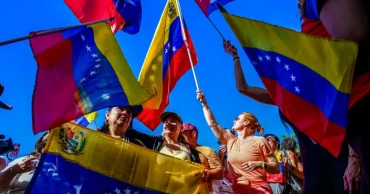
Venezuelans are responding with mixed emotions following the arrest of President Nicolás Maduro by US forces, expressing relief, anxiety and uncertainty about the country’s future.
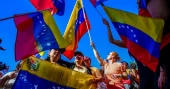
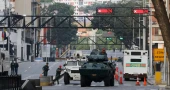
Residents cautiously emerged onto the streets of Caracas on Saturday after a night of explosions, with reactions ranging from celebration to anger. Some citizens said Maduro’s removal offered hope after years of political repression and economic hardship, though many feared instabilities in the days ahead.
Several people who spoke anonymously said they were grateful to the United States but uncertain about what would follow. While some welcomed promises of international support and investment, others questioned US President Donald Trump’s long-term intentions.
At the same time, Maduro loyalists staged protests in Caracas, demanding his release. Mayor Carmen Meléndez denounced the arrest as a “kidnapping,” while government supporters rallied in defense of the ruling party.
Maduro, who has ruled since 2013 and is accused by Washington of drug trafficking and weapons charges, is being extradited to New York along with his wife. The US says it will temporarily oversee Venezuela’s administration and oil resources until a new leadership is established.
Fear remains widespread as pro-government armed groups patrol neighborhoods and laws criminalize support for US actions. With nearly eight million Venezuelans living in exile, many say Maduro’s arrest marks only the beginning of a long and uncertain transition.
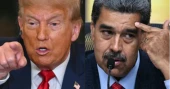
Earlier on Saturday, after months of growing military pressure on Venezuelan President Nicolás Maduro, President Donald Trump ordered a brazen operation into the South American country to capture its leader and whisk him to the United States where his administration planned to put him on trial.
In a Saturday morning interview on “Fox and Friends Weekend,” Trump laid out the details of the overnight strike, after which he said Maduro and his wife, Cilia Flores, were flown by helicopter to a U.S. warship.
With inputs from BBC
5 months ago
Maduro’s capture triggers Caribbean travel disruptions
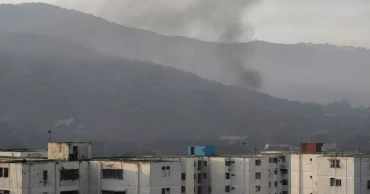
The U.S. military operation that captured Venezuelan President Nicolás Maduro and flew him out of the country early Saturday has also disrupted Caribbean travel at a busy travel time for the region.
No airline flights were crossing over Venezuela on Saturday, according to FlightRadar24.com. And major airlines canceled hundreds of flights across the eastern Caribbean region and warned passengers that the disruptions could continue for days after the Federal Aviation Administration imposed restrictions.
Flights to Puerto Rico, the Virgin Islands, Aruba and other destinations near Venezuela were canceled. The airlines are waiving change fees for passengers who have to reschedule their flights this weekend.
US will 'run' Venezuela until 'safe transition can take place': Trump
The FAA had earlier said it imposed a temporary airspace restriction on Puerto Rico’s international airport and surrounding regions.
An announcement by Luis Muñoz Marín International Airport in San Juan posted on the social media site X said restrictions were put in place because of the “security situation related to military activity” in Venezuela.
As a result, most commercial airlines to and from the airport that are operated by U.S. airlines have been suspended or may be canceled.
Foreign airlines and military aircraft are not included in this restriction, the statement said. “Passengers are urged to check the status of their flight directly with their airline before heading to the airport.”
How the US captured Maduro
JetBlue said it canceled about 215 flights “due to airspace closures across the Caribbean related to military activity.” It also noted that flights to the Dominican Republic and Jamaica were not affected by the government’s restrictions. Customers could rebook their travel or request a refund if the flights were canceled, the company said.
United said it was adjusting its schedule to account for airspace closures in the Venezuela region. It said customers could change their travel plans in the region for free as it continued to monitor the situation and worked with U.S. aviation authorities.
Southwest said it canceled all Aruba flights for Saturday and suspended Puerto Rico flights until late afternoon, but flights to the Dominican Republic were unaffected.
American said it was waiving change fees for flights to and from about 20 island destinations, including Anguilla, Antigua, Curacao, Saint Lucia and the U.S. and British Virgin Islands.
Delta said it has issued a travel waiver for customers traveling to or from 13 impacted airports through Tuesday.
5 months ago
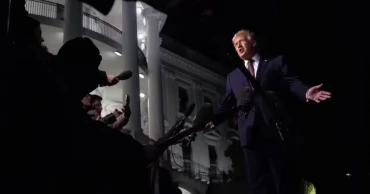
US will 'run' Venezuela until 'safe transition can take place': Trump
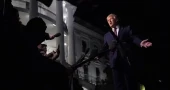
US President Donald Trump on Saturday said the US will take charge of Venezuela until a safe transition of power can happen. “We will do a safe, proper transition. We want liberty, peace, and justice for Venezuelans," Trump said. He also asserted that the US will make people of Venezuela “rich and safe."
The statement comes following the capture of Venezuelan President Nicolás Maduro. The US attacked Venezuela early on Saturday morning, carrying out military strikes, capturing Maduro and his wife.
Meanwhile, the US President has claimed that Venezuelan President Nicolás Maduro and his wife, Cilia Flores, are being taken to New York after being captured by US forces.
Speaking in an interview with Fox News, Trump said Maduro and Flores have been indicted in New York and are being transported to the state by helicopter and ship. He alleged that the Venezuelan leader was responsible for the deaths of many people, including American citizens.
Trump said the operation to capture Maduro had been planned earlier but was delayed due to weather conditions. “The weather has to be perfect,” he said, adding that the mission was launched once conditions improved.
Describing the raid, Trump said Maduro was captured from a location “more like a fortress than a house,” with heavy steel fortifications. He claimed no US soldiers were killed in the operation, though a few were injured and are now in stable condition.
With inputs from Agencies
5 months ago
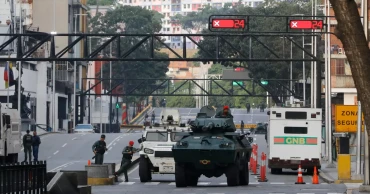
How the US captured Maduro
After months of growing military pressure on Venezuelan President Nicolás Maduro, President Donald Trump ordered a brazen operation into the South American country to capture its leader and whisk him to the United States where his administration planned to put him on trial.
In a Saturday morning interview on “Fox and Friends Weekend,” Trump laid out the details of the overnight strike, after which he said Maduro and his wife, Cilia Flores, were flown by helicopter to a U.S. warship.
Maduro was in a ‘fortress,’ Trump says
Trump described Maduro as being “highly guarded" in a presidential palace that was “like a fortress,” although the Venezuelan leader was unable to get to a safe room.
American forces were armed with “massive blowtorches,” which they would have used to cut through steel walls had Maduro locked himself in the room, Trump said.
“It had what they call a safety space, where it’s solid steel all around,” Trump said. “He didn’t get that space closed. He was trying to get into it, but he got bum-rushed right so fast that he didn’t get into that. We were prepared.”
Part of that preparation, Trump said, included practicing maneuvers on a replica building.
“They actually built a house which was identical to the one they went into with all the same, all that steel all over the place,” Trump said.
‘We turned off all the lights’
Trump said that the U.S. operation took place in darkness, although he did not detail how that had happened. He said the U.S. turned off “almost all of the lights in Caracas,” the capital of Venezuela.
“This thing was so organized,” he said. “And they go into a dark space with machine guns facing them all over the place.”
At least seven explosions were heard in Caracas. The attack lasted less than 30 minutes.
Venezuela’s vice president, Delcy Rodríguez, who under that country’s law takes power, said some Venezuelan civilians and members of the military were killed.
Trump says ‘a couple of guys injured’
Trump said a few U.S. members of the operation were injured but he believed no one was killed.
“A couple of guys were hit, but they came back and they’re supposed to be in pretty good shape,” he said.
The Republican president said the U.S. had lost no aircraft, but that a helicopter was “hit pretty hard."
“We had to do it because it’s a war," he added.
The weather was a factor
Trump said U.S. forces held off on conducting the operation for days, waiting for cloud cover to pass because the “weather has to be perfect.”
“We waited four days,” he said. “We were going to do this four days ago, three days ago, two days ago. And then all of a sudden it opened up and we said, go. And I’ll tell you, it’s, it was just amazing.”
Where is Maduro now?
Trump said that Maduro and Flores were flown by helicopter to a U.S. warship and would go on to New York to face charges. The Justice Department released an indictment accusing the pair of having an alleged role in a narco-terrorism conspiracy.
Months of escalating actions
The raid was a dramatic escalation from a series of strikes the U.S. military has carried out on what Trump has said were drug carrying boats in the Caribbean Sea and eastern Pacific Ocean since early September. There had been 35 known strikes that killed at least 115 people.
On Dec. 29, Trump said the U.S. struck a facility where boats accused of carrying drugs “load up.” The CIA was behind the drone strike at a docking area believed to have been used by Venezuelan drug cartels. It was the first known direct operation on Venezuelan soil since the U.S. began its strikes in September.
5 months ago
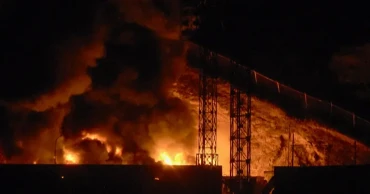
EU urges de-escalation in Venezuela
European Council President Antonio Costa said on Saturday the European Union (EU) was following the situation in Venezuela "with great concern" and urged de-escalation.
"The European Union calls for de-escalation and a resolution in full respect of international law and the principles enshrined in the Charter of the United Nations," he wrote on X.
He said the bloc would continue to support a peaceful, democratic and inclusive solution in Venezuela, and backed efforts by EU foreign policy chief Kaja Kallas, working with member states, to ensure the safety of European citizens in the country.
Earlier on Saturday, Kallas said the EU was closely monitoring developments and called for restraint, stressing that the principles of international law and the United Nations Charter must be respected.
Kallas said she had spoken with U.S. Secretary of State Marco Rubio and the EU ambassador in Caracas, adding that the safety of EU citizens in Venezuela was the bloc's top priority.
U.S. President Donald Trump said on Saturday that the United States has struck Venezuela and captured its President Nicolas Maduro, who was flown out of the country along with his wife.
Venezuela on Saturday denounced a "military aggression" by the United States, after large explosions were heard and aircraft were seen over the capital Caracas earlier in the day.
5 months ago
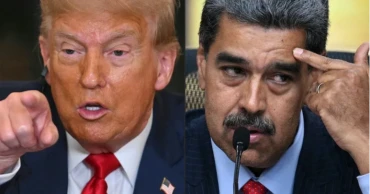
Trump claims Maduro captured as US launches major strikes on Venezuela
US President Donald Trump said the United States has carried out “large scale strikes” against Venezuela and claimed that Venezuelan President Nicolás Maduro and his wife have been captured and flown out of the country.
In a statement posted on his Truth Social platform, Trump said the operation was conducted in coordination with US law enforcement agencies and that further details would be announced at a news conference scheduled later in the day at his Mar-a-Lago residence.
Venezuela’s government earlier rejected and condemned what it described as “military aggression by the United States,” declaring a national emergency across the country. Authorities accused Washington of attempting to seize Venezuela’s strategic resources, particularly oil and minerals, and of trying to undermine the country’s political independence.
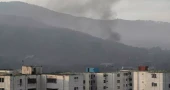
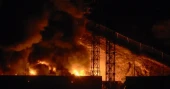
Explosions were reported in the capital Caracas, with witnesses describing loud blasts, low-flying aircraft and helicopters overhead. Footage circulating on social media and broadcast by international media showed large plumes of smoke and fires burning in different parts of the city, including near military facilities.
An eyewitness in Caracas told the BBC that the explosions were extremely loud and shook buildings. “My heart was pumping and my legs were shaking,” the witness said, adding that the blasts appeared precise but frighteningly close. After the explosions, the city fell largely silent as residents frantically contacted friends and relatives to check on their safety.
According to reports from US officials cited by CBS News, the strikes targeted sites inside Venezuela, including military installations in and around Caracas. The White House had not immediately issued an official response.
Venezuelan President Maduro signed a decree declaring a “state of external commotion” nationwide and ordered the implementation of national defense plans. The government also urged social and political groups, including militias and grassroots organisations, to mobilise and condemn what it called an imperialist attack.
The escalation follows weeks of rising tension between Washington and Caracas. Trump has intensified pressure on Maduro, accusing his government of drug trafficking and of using oil revenues to fund criminal activity. Since September, the US has launched multiple strikes on boats it claims were involved in drug smuggling in the Caribbean and Pacific, actions that have reportedly killed more than 110 people.
Just days earlier, Maduro said he was open to talks with the US on drug trafficking and oil issues, but avoided directly responding to Trump’s claims about earlier strikes on Venezuelan infrastructure.
Analysts say the latest developments mark a significant escalation in a crisis that has been building for months. Venezuelan journalists and residents have expressed deep concern over the scale of the strikes and the uncertainty surrounding their consequences, as power outages were reported in some areas and fear spread across the capital.
Reports of explosions first emerged in the early hours of the morning, with witnesses describing blasts near key military sites, including the La Carlota airstrip and the Fuerte Tiuna military complex. Venezuelan authorities say the situation remains fluid as they assess the damage and prepare further responses.
With inputs from BBC
5 months ago

Two killed as 6.5-magnitude earthquake strikes Mexico
A powerful 6.5-magnitude earthquake struck southern and central Mexico on Friday, disrupting President Claudia Sheinbaum’s first press conference of the year as seismic alarms rang out and claiming at least two lives.
Mexico’s National Seismological Service said the quake was centered near San Marcos in the southern state of Guerrero, close to the Pacific coast resort city of Acapulco. More than 500 aftershocks were recorded following the main tremor.
Guerrero’s civil defense authority reported several landslides in and around Acapulco as well as on highways across the state. Governor Evelyn Salgado said a 50-year-old woman was killed when her house collapsed in a small community near the epicenter. Officials also reported significant structural damage to a hospital in Chilpancingo, the state capital, prompting the evacuation of patients.
In both Mexico City and Acapulco, residents and visitors rushed outdoors as buildings shook. Mexico City Mayor Clara Brugada said one person died after suffering an apparent medical emergency and falling while evacuating a building.
The U.S. Geological Survey said the quake struck at a depth of 21.7 miles (35 kilometers), about 2.5 miles north-northwest of Rancho Viejo, Guerrero, in a mountainous area roughly 57 miles northeast of Acapulco.
Sheinbaum resumed her briefing shortly after the tremor.
José Raymundo Díaz Taboada, a doctor and human rights activist living on the hills surrounding Acapulco, said he heard a loud rumble and noticed dogs barking before the shaking intensified.
6.9 magnitude earthquake causes small tsunami waves off northeastern Japan
“At that moment, the seismic alert sounded on my phone,” he said. “Then the movement became strong and very noisy.”
He added that the tremor felt weaker than some previous earthquakes, noting he had packed an emergency bag as aftershocks continued. Díaz Taboada said he was unable to contact friends along the Costa Chica southeast of Acapulco due to disrupted communications.
5 months ago
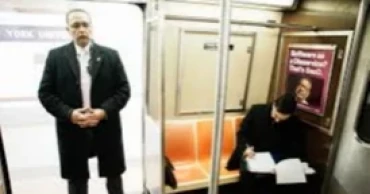
Zohran Mamdani’s first full day as New York City mayor features subway commute
Less than a day after celebrating his historic inauguration before cheering crowds in Manhattan, Zohran Mamdani began his first full workday as mayor in a way familiar to many New Yorkers: heading to the subway from a small apartment.
Wrapped up against the cold and appearing slightly under the weather, the 34-year-old left the one-bedroom Queens apartment he shares with his wife on Friday morning. Unlike most commuters, his journey was closely followed by photographers and videographers, and frequently paused as neighbors stopped to wish him well.
The democratic socialist, whose election was widely seen as a major breakthrough for progressives, now faces the realities of leading the nation’s largest city — issuing executive orders, naming officials, responding to reporters, and defending decisions made within his first hours in office.
His morning commute carried clear symbolism.
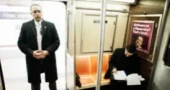
Surrounded by security and a few aides on the train into Manhattan, Mamdani posed for selfies with surprised riders before settling into a corner seat to review briefing notes. When two puzzled French tourists asked who he was, he introduced himself as New York’s new mayor. To convince them, he pointed to a copy of the New York Daily News featuring his photo on the front page.
Mamdani joins a line of New York mayors who have used public transportation to project accessibility. Former Mayor Eric Adams did the same on his first day, as did Bill de Blasio and Michael Bloomberg during their tenures.
Photos of Mamdani riding the subway quickly spread across social media after he arrived at City Hall. The move appeared to reinforce a promise from his inaugural address that his administration would reflect the lives of everyday New Yorkers.
His early actions continued that theme. After campaigning heavily on lowering housing costs, Mamdani went straight from Thursday’s inauguration to a Brooklyn apartment building, where he pledged to intensify a legal battle against what tenants allege is a negligent landlord, drawing loud support from residents.
Another early decision highlighted the heightened scrutiny surrounding his administration, especially over his views on Israel and support for Palestinians.
Seeking what he described as a fresh start, Mamdani rescinded several executive orders issued by his predecessor late in office, including two related to Israel — one adopting a controversial definition of antisemitism that includes certain criticism of Israel, and another prohibiting city agencies from boycotting or divesting from the country.
The move sparked immediate criticism from some Jewish organizations, as well as sharp comments from Israeli officials on social media.
Asked about the decision Friday, Mamdani read from prepared remarks, vowing that his administration would aggressively fight hate and division. He emphasized that the Mayor’s Office to Combat Antisemitism would remain in place.
He also announced plans to establish a new “mass engagement” office aimed at continuing his campaign’s efforts to involve more residents in city politics.
Speaking to a crowd of supporters and onlookers packed several rows deep, phones raised to capture the moment, Mamdani reflected on the expectations surrounding his leadership.
“New Yorkers are allowing themselves to believe in city government again,” he said. “That belief won’t last without real action.”
Still ahead for the new mayor: moving into the official mayoral residence on Manhattan’s Upper East Side before his Queens lease expires later this month.
5 months ago
Investigators suspect bottle-top sparklers caused deadly Swiss bar blaze
Swiss investigators said Friday they believe decorative sparklers attached to Champagne bottles sparked a devastating fire at a crowded ski resort bar after coming too close to the ceiling during New Year’s Eve celebrations.
Authorities are examining whether the ceiling’s soundproofing materials met safety standards and whether the sparkler candles — which emit upward sprays of sparks — were legally allowed inside the venue.
The fire tore through the Le Constellation bar in Crans-Montana early Thursday, killing 40 people and injuring 119 others, making it one of the deadliest disasters in Swiss history. Officials also said they would review other safety measures, including fire extinguishers and emergency exits. Prosecutors in the Valais region warned that criminal charges could follow if negligence is confirmed.
Devastating fire at a Swiss bar claims 40 lives
Among those missing was 16-year-old Arthur Brodard from Lausanne. His mother, Laetitia, was searching for him Friday, clinging to the hope that he might be among six injured victims still unidentified.
“I’m searching everywhere. My son is somewhere,” she said. “I just want to know where he is and be with him — whether that’s in intensive care or elsewhere.”
Police said the injured included 71 Swiss citizens, along with people from France, Italy, Serbia, Bosnia-Herzegovina, Luxembourg, Belgium, Portugal and Poland. The nationalities of 14 victims were still unknown.
Celebration turns to catastrophe
Axel Clavier, a 16-year-old from Paris, recalled feeling trapped and unable to breathe inside the Alpine bar moments after welcoming the new year. He escaped by pushing open a window with a table, but one of his friends died and several others were still missing hours later.
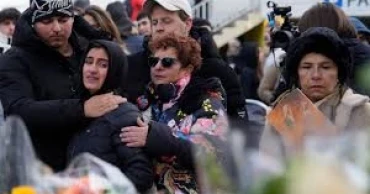
Outside the bar, mourners created an impromptu memorial of flowers and candles, while hundreds gathered at a nearby church to pray for the victims.
At a hospital in Sion, a distressed French teenager brought flowers for her 17-year-old best friend, who was badly burned and in intensive care. The girl said she had planned to go to the bar with classmates but changed her mind at the last minute. She later learned that some of her friends were hospitalized, while the fate of others remained unclear.
Social media quickly filled with photos of missing people, as families and friends appealed for information.
Valais regional leader Mathias Reynard said many accounts described extraordinary bravery during the chaos. While praising emergency responders, he noted that in the first moments it was largely young people who rescued others at great personal risk.
Witnesses describe sparklers and chaos
Clavier said he noticed servers entering the bar with Champagne bottles topped with lit sparklers shortly before the fire spread. Two women told French media they saw a bartender lifting a colleague onto his shoulders as she held a burning candle, moments before flames engulfed the wooden ceiling.
Witnesses described panicked crowds surging toward a narrow exit, people smashing windows to escape, and severely injured victims lying outside as parents rushed to the scene searching for their children.
Gianni Campolo, a 19-year-old vacationing nearby, rushed to help after receiving a call from a friend who escaped. He described seeing people with severe burns. “I witnessed something horrific — nothing could be worse than this,” he said.
Fourteen-year-old Marc-Antoine Chavanon also helped pull people out of the bar. “People were collapsing. We did everything we could,” he said, recalling a badly burned friend struggling to escape.
The intensity of the fire made identification difficult, forcing authorities to rely on DNA samples. In many cases, personal documents were destroyed by the flames.
Among those listed as missing was Emanuele Galeppini, a talented Italian teenage golfer. While his family awaited DNA confirmation, Italy’s Golf Federation announced that he had died.
Crans-Montana, surrounded by high-altitude ski slopes in the Valais Alps, is a well-known international ski destination and host of major sporting events, including the annual European Masters golf tournament.
5 months ago
Trump and Iranian leaders trade threats as protests spread across Iran
U.S. President Donald Trump and senior Iranian officials exchanged sharp warnings on Friday as protests expanded across Iran, further heightening tensions between the two countries following U.S. airstrikes on Iranian nuclear facilities in June.
Violence linked to the demonstrations has left at least eight people dead so far. The unrest began partly due to the collapse of Iran’s currency, the rial, but has increasingly taken on a political tone, with protesters voicing opposition to the government.
Now in their sixth day, the protests are the largest Iran has seen since 2022, when the death of 22-year-old Mahsa Amini while in police custody sparked nationwide unrest. While serious, the current demonstrations have not yet reached the scale or intensity of those earlier protests, which were triggered by Amini’s arrest over alleged hijab violations.
Trump’s remarks prompt swift reaction from Tehran
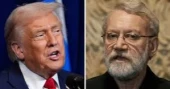
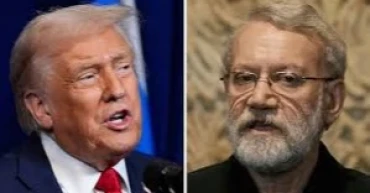
Trump posted on his Truth Social account that if Iran “violently kills peaceful protesters,” the United States would intervene. “We are locked and loaded and ready to go,” he wrote, offering no further details.
In response, Ali Larijani, a former parliamentary speaker and current secretary of Iran’s Supreme National Security Council, accused the U.S. and Israel of fueling the unrest, though he provided no evidence. Iranian officials have repeatedly made similar claims during past protest movements.
Larijani warned on X that U.S. involvement in Iran’s internal affairs would destabilize the entire region and damage American interests. He also cautioned that Trump’s actions could put U.S. troops in the region at risk.
His comments appeared to reference the significant U.S. military presence in the Middle East. In June, Iran launched missiles at the Al Udeid Air Base in Qatar following U.S. strikes on Iranian nuclear sites during Israel’s 12-day conflict with Iran. Although one missile struck a building, no injuries were reported.
Iran warns of harsh response to any attack amid Trump’s nuclear threat
A U.S. official said there had been no changes to American troop deployments or readiness levels in the region following Trump’s statements.
Iran’s ambassador to the United Nations, Amir Saeid Iravani, sent a letter to U.N. Secretary-General António Guterres and the Security Council calling for condemnation of Trump’s remarks and reaffirming Iran’s right to defend its sovereignty. He warned that the U.S. would be responsible for any consequences resulting from what he described as unlawful threats.
Separately, Ali Shamkhani, an adviser to Supreme Leader Ayatollah Ali Khamenei, cautioned that any foreign interference threatening Iran’s security would be met with force.
U.S. shows open support for protesters
Trump’s comments marked a rare, explicit show of U.S. support for Iranian demonstrators. Previous American leaders avoided such statements out of concern they could undermine protest movements. During Iran’s 2009 Green Movement, President Barack Obama refrained from public support, later calling that decision a mistake.
Analysts warn that Trump’s remarks could give Iranian authorities justification to claim the unrest is driven by foreign interference. Naysan Rafati of the International Crisis Group said that while the protests stem from domestic grievances, official crackdowns justified by U.S. statements could provoke the very intervention Iran fears.
Iran’s Foreign Ministry has also pointed to long-standing grievances against U.S. actions, including the 1953 CIA-backed coup, the 1988 downing of an Iranian passenger plane, and the recent U.S. strikes.
Demonstrations continue nationwide
Protests continued Friday in multiple Iranian cities, though daily life in Tehran remained largely normal. According to the Human Rights Activists News Agency, demonstrations have occurred in more than 100 locations across 22 provinces, with the death toll rising to eight after a protester was killed in Marvdasht.
Crowds gathered in Zahedan, near the Pakistan border, and funerals for slain demonstrators triggered additional marches. Videos circulating online showed mourners confronting security forces at the funeral of 21-year-old Amirhessam Khodayari, who was killed in Kouhdasht. His father rejected claims that his son belonged to the Basij paramilitary force, and later reports suggested official accounts were under review.
President Masoud Pezeshkian’s reformist government has signaled a willingness to engage with protesters but admits it has limited ability to address the rapidly worsening economy. The rial’s collapse — now trading at about 1.4 million rials to the dollar — initially sparked the unrest.
Although rooted in economic hardship, the protests have also included chants against Iran’s ruling system. Efforts to stabilize the economy since the June conflict have largely failed.
Iran has recently announced it has halted uranium enrichment at all sites, signaling openness to renewed negotiations to ease sanctions. However, talks have yet to resume, as both Trump and Israeli Prime Minister Benjamin Netanyahu have warned Iran against reviving its nuclear program.
5 months ago