Foreign-Affairs

Dhaka, Beijing eye stronger ties in news media and television
Bangladesh and China on Thursday held in-depth exchanges on strengthening cooperation in news media, film, and television between Bangladesh and China.
The two sides expressed hope to further enrich the content of exchanges, expand areas of cooperation, and elevate bilateral relations to a new level.
The issues were discussed when Chinese Ambassador to Bangladesh Yao Wen paid a courtesy call on Information and Broadcasting Minister Zahir Uddin Swapon and State Minister Yasser Khan Choudhury.
China is willing to continue deepening exchanges between the media and film/television sectors of both countries, enhance the sharing of experience in building modern communication systems, and promote mutual understanding and affinity between the peoples of the two nations.
Ambassador Yao congratulated Minister Swapon and State Minister Yasser on their new appointments, stating that cooperation in news media, film, and television serves as an important foundation for information transmission and emotional exchange.
The Bangladeshi side thanked Ambassador Yao for his congratulations and positively acknowledged the role of Bangladesh-China news media exchanges and film/television cooperation in advancing bilateral relations.
They expressed hope to further enrich the content of exchanges, expand areas of cooperation, and elevate bilateral relations to a new level.
1 month ago
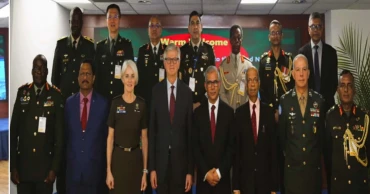
Bangladesh urges global cooperation to bridge digital divide
Bangladesh has called for stronger global cooperation to bridge the digital divide and build robust data systems.
Permanent Representative of Bangladesh to the United Nations Ambassador Salahuddin Noman Chowdhury made the call while delivering the country’s statement at the 59th Session of the Commission on Population and Development (CPD59) at the UN Headquarters in New York on Wednesday.
He underscored the need for strengthening research and data systems, bridging the digital divide through enhanced international cooperation, technology transfer and capacity building and promoting the ethical use of emerging technologies with strong data privacy safeguards.
Ambassador Salahuddin also highlighted the importance of investing in digital skills, particularly for women and youth.
Highlighting the critical role of technology and research in achieving ICPD objectives and the Sustainable Development Goals, he noted that nearly one-third of the global population still lacks internet access, limiting opportunities in essential services.
In his statement, the Ambassador underlined Bangladesh’s progress in reducing
maternal mortality, expanding immunisation coverage, strengthening community-based healthcare, promoting women’s empowerment and enhancing collaboration with research institutions.
He also emphasised the use of digital health solutions, including telemedicine and real-time disease surveillance.
Stressing the importance of investing in youth, skills development and innovation,
Salahuddin Noman acknowledged challenges such as urbanisation, climate change, and non-communicable diseases as barrier for sustainable development.
1 month ago

Bangladesh possesses natural treasure that must be protected: Germany
A German parliamentary committee delegation has said Bangladesh, with the Sundarbans, possesses a natural treasure that must be protected.
“Germany has the technical capabilities to help here and should continue to do so in the future. The diversity of flora and fauna in this water-shaped region made a deep impression on the participants,” said Michael Thews, MP, who led the delegation of the Committee on the Environment, Nature Conservation, Nuclear Safety and Consumer Protection here from April 7 to 12.
Thews said the situation in the flood-prone areas is extremely challenging for the people living there. “The construction of storm-resistant houses, shelters, and a secure drinking water supply must be urgently continued.”
The delegation was overwhelmed by the warm reception in the country, saying they will incorporate the experiences gained into their political work and give Bangladesh greater prominence in the future.
“As a token of gratitude, we spontaneously decided, in our personal capacity, to fund a bicycle for waste collection in the low-income neighbourhood of Greenland Abasan, Khulna,” said Thews, the Deputy Chairman of the Committee, noting that overall, the group left the country with many lasting impressions and the desire to continue the fruitful cooperation between the two countries.
German Ambassador to Bangladesh Dr Rudiger Lotz on Wednesday said the visit is an important step in the fight against climate change.
“It shows Germany’s commitment to combating the climate crisis on a global scale. Bangladesh is not only profoundly affected by climate change, but also a pioneer in adaptation strategies,” he said, adding that sharing knowledge and supporting Bangladesh’s efforts is therefore crucial.
The delegation also included MPs Violetta Bock, Dr Franziska Kersten, Manuel Krauthausen, Julia Scheider and Sascha van Beek.
The programme took them across the country, combining high-level political engagement with field visits to affected communities and ecosystems, giving the parliamentarians insight into Bangladesh’s efforts in the areas of climate adaptation, biodiversity and species conservation, water protection, and environmental pollution.
In Dhaka, the delegation opened the visit with political consultations, including a meeting with Environment, Forest and Climate Change Minister Abdul Awal Mintoo.
Both sides emphasised the importance of ongoing cooperation between Germany and Bangladesh and discussed future opportunities for collaboration on environmental issues.
1 month ago

US backs measles-rubella vaccination campaign in Bangladesh
The United States is supporting Bangladesh's Ministry of Health and Family Welfare through UNICEF with an emergency measles-rubella vaccination campaign to deliver over 21.9 million doses, protecting 1.2 million children under age five.
This effort reflects the Donald Trump administration's America First Global Health Strategy – preventing disease outbreaks abroad.
It also keeps America and Bangladesh safe, strengthens global health systems, and protects communities from infectious diseases, said the US Embassy in Dhaka on Wednesday.
1 month ago
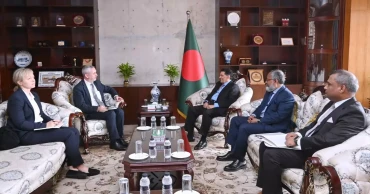
Bangladesh, EU to sign PCA next week
Bangladesh and the European Union (EU) will sign the Partnership and Cooperation Agreement (PCA) next week which is aimed at further institutionalising bilateral cooperation.
EU Ambassador to Bangladesh Michael Miller met Foreign Minister Dr Khalilur Rahman at the ministry on Wednesday and discussed issues of mutual interest.
They discussed the Foreign Minister’s upcoming visit to Brussels to lead a delegation for the initialling of the PCA, said the Ministry of Foreign Affairs.
Both sides expressed satisfaction with the long-standing and mutually beneficial Bangladesh-EU partnership, noting that it has evolved into a comprehensive and multifaceted engagement.
They discussed avenues of mutual interest, including reform initiatives, migration management, skills development, rule of law, and good governance.
The EU looks forward to the new Partnership and Cooperation Agreement with Bangladesh which will be ‘initialled’ during the visit of the Foreign Minister to Brussels on April 20, enhancing cooperation across the board.
The Heads of Mission of Denmark, France, Germany, Italy, the Netherlands, Spain, Sweden and the EU recently met Prime Minister Tarique Rahman, a senior official told UNB, noting that the EU has already conveyed its message of readiness to intensify relations with the new government.
The EU expressed support for priority reforms, economic modernisation and managed migration, stressing the importance of a level playing field to promote investment and shared values underpin the EU’s partnerships around the world.
1 month ago
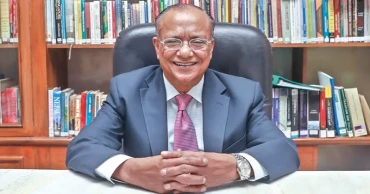
Waste management to see significant improvement within a year: Mintoo
Environment, Forest and Climate Change Minister Abdul Awal Mintoo on Wednesday expressed optimism that Bangladesh would witness a significant improvement in waste management within the next year, helping protect rivers, canals and other water bodies from pollution.
“Though our government is a new one, we are fully aware of this issue and hope that within the next year you will see significant positive change in waste management to prevent pollution in rivers, canals and beels,” he told Parliament.
The minister made the remarks while replying to a question following a notice raised by treasury bench lawmaker SM Rafiqul Islam (Gazipur-3) under Rule 71 of the Rules of Procedure.
Focusing on environmental degradation, Mintoo said pollution is not limited to industrial activities alone but occurs in multiple ways, contributing to the overall environmental pollution in the country.
He said there is already a proposal under consideration to establish a waste recycling plant for waste management at Amin Bazar.
“We also need to fix waste management systems in every town across the country,” he added.
The minister said the government has been continuing its efforts to control pollution in rivers, canals and wetlands by ensuring installation of effluent treatment plants (ETPs) in factories.
“At the same time, we are encouraging the private sector in various ways so that solid waste is properly processed and can be used to produce energy or bio-fertiliser,” he said.
In his question, the BNP lawmaker warned that environmental pollution is not only threatening public health but also reducing agricultural production, damaging crops and plants.
He said untreated liquid waste discharged into canals and wetlands is contaminating water sources, including groundwater accessed through tubewells, leading to various diseases such as cancer.
He stressed that installing effluent treatment plants should be mandatory for all industries, alongside strict monitoring mechanisms to ensure compliance.
Earlier, in his notice, the ruling party lawmaker sought to know what steps the government would take to protect the environment, citing alarming pollution levels from industrial liquid waste in Gazipur-3.
The environment minister delivered a statement following the notice, saying that there are a total of 877 industrial units in Gazipur-3 that have clearances from the Department of Environment.
Of them, 129 industries discharge liquid wastes.
“All these establishments have effluent treatment plants to treat wastewater before discharge,” he said, adding that the Department of Environment is regularly monitoring them both physically and online to ensure untreated wastewater is not released directly into water bodies.
He further said that among the 129 liquid waste-emitting industries, 121 have already installed IP cameras for real-time monitoring by the authorities, while installation in the remaining eight is underway.
Besides, all such industries have been given a deadline until June 2027 to obtain approval and implement zero discharge plans, the minister added.
1 month ago
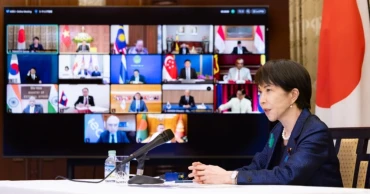
Bangladesh welcomes Japan-led energy initiative for Asian region
Bangladesh on Wednesday welcomed a Japan-led initiative to deal with energy issues in an efficient way in the Asian region, noting that all countries need to come together as no country can solve it alone.
“We need to come together to build a cooperation framework that will support all of us in this crisis, in particular in Asia,” Prime Minister’s Foreign Affairs Adviser Humaiun Kobir told reporters at the Ministry of Foreign Affairs.
Prime Minister Tarique Rahman joined the online meeting at the invitation of Japanese Prime Minister Takaichi Sanae.
Japan announces $10bln fund to help Southeast Asia tackle oil price spike
The Japanese Prime Minister announced the launch of “Partnership on Wide Energy and Resources Resilience (POWERR Asia),” a new cooperation framework consisting of both emergency responses and structural ones with mid-to-long-term perspectives.
The leaders of the participating countries said they will collaborate to address the current challenges together.
Adviser Kobir said the Prime Minister was invited as an important partner, noting that the Prime Minister holds one of the largest democratic mandates in the world.
He said the meeting mainly discussed the current energy crisis and concerns. “We cannot solve the issues of this crisis alone. So, we need all of us in the Asia Pacific to come together and find ways.”
AZEC partner countries are Australia, Brunei, Cambodia, Indonesia, Laos, Malaysia, the Philippines, Singapore, Thailand, Vietnam, Republic of Korea, India, Bangladesh, Sri Lanka, Timor-Leste, International Energy Agency (IEA), Asian Development Bank (ADB), and the Economic Research Institute for ASEAN and East Asia (ERIA).
The online meeting was attended by leaders of the Asian region, including partners of the Asia Zero-Emission Community (AZEC).
Bangladesh is seeking to mobilise US$2 billion from development partners to meet our immediate energy needs and safeguard our economic stability and has urged the international community to respond swiftly and positively to this call.
At the meeting, participants acknowledged that Asia is the most affected region by disruption in the supply of energy resources via the Strait of Hormuz, and concurred on the importance of ensuring safe passage through the Strait, according to the Ministry of Foreign Affairs of Japan.
Given that Asian economies are deeply interconnected via supply chains, they concurred on the importance of joint efforts by Asian countries.
Participating countries welcomed “Partnership on Wide Energy and Resources Resilience (POWERR Asia)”at the meeting to further strengthen regional supply resilience in energy and resources.
AZEC partners confirmed the importance of evolving the existing AZEC by incorporating the perspective of economic and energy resilience.
This framework (POWERR Asia) aims to cooperate in emergency responses through financing the procurement of crude oil, petroleum products, and maintaining supply chains in Asia, and addressing structural responses such as establishing stockpiling and release systems, as well as the construction and utilisation of storage tanks to expand the number of days of crude oil reserves within the region, securing critical minerals and diversifying energy resources such as biofuels, and promoting industrial advancement through energy-saving initiatives.
The support involves financial cooperation of approximately 10 billion dollars which is equivalent to roughly one year's worth of crude oil imports for ASEAN if converted to crude oil and petroleum product procurement by Asian countries.
At the outset, Prime Minister Takaichi said the countries most affected by disruptions in the supply of energy and resources passing through the Strait of Hormuz are those in Asia and it is necessary for Asian countries to work together in responding to this shared challenge because these impacts extend to all countries closely connected through supply chains.
Ferdinand R. Marcos, Jr., President of the Republic of the Philippines; Anwar bin Ibrahim, Prime Minister of Malaysia; Lawrence Wong, Prime Minister and Minister for Finance of the Republic of Singapore; Anutin Charnvirakul, Prime Minister and Minister of Interior of the Kingdom of Thailand; Le Minh Hung, Prime Minister of the Socialist Republic of Viet Nam; Dr. José Ramos-Horta, President of the Democratic Republic of Timor-Leste; and Dr. Kim Min-seok, Prime Minister of the Republic of Korea, also expressed their appreciation for holding this meeting.
These initiatives support the stability of Asian countries and contribute to strengthening Japan, including through the procurement of medical supplies from Asia to Japan.
Additionally, it embodies the realisation of the evolution of the Free and Open Indo-Pacific (FOIP) advocated by the Prime Minister Takaichi administration.
Besides, this initiative will serve as an opportunity to further develop the Asia Zero Emission Community (AZEC), which aims to simultaneously achieve energy security, economic growth, and decarbonization, by incorporating perspectives on economic and energy resilience.
1 month ago
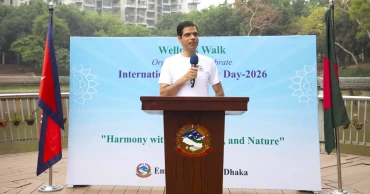
Wellness vital amid wars, inequality, climate crisis: Nepalese Ambassador
Nepalese Ambassador to Bangladesh Ghanshyam Bhandari on Wednesday underscored the relevance of wellness in today’s world, marked by multiple challenges, including wars and armed conflicts, economic inequality, social fragmentation, and the escalating climate crisis.
Highlighting wellness practices as living heritage deeply rooted in Nepal’s history and civilization, he shed light on centuries-old Hindu, Buddhist, yogic, and indigenous practices that embrace self-discipline, ethical living, and harmony with nature.
The Embassy organised a ‘Wellness Walk’ programme this morning in Dhaka to mark International Wellness Day-2026.
The event, aimed at raising awareness of the Wellness Day and promoting the importance of balance and harmony within ourselves and with nature, was held under the theme ‘Harmony with Mind, Body, and Nature’.
It featured a 45-minute walk, followed by a brief formal session and a Nepali ‘wellness breakfast’.
Speaking during the formal session, the Ambassador noted the plan of the Government of Nepal to observe 2027 as ‘Nepal Wellness Year’ as part of its broader vision to promote wellness tourism as a transformative driver of sustainable economic development.
He stressed Nepal’s aspiration to become a global hub for wellness and reiterated its firm commitment to advancing the wellness agenda.
The guests were served a selection of Nepali organic breakfast items, including millet pancakes, black lentil pancakes, buckwheat momos, and roasted grain flour smoothie (satuko sarbat), among others, reflecting Nepal’s tradition of wholesome and nourishing cuisine.
The United Nations General Assembly adopted a resolution, on 10 March 2026, proclaiming 15 April as International Wellness Day.
Nepal was the penholder of the resolution, co-sponsored by 40 and endorsed by 143 Member States.
1 month ago

About 250 feared missing as Rohingya boat capsizes in Andaman Sea
Around 250 people including Rohingya and Bangladeshi nationals are feared missing after a boat capsized in the Andaman Sea, the UN Refugee Agency (UNHCR) and the International Organization for Migration (IOM) said on Tuesday.
The agencies said they are “deeply saddened” by reports that the trawler which departed from Teknaf in southern Bangladesh for Malaysia, sank amid heavy winds, rough seas and overcrowding.
The UN agencies said the promise of better wages abroad, often coupled with misinformation spread by smuggling networks, drives individuals, Rohingya and Bangladeshi nationals, to take significant risks.
These factors, they said, create conditions in which smugglers and traffickers can exploit vulnerabilities, placing lives at grave risk.
"This tragic incident reflects the dire consequences of protracted displacement and the absence of durable solutions for the Rohingya," said the UN agencies.
Ongoing violence in Rakhine state has faded hopes of safe return in the near future, while shrinking humanitarian assistance, challenging living conditions in refugee camps, and limited access to education and livelihoods are pushing refugees to take such dangerous sea journeys in search of safety and opportunity.
The Andaman Sea continues to claim the lives of people undertaking these perilous journeys.
"We urgently call on the international community to step up solidarity and sustain funding to support lifesaving assistance for Rohingya refugees in Bangladesh as well as support for the Bangladeshi host communities," said the UN agencies.
As Bangladesh marks its new year, the UN agencies said, this tragedy is a reminder of the efforts urgently needed to address the root causes of displacement in Myanmar and create conditions that would allow Rohingya refugees to return home voluntarily, safely and with dignity.
Without collective action, the organisations said, more lives will be lost at sea and on desperate journeys through deadly routes.
1 month ago
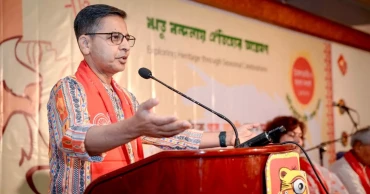
Indian envoy joins Baishakh eve cultural event in Dhaka
Indian High Commissioner to Bangladesh Pranay Verma joined Cultural Affairs Minister Nitai Roy Chowdhury at a colourful cultural event Monday evening to mark the Chaitra Sankranti and the eve of the Bengali New Year.
The programme organised by the Itihas O Oitijjo Parishad at the National Museum of Bangladesh, featured a rich array of cultural performances signifying the traditional Bengali culture, including dances inspired by nature and changing seasons, Rabindra Sangeet and Nazrul Geeti, recitations and traditional Jari music.
Colourful Baishakhi Shobhajatra welcomes Pahela Baishakh
Extending his warm greetings to the people of Bangladesh on Chaitra Sankranti and Pohela Baishakh, the High Commissioner described these festivities as an integral part of the deep-rooted shared cultural heritage of Bangladesh and that closely connects the societies and peoples of the two countries.
1 month ago