Foreign-Affairs
Securing adolescent health and well-being is vital for health of future generations: WHO
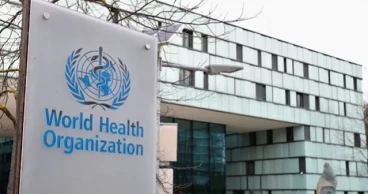
Increased investment is urgently needed to address evolving health risks and meet the mental and sexual and reproductive health needs for the nearly 1.3 billion adolescents (aged 10-19 years) globally, according to a new scientific publication released by the World Health Organization (WHO).
Adolescence is a unique and critical stage of human development, involving major physical, emotional, and social transitions, and is a pivotal window for laying long-term foundations for good health, said WHO release on Monday.
“Promoting and protecting the health and rights of young people is essential to building a better future for our world,” said Dr Tedros Adhanom Ghebreyesus, Director-General of WHO.
“Conversely, failing to address the health threats that adolescents face – some longstanding, some emerging – will not only have serious and life-threatening consequences for young people themselves, but will create spiraling economic costs for societies. That makes investing in services and programmes for adolescent health both a moral imperative and an economic no-brainer.”
The publication was launched at an event on the margins of the United Nations’ Summit of the Future. It highlights a number of troubling trends in adolescent health observed over the last decade, pointing to the urgent need for action.
At least 1 in 7 adolescents globally now suffer from a mental disorder, for instance, with particularly high rates of depression and anxiety. Anaemia among adolescent girls remains prevalent, at levels similar to those in 2010, while close to 1 in 10 adolescents are obese. Sexually transmitted infections (STIs) including syphilis, chlamydia, trichomoniasis, and genital herpes that commonly occur among youth are rising, and if left untreated, can have lifelong implications for health.
Meanwhile violence, including bullying, affects millions of young people worldwide each year, with devastating impacts on their physical and mental health.
Concerningly, attempts to roll-back adolescents’ access to sexual and reproductive health care and comprehensive sexuality education have escalated amidst a growing backlash against gender equality and human rights. Restrictive age of consent policies are limiting their access to STI and HIV services. Such measures can marginalize young people, reduce health-seeking behaviour, and lead to lasting negative health impacts.
The study emphasizes other broader fundamental challenges to the future of adolescents including climate change, conflict, and inequality.
The authors also highlight that gains are possible with the right investment and support. For example, adolescent HIV infections have declined, due to coordinated and persistent efforts in this area. Adolescent pregnancy and harmful practices such as female genital mutilation and early marriage have reduced. In addition, many positive trends in health outcomes are linked to more time in school, especially for girls; since 2000, the number of secondary-school-age children out of school decreased by nearly 30%.
Against this backdrop, the findings make a strong case for investing in adolescent health and well-being, with attention to foundational elements including education, healthcare, and nutrition. The authors call for enacting and implementing laws and policies that protect adolescent health and rights, for health systems and services to be more responsive to adolescents’ unique needs, and for the prioritization of youth engagement and empowerment across research, programming, and policymaking.
“Adolescents are powerful and incredibly creative forces for good when they are able to shape the agenda for their well-being and their future,” said Rajat Khosla, Executive Director of the Partnership for Maternal, Newborn and Child Health (PMNCH), which co-hosted the event where the publication as launched. “Leaders must listen to what young people want and ensure they are active partners and decision-makers. They are critical for the world’s future social, economic, and political stability, and if given the platform they need, they can help make a better and healthier world possible for everyone.”
Earlier this year, world leaders committed to accelerate efforts to improve maternal and child health, including adolescent health, at the World Health Assembly. Implementing these commitments, as well as those reflected in the UN’s Pact for the Future, will be critical to protecting and promoting the health and well-being of current and future generations.
1 year ago

Bangladesh to enjoy zero-tariff treatment for all product classes exported to China
Chinese President Xi Jinping has announced that China will voluntarily and unilaterally open its market wider, and has decided to give all LDCs having diplomatic relations with China, including 33 countries in Africa, zero-tariff treatment for 100 per cent tariff lines.
The Chinese president made this announcement in his keynote address at the opening ceremony of the Beijing Summit of the Forum on China-Africa Cooperation on September 5, 2024. This has made China the first major developing country and the first major economy to take such a step.
Recently, the office of the customs tariff commission of the state council of China issued an announcement. In order to expand unilateral opening up to LDCs and achieve common development, zero preferential tariff rate will be applied to 100 per cent of the tariff lines originating from LDCs that have diplomatic relations with China from 1 December, 2024.
For the products subject to tariff quota management, zero-tariff treatment only applies to the portion of products within the quota quantity. The portion of products exceeding the quota quantity shall still be subject to the original tax rate. As an LDC, Bangladesh will enjoy zero-tariff treatment for 100 per cent tariff lines exported to China starting from 1 December, 2024.
Announcement of the Office of the Customs Tariff Commission of the State Council of China on giving all LDCs having diplomatic relations with China zero-tariff treatment for 100 per cent tariff lines (customs tariff commission announcement number 9, 2024).
1 year ago
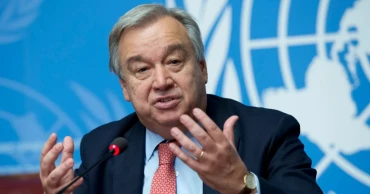
People everywhere are hoping for a future of peace, dignity, and prosperity: Guterres
UN Secretary-General António Guterres has emphasized that the Pact for the Future and its annexes, “open pathways to new possibilities and opportunities.”
“People everywhere are hoping for a future of peace, dignity, and prosperity. They are crying out for global action to solve the climate crisis, tackle inequality, and address new and emerging risks that threaten everyone,” he said.
“They see the United Nations as essential to solving these challenges,” he continued, adding “the Summit of the Future sets a course for international cooperation that can meet their expectations … now, let’s get to work.”
World leaders on Sunday adopted the Pact for the Future, a landmark declaration pledging concrete actions towards a safer, more peaceful, sustainable and inclusive world for tomorrow’s generations.
The Pact along with its annexes, the Global Digital Compact and the Declaration on Future Generations, was adopted by consensus, despite a last-minute proposal for an amendment by some countries, including Russia, Iran, the Democratic People’s Republic of Korea (DPRK) and Syria.
The amendment sought to incorporate text calling for non-intervention in any issue of national sovereignty, and the primacy of intergovernmental deliberation, in effect, downplaying the role of the civil society or private sector interests. It was rejected after the 193-member Assembly decided not to act on the proposal.
Pact for the Future
The Pact’s five broad focus areas include: sustainable development; international peace and security; science and technology; youth and future generations and transforming global governance.
This has become an urgent pivot, as multilateral financial institutions and even the United Nations itself have come up short seeking solutions to 21st century problems, the pact lays out.
By endorsing the Pact, UN Member States pledged, among other things, to:
Turbocharge the Sustainable Development Goals (SDGs) and the Paris Agreement on climate change, two landmark 2015 agreements that have seen halting progress and missed milestones
Listen to young people and include them in decision-making, at the national and global levels
Build stronger partnerships with civil society, the private sector, local and regional authorities and more
Redouble efforts to build and sustain peaceful, inclusive and just societies and address the root causes of conflicts
Protect all civilians in armed conflict
Accelerate the implementation of our commitments on women, peace and security
Global Digital Compact
The Global Digital Compact marks the first truly worldwide agreement on the international regulation of artificial intelligence (AI) and is founded on the idea that technology should benefit everyone.
It outlines commitments to ensure that digital technologies contribute to sustainable development and human rights, while addressing risks like digital divides, cybersecurity, and misuse of technology.
The Compact aims to bridge the digital divide and ensure AI technologies are used responsibly, fostering global cooperation on both AI capabilities and security threats.
Governments are also obligated to form an impartial worldwide Scientific Panel on AI and start an international conversation about AI governance inside the UN.
Declaration on Future Generations
The Declaration on Future Generations focuses on securing the well-being of future generations, also highlighting the need to include their interests in decision-making processes.
It also underlines the importance of protecting the environment, promoting intergenerational equity, and ensuring that long-term consequences of today's actions are considered.
Months of negotiation
The adoption was the culmination of months of negotiations co-facilitated by Germany and Namibia.
Speaking after the adoption, Philémon Yang, President of the 79th session of the General Assembly, urged nations to move forward, together, in a spirit of solidarity and multilateral cooperation.
“The path we choose must lead to a future where human dignity is respected and human rights are upheld. A future where peace transcends the mere absence of conflict and is grounded in justice, inclusion, and equity.”
1 year ago
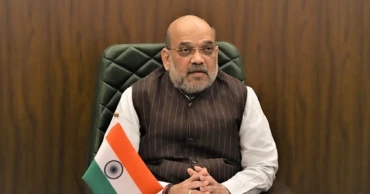
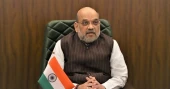
Bangladesh strongly protests ‘highly deplorable’ remarks by India’s Home Minister Amit Shah
Bangladesh’s Ministry of Foreign Affairs has lodged a strong protest against the "highly deplorable" remarks made by India’s Union Home Minister Amit Shah about Bangladeshi nationals during his recent visit to the state of Jharkhand.
Through the protest note handed over on Monday to the Deputy High Commissioner of India in Dhaka, the Foreign Ministry conveyed its serious reservation, deep sense of hurt and extreme displeasure, and called upon the Government of India to advise the political leaders to refrain from making such objectionable and unacceptable remarks.
The Foreign Ministry also emphasized that such remarks, coming from responsible positions against the nationals of a neighbouring country, undermine the spirit of mutual respect and understanding between two friendly countries.
1 year ago
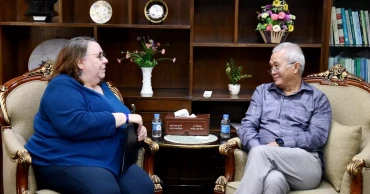
'US stands in support of indigenous communities and all Bangladeshis’: Embassy
The U.S. Embassy in Dhaka has released a statement in support of a just and inclusive society that defends the voices and rights of its most vulnerable populations.
“We stand in support of the indigenous communities and all Bangladeshis, recognizing their rich cultural heritage and invaluable contributions to the nation’s identity,” the embassy noted in a statement after a meeting between U.S. Embassy Charge d'Affaires Helen LaFave and CHT Adviser Supradip Chakma.
Their rights must be respected and upheld, ensuring they are free from discrimination, marginalization, and violence, the Embassy added.
1 year ago
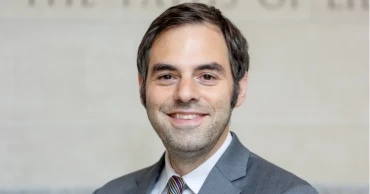
Vibes with US may change if Trump returns to presidency: Kugelman
With Chief Adviser Muhammad Yunus embarking on his first visit to the United States as head of the Bangladesh government to attend the 79th UNGA, where he will have a bilateral meeting with President Joe Biden on the sidelines, UNB spoke to Michael Kugelman (MK), director of the South Asia Institute at the Wilson Centre, about the gamut of relations between the two countries:
UNB: Are we witnessing a substantive reset in relations between Dhaka and Washington?
MK: It’s less of a reset and more an assertion of continuity. We’re seeing an emphasis on economic and development cooperation. This is a long standing and productive aspect of the relationship that’s been overlooked in recent years amid all the tensions over democracy and elections.
The U.S. is a top trade partner of Bangladesh, a prime source of FDI, and a major donor on issues ranging from public health to Rohingya refugees. It appears, at a moment when Bangladesh is facing a range of challenges on many fronts, that the U.S. is keen to signal that it wants to help Bangladesh move forward. This isn’t to suggest other key components of the relationship, like strategic cooperation and indeed human rights, are being jettisoned. But in the immediate term they will likely take a back seat.
UNB: Does the makeup of the interim government, in particular it being led by Prof. Yunus, make a difference?
MK: Dr. Yunus is a stabilising factor in US-Bangladesh relations, because he's a leader the US is comfortable working with and he is keen to engage with Washington. But Yunus factor aside, the relationship is actually following a track that began earlier this year, after Bangladesh's election, when the Biden administration essentially signaled that it's ready for a fresh start with the relationship. Yunus's arrival in power will ensure that an earlier reset in bilateral relations continues to play out.
UNB: We know how the U.S. and particularly the Biden administration, had been increasingly calling out the Sheikh Hasina regime to the extent it could since 2021 on its undemocratic ways. Would you say her fate in the end vindicated the U.S. position to some extent?
MK: Certainly, Hasina's increasingly autocratic tactics—flagged publicly by Washington for several years—were in the end what resulted in her ouster. But the US was not trying to draw links between concerns about democracy and free and fair elections and Hasina's political survivability. It was more that the US chose to apply, with great vigour, its values-based foreign policy in Bangladesh—one that sought to encourage a free and fair election that, by Washington's own admission, did not materialise.
UNB: There is a school of thought that some of the warmth and camaraderie witnessed during the recent U.S. delegation's visit may no longer be there if the Democrats lose the White House in November. How much credence would you lend that?
MK: I'm not sure I'd say there were unusual displays of warmth and camaraderie during the visit. It appeared to be what you'd expect for a standard series of cordial meetings. But the wider question is worth contemplating: Would the US relationship with Yunus-led Bangladesh—and the vibes accompanying it—change if Trump returns to the presidency? Indeed I think it would, albeit not dramatically.
Yunus has been critical of Trump in the past, and if Trump hasn't forgotten that, there could be some effects on the relationship. Additionally, several of the areas that have become priorities for cooperation in the Biden era—especially climate change collaborations and development and humanitarian assistance—may receive less enthusiasm from a Trump administration.
But on other fronts I would expect continuity. If Trump believes the US gets a lot out of its robust trade relationship with Bangladesh, then that would remain intact. He would also, like the Biden administration—whether rightly or wrongly—look at Bangladesh through a great power competition lens, and try to disincentivize Dhaka from moving too close to Beijing.
UNB: How was the movement that eventually toppled the AL government on Aug. 5 viewed by South Asia-watchers in the U.S.? When did you get a sense that something serious was going on here?
MK: The pivotal moment during the movement was when the full scale of the repressive response to the protests came into sharp relief. Once Hasina's security forces began using egregious levels of force—much more than during previous crackdowns against peaceful dissent—it became clear that her days in power would be numbered.
At that point here, attention turned to the "what next" questions. How much longer would she hold on to power? Who would replace her? Would stability be restored?
There's a lot less uncertainty now than there was in August. But I think for many of us closely watching developments from DC, there continues to be interest—and some concern—about what's coming: What will be the fate of the reform plans? What will that mean for election prospects? And how will the government deal with so many immediate challenges, like the economy and—let's be honest about this—the increased political space afforded to hardline Islamist forces? I know that for many in Bangladesh there is a great sense of hope and optimism, but also that many are concerned—about political uncertainty, the economy, security threats, and the like. It will fall to Yunus and his advisors to manage these complex public sentiments.
UNB: I'm sure you've come across the view, largely propagated by the Indian media, but finding currency in Russia and China too, that the U.S. had pulled off one of its so-called “colour revolutions” here. What do you say to that?
MK: I've shouted myself hoarse from many rooftops for many weeks insisting that this allegation is false. But I do recognize that those that believe this conspiracy theory have their minds made up and won't be dissuaded. I also recognize that China and Russia have a strategic interest in endorsing narratives that make the US look bad. And I recognize as well that there are those that will simply assume the worst about US policy intentions, given past US policies in Bangladesh and the region.
But let's be clear: This movement was driven by purely internal factors, above all the Hasina government's egregious uses of force to crack down on peaceful protestors, which was the straw that broke the camel's back for a public already harbouring so much pent-up anger against years of repression and growing economic stress. To ascribe an external hand to these purely internally driven developments would be to deny not only the truth, but also agency to masses of young people.
Yes, the mass movement brought to power Yunus, a close friend of Washington. But it also led to a new government that may be inclined to push closer to China, and keep some distance from India. And it has created more space for hardline Islamists to take on more political influence (such influence likely contributed to the recent decision to release from prison an Al-Qaeda-inspired terrorist leader). These outcomes don't serve US interests, and in fact they bring the US into alignment with India. That's telling, given all the recent commentary about the US and India not seeing eye to eye in Bangladesh.
UNB: At the moment, as you probably know, handing the country back to elected representatives through elections has taken a back seat. How comfortable do you think Washington is with that?
MK: My sense is Washington understands that the interim government needs time to make progress on the reform front prior to elections. And I think it understands Dhaka's view that rushing to elections without institutional reforms would not stabilise Bangladesh, and that ironically restoring democracy would become more difficult.
That said, if a year or two goes by, progress is lagging on reforms, and the economy isn't stabilising, that would make the public increasingly impatient, centre attention on the interim government's lack of a mandate, and possibly prompt the US to change its position and to encourage elections in the interest of democracy and stability.
UNB: Finally as a South Asia expert, how do you see the strategic realignment taking place in the region as a result of Aug.5 playing out? What does Beijing make of it all, and how would you expect it to react?
MK: I wouldn't overstate the notion of a strategic realignment. The biggest change is that India has lost a close friend in Hasina and must make some tough decisions about how to rebuild relations with Dhaka. But otherwise, I see plenty of continuity. There is multi-partisan support in Bangladesh—as there is in many South Asian capitals—in favour of good relations with Beijing, mainly due to commercial interests. The Yunus government will want to work with China. The same goes for his approach to Russia. While Yunus is close to Washington, I don't think that means he will try to distance Dhaka from Beijing and Moscow. They provide assistance in key sectors—infrastructure, energy—that's especially important now, at a moment of economic fragility.
I anticipate that the Yunus government, while it may be willing to move closer to Beijing (though let's remember Hasina moved closer to Beijing too!) and won't worry about upsetting India if it does so, will maintain the same general nonalignment position that previous governments have. In an era of intense great power competition, a familiar hedging policy is likely, with efforts to balance ties with the US, China, Russia, and—if New Delhi is receptive to it—India.
1 year ago
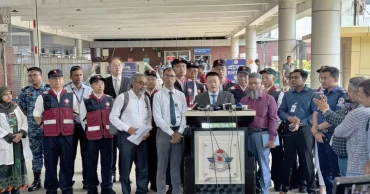
China keen to send more emergency medical teams to treat patients on-site in Bangladesh
China has said that with its visiting medical team, they will help Bangladesh assess the injuries and provide emergency humanitarian medical assistance based on needs, including sending more emergency medical teams to treat patients on-site and providing necessary medical supplies.
This is the first emergency medical team from China to Bangladesh since the formation of the interim government, which highlights two countries' excellent bilateral relations and the deep bond of mutual support between the two peoples, said Chinese Ambassador to Bangladesh Yao Wen.
At the invitation of the interim government, the Chinese National Emergency Medical Team arrived at Dhaka Hazrat Shahjalal International Airport on September 22.
Envoy Yao Wen and Additional Director General of Directorate General of Health ServicesSheikh Sayidul Haque were present to receive the team.
Yao said many civilians have suffered during the recent uprising in Bangladesh.
As the Comprehensive Strategic Cooperative Partner, he said, the Chinese government expresses its condolences to the victims and sympathy to the families of the deceased and the injured.
"China and Bangladesh have been supporting each other through thick and thin, and the Chinese people deeply empathize with the hardships faced by the Bangladeshi people," said Ambassador Yao.
1 year ago
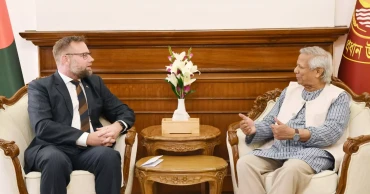
Denmark offers support to victims of students-led mass uprising
Danish Ambassador to Bangladesh Christian Brix Møller has expressed condolences for the victims of the July-August mass uprising and proceeded to offer Danish support to the survivors, particularly rehabilitation of victims of torture as well as support to several key areas of the interim government´s reform agenda.
This includes facilitating institutional reform in close collaboration with the National Human Rights Commission, universities, think tanks and law ministry.
The Ambassador paid a courtesy call on Chief Adviser Prof Muhammad Yunus on Sunday.
The Ambassador congratulated the Chief Adviser on taking on the leadership of the interim government of Bangladesh during this pivotal period for the country.
He also handed over the original congratulatory and best-wishes letter from the Danish Prime Minister, Mette Frederiksen to the Chief Adviser.
Denmark is committed to enable good governance and strengthen capacity of state and non-state actors, and has also decided in view of recent development in Bangladesh, to immediately allocate 1 million USD in support to the Centre for Policy Dialogue’s (CPD) work on strengthening good economic governance in Bangladesh and escaping the middle income trap.
In addition, the Danish Ambassador reiterated Denmark´s interest in enhancing trade and investment with Bangladesh, and building stronger economic diplomacy links between the two nations.
In this connection, he mentioned Denmark’s continued interest in high quality investments in Bangladesh, notably large specialised green investment projects such as the Laldia Container Terminal through a 400+ million USD investment by Danish shipping and ports giant Maersk/APM Terminals; 1.3 billion USD investment in offshore wind energy project off the coast of the Bay of Bengal by Copenhagen Infrastructure Partners/Copenhagen Offshore Partners, and app. 300 million USD financing for the Saidabad Water Treatment Plant in Dhaka.
The Ambassador voiced continued Danish commitment to the country’s stake in the production of fertilizer on a public-private partnership basis in Karnaphuli Fertilizer Company Limited (KAFCO) while also exploring new collaboration opportunities.
This includes business to business technology transfer in pharmaceuticals, where Denmark is world-leading, in order to nurture new internationally competitive industries in Bangladesh.
The Ambassador highlighted a growing and strengthening relationship between Denmark and Bangladesh, and shared commitments to work towards a greener transition in shipping, energy, water, labour market, and food/agriculture, as well as advancing the climate agenda.
Furthermore, the Ambassador pointed to the potential for even closer dialogue between Denmark and Bangladesh on labour sector reform during Denmark's membership of the ILO Governing Body for the period of 2024-2027 and on furthering dialogue on international solutions to the Rohingya crisis in light of Denmark’s membership of the UN Security Council 2025-2026.
1 year ago
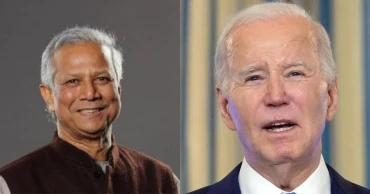
New Chapter in Dhaka-Washington ties: Biden and Yunus to hold talks in NY on Sept 24
Chief Adviser Prof Muhammad Yunus is scheduled to hold a meeting with US President Joseph R. Biden on Tuesday here on the sidelines of the United Nations General Assembly (UNGA) which reflects growing relations between the two countries.
This is going to be a one-to-one meeting, a senior official at the Ministry of Foreign Affairs told UNB, confirming the meeting in New York.
It is very significant as no US president has held a bilateral meeting with any Bangladesh head of government in the past decades in New York, the official added.
Biden will travel to New York City to participate in the 79th session of the UNGA on September 23-25.
In addition to addressing the General Assembly on September 24, President Biden will meet with world leaders to discuss cooperation in tackling threats to international peace and security, advancing global prosperity, and protecting human rights, said Press Secretary Karine Jean-Pierre on President Biden’s travel to New York City.
Chief Adviser Prof Yunus is scheduled to arrive here on Monday night (NY Time) to attend the 79th United Nations General Assembly (UNGA) with a packed schedule of meetings with global leaders on the sidelines.
Permanent Representative of Bangladesh to the UN Ambassador Muhammad Abdul Muhith and CDA of The Embassy of Bangladesh in Washington, D.C. Salahuddin Mahmud will receive him at JFK International Airport upon his arrival by a commercial flight.
The chief adviser will address the General Debate of the UNGA on September 27.
The 2006 Nobel Peace Prize laureate already described the challenges facing the interim government to the US delegation in Dhaka recently, saying his administration has moved quickly to "reset, reform, and restart" the economy, initiate reforms in financial sectors, and fix institutions such as the judiciary and police.
The chief adviser sought the assistance when a high-powered US delegation met him at the state guesthouse Jamuna.
The US delegation affirmed their dedication to fostering inclusive economic growth, institution building, and development to benefit the people of Bangladesh.
"As Bangladesh looks to chart a more equitable and inclusive future, the US stands ready to support those efforts," said the US side, after a meeting held at state guesthouse Jamuna.
Prof Yunus has a series of high-profile meetings lined up on the sidelines of the UNGA.
According to Foreign Affairs Adviser Md Touhid Hossain, the chief adviser will meet with leaders including the prime ministers of the Netherlands, Pakistan, and Nepal, as well as the President of the European Union, the US Secretary of State, the UN Secretary-General, the UN Human Rights chief, the World Bank President, and the USAID Administrator.
The foreign adviser said many meeting decisions are made at the last minute during this time.
“New meetings may be added to that consideration; again, due to lack of time, any meeting may be omitted.”
Prof Yunus is also likely to have meetings with the President of Italy and the Crown Prince of Kuwait.
On September 24, Prof Yunus will attend a welcome reception to be hosted by UN Secretary General António Guterres for the Heads of Delegation.
He will attend the inaugural session of the 79th UNGA. Foreign Affairs Adviser Md Touhid Hossain, Energy Adviser Muhammad Fouzul Kabir Khan, Permanent Representative of Bangladesh to the UN Ambassador Muhammad Abdul Muhith, Principal Coordinator (SDGs Affairs) Lamiya Morshed, Additional Foreign Secretary Riaz Hamidullah will accompany the chief adviser.
Yunus will also attend a high-level side event on the Rohingya crisis.
Foreign Minister of China Wang Yi is scheduled to call on the chief adviser.
The chief adviser will also attend a high-level side event – ‘Meet the Friends of Bangladesh’.
There will be a reception on the occasion of the 50th anniversary of Bangladesh’s membership in the United Nations which will be hosted by Professor Muhammad Yunus.
The foreign adviser said he will have a bilateral meeting with Indian External Affairs Minister S Jaishankar on the sidelines.
1 year ago

Bangladesh eyes major projects with South Korean financing, Finance Adviser says
Finance Adviser Dr. Salehuddin Ahmed said on Sunday that the interim government is exploring large-scale projects with financing from South Korea, a key development partner for Bangladesh.
The statement came after a meeting with Korean Ambassador to Bangladesh Park Young Sik at the Finance Ministry in the Secretariat.
“Korea is one of our important development partners, and their quality and standard of work are very high,” Dr. Salehuddin noted.
He highlighted the favorable terms of Korean loans, which carry a 0.5% interest rate and a repayment period of up to 40 years, describing them as “one of the softest loans” available to Bangladesh.
Dr. Salehuddin also praised Korea’s commitment to transparency and competitiveness, noting that most of their projects are awarded through international bidding processes.
Later in the day, Dr. Salehuddin met with Dr. Valantine Achancho, Country Director of the International Fund for Agricultural Development (IFAD) in Bangladesh. He praised IFAD's long-standing contributions to agricultural and microfinance projects in the country.
“IFAD has many ongoing projects in Bangladesh and will introduce more in the future,” Dr. Salehuddin said, adding that their discussions focused on post-flood rehabilitation efforts.
“IFAD has assured us of their support for necessary rehabilitation after the recent floods,” he added.
1 year ago