Foreign-Affairs

Chief Adviser urges media to fearlessly hold interim government accountable
Chief Adviser Prof Muhammad Yunus on Tuesday told top editors of the country that he wants the media to function with full freedom, and write without any hesitation if the interim government makes any mistake.
The Daily Star Editor Mahfuz Anam and Chief Adviser’s Press Secretary Shafiqul Alam said this to reporters in separate briefings at the state guest house Jamuna and Foreign Service Academy respectively.
Deputy Press Secretaries Mohammad Abul Kalam Azad Majumder and Apurba Jahangir were also present at the second briefing held at the Foreign Service Academy.
Chief Adviser Yunus will attend 79th UNGA this month, Foreign Affairs Adviser confirms
“It’s very important. He (Chief Adviser) requested us to write without any hesitation,” Anam said, noting that now they have truly found a media-friendly government. “We are very delighted,” he added.
Quoting the Chief Adviser, his Press Secretary Alam said Prof Yunus reiterated that he believes in media freedom and the interim government wants to see a vibrant media landscape.
During the meeting with the editors, Prof Yunus expressed his firm belief in the power of free press and urged the media to be vocal and transparent in their coverage. The Chief Adviser also stressed the importance of establishing a national consensus and unity through writings.
He encouraged the editors to remain unflinching in pointing out mistakes in all aspects of government operations.
79th UNGA big opportunity for Prof Yunus to share his govt's broader plans: Kugelman
Repressive clauses of the Digital Security Act and Cyber Security Act were also discussed while the editors proposed an immediate suspension of these clauses, particularly those used to suppress journalists, with a commitment to reform them over time.
The editors collectively emphasised the need for constitutional reforms, including the empowerment of local governments.
They also brought up the reformation of autonomous bodies like the Anti-Corruption Commission, Human Rights Commission, and Election Commission to transform them into truly pro-people organisations.
They especially talked about the Election Commission so that elections in the future can be a true reflection of the voters’ will.
There was a suggestion for forming a committee to explore further constitutional reforms, including judicial independence and police reform, to ensure a stronger democratic framework in the country.
Mahfuz Anam said there was discussion on making BTV, BSS and Bangladesh Betar autonomous so that journalists there can work professionally.
Shafiqul Alam said there were suggestions for removal of black laws.
Prothom Alo Editor Matiur Rahman, The New Age Editor Nurul Kabir, Daily Jugantor Editor Saiful Alam, The Business Standard Editor Enam Ahmed, and Kalbela Editor Santosh Sharma, among others, were present at the meeting.
1 year ago

All 57 Bangladeshis earlier convicted by UAE Federal Court pardoned
All 57 Bangladeshis who were earlier convicted by the Federal Court of the United Arab Emirates (UAE) have been pardoned today by Sheikh Mohamed bin Zayed Al Nahyan, president of the UAE.
Chief Adviser Professor Muhammad Yunus disclosed this at a meeting with editors of media outlets.
“All are pardoned. We are very happy,” The Daily Star Editor Mahfuz Anam told reporters following the meeting, giving Prof Yunus full credit for his personal initiative.
Earlier on August 28, Prof Yunus made a request to the UAE President regarding this issue.
“It was a big challenge for us,” Chief Adviser’s Press Secretary Shafiqul Alam told reporters on Tuesday, expressing the government’s satisfaction over the achievement.
He said they are in touch with the Bangladesh Embassy in UAE and concerned departments regarding the next stage of the process.
The Ministry of Foreign Affairs in Dhaka is also following up the matter.
In line with the top directive, Chancellor Dr Hamad Al Shamsi, UAE Attorney General, has issued an order to halt the implementation of the sentences and commence procedures to send them back.
The Attorney General also called on all residents of the UAE to respect the country’s laws, stressing that the right to express opinions is protected by the state and its legal framework, according to Gulf News.
He highlighted that the state provides lawful means for expressing views, ensuring this right does not turn into actions that could harm the interests of the nation and its people.
In July, a court in the United Arab Emirates (UAE) jailed 57 Bangladeshi nationals for holding protests in the Gulf country against the previous government in Bangladesh.
Three Bangladeshis were sentenced to life, 53 others to 10 years in prison, and one to 11 years for “gathering and inciting riots” during protests.
1 year ago
Saima Wazed calls for accelerating safety measures to reduce road traffic deaths
The World Health Organization has called on countries in the WHO South-East Asia Region to accelerate measures to reduce road traffic deaths, a leading cause of mortality among young people aged 15-29.
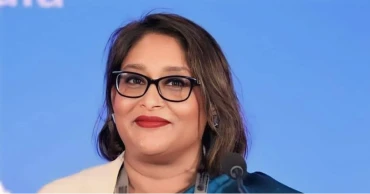
“Vulnerable road users, including pedestrians, bicyclists, and two or three-wheelers constitute 66% of all reported road traffic deaths in our Region,” said Saima Wazed, Regional Director, WHO South-East Asia, in her address at the 15th World Conference on Injury Prevention and Safety Promotion (Safety 2024) which began in New Delhi on Monday.
She emphasised that their roads and road networks need to be designed prioritising those most at risk: children and adolescents, people with disabilities, pedestrians, and other vulnerable groups.
The WHO South-East Asia Region accounted for 330 223 of the 1.19 million estimated global road traffic deaths in 2021, representing 28% of the global burden.
With 70% of the global population projected to live in urban areas by 2030, demand for public transport will surge, according to WHO.
The WHO South-East Asia Region, amid rapid urbanisation, faces shared challenges: a high prevalence of motorized two and three-wheelers, inadequate traffic injury data, poor pedestrian and cyclist infrastructure, and limited emergency services.
Unlike High-Income Countries, where road safety measures often focus on car occupants, Low- and Middle-Income Countries need to prioritise the safety of vulnerable road users, such as pedestrians, cyclists, and riders of two and three-wheelers who are disproportionately at higher risk.
Strengthening trauma and emergency care systems, enhancing road safety data, strong leadership and promoting collaboration among all stakeholders are essential for improving road safety.
“I am a great believer in collaborations and partnerships - and expanding these to non-traditional stakeholders,” said the regional director.
“This can be our moment to rethink and redo mobility for healthy cities. A holistic approach requires a cross-cutting, multi-sectoral approach, requiring collaboration with local governments, urban planners, traffic policing, law enforcement, and others,” she added.
Road safety, a public health and development priority, is crucial to achieving the UN Sustainable Development Goals (SDGs).
In September 2020, the UN General Assembly launched the Decade of Action for Road Safety 2021-2030 which aims to reduce road traffic deaths and injuries by at least 50% by 2030.
While the WHO South-East Asia Region saw a 2% decrease in road fatalities in 2021, contributing to a global 5% reduction, further efforts are needed to meet global targets.
At the World Conference, the Regional Director launched the ‘WHO South-East Asia Regional Status Report on Road Safety: Towards Safer and Sustainable Mobility.’
“This report outlines Road Traffic Injury patterns in our countries and highlights best practices and country-specific interventions. It is both timely and essential for assessing our current position, and for guiding necessary actions to achieve global targets,” she stated.
Addressing these challenges and implementing recommended strategies will be key to advancing road safety and reaching the 2030 targets.
“Ensuring the safety of vulnerable groups enhances the safety of everyone in society. For example, when we design roads and pavements, buildings, and other physical infrastructure - if we make these accessible for persons with disabilities, we would have made them safer for everyone to use,” said the regional director.
1 year ago

Bangladesh will be on track of "normalcy, stability, unity, prosperity" soon: Chinese Envoy
Chinese Ambassador to Bangladesh Yao Wen has said Bangladesh will soon get back on the track of "normalcy, stability, unity, development and prosperity" through joint efforts by all stakeholders under the Prof Muhammad Yunus-led interim government.
Till this course, he said, China will extend whatever support requested by Bangladesh.
"We see enormous potential for our cooperation. We see lot of cooperation work that we can undertake together," Ambassador Yao told reporters after his meeting with Bangladesh Jamaat-e-Islami Ameer Shafiqur Rahman on Monday.
The envoy said China will not intervene into internal affairs of any country and whatever happened inside Bangladesh will not affect Dhaka-Beijing relations.
"It is an internal affair of Bangladesh. We will respect the decision made by the people of Bangladesh," Ambassador Yao said when a journalist wanted to know his opinion on the interim government's reforms agenda and time frame.
He said China is supportive of Bangladesh, its people and the interim government.
"It is a very important day," said the envoy, adding that he had a very good, constructive and positive discussion with the Jamaat chief.
Yao said Jamaat used to have very good relations with their Chinese counterpart and the embassy in Dhaka. "But it has been affected over the last 13 years," he added.
"Now, we believe it is time to restart our dialogue and cooperation. We discussed our future cooperation between parties and between the two countries," he said.
The ambassador said Jamaat is supportive of China-Bangladesh relations and wished to see more cooperation and more Chinese investment in Bangladesh.
On the Rohingya issue, the ambassador said they are committed to Rohingya repatriation and China has been playing its role consistently.
He said they will work together with all stakeholders in Bangladesh including Jamaat for early repatriation of the Rohingyas to Myanmar.
The ambassador said Bangladesh is at historical crossroads at this moment and China is committed to deepening exchanges and cooperation with the interim government, all political parties and people of all walks of life in Bangladesh to consolidate the traditional friendship between the two countries.
He said China is also committed to promote the continuous development of the Bangladesh-China comprehensive strategic cooperative partnership, so as to bring more benefit to the two countries and the two peoples.
The two sides had an in-depth exchange of views on China-Bangladesh relations, inter-party exchanges and cooperation and other issues of common concern, said the Chinese Embassy in Dhaka.
"It's a very good meeting and we are looking forward to more cooperation with Jamaat," the ambassador said. Shafiqur Rahman appreciated China's great contribution to the economic and social development of Bangladesh.
He reiterated Jamaat’s firm support for the One-China Principle and is willing to strengthen cooperation with the Chinese side.
1 year ago

High-level US delegation to visit Dhaka soon
A senior-level US delegation will soon visit Bangladesh soon to discuss ways with the interim government to take forward the relations between the two countries in a changed political scenario.
Foreign Affairs Adviser Md Touhid Hossain confirmed the visit and said the visit will take place within a few days.
Any visit by the US delegation is always important, he told reporters at the Ministry of Foreign Affairs on Tuesday. The two countries are in discussion to finalise things regarding the visit.
This is going to be the first such visit from the US since the formation of the interim government led by Chief Adviser Professor Muhammad Yunus on August 8.
The delegation is likely to be in Dhaka before Prof Yunus's departure for New York to attend the 79th UN General Assembly, a diplomatic source told UNB.
US Assistant Secretary of State for the Bureau of South and Central Asian Affairs Donald Lu, Deputy Assistant Secretary of Defence for South and Southeast Asia Lindsey W. Ford and US Deputy Under Secretary/Assistant Secretary for International Finance Brent Neiman may join the US delegation.
Responding to a question, Hossain said Lu will stay relatively for a shorter period compared to other team members.
In this role, Ford serves as the principal adviser to senior leadership within the Department of Defence for all policy matters pertaining to the development and implementation of defence strategies and plans for the region.
Her area of responsibility includes bilateral security relations with India and all other South Asian countries, excepting Afghanistan; and with the nations of Southeast Asia.
Neiman serves as the Deputy Under Secretary for International Finance at the U.S Department of the Treasury.
The Foreign Affairs Adviser said they will discuss issues which are achievable and stressed that US visa policy will not affect the relations between the two countries.
The delegation will call on Chief Adviser Professor Yunus, Foreign Affairs Adviser Md Touhid Hossain, and Finance Adviser Dr Salehuddin Ahmed apart from their other engagements.
1 year ago
The Republic of Korea provides IOM with USD 2 Million in assistance to Vulnerable Host Communities in Cox’s Bazar
The Republic of Korea has provided the International Organization for Migration (IOM) with USD two million in assistance to strengthen protection and disaster resilience of vulnerable host communities in Cox's Bazar.
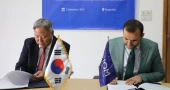
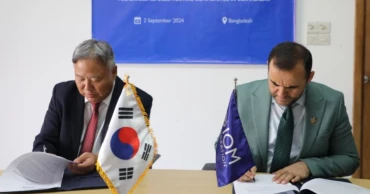
The one-year project was formalized by H.E. Mr. Park Young-sik, Ambassador of Korea to Bangladesh, and Mr. Abdusattor Esoev, Chief of Mission, IOM Bangladesh on Monday (2 September) afternoon.
The project aims to address the existing protection gaps for victims of trafficking (VoTs), survivors of gender-based violence (GBV) and other at-risk individuals in the host communities. It will provide comprehensive and integrated protection and prevention services while also enhancing the climate resilience of the host community by improving disaster risk reduction (DRR) measures and emergency response capabilities.
Ambassador Park Young-sik expressed his hope that the support from the Government of Korea will significantly improve the living conditions of the host communities through the implementation of the project.
“The contribution of USD 2 million from the Republic of Korea will support humanitarian activities for host communities and it demonstrates our commitment to providing humanitarian assistance for host communities as well as the Rohingya refugees in Bangladesh” said Ambassador Park Young-sik.
Throughout the project implementation, IOM will coordinate the interventions with the Inter Sector Coordination Group (ISCG), the Office of the Refugee Relief and Repatriation Commissioner (RRRC) and the District Administration as well as national and local authorities focused on the host community.
“Korea has been a vital partner for IOM in the Rohingya Refugee Response, assisting in addressing the significant challenges faced by both Rohingya refugees and host communities in Cox’s Bazar,” said Mr. Abdusattor Esoev, Chief of Mission, IOM Bangladesh.
“As humanitarian funding for the response continues to decline, we are deeply grateful for the unwavering support from the people and Government of Korea, who have been steadfast in backing IOM’s interventions since the beginning of this crisis.”
Since the beginning of the emergency in August 2017, Korea has been a steady supporter of the Rohingya refugee response in Bangladesh, contributing USD 10 million to IOM and other UN agencies as humanitarian aid in Bangladesh this year.
1 year ago

Indian High Commissioner meets with Home Affairs Adviser
Indian High Commissioner to Bangladesh, Pranay Verma, met with Home Affairs Adviser Lt. Gen. Md. Jahangir Alam Chowdhury (Retd.) this afternoon at the Home Affairs Adviser’s office in Bangladesh Secretariat, Dhaka.
During the meeting, they discussed various mutual interests, including cooperation between the police forces of both countries, border security, safety of Indian nationals in Bangladesh, and the exchange of information on flood warnings and forecasts.
Welcoming the High Commissioner, the Adviser mentioned that reforms are underway in the police and other forces under the Ministry of Home Affairs as part of ongoing efforts. However, these reforms are still in the preliminary stages.
Both sides agreed on enhancing border security to reduce border-related incidents to the lowest possible level, with an aim to bring it down to zero. The High Commissioner sought the Adviser’s cooperation in ensuring the safety of Indian students and other nationals residing in Bangladesh. The Adviser assured him of their full protection.
The Adviser emphasized that there is no threat to the security of Indian nationals in Bangladesh and the government will ensure their complete safety. He also highlighted the importance of collaboration between the two countries in flood warning and forecasting, to which the High Commissioner responded by promising to provide Bangladesh with the necessary data and support.
The High Commissioner also noted that Indian visa services have been resumed on a limited scale at Indian visa centers in Bangladesh, primarily for urgent medical needs and for students intending to pursue their studies in India.
The meeting was attended by Indian Embassy officials, including Deputy High Commissioner Pawan Kumar Tulsidas Bade and First Secretary (Political) Gokul V. K., along with senior officials from the Ministry of Home Affairs.
1 year ago

Bangladeshis can now travel to Pakistan without paying visa fee: High Commissioner
Pakistan has announced a new visa policy allowing citizens from 126 countries, including Bangladesh, to travel to Pakistan without a visa fee, to enhance diplomatic and people-to-people ties.
Pakistan's High Commissioner to Bangladesh, Syed Ahmad Maroof, informed about this development to the Home Affairs Adviser, Lt Gen (Retd) Md. Jahangir Alam Chowdhury during a meeting held today at the Secretariat, according to a press release.
During the meeting, the high commissioner highlighted that the new visa policy, which was introduced two weeks ago, aims to simplify travel procedures and promote tourism and business between Pakistan and the included countries.
Bangladesh, being one of the 126 nations on the list, stands to benefit from this initiative.
Maroof emphasized that this policy is part of Pakistan's broader efforts to strengthen bilateral relations and enhance cooperation with Bangladesh. He also expressed optimism that the travel arrangement without any visa fee would lead to increased interactions in various sectors, including trade, education, and cultural exchanges.
In addition to the visa policy, the meeting also covered discussions on resuming direct flights between the two countries, which had been suspended since 2018. The envoy stressed the importance of reinstating these flights to further facilitate travel and business engagements between Pakistan and Bangladesh.
The new visa policy is expected to be a major step forward in improving bilateral relations, which have seen a period of relative stagnation over the past 15 years. Both sides agreed on the need to overcome past challenges and work towards a more collaborative future.
Senior officials from both countries, including Kamran Dhangal, Counselor of the Pakistan High Commission in Dhaka, and home ministry officials were present at the time.
1 year ago
Toby Cadman in town; meets CA with advice on govt's legal imperatives
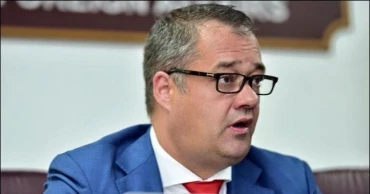
Toby Cadman, an international human rights lawyer who was once barred from entering Bangladesh, on Monday met Chief Adviser Professor Muhammad Yunus to discuss the need to establish a domestic tribunal with international support to try people accused of committing crimes against humanity during the student-led revolution.
Cadman, extradition specialist and the joint head of the London-based law firm The Guernica 37, said Bangladesh quickly needs to establish an effective domestic legal framework for truth, justice, and accountability that was properly supported by the international community and endorsed by the people of Bangladesh.
In presenting a number of proposals to the Chief Adviser, he said they were ready to support Bangladesh in an effort to develop a framework for the extradition of persons involved in crimes against humanity, economic crimes, and political corruption who fled the country with their ill-gotten assets.
The Chief Adviser heard his proposals and asked him to make a written submission. He said his government is committed to holding internationally acceptable trials of the people who ordered and carried out the massacre during the student-led revolution.
Prof Yunus said one of the top priorities of the Interim Government is to bring back billions of dollars laundered during Sheikh Hasina's 15-year-long autocratic regime.
1 year ago

Rohingya repatriation: Prof Yunus seeks UNHCR's support
Interim Government Chief Adviser Prof Muhammad Yunus has sought United Nations High Commissioner for Refugees Filippo Grandi’s support for the “dignified and voluntary” return of more than one million Rohingya people, who live in camps in Bangladesh, to their homeland in Myanmar.
Prof Yunus to attend UNGA with 'small, functional' delegation: Foreign Adviser
High Commissioner Grandi had a conversation with Chief Adviser Prof Yunus over the phone on Monday to congratulate him on his assumption of the leadership of the Interim Government of Bangladesh.
During the call, the UNHCR chief praised the Chief Adviser, saying he has taken up "an incredible task" to rebuild Bangladesh, said the Chief Adviser’s press wing.
The UNHCR chief requested the Chief Adviser to attend a meeting on the Rohingya crisis on the sidelines of the upcoming UN General Assembly meeting in New York.
Grandi informed the Chief Adviser that he plans to visit Bangladesh in October this year.
Govt tasked with carrying out deep reforms, polls after reasonable time: Prof Yunus tells US diplomat
The two leaders discussed the Rohingya issue, including about thousands of people who have been displaced by the ongoing conflict in Myanmar's Rakhine state.
Prof Yunus also sought assistance from the UN refugee agency for building a better future for Rohingya children who are growing up inside the Bangladesh camps.
On August 27, UNHCR welcomed the renewed commitment to the refugees, made by Prof Yunus and they call for continued solidarity from the international community through consistent financial support so that Rohingya refugees can eventually be repatriated to Myanmar, with safety, dignity and full rights.
In 2024, humanitarian agencies appealed for $852 million to assist some 1.35 million people, including Rohingya refugees and Bangladeshis in surrounding communities. This appeal remains inadequately funded, according to UNHCR.
Seven years ago, on 25 August 2017, some 700,000 Rohingya men, women and children were forced to flee Myanmar and seek protection in Bangladesh.
Prof Yunus starts his office from Chief Adviser’s Office
The generous support from Bangladesh and the international community has been critical in meeting the refugees’ most basic needs and providing protection, UNHCR said.
1 year ago