Foreign-Affairs
Australia to donate AUD 1 million for flood victims in Bangladesh: Envoy
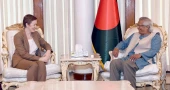
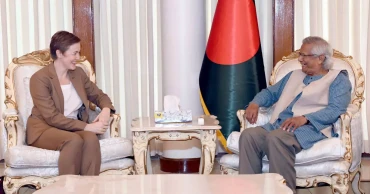
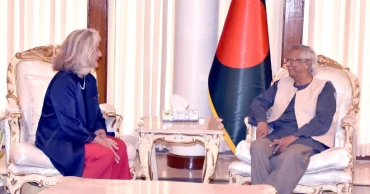
Acting Australian High Commissioner to Bangladesh Nardia Simpson on Thursday said Australia would donate AUD 1 million to a charity for the flood-affected people of Bangladesh.
She conveyed this to Chief Adviser of the Interim Government Prof Muhammad Yunus during a courtesy meeting at the State Guest House Jamuna.
The Chief Adviser thanked the country for the gesture and sought investment from Australia and increased trade and other assistance, according to the Chief Adviser's press wing.
The support – AUD 1 million or Tk 70 million - will be provided through their strategic partner Brac for emergency response to 35,000 people.
During the meeting, she condoled the loss of lives during the student-led revolution and said that Australia was committed to working with the interim Bangladesh government.
They touched upon a wide range of issues, including the security in Bay Bengal, the Rohingya crisis, human rights, economic corporations, tax tariffs, and minority issues.
She said Australia was now promoting peace-building, cultural, and leadership issues in the Rohingya camp.
1 year ago
Prof Yunus seeks Switzerland’s support to bring back money stolen from Bangladesh
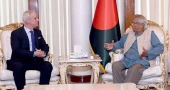
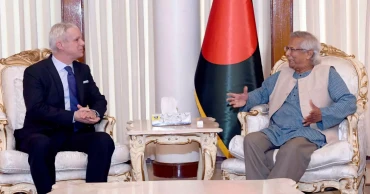
Interim government Chief Adviser Professor Muhammad Yunus on Thursday sought cooperation from Switzerland to bring back money stolen from Bangladesh.
Professor Muhammad Yunus raised the issue when Ambassador of Switzerland Reto Renggli paid a courtesy call to him at his office at State Guest House Jamuna.
"Is there any way to return the money?" Professor Yunus asked him, adding that a lot of stolen money has been transferred abroad. "It is important," he said.
Regarding mutual legal assistance, the Ambassador said that Switzerland is always willing to cooperate in compliance with globally recognized procedures and standards and in line with proposals it has put forward in recent years.
“It was a pleasure to learn from him about his government’s priorities. In view of the opportunities and challenges ahead, Switzerland will support the interim government in meeting the expectations of the people of Bangladesh,” said the Ambassador.
During the meeting, Ambassador Renggli presented Dr Yunus with a copy of a letter addressed to him by the President of Switzerland.
The envoy said Switzerland would support the interim government and strengthen economic ties with the country.
"I really hope that the business environment will grow further in Bangladesh," said the envoy.
The ambassador expressed concerns about the developments in Myanmar's Rakhine State, which shares a border with Bangladesh, according to the Chief Adviser’s press wing.
Prof Yunus said his government was looking to nurture young Rohingya leadership in the camps.
1 year ago
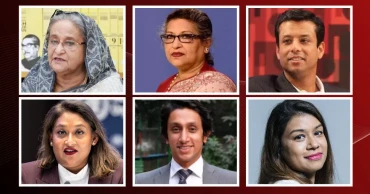
Draft ordinance for repealing security for family of Father of the Nation approved
The Advisory Council meeting on Thursday gave final approval to the draft of 'Security of Family Members of the Father of the Nation (Repeal) Ordinance, 2024', subject to vetting by the Legislative and Parliamentary Affairs Department.
Interim Government Chief Adviser Professor Muhammad Yunus chaired the meeting at state guesthouse Jamuna.
“Our government is an outcome of anti-discrimination movement. It (the security ordinance) was seen as discriminatory,” Adviser on Environment, Forest, and Climate Change Syeda Rizwana Hasan told reporters after the meeting.
The Public Security Division of the Ministry of Home Affairs initiated the issue as they feel there is “no necessity” of such special security.
As per the decision of the previous government, the 'Father of the Nation Security of Family Members Act, 2009' (Act No. 63 of 2009) was enacted and promulgated. Later, a gazette was issued to provide special security and facilities as per the Act.
The law was enacted only to provide state privileges to members of a family which is a clear discrimination, said the Advisory Council.
The current interim government is committed to eradicating all discrimination after the anti-discrimination student uprising, according to the press wing of the Chief Adviser.
It is necessary to take immediate action and issue an ordinance to repeal this Act, the Council viewed.
The family members of Father of the Nation Bangabandhu Sheikh Mujibur Rahman were getting foolproof state security everywhere in the country, including their residences and free utility services.
Meanwhile, the Advisory Council in its meeting also gave final approval to the draft of 'Special Security Force (Amendment) Ordinance, 2024'.
The 'Special Security Force Act, 2021' was formulated to provide security to the President, Prime Minister of the People's Republic of Bangladesh, family members of Father of the Nation Bangabandhu Sheikh Mujibur Rahman.
In view of the popular uprising of the students, an interim government was formed on August 8, 2024, consisting of the Chief Adviser and other advisers.
In such a changing situation, it is necessary to ensure the security of the Chief Adviser under the 'Special Security Force Act, 2021'.
It was also necessary to cancel some of the provisions of the said law with the addition of the security provision of the Chief Adviser to the Interim Government of the People's Republic of Bangladesh. 'Special Security Force Amendment Ordinance 2024' was unanimously approved in the advisory council meeting.
1 year ago
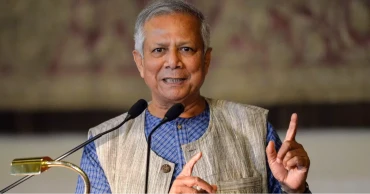
Bangladesh signs international convention on enforced disappearances
Bangladesh on Thursday signed the instrument of accession to the International Convention for the Protection of All Persons from Enforced Disappearance, demonstrating its commitment to investigate each and every case of enforced disappearances.
With this, Bangladesh is now party to all nine core human rights treaties, manifesting people's aspirations to uphold freedom and justice for everyone.
The International Convention for the Protection of All Persons from Enforced Disappearance was adopted in New York on 20 December 2006.
Chief Adviser of the interim government Prof Muhammad Yunus declared that the Bangladesh government having considered the above-mentioned Convention accedes to the same and undertakes faithfully to perform and carry out the stipulations therein contained.
"I have signed this instrument of accession at Dhaka, Bangladesh on 29 August 2024," reads a document signed by Prof Yunus on Thursday.
The chief adviser signed the instrument of accession at the weekly meeting of the council of advisers amid clapping by advisers. “It is a historic occasion,” he said.
The instrument was signed a day before the International Day for the Victims of Enforced Disappearances on August 30.
The interim government earlier this week formed a commission to investigate every case of enforced disappearances by security forces during Sheikh Hasina’s 15-year authoritarian rule.
“It is a big milestone for us, especially for the human rights workers. Around 700 people remain missing due to enforced disappearances. Many of us have faced this and a number of organizations are working in this area including Mayer Dak,” Adviser on Environment, Forest, and Climate Change Syeda Rizwana Hasan told reporters after the meeting.
She said a strong message is conveyed through this signing that there will be no enforced disappearances in the country and another message is that the victims will get a protection.
Bangladesh will take required law reforms in line with the modalities of the convention. The United Nations was repeatedly telling Bangladesh why the convention was signed.
Rizwana said the law enforcement agencies were not given any license to stage enforced disappearances. “They have no legal authority to do that. These practices must stop.”
The issue was earlier discussed in the meeting of the advisory council of the interim government.
Enforced disappearance has frequently been used as a strategy to spread terror within the society.
The United Nations Working Group on Enforced or Involuntary Disappearances has published records of more than 59,000 cases of “enforced disappearances” across 110 countries since 1980. The list includes countries who claim themselves to be the torchbearers of human rights.
1 year ago

Bridging Gaps, Building Solidarity: MSF South Asia’s Health and Humanity Summit elevates women’s voices
The 2nd edition of Medecins Sans Frontieres (MSF)/Doctors Without Borders South Asia’s Health and Humanity Summit, held in Colombo, Sri Lanka on Thursday sparked a crucial dialogue on issues affecting women health, people on the move, and humanitarian space in the South Asian region.
The summit brought together 20 leading experts, thought leaders, academicians, and more than 250 attendees from the social impact arena.
The gathering also called for concrete strategies to break the barriers in regional collaboration and pave the way for a more inclusive future for humanitarian efforts in South Asia, according to a message received from MSF.
For the 2024 edition, discussions centered on themes including ‘Women’s Vulnerabilities in Migration,’ ‘Dynamics of Regional Solidarity,’ ‘Reclaiming Spaces of Civil Society,’ and ‘Structural Inequities in Health and R&D Systems.’
The lineup of speakers featured esteemed figures such as Dr Radhika Coomaraswamy (Diplomat and human rights advocate), Hafsar Tameesuddin (Co-Secretary General, Asia Pacific Refugee Rights Network), Sergio Martín (Chief of Operations, MSF Asia), Dr. Santhushya Fernando (Senior Lecturer, Department of Medical Humanities, Faculty of Medicine, University of Colombo), Heela Najibullah (Peace and Conflict Researcher), Ambassador Shyam Saran (Former Foreign Secretary of India), Dr Ravi Rannan-Eliya (Director, Institute of Health Policy, Sri Lanka), Lina AbiRafeh (Arab-American Women’s Rights Activist), Dr. Unni Krishnan Karunakara (Former MSF International President) and Smriti Singh (Regional Director, Amnesty International, Sri Lanka) among others.
Dr. Farhat Mantoo, Executive Director, MSF South Asia said in today’s landscape, collaborating and using collective wisdom to build meaningful partnerships, based on equity, is essential for impactful humanitarian aid.
MSF is prioritizing locally-led voices to make localized care the standard. The organisation is designing interventions which are based on the best ways in which needs are addressed by those who are affected.
"True transformation goes beyond adaptation—it requires being a catalyst in civil society to drive change and bring prominence to issues that are invisible to many. By fostering dialogue and connecting local actors, we can alter the power imbalance and create a more effective humanitarian approach," Dr Farhat said.
Dr Radhika Coomaraswamy, human rights advocate and former UN Under-Secretary General and Special Representative for Children and Armed Conflict, delivered the keynote address for the summit.
“In a world where gender inequality persists, the fight for protection and reproductive rights is more critical than ever. Women's bodies and choices should not be battlegrounds but sanctuaries of dignity and freedom. We must ensure that gender justice is woven into the fabric of our global humanitarian efforts, empowering women to take control of their own future and safeguarding the rights of the next generation”, she said.
Another pivotal discussion, led by Dr Unni Krishnan Karunakara, Former MSF International President & Senior Fellow, Global Health Justice Partnership, Yale Law School, shed light on the stark realities of global health disparities, particularly in areas ravaged by conflict, disasters, and systemic neglect.
He said, “We face a profound challenge in delivering essential health care to the victimized, marginalized and forgotten. The ability of those most in need, those living in precarity, to receive health care is not just a matter of access; but a matter of survival. To remain relevant and effective, MSF and other humanitarian organizations must commit to working with and working for individuals and communities where healthcare must be a fundamental right, not a privilege.”
A standout feature of the event was MSF’s Humanity Heals exhibition, an immersive experience blending photography, art, and installations to tell the powerful stories of vulnerable communities.
Key exhibits included ‘What’s in the Bag’, which starkly illustrated the harsh realities for women forced to flee their homes, focusing on the personal items they carry—symbols of their resilience and strength in crises. ‘Fragmented’ used interactive threads to reveal how intersectional issues hinder regional solidarity, inviting viewers to explore the complex barriers to unity.
‘Speak Up’ featured 3D cutouts of news headlines, spotlighting the repression, censorship, and surveillance stifling civil society in South Asia, and underscoring the urgent need to protect this space. ‘For All’ delved into the inequalitieqs in healthcare access, challenging visitors to envision solutions to the world’s most pressing health challenges.
The Summit aspires to serve as a dynamic platform where leaders and change-makers from the social impact space—including NGOs, academic institutions, research scholars, and policymakers—can convene to share insights and cultivate partnerships that drive meaningful change.
By bringing together diverse perspectives across humanitarian work, healthcare, and innovation, MSF is dedicated to fostering the spirit of collaboration in the region. The ultimate goal is to strengthen efforts and create a cohesive strategy to address the pressing needs facing our communities.
1 year ago

ICOM calls for protecting Bangladesh’s endangered cultural heritage amid ongoing crisis
International Council of Museums (ICOM) has expressed deep concern over the ongoing crisis in Bangladesh, which has led to the destruction of invaluable cultural heritage sites and museums.
Reports from ICOM-Bangladesh of arson, vandalism, and deliberate damage to significant institutions such as the Independence Museum, Bangabandhu Memorial Museum, Genocide Museum, Shashi Lodge, Sunamgonj Heritage Museum and other historical landmarks have prompted urgent calls for action.
These acts of destruction threaten the physical existence of our museums, historical documents, and archaeological sites, ICOM said in a statement issued on August 23.
This crisis echoes the concerns highlighted in the recent “Declaration on the Protection of Archives, Libraries, Museums and Heritage Places during Armed Conflicts and Political Instability,” where the escalating destruction of cultural heritage during political instability was condemned by ICOM and its partner organisations.
Cultural heritage is an integral part of national identity, shaping who we are and how we are recognised on the global stage, said the statement.
UNESCO’s recognition of several of Bangladesh’s sites as World Heritage testifies to their universal value.
As reiterated in the declaration, museums, historical buildings, archives, and other cultural institutions are not merely repositories of objects and documents; they are the guardians of our collective memory, a source of inspiration for future generations, and a critical component of our self-identity.
The destruction, whether through arson, vandalism, or any other form of attack, is a direct assault on national heritage and collective history, said ICOM.
The preservation of cultural heritage is a collective obligation that requires the active involvement of every individual.
As emphasised by the declaration, protecting cultural heritage is essential not only for preserving our past but also for fostering peace, recovery, and the rebuilding of society.
ICOM’s network is ready to offer its assistance to the affected museum professionals in Bangladesh through the provision of contact with experts, as they take stock of the damage sustained and embark on the next steps to re-open to the public, where possible.
"In these challenging times, we urge everyone to unite in safeguarding museums, historical sites, and archives," said ICOM.
Over the years, ICOM has evolved in accordance with international museum professionals’ needs worldwide, keeping in mind its main mission. More than 60 years after its creation, the organisation continues to represent the global museum community.
1 year ago

UAE eager to enhance collaboration with Bangladesh to advance interests of 2 countries, fulfil people's aspirations
President of the United Arab Emirates (UAE) Sheikh Mohamed bin Zayed Al Nahyan on Wednesday had a telephone conversation with Chief Adviser Professor Muhammad Yunus and said his country would be eager to enhance collaboration in the coming period to advance the interests of both nations and fulfil the aspirations of their peoples.
Prof Yunus extended an invitation to the UAE President to visit Bangladesh at a convenient time.
The UAE is one of the largest trade partners of Bangladesh in the Arab world.
Many Bangladeshi businessmen use their ports to export goods to East African nations.
The UAE President congratulated the Chief Adviser on his assumption of the leadership of the Interim Government of Bangladesh, said the press wing of the Chief Adviser.
During the telephone conversation, Sheikh Mohamed expressed his hope that Chief Adviser Professor Yunus and the Interim Government would bring prosperity to Bangladesh.
Prof Yunus thanked the UAE president for the greetings.
He praised his visionary leadership, which has turned the Gulf Arab nation into one of the most prosperous nations on earth.
The Chief Adviser said the UAE has been a very good friend of Bangladesh for decades, and millions of people have found work in the Gulf Arab country, making it a key source of remittance for the South Asian nation.
Prof Yunus said that the UAE has stood by the Bangladesh people during major natural disasters, and it has been a generous host of one of the largest Bangladeshi diasporas of businessmen, skilled and unskilled workers.
The two leaders exchanged views on issues of bilateral interest, including manpower employment, enhanced investment, and trade.
1 year ago
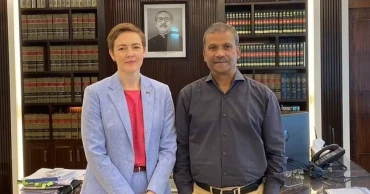
Acting Australian envoy meets Law Adviser
Acting Australian High Commissioner to Bangladesh Nardia Simpson on Wednesday met Law Adviser Dr Asif Nazrul and discussed priorities for the law and justice sector.
Simpson acknowledged Dr Nazrul's principled yet pragmatic approach to law reform, said the High Commission.
She agreed with Dr Nazrul when he said institutional strengthening required patience and commitment.
1 year ago
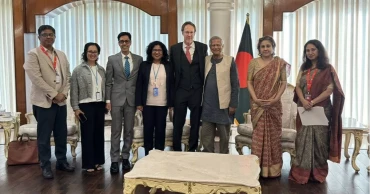
Prof Yunus seeks UNDP’s support for vital reforms in judiciary, EC; pledges fair polls
Chief Adviser Professor Muhammad Yunus on Wednesday said his government would seek support from the United Nations Development Programme (UNDP) for reforms in the judiciary and Election Commission.
“We are committed to free, fair and transparent elections,” said Prof Yunus.
The 2006 Nobel Peace laureate made the comments when the UNDP Resident Representative Stefan Liller paid a courtesy call on him at the State Guest House Jamuna in Dhaka.
Sustainable Development Goals (SDGs) affairs principal coordinator Lamiya Morshed, among others, was present at the meeting.
Prof Yunus said it is a good occasion to challenge everything. "These are opportunities. We have to find out how to reorganise the systems," he said, referring to the student-people revolution.
Prof Yunus sought support of UNDP to carry out vital reforms in wide-ranging areas such as judiciary, police, Election Commission, tax administration and land registration, according to his press wing.
The Chief Adviser said the Interim Government was committed to launch vital reforms in Bangladesh's key institutions in an effort to hold a free, fair and transparent election and help people truly enjoy the fruits of the student-led revolution.
He said Bangladesh immediately needs far-reaching digitalisation efforts -- including designing simple solutions -- in tax and land administration, so that a citizen can pay taxes or register their land and property sale without any hassles.
"Why do we have to go to the tax office? No one has to go to the tax office to file a tax return," the Chief Adviser said.
Prof Muhammad Yunus said Bangladesh needs vital reforms "to build a modern police force" and ensure a rule of law in the country.
UNDP Resident Representative Liller offered the UN agency's full support for the wide-ranging reforms. He said the UNDP has a long collaboration in Bangladesh but much of their funding was slowed down by bureaucratic processes.
UNDP officials attending the meeting said the agency was also ready to support Bangladesh's export diversification efforts, green transitioning, help in easing businesses and fighting climate change.
They said they would also like to reassess the country's investment climate, especially detecting the key constraints.
1 year ago
Interim Govt’s agenda to fight corruption would be a ‘key enabler’ to boost trade, investments: French Ambassador
French Ambassador to Bangladesh Marie Masdupuy on Wednesday said interim government's agenda to fight corruption would be a "key enabler" to further enhance trade and investments in Bangladesh as many were facing hurdles with customs and investment authority.
She said French firms were interested in setting up three solar parks in Bangladesh and installing "lightning arresters" in 15 lightning-prone districts in the country
France is ready to support Chief Adviser Professor Muhammad Yunus and the Interim Government in their efforts to rebuild the country, the ambassador of France said.
The French envoy made the comments when she paid a courtesy call on the Chief Adviser at the State Guest House Jamuna in Dhaka.
The envoy said French President Emmanuel Macron has invited him to visit France at a convenient time.
She also expressed her condolences at the death of students and people who were killed in the July-August revolution.
Professor Yunus said the student-led revolution has given the Interim Government an opportunity to rebuild the country like never before.
"It is a big task. But we see it as a big opportunity. If we don't use the opportunity, it will be a big failure," the Chief Adviser said.
He said the Interim Government to stay "as short as the people want or as long as they want".
1 year ago