Foreign-Affairs
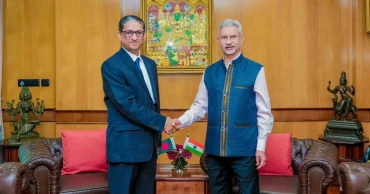
Dhaka, Delhi discuss ways to advance bilateral ties as Dhaka's envoy meets Jaishankar
Bangladesh and India on Friday discussed bilateral cooperation between the two countries as both sides eye stronger people-centric relations in the future.
Bangladesh High Commissioner to India M Riaz Hamidullah paid a courtesy call on Indian External Affairs Minister Dr S. Jaishankar at the Ministry of External Affairs in Delhi.
"Our conversation was focused on advancing our bilateral ties," said the Indian Minister after the meeting.
The meeting came amid Indian media reports that suggest Foreign Minister Dr Khalilur Rahman is expected to make a brief visit to New Delhi, the first since the new government led by Prime Minister Tarique Rahman was formed.
Indian High Commissioner to Bangladesh Pranay Kumar Verma recently said Bangladesh and India stand at the threshold of a promising future as two vibrant and forward-looking societies.
He said the two countries share a rich history and deep cultural ties, strengthened by their shared sacrifices during the Bangladesh Liberation War of 1971, which continue to unite the peoples of both nations.
"Today, as two vibrant and forward-looking societies, we stand at the threshold of a promising future – one in which we can work together to bring shared prosperity not only to our two countries but also to the wider region," he said.
The high commissioner said India has always supported and will continue to support a democratic, peaceful, progressive, and inclusive Bangladesh.
2 months ago
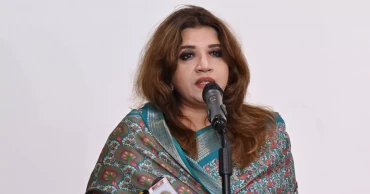
Govt prioritises safety of Bangladeshis abroad amid Middle East tensions: State Minister
State Minister for Foreign Affairs Shama Obaed Islam on Friday reaffirmed that the government is working tirelessly to ensure the safety and security of Bangladeshis living in the Middle East amid the ongoing tensions.
“Protecting our citizens is our top priority. We will take every possible step to ensure their safety,” she said while speaking to reporters at Hazrat Shahjalal International Airport after receiving the body of expatriate Mosharraf Hossain, who was killed in a missile attack in Saudi Arabia.
So far, five Bangladeshi nationals have lost their lives in the region.
The State Minister said Bangladeshi missions abroad remain in constant contact with citizens, monitoring their well-being and providing necessary support.
She also expressed hope for a peaceful resolution, stating that Bangladesh strongly advocates for an end to the conflict through diplomacy and dialogue.
Regarding the possible return of Bangladeshi nationals, she said the government is prepared to facilitate repatriation in phases.
“We are ready to bring back those who wish to return, depending on the evolving situation. All relevant ministries are on standby,” she added.
Mosharraf Hossain was killed on March 8 in a missile strike in the Al-Twaiq area near Al-Kharij, Saudi Arabia.
The attack occurred shortly before Iftar and claimed three lives, including Mosharraf.
Bangladesh said it strongly believes that conflict brings no solution and only dialogue, mutual respect and adherence to international law can resolve disputes.
Bangladesh also urged all parties to exercise maximum restraint, avoid further escalation and immediately pursue diplomatic efforts to de-escalate, according to the Ministry of Foreign Affairs.
Bangladesh reaffirmed its consistent position in favour of peace, stability and security in the Middle East, and called upon the international community to intensify efforts towards restoring calm and facilitating dialogue.
Around 280 Bangladeshis will return home from Iran soon.
They are expected to arrive at Hazrat Shahjalal International Airport at 1:30am Saturday, said a senior official at the Ministry of Foreign Affairs.
State Minister for Foreign Affairs Shama Obaed Islam will remain present at the airport to receive them, added the official.
2 months ago
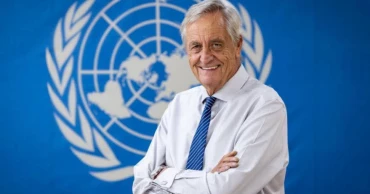
Bangladesh Army condoles passing of UN negotiator who advocated for peace in South Sudan
Bangladesh Army on Thursday expressed its deepest condolences on the passing of the Special Representative of the Secretary-General (SRSG) of UNMISS Nicholas Haysom.
Nicholas Haysom was the UN secretary general's special representative in South Sudan. He died in New York.
"We extend our heartfelt sympathies to his family and loved ones during this difficult time," said the Bangladesh Army.
His dedicated leadership and unwavering commitment to peace and stability in South Sudan will be remembered with great respect, said the Army.
"As a proud contributor to UNMISS, Bangladesh Army highly values his service. His legacy will continue to inspire peacekeepers across the globe."
2 months ago
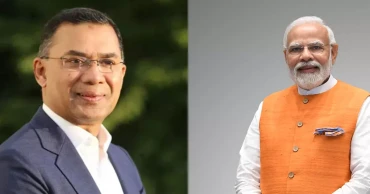
Indian PM extends Eid greetings to PM Tarique, people of Bangladesh
Indian Prime Minister Narendra Modi has extended warm greetings to Prime Minister Tarique Rahman and the brotherly people of the People’s Republic of Bangladesh on the joyous occasion of the festival of Eid-ul-Fitr.
"On behalf of the people and the Government of India, I extend warm greetings to you and the brotherly people of the People’s Republic of Bangladesh on the joyous occasion of the festival of Eid ul Fitr," he said in a message to Prime Minister Tarique.
Over the past one month, Muslims in India as well as across the world have observed the holy month of Ramadan and spent pious time in fasting and prayer, said Prime Minister Modi
He said the celebration of Eid reminds them of the timeless values of compassion, brotherhood and togetherness.
"We hope and pray for peace, harmony, good health and happiness for people across the world. May the bonds of friendship and camaraderie among our countries grow stronger," said Prime Minister Modi.
2 months ago
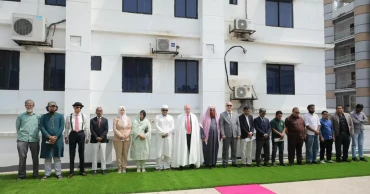
Algerian Embassy in Bangladesh Commemorates Victory Day
The Embassy of Algeria in Bangladesh observed Algeria’s Victory Day on Thursday on its premises in Dhaka.
Representatives from civil society, Islamic scholars, prominent business leaders, journalists from leading media houses, and members of the scientific community attended the event.
The programme commenced with the hoisting of the Algerian national flag, accompanied by the national anthem.
This was followed by a recitation from the Holy Quran by Qari Sakhwat Khan.
In his remarks, Ambassador Abdelouahab Saidani highlighted the historic significance of 19 March 1962, when the President of the Provisional Government of the Algerian Republic (GPRA), Benyoucef Benkhedda, proclaimed a ceasefire across Algerian territory following the Évian Accords, bringing an end to nearly eight years of armed struggle.
The Ambassador noted that this milestone paved the way for Algeria’s independence on 5 July 1962, following a referendum in which an overwhelming majority of the Algerian people voted in favor of sovereignty.
He emphasised that the ceasefire marked the culmination of immense sacrifices made by the Algerian people and the National Liberation Front (FLN) in their fight against colonial rule.
2 months ago

Bangladesh calls for lawful navigation, dialogue to resolve Middle East crisis
Bangladesh reiterated its support for the uninterrupted and lawful navigation of vessels in accordance with international law including the United Nations Convention on the Law of the Sea (UNCLOS).
Bangladesh urged meaningful engagement among all concerned parties to pursue a peaceful resolution of the ongoing crisis through constructive dialogue and diplomatic efforts.
It made the call at the 36th extraordinary session of IMO Council on the Middle East crisis.
The International Maritime Organization (IMO) convened its 36th Extraordinary Session of the Council in London on March 18 to deliberate on the evolving situation in the Middle East and its implications for global maritime safety and security, according to the Bangladesh High Commission in London.
The Bangladesh delegation was led by Deputy High Commissioner Dr Nazrul Islam.
In his intervention, the Deputy High Commissioner emphasised Bangladesh’s deep concern for the safety, security, and welfare of all seafarers, including Bangladeshi nationals serving aboard vessels operating in the affected regions.
2 months ago

9 globally renowned rights groups urge Bangladesh PM to urgently address concerns over press freedom
The Committee to Protect Journalists and eight other human rights organizations have written to Bangladesh’s newly elected Prime Minister Tarique Rahman urging his government to take steps to protect human rights and uphold press freedom.
The nine rights groups that wrote the letter are Amnesty International, Article 19, CPJ, CIVICUS, FIDH, Fortify Rights, Human Rights Watch, Kennedy Human Rights Center, and Tech Global Institute.
In a joint letter, the groups called on the government to publicly affirm its commitment to press freedom and media independence, release detained journalists, and review cases filed against journalists under cybercrime laws, including the Digital Security Act and Cyber Security Act.
The signatories called for an end to arbitrary surveillance, censorship, and internet shutdowns, and for the government to implement recommendations from the Media Reform Commission that align with international standards on press freedom.
The letter also urged authorities to conduct prompt and impartial investigations into attacks on journalists and news outlets, including the Prothom Alo and Daily Star.
2 months ago
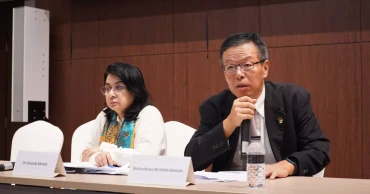
Dhaka, Tokyo EPA a significant milestone achieved through sustained dialogue: Ambassador
Japanese Ambassador to Bangladesh Saida Shinichi has described the Bangladesh-Japan Economic Partnership Agreement (EPA) as a significant milestone achieved through sustained dialogue between the two countries.
Speaking at a seminar, he noted that it is Bangladesh’s first full-fledged EPA and Japan’s first Comprehensive Economic Partnership Agreement with a least developed country.
The Ambassador emphasised that the agreement goes beyond tariff reductions and establishes rules and procedures to facilitate trade and investment, expressing hope that it will encourage greater foreign direct investment and strengthen Bangladesh’s industrial capabilities.
As Bangladesh and Japan move towards implementing the Economic Partnership Agreement (EPA), policymakers and stakeholders are increasingly focusing on how the country can maximise the benefits of this new framework of economic cooperation.
The agreement is expected to expand trade, strengthen investment linkages, and support industrial upgrading while helping Bangladesh integrate more deeply into regional and global value chains.
Against this backdrop, the Centre for Policy Dialogue (CPD), in partnership with the Embassy of Japan in Bangladesh, organised the seminar titled “Maximising the Opportunities of the Bangladesh–Japan Economic Partnership Agreement (EPA)” on Monday.
The event brought together policymakers, diplomats, academics, development partners, and business leaders from Bangladesh and Japan.
The seminar was organised in four segments: an inaugural session;sessions on “Rethinking Development and Industrial Policy in Bangladesh” and “Exploring the Future Bangladesh–Japan Economic Cooperation in a Time of Transition”; and a concluding session, said the CPD.
Dr Fahmida Khatun, Executive Director of CPD, delivered the welcome remarks and chaired the seminar.
She highlighted that the EPA presents an important opportunity to deepen Bangladesh–Japan economic relations and move beyond traditional aid-driven cooperation towards a partnership centred on trade, investment, and technology collaboration.
Presenting CPD’s analysis of the agreement, she noted that enhanced market access and deeper economic cooperation could support export diversification and attract greater foreign investment, while emphasising that Bangladesh will need coordinated policies prioritising trade facilitation, industrial upgrading, and supportive fiscal measures to fully realise the agreement’s potential.
The seminar featured keynote presentations on Bangladesh’s development trajectory and lessons from international industrialisation experiences.
2 months ago
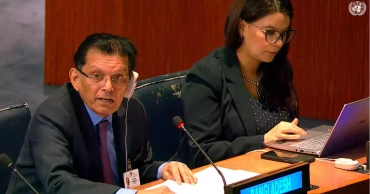
Bangladesh reaffirms commitment to women’s justice, empowerment at CSW70
Foreign Minister Dr Khalilur Rahman has reaffirmed Bangladesh’s strong commitment to gender equality and the empowerment of women.
He was delivering the national statement at the 70th Session of the United Nations Commission on the Status of Women (CSW70) held at the UN Headquarters in New York on March 17.
Reiterating Bangladesh’s full commitment to advancing the goals of the Beijing
Declaration and Platform for Action and the 2030 Agenda for Sustainable Development, the Foreign Minister emphasized that access to justice for women and girls remains a central priority for Bangladesh.
He also highlighted the vital contributions of Bangladeshi women in UN peacekeeping. Dr. Rahman further noted that climate change, economic uncertainty, conflicts, and the digital divide continue to create new barriers, particularly for women in rural and vulnerable communities.
To address these challenges, Bangladesh proposed strengthening justice systems through women’s leadership and enhancing regional and international cooperation to combat trafficking, according to Bangladesh Mission in New York.
The CSW70 is being held from March 9-19 in New York, focusing on strengthening access to justice, eliminating discriminatory laws, and addressing structural barriers for all women and girls.
2 months ago
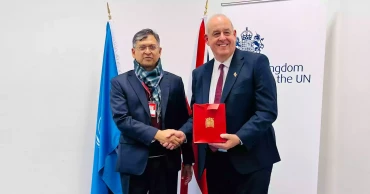
Salahuddin Ahmed, UK’s Minister of State for Home Office hold bilateral talks in Vienna
On the second day of the Global Fraud Summit in Vienna, Bangladesh Home Minister Salahuddin Ahmed met with the United Kingdom’s Minister of State for the Home Office, Rt Hon Lord Hanson, for a key bilateral discussion on Tuesday.
The meeting took place in the ‘MOE3’ room of the Vienna International Centre in the afternoon local time and focused on mutual security and strategic interests between the two countries.
At the start of the meeting, Home Minister Salahuddin Ahmed warmly greeted Lord Hanson and praised the historic and partnership-based relations between Bangladesh and the UK. He reaffirmed Bangladesh’s commitment to strengthening cooperation in defence, counter-terrorism, and maritime security. Lord Hanson also expressed his agreement on elevating the strategic partnership to a new level.
The minister thanked the UK for its continued support in maintaining Bangladesh’s stability and democratic reforms following the 2026 national elections. Referring to a recent meeting with British High Commissioner Sarah Cook in Dhaka, Salahuddin Ahmed called for accelerated cooperation in security reform, migration management, and criminal justice.
A key topic of discussion was the reform and modernization of the Bangladesh Police. The Home Minister highlighted the UK police’s professional experience and expertise, seeking technical and training assistance to ensure strategic reform, human rights protection, and institutional accountability in Bangladesh’s law enforcement. He noted that the UK’s specialized knowledge would be invaluable in building a modern and citizen-friendly police force.
Salahuddin Ahmed also urged continued international pressure to ensure the safe and sustainable repatriation of the Rohingya population. He emphasized the importance of the UK’s active role in maintaining regional stability and providing humanitarian aid to the displaced populations.
Lord Hanson praised Bangladesh’s security sector reform plans and its role in safeguarding regional stability, assuring support in the areas discussed.
Representatives from the diplomatic missions of Bangladesh and the UK in Vienna attended the meeting.
2 months ago