foreign-affairs
US donates 600,000 TB testing kits, 11,000 pediatric drugs to Bangladesh
The US government has donated 600,000 US-manufactured GeneXpert tuberculosis testing kits and 11,000 courses of pediatric TB drugs to the government of Bangladesh.
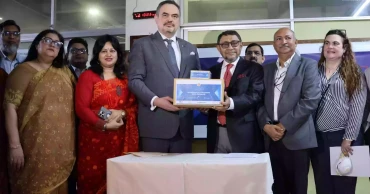
US Ambassador to Bangladesh Brent T. Christensen handed over the donation during a ceremony at a leading tuberculosis hospital, said US Mission Spokesperson Poornima Rai on Thursday.
Health Minister Sardar Mohammad Shakhawat Hossain Bokul and Directorate General of Health Services Prof Dr Pravath Chandra Biswas were present.
The donation addresses critical supply shortages and underscores the United States' commitment to global health security under the US government's new five-year framework to expand bilateral health partnerships, Rai said.
1 month ago
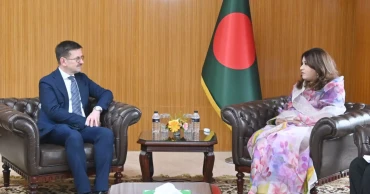
EU keen to work together with Bangladesh to unlock full potential of partnership
Managing Director for Asia and the Pacific of the European External Action Service (EEAS) Erik Kurzweil on Thursday acknowledged the strategic importance of the partnership between Bangladesh and the European Union (EU) and conveyed EU’s interest in working to unlock the full potential of the partnership.
Both sides recognised that the Partnership and Cooperation Agreement (PCA) would provide a framework for enhanced collaboration in numerous priority areas for shared prosperity.
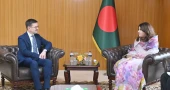
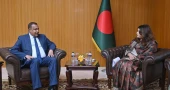
Kurzweil paid a courtesy call on State Minister for Foreign Affairs Shama Obaed Islam at the Ministry of Foreign Affairs and followed the successful holding of the 5th Bangladesh-EU Diplomatic Consultations in Dhaka.
The State Minister underscored Bangladesh’s commitment to advancing a multifaceted and forward-looking partnership with the EU, said the Ministry of Foreign Affairs.
The two sides discussed recent political and economic developments, trade and investment, facilitating business visits, LDC graduation, migration cooperation, democracy and human rights, women empowerment and gender equality, cultural cooperation, climate and renewable energy collaboration, multilateralism, as well as regional and multilateral issues, including the Rohingya issue.
The State Minister emphasised the need for opening up more legal pathways for migration, including by expanding the Talent Partnership initiative, for creating effective deterrent to irregular migration to Europe.
She also stressed on the important of FTA with the EU for mutually beneficial trade relations.
1 month ago
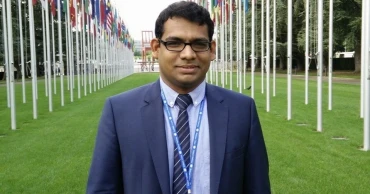
Dhaka summons acting Indian envoy
The Ministry of Foreign Affairs on Thursday summoned acting Indian High Commissioner to Bangladesh, Pawan Badhe, and lodged a formal protest over remarks made by Assam Chief Minister Himanta Biswa Sarma, stressing that such comments undermine the spirit of friendly relations between the two countries.
Director General (South Asia) Ishrat Jahan conveyed Dhaka’s position to the acting Indian High Commissioner in the afternoon, an official told UNB.
Bangladesh described the remarks as disparaging to Bangladesh-India relations and expressed its displeasure to India.
Assam Chief Minister Sarma on April 26 said 20 foreign nationals were apprehended in Assam and pushed back to Bangladesh.
"Rude people don't understand soft language. We continuously remind ourselves of this prophetic line when we expel infiltrators from Assam who don't leave themselves. For instance, these 20 illegal Bangladeshis who were PUSHED BACK last night," Sarma said in a post on X, according to Indian media reports.
Bangladesh stressed that public statements capable of straining ties between the two neighbours are counterproductive, and highlighted the importance of exercising restraint when addressing sensitive bilateral issues.
1 month ago
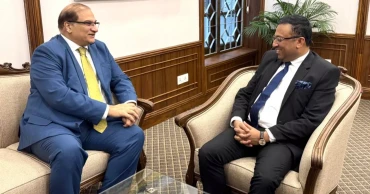
Bangladesh, Pakistan discuss new opportunities of cooperation
Bangladesh and Pakistan have explored new opportunities of cooperation, reaffirming their shared commitment to strengthening bilateral relations.
Pakistan High Commissioner to Bangladesh Imran Haider called on Adviser to the Prime Minister on Foreign Affairs Humaiun Kobir on Wednesday and discussed matters of mutual interest and explored various avenues to further enhance bilateral cooperation.
The High Commissioner also briefed the Adviser on ongoing collaborations across multiple sectors including the second phase of the Bangladesh-Pakistan Knowledge Corridor, as well as efforts to promote business to business linkages, people to people contacts and cultural exchanges between the two countries.
1 month ago
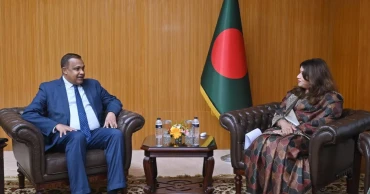
Bangladesh keen to deepen ties with Belarus across key sectors
Bangladesh has expressed its willingness to work closely with Belarus to further strengthen the existing friendly relations.
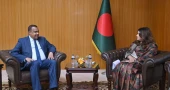
Non-resident Ambassador of Belarus to Bangladesh Mikhail Kasko paid a courtesy call on State Minister for Foreign Affairs Shama Obaed Islam at the Ministry of Foreign Affairs recently and discussed issues of mutual interest.
Both sides held productive discussions on enhancing bilateral cooperation in key areas, including agriculture, defence, textiles and RMGs, skilled and semi-skilled labour migration, IT sector, pharmaceuticals, and jute, the Ministry said.
They also emphasised the importance of strengthening people-to-people contacts to further solidify the foundation of bilateral relations.
Ambassador Kasko congratulated the State Minister on assuming office and conveyed the readiness of Belarus government to work with the new government of Bangladesh.
Both sides agreed that different bilateral mechanisms, including Foreign Office Consultations, should be held more frequently to expedite discussions and advance cooperation in identified priority areas.
The meeting concluded with both sides expressing appreciation for the warm and friendly exchanges and reaffirming their shared commitment to further deepen and broaden Bangladesh-Belarus relations in the coming years.
1 month ago
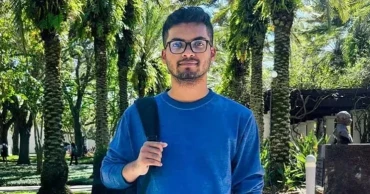
Killings of two Bangladeshi students in US: Limon’s body to arrive on May 4
The body of Zamil Ahamed Limon, one of the two Bangladeshi students at the University of South Florida of the US who were murdered there, will arrive in Dhaka on May 4.
Golam Mortoza, Minister (Press) at the Bangladesh Embassy in US, in a WhatsApp message on Thursday said the mortal remains will reach Hazrat Shahjalal International Airport on an Emirates flight at 8:40am on the day.
He said the body of Limon have been received by the funeral home and it will be transported from Orlando (MCO) via the Emirates flight, which will depart at 08:50pm on May 2.
Limon’s first namaz-e-janaza is scheduled to be held after Johr prayers today at Islamic Society of Tampa Bay Area, Tampa in Florida, Golam Mortoza said.
However, no information has so far been available about the other victim – Nahida Sultana Bristy, he said.
Limon and Bristy, both 27-year-old doctoral students from Bangladesh, disappeared on April 16. Limon was last seen at the off-campus complex where he shared an apartment with murder suspect Hisham Abugharbieh, 26 and another roommate.
Detectives used cellphone location and licence plate reader data to track Abugharbieh’s car and Limon’s phone to the bridge where Limon’s body was found on April 24. Limon had numerous stab wounds and appeared to be bound, according to a report filed by prosecutors.
Authorities continued searching for Bristy, and on April 26 a body was recovered from a nearby waterway. The identity has not yet been confirmed, and autopsy reports are pending, officials said.
Meanwhile, the murder suspect will remain in custody without bond, a judge ordered on Tuesday, days after a SWAT team arrested him at his parents’ home.
Hisham Abugharbieh has also been barred from contacting witnesses or the victims’ family members, Hillsborough County Judge Logan Murphy said during a brief hearing in Tampa.
According to court records, Abugharbieh faces two counts of first-degree murder with a weapon along with other charges. He could face the death penalty if convicted, though prosecutors have not yet said whether they will pursue capital punishment.
When questioned days after the couple disappeared, Abugharbieh denied involvement, though detectives noted that his pinky finger was bandaged, according to a pretrial detention report.
Investigators later gained access to the apartment with the help of the building manager. A third roommate told police that Abugharbieh had used a cart overnight on April 16 to move cardboard boxes from his room to a trash compactor.
1 month ago
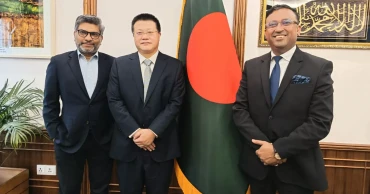
Chinese envoy meets Humaiun Kobir, discusses issues of mutual interest
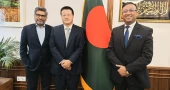
Chinese Ambassador to Bangladesh Yao Wen paid a courtesy call on Prime Minister’s Foreign Affairs Adviser Humaiun Kobir on Wednesday.
The meeting took place at the Prime Minister’s Office in the afternoon, the Ministry of Foreign Affairs said in a statement.
During the meeting, the two sides discussed issues of mutual interest, including trade and investment between the two countries.
Tanvir Ghani, Special Assistant to the Prime Minister on Investment and Capital Markets, and Song Yang, Economic and Commercial Counsellor at the Chinese Embassy, were also present.
1 month ago
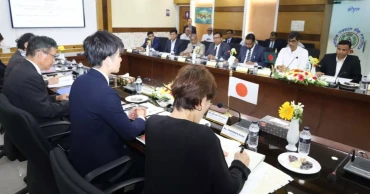
Bangladesh, Japan explore stronger cooperation in agriculture
Bangladesh and Japan on Wednesday expressed interest in strengthening bilateral cooperation in agriculture, with a focus on research, technology transfer, agro-processing and market access.
The views were shared at a bilateral meeting held at the Bangladesh Agricultural Research Council (BARC) in Dhaka.
At the meeting, the Bangladesh delegation was led by Agriculture, and Fisheries and Livestock Minister Mohammed Aminur Rashid, while the Japanese delegation was led by SUZUKI Norikazu, Minister of Agriculture, Forestry and Fisheries of Japan.
During discussion, the Japanese side emphasised the importance of strengthening inter-ministerial coordination and enhancing private-sector engagement.
Japan also encouraged Bangladesh to pursue the implementation of the Economic Partnership Agreement (EPA), including coordination on operational procedures related to the export of Japanese Wagyu beef. Opportunities for collaboration in halal food production were also highlighted.
In addition, the Japanese delegation underscored the importance of joint initiatives in sustainable agriculture through frameworks such as the Joint Credit Mechanism (JCM).
The Bangladesh side outlined several priority areas for enhanced cooperation, including advanced agricultural research – particularly in speed breeding technologies such as genomics and phenomics-as well as vegetable seed production.
Bangladesh also requested improved market access for its agricultural products, including mangoes and frozen foods.
Bangladesh explored opportunities for Japanese collaboration in agricultural mechanisation and the adoption of Fourth Industrial Revolution (4IR) technologies, including drones, big data, and artificial intelligence.
The Bangladesh side also invited Japanese investment in agro-processing industries, especially in the drying and dehydration of jackfruit and mango.
Cooperation in deep-sea fishing and food safety compliance were identified as additional areas of mutual interest.
In his remarks, Minister Aminur Rashid said agriculture remains the backbone of Bangladesh’s economy, and they highly value Japan’s cooperation in advancing agricultural modernisation, mechanisation, value chain development, and climate-resilient practices.
Japanese expertise, innovation, and investment have played an important role in enhancing productivity and promoting agro-industrial growth in Bangladesh, he said.
The meeting concluded with a shared commitment to further strengthen bilateral cooperation and promote sustainable, technology-driven agricultural development for the mutual benefit of both countries.
1 month ago
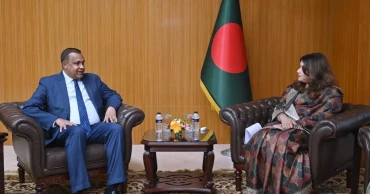
Dhaka seeks constructive relations with neighbouring countries: Shama Obaed
State Minister for Foreign Affairs Shama Obaed Islam has emphasised that the government of Bangladesh places high priority on fostering constructive relations with neighbouring countries.
She reaffirmed the government of Bangladesh’s commitment to revitalising SAARC for the benefit of the peoples of the region.
The issues were discussed when High Commissioner of Sri Lanka to Bangladesh Dharmapala Weerakkody paid a courtesy call on the State Minister at the Ministry of Foreign Affairs on Tuesday.
Shama Obaed says July uprising proved youth patriotism, raises corruption concerns over post-Aug 5 govt
During the meeting, the State Minister and the High Commissioner reviewed various aspects of the ongoing bilateral cooperation and issues of mutual interests, said the Ministry.
Both sides emphasized the need to strengthen and expand bilateral cooperation in areas such as trade, health, education, tourism, connectivity, culture, and sports to unlock the significant untapped potential between the two countries.
The State Minister highlighted Bangladesh’s export strengths in sectors such as jute, pharmaceuticals, leather goods and information technology.
1 month ago
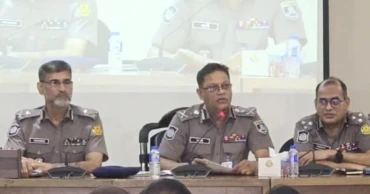
Technology reshaping crime, police must adapt: IGP
Inspector General of Police (IGP) Md Ali Hossain Fakir has said that technology is not only driving development but also transforming the nature of crime, with criminals increasingly adopting new methods using digital tools.
He made the remarks on Wednesday afternoon while speaking as the chief guest at the inauguration of nine new apps and software developed through the initiative of Dhaka Metropolitan Police (DMP) at its headquarters.
The IGP said the world is now moving through the Fourth Industrial Revolution, where technology plays a dual role—supporting progress while also enabling new forms of criminal activity.
In this context, he stressed the need for the police force to maximize the use of modern technology.
He described the newly launched DMP-developed systems as timely and forward-looking initiatives that would strengthen modern policing.
Among the tools introduced is a Road Transport Law Violation Detection System powered by artificial intelligence, which will help quickly identify traffic law violators, improve road discipline, reduce accidents, and enhance traffic management efficiency.
He also highlighted the Hotel Occupancy Information System, which is expected to improve the monitoring and management of guest information in city hotels, thereby strengthening crime prevention and intelligence operations.
The ‘Hello DMP’ app was also launched, designed to serve as a direct communication platform between citizens and police. Through the app, people will be able to access services, file complaints, and seek assistance more easily, contributing to more citizen-friendly policing.
Other newly introduced digital tools include the DMP Online Training Course, Residence Allocation Software, League Management Software, Traffic Duty Distribution Software, Employee Performance Evaluation Software, and Traffic News Archive.
The IGP expressed hope that these initiatives will make police administrative functions more modern, transparent, and dynamic, while further strengthening technology-based policing for public safety.
1 month ago