foreign-affairs

What is known about suspect Hisham in the killing of Bangladeshi student in Florida
The body of a Bangladeshi doctoral student who went missing with his girlfriend from the University of South Florida was found on a bridge over Tampa Bay, and his roommate has been taken into custody, law enforcement authorities said Friday.
Zamil Limon’s remains were found on the Howard Frankland bridge Friday morning, but Nahida Bristy is still missing, Hillsborough County Chief Deputy Joseph Maurer said.
Limon’s roommate Hisham Saleh Abugharbeih, 26, was taken into custody at his family’s home nearby on preliminary charges that include unlawfully moving a dead body, failure to report a death, tampering with evidence, false imprisonment and battery.
He was expected to make a first appearance in court Saturday morning.
“We are still actively searching for Nahida,” Maurer said, appealing to the public to share any useful information. Law enforcement dive teams were searching the bay near the bridge as part of those efforts, the sheriff’s office said.
Officers encountered Abugharbeih as they responded to a report of domestic violence at his family’s home, just north of the campus, and were able to move his relatives to safety. But then he barricaded himself inside and refused to come out.
A SWAT team responded — along with a drone, a robot and crisis negotiators — before Abugarbeih came out with his hands up, apparently wearing nothing but a blue towel.
Bangladeshi USF student found dead in Florida, compatriot still missing
“This is a deeply disturbing case that has shaken our community and impacted many who were hoping for a safe resolution,” Sheriff Chad Chronister said. “While the discovery of Zamil Limon’s remains is heartbreaking, I want the public to know that our detectives worked and are working tirelessly and relentlessly to uncover the truth.”
A family friend contacted authorities last Friday after being unable to contact either one, USF police said.
Investigators spoke with Abugharbeih, who is a native-born U.S. citizen, on Thursday, Maurer said, but after initially talking, Abugharbeih chose to end the interview.
He said Abugharbeih was speaking with detectives again after his arrest Friday morning.
There are no other suspects in the investigation at this time, Maurer said.
An autopsy is being done on the remains to determine the manner and cause of Limon’s death, and those results are expected Saturday morning, he said.
Abugharbeih had been a USF student but was not currently enrolled. University records showed he had attended the school from Spring 2021 through Spring 2023, and had pursued a BS in Management, a university spokesperson said.
Limon was studying geography, environmental science and policy, and Bristy is studying chemical engineering.
Abugharbeih had several previous arrests, the sheriff’s office said. He was charged with battery and burglary of an unoccupied dwelling in September 2023, and with battery that May — both classified in court records as misdemeanors.
Court records show Abugharbeih entered into a diversion program for first-time offenders charged with misdemeanors. He completed the program in 2024 and the charges were discontinued. A phone call to his lawyer in that case was not immediately returned.
Hillsborough County Court records also showed two domestic violence petitions filed by a family member in 2023. A judge granted an injunction in one case and denied the other petition. He also was accused of traffic violations.
1 month ago

Bangladeshi USF student found dead in Florida, compatriot still missing
A Bangladeshi doctoral student at the University of South Florida has been found dead in Florida while another Bangladeshi student remains missing, reports AP.
Police said the victim’s roommate has been taken into custody on multiple charges.
Hillsborough County Sheriff Chad Chronister said the remains of Zamil Limon were discovered Friday morning on the Howard Frankland Bridge spanning Tampa Bay.
However, Nahida Bristy is still missing, and search efforts are ongoing.
Police have taken Limon’s roommate, Hisham Saleh Abugharbeih, into custody on preliminary charges including domestic violence, battery, false imprisonment, tampering with evidence, failing to report a death, and unlawfully moving a body.
“We are still actively searching for Nahida,” Chronister said, urging anyone with information to come forward.
According to officials, deputies initially responded to a domestic violence call at a residence about a mile from the campus.
Officers managed to safely evacuate the suspect’s family members before he barricaded himself inside the house and refused to surrender.
A SWAT team was later deployed, and the suspect eventually exited the residence peacefully.
Authorities said he initially communicated with law enforcement but later stopped responding.
Limon and Bristy, who were in a relationship, had been missing since April 16.
Limon, a student of geography, environmental science and policy, was last seen at his apartment, while Bristy, a chemical engineering student, was last spotted about an hour later at a campus science facility.
University police were alerted after a family friend reported being unable to reach either of them last Friday.
1 month ago
Nepalese envoy expounds on wide-ranging scope for bilateral cooperation during Rangpur visit
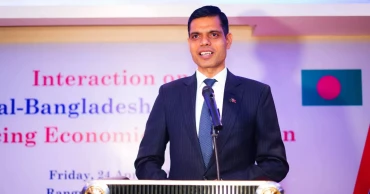
Nepalese Ambassador to Bangladesh Ghanashyam Bhandari on Friday underscored the wide-ranging opportunities for bilateral cooperation between Bangladesh and Nepal in areas such as trade, transit, energy, connectivity, education, and tourism
He also emphasised the importance of strengthening business connections to foster a more robust economic partnership between the two countries.
The Ambassador was speaking at a programme, organised by the Embassy on ‘Nepal-Bangladesh Relations: Advancing Economic Cooperation’ in Rangpur in the evening.
Bangladesh calls for strategic framework to deepen cooperation with Nepal
1 month ago

Bangladesh should avoid aligning 'too closely' with any single country or bloc: Int'l Crisis Group
The International Crisis Group has said diversifying ties would give Bangladesh more 'strategic autonomy' and allow it to navigate changing regional politics more effectively, stressing that Dhaka should avoid aligning too closely with any single country or bloc.
"Given intensifying major-power competition in the Indo-Pacific, it should avoid aligning too closely with any single country or bloc," said the Brussels-based organisation that sounds the alarm to prevent deadly conflict globally.
It will also help mitigate the domestic backlash that is linked to perceptions of overdependence on specific external partners, as seen in the anti-India sentiment that eroded support for the Hasina government, ICG said, noting that the most important task for the new government will be rebuilding ties with India.
Bangladesh's dependence on India, China could increase if western pressure continues: Int'l Crisis Group
Bangladesh is getting back to the foreign policy of martyred President Ziaur Rahman and wants to maintain a good relationship with each country while at the same time protecting the country’s interests, a senior official told UNB.
Following the “Bangladesh First” policy, he said Dhaka will continue to seek respectful, mutually beneficial relations with all nations, particularly its neighbors, grounded in sovereign equality and shared interests.
The Crisis Group said former Prime Minister Hasina forged close relations with New Delhi, addressing its security concerns and bolstering economic integration and after she fell, bilateral relations plummeted to 'historic lows.'
India’s outreach to the BNP has continued since the election, with Indian Prime Minister Narendra Modi inviting Tarique Rahman to visit India, according to the Crisis Group Asia Briefing titled "Bangladesh’s New Government Gets Down to Business".
"Dhaka and New Delhi should seek to build on this long overdue reset. But domestic politics in both countries will constrain efforts to restore ties," said the ICG.
The BNP government has assumed office amid profound regional and global shifts, creating both risks and opportunities.
Under former Prime Minister Sheikh Hasina, Bangladesh’s foreign policy was closely aligned with that of India, ICG observed.
The organisation in its latest report released on Thursday said Hasina's ouster prompted a diplomatic rebalancing, and with bilateral relationships undergoing a period of adjustment, India, China and the U.S. are all seeking to deepen ties with the new administration.
Under US President Trump, Washington has placed greater emphasis on trade and strategic competition with China, including through the Reciprocal Trade Agreement signed in early February.
China, meanwhile, has continued to cultivate ties across the political spectrum, positioning itself as a key partner for infrastructure financing while emphasising its policy of non-interference in Bangladeshi politics, ICG said.
In this global environment, the BNP government will 'need to be careful' in how it balances relations with its major partners, which also include the European Union, Japan, Pakistan, Türkiye, Gulf Arab countries and Russia.
Foreign governments were quick to recognise the BNP’s victory.
Most importantly, India, which has a long history of supporting the AL and whose relations with Yunus’s interim government were frosty, signalled that it was open to working with the BNP, said the ICG.
The US and China also moved quickly to strengthen ties with the new government.
After the swearing-in ceremony, U.S. President Donald Trump sent a message of congratulations in which he urged the new prime minister to stick to a bilateral trade deal Washington had signed with the interim government and complete “routine defence agreements” that would enable the purchase of U.S. military equipment.
On 17 February, Chinese Prime Minister Li Qiang said China looked forward to working with the BNP government in boosting “high-quality Belt and Road cooperation” and “elevating the China-Bangladesh Comprehensive Strategic Cooperative Partnership to a new level”.
The message also noted the two countries “have always respected and treated each other as equals, pursued mutually beneficial cooperation and win-win results” – an oblique criticism of India, which is perceived to have often interfered in Bangladeshi politics.
Rohingya Crisis
The Rohingya refugee crisis will remain one of Bangladesh’s most difficult foreign policy challenges, ICG said.
Continued conflict in Myanmar, particularly in Rakhine State, means the 1.2 million Rohingya refugees now living in camps in Cox’s Bazaar are unlikely to return home soon - something Tarique Rahman has all but acknowledged, it said.
With very limited options for third-country resettlement, most will have no choice but to remain in Bangladesh for the foreseeable future.
"But the current policy – which prohibits employment – leaves refugees heavily dependent on international aid, which has fallen sharply following the demise of USAID," it said. Declining funding has already forced the World Food Programme to reduce food assistance to many families.
As Crisis Group has argued, Dhaka should allow the Rohingya greater opportunities to earn income, while mitigating the impact such a change in policy would have on Bangladeshis.
"This reform would be in line with the BNP 2023’s policy paper on the refugee crisis, which promised to explore the possibility of Rohingya working in sectors with labour shortages," it said.
The government will also need to curb the influence of Rohingya armed groups, which pose security risks both in the camps and along the border.
As the Arakan Army now controls most of Rakhine State, where the refugees came from, Dhaka will also need to resume dialogue with the group; the interim government’s efforts made little headway, said the Crisis Group.
1 month ago
‘Garden of Memory’ tree-planting ceremony held in Dhaka
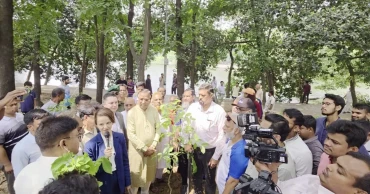
Russian House in Dhaka organised a “Garden of Memory” tree-planting ceremony at Dhanmondi Lake on Friday morning, bringing together guests, students, and members of the public in a meaningful act of remembrance and environmental responsibility.
The “Garden of Memory” is an international memorial initiative originating in Russia, dedicated to honouring those who lost their lives during the Great Patriotic War (1941-1945). Each year, trees are planted across Russia and worldwide – symbolising one tree for every life lost – while promoting environmental sustainability.
The ceremony was attended by Vyacheslav Sentyurin, Minister-Counsellor of the Russian Embassy in Bangladesh; Md Abdus Salam, Administrator of Dhaka South City Corporation (DSCC); Alexandra Khlevnoy, Director of the Russian House in Dhaka; and Sirajul Islam, General Secretary of the Soviet Alumni Association Bangladesh (SAAB).
The programme began with a visit to the Russian House, followed by the official ceremony at the lakeside.
In her opening remarks, Khlevnoy emphasised the importance of preserving historical memory and strengthening humanitarian ties through initiatives that connect people across countries and generations.
In his speech, Sentyurin highlighted the historical significance of May 9, 1945, noting that the Soviet Union’s victory in the Great Patriotic War came at an immense human cost of approximately 27 million lives.
Addressing the gathering, DSCC Administrator Abdus Salam expressed his appreciation for the initiative and highlighted Bangladesh’s commitment to environmental sustainability.
He noted the government’s plan to plant 250 million trees within five years to combat climate change and promote a greener future.
The DSCC administrator further stated that his city corporation plans to plant 300,000 trees between 2026 and 2030 to expand urban green coverage.
Speakers emphasised that the “Garden of Memory” serves not only as a tribute to the fallen heroes of World War II but also as a symbol of friendship between the peoples of Bangladesh and Russia, while promoting shared responsibility for environmental protection.
The central moment of the event was the ceremonial planting of saplings by the distinguished guests at Dhanmondi Lake, contributing to the global “Garden of Memory” movement.
The event concluded with a reception at the Russian House in Dhaka, providing an opportunity for informal interaction and further strengthening cultural and diplomatic ties.
1 month ago
UN Forum: Bangladesh calls for fair global financial architecture, sustainable LDC graduation
Bangladesh has called for urgent global action to bridge the widening SDG financing gap and establishing a 'fair, inclusive, and responsive' international financial system.
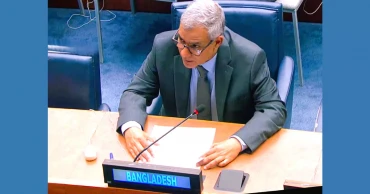
At the general debate in ECOSOC Financing for Development Forum 2026 held at the UN Headquarters in New York on April 23, Bangladesh’s Permanent Representative to the UN Ambassador Salahuddin Noman Chowdhury underscored that geopolitical conflicts, declining ODA, climate shocks, trade barriers, and energy uncertainties were shrinking the policy space for developing countries.
In this context, Bangladesh had sought an extension of its LDC graduation preparatory period to ensure a smooth and sustainable transition.
The Permanent Representative also highlighted the country’s progress in political and economic recovery with the government focusing on macroeconomic stability, rebuilding business confidence, strengthening the banking sector, promoting investment, and expanding direct support to vulnerable people, according to the Bangladesh Mission in New York.
Stressing the need to lower debt costs, avoid inefficient infrastructure-related debt, and channel FDI into productive, job-creating sectors with technology transfer, Ambassador Chowdhury called for a more representative global financial system, climate justice, action on loss and damage, and the return of stolen assets to their rightful owner.
1 month ago

Govt, WHO stress stronger protection against NCDs for all Bangladeshis
With strong leadership from the government of Bangladesh and technical support from WHO, every Bangladeshi - wherever they live - can be better protected from NCDs and live longer, healthier lives, said the UN agency.
In a first-of-its-kind move, the Ministry of Foreign Affairs (MOFA) last week briefed more than 80 Bangladesh Missions worldwide on addressing noncommunicable diseases (NCDs) among millions of Bangladeshis living abroad.
The initiative builds on a landmark development in 2025, when 35 ministries signed a Joint Declaration, launching a new era of coordinated national action to prevent and control NCDs, according to the UN agency.
In Bangladesh, WHO said, NCDs account for 71% of all deaths. For many expatriates, risks may be even higher due to demanding work conditions, limited access to health services, and lifestyle-related factors.
The consultation will inform the Ministry of Foreign Affairs, Bangladesh’s ongoing work to develop a dedicated NCD workplan, with missions already contributing practical, context-specific recommendations.
1 month ago

NY Senate adopts historical resolution to declare April 14 as ‘Bangla New Year Day’
A new chapter in the recognition of Bengali heritage has begun as the New York State Senate adopted a significant resolution calling for April 14 to be officially declared as "Bangla New Year Day".
The resolution, adopted on April 22 during a session at the State Capitol, marked the grand conclusion of a three-day celebration organized by the expatriate community.
The resolution was introduced at 11:15 AM by Senators Luis R. Sepúlveda, Nathalia Fernandez, and Toby Ann Stavisky. Addressing the chamber, Senator Stavisky noted that the resolution serves as a tribute to the vital role Bengalis play in New York’s education, business, and cultural sectors. The move received a standing ovation from approximately 50 prominent expatriate Bengalis in attendance.
The measure officially urges Governor Kathy Hochul to proclaim April 14, 2026, as "Bangla New Year Day" in New York State. It highlights Pohela Boishakh as a non-sectarian festival with roots in the Mughal-era agricultural economy, celebrating the shared traditions of music, dance, and fine arts across all communities.
Acknowledging Cultural Contributions
The New York State Legislature specifically recognized the three decades of cultural advocacy by the Muktadhara Foundation and its founder, Bishwajit Saha. Saha, who also serves as the President of NRB Worldwide, was included in the official distribution list for the resolution, affirming his contributions to promoting the Bengali language and culture.
“We want to establish the celebration of the Bengali New Year beyond the expatriate community and into mainstream American society,” said Bishwajit Saha during the event.
Following the legislative session, an enchanting cultural program was held at the Capitol featuring Rabindra Sangeet, folk music by Baul artist Md Shahin Hossain, and performances by child artist Bhasha Saha and Durga Kshatriya. The program, directed by Mohitosh Talukder Tapas, concluded with a collective rendition of the National Anthem of Bangladesh.
The festivities began on April 11 at Times Square and Jackson Heights before reaching this historic finale in Albany. Advocates view the resolution as a major milestone toward making the Bengali New Year an official cultural day in New York State.
1 month ago

Bangladesh-India partnership set to boost medical tourism
Bangladesh’s Rhythm Group and India’s Manipal Hospitals on Thursday signed an agreement to streamline medical tourism, offering Bangladeshi patients’ seamless access to advanced healthcare services in India.
The agreement was signed at a ceremony held at a city hotel, attended by High Commissioner of India to Bangladesh Pranay Verma as the chief guest.
Rhythm Group Managing Director Shohag Hossain and Manipal Health Enterprises Group Consultant Jithu Jose inked the deal on behalf of their respective sides while Rhythm Group Deputy Managing Director Abhir Hossain was present.
Speaking on the occasion, High Commissioner Pranay Verma said the agreement reflected the deepening people-centric partnership between Bangladesh and India and would further strengthen cooperation in healthcare and people centric connectivity between the two neighbouring countries.
He said initiatives like these will facilitate access to quality and affordable healthcare services for Bangladeshi citizens and welcomed greater institutional collaboration between the private sectors of both countries.
Group COO of Manipal Health Enterprises Karthik Rajagopal said, “At Manipal, we believe that delivering quality healthcare is a shared responsibility that transcends borders. With Rhythm Group’s strong presence and expertise, we are confident that patients from Bangladesh will experience hassle-free access to our patient-centric, world-class healthcare services,”
On behalf of the Rhythm Group, Abhir Hossain said the partnership would bring major relief to Bangladeshi patients by ensuring reliable guidance, smoother travel arrangements and easier access to advanced treatment facilities in India.
He said the agreement would help organise Bangladesh’s growing medical tourism sector and offer patients greater confidence, convenience and peace of mind while seeking specialised care abroad.
Under the partnership, Bangladeshi patients will receive end-to-end support for treatment in India, including medical consultations, hospital selection, and travel arrangements.
The initiative combines Rhythm Group’s expertise in travel, aviation and logistics with Manipal Hospitals’ extensive clinical network, comprising 49 hospitals, over 12,600 beds and more than 11,000 doctors.
The services will include facilitation of second medical opinions, review of medical reports and tailored guidance to ensure appropriate treatment options.
Patients will also benefit from coordinated travel support, including accommodation arrangements and special airfare facilities through airline partnerships.
Both sides also announced plans to introduce a digital video consultation platform, enabling Bangladeshi patients to consult specialist doctors remotely before travelling.
In the long term, the two organisations aim to establish a multidisciplinary hospital in Bangladesh through a joint venture to enhance local healthcare capacity.
1 month ago
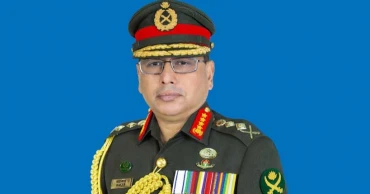
Army Chief returns home after Malaysia visit
Chief of Army Staff General Waker-Uz-Zaman returned home on Thursday after completing a four-day official visit to Malaysia.
During the visit, he attended the Defence Services Asia (DSA) and National Security Asia (NATSEC ASIA) 2026 Exhibition in Kuala Lumpur as the representative of Prime Minister Tarique Rahman.
He also participated in the 8th Putrajaya Forum held under the theme “ASEAN Security at the Edge of Emerging Technologies,” said an ISPR press release .
Besides, the Army Chief held courtesy meetings with Malaysian defence and security officials, where they discussed issues related to defence cooperation, joint training, joint initiatives and mutual collaboration between the two countries.
1 month ago