foreign-affairs
Rohingya Crisis: FM urges global community to scale up funding
Foreign Minister Dr Khalilur Rahman has voiced deep concern over the declining level of international donor assistance for the Rohingya population.
He urged the global community to scale up funding, ensure stability and security in Rakhine State, and take urgent measures to safeguard human rights.
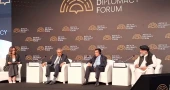
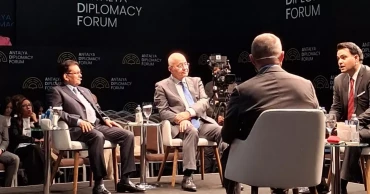
The Foreign Minister made these remarks while speaking as a panelist at a session titled “Global Refugee Protection System in the Face of Displacement Crisis” at the Antalya Diplomacy Forum 2026 in Turkey on Friday.
He emphasised that international engagement must go beyond humanitarian aid, calling for a more proactive and constructive role in fostering conditions conducive to the safe, dignified, and voluntary repatriation of the Rohingyas, said the Ministry of Foreign Affairs on Saturday.
Highlighting the root of the crisis, he noted that a sustainable and lasting solution lies within Myanmar’s Rakhine State.
The Foreign Minister said that since assuming office, he has received a positive response from both the Myanmar government and the Arakan Army.
Reiterating his stance, the Foreign Minister described the Rohingya crisis as resolvable - provided there is a coordinated global initiative backed by sustained international cooperation.
Earlier, the UN Refugee Agency (UNHCR) and the International Organization for Migration (IOM) urgently called on the international community to step up solidarity and sustain funding to support lifesaving assistance for Rohingyas in Bangladesh as well as support for the Bangladeshi host communities.
The UN agencies said the promise of better wages abroad, often coupled with misinformation spread by smuggling networks, drives individuals, Rohingya and Bangladeshi nationals, to take significant risks.
These factors, they said, create conditions in which smugglers and traffickers can exploit vulnerabilities, placing lives at grave risk.
Ongoing violence in Rakhine state has faded hopes of safe return in the near future, while shrinking humanitarian assistance, challenging living conditions in refugee camps, and limited access to education and livelihoods are pushing refugees to take such dangerous sea journeys in search of safety and opportunity.
The Andaman Sea continues to claim the lives of people undertaking these perilous journeys.
As Bangladesh marks its new year, the UN agencies said, this tragedy is a reminder of the efforts urgently needed to address the root causes of displacement in Myanmar and create conditions that would allow Rohingya refugees to return home voluntarily, safely and with dignity.
Without collective action, the organisations said, more lives will be lost at sea and on desperate journeys through deadly routes.
1 month ago
Dhaka thanks Islamabad for its 'commendable diplomatic efforts' to bring conflict to negotiated end
Bangladesh and Pakistan have discussed the latest developments in regard to talks to resolve the ongoing conflict in the Gulf region.
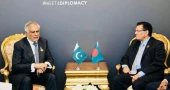
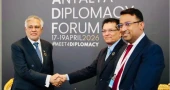
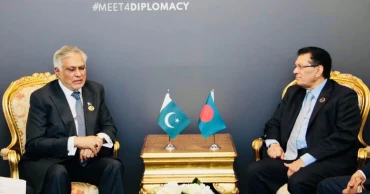
Foreign Minister Dr Khalilur Rahman held a bilateral meeting with Pakistan's Deputy Prime Minister and Foreign Minister Ishaq Dar on the sidelines of the Antalya Diplomacy Forum on Friday.
He thanked Pakistan for its 'commendable diplomatic efforts' to bring the conflict to a negotiated end.
The two Ministers also discussed ways to further advance bilateral relations, said the Ministry of Foreign Affairs on Saturday.
Foreign Affairs Adviser to the Prime Minister, Humaiun Kobir, was also present at the meeting.
The two sides exchanged views on regional developments including Pakistan’s role in facilitating the dialogue between the United States and Iran.
“Pleased to meet Dr Khalilur Rahman, Foreign Minister of Bangladesh, on the sidelines of Antalya Diplomacy Forum 2026," said the Pakistani Foreign Minister after the meeting.
He said they discussed strengthening ties between Bangladesh and Pakistan and exchanged views on regional developments, including Pakistan’s hosting of the Islamabad talks.
"I look forward to our continued positive and forward-looking engagement," Dar added.
1 month ago
State Minister Shama leaves for Dakar Forum on peace, security
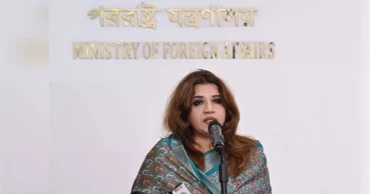
State Minister for Foreign Affairs Shama Obaed Islam will represent Bangladesh at Dakar International Forum on Peace and Security, which will be held in Senegal from April 19–22.
The State Minister left Dhaka for Dakar, Senegal, on Saturday morning to attend the Forum, said an official at the Ministry of Foreign Affairs.
She is expected to return to Bangladesh on April 24.
1 month ago
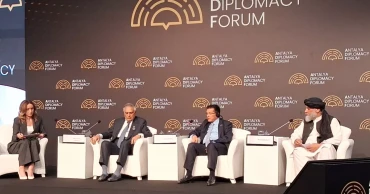
Reviving SAARC key foreign policy goal of PM Tarique Rahman: Foreign Minister
Foreign Minister Dr Khalilur Rahman has said reviving SAARC is a major foreign policy objective of Prime Minister Tarique Rahman.
He made the remarks while speaking at a ministerial panel held on Saturday at the Antalya Diplomatic Forum in Turkiye.
The discussion warmly recalled the seminal contribution of Shaheed President Ziaur Rahman's initiative to establish SAARC.
The panel agreed that the South Asian region has immense possibilities for cooperation, and dialogue and diplomacy are the highlights only way to overcome the barriers to cooperation among the countries of the region.
Pakistan Deputy Prime Minister and Foreign Minister Ishaq Dar and Afghan Transport Minister Azizi participated in the panel.
1 month ago
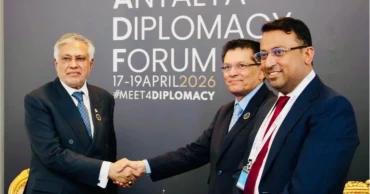
Bangladesh, Pakistan foreign ministers meet on sidelines of Antalya Diplomacy Forum
Bangladesh and Pakistan on Friday exchanged views on regional developments, including Pakistan’s role in facilitating the dialogue between the United States and Iran.
Foreign Minister Dr Khalilur Rahman held a meeting with Senator Ishaq Dar, Deputy Prime Minister as well as Foreign Minister of Pakistan, on the sidelines of the 'Antalya Diplomacy Forum 2026' in Türkiye.
“Pleased to meet Dr Khalilur Rahman, Foreign Minister of Bangladesh, on the sidelines of Antalya Diplomacy Forum 2026," said the Pakistani Foreign Minister after the meeting.
PM Tarique congratulates Bangladesh team on thrilling win over Pakistan
He said they discussed strengthening ties between Pakistan and Bangladesh, and exchanged views on regional developments, including Pakistan’s hosting of the Islamabad Talks.
"I look forward to our continued positive and forward-looking engagement," Dar added.
Prime Minister’s Foreign Affairs Adviser Humaiun Kobir was also present at the meeting, as seen in photographs shared by the Pakistanis.
The Bangladesh side has not yet shared anything on the meeting.
1 month ago
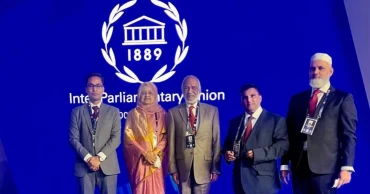
Dr Moyeen Khan leads Bangladesh delegation at IPU; urges global cooperation to ensure inclusive development, peace
BNP Standing Committee Member Dr Abdul Moyeen Khan MP on Thursday called for stronger international cooperation, particularly in technology transfer and capacity building, to ensure inclusive development, lasting peace and justice for future generations.
“We call for stronger international cooperation particularly in technology transfer, capacity building, and sharing of best practices from around the world,” he said while speaking at the 152nd Assembly of the Inter-Parliamentary Union (IPU) in Istanbul.
Dr Moyeen Khan, who is leading the Bangladesh Delegation to the IPU Assembly, said no country can achieve these goals alone and stressed the need for global partnerships to expand affordable assistive technologies and effective social protection systems, according to a message received here from Istanbul on Friday.
Addressing the session on the theme “Nurturing Hope, Securing Peace and Ensuring Justice for Future Generations,” he said Bangladesh remains committed to inclusive social development, describing inclusion as the foundation of peace, stability and justice.
“If we are serious about building a better future for the next generation, we must begin by empowering those who are most often left behind,” the BNP leader told the assembly.
Highlighting Bangladesh’s democratic journey, he said the country was founded with the goals of democracy and economic welfare of the underprivileged, but its path has not been smooth.
“We had repeated setbacks in our long struggle, but each time the resilient people of Bangladesh have risen in favour of democracy, human rights and good governance,” Dr Moyern said.
He said inclusion requires systemic transformation, noting that efforts are underway to improve accessibility in education, healthcare and employment sectors.
He emphasised the central role of parliament in this process through enacting inclusive laws, ensuring adequate budget allocation and maintaining effective oversight to guarantee accountability.
The BNP leader also urged greater collaboration among countries to share best practices and strengthen institutional capacities.
“The IPU provides a unique platform not only to exchange ideas but also to commit to practical and measurable actions that can transform the lives of millions,” he said.
Looking ahead, he stressed the need to strengthen institutions, expand inclusive infrastructure and invest in human capital.
“Inclusion is not charity—it is justice. And justice is the foundation of peace,” he said, adding that a society should be judged by how it empowers its most vulnerable citizens.
He also underscored the importance of democratic values, saying democracy is about the rule of the majority with the consent of the minority.
Concluding his speech, Dr Moyeen Khan called for peaceful coexistence and global harmony, expressing hope for a world marked by friendship and mutual respect among people.
1 month ago
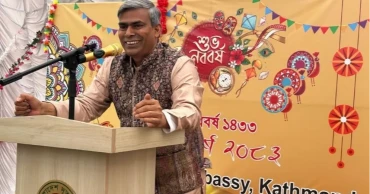
Bangladesh Embassy in Kathmandu observes Pohela Boishakh, ushering in Bangla New Year 1433
With ambassadors and heads of mission from regional countries, senior officials of the Government of Nepal, diplomats from resident missions, Nepali business leaders, and members of the Bangladeshi community in Nepal, the Bangladesh Embassy in Kathmandu celebrated Pohela Boishakh on Friday, ushering in the Bengali New Year and year 1433 on the Bengali calendar.
The SAARC Secretary General attended as guest of honour, while representatives from India, Pakistan, Myanmar and Sri Lanka added regional dimension.
In welcome remarks, the Bangladesh Ambassador to Nepal highlighted Pohela Boishakh as part of Bengali identity, marking renewal through centuries-old rituals including Haal Khata and transcending religious and geographical boundaries. He emphasized regional cultural harmony across South and Southeast Asia, citing Charayapada as shared heritage and early Bengali writings, and noted civilizational linkages between Bangladesh and Nepal, promoting cultural exchange and tourism.
Notable progress made in Nepal-Bangladesh relations: Deputy Chief of Mission in Dhaka
Guest of honour praised Bangladesh’s cultural heritage and stressed regional cultural exchanges, calling the festival "a celebration of harmony in diversity" event.
Cultural performances featured Bangla and Nepali songs by Nepali artist Sabu Lama, local students and Bangladeshi community members. Children’s games and prize distribution held. Venue decorated with festoons and artifacts. Foods including panta ilish and sweets were served.
It concluded with dinner highlighting Pohela Boishakh and Nepali Naya Barsha in mid-April reinforcing regional bonds.
1 month ago
Hasina’s extradition request being 'examined:' India
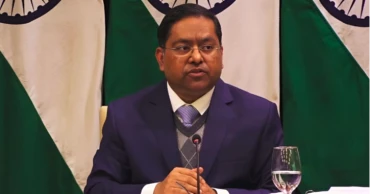
Reiterating its desire to engage constructively, India on Friday said they are examining the request for former Prime Minister Sheikh Hasina’s extradition as part of ongoing judicial and internal legal processes.
"There is a request.....the request is being examined as part of ongoing judicial and internal legal processes," the Indian Ministry of External Affairs (MEA) spokesperson Randhir Jaiswal told reporters in New Delhi, noting that they will continue to engage constructively on the issue with all the stakeholders.
Responding to a question at the weekly media briefing, Jaiswal said they follow all the developments very closely.
Hasina no longer relevant to Bangladesh: Adviser Humaiun
Bangladesh, on April 8, reiterated its request to extradite Hasina and former Home Minister Asaduzzaman Khan Kamal to Bangladesh, who have been awarded death penalty by the International Crimes Tribunal.
"We will continue to seek her extradition through a transparent judicial process. It (the extradition request) has been discussed. It will be dealt with through a transparent judicial process," Prime Minister's Foreign Affairs Adviser Humaiun Kobir told reporters recently in Dhaka.
He said there would be some challenges as Hasina is still staying there.
Indian External Affairs Minister Dr S Jaishankar met with Foreign Minister Dr Khalilur Rahman in New Delhi. Adviser on Foreign Affairs to Prime Minister of Bangladesh, Humaiun Kobir was also present at the meeting.
The External Affairs Minister reiterated India's desire to engage constructively with the new government and further strengthen bilateral ties, said the MEA spokesperson on Friday.
The two sides agreed to explore proposals for deepening the partnership through the relevant bilateral mechanisms.
Follow-on official meetings are expected to take place at an early date. Both sides exchanged views on regional and global issues of mutual interest.
During the visit, Foreign Minister Dr Khalilur also met National Security Adviser Ajit Doval and Minister of Petroleum and Natural Gas Hardeep Singh Puri.
Prime Minister’s Foreign Affairs Adviser Humaiun Kobir recently said the challenges that exist in the Bangladesh-India relationship can be resolved if both sides remain engaged in dialogue.
"Challenges are there. I am telling you repeatedly. You can address the challenges if you are engaged in dialogue. You must not give up the path of dialogue," he told reporters at the Ministry of Foreign Affairs on Monday evening.
Adviser Humaiun said the chances of resolving issues will be greater if the door to dialogue and discussion remains open.
"It was our first visit to India. Let us utilise this as a stepping stone to start dialogue and discussion for moving forward positively," said Adviser Humaiun, while responding to a question.
He said it is a very good start to working together positively.
Describing Sheikh Hasina as a terrorist and killer, he said she is staying in India after 'killing 1,500 people' in Bangladesh.
"It's a must to restrain her. She (ex-PM Hasina) should not be allowed to utilise Indian soil to destabilise Bangladesh in any way," he said.
The adviser said there are some issues that can be resolved immediately while others may take a little longer to resolve.
1 month ago

US keen to advance 'strategic cooperation' with Bangladesh on education, well-being of children
US Special Envoy for Best Future Generations Charles J. Harder will pay a three-day visit to Bangladesh from April 18 to strengthen Bangladesh-US strategic cooperation on education and the well-being of children.
The US Special Envoy will arrive in Dhaka on Saturday to advance the 'strategic cooperation' on education and the well-being of children, said the US Embassy in Dhaka on Friday.
The mission of Special Envoy Harder’s office is to protect and promote the interests and well-being of children (0-17) throughout the world.
US announces $235,000 grant to restore historic Musa Khan Mosque at DU
Special Envoy Harder will meet with senior government officials and stakeholders to expand partnerships that support Bangladesh's next generation.
The focus of his office is the protection and well-being of children throughout the world, with particular focus on food security, education, healthcare, WASH (water, sanitation and hygiene), and ending child labor, trafficking, and recruitment into gangs and armed conflict.
Special Envoy Harder meets with senior government officials both domestically and internationally on these issues, as well as senior members of foundations, corporations, non-profit organizations, faith-based organizations and international governmental organizations, to find 'creative and common-sense solutions' to these issues for children, their families and their communities, according to US Department of State.
1 month ago
Bangladesh reiterates strong commitment to UN peacekeeping
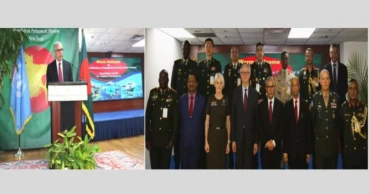
Paying rich tribute to the peacekeepers who made the ultimate sacrifice in the line of duty, Permanent Representative of Bangladesh Ambassador Salahuddin Noman Chowdhury has underscored Bangladesh’s readiness to further strengthen its contributions in partnership with the United Nations and the international community.
The Permanent Mission of Bangladesh to the UN hosted a luncheon in honor of the Heads of Military Components and Force Commanders serving in United Nations peacekeeping missions at the Mission on April 15.
The event was attended by the United Nations Under-Secretary-General for Peace Operations Jean-Pierre Lacroix, Under-Secretary-General for Operational Support Atul Khare, Acting Military Adviser of the Office of Military Affairs Lieutenant General Cheryl Pearce along with distinguished Force Commanders, senior UN officials and diplomats.
Ambassador Chowdhury expressed deep appreciation for the leadership of Force Commanders and Heads of Military Components serving in challenging UN peacekeeping missions, said a media release issued on Thursday.
The programme was moderated by Brigadier General Mohammad Golam Rabbani the Defence Attaché of the Mission who concluded the event by expressing his sincere gratitude to all distinguished guests for their presence.
1 month ago